
When planning your trip to Morocco in January, knowing the weather is key. Morocco’s weather changes a lot in different areas during winter.
Expect different weather conditions in various parts of the country. It’s important to know what to pack for your trip.
Key Takeaways
- Morocco’s climate varies across regions in January.
- Packing should be based on the specific region you plan to visit.
- Understanding the January climate helps in preparing for your trip.
- Diverse weather conditions can be expected across the country.
- Preparation is key to a successful journey.
Overview of Morocco’s Winter Climate
January in Morocco offers a variety of weather, from mild in the south to cooler in the north. Knowing the weather patterns and regional differences is key to getting ready for your trip.
General January Weather Patterns
In January, Morocco is in its winter, with cooler mornings and evenings. Average temperatures range from 45°F to 65°F (7°C to 18°C) across the country. Expect some rain, especially in the north, but January is mostly dry. For the latest morocco weather forecast, check a reliable weather service.
Regional Climate Variations
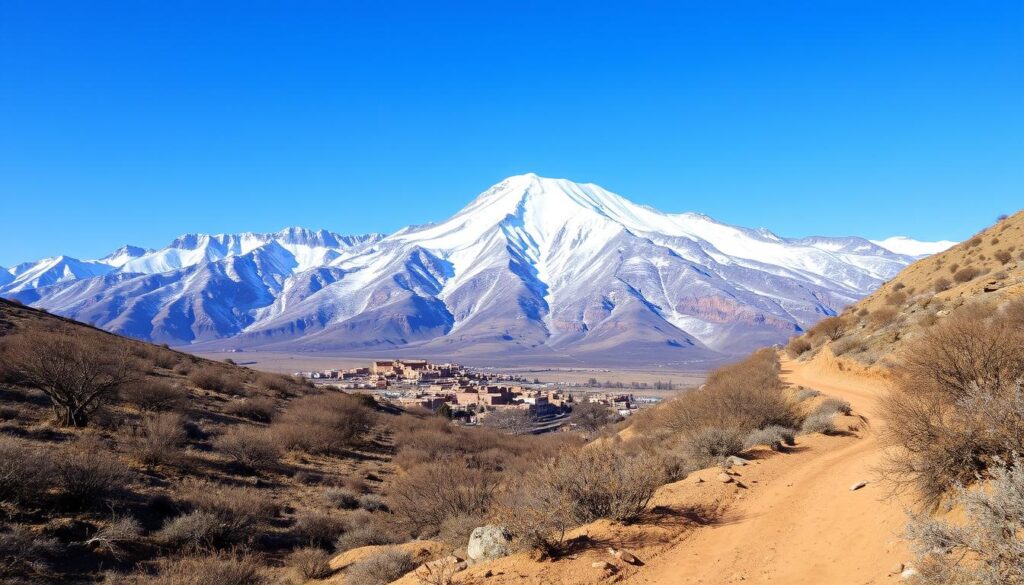
Morocco’s varied geography leads to different climates in each region. The Atlas Mountains are cold, with snow, perfect for winter sports. The Sahara Desert has big temperature swings, with cold nights and warmer days. Coastal areas like Casablanca and Rabat have milder winters.
Knowing these january weather patterns helps you pack right and enjoy Morocco’s diverse landscapes and activities.

Traveling to Morocco in January means being ready for different morocco winter weather conditions. By understanding what to expect, you can fully enjoy Morocco’s mountains, deserts, and more.
- Check the latest weather forecasts before your trip.
- Pack layers for varying temperatures.
- Consider visiting the Atlas Mountains for winter sports.
- Enjoy the mild climate in coastal regions like Casablanca.
Understanding the Weather in January in Morocco
Planning a trip to Morocco in January? Knowing the weather is key for a great trip. Morocco’s weather changes a lot from the coast to inland. Being ready for these changes will make your trip better.
Temperature Ranges Across the Country
January temperatures in Morocco vary a lot. Coastal areas are mild, with temperatures between 12°C and 18°C (54°F to 64°F). But inland, it can get cooler, especially in the mornings and evenings. Temperatures can drop to around 5°C (41°F) in the Atlas Mountains and other high places.
Precipitation and Humidity Levels
January is quite wet in Morocco, with rain in most places. The north and the Atlas Mountains get the most rain. The south is drier. Humidity is moderate, from 60% to 80% by the coast, and lower inland.
Daylight Hours and Sunshine Expectations
Even in winter, Morocco gets a lot of sunshine in January, about 7 hours a day. Days are short, with sunset around 5:30 pm. But the clear skies make for beautiful winter views and nice daytime weather.
Coastal Morocco in January
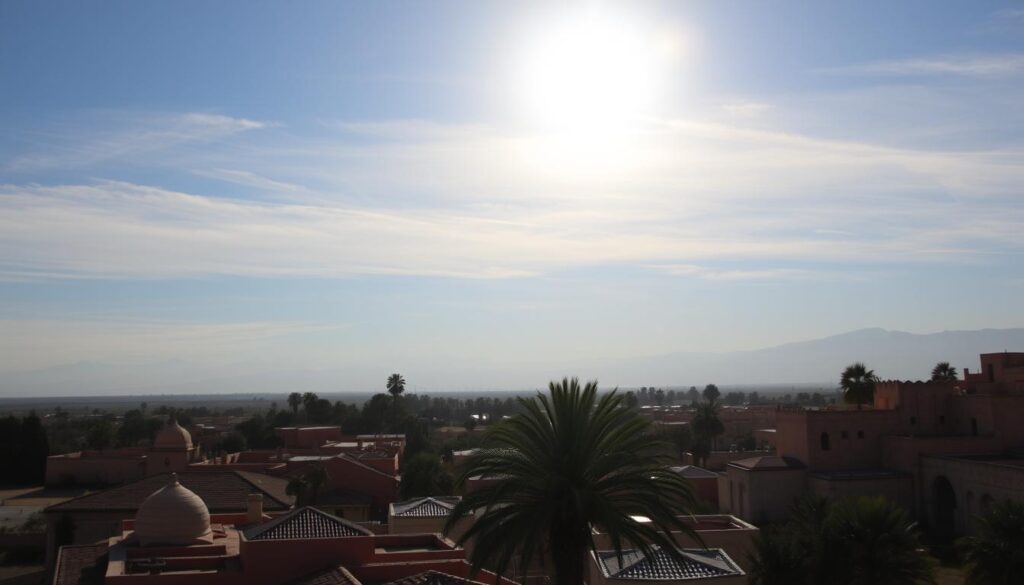
Morocco’s coast in January is calm and mild, perfect for a winter break. The coastal areas have a milder winter than inland, attracting those wanting to avoid cold weather.
Casablanca and Rabat Weather Conditions
Casablanca and Rabat, Morocco’s coastal cities, have mild winters in January. Expect temperatures between 45°F and 65°F (7°C to 18°C). There’s moderate rainfall and lots of sunshine. Here’s what you can look forward to:
- Average high temperature: 63°F (17°C)
- Average low temperature: 48°F (9°C)
- Average rainfall: 3.5 inches (89 mm)
Essaouira and Atlantic Coast Climate
Essaouira is famous for its windy weather. January brings temperatures from 50°F to 65°F (10°C to 18°C). The Atlantic Coast is cool and breezy, great for:
- Surfing and water sports
- Exploring the historic medina
- Enjoying local cuisine
Agadir and Southern Coast Temperatures
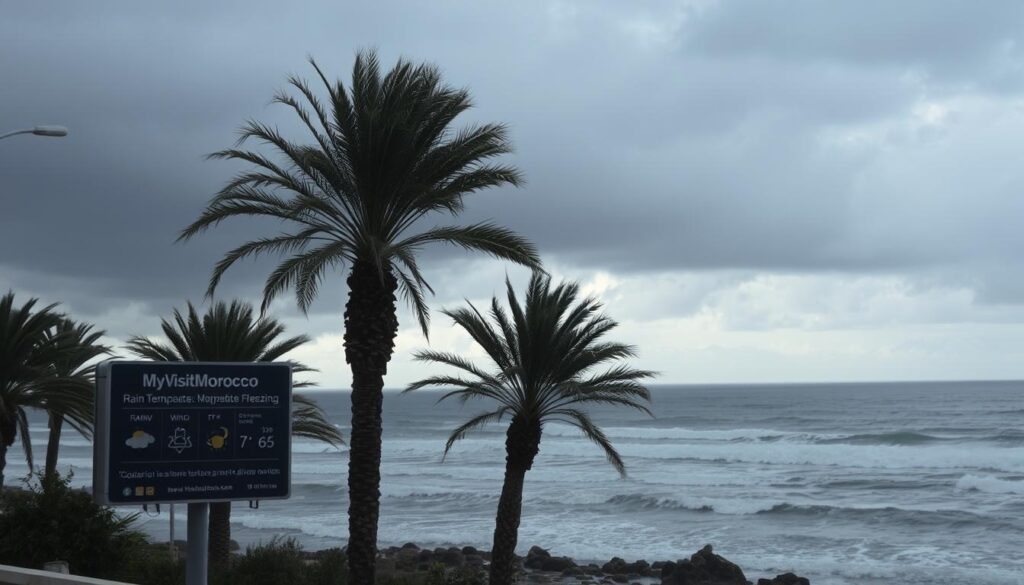
Agadir, on the southern coast, has nice January temperatures from 50°F to 70°F (10°C to 21°C). The southern coast is warmer than the north, making Agadir a great winter spot. You can enjoy:
- Beach activities like swimming and sunbathing
- Outdoor excursions to nearby attractions
- A relaxed atmosphere with mild weather
Morocco’s coast in January is perfect for a winter escape. It offers pleasant weather and exciting activities.
Northern Morocco Winter Experience
Northern Morocco has a special winter. It mixes Mediterranean and mountain climates. When you visit in January, you’ll see different weather than the rest of Morocco.
Tangier and Mediterranean Coast
Tangier and the coast have mild winters. Temperatures are between 12°C to 17°C (54°F to 63°F). The sea keeps it warmer than inland.
Chefchaouen and the Rif Mountains
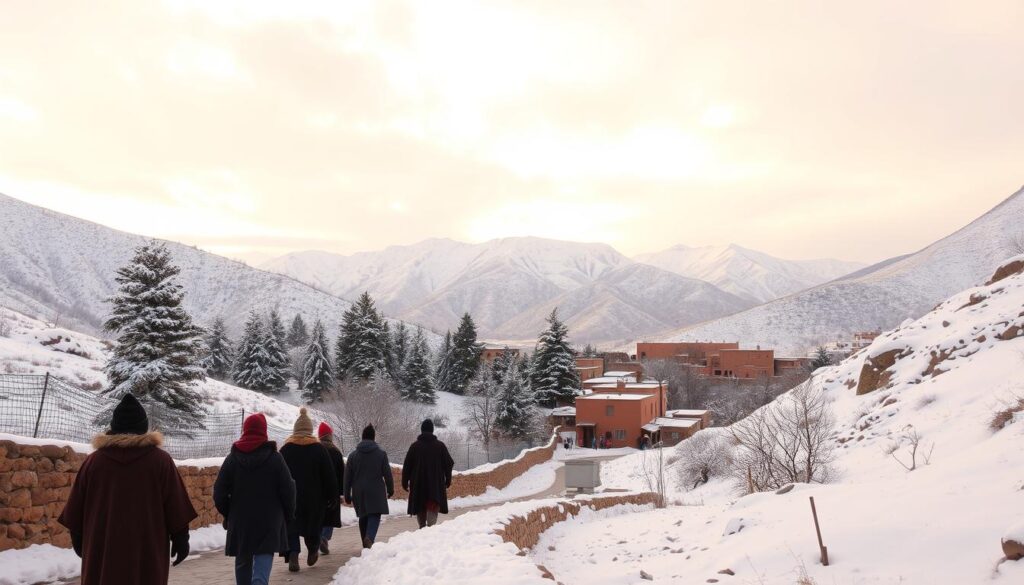
Chefchaouen, in the Rif Mountains, gets cold, especially at night. It can drop to 8°C (46°F). You’ll need warm clothes.
The mountains also mean more rain and snow at high places.
Knowing these differences helps you pack right for Northern Morocco in January. Whether you’re by the sea or in the mountains, being ready for the weather makes your trip better.
Central Morocco’s January Climate
January in Central Morocco brings a mix of winter weather, shaped by its varied landscapes. The north is cooler, while the south is milder.
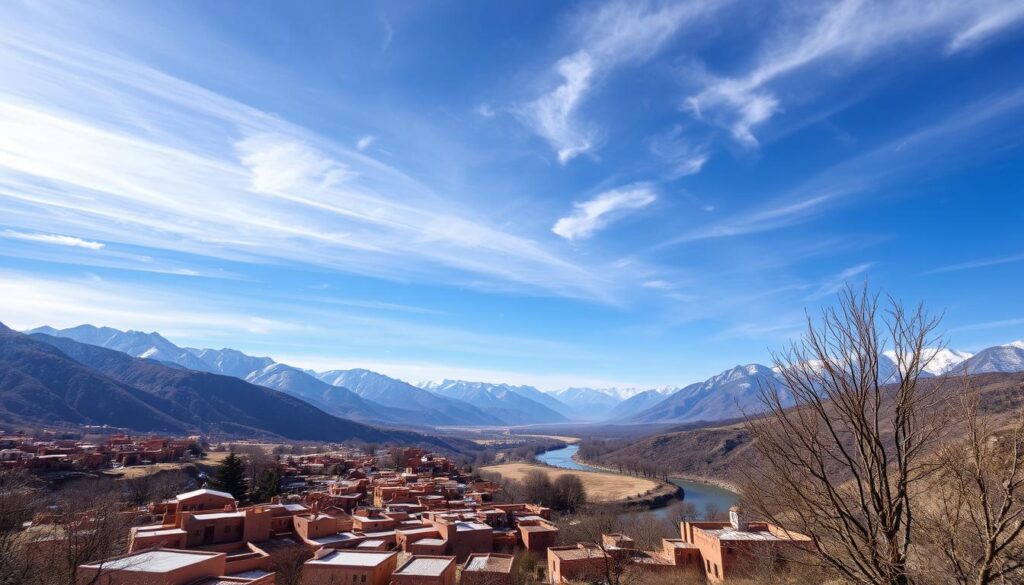
Fes and Meknes Weather
Fes and Meknes are known for their history and cool winters. In January, temperatures range from 45°F to 55°F (7°C to 13°C). Expect some rain, with Fes getting about 2.5 inches (64 mm).
It’s important to dress in layers to handle the day’s temperature changes.
What to Expect in Marrakech
Marrakech enjoys mild winter days in January. Highs reach about 64°F (18°C), while lows are around 45°F (7°C). The city’s lively vibe stays strong, with plenty of sunshine.
With about 7 hours of sun daily, it’s a perfect time to see the city’s sights.
Ouarzazate and Pre-Saharan Regions
Ouarzazate and the pre-Saharan areas get chilly, especially at night, with lows below 40°F (4°C). But days can still be nice, up to 60°F (15°C).
The pre-Saharan areas see little rain, making it great for desert trips.
| City | Average High Temp | Average Low Temp | Average Rainfall |
|---|---|---|---|
| Fes | 55°F (13°C) | 45°F (7°C) | 2.5 inches (64 mm) |
| Marrakech | 64°F (18°C) | 45°F (7°C) | 1.2 inches (30 mm) |
| Ouarzazate | 60°F (15°C) | 40°F (4°C) | 0.5 inches (13 mm) |
Atlas Mountains in Winter
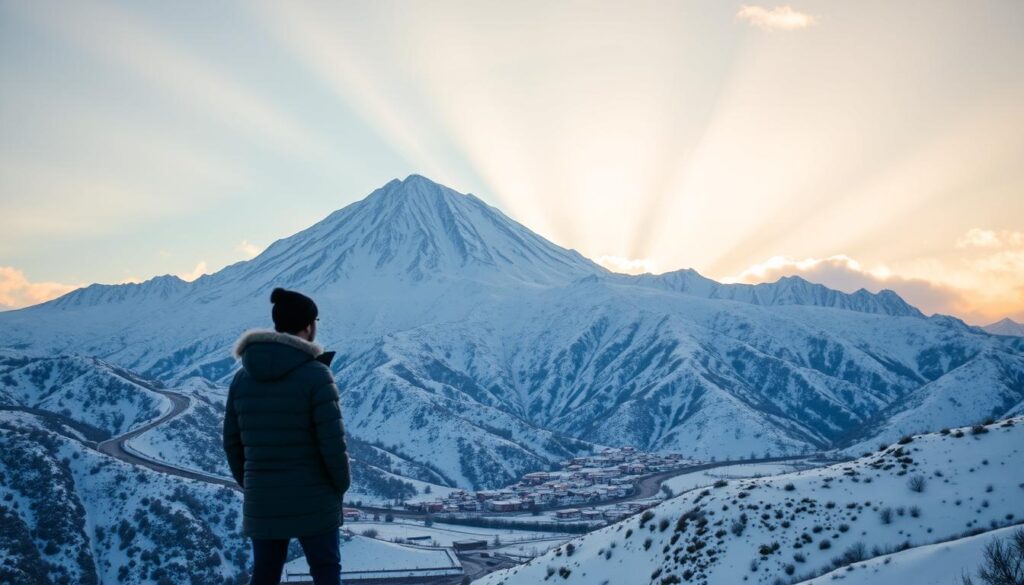
The Atlas Mountains turn into a winter wonderland in January. This makes it a unique place for travelers. When planning your trip to Morocco in January, knowing the weather is key.
Temperature and Snowfall Patterns
In January, the Atlas Mountains see a lot of snow. Temperatures often go below freezing. They usually range from 32°F to 45°F (0°C to 7°C). For the latest weather averages, check Atlas Mountains January averages.
Popular Mountain Destinations in January
January is a great time to visit places like Oukaimden ski resort and the village of Imlil. These spots offer skiing, snowboarding, and trekking.
Winter Sports Opportunities
The Atlas Mountains are perfect for winter sports. Oukaimden offers skiing and snowboarding. The trails are also great for trekking, making January ideal for outdoor lovers.
| Destination | Activity | Average Temperature |
|---|---|---|
| Oukaimden | Skiing/Snowboarding | 32°F – 40°F (0°C – 4°C) |
| Imlil | Trekking/Hiking | 35°F – 45°F (2°C – 7°C) |
Sahara Desert Winter Conditions
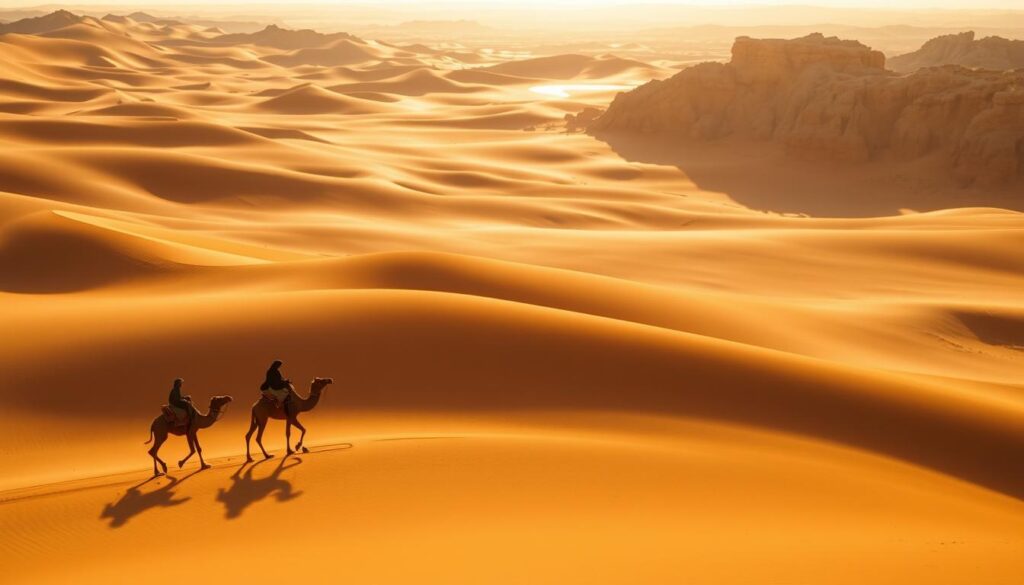
The Sahara Desert in January is a peaceful winter wonderland, great for desert tours. You can explore the vast dunes and enjoy the calm atmosphere. The desert’s winter is quite serene.
Day and Night Temperature Fluctuations
In January, the Sahara Desert’s temperatures change a lot between day and night. Days can be warm, reaching up to 20°C (68°F). Nights, however, can get quite cool, around 5°C (41°F). It’s smart to bring layers for your desert trip.
Merzouga and Zagora Climate
Merzouga and Zagora are top spots for seeing the Sahara’s beauty. In January, they have mild days, perfect for desert tours and outdoor fun. But, nights can get chilly, so be ready.
Desert Tours in January
January is a perfect time for desert tours because the weather is easier to handle. You can go on camel rides, camp under the stars, and see the vast desert. Morocco’s weather forecast in January usually shows clear skies, making it great for desert adventures.
When planning your trip, think about the January climate in Morocco and pack right. With the right gear, you’ll have a memorable and fun time in the Sahara Desert.
Essential Clothing for Morocco in January
When you travel to Morocco in January, it’s important to pack clothes for different temperatures. The weather can be mild or cool, depending on where you are. This includes coastal areas, mountains, or the desert.
Layering Strategies for Varying Temperatures
Layering is key for Morocco’s January weather. You should have both lightweight and warmer clothes. For the day, wear breathable clothes like cotton or linen shirts and light pants.
For cooler mornings and evenings, especially in the mountains, bring warmer layers. These can be fleeces or light jackets.
Remember, dress in layers that you can easily add or remove. This is helpful when moving between indoor and outdoor places or when the temperature changes.
Footwear Recommendations
Comfortable shoes are a must for exploring Morocco. Whether you’re walking in medinas, hiking in the Atlas Mountains, or enjoying coastal towns. For city walks, wear comfortable shoes or sneakers.
If you’re hiking or trekking, bring waterproof boots with good grip.
Rain Gear and Weather Protection
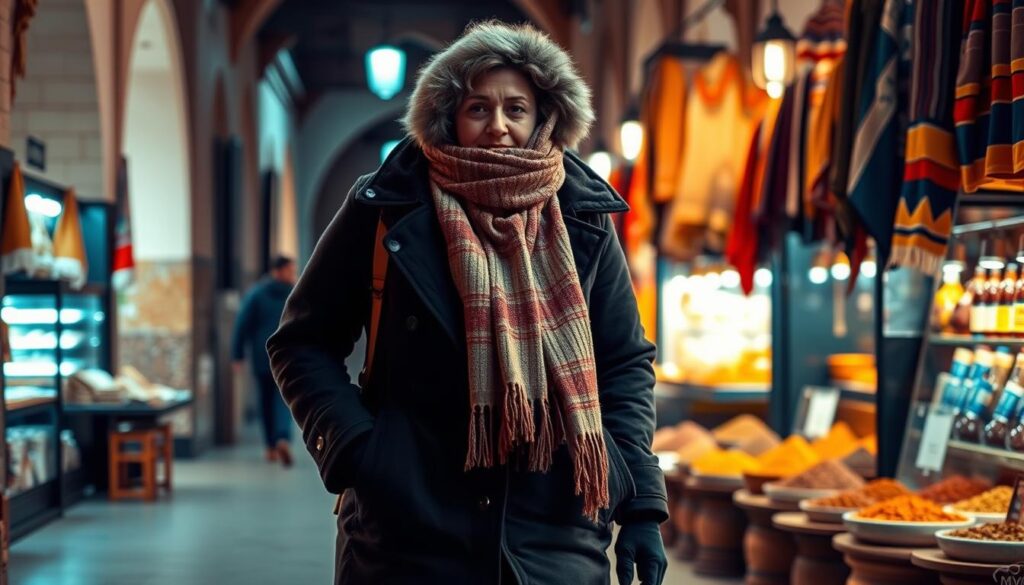
January can be rainy in Morocco, especially in the north and mountains. It’s wise to bring a waterproof jacket or poncho. Also, don’t forget a warm hat and gloves for the cold higher elevations.
| Region | Temperature Range | Recommended Clothing |
|---|---|---|
| Coastal Areas | 12°C – 18°C (54°F – 64°F) | Light layers, comfortable walking shoes |
| Mountain Regions | 0°C – 10°C (32°F – 50°F) | Warm layers, waterproof gear, sturdy hiking boots |
| Desert | 10°C – 25°C (50°F – 77°F) | Light, breathable clothing, sun protection, comfortable shoes |
Packing for Coastal and Urban Areas
When planning your January trip to Morocco, think about the weather in coastal and urban areas. These places have mild winters, perfect for visiting. But, the temperature changes a lot between day and night, so pack smart.
Daytime Attire for Cities
In cities like Casablanca, Rabat, and Marrakech, wear light, breathable clothes for the day. Temperatures can hit up to 18°C (64°F), making it great for walking and exploring. Don’t forget comfy shoes and items to protect you from the sun.
Evening and Nighttime Necessities
Nights in coastal and urban Morocco can get chilly, especially by the sea. Temperatures can drop to 8°C (46°F) in January. Bring warm layers like light jackets or sweaters for the evenings.
Beach Visits in Winter
If you’re heading to Morocco’s beaches in January, pack right. The water might be too cold for swimming, but the beaches are lovely for walks or picnics. Bring a warm layer for the cooler times and a waterproof jacket for rain.
What to Pack for the Atlas Mountains
Planning a trip to the Atlas Mountains in January? Knowing what to pack is key. The mountains are cold in January, with a chance of snow. This makes them perfect for winter sports fans.
Cold Weather Gear Essentials
To stay warm, pack layered clothes. Include thermal wear and waterproof jackets. Thermal wear keeps you warm, and waterproof jackets shield you from the elements.
Remember to bring warm hats, gloves, and scarves. They help keep your head and hands from losing heat.
Specialized Equipment for Mountain Activities
For hiking or trekking, you might need special gear. Depending on the snow, you might need crampons or trekking poles. Always check the weather forecast and talk to local guides or tour operators for trail updates.
For more tips on winter hiking, check out Becky the Traveller. They offer great advice on preparing for winter hikes in Morocco.
Hiking and Trekking Gear for Winter Conditions
Along with cold weather gear, make sure you have sturdy, waterproof boots. Boots with good grip are essential for icy or snowy paths. Gaiters and gators help keep snow out of your boots.
For longer treks, consider a portable stove or camping gear for cold weather.
Desert Packing Essentials for January
When you head to Morocco’s desert in January, packing right is key. The desert’s climate can be harsh, with big temperature changes from day to night.
Daytime Desert Wear
For daytime adventures, choose lightweight, breathable clothing that keeps you cool. Opt for loose cotton clothes and a hat. Remember to pack sunglasses and sunscreen with high SPF to shield your skin from the desert sun.
Overnight Desert Camping Necessities
January nights in the desert can get cold. Bring warm layers for camping. A sleeping bag for cold weather is a must. Also, think about a portable heater if your gear allows it.
“The desert at night is a different world, with stars shining brightly overhead. Being prepared for the cold ensures you can fully enjoy this magical experience.” – Desert Travel Guide
Protecting Against Sand and Wind
Morocco’s desert is famous for its sand and wind. To protect yourself, pack scarves or masks and goggles to block sand. Choose clothes that can handle the desert’s rough conditions and can be layered.
| Item | Purpose |
|---|---|
| Lightweight, breathable clothing | Daytime comfort and sun protection |
| Warm layers and sleeping bag | Nighttime warmth |
| Scarves or masks and goggles | Protection against sand and wind |
By planning your packing list well, you can have a safe and fun trip to Morocco’s desert in January.
Cultural Considerations for Your Packing List
A trip to Morocco in January is more than just facing the cold. It’s also about showing respect for the local culture through what you wear. As you make your packing list, think about the cultural details that will enhance your visit and show respect.
Respectful Attire for Religious Sites
When you visit religious sites in Morocco, dressing modestly is key. Both men and women should cover their shoulders and knees. This shows respect. Pack lightweight, breathable clothes that can be layered for the changing temperatures.
Balancing Comfort and Cultural Sensitivity
Morocco’s culture is vibrant but conservative. To be comfortable and respectful, wear loose, knee-length clothes. Choose fabrics and layers that keep you warm in January’s mild weather.
Dress Codes for Different Settings
Dress codes vary in Morocco. In rural areas or local events, dress more conservatively. Marrakech’s urban areas are more relaxed. Here’s a quick guide for different places:
| Setting | Dress Code |
|---|---|
| Religious Sites | Modest, cover shoulders and knees |
| Rural Areas | Conservative, loose-fitting |
| Urban Areas | Smart casual, with layers for temperature control |
For a detailed packing list for Morocco, check out this resource.
Health and Comfort Items for Winter Travel
When you’re getting ready for your Moroccan trip in January, think about what you’ll need for health and comfort. Morocco’s weather in January can change a lot. It gets cooler in the mornings and evenings, especially in the desert and mountains.
Sun Protection Even in Winter
The Moroccan sun can still be strong, even in winter. Make sure to pack high SPF sunscreen and a wide-brimmed hat. Also, don’t forget lip balm with SPF to keep your lips from getting dry.
Medications and First Aid Essentials
Always carry your medications and a basic first aid kit. Your kit should have band-aids, antiseptic wipes, and any meds for altitude sickness or common travel sickness. Check out our detailed packing list for Morocco for more info.
Staying Hydrated in Dry Winter Air
The dry winter air, especially in the desert, can dry you out. Drink lots of water all day. Bring a reusable water bottle and some hydrating lip balm to keep your skin and lips moist.
Preparing for Unexpected Weather Situations
Traveling to Morocco in January means being ready for sudden weather changes. Morocco’s weather can be unpredictable. Knowing about possible weather events helps you plan better.
Flash Floods and Heavy Rain Preparation
Morocco, especially the Atlas Mountains, can have flash floods. Stay updated with the morocco weather forecast to know the risks of heavy rain. A waterproof jacket and a plan for emergencies are essential.
Transportation Delays Due to Weather
January weather in Morocco can lead to transport delays, especially in rural areas. Check the weather forecast often and plan your trip with flexibility. Knowing about possible delays helps you adjust your travel plans.
Being ready for unexpected weather lets you enjoy Morocco without interruptions.
Conclusion: Preparing for Your January Moroccan Adventure
Getting ready for your Moroccan trip in January is key. Morocco’s weather changes a lot, depending on where you are. Knowing this helps a lot.
With the right clothes, you can enjoy Morocco’s cities, nature, and culture. The coast is mild, but the Atlas Mountains and Sahara can be cold. Being prepared makes your trip better.
Think about the weather in January and pack smart. This way, you’ll love Morocco, whether you’re in Marrakech, the Atlas, or the desert. It’s all about being ready for the adventure.


 Covers cities, coast, mountains, desert & food