

The High Atlas Mountains, a majestic spine running through Morocco, are more than just breathtaking landscapes; they are the beating heart of Berber culture, a place where ancient traditions thrive, largely untouched by the outside world. To truly understand this vibrant heritage, one must listen to the soul-stirring sounds of traditional music Atlas Mountains. It’s a journey into the very essence of Berber identity, an experience that transcends mere observation and invites participation. From haunting flutes echoing through valleys to the hypnotic rhythms of drums around a village fire, this music isn’t just entertainment; it’s a living chronicle of history, celebration, hardship, and community. For travelers seeking an authentic connection with Morocco’s indigenous people, engaging with their musical traditions offers an unparalleled window into their world.
The Echoes of Ancestors: Understanding Berber Musical Traditions
Berber music, particularly the traditional music Atlas Mountains, is deeply rooted in oral tradition, passed down through generations. It acts as a powerful narrative, preserving history, myth, and daily life. Unlike many structured musical forms, Berber folk music often has an organic, improvisational quality, reflecting the raw beauty and ruggedness of its mountainous home. The lyrics, typically sung in Tamazight (the Berber language), recount tales of love, harvest, migration, and resistance. Instruments are often handmade, crafted from local materials, further cementing the music’s connection to the land. This isn’t concert hall music; it’s the soundtrack of everyday life, of celebrations, of quiet evenings, and of communal gatherings. Experiencing it means stepping into a continuous cultural dialogue that has been unfolding for centuries right here in the Atlas.
Instruments of the Soul: The Voices of Atlas Berber Music
The distinctive sound of Atlas Mountains music is defined by its unique array of instruments, each telling its own story. The bendir, a frame drum often adorned with intricate patterns, provides the pulsating backbone of many performances. Its rhythmic thrumming can be both energetic and deeply meditative. Accompanying it, you’ll often find the tarija, a smaller, goblet-shaped drum, adding higher-pitched accents. Stringed instruments like the lotar (a three or four-stringed lute) or the ribab (a single-stringed fiddle with a haunting, resonant sound) carry the melodies.

Perhaps the most ethereal voice in the ensemble is the nay, an end-blown flute crafted from reed. Its mournful yet beautiful tones perfectly encapsulate the expansive landscapes of the Atlas. These instruments, played with skill and passion, merge to create a tapestry of sound that is unmistakably Berber. Understanding these instruments and their roles is key to appreciating the complexity and depth of the traditional music Atlas Mountains.
When Melodies Become Movement: Dance and Storytelling
In Berber culture, music is rarely a standalone art form; it’s intrinsically linked with dance and storytelling. Many performances involve communal dances, often circular, where participants join hands or move in unison to the rhythm. These dances are not choreographed in the Western sense but are expressions of shared emotion and celebration. The Ahidous, for example, is a popular Berber dance performed by men and women, forming a large circle and swaying to the beat of drums and the sung poetry. It’s a powerful display of community spirit and often takes place during festivals, weddings, or other significant events.
The lyrics themselves are often living poems, recounting historical events, celebrating nature, expressing love, or even offering social commentary. The musicians and dancers are not just performers; they are storytellers, chroniclers, and guardians of their heritage. To witness an Ahidous performance or a more intimate gathering around a campfire where stories are sung and played into existence is to experience the continuity of Berber culture firsthand.
Finding the Rhythms: Where to Experience Atlas Mountain Music
For travelers eager to immerse themselves in traditional music Atlas Mountains, the opportunities are often less about formal venues and more about genuine cultural encounters. While you might find occasional performances in larger cities like Marrakech that draw inspiration from Berber traditions, the most authentic experiences are naturally found within the High Atlas itself.
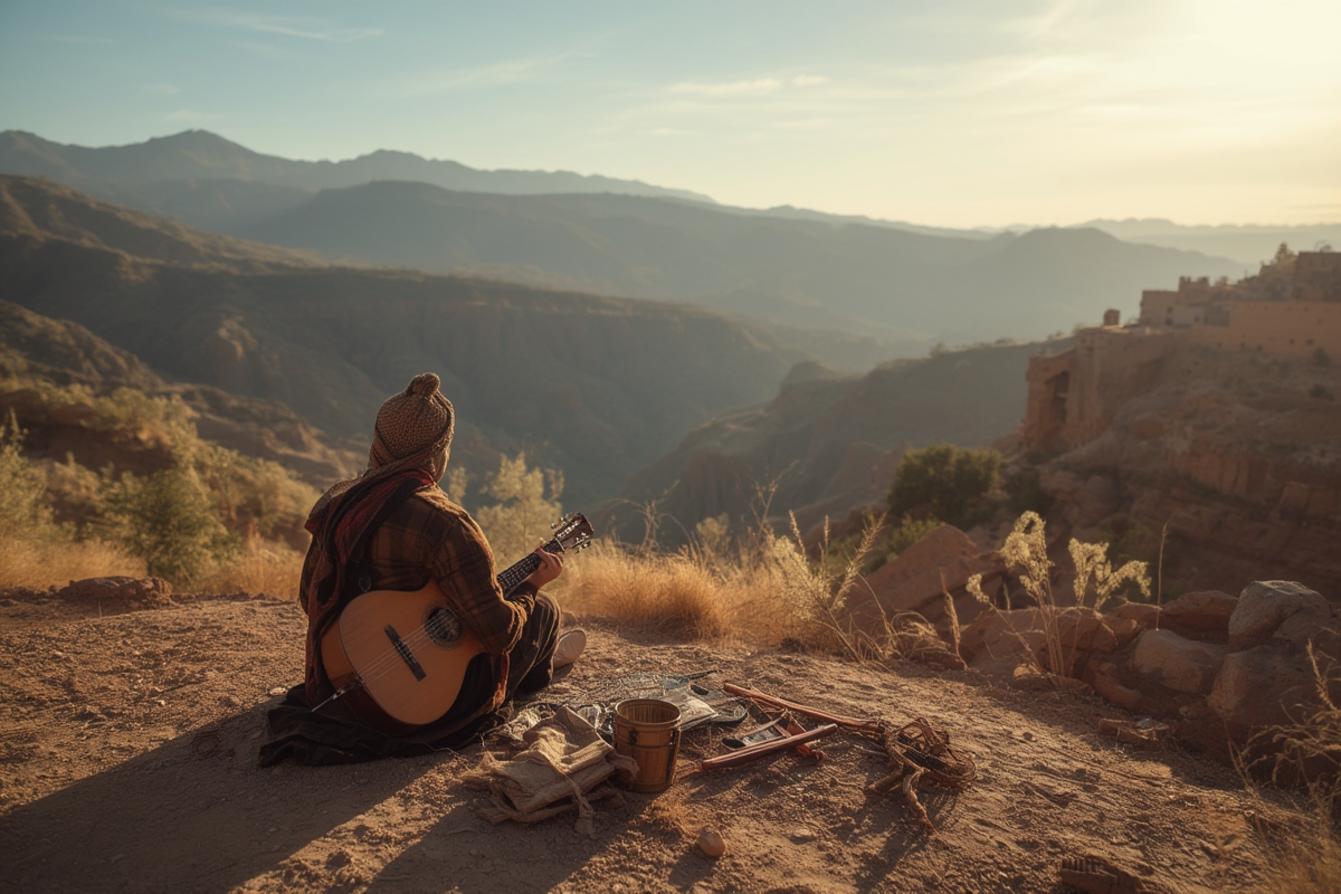
One of the best ways to encounter this music is by joining a guided trek or staying in a guesthouse in a Berber village. Many local guides or guesthouse hosts are proud to share their heritage and can arrange for impromptu musical evenings, especially during peak season or special occasions. Consider areas around Imlil, Aït Benhaddou, or the Ourika Valley, accessible from Marrakech, as starting points. Festivals are also prime opportunities; inquire locally about village moussems (seasonal festivals) where music and dance are central. While these are not always calendared for tourists, a good local guide, often found through services like Berber folk music, can be invaluable in helping you discover these authentic moments. Don’t be afraid to ask, as local hospitality often extends to sharing these cherished aspects of their culture.
Attending a Berber Performance: Etiquette and Appreciation
When you have the privilege of witnessing a performance of traditional music Atlas Mountains, it’s important to approach it with respect and cultural sensitivity. These aren’t staged shows primarily for tourists but genuine expressions of community and tradition. If you’re invited to a local celebration or a small gathering, a few considerations can enhance your experience and show your appreciation:
Firstly, ask permission before taking photos or videos, especially close-ups. Often, people are happy to share, but a respectful inquiry goes a long way. Secondly, try to participate, even if it’s just by clapping along or swaying to the rhythm. Berbers are known for their warm hospitality, and joining in, even modestly, can deepen the connection. Avoid interrupting or speaking loudly during performances. Most importantly, simply be present and listen. Let the music wash over you, allowing yourself to feel the energy and emotion it conveys. Engaging with guides who facilitate these experiences means you’re supporting local communities directly, ensuring these traditions continue to thrive.
Conclusion
The traditional music Atlas Mountains offers an unforgettable journey into the heart of Berber culture. It’s an auditory tapestry woven with history, emotion, and the profound connection between people and their mountain home. From the rhythmic pulses of the bendir to the soaring melodies of the nay, each note carries the weight of generations, inviting travelers to listen, learn, and truly feel the Moroccan spirit. To experience this music firsthand is not just to observe a performance; it’s to participate in a living heritage, a vibrant testament to the enduring soul of the High Atlas. So, as you plan your Moroccan adventure, set aside time to venture into these majestic peaks and let the timeless rhythms of Berber music resonate within you.
FAQs
What are the most common instruments used in traditional Atlas Mountains music?
The most common instruments include percussion like the bendir (frame drum) and tarija (goblet drum), and stringed instruments such as the lotar (lute) and ribab (single-stringed fiddle). The nay (reed flute) is also a prominent melodic instrument.
Is traditional Berber music always accompanied by dance?
While not always, dance is a very integral part of many traditional Berber musical performances, especially during celebrations and festivals. The Ahidous is a famous example of a communal dance performed to live music.
How can travelers best experience authentic traditional music in the Atlas Mountains?
The most authentic experiences are often found by staying in guesthouses in Berber villages, hiring local guides for treks, or inquiring about local festivals (moussems). These informal settings offer genuine cultural immersion rather than staged performances.
What is the significance of the lyrics in traditional Atlas Mountains music?
The lyrics, usually sung in the Tamazight language, are deeply significant. They serve as an oral history, recounting tales of ancient traditions, daily life, love, harvest, social events, and even historical narratives, often acting as a living chronicle of Berber culture.




 Covers cities, coast, mountains, desert & food