
You’re about to embark on a journey through Morocco. This land is full of vibrant cities, majestic mountains, and timeless traditions.
From Marrakech’s bustling streets to the Atlas Mountains’ serene landscapes, Morocco is a treasure trove of experiences. There’s so much to discover.
In this article, we’ll guide you through the top attractions. We want your trip to be unforgettable.
Key Takeaways
- Explore the vibrant cities of Morocco, including Marrakech and Fez.
- Discover the majestic beauty of the Atlas Mountains.
- Experience the rich cultural heritage of Morocco.
- Visit the stunning natural landscapes and beaches.
- Immerse yourself in the local traditions and cuisine.
The Enchanting Diversity of Morocco
Exploring Morocco reveals a mix of Arab, Berber, and European cultures. This blend is seen in its architecture, food, and traditions. It makes Morocco a captivating place for visitors.
A Blend of Arab, Berber, and European Influences
Morocco’s culture is shaped by its history and diverse traditions. You can see this mix in its cities, where old medinas meet modern buildings. By visiting historic sites, local markets, and trying traditional food, you can experience this cultural blend.
Key cultural influences include:
- Arabic architecture and Islamic traditions
- Berber customs and linguistic heritage
- European colonial history and its architectural legacy
From Atlantic Shores to Saharan Sands
Morocco’s geography is as varied as its culture. From the Atlantic coast to the Sahara Desert, you’ll find different landscapes and experiences. You can enjoy beaches, explore medinas, or go on a Sahara Desert adventure.
| Region | Key Attractions |
|---|---|
| Atlantic Coast | Beaches, coastal towns, and vibrant cities |
| Sahara Desert | Camel trekking, overnight camps, and desert landscapes |
| Mountainous Regions | Hiking opportunities, traditional Berber villages, and scenic vistas |
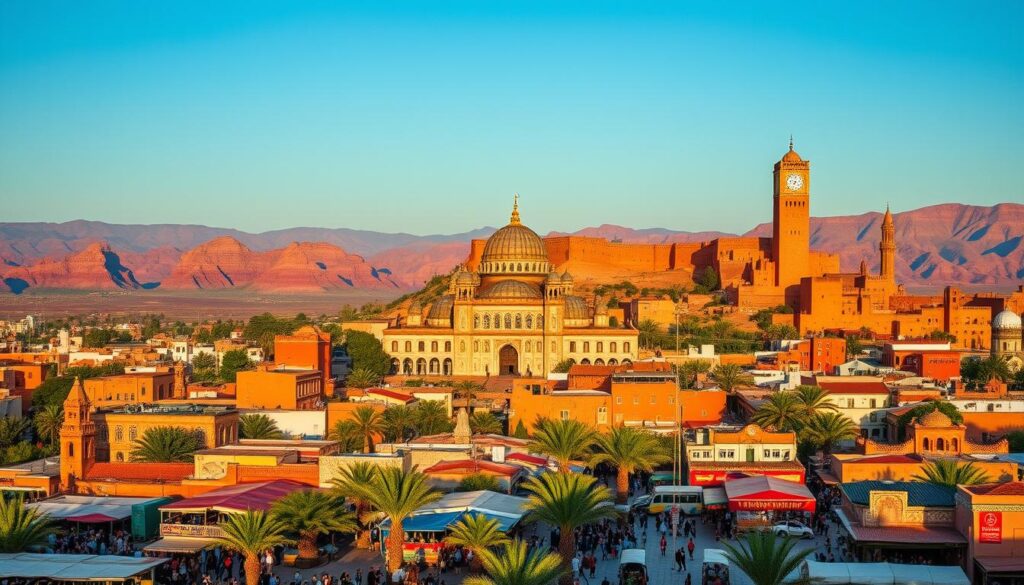
Marrakech: The Red City’s Timeless Allure
When you arrive in Marrakech, you’re hit with a burst of colors, smells, and sounds. It’s a city full of experiences waiting for you to discover.
Jemaa el-Fnaa: The Bustling Heart of Marrakech
Jemaa el-Fnaa is Marrakech’s heart and soul. By day, it’s a market with vendors selling everything from food to crafts. At night, it turns into a lively show with food, snake charmers, and performers. Try local dishes like tagine and harira or just enjoy the vibe.
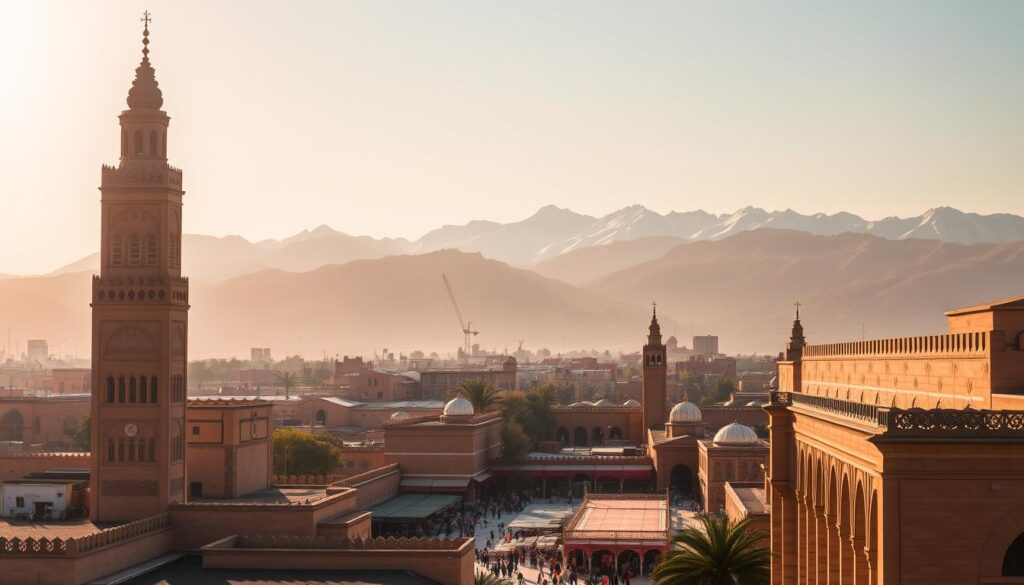
Architectural Wonders: Bahia Palace and Koutoubia Mosque
Marrakech boasts some of Morocco’s most iconic landmarks. The Bahia Palace shows off amazing craftsmanship and gardens. The Koutoubia Mosque, the biggest in Marrakech, reflects the city’s history and spirituality.
Navigating the Labyrinthine Souks
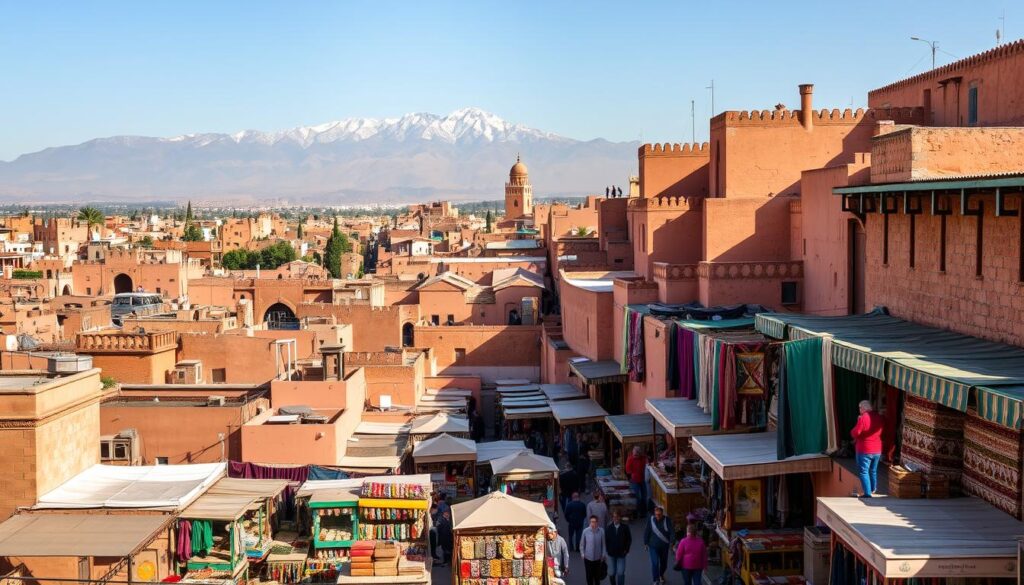
The souks of Marrakech are a shopper’s dream. They offer everything from traditional crafts to modern souvenirs. To shop well, learn the souks’ layout and how to haggle.
Specialty Markets and Artisan Treasures
Marrakech’s souks are divided by product. You can find handmade carpets, metalwork, and pottery. For a real experience, visit early to avoid crowds and heat.
Haggling Tips for the Marrakech Markets
Haggling in Marrakech’s markets is an art. Start with a low offer and be ready to negotiate. Building a good relationship with vendors can get you a better deal. For more tips, see our Ultimate Marrakech Travel Guide.
| Landmark | Description | Must-see Feature |
|---|---|---|
| Jemaa el-Fnaa | Bustling marketplace and entertainment hub | Nighttime spectacle |
| Bahia Palace | Exquisite example of Moroccan architecture | Intricate craftsmanship |
| Koutoubia Mosque | Largest mosque in Marrakech | Historic and spiritual significance |
Marrakech mixes tradition and modernity, making it a top popular sight in Morocco. Explore historic sites, try local food, or shop in the souks for an unforgettable trip.
Fes: Morocco’s Cultural and Spiritual Center
Fes is a city that mixes tradition with mystery. It’s a must-see destination in Morocco. Here, you can experience Morocco’s heart through culture and spirituality.
Fes el Bali: The World’s Largest Car-Free Urban Area
Fes el Bali, the old medina, is a place to explore. It’s the world’s largest car-free area. Here, you’ll find narrow streets filled with traditional Moroccan life.
Getting lost in the medina is easy. You’ll find hidden gems and experience local culture up close.
Al-Qarawiyyin: The Oldest Continuously Operating University
Visit the Al-Qarawiyyin University to see Fes’s history. It’s the oldest continuously operating university in the world. Founded in 859 AD, it’s a key part of Islamic world’s culture and learning.
The Famous Chouara Tanneries
Seeing the Chouara Tanneries is a must in Fes. Here, you’ll see ancient leather-making. It’s a unique experience that you won’t forget.
The Ancient Leather-Making Process
The Chouara Tanneries show how Morocco’s leather goods are made. From preparing hides to dyeing, it’s all done by hand. These methods have stayed the same for centuries.
Best Viewpoints for Photography
For great photos of Fes, check out viewpoints near the Chouara Tanneries. For more tips on visiting Fes, including photography spots, visit travelwithmansoureh.com.
Chefchaouen: The Blue Pearl of the Rif Mountains
Chefchaouen, known as the Blue Pearl, is a peaceful town in the Rif Mountains. It’s famous for its blue buildings, making it a stunning place to visit. Walking through its streets, you’ll find vibrant markets and calm surroundings. For more trip planning info, check out Morocco’s destination guides.
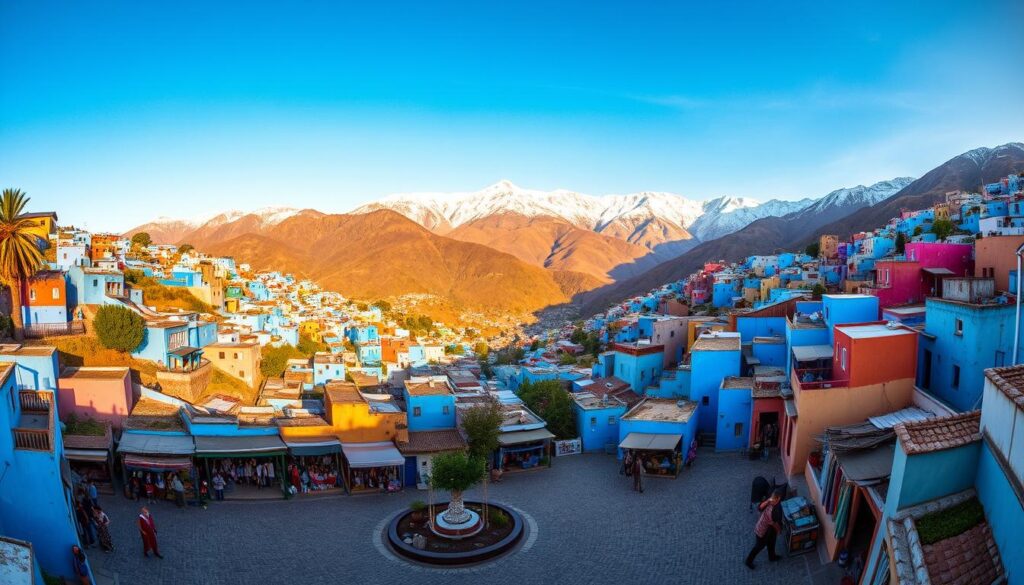
The History Behind the Blue-Washed Buildings
The blue buildings in Chefchaouen started with Jewish refugees. They painted the buildings blue to symbolize the sky and heaven. This tradition has made the town a beautiful sight, showing its cultural heritage.
Hiking Opportunities and Panoramic Vistas
Chefchaouen is great for hikers and those who love adventure. The Rif Mountains have trails for all skill levels, offering amazing views. You can hike to the Spanish Mosque or Jebel Lakraa for a mix of challenge and beauty.
Chefchaouen is perfect for those who want to relax or seek adventure. Its natural beauty, culture, and friendly people make it a top spot in Morocco.
Casablanca: Morocco’s Modern Economic Hub
Casablanca is Morocco’s economic heart, where old and new meet. You’ll find history, culture, and modern comforts here. It’s a city full of life and beauty.
Hassan II Mosque: Architectural Marvel by the Sea
The Hassan II Mosque is a top spot in Casablanca and Morocco. It’s not just a mosque but a symbol of Morocco’s culture. Its beauty, with detailed carvings and tiles, is awe-inspiring. Visitors can take guided tours to understand its importance.
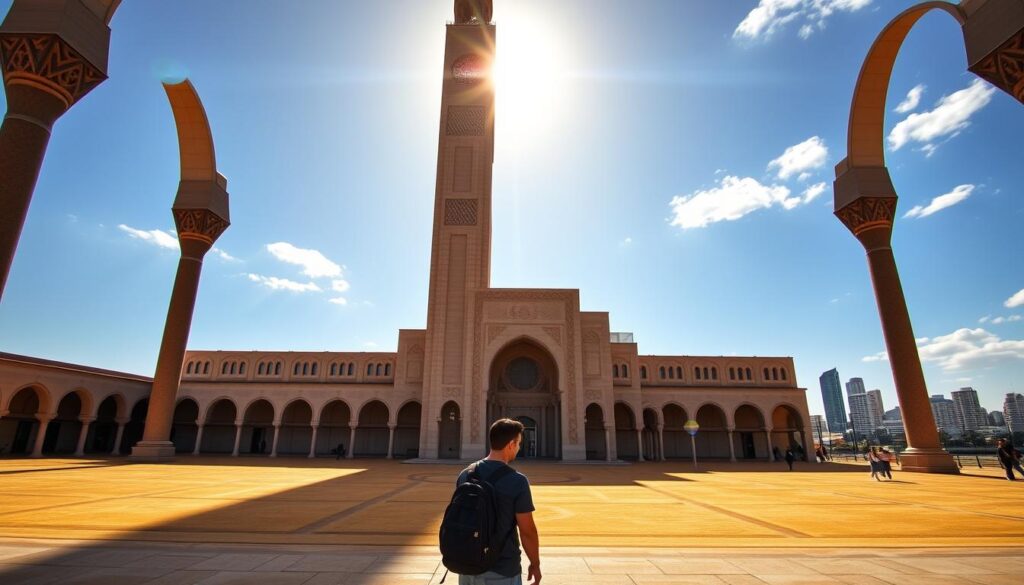
The Corniche and Ain Diab Beach Promenade
The Corniche offers stunning views of the Atlantic Ocean. Ain Diab Beach Promenade is loved by all, with its clean beaches and eateries. It’s perfect for walks, water sports, or just enjoying the sun.
Mohammed V Square and Art Deco District
Mohammed V Square is a historic gem in Casablanca’s heart. It’s surrounded by Art Deco wonders. The square is beautiful, with gardens and fountains. It’s a great place to see the city’s history and culture.
| Attraction | Description | Location |
|---|---|---|
| Hassan II Mosque | Iconic mosque with stunning architecture | Casablanca |
| Corniche | Scenic waterfront area with ocean views | Casablanca |
| Mohammed V Square | Historic landmark with Art Deco buildings | Casablanca |
Casablanca is a city where tradition and modernity come together. It offers a rich experience for all. Whether you love history, culture, or just the vibe, Casablanca has it all.
Rabat: Royal Heritage in the Capital City
Rabat, Morocco’s capital, is full of history and royal heritage. As you explore the city, you’ll see a mix of Arab, Berber, and European cultures. This mix makes Rabat’s culture truly unique.
Kasbah of the Udayas and Andalusian Gardens
The Kasbah of the Udayas is a historic fort with amazing views of the Atlantic Ocean. Inside, the Andalusian Gardens offer a peaceful place. They have beautiful plants and calm water features. This spot is a key attraction in Morocco, showing off the country’s history and beauty.
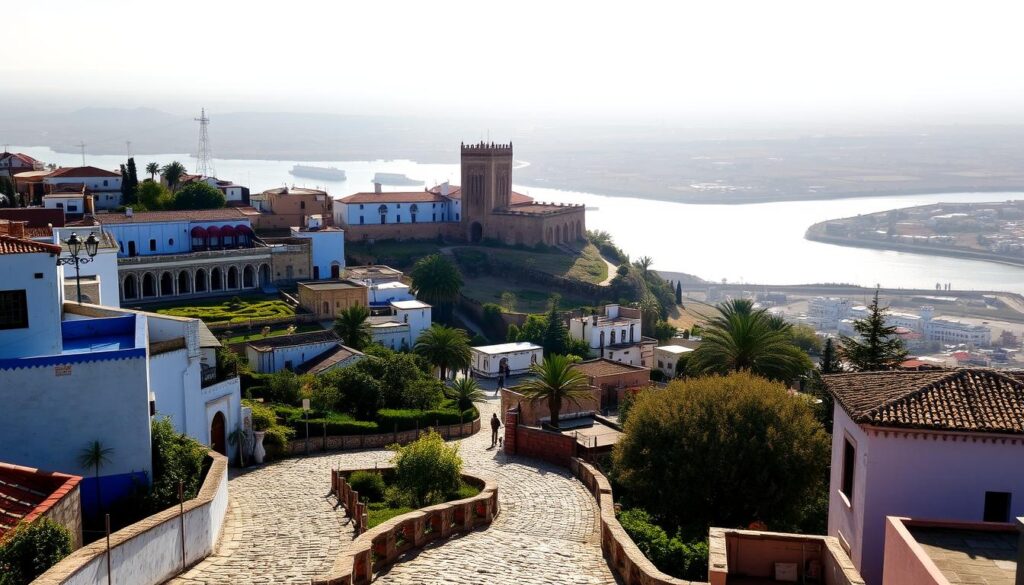
Hassan Tower and Mohammed V Mausoleum
The Hassan Tower and the Mohammed V Mausoleum are Rabat’s top sights. The Hassan Tower is an unfinished minaret that symbolizes the city’s past. The Mohammed V Mausoleum honors Morocco’s former king with its stunning design. For more on Rabat’s sights, check out Journal of Nomads.
Must-See Things to See in Morocco’s Sahara Desert
When you enter Morocco’s Sahara Desert, you’re surrounded by endless beauty. This desert is a mix of stunning nature and rich culture. It’s a sight to behold.
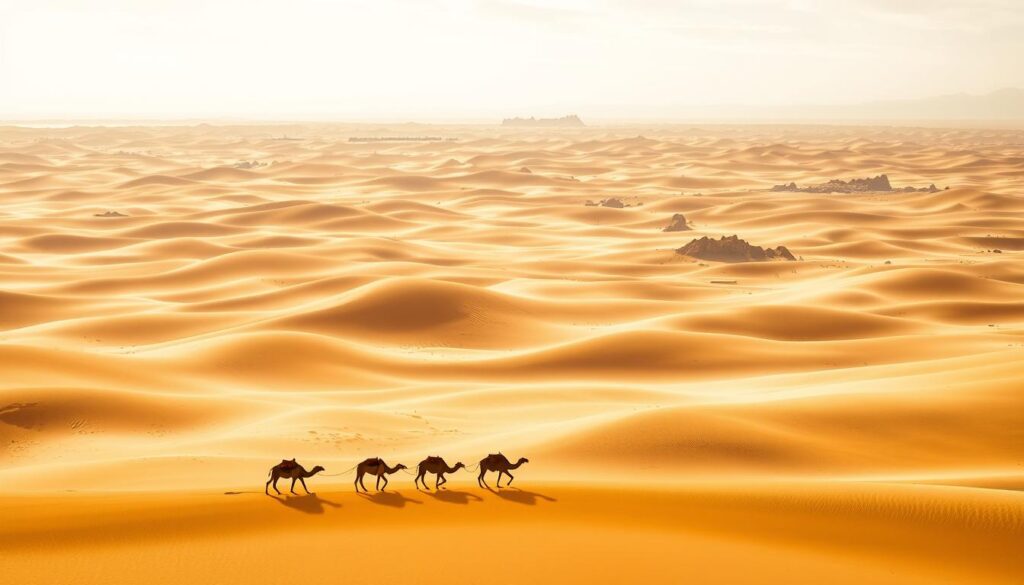
Camel Trekking and Overnight Camps Under the Stars
Camel trekking in the Sahara is unforgettable. As night falls, you’ll reach a camp to rest under the stars. The desert’s calm and the campfire’s warmth create a magical night.
The Towering Dunes of Erg Chebbi and Erg Chigaga
The Sahara boasts incredible dunes like Erg Chebbi and Erg Chigaga. Erg Chebbi near Merzouga is famous for its stunning sunrises and sunsets. Erg Chigaga, near M’Hamid, offers a secluded yet breathtaking view. Riding these dunes feels like sailing on golden sand.
Authentic Encounters with Berber Desert Communities
Visiting Berber communities in the Sahara is a unique experience. You can enjoy traditional music and folklore around the campfire. You’ll learn about the rich heritage of these desert people. Plus, desert astronomy or stargazing here is unmatched due to the clear skies.
Traditional Music and Folklore Around the Campfire
By the campfire, you’ll hear the lively sounds of Berber music. This cultural experience is a highlight of any Sahara trip. It gives you a peek into the traditions and stories of the locals.
Desert Astronomy: Stargazing in the Sahara
The Sahara’s clear skies are perfect for stargazing. With little light pollution, the night sky is breathtaking. Many camps offer telescopes for a closer look at the stars.
Morocco’s Sahara Desert is a must-see for adventure, beauty, and culture. Whether trekking on camels, exploring Berber communities, or stargazing, the Sahara offers unforgettable moments.
Atlas Mountains: Majestic Peaks and Hidden Valleys
The Atlas Mountains offer a peaceful escape from the city. Here, you can find adventure and natural beauty. You can climb North Africa’s highest peak, visit friendly Berber villages, and see amazing waterfalls.
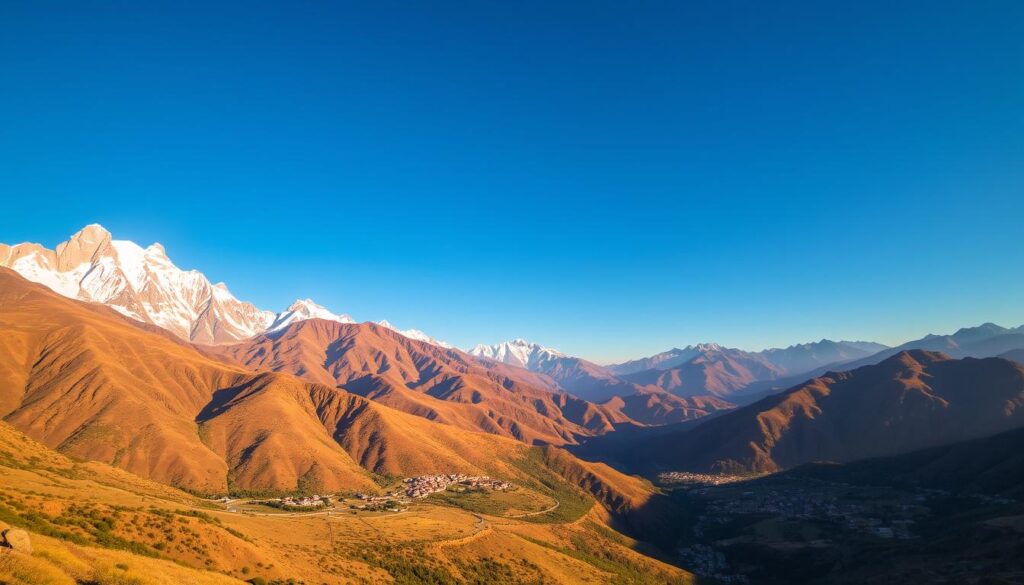
Conquering Mount Toubkal: North Africa’s Highest Summit
Mount Toubkal is a challenge and a reward for the brave. It’s North Africa’s highest peak, offering stunning views. Hike to the summit with a guide and enjoy the local culture and scenery.
Traditional Berber Villages and Mountain Hospitality
The Atlas Mountains are home to traditional Berber villages. Here, you can experience the locals’ famous hospitality. Visit places like Imlil and enjoy their warm welcomes, food, and culture.
Spectacular Ouzoud Waterfalls
The Ouzoud Waterfalls are a hidden gem in the Atlas Mountains. This natural wonder draws visitors worldwide. You can hike behind the falls, take a boat ride, or just admire the views.
Wildlife Spotting: Barbary Macaques
Look out for the Barbary macaques, a unique monkey species in the Atlas Mountains. They can be seen in their natural habitat, offering a special wildlife experience.
Seasonal Variations and Photography Tips
The Atlas Mountains change with the seasons. Spring brings wildflowers, while autumn offers harvest scenes. For photographers, the golden hour is best, and a telephoto lens is great for wildlife shots.
| Best Time to Visit | Activities | Highlights |
|---|---|---|
| Spring (March to May) | Hiking, wildlife spotting | Blooming wildflowers, mild weather |
| Autumn (September to November) | Photography, cultural visits | Harvest landscapes, comfortable temperatures |
| Winter (December to February) | Skiing, snowboarding | Snow-capped peaks, serene landscapes |
For more information on exploring the Atlas Mountains, visit Encounter Travel’s blog for detailed insights and travel tips.
Essaouira: Atlantic Coastal Charm
Essaouira is a treasure on Morocco’s Atlantic coast. It’s a place where nature meets culture. This town has beautiful beaches, a calm vibe, and a rich history. It’s perfect for those who love to relax and explore.
The UNESCO-Listed Medina and Skala Fortress
The UNESCO-listed Medina is the heart of Essaouira. It’s a historic walled city with lovely streets, shops, and galleries. The Skala Fortress, built in the 18th century, offers amazing views of the Atlantic Ocean.
Visitors can walk the ramparts, see historic cannons, and enjoy the views. It’s a must-see attraction in Essaouira.
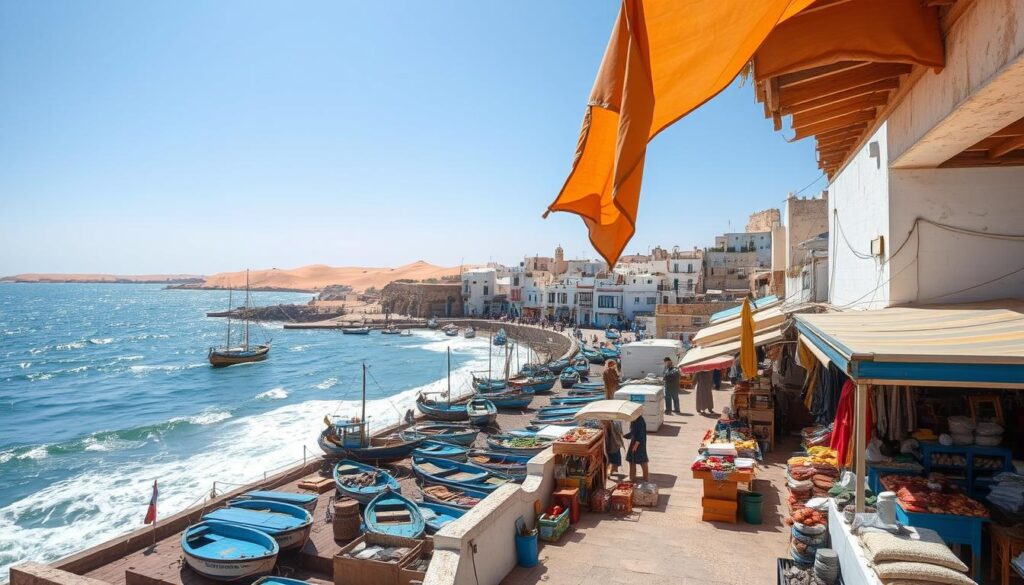
A travel enthusiast said, “The Skala Fortress is more than a historical site; it’s an experience that connects you with Essaouira’s soul.” The medina and fortress together offer a unique cultural and historical experience.
Water Sports Paradise and Artistic Heritage
Essaouira is famous for its water sports, like windsurfing and kitesurfing. Its beaches are ideal for both newbies and pros. The town is also a creative hub, with many galleries and art festivals.
Visitors can dive into the local art scene, check out the galleries, and feel the town’s lively vibe. An artist said, “Essaouira’s unique light and vibrant culture make it a paradise for artists.”
Ancient Wonders: Volubilis and Meknes
Among Morocco’s many iconic landmarks, Volubilis and Meknes are standout historical sites. They showcase the country’s rich cultural heritage and architectural beauty.
Roman Ruins of Volubilis: Morocco’s Archaeological Gem
Volubilis is a top attraction in Morocco, with well-preserved Roman ruins from the 1st century AD. Walking through, you’ll see the Capitol, Basilica, and triumphal arch. It’s a UNESCO World Heritage site, known for its history and architecture.
For more on visiting Volubilis, check out this detailed travel account.
Imperial City of Meknes and the Magnificent Bab Mansour
Meknes was Morocco’s capital under Sultan Moulay Ismail. The Imperial City boasts many architectural wonders, including Bab Mansour. This grand gate is famous for its tile work and size, showing the city’s past splendor.
Visitors can explore souks, historic sites, and experience local culture.
Some top attractions in Volubilis and Meknes include:
- The Roman ruins and archaeological sites
- The historic city gates, such as Bab Mansour
- The vibrant souks and local markets
- The opportunity to experience the local Berber culture
Exploring these ancient cities offers a unique look into Morocco’s imperial past and cultural diversity.
Authentic Moroccan Culinary Experiences
Exploring Morocco opens up a world of real culinary adventures. The food here mixes old traditions with new twists. It shows the country’s rich mix of cultures, from Arab and Berber to European.
From Tagines to Tangia: Regional Specialties
Moroccan food is known for its many special dishes. Tagines are slow-cooked stews cooked in clay pots. They mix meat, veggies, and dried fruits. Tangia is a Marrakech dish with meat, spices, and sometimes lemons, all slow-cooked in clay.
The Art of Moroccan Tea and Coffee Culture
Moroccan tea is a big part of their welcome to guests. Mint tea, or “Atay,” is a favorite, made with green tea, fresh mint, and sugar. Coffee is also big, with ahwa (coffee) made from finely ground beans.
Hands-On Cooking Classes and Food Tours
For a real taste of Moroccan food, try a cooking class or food tour. You’ll learn about local ingredients, cooking methods, and the stories behind the dishes.
Spice Markets and Their Culinary Treasures
Morocco’s spice markets are full of amazing smells and tastes. Spice blends like ras el hanout are key to Moroccan cooking. They mix cinnamon, cumin, coriander, and turmeric, among others.
Street Food Safety and Must-Try Dishes
When eating street food, stay safe and enjoy it. Choose vendors with lots of customers and pick dishes that are hot and fresh. Try grilled meats, fresh juices, and traditional pastries.
| Dish | Description | Region |
|---|---|---|
| Tagine | Slow-cooked stew | Various |
| Tangia | Slow-cooked meat dish | Marrakech |
| Merguez | Spicy sausage | North Africa |
Practical Travel Tips for Your Moroccan Adventure
Getting ready for Morocco means knowing the travel basics. Morocco is full of culture, beauty, and lively cities. But, some planning is needed to enjoy it fully.
Navigating Seasons and Climate Variations
The weather in Morocco changes a lot. Spring (March to May) and autumn (September to November) are the best times. Summer is very hot, especially in the desert. Winters can be cool in the mountains. Knowing this helps you pack right and plan your trip.
Transportation Options: From Trains to Grand Taxis
Morocco has a good transport system. Trains are great for big city trips like Marrakech, Fez, and Rabat. For shorter trips or rural areas, grand taxis are cheap and common. Renting a car gives you freedom, especially for countryside or mountain trips. For a real experience, try local transport like grand taxis or buses.
Cultural Etiquette and Respectful Tourism
Morocco values its culture and religion a lot. It’s important to respect local customs. Dress modestly, especially in mosques or rural places. Wear clothes that cover your shoulders and knees. Also, be careful with your actions in public, avoiding too much affection.
Dress Code Recommendations
Wear loose, covering clothes for both men and women. In conservative spots, women might want a scarf for their hair.
Photography Etiquette and Local Customs
Always ask before taking pictures of people, especially in quiet or conservative places. Some might not like being photographed. Also, watch out for places you shouldn’t take pictures, like government buildings or military areas.
Being informed and respectful makes your Moroccan trip better. Knowing the culture, climate, and transport options lets you enjoy the best places to visit in Morocco and see the must-see destinations Morocco offers.
Conclusion: The Timeless Magic of Morocco
Morocco has a special charm that stays with you long after you leave. As you wander through the things to see in Morocco, you’ll find a world full of life. You’ll see vibrant cities, majestic mountains, and landmarks that stand out.
From Marrakech’s busy souks to Chefchaouen’s calm, Morocco’s beauty is vast. You’ll find historic sites in Fes and the stunning Sahara Desert. The Bahia Palace and Koutoubia Mosque show Morocco’s rich history and architecture.
Planning your trip to Morocco? Remember, its warm welcome and unique experiences are unforgettable. You’ll love exploring the Atlas Mountains, relaxing in Essaouira, or diving into Casablanca’s culture. Morocco offers an adventure you’ll always remember.



 Covers cities, coast, mountains, desert & food