
Traveling from Spain to Morocco by ferry is a great way to see the sights. The ferry service links many ports in Spain to those in Morocco. This makes it easy to find a route that fits your travel plans.
You can pick from several departure ports in Spain. And you can arrive at different ports in Morocco. This makes planning your trip easier, based on what you prefer and your schedule.
Knowing the ferry routes, prices, and departure ports is key for a smooth trip. This article will help you understand how to travel by ferry from Spain to Morocco.
Key Takeaways
- Multiple ferry routes connect Spain and Morocco.
- Prices vary depending on the route and class of service.
- Several ports in Spain and Morocco offer ferry services.
- Schedules and fares are available through ferry operators.
- Booking in advance is recommended for the best rates.
The Spain to Morocco Ferry Experience
The ferry ride from Spain to Morocco is a mix of comfort and adventure. You’ll see beautiful views as you cross the Strait of Gibraltar. It’s a relaxing and scenic journey.
Why Choose Ferry Travel Over Flying
Traveling by ferry has many benefits over flying. You skip the airport security and baggage claims. Plus, you can bring your vehicle, giving you more freedom in Morocco.
Also, you get to see the coastline and have more room to move. This is different from flying where you’re cramped.
For more info on ferry routes, check out Ferry Hopper’s guide on Spain to Morocco.
What to Expect on Your Journey
On your ferry trip, you’ll find many amenities. Ferries have comfy seats, places to eat, and shops. Some even have cabins for those who want to sleep.
| Ferry Operator | Onboard Amenities | Journey Duration |
|---|---|---|
| FRS Ferries | Food & Beverage, Shopping | Approximately 1 hour |
| Baleària | Cabins, Restaurant, Bar | Approximately 1-2 hours |
| Trasmediterránea | Cafeteria, Shop, Comfortable Seating | Approximately 2 hours |
Choosing the ferry means a more relaxed and fun trip. With many operators, you can pick the best one for you.
Major Ferry Routes Between Spain and Morocco
Traveling from Spain to Morocco by ferry is a great way to see both countries’ rich cultures. The ferry service links Spain’s ports with Morocco’s key spots. This gives travelers many choices for their trip.
Algeciras to Tangier Med
The Algeciras to Tangier Med route is very popular. It’s run by FRS Ferries and Trasmediterránea, with many sailings a day. The trip takes about 1 hour, making it fast and easy.
This route is great because of its many sailings and short time. You’ll enjoy a comfy ride with food and seating.
Tarifa to Tangier Ville
The Tarifa to Tangier Ville route is for those who want a relaxing trip. It offers beautiful views of the Strait of Gibraltar. FRS Ferries and Inter Shipping run this route, taking about 35-40 minutes.
Taking the ferry from Tarifa lets you see lovely coastal views. You can relax on deck or in the ship’s facilities.
Other Available Routes
There are more ferry routes between Spain and Morocco. You can also go from Algeciras to Ceuta or from Almería to Melilla or Nador. These options let travelers choose based on their plans and likes.
When picking your ferry, think about the trip time, how often it sails, and what’s on board. Visit Baleària and Trasmediterránea’s websites to book and plan your trip.
Ferry Companies Operating the Spain-Morocco Routes
Traveling from Spain to Morocco offers several ferry options. Companies like FRS Ferries, Baleària, Trasmediterránea, and Inter Shipping provide different services. Each has its own routes and features.
FRS Ferries
FRS Ferries is famous for its fast ferry rides. They connect Algeciras to Tangier Med. You’ll find many amenities onboard. For schedules and tickets, check Direct Ferries.
Baleària
Baleària offers a variety of ferry services, including fast ones. They carry both people and vehicles. Baleària is known for comfort and reliability.
Trasmediterránea
Trasmediterránea has a lot of experience on Spain-Morocco routes. They transport passengers and vehicles. They have several routes to meet different needs.
Inter Shipping
Inter Shipping focuses on safe and efficient travel. They might not run as often as others. But they’re a reliable choice for travelers.
| Ferry Company | Route(s) | Services |
|---|---|---|
| FRS Ferries | Algeciras to Tangier Med | High-speed ferry, onboard amenities |
| Baleària | Multiple routes | High-speed ferry, passenger and vehicle transport |
| Trasmediterránea | Multiple routes | Passenger and vehicle transport, various onboard services |
| Inter Shipping | Spain to Morocco | Efficient and safe ferry services |
Departure Ports in Spain
Spain’s coastal towns are not just tourist spots. They are also key ferry departure points for Morocco. Knowing these ports helps you plan your trip better.
Algeciras Port Guide
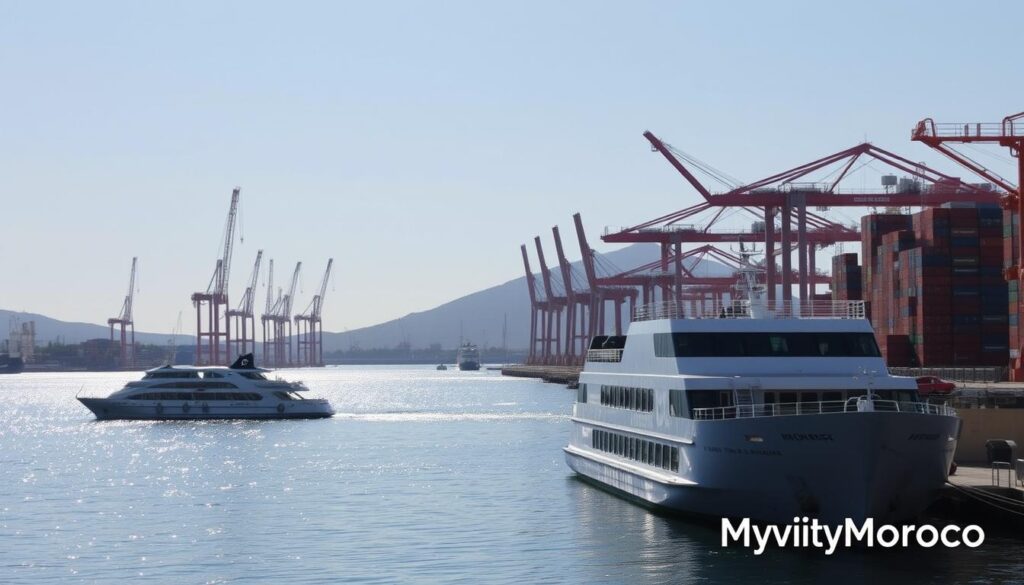
Algeciras is a major ferry port for Spain to Morocco. It’s near the Strait of Gibraltar, making it easy to get to Tangier Med. The port has ticketing services, cafes, and duty-free shopping.
Traveling from Algeciras to Tangier Med takes about 1 hour. Arrive early at the port to avoid stress. Check the spain morocco ferry schedule in advance.
Tarifa Port Guide
Tarifa is a favorite for its beautiful views and close distance to Tangier Ville. The ferry ride is special, with chances to see dolphins. Tarifa’s port has parking, restaurants, and information desks.
- Check-in and boarding are easy.
- There’s duty-free shopping before your trip.
- Many dining options are available.
Barcelona and Other Spanish Departure Points
Algeciras and Tarifa are the top choices, but Barcelona and Almería also offer ferry services to Morocco. These routes might be less common but provide different travel options. For example, Barcelona is a big port with links to Morocco, offering a longer journey or a different start for your trip.
When booking your ferry ticket, whether online or at the terminal, make sure to understand the how to book spain to morocco ferry process. This ensures a smooth trip.
Arrival Ports in Morocco
Morocco’s ports are your first taste of the country’s lively culture. When you travel from Spain to Morocco by ferry, you’ll land at one of several key ports. Each port has its own special features and services.
Tangier Med Port Guide
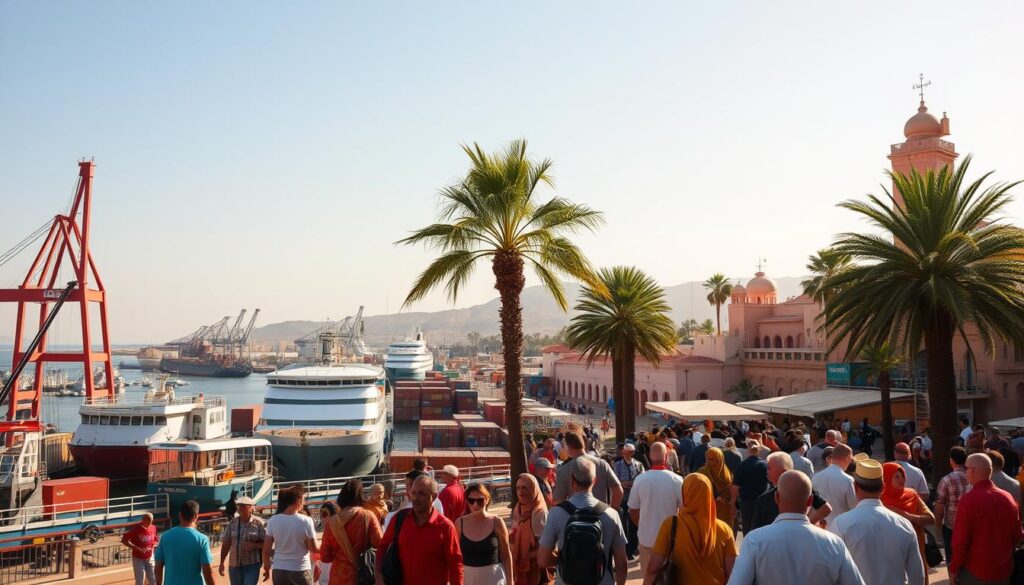
Tangier Med is Morocco’s busiest port, a key stop for ferries from Spain. It boasts modern facilities and handles passengers and cargo well. Arriving at Tangier Med, near the Strait of Gibraltar, is common.
The port has shops, restaurants, and places to exchange money. It’s a great place to start your Moroccan adventure.
Tangier Ville Port Guide
Tangier Ville is closer to the city center, offering a traditional Moroccan welcome. It’s smaller than Tangier Med but still has the basics for travelers, like customs and immigration.
Getting into the city is easy from Tangier Ville. Taxis and public transport are ready to take you where you need to go.
Nador and Ceuta Ports
Nador is a key port in Morocco, with ferry routes from Spain. It’s a bit away from the main tourist spots but is a big entry point for northern Morocco.
Ceuta, a Spanish enclave, is also a ferry stop. It’s a special place that mixes Spanish and Moroccan cultures.
Understanding Spain to Morocco Ferry Prices
To get the most out of your trip from Spain to Morocco, knowing what affects ferry prices is key. Prices change based on several things like the time of year, ticket type, and if you’re bringing a vehicle.
Passenger Ticket Costs
When it comes to passenger tickets, cost is a big deal. Prices can vary a lot depending on the ferry company, ticket class, and how early you book. You might pay between €30 to €100 for a one-way ticket. For example, booking a ferry from Spain early can get you a better deal.
Vehicle Transport Fees
Traveling with a vehicle adds extra costs. Fees for cars, motorcycles, or caravans depend on the vehicle size and ferry route. On average, a car can cost €100 to €300 per trip.
| Vehicle Type | Average Cost (€) |
|---|---|
| Motorcycle | 50-100 |
| Car | 100-300 |
| Caravan | 150-400 |
Seasonal Price Variations
Ferry prices between Spain and Morocco change with the seasons. Prices go up in peak season, like summer and holidays, because more people travel. But, off-season travel can be cheaper. Some ferry companies offer discounts during slow times.
Finding Discounts and Special Offers
Here are some tips to save on ferry tickets:
- Book early to get the best prices.
- Watch for seasonal sales and last-minute deals.
- Travel during off-peak times.
- Check ferry operator websites like FRS Ferries, Baleària, and Trasmediterránea for special offers.
Travel experts say being flexible and planning ahead can really cut costs on your ferry trip from Spain to Morocco.
“The key to affordable ferry travel is being flexible and taking advantage of the various discounts available.” – Travel Expert
Ferry Schedules and Crossing Times
Knowing the Spain to Morocco ferry schedules is key for a smooth trip. The timing and length of these crossings affect your travel plans.
High Season vs. Low Season Schedules
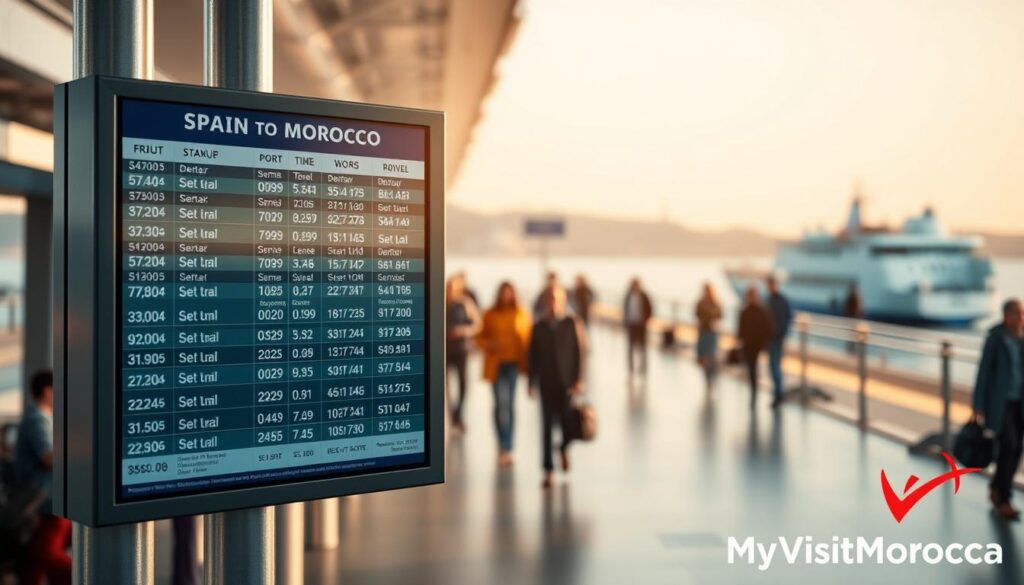
Ferry times change with the seasons. In summer and holidays, ferries run more often. This is because more people travel then. But, in the off-season, ferries might not go as often.
High Season: More frequent departures, often every few hours.
Low Season: Less frequent departures, sometimes limited to once or twice a day.
Average Journey Duration by Route
The ferry ride from Spain to Morocco varies by route. For example, the Algeciras to Tangier Med trip is shorter than longer routes.
- Algeciras to Tangier Med: Approximately 1 hour.
- Tarifa to Tangier Ville: About 35-40 minutes.
- Other routes may take longer, depending on the distance and type of ferry service.
Knowing these times helps you plan better. It ensures you arrive on schedule.
How to Book Your Spain to Morocco Ferry Ticket
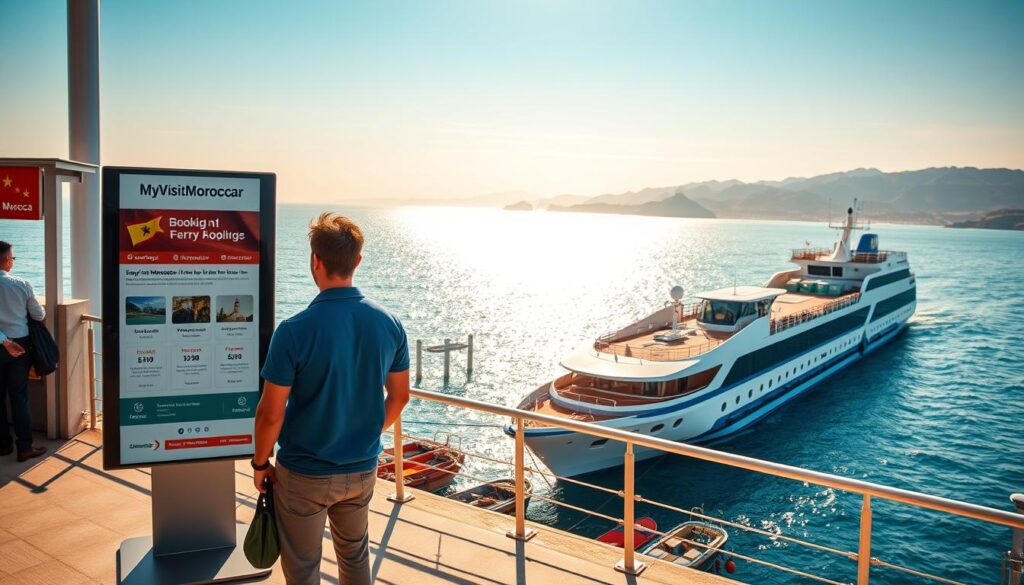
Booking your Spain to Morocco ferry ticket is easy. You can do it online, at the terminal, or through a travel agency. Companies like FRS Ferries, Baleària, and Trasmediterránea offer many options.
Online Booking Platforms
Booking online is quick and easy. Most ferry companies have websites for checking schedules and prices. Online travel agencies also compare prices for you.
When booking online, have your travel details ready. This includes your dates, passenger info, and vehicle details if you’re bringing one.
Booking at the Terminal
For a personal touch, book at the terminal. The staff can help with your booking and answer questions. However, it might take longer, especially in busy seasons.
Using Travel Agencies and Tour Operators
Booking through a travel agency can be helpful. They can plan your trip and include extras like hotels or tours. They might also offer special deals.
Choose your booking method wisely. Book early, especially in busy seasons, to get the best times and avoid last-minute problems.
Traveling with Vehicles on the Ferry
Thinking of bringing your car on the ferry from Spain to Morocco? Here’s what you need to know. It’s a convenient way to travel with your vehicle.

Required Documentation for Vehicles
To bring your vehicle on the ferry, you’ll need the right documents. You’ll need your vehicle’s registration and insurance. Make sure your registration is current and your insurance covers you in Morocco.
For the latest on what you need, check with your ferry operator. You can also visit their website, like FRS Ferries.
Vehicle Size and Type Restrictions
Ferry operators have rules for vehicle size and type. They limit height, length, and weight. Some ferries won’t take certain vehicles, like those with hazardous materials.
It’s crucial to check with your ferry operator before you go. This way, you’ll know if your vehicle can be transported.
Vehicle Boarding and Disembarkation Process
Boarding and getting off with your vehicle is easy. At the port, go to the check-in area and show your documents. After that, you’ll be shown where to board the ferry.
When you get to Morocco, follow the crew’s instructions to disembark. Arrive at the port early to avoid any stress.
Knowing the rules and steps for traveling with your vehicle on the ferry from Spain to Morocco makes your trip better.
Onboard Amenities and Services
Traveling by ferry from Spain to Morocco offers a variety of amenities and services. Whether you seek comfort, convenience, or entertainment, these ferries cater to your needs. They aim to make your journey enjoyable.
Seating Options and Cabin Classes
There are many seating options to suit your comfort and budget. From reclining seats to private cabins, there’s something for everyone. Some ferries provide:
- Reclining Seats: Comfortable seating for those who want to relax during their journey.
- Private Cabins: For a more luxurious experience, complete with additional amenities.
- Open Deck Areas: Perfect for those who enjoy the fresh sea air.
Dining and Shopping Facilities
Ferries on the Spain to Morocco route offer a variety of dining and shopping options. You can enjoy:
- Restaurants and Cafes: Offering a range of cuisine from local dishes to international options.
- Duty-Free Shopping: Take advantage of duty-free shopping for perfumes, tobacco, and more.
- Vending Machines: For quick snacks and essentials.
Entertainment and Additional Services
Many ferries provide entertainment options and additional services to enhance your journey. These include:
- Live Entertainment: Some ferries feature live music or other performances.
- Kids’ Play Areas: Keeping younger travelers entertained.
- Wi-Fi and Charging Points: Stay connected throughout your journey.
Navigating Customs and Immigration
Getting ready for your trip from Spain to Morocco by ferry? Knowing the customs and immigration rules is key. This info will make your entry into Morocco easy, so you can enjoy your trip more.
Passport and Visa Requirements
First, check your passport’s validity and if you need a visa for Morocco. Your passport should be good for at least six months after your stay. Some countries, like the EU and US, don’t need a visa for tourism up to 90 days. Always check the latest visa rules for your country before you go.
Customs Regulations and Prohibited Items
Morocco has rules on what you can bring in. Things like narcotics, firearms, and pork are banned. There are also limits on how much money you can bring in. For the latest on what’s not allowed, visit the Moroccan customs website or talk to your travel agent.
Immigration Process at Moroccan Ports
When you arrive in Morocco, you’ll go through immigration. You’ll need to show your passport, might fill out a form, and answer questions about your trip. It’s usually easy, but have all your documents ready. Some ports use electronic systems, so follow the signs.
Knowing these steps will help you enter Morocco smoothly. This way, you can start enjoying your trip without any hassle.
Practical Tips for Your Ferry Journey
Getting ready for your ferry trip from Spain to Morocco? Here are some tips to make your journey smooth and fun. Whether you’re off on a holiday or a business trip, being ready can really help.
Best Times to Travel and Avoiding Crowds
To dodge the crowds, think about traveling in the off-season or early mornings. The summer and holidays are the busiest times for this route. Traveling when it’s less busy means a calmer trip and maybe cheaper tickets.
Managing Seasickness and Weather Conditions
Got seasickness? There are ways to lessen its effects. Choose a cabin in the middle or higher up to feel less motion. Stay hydrated, eat light meals, and think about taking meds. Also, check the weather forecast to get ready for any weather.
Language Considerations
Many Moroccans speak some Spanish or French, but Arabic is the official language. Knowing basic Arabic phrases can really help your trip. Ferry staff often speak English too, but having a translation tool is always a good idea.
Cultural Etiquette When Arriving in Morocco
Morocco is full of culture and diversity. When you arrive, be mindful of local customs, especially at religious sites. Dress modestly and be ready to remove your shoes when asked. Understanding and respecting these customs will make your trip better.
| Tip | Description | Benefit |
|---|---|---|
| Travel Off-Season | Avoid peak travel times | Less crowded, potentially lower prices |
| Manage Seasickness | Choose appropriate cabin, stay hydrated | More comfortable journey |
| Learn Basic Arabic Phrases | Show respect for local culture | Enhanced experience, positive interactions |
| Respect Local Customs | Dress modestly, follow local norms | Cultural sensitivity, enriching experience |
By following these tips, you can make your ferry journey from Spain to Morocco better. Whether it’s your first time or you’ve done it before, being prepared is key to a great trip.
Conclusion
Now that you’ve learned about traveling by ferry from Spain to Morocco, you’re ready to plan your trip. The ferry service is a convenient and quick way to get between the two countries. You have many routes and ferry companies to pick from.
When you travel by ferry, you’ll find many amenities onboard. There are places to eat, shop, and even entertainment. The trip’s length depends on the route, but there are many departures to choose from.
Knowing about ferry travel, like prices, schedules, and what documents you need, helps you plan better. Whether you’re traveling for fun or work, the ferry is a great way to see Morocco’s culture.





 Covers cities, coast, mountains, desert & food