
Traveling from Spain to Africa is now more popular than ever. It combines different cultures and landscapes in a unique way. You can visit Morocco’s lively cities and enjoy the area’s rich history and warm hospitality.
When planning your trip, you’ll find many travel routes to choose from. Whether you prefer ferry rides or flights, there’s something for everyone. This journey not only offers tourism opportunities but also lets you discover new places.
Key Takeaways
- Multiple travel options are available from Spain to Africa.
- The journey offers a blend of cultural experiences and landscapes.
- Morocco is a popular destination, known for its vibrant cities and rich history.
- Travelers can choose from various routes, including ferries and flights.
- The region provides numerous tourism opportunities.
The Geographic Bridge Between Continents
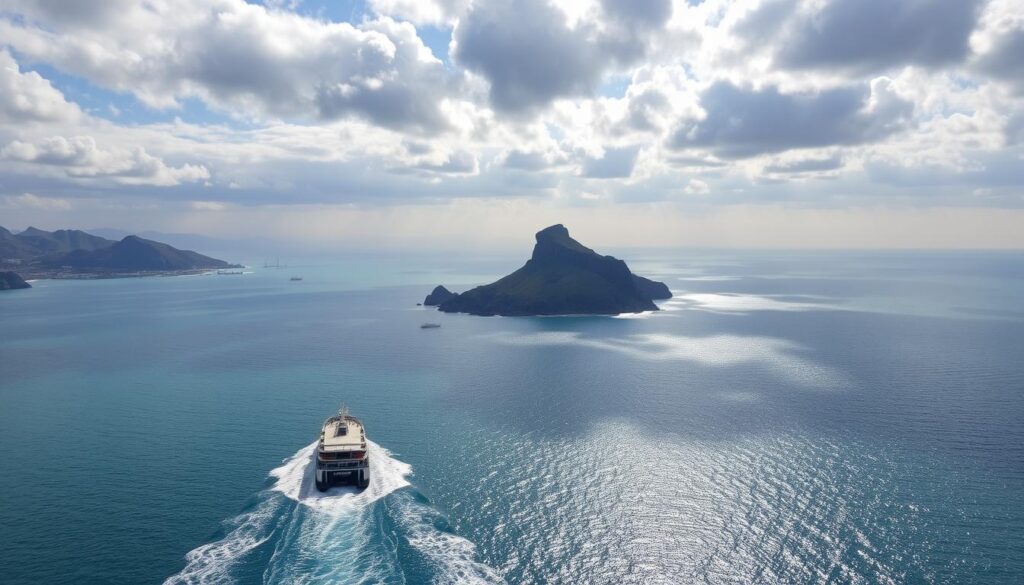
When you travel from Spain to Morocco, the Strait of Gibraltar is key. It connects the Mediterranean Sea to the Atlantic Ocean. This waterway separates Europe from Africa.
The Strait of Gibraltar: Europe’s Gateway to Africa
The Strait of Gibraltar is more than a geographical landmark. It’s a doorway for those traveling between Europe and Africa. It has been important in history, helping with cultural exchange and trade.
Understanding the Proximity: Just 14 Kilometers Apart
The distance between Spain’s southern tip and Morocco’s northern coast is about 14 kilometers. This makes the Strait of Gibraltar one of the closest spots between Europe and Africa. It offers a unique path for travelers.
The close relationship between Spain and Morocco has led to a rich cultural exchange. Both regions have influenced each other throughout history and today. This nearness makes traveling between them not only possible but also thrilling.
Historical Connections: Spain and Morocco Through the Ages
Spain and Morocco have a long history together. This bond has been shaped by conquests, cultural exchanges, and their close location.
The Moorish Influence on Spain (711-1492)
The Moors ruled Spain for nearly 800 years. This period greatly influenced Spain’s architecture, cuisine, and culture. Places like the Alhambra in Granada and the Mezquita in Córdoba show this influence. It also left marks on Spanish art, literature, and language.
Spanish Presence in Northern Morocco
Spain also had a big impact in Northern Morocco, especially during the colonial era. They set up territories in Africa, like Ceuta and Melilla, which Spain still controls today. This legacy is seen in the culture and buildings of these areas.
Modern Relations Between the Nations
Today, Spain and Morocco have a complex relationship. They work together on trade, security, and managing migration. But they also face challenges like territorial disputes and fishing rights. Despite these, their historical and cultural ties remain strong.
| Period | Event | Impact |
|---|---|---|
| 711-1492 | Moorish occupation of Spain | Cultural, architectural, and linguistic influence |
| Colonial Era | Spanish presence in Northern Morocco | Establishment of Spanish territories in Africa |
| Modern Era | Complex bilateral relations | Cooperation and tensions over various issues |
Overview of Spain to Africa Travel Options
Looking for a relaxing ferry ride or a fast flight? Spain to Africa travel options have something for everyone. You can pick from various routes that promise unique experiences, making your trip unforgettable.
Ferry Crossings: The Classic Route
Ferry rides from Spain to Africa are a favorite. They offer a calm journey with beautiful views of the sea. Perfect for those who want to travel with their vehicles or enjoy the ferry’s amenities.
Air Travel: Quick Connections
Need to get there fast? Air travel is your best bet. Many airlines offer this route, with good prices and schedules. You’ll arrive feeling fresh and ready to go.
Organized Tours and Packages
Want a stress-free trip? Try an organized tour or package. They include transport, stay, and tours, making planning easy. There’s a package for every interest and budget.
| Travel Option | Duration | Cost | Scenic Views |
|---|---|---|---|
| Ferry Crossing | Several hours | Variable | Yes |
| Air Travel | Approximately 1-2 hours | Variable | No |
| Organized Tours | Varies | Package-dependent | Yes |

When picking your Spain to Africa travel, think about time, cost, and experience. Whether by ferry, flight, or tour, your journey will be memorable.
Ferry Routes from Spain to Morocco
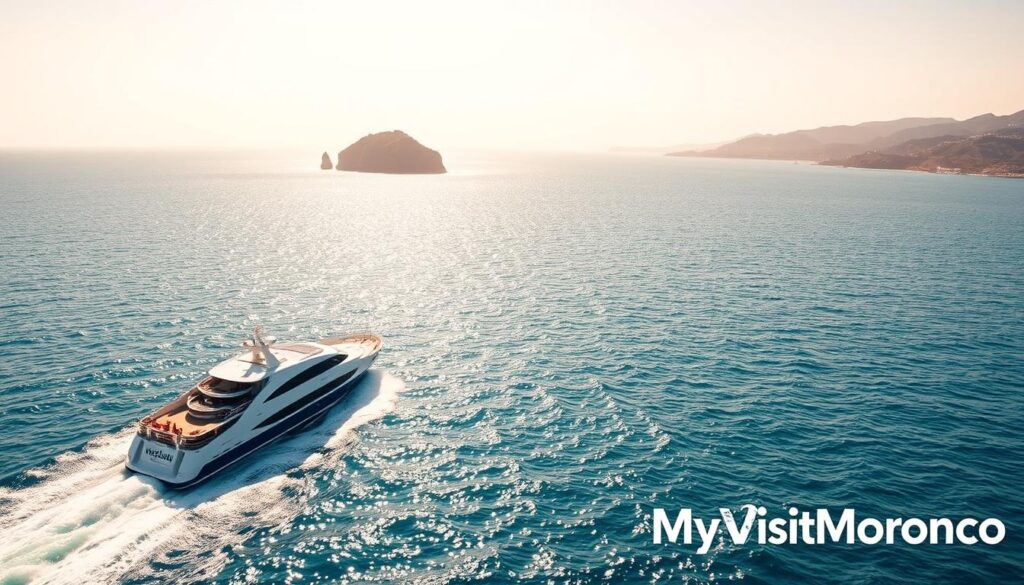
Traveling from Europe to Africa by ferry from Spain to Morocco is popular. These routes are convenient and offer beautiful views of the Mediterranean and Atlantic Oceans.
Algeciras to Tangier Med: The Busiest Crossing
The Algeciras to Tangier Med route is very busy. It connects Spain’s southern tip with Morocco’s northern coast. This makes it a key link between Europe and Africa.
Tarifa to Tangier City: The Shortest Route
The Tarifa to Tangier City route is the shortest. It’s fast and offers stunning views of the Strait of Gibraltar.
Almería to Nador: The Eastern Connection
The Almería to Nador route is great for eastern Morocco. It’s perfect for those going to eastern Morocco or further into Africa.
Málaga to Melilla: Reaching Spanish Territory in Africa
The Málaga to Melilla ferry is ideal for visiting Melilla, a Spanish area in North Africa. It’s the easiest way to see Spanish territory in Africa.
| Ferry Route | Duration | Frequency |
|---|---|---|
| Algeciras to Tangier Med | Approximately 1 hour | Multiple departures daily |
| Tarifa to Tangier City | About 35 minutes | Several times a day |
| Almería to Nador | Around 7-8 hours | Daily departures |
| Málaga to Melilla | Approximately 7 hours | Multiple times a week |
When planning your trip from Spain to Morocco, pick the ferry route that fits your plans. Whether you want the fastest trip or a relaxing journey, there’s a route for you.
Flying from Spain to Morocco
Flying is a quick way to travel from Spain to Morocco. Many airlines offer flights between these countries. You can choose the best option for your trip.
Major Flight Routes and Airlines
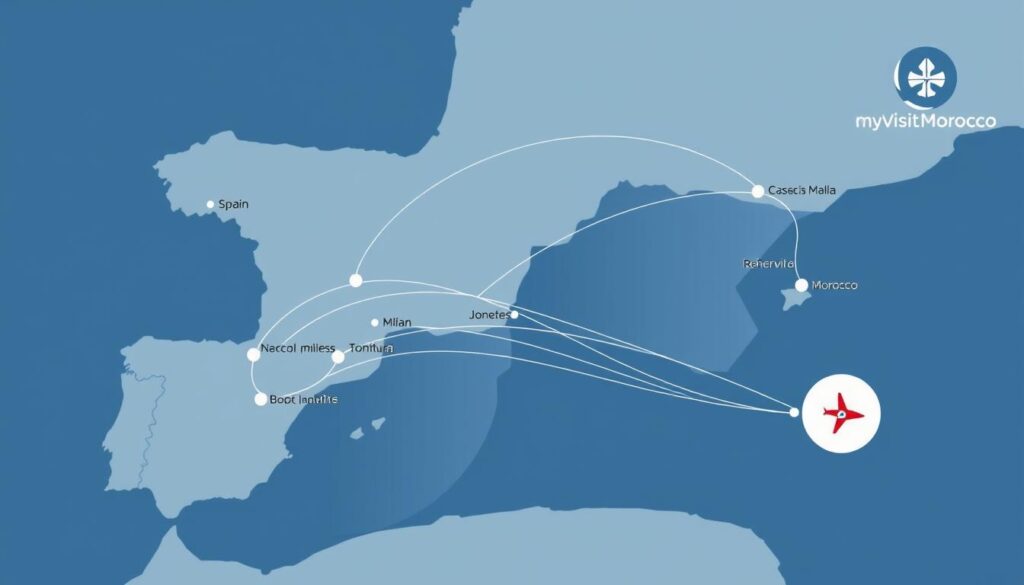
Major Spanish cities like Madrid, Barcelona, and Málaga have flights to Moroccan cities. Marrakech, Tangier, and Casablanca are popular destinations. Airlines like Ryanair, Iberia, and Royal Air Maroc provide good prices and schedules.
Budget Options and Seasonal Considerations
If you’re watching your budget, low-cost carriers can help. But, prices change with the season. Summer and holidays are pricier. Booking early can get you a better deal.
- Book flights at least a few weeks in advance to get the best deals.
- Consider flying into less busy airports if possible.
- Be flexible with your travel dates to save on flights.
Comparing Travel Times with Ferry Options
Flying is much faster than taking a ferry. For example, a flight from Málaga to Marrakech is about an hour. Ferries take longer, from 30 minutes to several hours. For more info, visit Sun-Trails.
Flying offers a fast, convenient way to travel from Spain to Morocco. It’s a great choice for those who value speed and convenience.
Spanish Departure Points: Cities and Ports
Planning your trip from Spain to Africa starts with knowing your departure points. Spain’s long coastline has many ports leading to Morocco and other African areas.
Algeciras: The Main Ferry Hub
Algeciras is a key port, with many ferries to Tangier Med. It has modern facilities, making it easy to start your trip. Ferry operators like FRS and Balearia run sailings every day, giving travelers options.
Tarifa: Gateway to the Strait
Tarifa is close to Tangier and is another important departure point. The ferry ride from Tarifa to Tangier is short. The views on this trip are stunning, showing the beauty of both continents.
Other Departure Points: Málaga, Almería, and Barcelona
Algeciras and Tarifa are the top choices, but Málaga, Almería, and Barcelona also connect to Morocco. Málaga is a big hub, with ferries to Melilla. Almería has ferries to Nador, offering another way into Morocco.
When picking your departure point, think about how often ferries run, travel time, and port facilities. This helps make your journey start smoothly.
Moroccan Arrival Points: Where to Enter
Traveling from Spain to Morocco means picking the right spot to start your adventure. Morocco has many entry points, each with its own charm and benefits.
Tangier: The Northern Gateway
Tangier, in the north, is a top choice for entering Morocco. This historic city has been a key cultural and trade center for ages. When you arrive in Tangier, you’re surrounded by its lively vibe, mixing African, Arab, and European cultures.
“Tangier is a city that wears its history on its sleeve,” a traveler once said. This captures the essence of this amazing place.
Nador and the Eastern Coast
Nador, on the eastern coast, is another entry point with its own view of Morocco. The ferry ride from Almería to Nador shows off the Mediterranean Sea and the coast. Nador is famous for its stunning beaches and the nearby Kert valley, perfect for nature enthusiasts.
Ceuta and Melilla: Spanish Territories in Africa
Ceuta and Melilla, though Spanish, are in Africa and offer a special entry into the area. These cities mix Spanish culture with Moroccan surroundings. They are known for their rich history and beautiful buildings.
When planning your trip from Spain to Morocco, think about which entry point fits your travel plans best. Each place offers a unique experience, making your journey unforgettable and full of new discoveries.
Documentation and Border Requirements for American Travelers
For American travelers, knowing the documentation and border rules is key when planning a trip to Morocco. As you get ready to travel from Spain to Africa, it’s important to know what documents and rules you need.
Passport and Visa Requirements for Morocco
You’ll need a valid passport with at least six months’ validity from your planned departure date to enter Morocco. American citizens don’t need a visa for tourism or business stays up to 90 days in 180 days. But, your passport must have two blank pages for entry stamps.

Customs Regulations and Restrictions
When you travel to Morocco, know the customs rules. Some items, like cultural artifacts and certain medications, are restricted or banned. Always declare valuable items and large amounts of money to avoid trouble upon arrival.
Health Insurance and Safety Considerations
Travel health insurance is not required but is highly advised. It can help with unexpected medical costs, including evacuation. Also, keep up with local safety info through the U.S. State Department advisories.
U.S. State Department Advisories
The U.S. State Department gives travel advisories for Morocco. These advisories tell you about safety and security. Register with the Smart Traveler Enrollment Program (STEP) to get important safety updates about Morocco.
By knowing and following these rules, you can have a smooth and fun trip from Spain to Morocco.
Best Times to Travel from Spain to Africa
Timing is key when traveling from Spain to Africa. The climate and tourist season greatly affect your trip.
Seasonal Considerations and Weather Patterns
The Strait of Gibraltar has a Mediterranean climate. It has mild winters and warm summers. Spring (March to May) and autumn (September to November) are the best times to go. The weather is nice then.
Peak Tourist Seasons and Crowds
Summer is the busiest time, especially in July and August. For fewer people, try the shoulder season. June and September are great. They have nice weather and fewer crowds.
Ferry Schedules Throughout the Year
Ferries run from Spain to Morocco all year. But, the schedule changes with the season. More sailings happen in peak season. Always check the latest schedules before you go.
| Season | Weather | Crowds | Ferry Schedules |
|---|---|---|---|
| Spring (Mar-May) | Mild | Moderate | Regular |
| Summer (Jun-Aug) | Warm | High | Frequent |
| Autumn (Sep-Nov) | Pleasant | Moderate | Regular |
| Winter (Dec-Feb) | Cool | Low | Reduced |
Planning Your Spain to Africa Journey
Getting ready for your trip from Spain to Africa needs careful planning. There are many ways to travel, and you should think about a few key things. This will help you enjoy your journey more.
Creating an Itinerary: How Many Days to Allocate
First, decide how long you’ll stay. The right time depends on what you want to see and do. For a full experience of Spain and Morocco, plan for at least 14 days.
This time lets you see big cities, cultural spots, and the beautiful landscapes of both places.
Booking Transportation in Advance
Booking your travel early is key, especially when many people are traveling. You can pick between ferries and flights, based on your schedule and likes. For example, you can book a guided tour that takes you from Spain to Morocco. This makes things easier for you.
Accommodation Options on Both Sides
In Spain and Morocco, you can find many places to stay, from cheap hostels to fancy hotels. It’s smart to book your stay early, especially in places like Tangier and Marrakech. Look for cities that mix culture with modern comforts.
Travel Apps and Resources for Cross-Continental Travel
Use travel apps and resources to make your trip better. They give updates on travel, weather, and places to see. Apps like Google Translate help with language, and ones for money can keep your spending in check.
Cost Considerations for Spain-Morocco Travel
Planning your trip from Spain to Morocco? Knowing the costs is key for a smooth journey. Your expenses will change based on how you travel, where you stay, and when you go.
Ferry Ticket Prices and Variables
Ferry prices from Spain to Morocco change a lot. It depends on the route, who you travel with, and your ticket type. For example, the Algeciras to Tangier Med route has many options, from cheap to fancy. Prices range from $30 to $100 per person for a one-way ticket. Book early to get the best deals.
Flight Costs and Finding Deals
Flights from Spain to Morocco are also an option. Prices change with the season, demand, and how early you book. Budget airlines can be very cheap, sometimes under $50 for a one-way ticket. But watch out for extra fees for bags and services.
Currency Exchange and Banking Tips
Knowing about currency exchange and banking can save you money. In Morocco, the dirham is the local money, but euros are okay in tourist spots. ATMs are the best way to get dirhams, but check your bank for foreign fees.
Overall Budget Planning for Cross-Continental Travel
Plan your budget by thinking about all your trip costs. This includes how you get there, where you stay, what you eat, and what you do. Here are some key things to consider:
- Transportation costs: ferry or flight tickets
- Accommodation: hotel, hostel, or Airbnb options
- Food and drink: eating out, groceries, or all-inclusive packages
- Activities and entrance fees
By breaking down your costs, you can manage your budget better. This way, you can enjoy your trip more.
Good budget planning is essential for a stress-free trip. By knowing the costs and making smart choices, you can have a great and affordable journey from Spain to Morocco.
The Spain to Africa Experience: What to Expect
Traveling from Spain to Africa is a unique adventure. It’s not just about getting to your destination. It’s about the amazing experiences you have along the way.
The Ferry Journey: Views and Onboard Facilities
The ferry ride from Spain to Africa is stunning. You’ll see the Strait of Gibraltar and enjoy various facilities onboard. You can relax, eat, or just enjoy the sea air.
First Impressions of Morocco
When you arrive in Morocco, you’ll feel the vibrant atmosphere. It’s a mix of old and new. The sights, sounds, and smells will leave a lasting impression.
Cultural Transition Between Continents
Going from Europe to Africa is more than just a change in location. You’ll see different buildings, food, and ways of life. Embracing these changes will make your trip better.
Language Barriers and Communication
In Morocco, Arabic is the main language, but many speak Spanish and French too. You might face language issues. But, learning some Arabic or using a translation app can help a lot.
| Language | Common Phrases | Usefulness |
|---|---|---|
| Arabic | Hello: Marhaba, Thank you: Shukraan | High |
| French | Hello: Bonjour, Thank you: Merci | Medium |
| Spanish | Hello: Hola, Thank you: Gracias | Low |
By embracing the cultural shift and preparing for language differences, your trip from Spain to Africa will be enriching.
Cultural Experiences Along the Spain to Africa Route
The trip from Spain to Morocco is more than just moving from one place to another. It’s a journey through rich cultures shaped by centuries of exchange. As you cross the Strait of Gibraltar, you move not just between continents but also through a tapestry of traditions.
Spanish-Moroccan Fusion in Border Regions
The areas along the Spain-Africa route blend Spanish and Moroccan cultures in a unique way. This mix is seen in the architecture, language, and traditions. For example, the Alhambra in Granada shows Moorish influence on Spanish buildings. Meanwhile, Spanish touches are visible in Northern Morocco’s cities, like Tangier.
Culinary Transitions Between Continents
Traveling from Spain to Morocco, you’ll see a big change in food. Spanish dishes like tapas and paella give way to Moroccan tagines and couscous. The taste and ingredients may differ, but the Mediterranean hospitality remains the same. You can discover these changes by visiting local markets or trying restaurants along the way, like those in tour packages that highlight food.
Cultural Etiquette for American Travelers
Knowing cultural norms is key when traveling from Spain to Morocco. Both countries share some customs, but there are differences. For instance, in Morocco, it’s common to greet with a handshake or a kiss on the cheek. Dressing modestly is also appreciated. Learning basic Arabic phrases, like “hello” (as-salamu alaykum) and “thank you” (shukraan), can be helpful.
Shopping and Souvenirs
Shopping for souvenirs offers a mix of Spanish and Moroccan items. You can find everything from Spanish ceramics to Moroccan handicrafts. Remember to haggle politely, as it’s common in Moroccan markets.
Popular Itineraries Combining Spain and Morocco
Traveling from Spain to Morocco offers many options for a memorable trip. The two countries are close, making it easy to see their rich cultures, beautiful landscapes, and lively cities.
The Classic Andalusia-Northern Morocco Circuit
This path includes historic cities like Seville and Granada in Spain. Then, take a ferry to Tangier and explore Northern Morocco. You’ll see amazing architecture, taste delicious food, and experience cultural mix. Learn more about this route and find its hidden treasures and famous spots.
Coastal Route: Mediterranean Spain to Atlantic Morocco
Traveling along the coast from Spain to Morocco is a special journey. You’ll visit quaint coastal towns, enjoy fresh seafood, and see stunning sea views. This path shows off the varied landscapes and sea life of both countries.
Urban Exploration: Madrid-Seville-Tangier-Marrakech
Urban lovers will enjoy cities like Madrid, Seville, Tangier, and Marrakech. You can see historic centers, famous landmarks, and dive into local culture. Each city has its own unique charm, from Madrid and Seville’s European feel to Tangier and Marrakech’s African energy.
Adventure Routes: Combining Natural Highlights
Adventure seekers can choose routes that highlight Spain and Morocco’s natural wonders. Hike in the Sierra Nevada or Atlas Mountains, or visit beautiful beaches. These paths let you explore diverse ecosystems and enjoy outdoor activities.
Practical Tips for Spain to Africa Travelers
To make your trip from Spain to Africa smooth, follow these tips. As you move from Spain’s landscapes to Morocco’s vibrant culture, being ready can help a lot.
Managing Currency and Payments
Morocco uses the dirham, not accepted outside the country. Exchange some money when you arrive or use ATMs for dirhams. Credit cards work in tourist spots, but cash is better for small buys.
Communication and Internet Access
Staying connected in Morocco is easy, with lots of internet and mobile coverage. Get a local SIM card or a portable Wi-Fi for data needs. Many places offer free Wi-Fi too.
Transportation Within Morocco After Arrival
After landing in Morocco, you’ll find many ways to get where you need to go. Taxis, buses, and trains are available. For longer trips, book trains or buses early to get a seat.
Safety Considerations for American Travelers
Morocco is mostly safe for tourists, but be careful. Watch your stuff, especially in busy places, and don’t travel alone at night. Keep up with local news and follow travel advisories.
Dealing with Culture Shock
Going from Spain to Morocco is a big cultural change. Be ready for different customs, languages, and lifestyles. Learning Arabic phrases and local customs shows respect for the culture.
With preparation and knowledge, you can travel from Spain to Africa confidently. Enjoy Morocco’s rich culture and stunning nature.
Conclusion: Bridging Continents and Cultures
Exploring the travel route from Spain to Africa is more than just moving from one place to another. It’s a chance to dive into a world of cultural exchange. This journey shows the mix of European and African ways of life, showing how these areas have connected over time.
The trip from Spain to Morocco is a special experience. It’s where cultures, languages, and traditions blend together. Whether you take a ferry or a flight, you’ll remember the vibrant cities, beautiful landscapes, and friendly people.
When planning your trip, think about the different ways to travel, the cultural experiences, and the tips in this guide. This journey will open your eyes to the world’s connections. It makes the trip from Spain to Africa a truly enriching adventure.





 Covers cities, coast, mountains, desert & food