
Are you ready for an adventure from southern Spain to Morocco? This trip will be unforgettable, with many ways to get there. These two places are full of culture and beauty.
You can take a ferry to get there. Many companies run services between Spain’s Tarifa and Algeciras, and Morocco’s Tangier Ville and Tanger Med. For more info, check out this resource to plan your trip.
Looking for a quick trip or a longer one? There are multiple travel options for you. In this article, we’ll show you the best routes and tips for a great trip.
Key Takeaways
- Multiple ferry operators offer services between southern Spain and Morocco.
- The most practical routes for tourists are Tarifa to Tangier Ville and Algeciras to Tanger Med.
- Travel times vary from 1 to 2 hours depending on the type of ferry.
- Ports in Spain include Algeciras and Tarifa, while in Morocco, you have Tangier Ville and Tanger Med.
- Plan your trip in advance to ensure a smooth journey.
The Magic of Cross-Continental Travel
Traveling from southern Spain to Morocco is more than a trip. It’s a dive into the cultural bridges between Europe and Africa. You’ll see how history and culture have shaped both regions.
Cultural Bridges Between Europe and Africa
The cultural exchange between southern Spain and Morocco shows their shared history. You can see this in their architecture, food, and markets. For example, a day trip from Málaga to Morocco offers a glimpse into this rich heritage. It’s a great part of any southern Spain itinerary.
Historical Connections Between Andalusia and Morocco
The history between Andalusia and Morocco is deep. You can still see the Moorish influence in southern Spain’s architecture, art, and food. At the same time, Morocco’s culture has been shaped by Spain. This exchange has made both places special, offering travelers a unique experience that spans continents.
Planning Your Southern Spain to Morocco Adventure
Planning your trip from southern Spain to Morocco means knowing the best travel times and making a good plan. This journey combines different cultures, histories, and landscapes in a unique way.
Best Times of Year for This Journey
The best times to go are spring (March to May) and autumn (September to November). These seasons have nice weather, with mild temperatures and fewer crowds than summer.
In spring, the scenery is stunning with flowers and greenery. It’s perfect for photographers. Autumn offers a great climate for visiting cities and historical sites without the summer heat.
Ideal Duration and Trip Planning Timeline
For a deep experience, plan for at least 10 to 14 days. This time lets you see the main spots in southern Spain and Morocco without rushing.
| Destination | Duration | Highlights |
|---|---|---|
| Southern Spain | 4-5 days | Seville, Córdoba, Granada, Málaga |
| Morocco | 6-9 days | Tangier, Chefchaouen, Fez, Marrakech |
Remember to plan for travel time between places and any possible delays. A good plan makes your trip smooth and fun.
Transportation Options Between Southern Spain and Morocco
Traveling between southern Spain and Morocco is easy with many options. You can take ferries or flights, each with its own perks. When exploring southern Spain and Morocco, picking the right way to travel is key for a smooth trip.
Ferry Routes and Services
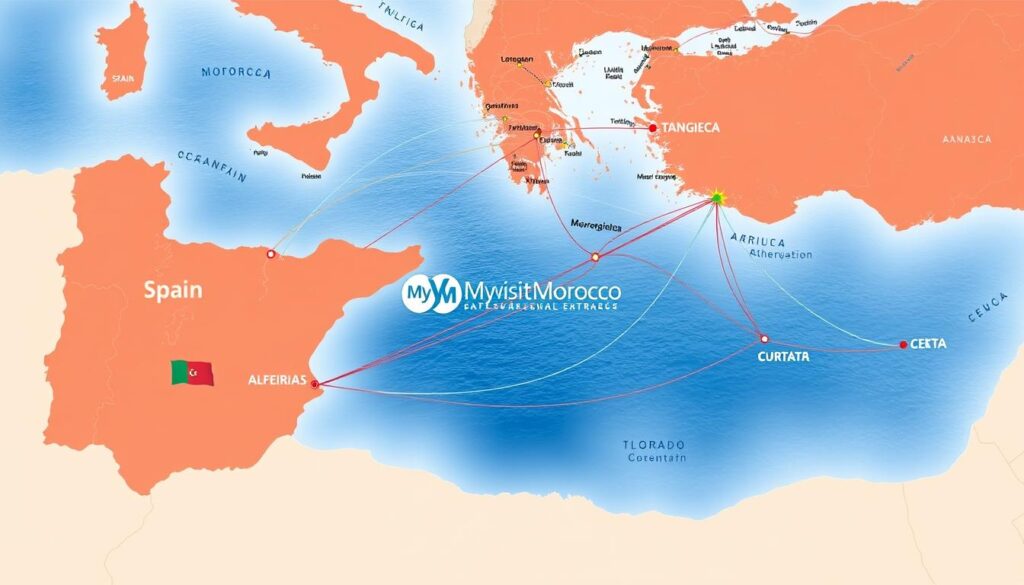
Ferry services are a favorite for crossing the Strait of Gibraltar. They connect ports like Algeciras and Tarifa in Spain to Tangier in Morocco. The ferry ride is not just convenient for cars but also offers beautiful views.
For those traveling with cars or preferring a more leisurely journey, ferries are a great choice.
Flight Connections Between Regions
Flights are quicker for those in a hurry. Airlines fly from Málaga and Seville in Spain to Tangier and Marrakech in Morocco. But, flights are faster and may cost more, considering check-in and security.
Comparing Cost and Convenience
Choosing between ferry and flight depends on cost and convenience. Ferries offer a relaxed trip and can carry vehicles, but they’re slower. Flights are quicker but might be pricier, especially with check-in and layovers.
Southern Spain to Morocco travel tips suggest thinking about what matters most to you and your plans.
The Algeciras to Tangier Ferry: The Classic Crossing
Traveling from southern Spain to Morocco is easy with the Algeciras to Tangier ferry. It’s a popular choice for both travelers and locals. The journey across the Strait of Gibraltar is straightforward.
Ferry Schedule and Operators
Several companies run the Algeciras to Tangier ferry, including FRS, Balearia, and Inter Shipping. They offer many sailings each day, with more during peak times. You can find 4-6 trips daily, lasting from 35 minutes to 1 hour and 30 minutes.
Ticket Prices and Booking Information
Ticket prices vary by operator, class, and when you book. Economy tickets start at €30-€50 for a one-way trip. Booking early, especially in busy seasons, helps get the best deals. You can book online or through Ferryhopper.
What to Expect During the Crossing
The ferry ride is comfortable and quick. Ferries have cafes, restaurants, and lounges. Some even offer Wi-Fi and duty-free shopping. Arrive 30 minutes early to check in and board.
Choosing the ferry from Algeciras to Tangier is a scenic and convenient way to Morocco. With many sailings and good prices, it’s perfect for exploring both regions’ cultures and landscapes.
Alternative Ferry Routes from Spain to Morocco
Looking for different ferry routes from Spain to Morocco? You’re in luck. There are many options. The Algeciras to Tangier ferry is popular, but other routes might be better for you.
Tarifa to Tangier: The Shortest Crossing
The Tarifa to Tangier ferry is the quickest, taking about 35 minutes. It’s perfect if you start in western Andalusia. Tarifa is famous for its windsurfing, and Tangier is full of history and markets. You’ll love the fast trip and Tangier’s lively atmosphere.
Málaga to Melilla and Nador Connections
Traveling from Málaga? There’s a ferry to Melilla and Nador. Melilla is great for culture lovers, and Nador is near the Rif Mountains. This route is good for eastern Andalusia.
Almería to Nador and Other Eastern Routes
Starting in Almería or eastern Andalusia? The Almería to Nador ferry is convenient. It takes you straight to northern Morocco, perfect for visiting Nador and Melilla. It saves you from going back through big cities.
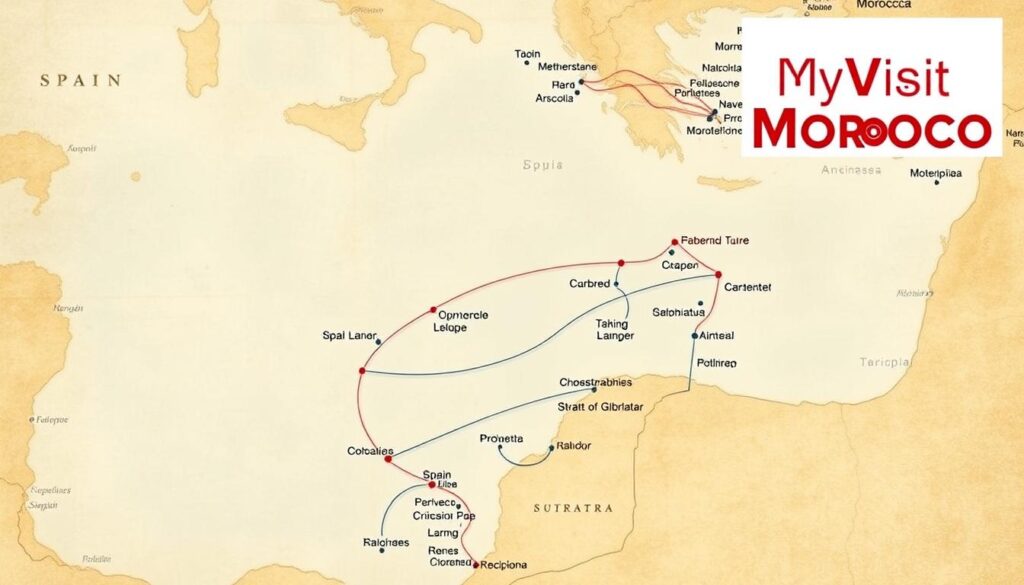
These ferry routes offer flexibility and convenience. They let you plan your trip based on your preferences. Whether you’re off to Tangier, Melilla, or Nador, there’s a ferry for you.
Essential Documents and Border Procedures
Planning your trip from southern Spain to Morocco? Knowing the key documents and border rules is vital. Traveling between these places means crossing international borders. Being ready will make your journey smoother.
Visa Requirements for Morocco
A valid passport is needed to enter Morocco, with at least six months’ validity. Your nationality might require a visa. EU, US, and some other countries can visit without a visa for up to 90 days for tourism or business. Always check the latest visa rules for your country before your spain and morocco itinerary.
Customs Regulations and Border Crossing Tips
When you cross from southern Spain to Morocco, know the customs rules. Tell customs about all your purchases and gifts. Some items, like antiques or cultural goods, have special rules or need permits.
To make border crossing easy on your southern spain to morocco route, have your papers ready. Be truthful about your items and be ready for any delays.
Southern Spain to Morocco: The Perfect 10-Day Itinerary
Start an exciting trip from southern Spain to Morocco with a 10-day plan. You’ll see historic cities in Andalusia and Morocco’s imperial cities. This journey is full of cultural experiences.
Days 1-4: Exploring Andalusia’s Highlights
Start in southern Spain’s lively cities. Spend four days seeing Andalusia’s amazing buildings and culture. Visit Seville first to see the Cathedral of Seville and the Royal Alcázar Palace.
Then, go to Córdoba to see the Mezquita, a mosque-cathedral. Finally, visit Granada to see the Alhambra, a UNESCO site. For more plans, check out 10 Days in Spain & Morocco.
Days 5-10: Morocco’s Imperial Cities and Beyond
On day five, cross the Strait of Gibraltar to Tangier, Morocco’s entry point. Explore the Kasbah and souks. Then, go to Chefchaouen, the Blue Pearl, for its calm beauty.
Next, visit Fez, an imperial city, to wander the ancient medina and see the Al-Attarine Madrasa. Days six to nine will take you to Meknes and Rabat, each with its own history and culture. Finish in Marrakech, where you can dive into the Jemaa el-Fnaa square and the lively markets.
| Day | Location | Highlights |
|---|---|---|
| 1-4 | Andalusia, Spain | Seville, Córdoba, Granada, Alhambra |
| 5-10 | Morocco | Tangier, Chefchaouen, Fez, Meknes, Rabat, Marrakech |
The Andalusian Triangle: Seville, Córdoba, and Granada
The Andalusian Triangle, made up of Seville, Córdoba, and Granada, is a goldmine of history and culture. As you follow the southern Spain itinerary, you’ll uncover the deep cultural roots of these cities.
Seville: The Heart of Andalusia
Seville, the heart of Andalusia, buzzes with life and history. You’ll find landmarks like the Cathedral of Seville and the Royal Alcázar Palace. Don’t miss the Santa Cruz neighborhood, a romantic boat ride on the Guadalquivir River, or the UNESCO World Heritage Site, Archivo de Indias.
Córdoba’s Mezquita and Historic Center
Córdoba boasts the Mezquita, a stunning mosque-cathedral. Its Islamic heritage is unmatched. Explore the historic center’s narrow streets, visit the Alcázar de los Reyes Cristianos, and check out the Jewish Quarter.
Granada and the Magnificent Alhambra
Granada is renowned for the Alhambra, a breathtaking palace and fortress. It’s a top attraction in Spain. Discover the Alhambra’s detailed architecture, enjoy the Generalife gardens, and immerse yourself in the Albaicín neighborhood’s vibrant culture.
| City | Main Attraction | Other Highlights |
|---|---|---|
| Seville | Cathedral of Seville | Royal Alcázar Palace, Santa Cruz neighborhood |
| Córdoba | Mezquita | Alcázar de los Reyes Cristianos, Jewish Quarter |
| Granada | Alhambra | Generalife gardens, Albaicín neighborhood |
For a deeper dive into the region and its ties to Morocco, look into our Morocco tour. It’s perfect for enhancing your southern Spain journey.
Coastal Gems of Southern Spain
The coastal areas of southern Spain are a blend of culture, history, and stunning beaches. They are perfect travel destinations for your next adventure.
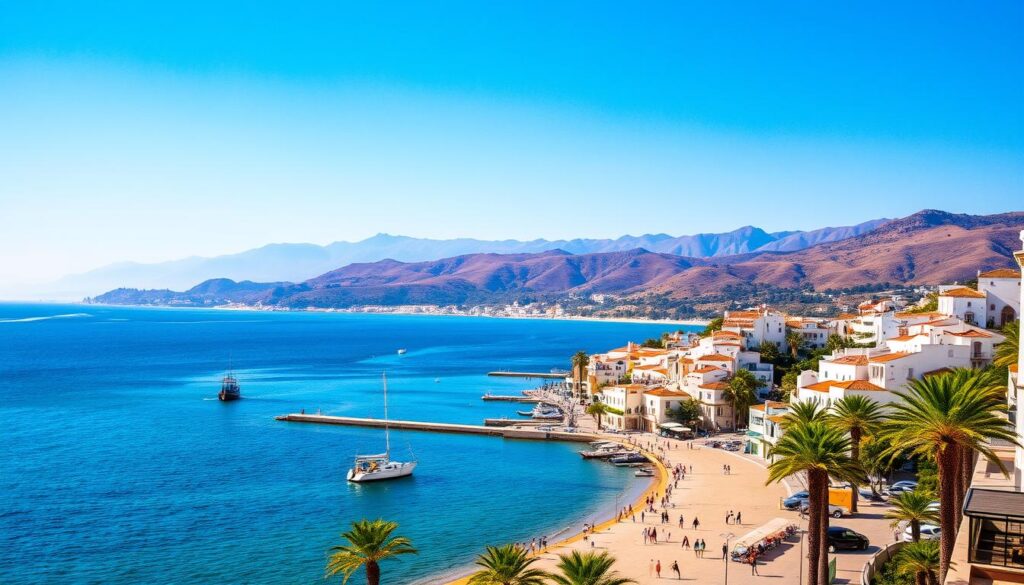
Málaga: Culture and Beaches
Málaga is a city that combines cultural spots with lovely beaches. You can see the Picasso Museum and explore the historic center. Don’t miss the city’s food scene.
Afterward, unwind on La Malagueta beach or walk along the Paseo del Parque.
Cádiz and the Costa de la Luz
Cádiz is famous for its historic old town and lively culture. Visit the Cádiz Cathedral and try the local seafood. The Doñana National Park is nearby.
The Costa de la Luz offers untouched beaches and quaint villages. It’s ideal for a calm escape.
When planning your trip from southern Spain to Morocco, include these coastal spots. They are key southern Spain to Morocco travel tips for a memorable journey.
Morocco’s Northern Treasures
Morocco’s northern areas are a mix of cultures and landscapes. You’ll see Mediterranean and African influences in its cities, landmarks, and nature.
Tangier: Gateway to Africa
Tangier is a key spot for Africa. It has a rich history and culture. You can see the Medina, visit the Kasbah, and enjoy its architecture.
The city’s beaches and nightlife are also great. They attract many travelers.
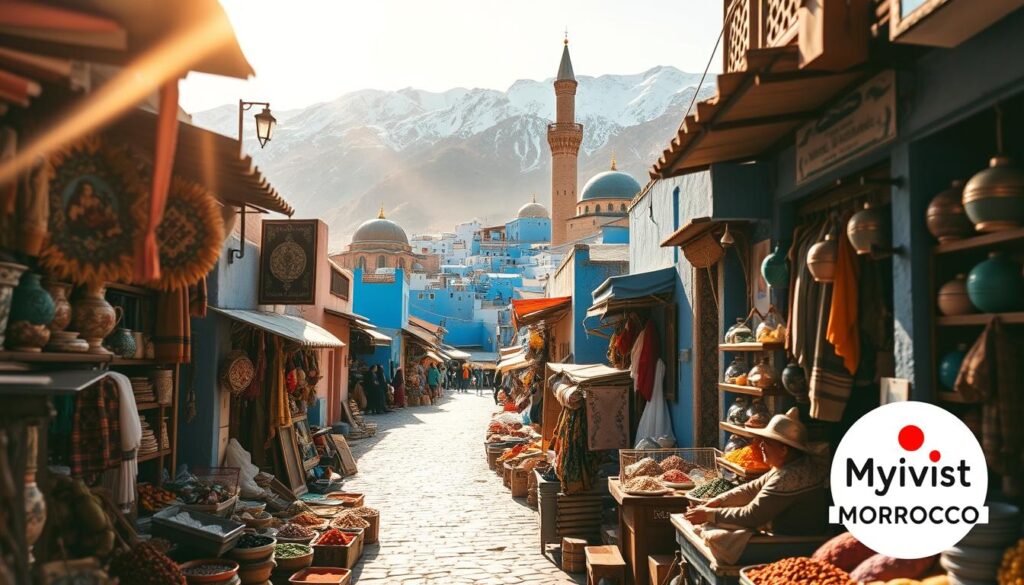
Chefchaouen: The Blue Pearl
Chefchaouen is called the Blue Pearl. It’s in the Rif Mountains. The town’s blue buildings and narrow streets are charming.
It’s perfect for relaxing and exploring. You can hike, visit markets, and enjoy the calm.
Tetouan and the Mediterranean Coast
Tetouan and the Mediterranean coast have history and nature. Tetouan’s Medina is a UNESCO site. It shows rich culture and architecture.
The nearby beaches and towns are great for swimming and surfing. They let you explore the coast.
| Destination | Main Attractions | Best Time to Visit |
|---|---|---|
| Tangier | Medina, Kasbah, Beaches | Spring, Autumn |
| Chefchaouen | Blue-painted buildings, Hiking trails | Spring, Summer |
| Tetouan | Medina (UNESCO World Heritage Site), Beaches | Autumn, Spring |
The Imperial Cities Route in Morocco
Start a journey through Morocco’s Imperial Cities. Here, history, culture, and architecture come together beautifully. You’ll see Fez, Meknes, Volubilis, and Rabat, each showing a different side of Morocco’s heritage.
Fez: Medieval Splendor
Fez is Morocco’s ancient capital, full of medieval charm. Its old city, Fes el-Bali, is a labyrinth of streets and markets. Don’t miss the Al-Attarine Madrasa and the Karaouine Mosque, one of the oldest universities.
- Explore the ancient medina
- Visit historic madrasas and mosques
- Experience the local craftsmanship
Meknes and Volubilis
Meknes is another Imperial City with a long history. See the Roman ruins of Volubilis, a UNESCO site. Then, check out Meknes’ impressive gates and monuments.
- Visit the Mausoleum of Moulay Ismail
- Explore the ancient Volubilis
- Discover the city’s historic landmarks
Rabat: Morocco’s Capital
Rabat, Morocco’s capital, mixes old and new. See the Chellah Necropolis, a Roman ruin turned Islamic site. Also, visit the Kasbah of the Udayas for amazing ocean views.
- Visit the Royal Palace
- Explore the Hassan Tower
- Enjoy the city’s coastal charm
Traveling through Morocco’s Imperial Cities, you’ll see the best of Moroccan culture, history, and architecture. This journey from southern Spain to Morocco will be unforgettable.
Marrakech and Beyond: Extending Your Moroccan Journey
Marrakech is a must-see in Morocco, blending old and new perfectly. Known as the Red City, it offers many experiences. These will make your trip from Southern Spain to Morocco even more special.
Marrakech: The Red City
Marrakech is a feast for the senses. Its busy souks, colorful markets, and beautiful buildings are unforgettable. You can wander the historic Medina, see the Jardin Majorelle, and try local food at riads.
Day Trips to the Atlas Mountains and Desert
The Atlas Mountains and desert are great for day trips. You can hike in the mountains, visit Berber villages, or ride camels in the desert. These trips show Morocco’s varied landscapes and cultures.
| Destination | Activity | Duration |
|---|---|---|
| Atlas Mountains | Hiking, Visiting Berber Villages | Full Day |
| Desert | Camel Ride, Sunset Viewing | Half Day |
| Ourika Valley | Hiking, Waterfalls | Full Day |
By exploring Marrakech and more, you’ll see Morocco’s rich culture and nature. Your trip from Southern Spain to Morocco will be unforgettable.
Accommodation Guide for Southern Spain and Morocco
Traveling from Southern Spain to Morocco can be made better by choosing the right place to stay. Both areas have many places to stay, fitting all tastes and budgets.
Where to Stay in Andalusia
Andalusia is known for its history and culture. It has many places to stay. In Seville and Granada, you can find hotels that show off the Moorish past.
For a calm stay, try Málaga and Cádiz. These coastal towns have hotels right by the beach and cozy guesthouses.
Moroccan Accommodation Options from Riads to Resorts
Morocco’s places to stay are just as varied. Traditional riads, with their beautiful gardens, are a special experience. They’re great in Marrakech and Fez.
For something newer, Morocco has luxury resorts in Tangier and along the coast. No matter what you’re looking for, Morocco has it.
Safety and Cultural Considerations
Traveling from Southern Spain to Morocco requires knowing about safety and culture. Both places offer unique experiences. But, understanding local customs and safety tips can make your trip better.
Staying Safe in Both Destinations
It’s key to know about local safety when traveling. In Southern Spain, watch out for petty theft and pickpocketing in tourist spots. In Morocco, keep an eye on your stuff, especially in busy markets.
Staying safe also means listening to local advice and following their rules.
Respecting Local Customs and Traditions
Respecting local customs is crucial in Morocco. Morocco is conservative, so dress modestly, especially at religious sites. Knowing and respecting traditions, like during Ramadan, can make your trip richer.
In Southern Spain, the culture is more laid-back. But, it’s good to respect local ways, like siesta times.
By being informed and respectful, you’ll have a great time in Southern Spain and Morocco. This way, you’ll get the most out of your Spain and Morocco itinerary.
Conclusion: Bridging Continents and Cultures
As you finish your trip from southern Spain to Morocco, you’ve seen the rich culture and history of both places. The Strait of Gibraltar, just 13km wide, connects these two areas. This has made their cultures blend in a unique way.
The plan for a 38.5km underwater tunnel shows how important this link is. It will connect Spain’s Punta Paloma with Morocco’s Punta Malabata. The project, costing over $15 billion, will make moving goods and people easier. You can learn more about it on The New Arab.
Thinking back on your travels, you’ve picked up great tips for traveling from southern Spain to Morocco. You’ve seen the historic cities of Andalusia and the lively markets of Morocco. This journey is full of experiences that connect different continents and cultures.





 Covers cities, coast, mountains, desert & food