
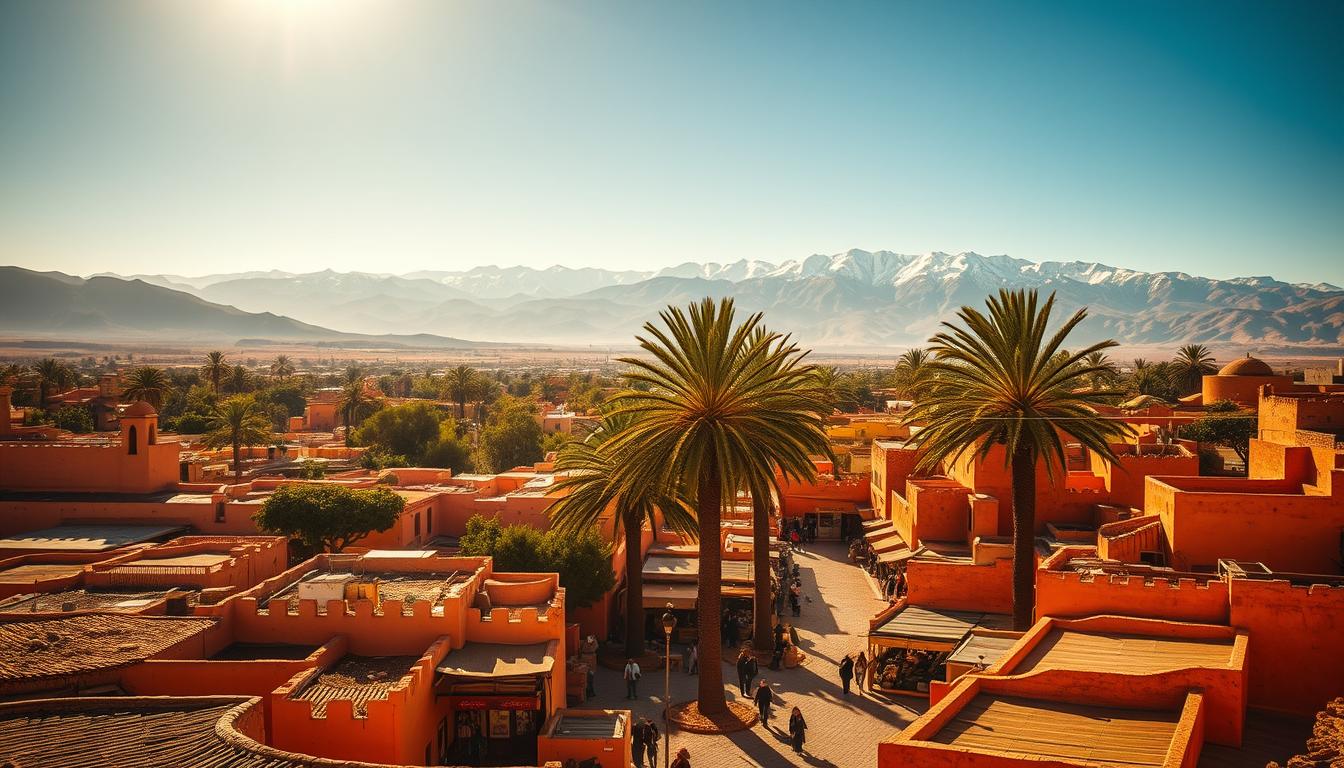
morocco temperature january
Planning your trip to Morocco in January? Knowing the weather conditions in different areas is key. Morocco’s varied geography leads to different climates in each region.
January brings unique weather to each part of Morocco. This guide will help you get ready for your visit.
Key Takeaways
- Morocco’s climate varies by region in January.
- Weather conditions differ significantly across the country.
- Understanding regional weather helps in planning your trip.
- January is a great time to visit certain regions in Morocco.
- Regional weather patterns can impact your travel plans.
Understanding Morocco’s Winter Climate
Knowing Morocco’s winter climate is key to enjoying your trip. Its diverse landscapes play a big role. Morocco’s geography includes coastal areas, mountains, and deserts. Each type affects the local climate in its own way.
Morocco’s Diverse Geographical Zones
Morocco’s landscape is varied, with different zones having different climates. The country’s geography can be broadly categorized into three main types: coastal, mountain, and desert landscapes.
Coastal, Mountain, and Desert Landscapes
The coastal regions have milder winters. The mountainous areas can be quite cold, especially at night. The desert regions have a more extreme climate, with cooler nights and warmer days.
How Geography Affects Local Climate
The diverse geography of Morocco impacts the local climate. For example, the Atlas Mountains can create a rain shadow effect. This leads to varied precipitation patterns across the country.
General January Weather Patterns
In January, Morocco is in its winter season. Cool temperatures are common across the country. The average temperature varies significantly across different regions.
Typical Temperature Ranges Nationwide
Nationwide, January temperatures can range from as low as 5°C (41°F) in the mornings and evenings to around 18°C (64°F) during the day. Here’s a breakdown of typical temperature ranges:
| Region | Daytime Temperature | Nighttime Temperature |
|---|---|---|
| Coastal | 15°C – 18°C (59°F – 64°F) | 8°C – 12°C (46°F – 54°F) |
| Mountain | 10°C – 14°C (50°F – 57°F) | 0°C – 5°C (32°F – 41°F) |
| Desert | 18°C – 22°C (64°F – 72°F) | 5°C – 10°C (41°F – 50°F) |
Seasonal Weather Phenomena
January is a good time to see Morocco’s varied weather phenomena. You can see rainfall in the north and occasional snow in the Atlas Mountains. The  climate in Morocco in January is quite diverse, making it a fascinating time to visit.
Morocco Temperature January: A Regional Overview
Morocco’s geography leads to different temperatures in January. Knowing these regional differences is key to enjoying your trip.
Temperature Ranges Across the Country
January temperatures in Morocco change a lot from coast to mountains. Temperatures are mild to cool, with big drops at night.
Daytime Highs and Nighttime Lows
Daytime highs are 18-22°C (64-72°F) in coastal cities like Casablanca and Rabat. But, nighttime lows can be 8-12°C (46-54°F). Inland cities see bigger temperature swings.
Regional Temperature Variations
Marrakech and the Sahara Desert have warmer days, up to 22-25°C (72-77°F). But, nights can be 5-10°C (41-50°F) cold. The Atlas Mountains are much cooler, sometimes below freezing at night.
Precipitation Patterns in January
January is wet in some parts of Morocco, with different rainfall and snowfall.
Rainfall Distribution by Region
The north and Atlantic coast get more rain than the south. Cities like Tangier and Rabat see moderate rain, about 70-100 mm for the month.
Snowfall in Mountainous Areas
The Atlas Mountains get a lot of snow in January. This makes them great for winter sports. Snowfall can be several meters deep, with temperatures often freezing.
| Region | Daytime High (°C) | Nighttime Low (°C) | Precipitation (mm) |
|---|---|---|---|
| Casablanca | 18 | 8 | 70 |
| Marrakech | 22 | 5 | 30 |
| Tangier | 16 | 10 | 100 |
| Atlas Mountains | 8 | -2 | Snowfall |
The table shows how temperature and rain change across Morocco in January. Knowing these differences helps plan your trip and what to pack.
“The diversity of Morocco’s climate is one of its most fascinating aspects, offering a range of experiences for visitors in January.”
Coastal Morocco in January
Exploring Morocco’s coast in January reveals a milder climate than inland areas. The coastal regions offer a refreshing winter escape. Temperatures here are relatively mild compared to the rest of the country.
Atlantic Coast Weather Conditions
The Atlantic coast, home to cities like Casablanca and Rabat, sees mild January temperatures. Expect highs from 17°C to 18°C (63°F to 64°F). Lows can drop to 8°C to 9°C (46°F to 48°F).
Casablanca and Rabat Temperature Ranges
In Casablanca and Rabat, January temperatures are similar. Average highs are 17°C (63°F), and lows are about 8°C (46°F). Check the average weather conditions for more details.
Essaouira and Agadir Climate
Further south, Essaouira and Agadir on the Atlantic coast enjoy warmer conditions. Essaouira’s highs reach 18°C (64°F), while Agadir’s can hit 20°C (68°F). Both cities have mild lows, from 9°C to 11°C (48°F to 52°F).
Mediterranean Coast Climate
The Mediterranean coast of Morocco has its own climate in January. It’s cooler than the Atlantic coast, with more temperature swings.
Al Hoceima Weather Patterns
Al Hoceima on the Mediterranean coast sees highs of 16°C (61°F) and lows of 9°C (48°F) in January. The weather is mild but can be cool in the evenings.
Nador and Eastern Coast Conditions
Nador and other eastern Mediterranean coast areas have similar temperatures. Expect highs of 16°C to 17°C (61°F to 63°F) and lows of 8°C to 9°C (46°F to 48°F).
| City | Average High (°C) | Average Low (°C) |
|---|---|---|
| Casablanca | 17 | 8 |
| Rabat | 17 | 8 |
| Essaouira | 18 | 9 |
| Agadir | 20 | 11 |
| Al Hoceima | 16 | 9 |
| Nador | 16 | 8 |
Northern Morocco January Weather
In January, Northern Morocco feels the Atlantic Ocean and the Mediterranean Sea’s effects. This creates different weather in the coastal and mountain areas. You’ll see big climate differences as you travel.
Tangier and the Strait of Gibraltar
Tangier, near the Strait of Gibraltar, has a mild January climate. The Atlantic Ocean’s influence is strong here.
Temperature and Humidity Levels
Daytime in Tangier is usually 16°C to 18°C (61°F to 64°F). Nights can get chilly, around 8°C to 10°C (46°F to 50°F). The humidity is about 70%, thanks to its coastal spot.
Wind Patterns and Ocean Effects
The Strait of Gibraltar brings cool winds from the Mediterranean. For more weather details, check WeatherSpark for Errachidia’s January weather.
Tetouan and Chefchaouen Climate
Tetouan and Chefchaouen, in the Rif Mountains, are cooler than Tangier. January is quite cold here.
Mountain Influence on Local Weather
The mountains around Tetouan and Chefchaouen make nights colder. Daytime is still mild, between 12°C to 15°C (54°F to 59°F). Snow can fall sometimes.
Rainfall and Foggy Conditions
January brings more rain, about 100 mm in Tetouan. Fog is common, especially mornings. It adds to the charm of these towns.
| City | Average High Temperature | Average Low Temperature | Average Rainfall |
|---|---|---|---|
| Tangier | 17°C (63°F) | 9°C (48°F) | 90 mm |
| Tetouan | 14°C (57°F) | 8°C (46°F) | 100 mm |
| Chefchaouen | 13°C (56°F) | 7°C (45°F) | 120 mm |
Central Morocco’s January Climate
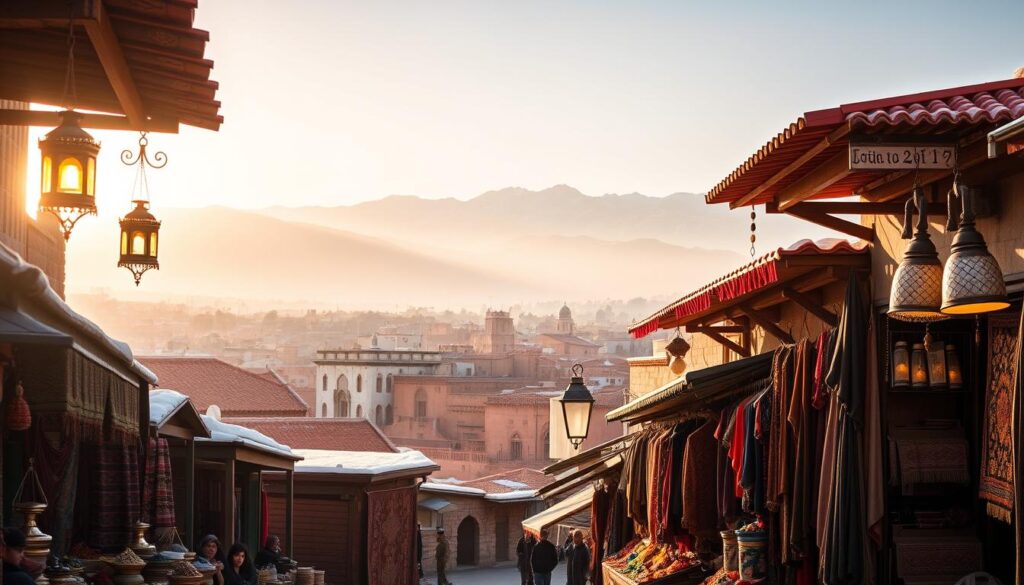
Exploring Central Morocco in January reveals a mix of continental and Mediterranean climates. Cities like Fez and Meknes, and coastal spots Rabat and Casablanca, offer different weather experiences.
Fez and Meknes Weather Patterns
Fez and Meknes, inland, have a more continental feel. January brings cool temperatures with big day-night temperature swings.
Temperature Fluctuations
In Fez and Meknes, days can hit 12°C to 15°C (54°F to 59°F). Nights can fall to 2°C to 5°C (36°F to 41°F). This is common for inland areas.
Precipitation and Sunshine Hours
January is wet in Fez and Meknes, with 60 mm to 80 mm (2.4 in to 3.2 in) of rain. Yet, they get 5 to 6 hours of sun daily.
Rabat and Casablanca Temperatures
Rabat and Casablanca, by the coast, have a milder January due to the Atlantic Ocean’s effect.
Coastal Influence on Urban Climate
The ocean keeps temperatures steady. Days reach 17°C to 18°C (63°F to 64°F), and nights dip to 8°C to 10°C (46°F to 50°F). This makes coastal cities more pleasant in January.
Humidity and Comfort Levels
Rabat and Casablanca’s humidity is 70% to 80%. This makes the air cooler but also more comfortable than inland areas.
| City | Average High Temperature (°C) | Average Low Temperature (°C) | Precipitation (mm) | Sunshine Hours |
|---|---|---|---|---|
| Fez | 14 | 4 | 70 | 5.5 |
| Meknes | 13 | 3 | 65 | 5.5 |
| Rabat | 17 | 8 | 80 | 6 |
| Casablanca | 17 | 9 | 75 | 6 |
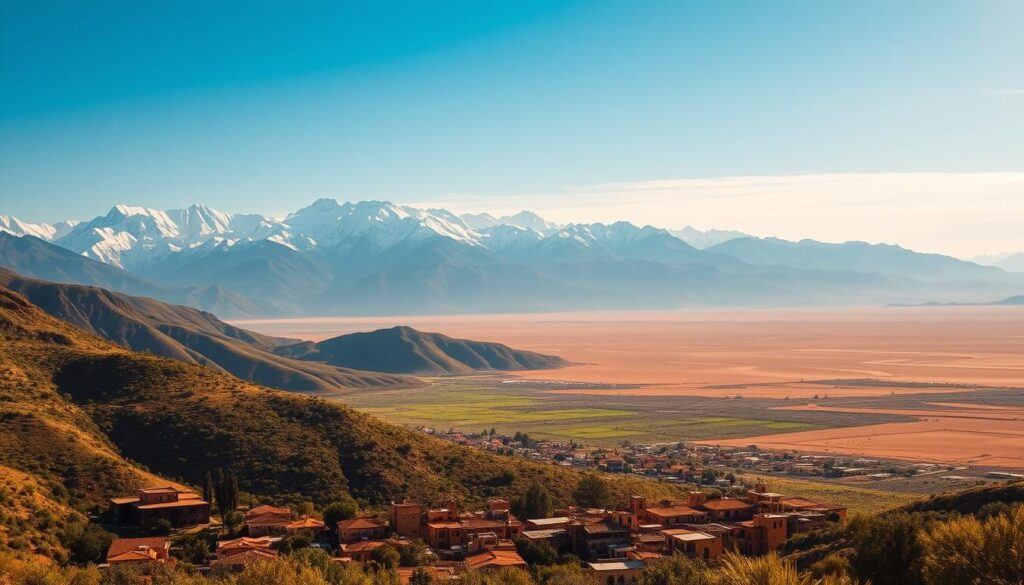
Knowing these climate patterns helps plan your January trip to Central Morocco. It prepares you for the different weather in each city.
Marrakech Weather in January
Planning your trip to Marrakech in January? Knowing the local climate is key. Marrakech is known for its vibrant culture and desert landscape. The winter months bring a unique climate.
Day and Night Temperature Variations
January in Marrakech is cooler, with big differences between day and night. Days are pleasant, while nights can get quite chilly.
Average Daytime Highs
In January, Marrakech’s daytime highs average around 18°C (64°F). This is perfect for exploring the medina or Majorelle Garden.
Nighttime Temperature Drops
Nights can drop to about 6°C (43°F). Remember to pack layers for the cooler evenings.
Rainfall and Sunshine Hours
January is dry in Marrakech. Knowing about rainfall and sunshine helps plan your activities.
Precipitation Frequency and Amount
January sees about 28 mm (1.1 inches) of rain on average. The rain is usually light and short.
Clear Days and Solar Intensity
January is sunny, with 7.5 hours of sunshine daily. The clear skies are great for photography and outdoor adventures.
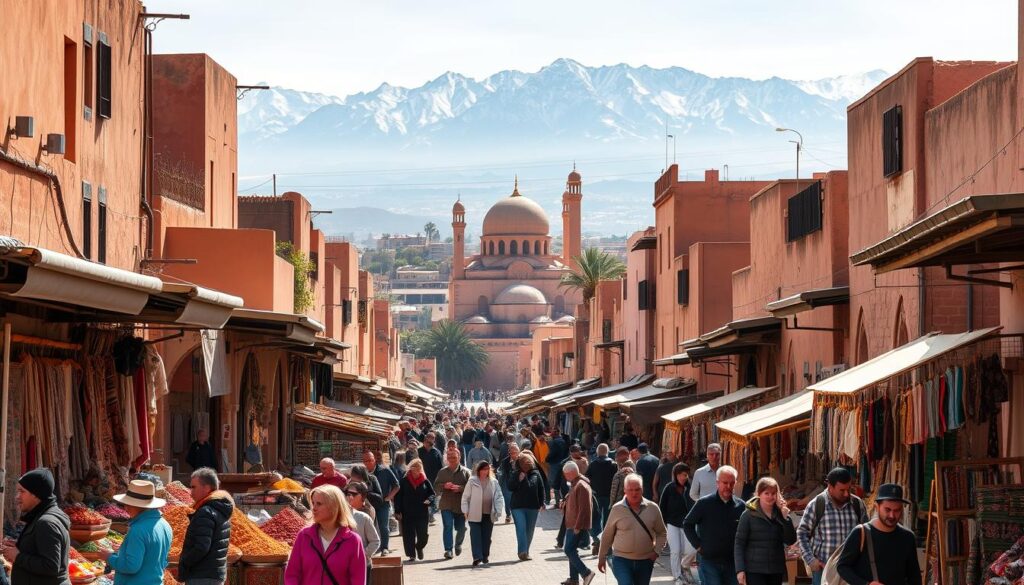
Understanding these weather patterns makes your January visit to Marrakech better. Enjoy the culture and natural beauty.
Atlas Mountains Winter Conditions
January is a magical time to visit the Atlas Mountains. Their winter climate and stunning views are unforgettable. The Atlas Mountains are a key part of Morocco, offering everything from snow sports to peaceful landscapes.
High Atlas January Climate
The High Atlas has cold winters and lots of snow in January. It’s perfect for those who love winter sports.
Ifrane and Snow Conditions
Ifrane, called “Little Switzerland,” is famous for its snow. You can ski and snowboard on well-kept slopes.
Oukaimeden and Winter Sports
Oukaimeden is another top spot in the High Atlas for skiing and winter sports. Its high altitude means great snow all January.
Middle and Anti-Atlas Regions
The Middle and Anti-Atlas have winter weather too, but it’s milder than the High Atlas. The climate changes with altitude.
Temperature Variations with Altitude
Temperatures get colder as you go higher. This creates different climates in the Atlas Mountains.
Weather Impacts on Accessibility
The snow can make some places hard to get to. But it also makes the area more beautiful. Be ready for changing weather when you visit the Atlas Mountains in January.
In summary, the Atlas Mountains offer a special winter experience. With their cold weather, snow, and sports, January is a great time to see Morocco’s natural beauty and outdoor activities.
Southern Morocco and Sahara Desert in January
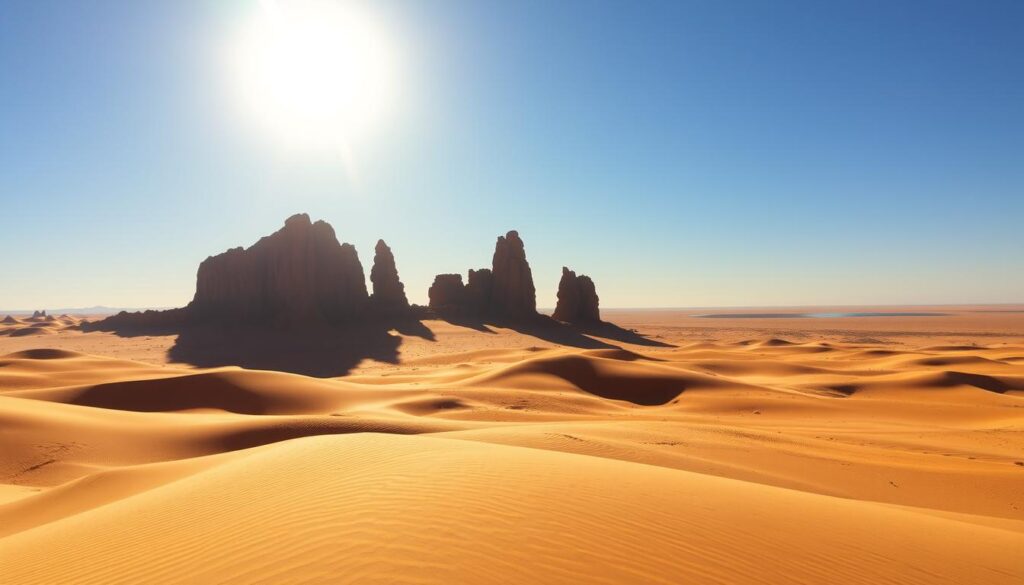
January in Southern Morocco and the Sahara Desert brings mild days and cool nights. This region offers a unique winter experience. It’s worth exploring the blend of winter weather patterns here.
Ouarzazate and the Gateway to the Desert
Ouarzazate is seen as the gateway to the Sahara Desert. It has pleasant winter days with highs around 22°C (72°F). But, the nights can get very cold.
Daytime Desert Heat
In the day, Ouarzazate is warm and sunny. It’s perfect for outdoor fun like visiting the Atlas Studios or desert tours.
Dramatic Nighttime Cooling
At night, the temperature drops to about 5°C (41°F). So, don’t forget to bring warm clothes. This big change in temperature is typical of desert climates.
Merzouga and Erg Chebbi Dunes
Merzouga, a small village near the Erg Chebbi dunes, has a harsh desert climate. It’s famous for its vast dunes and camel trekking.
Desert Climate Extremes
The Erg Chebbi dunes face extreme temperature changes. Cold nights are common in desert winters. So, expect chilly mornings and evenings.
Star-Gazing Conditions
Visiting Merzouga in January offers exceptional star-gazing opportunities. The clear skies make it perfect for astronomy fans.
January is a great time to see Southern Morocco and the Sahara Desert. It offers mild days and cool nights. Whether you’re in Ouarzazate or the Erg Chebbi dunes, there’s something for everyone.
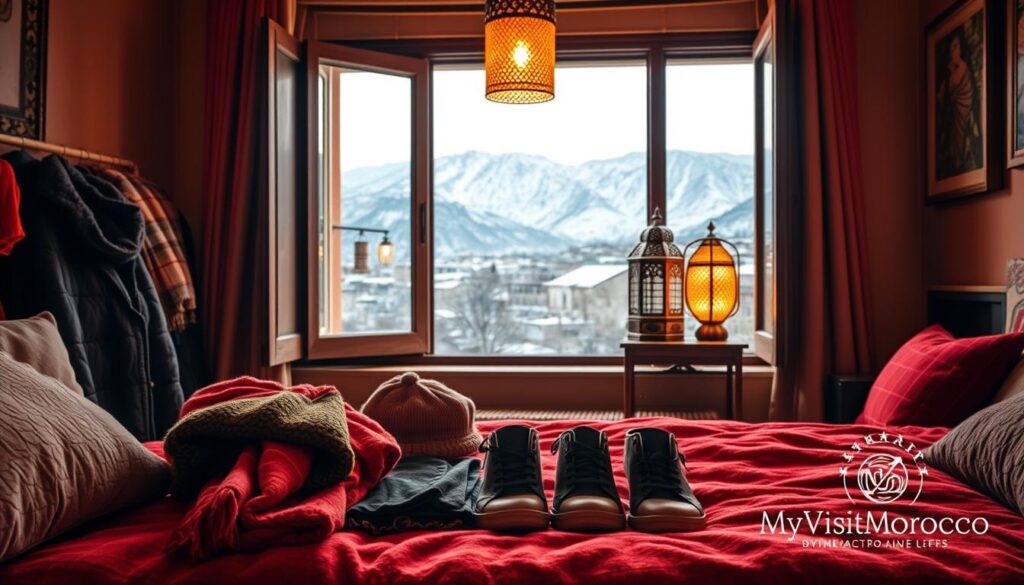
What to Pack for Morocco in January
Morocco’s weather in January changes a lot, so you need the right clothes for each place. Knowing the weather in different areas helps you pack better.
Clothing Recommendations by Region
Think about where you’re going in Morocco. For coastal and urban areas, you can wear lighter clothes because it’s not too cold.
Coastal and Urban Areas
In cities like Rabat and Casablanca, it’s pretty mild. So, pack light jackets and comfy clothes.
Mountain and Desert Regions
In the Atlas Mountains and desert regions, it gets colder. Bring warm clothes and layers for the chilly evenings. For more tips on Morocco, check out Morocco Travel Tips.
Essential Items for Winter Travel
There are key items to pack for a cozy winter trip to Morocco.
Weather Protection Gear
Make sure you have weather protection gear. This includes waterproof jackets and umbrellas for rainy days.
Comfort and Health Necessities
Remember to pack comfort and health necessities. This includes comfy shoes, sunscreen, and any medicines you need. This keeps you healthy and happy on your trip.
Best Activities for January Visitors
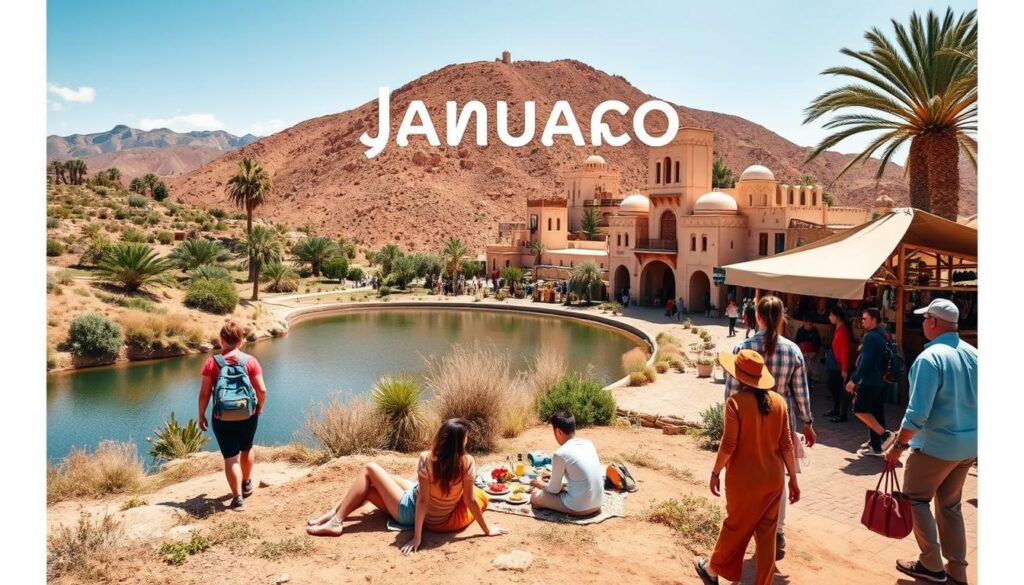
January is a great time to see Morocco’s culture and landscapes. The weather is mild, making it perfect for exploring.
Indoor Cultural Experiences
Morocco’s cities have museums, historical sites, and workshops. They are great for a January visit. You can learn about the country’s history and see amazing crafts while staying warm.
Museums and Historical Sites
Check out the Bahia Palace in Marrakech for stunning craftsmanship. Or see modern Moroccan art at the Musee d’Art Contemporain in Tangier. The ancient city of Volubilis also offers a peek into Morocco’s past.
Culinary and Artisan Workshops
Take a cooking class to learn Moroccan dishes. Or visit an artisan workshop to see crafts being made. These activities are a fun way to learn about Moroccan culture in January.
Outdoor Adventures in Winter
Morocco is perfect for outdoor fun in January. You can explore deserts or mountains, no matter your adventure level.
Desert Excursions and Camel Treks
Go on a camel trek in the Erg Chebbi dunes near Merzouga. Or take a desert excursion to see the Sahara’s calm. January’s cool weather makes these trips even better.
Mountain Hiking and Snow Activities
The Atlas Mountains are great for hiking, with trails for everyone. In January, you might find snow for snowshoeing or other winter sports.
January Events and Festivals in Morocco
January in Morocco is a time of unique celebrations. You’ll see both traditional and modern events. These gatherings show off Morocco’s lively culture and spirit.
Traditional Winter Celebrations
January is key for Morocco’s traditional celebrations. These events highlight the country’s history and customs.
Regional Cultural Festivities
January’s festivities vary by region, showing Morocco’s diverse traditions. For example, the Festival of the Almond Blossom in the south welcomes spring with music and food.
Religious Observances
January is also filled with religious events. Morocco being mostly Muslim, these dates are celebrated with deep respect and tradition.
Modern Events and Gatherings
Besides traditional events, Morocco has modern happenings in January. These events cater to all interests, showing the country’s modern culture.
Music and Arts Festivals
January is perfect for Morocco’s music and arts fans. The Marrakech International Film Festival and local music events highlight the country’s artistic talent.
Sporting Events
Sports lovers have plenty to enjoy in January. Morocco hosts international football and local sports, thanks to its modern sports facilities.
| Event Type | Location | Date |
|---|---|---|
| Almond Blossom Festival | Southern Morocco | Early January |
| Marrakech Film Festival | Marrakech | Late December/ Early January |
| Local Music Festivals | Various Cities | Throughout January |
Travel Tips for Visiting Morocco in January
Planning a trip to Morocco in January? Here are some key tips to make your trip better. Knowing the weather and being ready for the cold will improve your experience.
Transportation Considerations
January’s weather can change your travel plans, especially in rural areas or the Atlas Mountains. It’s important to think about how the weather might affect your travel.
Weather Effects on Travel Plans
Rain and cooler temperatures can make roads slippery. Mountainous areas might even see snow. Always check the weather forecast and choose reliable transport to avoid these issues.
Best Transportation Options by Region
In cities like Marrakech and Rabat, taxis and ride-sharing are good choices. For rural or mountainous areas, consider a private driver or guided tours that include transport.
| Region | Recommended Transportation |
|---|---|
| Urban Areas (Marrakech, Rabat) | Taxis, Ride-sharing Services |
| Rural/Mountainous Areas | Private Drivers, Guided Tours |
Accommodation Recommendations
Choosing the right place to stay is key for comfort in January. Look for places that are warm and have the right amenities for the season.
Staying Warm and Comfortable
Choose riads or hotels with heating, especially in cooler areas. Many riads in Marrakech are perfect for winter.
Regional Lodging Specialties
In the Atlas Mountains, stay in traditional lodges for a cozy feel. In cities, hotels with modern comforts are best.
By thinking about transport and choosing the right place to stay, you can have a great trip to Morocco in January. Even with the cooler weather, you’ll be comfortable and happy.
Conclusion
Visiting Morocco in January is a unique adventure. The weather varies greatly across different areas. Knowing the january temperature in morocco and weather in morocco during january is key for a great trip.
The coastal areas are mild, while the mountains are cold. The desert’s temperature changes dramatically. Morocco in January offers a rich and diverse travel experience.
You can enjoy indoor cultural spots, outdoor adventures, and winter celebrations. Whether you’re in the cities, by the Atlantic coast, or in the Atlas Mountains, there’s something for everyone. So, pack right and get ready to enjoy Morocco’s winter.



 Covers cities, coast, mountains, desert & food