

morocco temperature february
Planning your trip to Morocco in February? Knowing the average highs and lows is key. Morocco’s climate changes a lot depending on where you are.
In February, the north of Morocco sees daytime highs from 61°F to 66°F (16°C to 19°C). The central areas have temperatures between 63°F to 68°F (17°C to 20°C). If you’re going to the mountains, it gets cooler, especially at higher elevations. Daytime highs there are about 54°F to 59°F (12°C to 15°C).
The south of Morocco is warmer, with temperatures from 64°F to 75°F (18°C to 24°C). It’s a great spot for those looking for milder winter weather.
Key Takeaways
- Daytime highs in northern Morocco range from 61°F to 66°F (16°C to 19°C).
- Central regions experience temperatures between 63°F to 68°F (17°C to 20°C).
- Mountainous areas are cooler, with highs around 54°F to 59°F (12°C to 15°C).
- Southern Morocco is relatively warm, with temperatures between 64°F to 75°F (18°C to 24°C).
- Sea temperatures average around 59°F to 61°F (15°C to 16°C).
The Winter Climate of Morocco
In Morocco, the winter climate is a mix of Mediterranean, Atlantic, and desert influences. This mix comes from Morocco’s unique geography. It includes mountains, deserts, and a long coastline along the Atlantic Ocean.
Morocco’s Diverse Climate Zones
Morocco’s climate changes a lot in different areas. Coastal areas are milder than inland ones. The Atlas Mountains split the climate, with northern and western slopes being more humid and temperate.
The southern and eastern slopes are drier. The Sahara Desert in the south has extreme temperature changes.
| Region | Climate Characteristics |
|---|---|
| Coastal Areas | Mild winters, moderate temperatures |
| Atlas Mountains | Cold winters, potential for snow |
| Sahara Desert | Very cold nights, hot days |
February’s Position in Morocco’s Seasonal Calendar
February is right in the middle of Morocco’s winter. It’s cooler, especially in the mornings and evenings. February is a good time to visit Morocco, with mild weather in coastal areas.
You can see the average weather in Rabat during February on WeatherSpark for more details.

Morocco Temperature February
Morocco’s weather in February is mild during the day and cooler at night. The temperature varies by region.
Average Daytime Temperatures
In February, daytime temperatures in Morocco are usually between 17°C and 22°C. Daytime highs can sometimes reach up to 25°C (77°F) in cities like Marrakech. This makes it a great time to see the markets and historical sites. For more details on Marrakech’s weather, visit WeatherSpark.
- Coastal areas tend to be cooler, with temperatures around 17°C to 18°C (63°F to 64°F).
- Inland cities experience warmer days, often reaching the mid-twenties Celsius (around 77°F).
Typical Overnight Lows
February nights can be chilly, especially in the desert. Temperatures can drop to around 5°C to 10°C (41°F to 50°F) in the Sahara Desert. Coastal cities like Casablanca have milder nights, ranging from 10°C to 12°C (50°F to 54°F).

Packing layers is key for your trip in February. Knowing the highs and lows helps you prepare for Morocco’s varied weather.
Regional Temperature Variations Across Morocco
Morocco’s geography leads to different temperatures in February. As you travel, you’ll see cool coasts and colder inland areas.
Coastal Climate Characteristics
The coastal areas, like Casablanca and Rabat, have a milder climate in February. The Atlantic Ocean keeps temperatures stable.
Coastal areas have an average high of 17°C (63°F) and a low of 9°C (48°F). This makes them a great time to visit.
| City | Average High (°C) | Average Low (°C) |
|---|---|---|
| Casablanca | 17 | 9 |
| Rabat | 17 | 8 |
| Tangier | 16 | 9 |
Inland Temperature Patterns
Inland Morocco has more extreme temperatures in February. Cities like Marrakech and desert areas are cool, especially at night.
In Marrakech, highs reach 22°C (72°F), but lows can be 9°C (48°F). Inland areas are drier and have more temperature changes.
When visiting Morocco in February, bring layers. Temperatures change a lot between day and night, and between regions.
Marrakech Weather in February
Marrakech in February is a lovely place to visit, with temperatures getting warmer as the month goes on. You’ll find mild days and cool nights, perfect for exploring before the crowds arrive.
Temperature Ranges in the Red City
In February, Marrakech’s highs reach about 22°C (72°F) during the day. Nights can get down to around 9°C (48°F). So, pack layers for your trip, including light clothes for the day and warm ones for the evening. For the latest weather, check weather forecasts for Marrakech’s Menara Airport.
Sunshine Hours and Rainfall Expectations
February brings lots of sunshine to Marrakech, with about 7.5 hours of it daily. Though it’s mostly dry, you might see some rain, averaging 27 mm (1.1 inches) over a few days. The rain is usually light, so it won’t ruin your trip. 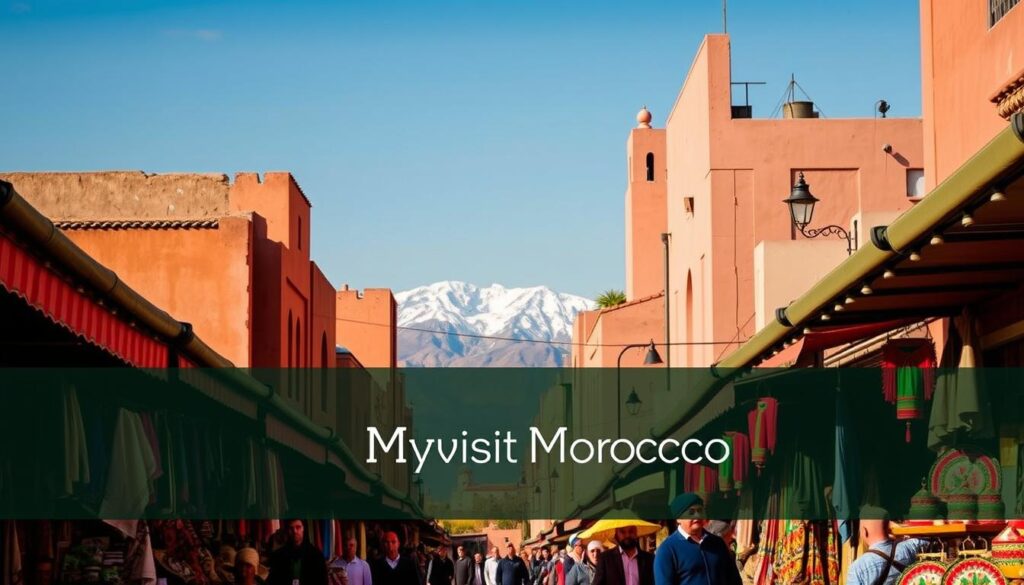
February is a wonderful time to see Marrakech if you like milder weather and fewer people around. With nice temperatures and lots of sunshine, you’ll enjoy the city’s lively markets, historic spots, and cultural events.
Casablanca and Rabat February Climate
Exploring Morocco’s Atlantic coast in February reveals a unique climate in cities like Casablanca and Rabat. The weather is shaped by the Atlantic Ocean, offering a different feel than inland areas.
Atlantic Coast Temperature Patterns
In February, Casablanca and Rabat see temperatures from highs of 17°C (63°F) to lows of 9°C (48°F). These mild temperatures make the Atlantic coast a great winter spot. Expect:
- Mild daytime temperatures, perfect for exploring
- Cooler nights, needing light layers for warmth
- Moderate sea temperatures, good for walks but not for swimming
Humidity and Wind Factors
February brings moderate humidity to the Atlantic coast, between 60% to 80%. Wind speeds average 20-25 km/h (12-16 mph) in Casablanca and Rabat. This can make it feel cooler, especially in the mornings and evenings.
Visiting Casablanca and Rabat in February means you might see some rain. But it’s usually not heavy. The mix of humidity, wind, and temperature creates a cool winter climate, unlike the warmer summers.
Northern Morocco: Tangier and Chefchaouen in February
Traveling to Northern Morocco in February? You’ll want to know about the weather in Tangier and Chefchaouen. The area’s climate is shaped by its location near the Mediterranean Sea. This sea affects both temperatures and how much rain falls.
Mediterranean Influences on Temperature
The Mediterranean climate keeps temperatures in Tangier and Chefchaouen mild in February. Daytime highs usually reach about 17°C (63°F). Nights can get cooler, dropping to around 8°C (46°F).
Tangier’s coastal spot means it stays warmer, thanks to the Mediterranean. Chefchaouen, being inland and higher up, can get chilly, especially at night.
Rainfall and Cloud Cover Statistics
February is still wet in Northern Morocco, with Tangier and Chefchaouen seeing a lot of rain. Tangier gets about 100 mm of rain, with 8 rainy days on average.
| City | Average High Temperature | Average Low Temperature | Average Rainfall |
|---|---|---|---|
| Tangier | 17°C (63°F) | 8°C (46°F) | 100 mm |
| Chefchaouen | 15°C (59°F) | 6°C (43°F) | 120 mm |
Knowing the weather in Northern Morocco in February helps plan your trip better. Whether you’re visiting Tangier’s lively streets or Chefchaouen’s scenic views, being ready for the weather makes your trip better.
The Sahara Desert Experience in February
The Sahara Desert in February is a unique adventure. The day is hot, but the night gets cold. Knowing the Sahara’s temperature is key for a great trip to Morocco in February.
Daytime Heat and Sunshine
The Sahara is warm and sunny during the day. Temperatures often hit 22°C (72°F) in February. The clear skies make the sun’s rays intense, making it feel warmer.
You’ll see lots of sunshine, with 8-9 hours of daylight. Here’s a table showing daytime temperatures in different Sahara parts in Morocco in February:
| Location | Average High Temperature (°C) | Average High Temperature (°F) |
|---|---|---|
| Merzouga | 20 | 68 |
| Zagora | 22 | 72 |
| Errachidia | 21 | 70 |
Cold Desert Nights: What to Expect
Nights in the Sahara can be very cold. Temperatures can fall to 5°C (41°F) in February. It’s important to pack layers for the cold nights.
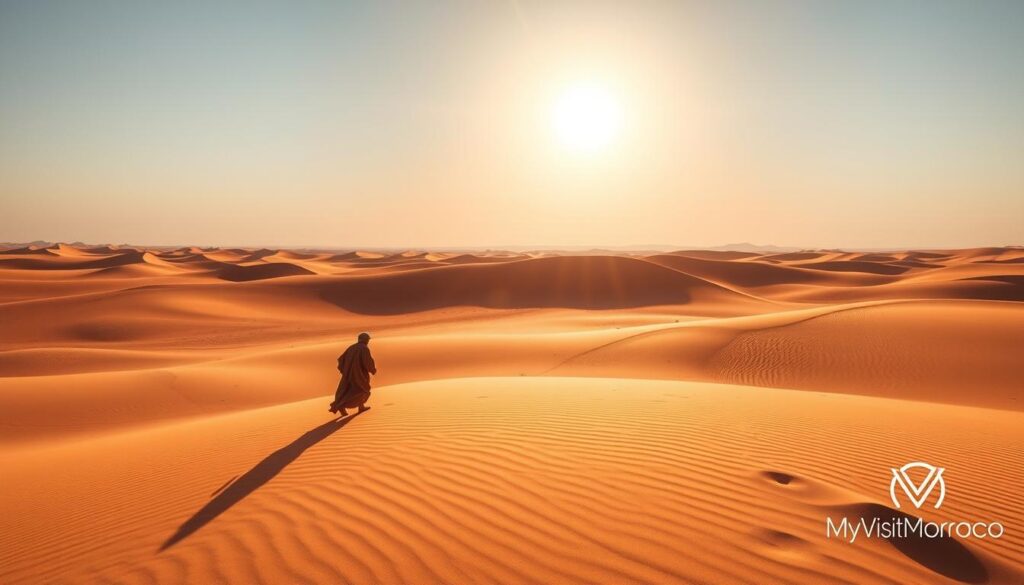
Knowing the temperature changes will help you prepare for your Sahara trip in February. This way, you’ll have the right clothes for both the warm days and cold nights.
Atlas Mountains February Conditions
The Atlas Mountains offer a unique winter experience in February. Conditions vary greatly by altitude. Exploring this beautiful region of Morocco, you’ll find different weather conditions.
Temperature Variations by Altitude
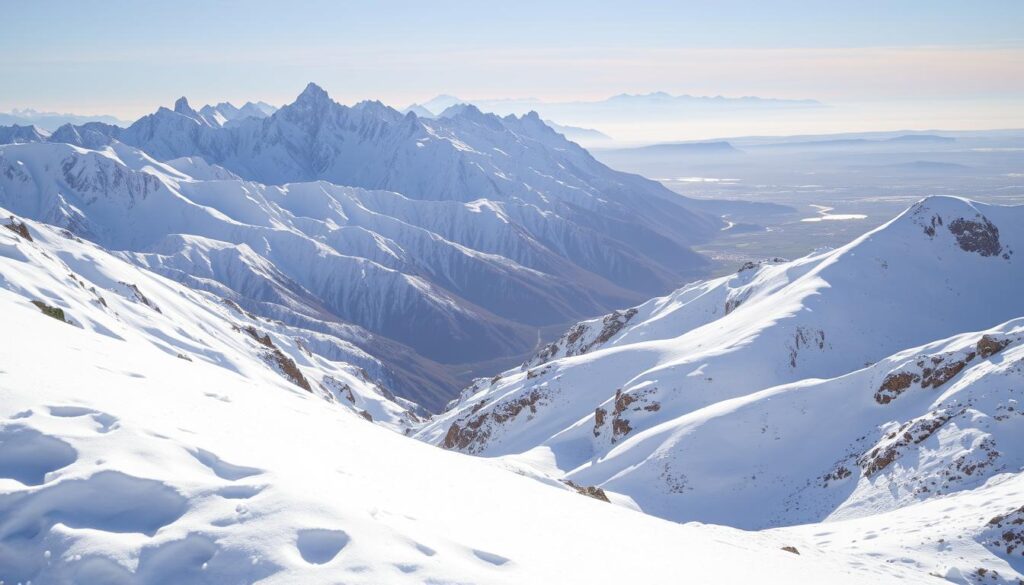
In February, the Atlas Mountains’ temperature changes with altitude. At lower elevations, it’s mild, with highs of 12°C to 15°C (54°F to 59°F). But, as you go higher, it gets colder, often below 0°C (32°F) at night.
The higher peaks can be snow-capped. This creates a beautiful winter scene.
| Altitude | Daytime Temperature | Nighttime Temperature |
|---|---|---|
| Low (500m) | 12°C – 15°C | 5°C – 8°C |
| Medium (1500m) | 8°C – 12°C | 0°C – 5°C |
| High (3000m) | 0°C – 8°C | -5°C to 0°C |
Snow Conditions for Winter Sports
February is great for winter sports in the Atlas Mountains. Many resorts have good snow. This makes skiing and snowboarding perfect.
Resorts like Oukaïmeden and Mischliffen are favorites. They offer slopes for all skill levels. Make sure to pack warm and icy-proof gear.
What to Pack for Morocco in February
When you’re planning your trip to Morocco in February, remember to pack layers. The weather can be cool in the evenings, especially in the desert and mountains. Bring long-sleeve tops, sweaters, and warm socks to stay cozy.
A packable winter jacket is a smart choice, as nights can get really cold. For more tips on what to wear, check out this guide on dressing for Morocco’s climate.
February’s average temperature in Morocco means cooler mornings and evenings. But the days are still mild, making it a perfect time to explore. You’ll find comfortable weather for both city and countryside adventures.
By packing smart and wearing layers, you’ll be ready for Morocco in February. No matter where you go, you’ll be comfortable.





 Covers cities, coast, mountains, desert & food