
Planning a trip to Morocco in August? It’s key to know the weather. The high temperature can get very hot. So, it’s important to understand what you’ll face.
The climate is hot desert, with big differences between day and night temperatures. Being ready for these changes will make your trip better.
Knowing the average temperature in Morocco in August lets you pack right. It also helps you enjoy your summer trip more.
Key Takeaways
- High desert temperatures during the day
- Significant drop in temperature at night
- Importance of staying hydrated
- Regional climate variations across Morocco
- Best practices for coping with the August heat
Morocco’s Climate Overview in August
Planning a trip to Morocco in August? Knowing the climate is key for a comfortable trip. Morocco’s August weather is hot and dry, typical of North Africa’s summer peak.

General Weather Patterns
In August, Morocco’s weather is hot all day. Expect little rain, as August is very dry. The dry heat is important to think about when packing.
The average high in August is about 38°C (100°F). Some cities inland can get even hotter. Exploring in the middle of the day can be tough because of the heat.
Regional Climate Variations
Despite the hot and dry overall climate, there are regional differences. Coastal areas are cooler than inland, with cities like Casablanca and Rabat being milder. Marrakech or Fez are hotter.
Desert areas, like Merzouga and Zagora, are very hot during the day. But, it cools down a lot at night. Knowing these differences helps you pack right for your Moroccan travels.
Morocco Temperature August: The Facts and Figures
When planning your trip to Morocco in August, knowing the temperature is key. August is the hottest month, with extreme highs in inland cities. It’s important to understand the historical temperature data and daily changes.
Historical Temperature Data
In August, Morocco’s climate is very hot, with temperatures over 100°F (38°C) in places like Marrakech and Fez. The average high temperatures range from 95°F (35°C) by the coast to over 104°F (40°C) in the desert. Below is a table showing average temperature ranges in different parts of Morocco in August.
| Region | Average High Temperature (°F) | Average Low Temperature (°F) |
|---|---|---|
| Coastal Regions | 86 – 95 | 68 – 75 |
| Inland Cities | 95 – 104 | 75 – 82 |
| Desert Areas | 104 – 113 | 82 – 90 |
Temperature Fluctuations Throughout the Day
It’s important to know how temperatures change throughout the day. The hottest time is usually between 12 pm and 3 pm. It’s best to stay indoors then. The evenings are cooler, perfect for outdoor activities.
In the desert, the temperature drops a lot at night. So, make sure to pack for the cooler nights.
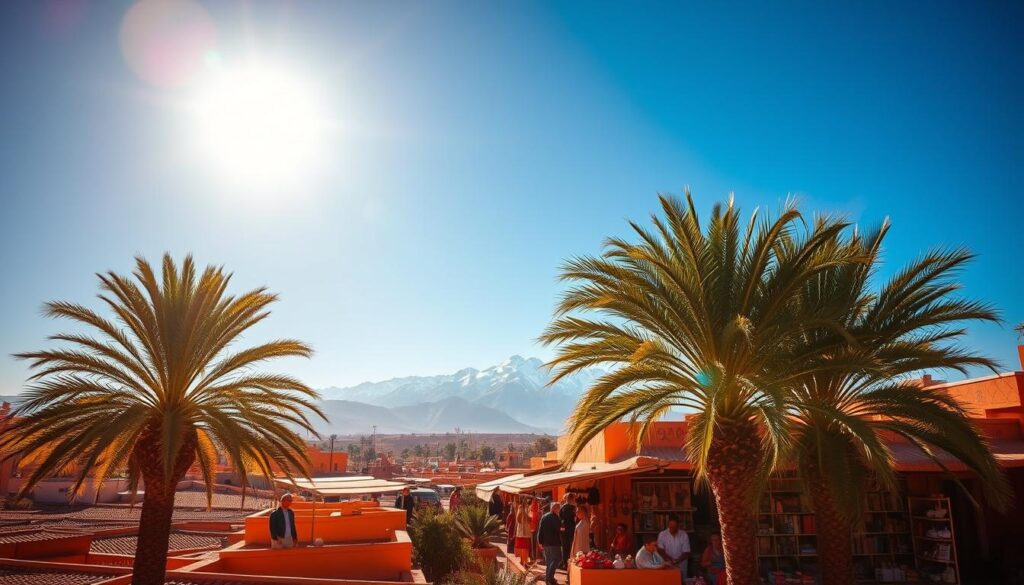
Knowing these temperature patterns helps you plan your day better. This way, you can enjoy Morocco in August more comfortably.
Coastal Morocco in August
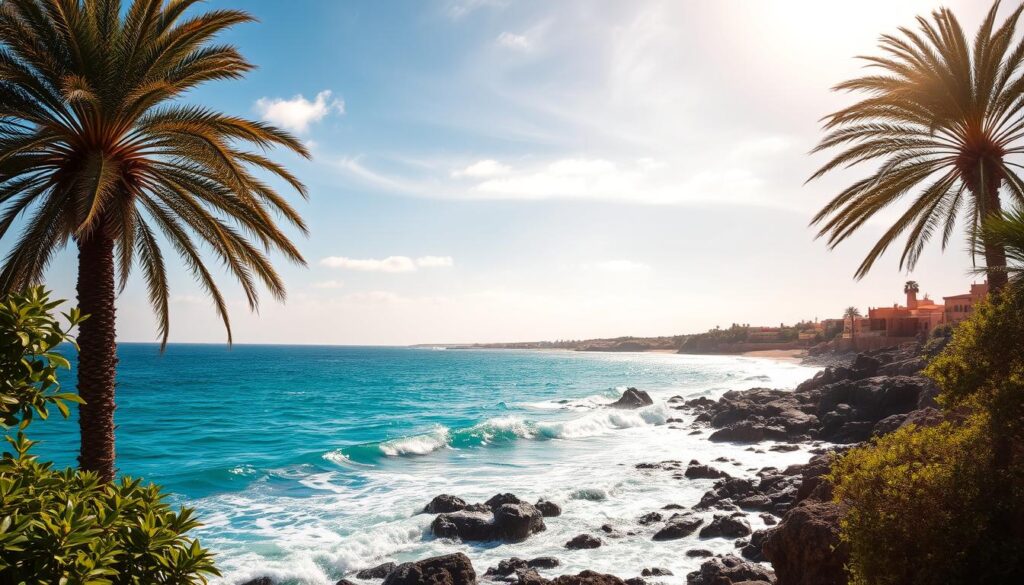
Morocco’s coast is a cool escape from the summer heat. The weather is milder than inland areas. Coastal cities are perfect for beach fun, cultural spots, and outdoor adventures.
Casablanca and Rabat Weather
Casablanca and Rabat have mild August weather. Temperatures reach highs of 26°C (79°F) and lows of 20°C (68°F). A gentle ocean breeze keeps things comfortable. You can explore historical sites or walk along the Corniche.
Tangier and Mediterranean Coast
Tangier and the Mediterranean coast have unique weather. August brings highs of 28°C (82°F) and lows of 22°C (72°F). The summer is pleasant, ideal for beach visits and water sports.
Essaouira and Agadir Climate Conditions
Essaouira and Agadir boast pleasant coastal weather. Essaouira sees highs of 24°C (75°F) and lows of 18°C (64°F), with a sea breeze. Agadir is warmer, with highs of 28°C (82°F) and lows of 20°C (68°F). Both are great for escaping inland heat.
For more weather details, check Holiday Hypermarket’s Morocco Weather Page. It offers year-round climate insights.
| City | Average High Temperature | Average Low Temperature |
|---|---|---|
| Casablanca | 26°C (79°F) | 20°C (68°F) |
| Rabat | 26°C (79°F) | 20°C (68°F) |
| Tangier | 28°C (82°F) | 22°C (72°F) |
| Essaouira | 24°C (75°F) | 18°C (64°F) |
| Agadir | 28°C (82°F) | 20°C (68°F) |
Inland Cities: Marrakech and Fez in August
Morocco’s inland cities, like Marrakech and Fez, get very hot in August. It’s key to know the temperature patterns and how to stay cool in these cities.
Marrakech’s Heat Intensity
Marrakech is one of the hottest places in Morocco in August. Temperatures can reach extreme highs. The desert climate makes the heat relentless, especially during the day.
Daily Temperature Patterns
In Marrakech, August days can hit 38°C (100°F). Nights drop to about 23°C (73°F). This big change means you need to be ready for both the heat and cooler evenings.
Heat Index and Humidity Levels
The heat index in Marrakech in August makes it feel even hotter. Although humidity is usually low, the heat index can still make it feel very hot. Staying hydrated and protecting yourself from the heat is crucial.
Fez Temperature Patterns
Fez, another inland city, has a similar climate to Marrakech but with some unique features. The old medina in Fez can be especially challenging because of its dense architecture, which traps heat.
Old Medina Microclimate
The old medina of Fez has a microclimate that feels hotter than the rest of the city. The narrow streets and buildings absorb and hold heat, making it feel more intense. Visitors should be ready for this when exploring the medina.
Surrounding Areas
The areas around Fez can be a bit cooler, especially in the evenings. But the overall temperature is still high. Visitors should still protect themselves from the heat. Exploring the surrounding areas can offer some relief and a different view of the region.
Desert Regions: Sahara Temperature in August
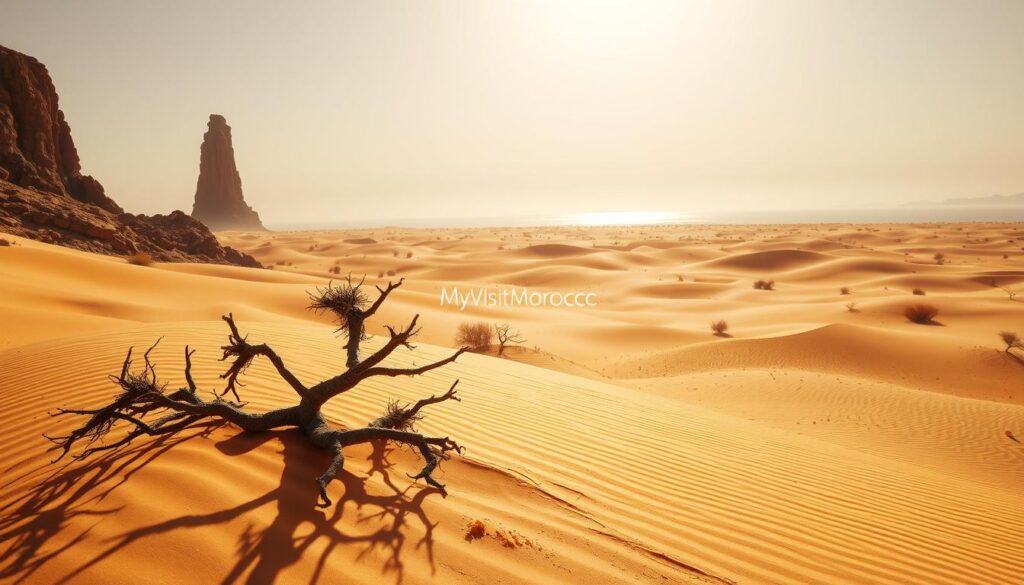
Morocco’s Sahara Desert turns into a hot furnace in August. Temperatures hit extreme highs. Knowing the climate is key for a fun trip.
Merzouga and Erg Chebbi Dunes
Merzouga is a small village near Erg Chebbi’s stunning sand dunes. In August, it gets very hot, with days reaching 45°C (113°F). Nights cool down to about 25°C (77°F).
The heat is intense during the day. It’s best to do activities early morning or late evening.
Zagora and M’Hamid Climate
Zagora and M’Hamid are also in the Sahara Desert. August is very hot here, with highs over 43°C (109°F). The dry air makes the heat even more intense.
Staying hydrated is crucial. Protecting yourself from the sun is also important. Plan your visit carefully to stay safe.
| Location | Average High Temperature in August | Average Low Temperature in August |
|---|---|---|
| Merzouga | 45°C (113°F) | 25°C (77°F) |
| Zagora | 43°C (109°F) | 24°C (75°F) |
| M’Hamid | 44°C (111°F) | 26°C (79°F) |
Mountain Areas: Atlas Mountains in August
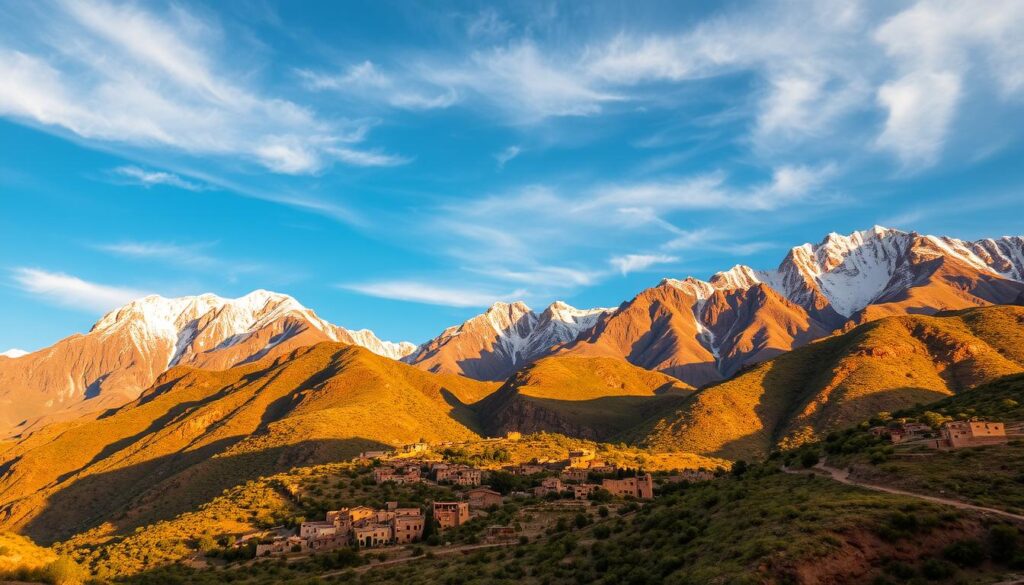
The Atlas Mountains are a cool escape from Morocco’s summer heat. As you explore, you’ll see the temperature drop compared to lower areas.
High Atlas Temperature Variations
The High Atlas range has big temperature changes between day and night. Daytime temperatures can hit 25°C (77°F), but nights can get as cold as 10°C (50°F). It’s important to bring layers.
“The Atlas Mountains are a haven for those seeking respite from the heat.” The cooler weather is perfect for hiking and visiting Berber villages.
Mountain Retreats for Heat Escape
The Atlas Mountains have great places to escape the heat. Towns like Imlil and Oukaïmeden are cooler and have many places to stay. You can hike, bike, or just enjoy the views.
“The mountains are calling, and I must go.” This quote fits many who find peace in the Atlas Mountains’ landscapes and cooler air.
Visiting the Atlas Mountains in August means enjoying temperatures from 15°C to 25°C (59°F to 77°F). It’s a great place to find relief from summer’s heat.
What to Pack for Morocco’s August Heat
Getting ready for Morocco’s August weather means choosing the right clothes and accessories. This ensures a fun and comfy trip. The hot weather calls for careful planning of what to wear and bring.
Essential Clothing Items
For clothes, focus on lightweight and breathable fabrics. You’ll need:
- Loose-fitting cotton clothes for airflow
- Moisture-wicking fabrics to stay cool and dry
- A hat or cap to shield your face and head from the sun
- Comfortable sandals or breathable shoes for walking
For more packing tips, check out this guide on what to pack for.
Heat Protection Accessories
Don’t forget these accessories to protect yourself from the heat:
- Sunglasses with UV protection for your eyes
- Sunscreen with high SPF to avoid sunburn
- A refillable water bottle to stay hydrated
- A portable fan or cooling towel for extra comfort
With these essentials, you’ll be ready to enjoy Morocco’s August heat and make the most of your trip.
Dealing with the Heat: Survival Tips for American Travelers
Morocco’s summer heat can be overwhelming, but you can manage it. When planning your trip to Morocco in August, knowing how to handle the heat is key. This will make your trip comfortable and fun.
Hydration Strategies
Staying hydrated is crucial in Morocco’s summer. Drink lots of water all day. Carry a refillable water bottle everywhere.
The desert regions in Morocco can get very hot in August. Drinking water often keeps your body balanced and stops dehydration.
| Hydration Tip | Benefit |
|---|---|
| Drink water regularly | Maintains body fluid balance |
| Avoid sugary and caffeinated drinks | Reduces risk of dehydration |
| Eat hydrating foods | Contributes to overall fluid intake |
Daily Schedule Adjustments
Changing your daily schedule helps with Morocco’s August heat. Do outdoor activities in the cooler morning or evening.
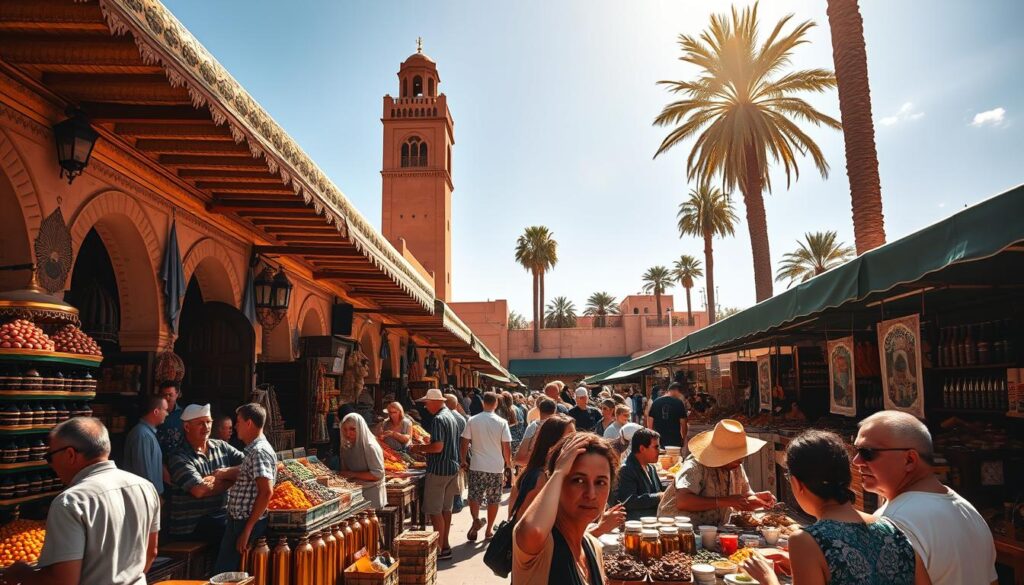
Stay out of the sun between 11 am and 3 pm. Take breaks in shaded or air-conditioned spots to cool down.
Best Places to Visit in Morocco During August
August is hot in Morocco, but you can still have a great trip. There are cool places to visit, from coastal towns to mountain retreats. These spots are perfect for a refreshing August getaway.
Coastal Retreats
Morocco’s coast is great for escaping the heat. Essaouira and Agadir have nice weather by the sea. You can swim, shop at markets, and relax on the beach.
The coastal breeze makes these towns perfect for summer. For more info, check out places to visit in Morocco.
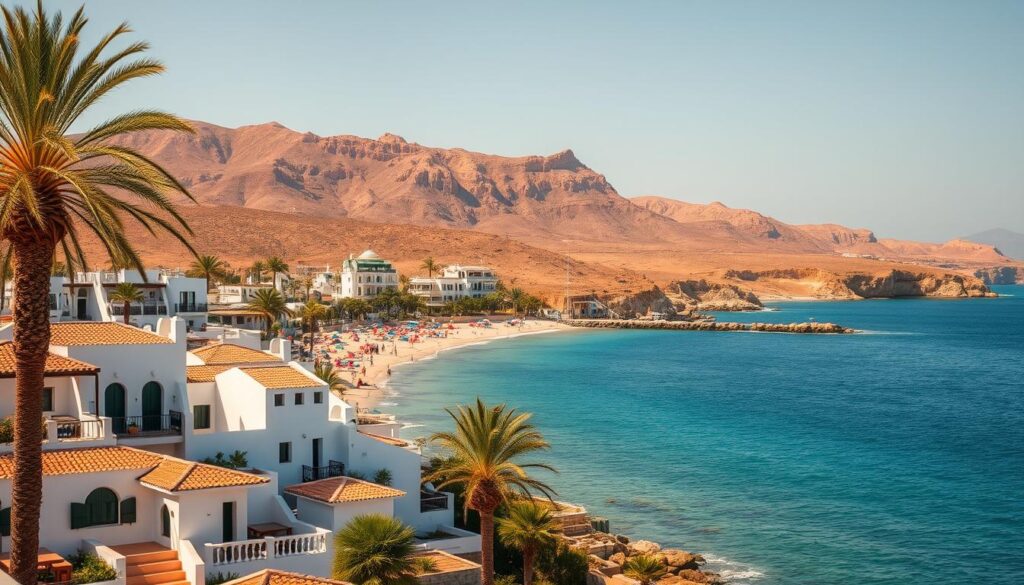
Tangier is another coastal gem. It offers culture and beach fun. The sea breeze in Tangier is cool, making it great for summer.
Mountain Escapes
Morocco’s mountains are cool and perfect for escaping the heat. The Atlas Mountains are great for hiking and exploring. Visit Imlil for serene views and cooler air.
The Rif Mountains are also a hidden gem. They have lush landscapes and a cooler climate. You can hike, explore villages, and enjoy stunning views.
Activities Suitable for August Weather in Morocco
Discover the best of Morocco in August with water activities and cultural tours. August is the hottest month, but you can still have a great trip with the right planning.

Water-Based Experiences
Visit coastal towns like Essaouira and Agadir for water fun. You can relax on the beach or try water sports. The coast is cooler than inland areas.
Indoor Cultural Explorations
Learn about Morocco’s culture by visiting museums, riads, and historic sites. These places are indoors, so they’re cool in August. Explore souks, ancient medinas, or relax in a riad.
Early Morning and Evening Activities
Plan your day for the cooler times. Take a guided tour, go hiking, or stroll through markets in the morning or evening.
| Activity | Location | Best Time |
|---|---|---|
| Beach Relaxation | Essaouira, Agadir | Morning, Evening |
| Cultural Exploration | Marrakech, Fez | Anytime (Indoor) |
| Hiking | Atlas Mountains | Early Morning |
Plan your activities around the heat for a fulfilling trip in Morocco, even in August.
Health Considerations: Traveling in Morocco’s August Heat
Morocco’s August heat is well-known, and it’s key to know how to stay safe. When you visit Morocco in August, you face high temperatures, especially in the desert and inland. The average temperature can get very high, so being ready is a must.
Heat-Related Illness Prevention
Stopping heat-related illnesses is a big deal in August Morocco. Drink lots of water all day to stay hydrated. Try to avoid hard activities from 11 am to 3 pm. Also, choose cool spots or places with air conditioning when you can.
Knowing the signs of heat exhaustion or heatstroke is important. Look out for dizziness, nausea, headaches, and a high body temperature.
| Symptom | Action |
|---|---|
| Dizziness, Nausea | Rest in a cool place, hydrate |
| Headaches, High Body Temperature | Seek medical attention if severe |
Medical Preparations and Precautions
Before you go to Morocco, make sure you’re ready medically. Talk to your doctor, especially if you have health issues. Bring your important medicines and a travel health kit with sunscreen, a hat, and oral rehydration salts.
Knowing the local healthcare and having a plan for emergencies can also help. This way, you’ll feel more at ease during your trip.
August vs. Other Months: When to Visit Morocco
Planning a trip to Morocco? Knowing the climate changes is key. August is very hot, but how does it stack up against other months?
Comparing Summer Months
Summer in Morocco, from June to August, brings high heat, especially in the desert. August is hot, but July is the hottest month. For a cooler summer, June might be better. But, if you want beach fun, Essaouira and Agadir are great in August.
Alternative Seasons for Comfortable Travel
Want to dodge the heat? Spring (March to May) and autumn (September to November) are perfect. The weather is mild, perfect for city explorations in Marrakech and Fez. For more tips, see Lonely Planet’s guide.
| Season | Months | Weather Conditions |
|---|---|---|
| Spring | March – May | Mild, pleasant temperatures |
| Summer | June – August | Hot, especially in desert regions |
| Autumn | September – November | Comfortable, fewer tourists |
Average Temperature in Morocco August: Regional Breakdown
Morocco’s geography leads to different temperatures in August. Knowing these differences helps you plan your trip. It lets you pick places that fit your comfort level.
The country’s climate changes from Mediterranean in the north to desert in the south. This means big temperature differences. Here’s what you can expect in different parts of Morocco.
Northern Morocco
Northern Morocco, like Tangier and Tetouan, has a Mediterranean climate. In August, days are usually in the mid-80s Fahrenheit (around 30°C). Nights can drop to the mid-60s Fahrenheit (around 18°C). The sea keeps temperatures a bit cooler.
Central Morocco
Central Morocco, home to Marrakech and Fez, gets very hot in August. Days often hit over 100°F (38°C), sometimes even more. Nights are still warm, from the mid-70s to low 80s Fahrenheit (around 23-27°C).
Southern Morocco
Southern Morocco, like Merzouga and Zagora, is scorching in August. Daytime temperatures can hit 115°F (46°C) or more. Nights can cool down to around 75°F (24°C) or lower, thanks to clear skies.
| Region | Average High Temperature (°F) | Average Low Temperature (°F) |
|---|---|---|
| Northern Morocco | 86 | 66 |
| Central Morocco | 104 | 77 |
| Southern Morocco | 115 | 75 |
The table shows big temperature differences across Morocco in August. Planning your activities based on the region’s temperature can make your trip better.
Conclusion: Planning Your August Trip to Morocco
Getting ready for your August trip to Morocco? Knowing the temperature is key for a comfortable trip. Highs often hit over 100°F (38°C) in some areas, so plan well.
Coastal spots like Essaouira and Agadir are cooler, perfect for escaping the heat. But cities like Marrakech and Fez get very hot. Stay hydrated and adjust your plans to beat the heat.
Understanding Morocco’s August weather helps you pack right and plan activities. Whether you’re exploring markets, relaxing by the sea, or heading to the Sahara, Morocco has it all.



 Covers cities, coast, mountains, desert & food