
morocco native language
Exploring Morocco’s culture makes you curious about the languages spoken there. Morocco’s language scene is rich and varied, with many dialects and languages present.
The country’s language history is shaped by its past, geography, and cultural exchanges. Morocco’s language scene is both complex and intriguing, from the official language to local dialects.
Key Takeaways
- Morocco has a diverse linguistic landscape with multiple languages and dialects.
- The official language is Arabic, but other languages are also widely spoken.
- Regional dialects play a significant role in shaping the country’s language profile.
- Morocco’s language heritage is influenced by its history and cultural exchange.
- The country’s linguistic diversity is a reflection of its rich cultural identity.
The Linguistic Mosaic of Morocco
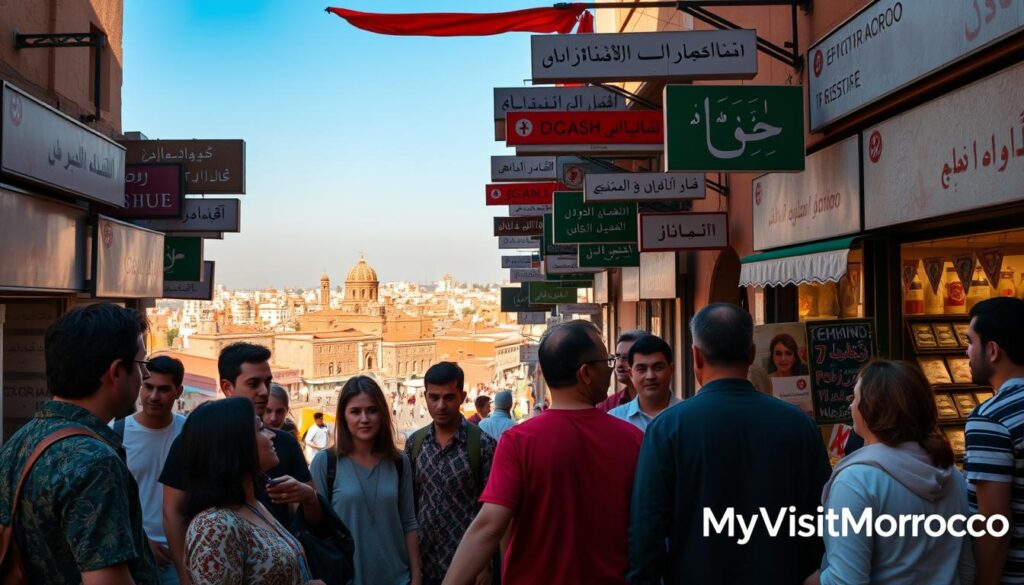
Exploring Morocco reveals a rich linguistic tapestry. The country’s location at the crossroads of Africa, Europe, and the Arab world has created a unique mix of languages and cultures. This diversity is seen in the many languages spoken across the country.
A Nation at the Crossroads of Multiple Civilizations
Morocco’s strategic location has shaped its language profile. The country has been influenced by the Berbers, Arabs, French, and Spanish. Each civilization has left its mark on the language.
This blend of cultures comes from Morocco’s history as a major trade route. It was also exposed to different colonial powers. The culture of Morocco is a rich mix of traditions and customs.
The Four-Tiered Language System
Morocco’s language system is complex, with four main levels. These include Classical Arabic, Modern Standard Arabic, Darija (Moroccan Arabic), and Berber languages. Each language has its own role in Moroccan society.
Understanding this system is crucial to grasping moroccan culture and language.
Official Languages of the Kingdom
Knowing Morocco’s official languages is important. The country has two main languages: Modern Standard Arabic and Amazigh (Berber). These languages are at the heart of Morocco’s culture.

Modern Standard Arabic: The Primary Official Language
Modern Standard Arabic is Morocco’s main official language. It’s used in government, schools, and formal events. This version of Arabic is understood across the Arab world, helping people from different countries talk to each other.
Usage in Government and Formal Settings
In Morocco, Modern Standard Arabic is key in official documents and speeches. It’s also the language taught in schools, from elementary to university. This ensures everyone learns the same language.
Religious Significance of Classical Arabic
Classical Arabic, similar to Modern Standard Arabic, is very important for religion. It’s the language of the Quran. This makes Modern Standard Arabic even more important in Moroccan society, linking it to Islam.
Amazigh (Berber): Recognition as an Official Language
Amazigh, or Berber, is Morocco’s second official language. It’s valued for its culture and history. There are many Amazigh dialects spoken in different parts of Morocco.
The 2011 Constitutional Reform
The 2011 constitutional reform was a big step for Amazigh. It was officially recognized as an official language, alongside Arabic. This change recognized Morocco’s linguistic diversity and the role of Amazigh in its identity.
Standardization Efforts and Tifinagh Script
There are efforts to make Amazigh more standardized. The Tifinagh script is being used to write Amazigh. This is important for teaching and using Amazigh in official settings.
Darija: The Morocco Native Language of Everyday Communication
As you explore Morocco’s lively markets and souks, you’ll see Darija is more than a language. It’s a key to understanding the local culture. Darija, the everyday Arabic spoken in Morocco, is crucial for Moroccans. It’s how they talk in casual settings.

What Makes Moroccan Arabic Unique
Moroccan Arabic, or Darija, stands out from other Arabic forms. Its sound and words are different from Standard Arabic. This makes it special.
Phonological Characteristics
Darija sounds different from Modern Standard Arabic. Its unique sounds make it distinct. Some key differences include:
- The use of the “v” sound, which is not found in Modern Standard Arabic.
- The pronunciation of the “q” sound as a “g” or “q” depending on the region.
- The simplification of certain consonant clusters.
Vocabulary Differences from Standard Arabic
Darija has words from French, Spanish, and Berber. This shows Morocco’s history and cultural mix. Some examples are:
- Using French loanwords for modern concepts and technology.
- Incorporating Berber words related to agriculture and traditional practices.
Regional Variations of Darija
Darija changes depending on where you are in Morocco. You’ll notice differences between city and countryside.
Urban vs. Rural Dialects
Cities like Casablanca and Rabat have their own dialects. These are different from rural areas. City dialects often include words from other languages, showing the diversity of city life.
Geographical Dialect Boundaries
Geography shapes the dialects in Morocco. For example, northern dialects might be influenced by Spanish. Southern dialects might keep more Berber words.
The Amazigh (Berber) Languages of Morocco
In Morocco, Amazigh languages play a big role in the country’s identity. These languages, also known as Berber, have a long history in Morocco. They are not just old relics but are still important in Moroccan culture and daily life.
Tarifit, Tamazight, and Tashelhit: The Main Berber Varieties
There are three main Amazigh languages in Morocco: Tarifit, Tamazight, and Tashelhit. Each has its own unique features and is spoken in different parts of the country.
Geographical Distribution
Tarifit is mainly spoken in the Rif region of northern Morocco. Tamazight is found in the Middle Atlas region. Tashelhit is spoken in the High Atlas and Souss regions. This shows the historical and cultural ties of Amazigh communities to their lands.
| Amazigh Language | Primary Region |
|---|---|
| Tarifit | Rif region, northern Morocco |
| Tamazight | Middle Atlas region |
| Tashelhit | High Atlas and Souss regions |
Mutual Intelligibility Challenges
Even though they belong to the same Amazigh family, these languages can be hard to understand for each other. This is because of differences in words, pronunciation, and grammar. It shows the rich diversity within the Amazigh community.

The Revival of Amazigh Cultural Identity
Recently, there’s been a big push to bring back and celebrate Amazigh culture in Morocco. This effort is seen in many initiatives to keep and promote the Amazigh languages.
The Royal Institute of Amazigh Culture
The Royal Institute of Amazigh Culture is a key player in this movement. It works to support the Amazigh language and culture. The institute helps with education, research, and cultural events that honor Amazigh heritage. For more on Morocco’s languages, check out Wikipedia’s page on the Languages of.
Amazigh Media and Publications
There’s also been a rise in Amazigh media and publications. TV channels, radio stations, and newspapers now offer content in Amazigh. This makes the languages more accessible and helps build a sense of community among Amazigh speakers.
French Language in Moroccan Society
French plays a big role in Morocco, a country with many languages. Its influence comes from Morocco’s history, especially during the colonial times.
Colonial Legacy and Continued Presence
The French ruled Morocco from 1912 to 1956. French became the language of government, schools, and business. This legacy still affects Moroccan society today.
Historical Context of the Protectorate
During the French rule, French was for the ruling class. It was used to keep the local people apart. But, it also brought modern things like schools and hospitals, all in French.
Post-Independence Language Policies
After gaining freedom in 1956, Morocco had to decide on its language. Arabic became the official language, but French still had a big role. For more on French in Morocco, check out Crossroads Cultural Exchange.
French in Education, Business, and Government
Today, French is key in Morocco, especially in schools, business, and government. It’s used for talking to the world and is seen as a way to get ahead.
The Prestige Language of Opportunity
In Morocco, speaking French means you’re seen as more important and have better job chances. Many see French as a way to get into global markets and study abroad.
Francophone Education System
The schools in Morocco follow a French curriculum. This has made Morocco close to Francophone countries and helped with cultural sharing.
Spanish Influence in Northern Morocco
Spanish has left a lasting mark in Northern Morocco. The region’s history with Spain has shaped local dialects and cultural practices.
Historical Context of Spanish Presence
The Spanish presence in Northern Morocco began in the early 20th century. This time period is key to understanding the area’s language today.
The Spanish Protectorate (1912-1956)
During the Spanish Protectorate, Spanish was used for administration and education. This period set the stage for Spanish’s ongoing impact in the region.
Ceuta, Melilla, and Border Regions
Ceuta and Melilla, and the border areas, still show strong Spanish influences. These places keep close ties with Spain culturally and economically.
Spanish Linguistic Elements in Northern Dialects
Northern Moroccan dialects have many Spanish words, especially in commerce and food. Common Spanish loanwords are part of daily life.
| Spanish | Moroccan Arabic Dialect | English Translation |
|---|---|---|
| pan | ban | bread |
| café | qahwa | coffee |
| televisión | tilivizyon | television |
Spanish Media Consumption in the North
Many in Northern Morocco watch Spanish TV and listen to Spanish radio. This keeps Spanish influences alive in local dialects and culture.
English and Other Foreign Languages
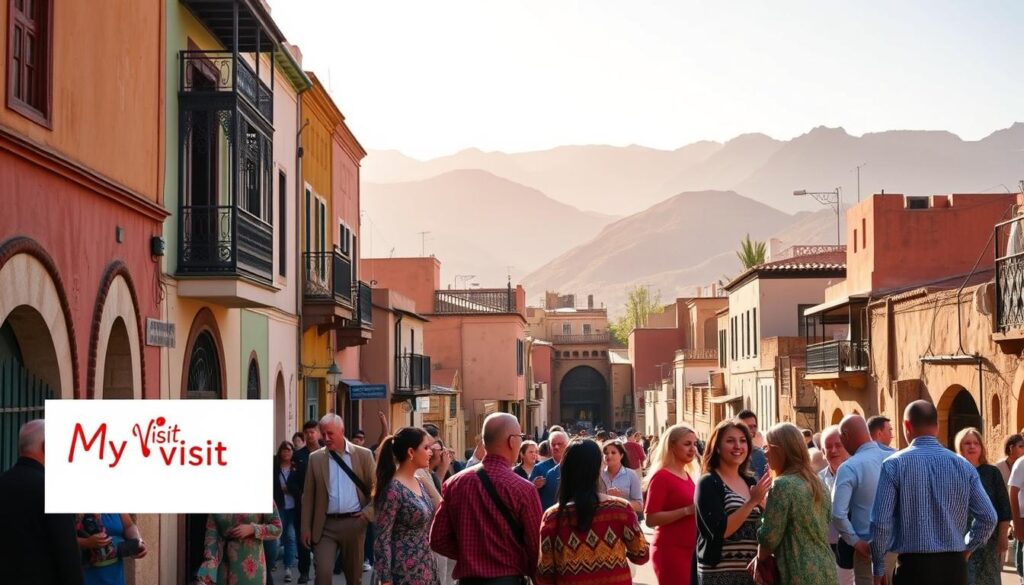
English is becoming more important in Morocco, especially in education, tourism, and trade. As Morocco connects more with the world, more people want to speak English.
The Growing Importance of English
English is key in Morocco for business and tourism. Tourism is booming, with visitors coming for Morocco’s culture and nature.
Tourism and International Business
More tourists and business mean more need for English. Hotel staff and tour guides are learning English to help visitors.
English in Education Reform
Education in Morocco is changing to include more English. Kids start learning English earlier, and there are more resources for it.
Other Languages in Moroccan Society
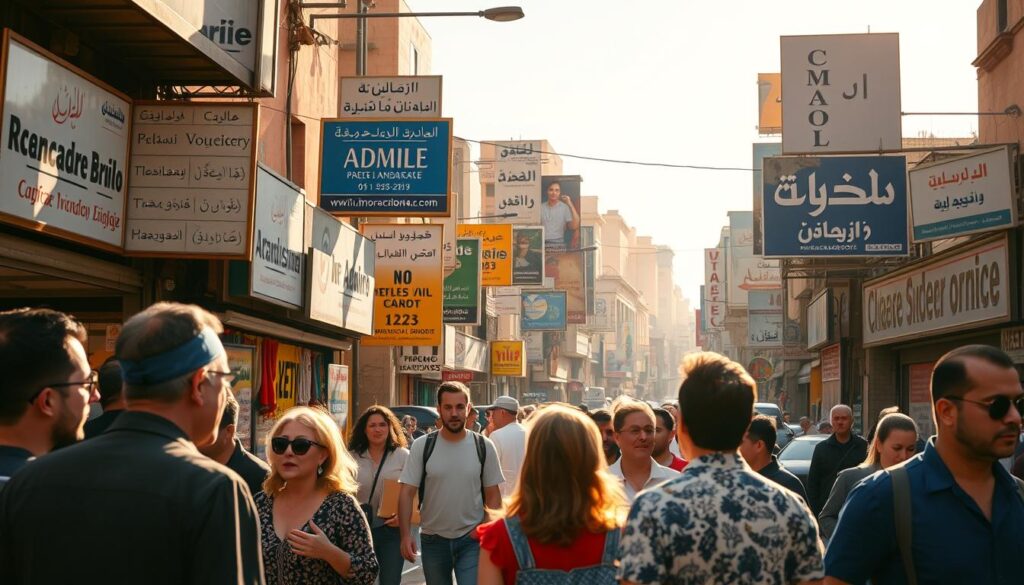
Other languages are also important in Morocco. Hassaniya Arabic, for example, is spoken in the south.
Hassaniya Arabic in the Southern Provinces
Hassaniya Arabic shows the south’s cultural richness. It’s a big part of Morocco’s diversity.
Immigrant Languages and Communities
Morocco also has immigrant communities with their own languages. These communities add to Morocco’s language variety.
In summary, Morocco’s language scene is rich and varied. English is growing, but other languages like Hassaniya Arabic and immigrant languages are also vital. Understanding this diversity helps us see Morocco’s complex culture.
Historical Evolution of Languages in Morocco
To understand Morocco’s language history, we must explore its rich cultural heritage. The country’s location has made it a meeting point for many civilizations. Each has left its mark on the languages spoken there.

Pre-Islamic Language Landscape
Before Islam, Berber tribes lived in Morocco. They spoke Amazigh languages, which were common. The Phoenicians, Romans, and Vandals also added their languages to the mix.
Arabic Arrival and Spread
Islam arrived in the 7th century, bringing Arabic with it. Arabic became the language of government, religion, and culture. It evolved into Darija, the native language of most Moroccans. Arabic’s spread greatly influenced the area’s language diversity.
Colonial Period Language Policies
During colonial times, Morocco was split between French and Spanish zones. French became the language of government and education. Spanish had a big impact in the north. This period was complex, with colonial and indigenous languages mixing.
Today, Morocco’s languages include Arabic, Amazigh, French, and others. They coexist in a complex ecosystem, shaped by history.
Language and Social Identity in Morocco
The language in Morocco is deeply connected to its society. Exploring language in Morocco shows how it mirrors and molds the country’s identity.
Language as a Marker of Education and Status
In Morocco, speaking certain languages like Modern Standard Arabic and French shows you’re well-educated and have a good social standing.
Linguistic Capital and Social Mobility
Being able to speak many languages, especially the prestigious ones, boosts your social standing. Multilingual people are seen as more educated and refined, leading to better job chances.
Urban Elite Multilingualism
Urban elites in Morocco are known for their language skills. They speak Darija, Modern Standard Arabic, French, and sometimes English. This skill shows their high social status and cultural knowledge.
Code-Switching as Cultural Practice
Switching between languages in one conversation is common in Morocco. It shows the country’s love for languages and is a big part of its culture.
Mixing Languages in Conversation
Moroccans often blend languages like Darija and French, or Darija and Modern Standard Arabic in talks. This mixing is not just for ease of communication but also shows who you are and where you belong.
Situational Language Selection
The language used changes based on where you are and who you’re with. For example, French is used in work settings, while Darija is for casual chats. This shows the fine art of choosing the right language in Morocco.

Language in the Moroccan Education System
In Morocco, schools teach in Arabic, French, and Amazigh. This mix shows the country’s rich culture and history. It reflects its ties with many civilizations.
The Language of Instruction Debate
For years, there’s been a debate on what language to teach in schools. The focus is on Arabic and French. Amazigh languages are also becoming more important.
Arabic vs. French Medium Education
After gaining independence, Morocco chose Arabic as the main language. But, many felt French was more useful for education and talking to the world.
The “Arabization” Policy and Its Effects
The “Arabization” policy made Arabic more common. But, it made students less good at French. French is key for science and technology.
Recent Reforms and Their Impact
Recently, Morocco has made changes to its schools. These aim to improve education and solve language issues. French is now used in science again, and Amazigh is being taught.
Reintroduction of French in Scientific Subjects
French is back in science classes. This is because it’s needed for technical skills. It’s seen as important for school and work.
Amazigh Language Teaching Initiatives
Teaching Amazigh is part of recognizing Morocco’s many languages. For more on the class politics behind Morocco’s language debate, you can read here.
These changes are being watched closely. They’re a big step towards a more diverse and inclusive education.
| Language | Role in Education | Recent Changes |
|---|---|---|
| Arabic | Primary language of instruction | Continued emphasis |
| French | Reintroduced in scientific subjects | Increased importance in technical fields |
| Amazigh | Increasingly part of the curriculum | New teaching initiatives |
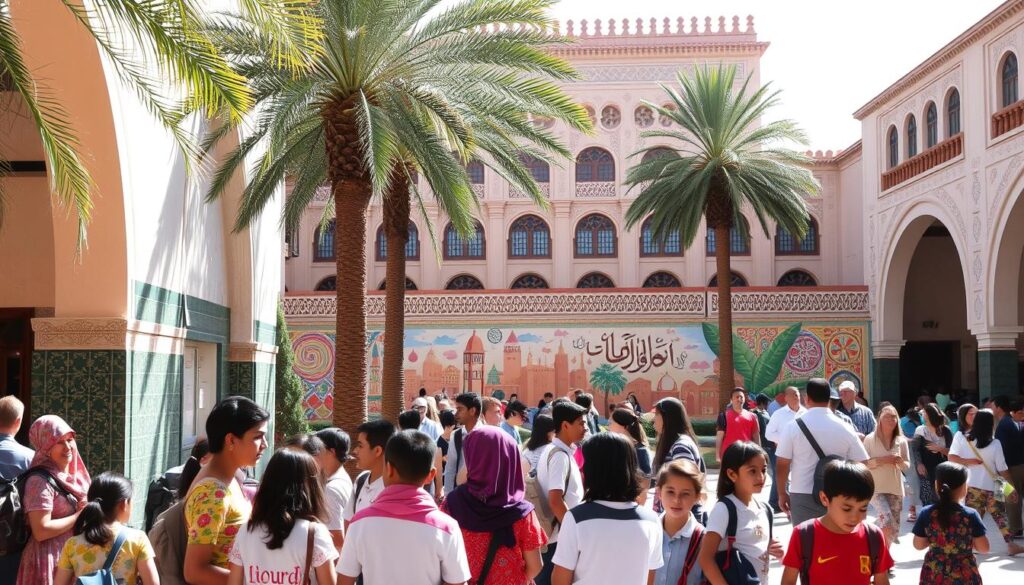
Urban vs. Rural Language Practices
Exploring Morocco’s language scene shows a big difference between city and countryside. The country’s varied landscapes and cultures have created a rich mix of languages. Each area has its own special way of speaking.
Metropolitan Language Mixing
In cities like Casablanca, Rabat, and Marrakech, languages blend together. You’ll hear Darija, French, and Arabic mixed in. This creates a lively mix of sounds and words.
Casablanca, Rabat, and Marrakech Speech Patterns
Each city has its own way of speaking. This is shaped by history, culture, and economy. For example, Casablanca’s fast business world has created a special mix of Darija and French.
Youth Language Innovations
Young people in cities are making new words and slang. This shows their unique culture. It’s a key part of city language.
Preservation of Traditional Dialects in Rural Areas
Rural areas keep traditional dialects alive. You’ll find Tarifit, Tamazight, and Tashelhit here. These dialects are a big part of Morocco’s culture and are still important today.
Mountain Communities and Language Preservation
Mountain communities keep their languages close to their hearts. They are isolated, which helps them keep their traditions alive. There are efforts to record and save these dialects.
Oral Traditions and Linguistic Heritage
Rural areas are full of stories and poems passed down through generations. These traditions are a big part of Morocco’s language history. They are cherished and continue to be shared.
Language in Moroccan Media and Entertainment
In Morocco, media and entertainment show a rich mix of languages. This reflects the country’s diverse culture. You’ll see a blend of languages in Moroccan media.
Television, Radio, and Film Language Choices
Moroccan TV, radio, and films have grown a lot. They offer content in many languages. The language choice depends on the audience and content type.
The Rise of Darija in Broadcasting
Darija, or Moroccan Arabic, is becoming more popular in TV and radio. It’s used more because it’s understood by many Moroccans.
Multilingual Programming
Other languages like Modern Standard Arabic, French, and Amazigh are also used. This multilingual approach reaches more people and meets different needs.
| Language | TV Usage | Radio Usage | Film Usage |
|---|---|---|---|
| Darija | High | High | Moderate |
| Modern Standard Arabic | Moderate | Moderate | Low |
| French | Low | Low | Moderate |
| Amazigh | Low | Low | Low |
Digital Communication and Social Media
Digital media has changed how Moroccans use language. Online, language use is flexible and creative.
Texting in Moroccan Arabic with Latin Script
Many write Moroccan Arabic, or Darija, in Latin script for texting and social media. This is popular among the young.
Language Mixing in Online Spaces
Online, people often mix languages like Darija, French, and English. This shows Morocco’s multilingual society.
Communicating as a Visitor in Morocco
Before you go to Morocco, it’s key to know the languages spoken there. The country has many languages and dialects. Knowing this can make your trip smoother.
Essential Phrases to Know
Learning a few important phrases can really improve your time in Morocco. Start with basic greetings and courtesies.
Greetings and Basic Courtesies
Saying “As-salamu alaykum” (peace be upon you) or “Marhaba” (hello) to locals is a good start. Saying “Wa alaykum as-salam” (and upon you be peace) shows respect.
Shopping and Transportation Vocabulary
Asking “How much?” (Shحال hada? in Darija) can help with prices at markets. For getting around, knowing numbers and asking for directions is key.
Navigating Language Barriers
Many Moroccans speak some French or English, but language barriers can still happen. Knowing when to use which language is helpful.
Which Language to Use Where
In tourist spots, English is getting more common, but using Darija or French is still appreciated. In rural areas, simple Darija phrases or gestures work best.
Communication Strategies for Tourists
Carrying a phrasebook, using translation apps, and being patient can help. Smiling and showing you’re eager to learn also helps a lot in Morocco.
The Future of Languages in Morocco
The future of languages in Morocco is complex. It’s influenced by policy changes and new technology. As Morocco modernizes and joins the global community, its language scene will change a lot.
Evolving Language Policies
Morocco’s language policies are changing. They now support the country’s diverse languages. Recent updates aim to use local languages more in schools and government.
Educational Reform
Educational changes are key in shaping language policies. Adding Amazigh (Berber) languages to school curricula helps keep these languages alive.
Digital Technology and Language Preservation
Digital tools help save Morocco’s languages. Online and social media offer new ways to teach and share these languages.
Changing Attitudes Toward Indigenous Languages
Young people in Morocco are starting to value their indigenous languages more. This change is important for keeping these languages alive.
Youth Perspectives on Language Identity
Young Moroccans are proud of their linguistic heritage. They use social media to teach and celebrate their indigenous languages.
Globalization and Linguistic Diversity
Globalization brings both challenges and chances for Morocco’s languages. It can threaten local languages but also helps spread them worldwide.
| Language | Speakers | Status |
|---|---|---|
| Modern Standard Arabic | Official | Widely used in government and education |
| Amazigh (Berber) | Official | Promoted in education and media |
| Darija (Moroccan Arabic) | Widely spoken | Common in daily communication |
Conclusion: The Rich Tapestry of Moroccan Languages
Exploring Morocco’s languages reveals a rich tapestry. The country’s culture is seen in its many languages and dialects. Modern Standard Arabic and Amazigh are official, while Darija is common in daily talks.
Different dialects like Tarifit, Tamazight, and Tashelhit show the complexity. French, from colonial times, is big in education and business. Spanish is seen in the north. English and other languages are growing, especially with the young and in tourist spots.
It’s key to understand Morocco’s language diversity to connect with locals. Learning about Moroccan languages opens up the country’s history and culture. The language scene is always changing, making Morocco a captivating place to study.



 Covers cities, coast, mountains, desert & food