
Imagine walking through the lively souks and ancient medinas of Morocco. You’ll see stunning architecture and rich cultural heritage. This trip will show you the beauty of Morocco.
Every landmark in Morocco has its own story. You’ll see the busy streets of Marrakech and the calm Atlas Mountains. Your trip will be full of amazing moments.
Key Takeaways
- Discover the most iconic landmarks Morocco has to offer
- Explore the rich cultural heritage of Morocco’s ancient cities
- Marvel at the stunning architecture of Morocco’s famous landmarks
- Experience the vibrant energy of Marrakech’s bustling streets
- Enjoy the serene landscapes of the Atlas Mountains
The Allure of Morocco’s Ancient and Modern Wonders
Morocco is a mix of old and new, offering a unique travel experience. You’ll find a rich history, culture, and architecture as you explore this fascinating country.
Morocco’s iconic landmarks show its diverse heritage. You can see ancient medinas in Fes and Marrakech and modern buildings in Casablanca. The Hassan II Mosque is a huge mosque and a modern Islamic architecture wonder.
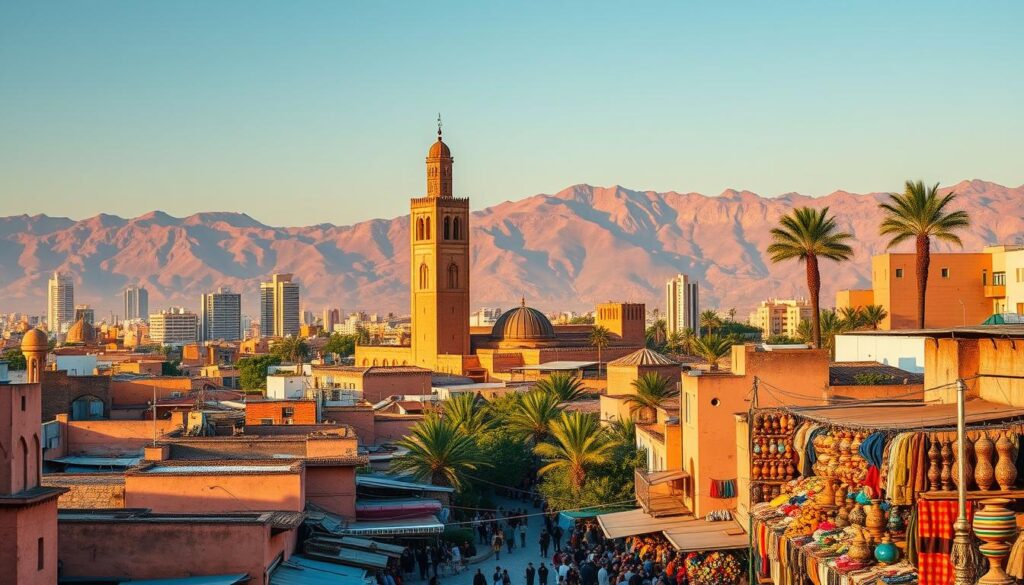
The Sahara Desert is another must-see. It has huge dunes that are peaceful and stunning. You can go on camel rides, stay in desert camps, and see the stars in this amazing place.
| Landmark | Location | Significance |
|---|---|---|
| Hassan II Mosque | Casablanca | Modern Islamic architecture |
| Bahia Palace | Marrakech | 19th-century palace architecture |
| Ait Benhaddou | High Atlas Mountains | UNESCO World Heritage site and film location |
Morocco is a place where old and new meet, making it a great place to visit. You can wander through souks, relax in riads, or see amazing buildings. Morocco’s landmarks will surely make a big impression on you.
Most Famous Morocco Landmarks Worth Visiting
Morocco’s landmarks are stunning and full of history and culture. Exploring the country, you’ll find many famous landmarks. They are sure to make a lasting impression.
The cultural value of these sites is huge. Many are UNESCO World Heritage Sites. For example, Marrakech is famous for its historic landmarks and vibrant souks. You can learn more about Morocco’s historic sites onHistory Hit’s guide.
Cultural Significance of These Iconic Sites
Morocco’s landmarks are not just beautiful; they are also culturally and historically significant. The country’s rich heritage is seen in its architecture, art, and traditions. For instance, the tilework and Islamic architecture show Morocco’s cultural identity.
Visiting these sites, you’ll learn a lot about Morocco’s history. You’ll also understand the importance of preserving its cultural heritage.
Best Seasons to Explore Morocco’s Treasures
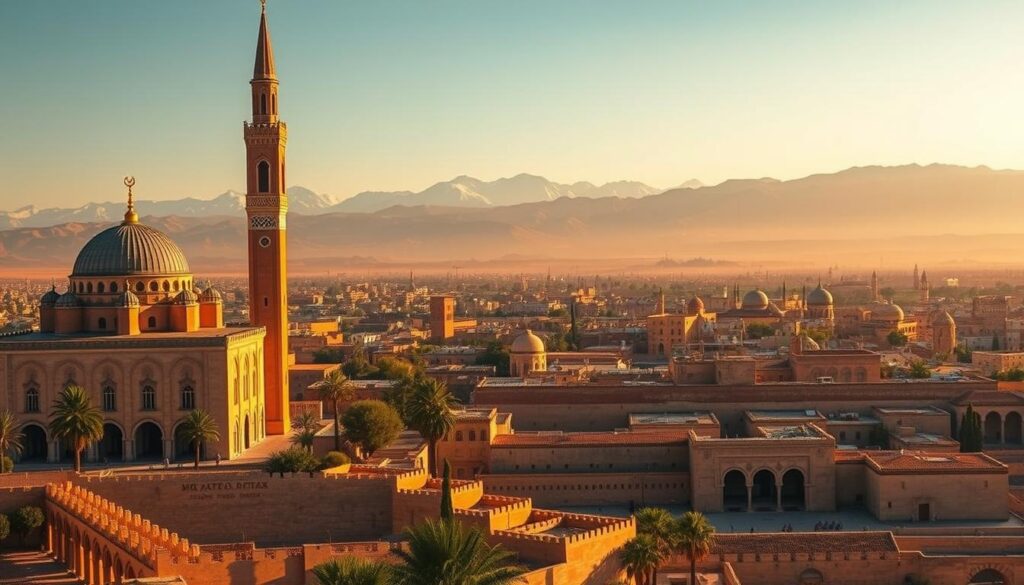
When planning your trip to Morocco, think about the best time to visit. The climate varies from hot desert to mild coastal regions. Spring (March to May) and autumn (September to November) are the best times to see landmarks like Marrakech’s Jemaa el-Fnaa or Fes.
Visiting during these seasons lets you fully enjoy Morocco’s landmarks. Whether you’re exploring souks or admiring architecture, Morocco’s landmarks will impress you.
The Sahara Desert: Nature’s Masterpiece
The Sahara Desert is a natural wonder that calls to travelers in Morocco. It’s one of the top Moroccan landmarks and offers a unique experience. You can enjoy the calm of the desert, see amazing sunsets, and gaze at the stars at night.
For those looking for adventure, the Sahara Desert is full of opportunities. You can explore its vast landscapes and find hidden treasures like Erg Chebbi and Erg Chigaga dunes.
Erg Chebbi and Erg Chigaga Dunes
Erg Chebbi, near Merzouga, is a stunning dune field. You can try sandboarding or just enjoy the dunes at sunrise or sunset. Erg Chigaga is more secluded, perfect for those who want peace and quiet in the desert.
For more info on visiting Morocco and these landmarks, check out Memphis Tours. They have 12 essential experiences to try in Morocco.
Desert Camps and Camel Treks
Staying in a desert camp is a must-do in the Sahara. You’ll enjoy Berber hospitality, local food, and the stars at night. Camel treks let you see the desert like ancient traders did, moving slowly across the dunes.
Whether it’s a short ride or a long trek, the Sahara Desert will impress you. As one of Morocco’s popular landmarks, it offers adventure, peace, and memories that last a lifetime.
Marrakech’s Architectural Treasures
When you arrive in Marrakech, you’re surrounded by amazing architecture. This shows the city’s rich history and culture. The buildings are a mix of Islamic art and Moroccan traditions.
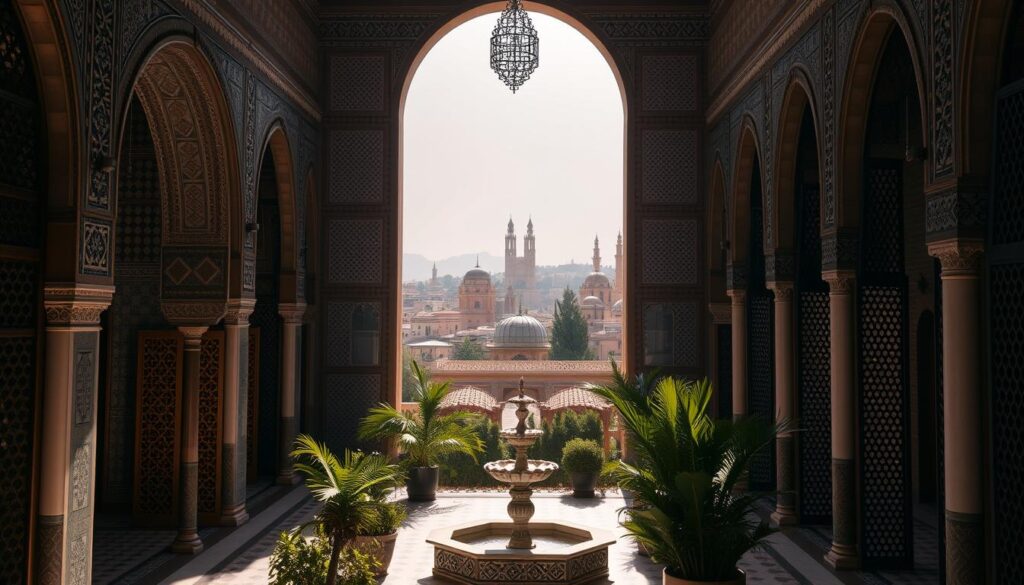
Visiting Marrakech’s landmarks is a must. Places like the Koutoubia Mosque and Jemaa el-Fnaa Square are famous. They are beautiful and carry deep cultural and historical meanings.
Koutoubia Mosque and Minaret
The Koutoubia Mosque is a key landmark in Marrakech. Its 69-meter minaret is a work of Almohad architecture. Built in the 12th century, it shows the city’s history and culture.
The minaret is known for its detailed stonework and designs. It’s a key part of Morocco’s architectural history.
| Landmark | Historical Significance | Architectural Style |
|---|---|---|
| Koutoubia Mosque | Built in the 12th century | Almohad architecture |
| Jemaa el-Fnaa Square | Historic gathering place | Blend of traditional and modern elements |
Jemaa el-Fnaa Square
Jemaa el-Fnaa Square is a treasure in Marrakech. It’s known for its lively atmosphere and diverse cultures. This square has been a meeting spot for centuries, blending old and new.
Exploring Jemaa el-Fnaa, you’ll see colors, sounds, and tastes that make Marrakech special.
Both the Koutoubia Mosque and Jemaa el-Fnaa Square are must-sees in Marrakech. They offer a peek into the city’s history and stunning architecture.
Ait Benhaddou: Morocco’s Famous Fortified Village
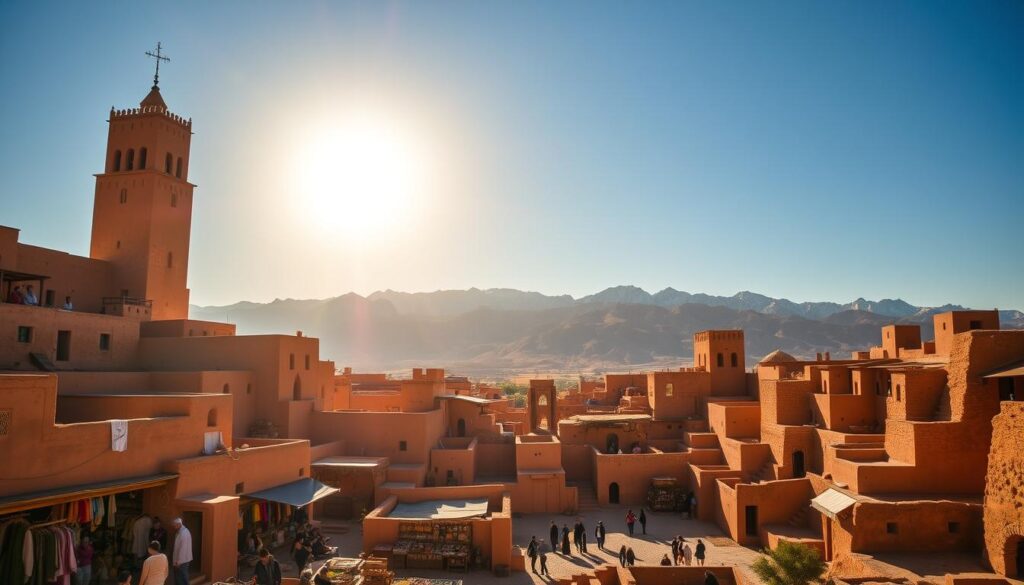
Ait Benhaddou is a historic fortified village in Morocco. It sits on a hill and has been a cultural landmark for centuries. This village is known for its unique architecture and historical importance.
UNESCO Heritage and Historical Significance
Ait Benhaddou is a UNESCO World Heritage site since 1987. Its earthen architecture shows the traditional building methods of the area. The village was a key spot for trade and cultural exchange because of its location.
The village’s high walls and compact buildings show the creativity of its builders. It was a safe place for its people against invaders.
Film Location for Hollywood Blockbusters
Ait Benhaddou is famous worldwide, not just for its history but also for being in many Hollywood movies. Films like “Gladiator,” “Lawrence of Arabia,” and “Game of Thrones” were filmed here. They chose it for its unique and dramatic look.
The village’s charm comes from its real feel and rich culture. Visitors can walk its narrow alleys and see the traditional buildings. It feels like stepping into a movie.
| Film Title | Release Year | Notable Scene |
|---|---|---|
| Gladiator | 2000 | The Roman Colosseum scenes |
| Lawrence of Arabia | 1962 | The crossing of the desert |
| Game of Thrones | 2011-2019 | The city of Yunkai |
Fes El Bali: The Medieval Medina
Step into Fes El Bali and you’re in a medieval world. Here, history and culture mix perfectly. This ancient medina is Morocco’s heart, full of historical landmarks waiting to be found. Visiting Fes El Bali is more than a trip; it’s an adventure that will touch your heart and mind.
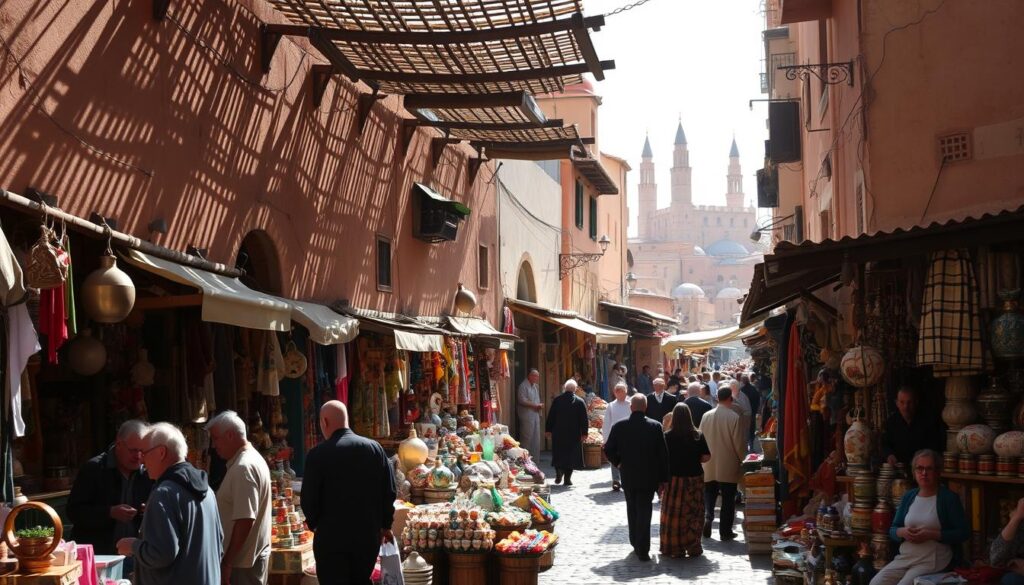
Fes El Bali is home to Morocco’s most important historical sites. The Al-Qarawiyyin University and Mosque are among them. For more on Morocco’s varied places, check our destination guides.
Al-Qarawiyyin University and Mosque
The Al-Qarawiyyin University and Mosque show Fes El Bali’s rich culture. Founded in 859 AD, it’s one of the world’s oldest universities. The mosque’s design is stunning, with detailed architecture that invites peace.
Key Features:
- Ancient architecture that reflects Islamic design principles
- A hub for Islamic scholarship and learning
- A serene and beautiful mosque that is a must-visit
Chouara Tannery and Traditional Crafts
The Chouara Tannery is a key spot in Fes El Bali. It’s one of the city’s oldest tanneries. Here, tanners use traditional methods, offering a glimpse into Morocco’s crafts.
Traditional Crafts: The Chouara Tannery is more than leather making. It’s a display of Moroccan craftsmanship. Visitors can see artisans creating leather goods with ancient techniques.
Visiting Fes El Bali is a journey into Morocco’s culture. With landmarks like the Al-Qarawiyyin University and Mosque and the Chouara Tannery, it’s a place for history and craft lovers. As a best landmark in Morocco, Fes El Bali is a must-see.
Chefchaouen: The Blue City of the Rif Mountains
Chefchaouen, known as the Blue City, is a hidden gem in Morocco’s rugged landscape. It’s famous for its blue-washed buildings, creating a unique and peaceful vibe. Walking through its narrow streets feels like entering a world of calm.
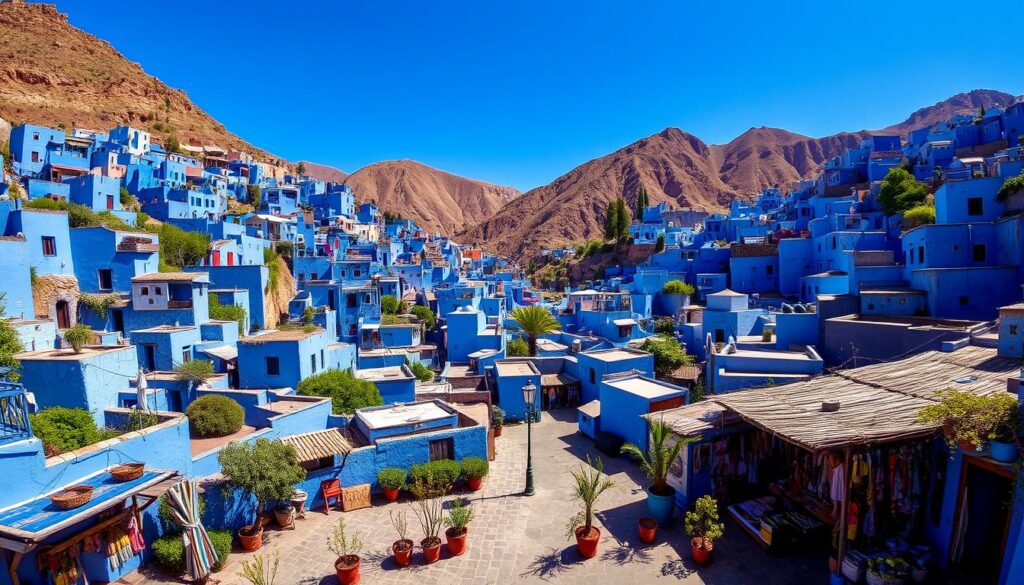
Visiting Chefchaouen feels like stepping into a postcard. It’s a perfect spot to get away from city life’s noise. You can check out local markets, see historical sites, or just enjoy the views.
Origins of the Blue-Washed Buildings
The blue buildings in Chefchaouen started in the 1930s. There are different stories about why they were painted blue. Some say it’s because of the Jewish community that once lived there. The blue is thought to represent the sky and heaven, linking to a spiritual connection. For more on Chefchaouen’s history and its ties to Tetouan, check out more resources.
Plaza Uta el-Hammam and the Kasbah
Plaza Uta el-Hammam is the heart of Chefchaouen, filled with cafes, shops, and historic buildings. The Kasbah, a nearby fortress, has a garden and a small museum. These places offer a peek into Chefchaouen’s history and culture.
Hassan II Mosque: Casablanca’s Coastal Marvel
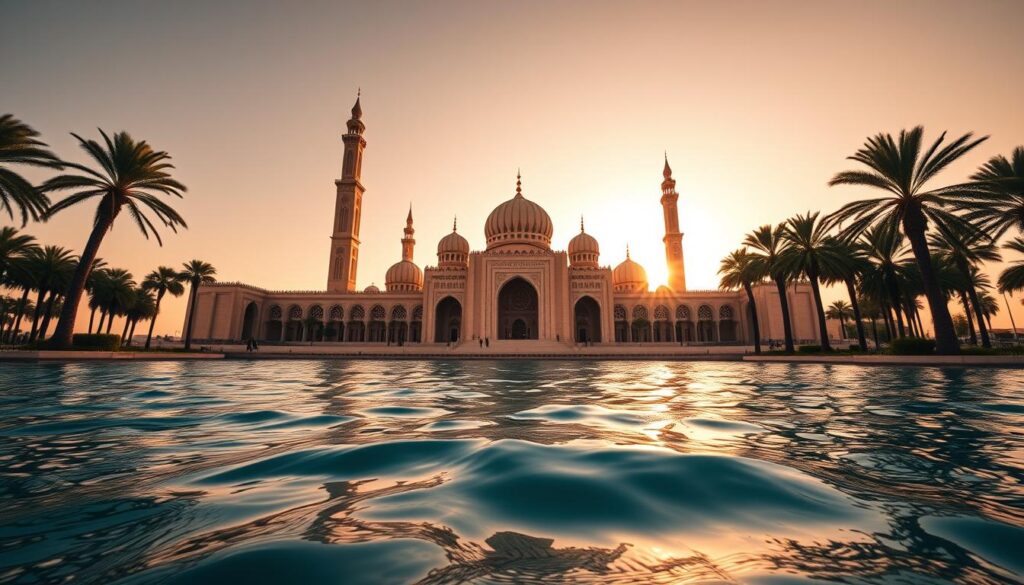
The Hassan II Mosque in Casablanca is a stunning example of Moroccan craftsmanship and Islamic architecture. When you visit, you’ll be amazed by its grandeur and the detailed work. It’s one of the famous landmarks in Morocco.
Architectural Features and Records
The Hassan II Mosque is famous for its impressive architecture. Its minaret is 210 meters tall, one of the tallest in the world. The mosque combines traditional Moroccan and modern styles, showing Morocco’s rich culture.
Building the mosque was a huge engineering challenge. It took thousands of workers and artisans six years to finish, completed in 1993.
| Feature | Description |
|---|---|
| Minaret Height | 210 meters |
| Construction Period | 1987-1993 |
| Capacity | 25,000 worshippers |
Guided Tours and Prayer Hall Access
Guided tours of the mosque offer insights into its history and architecture. They also let you see the prayer hall, where you can feel the spiritual atmosphere.
Before visiting, check the opening hours and tour availability. For more information, visit Connecting Morocco.
The Hassan II Mosque is a key iconic landmark in Morocco. Seeing it is a must-do on any trip to Morocco.
Ancient Roman City of Volubilis
Exploring Morocco’s history takes you to Volubilis, an ancient Roman city. It’s near Meknes and is a key top Moroccan landmark. Here, you see the Roman era’s architecture and culture.
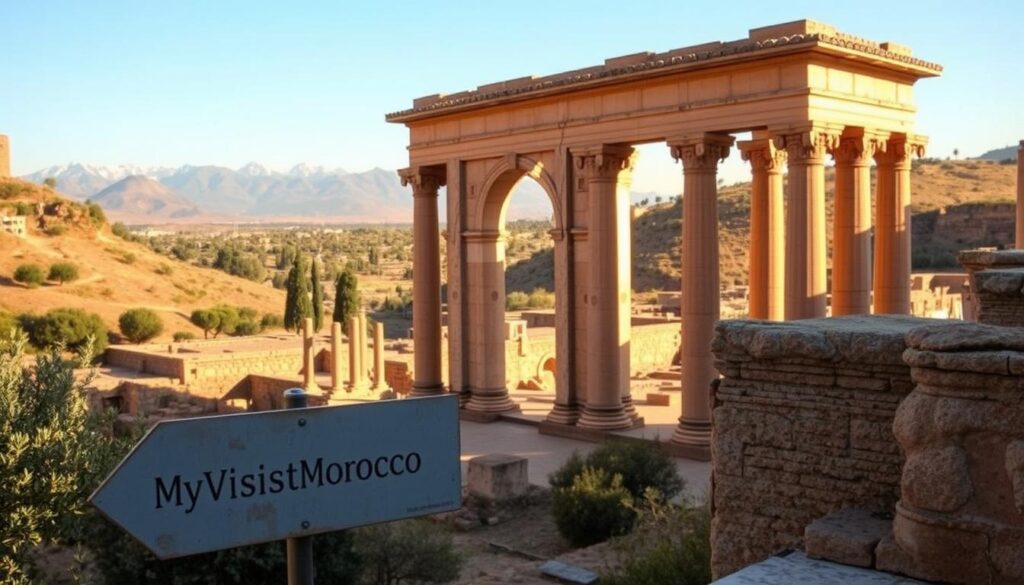
Preserved Mosaics and Columns
Volubilis is famous for its well-preserved mosaics. They show mythological scenes and daily life from long ago. Walking through, you’ll see the amazing details and colors that have lasted for centuries.
The mosaics show the Romans’ artistic talent and their impact on local art. The site also has impressive columns. These columns once held up big buildings like temples and public areas. They show how the Romans planned their cities and public spaces.
Archaeological Significance and Excavations
Volubilis is very important for archaeology because it’s so well-preserved. This has helped historians learn about the Romans in North Africa. Digging up the site has found many artifacts like coins, pottery, and inscriptions.
| Aspect | Description | Significance |
|---|---|---|
| Mosaics | Intricately designed, depicting mythological and everyday scenes | Showcases Roman artistic influence and local craftsmanship |
| Columns | Imposing structures that supported ancient buildings | Demonstrates Roman architectural techniques and urban planning |
| Excavations | Uncovered artifacts such as coins, pottery, and inscriptions | Provides insight into daily life and history of Roman occupation |
Natural Morocco Landmarks: Todra and Dades Gorges
The Todra and Dades Gorges are two of Morocco’s most stunning natural spots. They attract adventurers from all over. Located in the Atlas Mountains, these gorges are famous for their amazing rock formations and beautiful views. Exploring these places lets you see Morocco’s unique landscapes and rich culture.
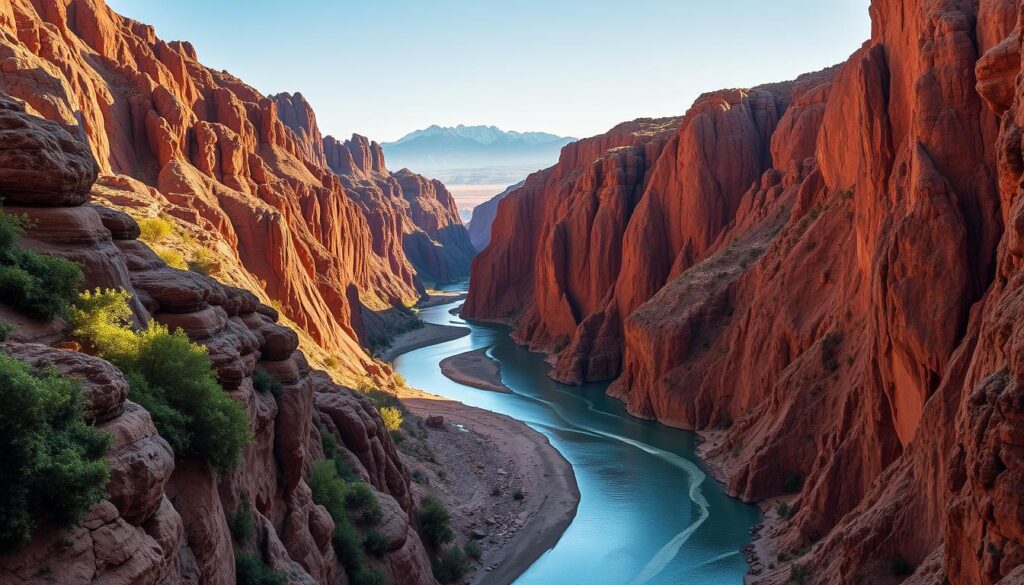
Rock Climbing and Hiking Opportunities
The Todra and Dades Gorges are perfect for outdoor fun, like rock climbing and hiking. The area’s rugged beauty and stunning views make it a dream for adventurers. There are trails for every skill level, from challenging climbs to easy walks.
Walking through the gorges, you’ll see incredible views. The paths go through stunning rock formations, with high cliffs and deep valleys. These were carved by rivers over millions of years.
As you hike, you’ll see the beautiful landscape around you. The trails pass through traditional Berber villages. Here, you can experience the local culture and hospitality. Whether you’re an experienced hiker or just want a casual walk, the Todra and Dades Gorges have something for everyone.
Berber Villages and Local Culture
The Todra and Dades Gorges are home to many traditional Berber villages. Here, you can dive into the rich cultural heritage of the area. The Berber people have lived here for centuries, keeping their traditions alive.
Visiting the villages, you can explore local homes and learn about Berber crafts and customs. These villages offer a rare look into a centuries-old way of life. It’s a unique and enriching experience for visitors.
Coastal Gems: Essaouira’s Fortified Medina
The fortified medina of Essaouira is a treasure of Morocco’s culture and architecture. Walking through its ancient walls and lively markets, you feel history and culture merge. It’s a truly special place.
Essaouira’s medina is a mix of cultures, thanks to its spot on Morocco’s Atlantic coast. Its buildings show a strong Portuguese touch, from the 18th-century fortifications that once stood here.
Portuguese Influences and Fishing Port
The medina’s walls and towers tell the story of the Portuguese era. They mix military design with local skills. The fishing port is another gem, showing the sea’s role in Essaouira’s life.
Essaouira’s medina is full of wonders:
| Feature | Description |
|---|---|
| Portuguese Ramparts | 18th-century fortifications that showcase a blend of military architecture and local craftsmanship |
| Fishing Port | A bustling hub of activity, offering a glimpse into the daily lives of local fishermen |
| Vibrant Markets | Colorful markets selling local handicrafts, fresh produce, and seafood |
Gnaoua Music Festival and Cultural Heritage
Essaouira is famous for its Gnaoua Music Festival. It celebrates Gnaoua culture and music, drawing visitors worldwide. The Gnaoua people, from sub-Saharan Africa, have a unique culture seen in their music and dance.
Visiting Essaouira’s medina is more than seeing a historic site. It’s diving into Morocco’s living culture. The town’s mix of cultures, lively markets, and rich heritage make it a top spot for travelers.
Majorelle Garden and Yves Saint Laurent Museum
When you enter the Majorelle Garden, you’re surrounded by vibrant plants and blue buildings. This place in Marrakech shows Morocco’s rich culture and mix of old and new.
Exotic Plants and Vibrant Blue Architecture
The Majorelle Garden is famous for its exotic plants like cacti and palm trees. Its blue buildings, inspired by Art Deco, stand out against the green, making it a beautiful sight.
French artist Jacques Majorelle started the garden in the 1920s. Later, Yves Saint Laurent and Pierre Bergé restored it. Now, it’s a top spot for visitors from everywhere.
Fashion Legacy and Art Collections
The Yves Saint Laurent Museum is inside the Majorelle Garden. It celebrates the designer’s work. You can see his colorful textiles and detailed embroideries here.
The museum shows how Saint Laurent changed fashion and his love for Morocco. It also has a lovely garden, mixing art, nature, and culture.
| Feature | Description |
|---|---|
| Exotic Plants | Cacti, bamboo, palm trees, and more |
| Architecture | Vibrant blue Art Deco-inspired structures |
| Fashion Legacy | Yves Saint Laurent’s artwork and textile designs |
Seeing the Majorelle Garden and Yves Saint Laurent Museum is a special experience. It’s a mix of art, culture, and nature that shows Morocco’s best.
Royal Palaces: Bahia Palace and El Badi Palace
Exploring Morocco’s history, you’ll find the Royal Palaces. The Bahia Palace and El Badi Palace are key sites. They show Morocco’s architectural beauty and cultural richness. These palaces in Marrakech highlight Moroccan builders’ skill and artistry.
The Bahia Palace, built in the late 19th century, is famous for its intricate tilework and craftsmanship. Its name, “Bahia,” means “brilliance,” fitting its stunning architecture.
Intricate Tilework and Islamic Architecture
The Bahia Palace is a gem of Islamic architecture. It boasts elaborate tile work, carved wood, and intricate stone carvings. Walking through its halls, you’ll see the beauty and skill preserved over time.
The palace’s design is traditional Moroccan. It focuses on geometric patterns andarabesque motifs. Visitors can see different rooms and courtyards, each offering a peek into the lives of those who lived there.
Historical Significance to Moroccan Monarchy
The Bahia and El Badi Palaces are crucial to the Moroccan monarchy’s history. The El Badi Palace, built in the 16th century, was a symbol of the Sultan’s wealth and power. Though much of it is gone, its remains show the grandeur of the Saadi dynasty.
These palaces are among thetop Moroccan landmarks. They draw visitors worldwide who want to learn about Morocco’s history and culture.
Practical Guide to Visiting Morocco’s Landmarks
Planning your trip to Morocco? Knowing how to visit its famous landmarks is key. Morocco is rich in history, diverse landscapes, and vibrant culture. It’s a fascinating place for travelers.
Transportation Options and Guided Tours
Morocco’s transportation network is well-developed. It’s easy to get around its popular landmarks. You can choose from:
- Railway services connecting major cities like Marrakech, Fez, and Rabat.
- Bus services, including both public and private operators.
- Renting a car or hiring a private driver for more flexibility.
- Guided tours that often include transportation as part of the package.
Guided tours are great for popular landmarks in Morocco. They offer insights into the history and cultural significance of the sites.
Cultural Etiquette and Safety Tips
When visiting Morocco’s landmarks, respect local customs and traditions. Here are some tips:
- Dress modestly, covering your shoulders and knees, especially when visiting mosques or rural areas.
- Remove your shoes before entering mosques or homes.
- Be respectful of local customs and traditions.
- Stay informed about local conditions and follow safety advisories.
By respecting local norms, you’ll have a better experience exploring Morocco’s tourist attractions.
Conclusion: The Timeless Magic of Morocco’s Diverse Landmarks
Exploring Morocco reveals a land full of history, culture, and natural wonders. You’ll see the morocco landmarks like Merzouga’s sand dunes. Marrakech and Fez’s vibrant cities offer unique experiences. The Hassan II Mosque and Volubilis show Morocco’s rich heritage.
Morocco’s geography, from the Atlas Mountains to the Sahara Desert, is breathtaking. Trekking in the “pre-Sahara” or exploring medinas is captivating. Morocco’s landmarks are not just beautiful but also full of history and culture.
Morocco welcomes visitors all year with its pleasant climate and diverse landscapes. As you dive into the local culture, history, and beauty, you’ll see why it’s a favorite among travelers.




 Covers cities, coast, mountains, desert & food