Start your adventure through the Iberian Peninsula and North Africa with our detailed visual travel planner. It’s made to help you find your way around key destinations in Spain, Portugal, and Morocco. You’ll get to know their unique cultures, histories, and landscapes.
Planning a big trip or just a short visit? Our visual travel planner is here to help. It shows you the best ways to get around and must-see attractions. This makes planning your trip a breeze.
Key Takeaways
- Comprehensive guide to Spain, Portugal, and Morocco
- Key destinations and must-see attractions
- Transportation networks for easy navigation
- Regional insights for a deeper travel experience
- Multi-country itinerary planning made simple
The Allure of the Iberian Peninsula and North Africa
Spain, Portugal, and Morocco are a mix of cultures, histories, and geography. This mix attracts travelers, offering a wide range of experiences. It connects Europe and Africa in a unique way.
Geographic Overview of the Region
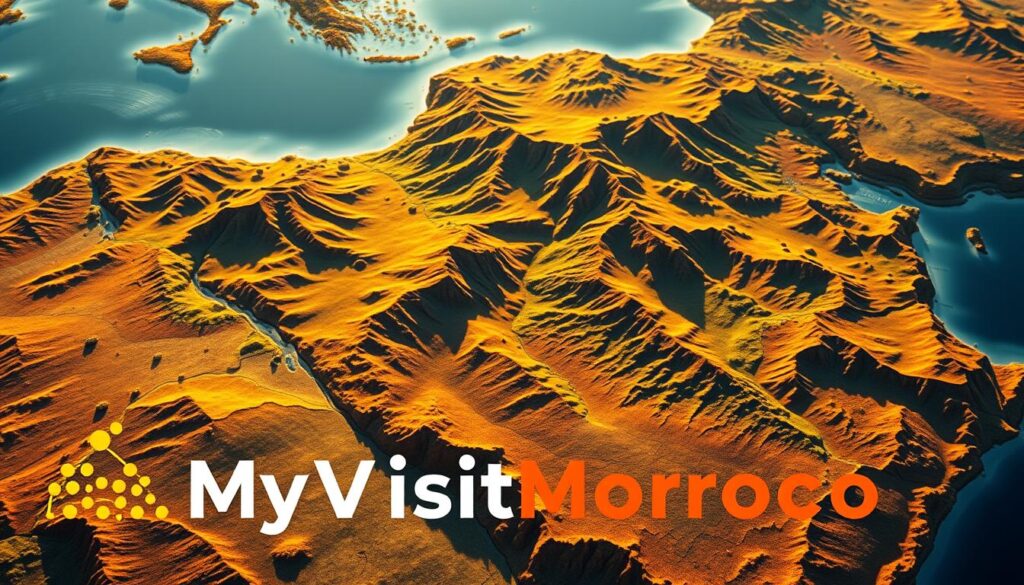
The Iberian Peninsula, home to Spain and Portugal, has varied landscapes. From the Pyrenees mountains to the Atlantic coast, it’s diverse. Morocco, across the Strait of Gibraltar, has its own geography. The Atlas Mountains and Sahara Desert stand out against the coastal beauty.
Why These Three Countries Make an Ideal Combined Trip
Traveling to Spain, Portugal, and Morocco together is rewarding. You get to see different cultures, foods, and landscapes. Their close location and unique histories make for a great trip.
You can learn about Spain’s Moorish past, Portugal’s sea history, and Morocco’s lively markets. All in a small area.
| Country | Key Attractions | Cultural Highlights |
|---|---|---|
| Spain | Alhambra, Costa Brava | Moorish architecture, Flamenco |
| Portugal | Lisbon, Porto | Fado music, Custard tarts |
| Morocco | Marrakech, Sahara Desert | Souks, Berber culture |
Comprehensive Map of Spain Portugal Morocco
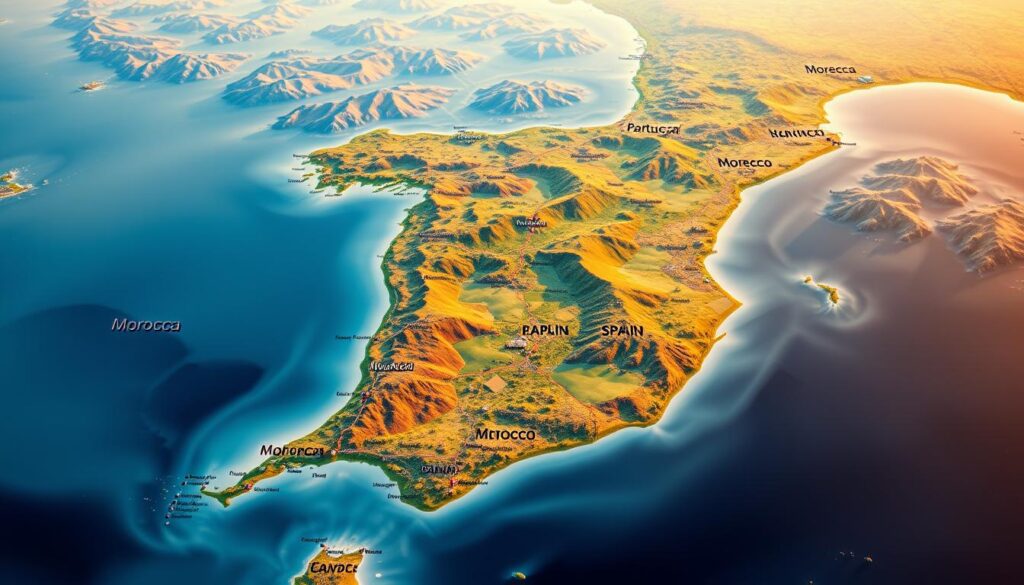
A detailed map is key to exploring the Iberian Peninsula and North Africa. This area, including Spain, Portugal, and Morocco, has many landscapes and cultures to discover.
Key Geographic Features and Boundaries
The region boasts different landscapes. The Pyrenees Mountains separate Spain from France. Portugal and Spain have Atlantic coastlines, and Morocco has the Atlas Mountains. Knowing these features and country borders is essential for planning your trip.
Major Cities and Their Strategic Locations
Cities like Madrid in Spain, Lisbon in Portugal, and Marrakech in Morocco are cultural and historical centers. They are well-located near important geographic spots or travel paths. This makes them great places to start your journey.
Distance Perspectives for Travel Planning
Knowing the distances between cities is crucial for travel planning. For example, Madrid to Lisbon is about 315 miles. Marrakech to Madrid is roughly 560 miles. An interactive map can help you see these distances and plan your trip better.
Essential Map Types for Travelers
Travelers to the Iberian Peninsula and North Africa need various map types to navigate effectively. Different maps serve different purposes. They help understand administrative boundaries, navigate terrain, and find tourist attractions.
Political and Administrative Maps
Political and administrative maps are key for understanding the governance structure and boundaries of Spain, Portugal, and Morocco. These maps show regions, provinces, and municipalities. They help plan itineraries and follow local regulations. You can find a detailed map of Spain on Woosmap, which provides insights into its administrative divisions.
Detailed Topographic Maps for Terrain Navigation
For those exploring the rugged terrains of the Atlas Mountains or hiking in the Pyrenees, detailed topographic maps are essential. These maps show elevation, landforms, and natural features. They help navigate challenging landscapes. Topographic maps are crucial for adventure seekers, ensuring they stay on track and avoid potential hazards.
Road Maps for Driving Adventures
When driving across Spain, Portugal, and Morocco, road maps are your best companion. These maps detail highways, secondary roads, and scenic routes. They allow travelers to plan their journey and navigate the roads with ease. Road maps also highlight points of interest, fuel stations, and rest areas, making long drives more enjoyable.
Specialized Tourist Maps
Specialized tourist maps are designed to highlight attractions, cultural sites, and leisure activities. These maps guide travelers to must-see destinations, such as historical landmarks, national parks, and local festivals. By using tourist maps, visitors can maximize their travel experience, discovering hidden gems and experiencing the local culture more deeply.
Digital vs. Physical Maps for Your Journey
Getting ready for your trip to Spain, Portugal, and Morocco? Knowing the perks of digital and physical maps is key. Your choice can really shape your travel adventure.
Benefits of Interactive Digital Maps
Digital maps are a hit with travelers for good reasons. They come with two major pluses:
Real-time Updates and Navigation
Digital maps give you real-time updates. You’ll always know about traffic, road blocks, and more. This keeps your trip smooth.
Integrated Points of Interest
These maps also highlight points of interest. You’ll find historical spots, eateries, and places to stay. It’s a great way to explore and plan your trip.
Advantages of Traditional Paper Maps
Even with digital maps around, paper maps still have their charm. Here’s why:
Reliability Without Technology
Paper maps don’t need batteries or internet. They’re reliable in places with no signal.
Better Spatial Awareness
Using paper maps can improve your spatial awareness. It helps you grasp the area’s layout and plan your path better.
| Map Type | Key Benefits |
|---|---|
| Digital Maps | Real-time updates, integrated points of interest |
| Paper Maps | Reliability without technology, better spatial awareness |
Choosing between digital and physical maps depends on what you like and how you travel. Many prefer using both for the best experience.
Best Interactive Map Resources for the Region
Traveling through Spain, Portugal, and Morocco is easier with the right maps. These tools help you find your way and discover secret spots. They show you places you might not find on your own.
Google Maps and Google Earth Features
Google Maps and Google Earth are must-haves for travelers. Google Maps gives you live traffic updates, street views, and clear directions. Google Earth shows the area in 3D, making it easier to understand the landscape. Key features include:
- Real-time GPS navigation
- Street view for familiarization
- 3D terrain visualization
Specialized Travel Planning Apps
There are also apps made just for travel. Apps like TripIt and Google Trips help organize your trip. Maps.me gives you maps that work offline, even without internet. These apps make planning your trip easier.
Official Tourism Websites with Interactive Maps
Official tourism sites for Spain, Portugal, and Morocco have interactive maps. These maps show you the best places to visit, stay, and eat. They give you local tips and help you plan your trip. Some notable features include:
- Destination guides
- Event calendars
- Personalized itinerary builders
Using these interactive map resources makes your trip to Spain, Portugal, and Morocco better. You’ll have a well-planned and fun journey.
Printable and Downloadable Maps for Travelers
Travelers to Spain, Portugal, and Morocco can really benefit from good maps. These maps are great for navigating without the internet. They also help plan your trip.
High-Quality Downloadable Maps
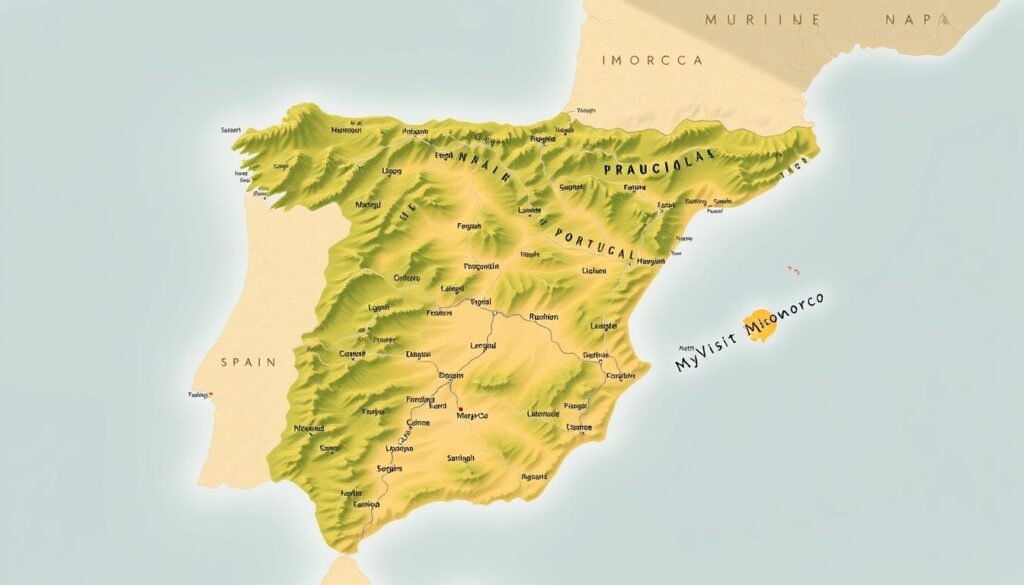
Looking for detailed maps? Many places offer high-quality downloadable maps. These are perfect for those who like to carry a physical map or need it offline. You can get topographic, road, and tourist maps for Spain, Portugal, and Morocco.
These maps give you all the details you need. They show geographic features, major cities, and roads. This makes sure you’re ready for your trip.
Custom Map Creation Tools
Custom map creation tools let you make maps just for you. You can pick what to include or leave out. This way, your map shows only the places you’re interested in.
Whether you love history, nature, or cities, custom maps are a big help. They give you all the info you need in one place.
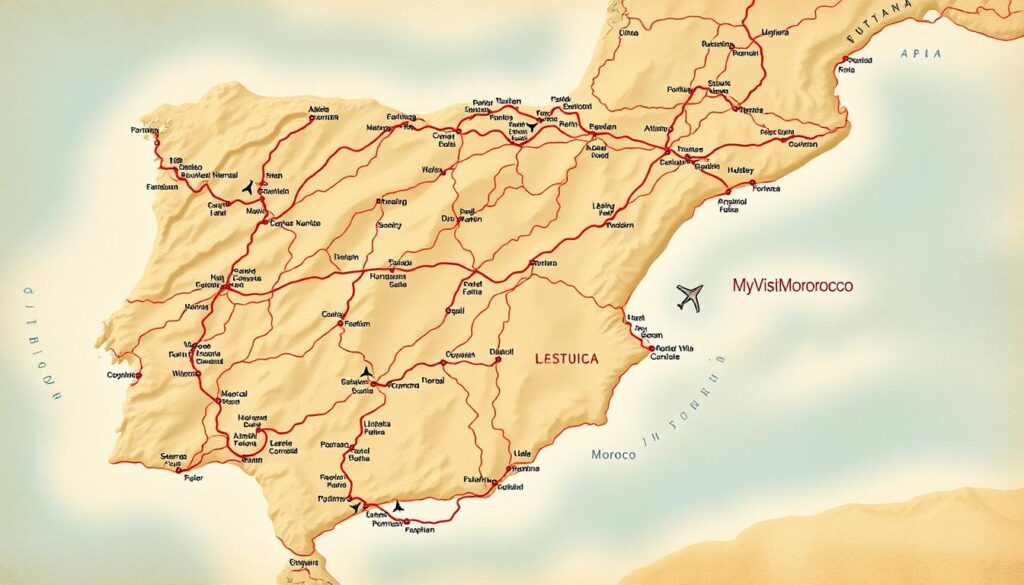
Transportation Networks Across the Three Countries
Traveling through Spain, Portugal, and Morocco is easier with the right transportation. The area has a wide range of ways to get around, including trains, cars, and boats.
Rail Systems and Connections
The rail networks in these countries are modern and efficient. In Spain, the AVE trains zip from Madrid to Barcelona and Seville. Portugal’s Alfa Pendular trains connect Lisbon to Porto. Morocco’s ONCF trains run between Marrakech, Rabat, and Tangier. Rail travel is comfortable and relatively affordable, making it a favorite among travelers.
Major Highways and Road Routes
Traveling by car is also a great option. The AP-7 highway in Spain hugs the Mediterranean coast. Portugal’s A2 and A1 highways lead to Lisbon and the Algarve. Morocco’s highways connect cities like Casablanca, Rabat, and Tangier. A road trip here can be both flexible and beautiful.
Ferry Connections Between Europe and Africa
Ferry services link Spain and Morocco, bridging Europe and Africa. Companies like Balandalou and Grimaldi Lines run between Tarifa and Tangier. These ferries are not just useful but also scenic, perfect for traveling with your vehicle.
Planning Multi-Country Itineraries
Starting a journey through the Iberian Peninsula and North Africa needs a good plan. This area is full of different cultures, landscapes, and historical sites. It’s a great place for travelers to explore.
Logical Routes Between Key Destinations
Think about the best ways to get from one place to another. For example, you could go from Madrid, Spain, to Lisbon, Portugal, and then to Marrakech, Morocco. This path lets you see the special cultures and histories of each country easily.
Key destinations to consider include:
- Madrid and Toledo in Spain
- Lisbon and Porto in Portugal
- Marrakech and Fez in Morocco
Border Crossing Information and Requirements
Knowing how to cross borders is key for a smooth trip. Here’s what you need to know:
Spain-Portugal Crossings
The Spain-Portugal border is easy to cross. Thanks to the Schengen Agreement, there’s no passport control. But, it’s wise to carry your ID.
Spain-Morocco Connections
To get from Spain to Morocco, take a ferry from places like Algeciras or Tarifa to Tangier. Make sure you have the right visas and travel papers. The rules can change based on where you’re from.
Tip: Check the latest visa requirements and travel advisories before your trip.
Key Regions in Spain for Travelers
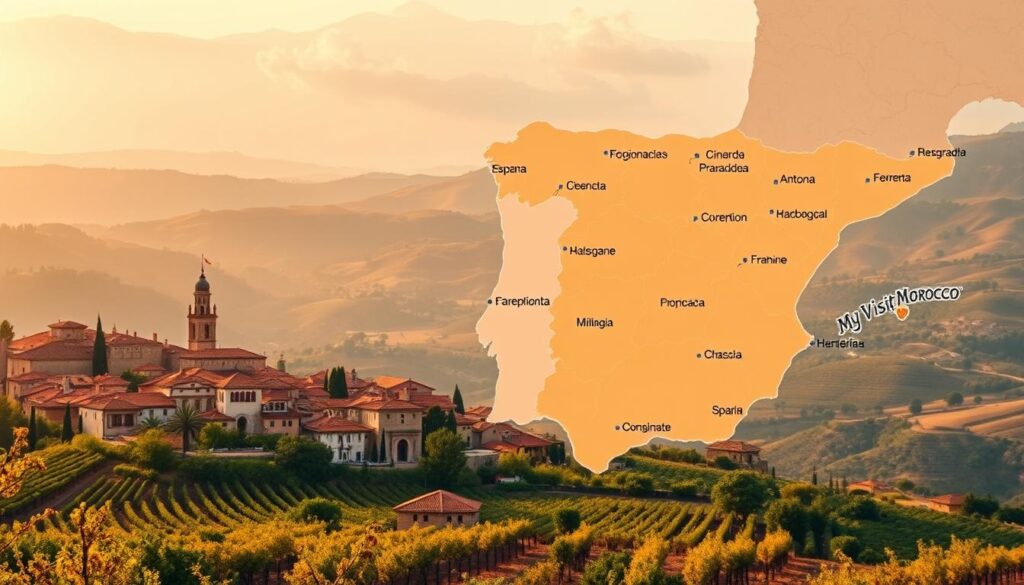
Spain is a country full of different landscapes and cultures. It offers many experiences across its regions. When planning your trip with a detailed map of Spain, Portugal, and Morocco, knowing Spain’s regions can make your trip better.
Northern Spain: Basque Country to Galicia
Northern Spain is full of cultural and natural beauty. The Basque Country is famous for its unique culture and food. Galicia has stunning coastlines and historic sites. You can explore vibrant cities, beautiful beaches, and rich heritage here.
Central Spain: Madrid and Castilian Heartland
Central Spain is where you’ll find Madrid, the capital. It’s known for its museums, nightlife, and food. The Castilian heartland has historic towns, medieval castles, and beautiful countryside. It shows Spain’s rich history and culture.
Southern Spain: Andalusia and Mediterranean Coast
Andalusia is a key part of Southern Spain. It’s known for its Moorish architecture, flamenco music, and beautiful countryside. The Mediterranean coast has a warm climate and beautiful beaches. It’s great for relaxation and water activities. This region is a must-see for anyone visiting Spain.
Essential Portuguese Destinations on the Map
Exploring Portugal reveals a world of exciting places to see. The country is famous for its friendly people and stunning views. You’ll find everything from ancient cities to beautiful valleys.
Lisbon and Central Portugal
Lisbon, the capital, is a top spot to visit. It boasts historic areas like Alfama and Bairro Alto, and famous sites like the Belem Tower. Central Portugal has the enchanting town of Sintra, famous for its grand palaces and castles.
Along the Silver Coast, towns like Nazaré and Óbidos offer a blend of history, culture, and nature. These places are perfect for anyone looking to explore.
- Explore Lisbon’s historic trams and elevators
- Visit the Jerónimos Monastery in Belém
- Discover the charming town of Sintra
Porto, Douro Valley, and the North
Porto is known for its Port wine and the Ribeira district, a UNESCO World Heritage Site. The Douro Valley is ideal for wine tastings, with its scenic vineyards and hills. In the North, don’t miss the Baroque church of São Francisco in Porto and the Peneda-Gerês National Park’s breathtaking views.

- Taking a river cruise along the Douro River
- Visiting a Port wine cellar
- Exploring the historic center of Guimarães
Navigating Morocco’s Diverse Landscapes
Traveling through Morocco, you’ll see a mix of landscapes. You’ll find bustling cities and peaceful natural spots. Morocco’s mix of cultures makes it a unique place to visit.
Imperial Cities and Urban Centers
Morocco’s cities, like Marrakech, Fez, and Meknes, are full of history and culture. Marrakech is famous for its lively souks and Jemaa el-Fnaa square. Fez, the old capital, has medieval buildings and the Al-Attarine Madrasa.
Atlas Mountains and Natural Wonders
The Atlas Mountains are stunning and great for hiking. They are home to Berber communities. You can also see the Todra Gorge and Dades Valley for their amazing rock formations.
Coastal Areas and Desert Regions
The Atlantic Ocean borders Morocco, with places like Essaouira and Taghazout having beautiful beaches. The Sahara Desert is also a must-see, with its huge dunes and camel treks.
| Region | Key Attractions | Activities |
|---|---|---|
| Imperial Cities | Marrakech, Fez, Meknes | Explore souks, visit historical sites |
| Atlas Mountains | Todra Gorge, Dades Valley | Hiking, trekking, cultural experiences |
| Coastal Areas | Essaouira, Taghazout | Beach activities, surfing |
| Desert Regions | Sahara Desert | Camel treks, desert camping |
Using Topographic Maps for Adventure Travel
Adventure travel in Spain, Portugal, and Morocco needs detailed topographic maps. These maps show the terrain, helping you navigate mountains, coasts, and more. They are key for safe and fun trips, whether hiking, biking, or water sports.
Mountain Regions and Hiking Trails
For hikers and trekkers, topographic maps are vital. They help plan routes and navigate trails. The Pyrenees between Spain and France, the Serra da Estrela in Portugal, and the Atlas Mountains in Morocco are stunning. Maps show trailheads, elevation, and hazards, making your hike better.
Use apps like Gaia GPS for easier trail navigation.
Coastal Areas and Water Activities
Coastal areas in Spain, Portugal, and Morocco are great for water sports. Topographic maps show the coastline’s shape, safe spots, and plan water adventures. The Costa Brava in Spain, the Algarve in Portugal, and Morocco’s coastlines are diverse. Each has its own beauty to discover with detailed maps.
Detailed Road Maps for Self-Drive Journeys
Planning a self-drive trip through Spain, Portugal, and Morocco needs careful planning. Detailed road maps are essential for a smooth journey. They help you navigate, find hidden spots, and enjoy the scenery.
Understanding Road Classifications
Road types differ in Spain, Portugal, and Morocco. In Spain, highways are marked ‘AP’ or ‘A’. Portugal uses ‘A’ or ‘IP’ for highways. Morocco has ‘A’ for highways and ‘N’ for national roads. Knowing these helps plan your trip better.
Planning Scenic Routes
Scenic routes are more than just travel paths. They offer a deep experience. For example, the Camino de Ronda in Andalusia, Spain, shows stunning Mediterranean views. The N222 road in Portugal’s Douro Valley is famous for its beauty.
Navigating Rural Areas
Rural areas have complex road systems. Detailed maps are crucial here. In rural Morocco, a detailed map leads you through the Atlas Mountains. It ensures you see the amazing views.
| Country | Highway Denotation | National Road Denotation |
|---|---|---|
| Spain | AP or A | N |
| Portugal | A or IP | N |
| Morocco | A | N |
Practical Tips for Using Maps While Traveling
Traveling through different landscapes and cultures needs good navigation tools. Whether you’re driving in Spain, hiking in Morocco, or exploring Lisbon, the right map is key.
Offline Map Solutions
Offline maps are a great tool for travelers. Apps like Google Maps let you download maps for offline use. This is handy in places with bad internet or to save on data.
To use offline maps, search for the area you’re in. Click “Download” and follow the steps to save it on your device.
Navigating Without Data or Wi-Fi
Traveling without internet needs some planning, but it’s doable. Downloading offline maps is a good start. You can also use a GPS device, which works without internet.
Carrying a physical map is a smart backup. Knowing the route and landmarks before you go helps you navigate better offline. For more tips on European roads, check out Rick Steves’ travel tips.
Creating Your Personalized Travel Map
Creating a travel map tailored to you is now easier than ever. You can customize your travel plans to match your preferences. This makes your trip more enjoyable and stress-free.
Tools for Custom Itinerary Mapping
There are many digital tools to help you make a custom itinerary map. Google My Maps and TripIt are great options. They let you plot your destinations, plan your route, and share your plans with others.
| Tool | Features | Benefits |
|---|---|---|
| Google My Maps | Custom map creation, marker placement | Personalized mapping |
| TripIt | Itinerary planning, real-time updates | Organized travel plans |
Sharing and Collaborating on Travel Plans
Sharing your travel plans is easy with the right tools. Many travel apps offer real-time collaboration. This way, you can work with your travel buddies to finalize your plans.
Conclusion: Making the Most of Your Spain-Portugal-Morocco Adventure
Now that you’ve planned your trip, you’re all set to explore the Iberian Peninsula and North Africa. With a detailed spain portugal morocco map, your adventure is just around the corner.
Maps and knowing how to get around will make your trip better. You’ll enjoy the rail systems and scenic drives. Each trip is a chance to see new places.
Looking for a calm trip or something exciting? This area has it all. With your travel plan, you can make your trip exactly how you want it.
When you start your journey, be ready for anything. Spain, Portugal, and Morocco are full of amazing sights, cultures, and stories. Get ready to discover them all.




 Covers cities, coast, mountains, desert & food