Are you planning a trip to Morocco and curious about the Sahara Desert location? You’re not the only one. Many travelers wonder if this vast desert is part of Morocco.
The Sahara covers several North African countries, including Morocco. While it’s not just in Morocco, the country is a great place to start exploring this natural wonder.
Before you head out, it’s key to understand Morocco’s connection to the Sahara Desert. This knowledge will make your trip better and help you enjoy the desert’s beauty.
Key Takeaways
- Morocco is one of the countries where you can experience the Sahara Desert.
- The Sahara Desert is a vast landscape that spans across North Africa.
- Understanding the Sahara’s location will enhance your travel experience.
- Morocco offers a unique gateway to exploring the Sahara Desert.
- Knowing what to expect will help you prepare for your trip.
The Geography of the Sahara Desert
The Sahara Desert is a huge, dry area in North Africa that draws travelers from all over. It has amazed explorers and scientists for many years.
Size and Scale of the Sahara
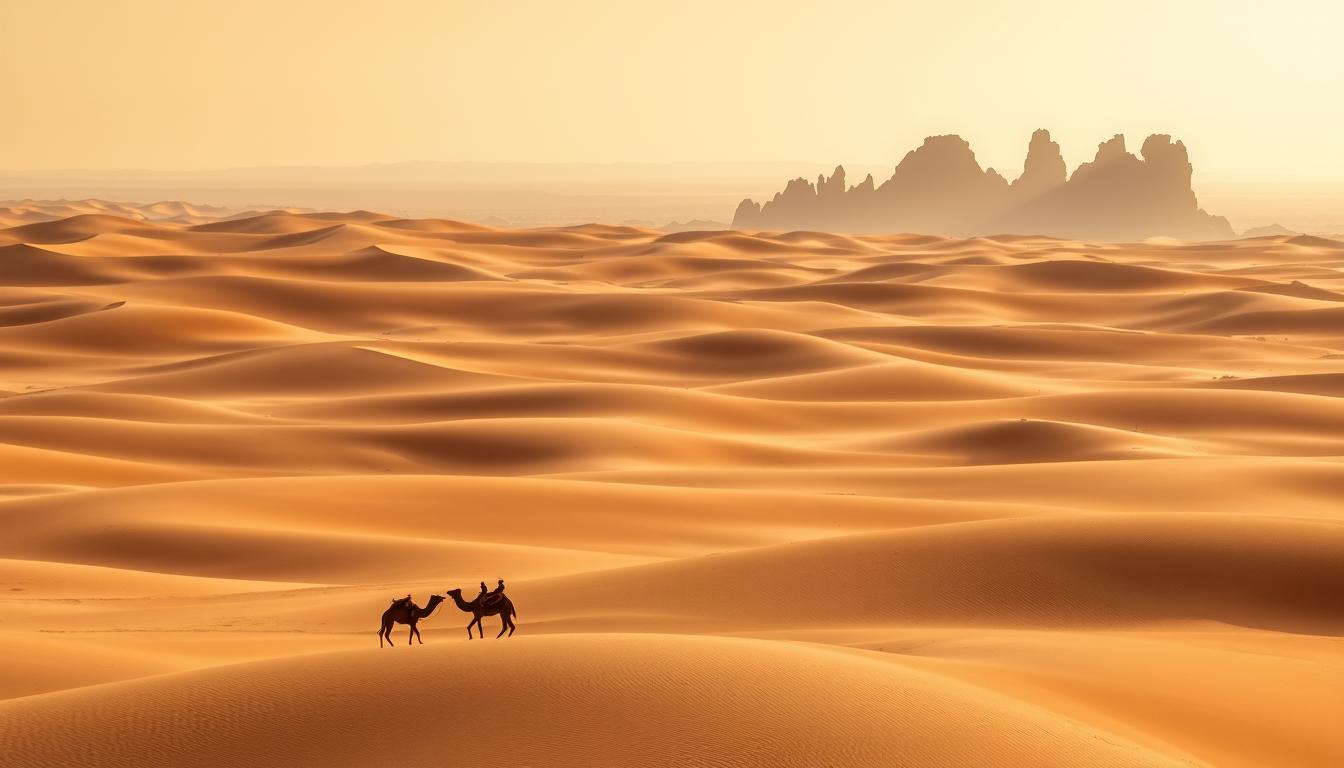
The Sahara Desert is huge, covering about 9.2 million square kilometers (3.6 million square miles). It’s as big as China or the United States. As one of the largest hot deserts, it has extreme heat, huge dunes, and dry conditions. The sheer scale of the Sahara is truly amazing, making it a key feature on our planet.
Countries That Share the Sahara Desert
The Sahara covers several countries in North Africa, like Algeria, Chad, Egypt, Libya, Mali, Mauritania, Morocco, Niger, and Tunisia. Each country has its own part of the Sahara, adding to its rich culture and geography. Experts say, “The Sahara Desert is not just a geographical entity but also a cultural melting pot.” The Sahara’s varied landscapes and cultures make it a captivating place to explore.
Is the Sahara Desert in Morocco? The Simple Answer
Morocco is often linked with the Sahara Desert. But how much of this huge desert lies within its borders is not well known. The Sahara Desert is the biggest hot desert globally, covering most of North Africa. It stretches across several countries, including Morocco, Algeria, Tunisia, Libya, Egypt, Mali, Niger, Chad, and Mauritania.
Morocco’s Portion of the Sahara
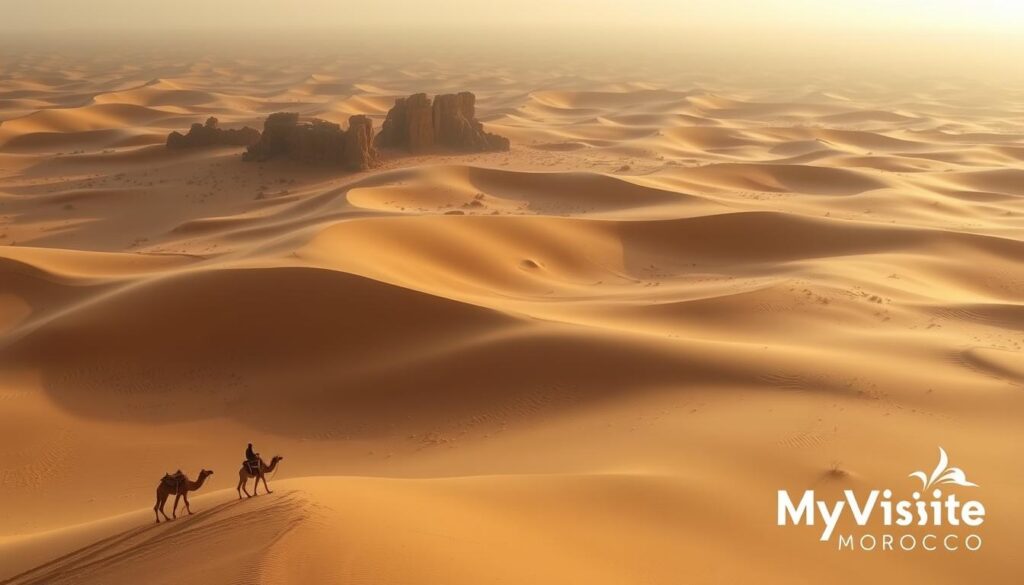
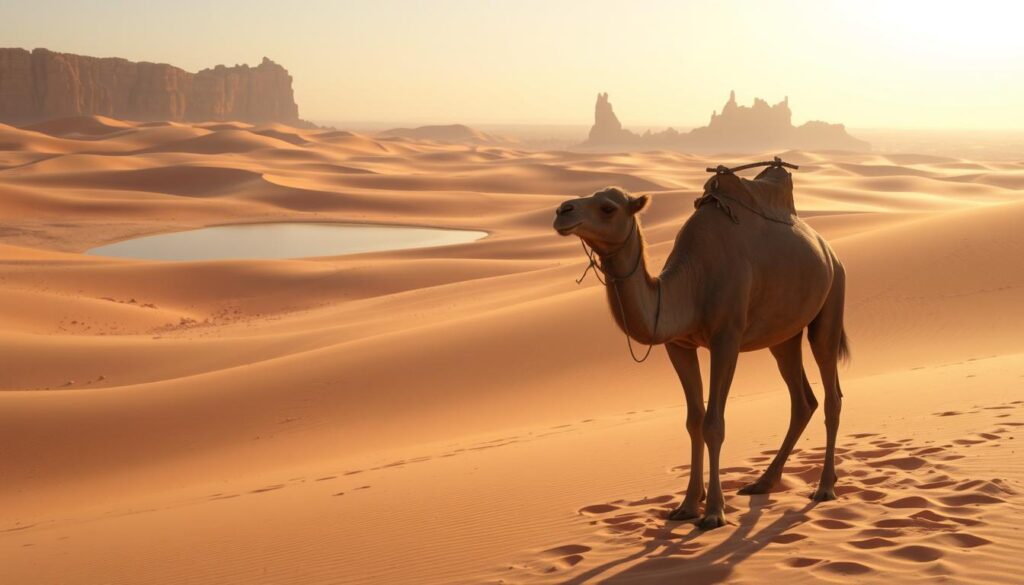
The Sahara Desert is vast, covering much of North Africa. But Morocco’s part is significant. The Moroccan Sahara includes areas like Erg Chebbi and Erg Chigaga, famous for their stunning dunes and desert views. Although it doesn’t cover as much of Morocco as other countries, the Moroccan Sahara is a key part of the country’s identity and a major tourist attraction.
| Country | Approximate Area Covered by Sahara |
|---|---|
| Algeria | 1,800,000 km² |
| Morocco | 100,000 km² |
| Mali | 650,000 km² |
The Sahara’s Northern Boundaries
The Sahara Desert’s northern edges are the Atlas Mountains in Morocco and the Mediterranean coast in other countries. In Morocco, the Atlas Mountains mark the Sahara’s border with the cooler regions to the north. This mountain range is vital for defining Morocco’s climate and ecosystems, creating a variety of environments from desert to mountains.
Understanding Morocco’s Desert Regions
The Sahara Desert is just one part of Morocco’s diverse desert regions. Each has its own unique character. As you explore Morocco, you’ll find that the country’s desert landscapes are more than just the Sahara.
Morocco’s geography is varied. Different desert areas offer unique experiences and attractions.
The Moroccan Sahara vs. Other Moroccan Deserts
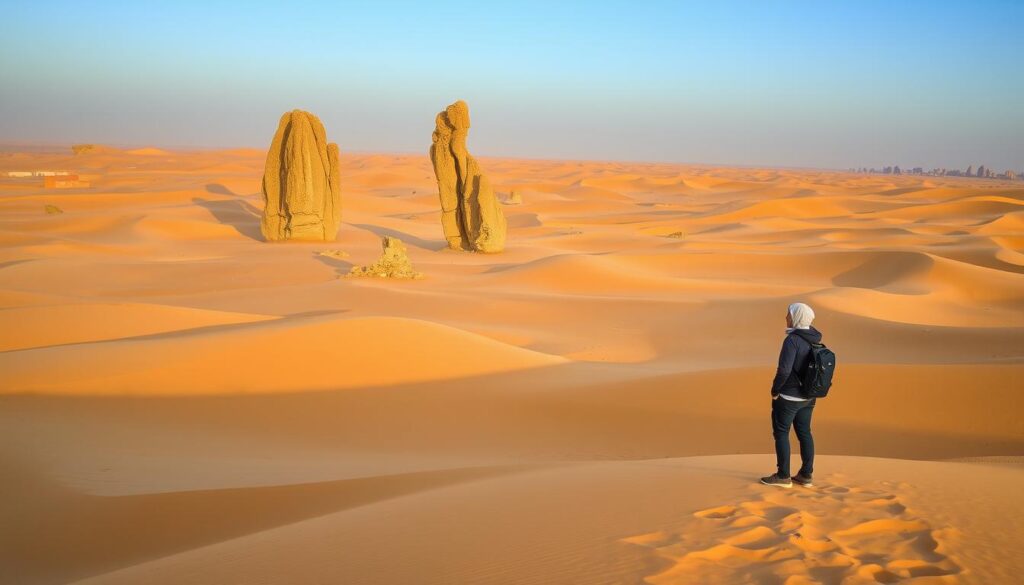
The Sahara is the most famous desert in Morocco. But, other desert regions like the Anti-Atlas Desert and areas around Zagora are just as captivating. The Moroccan Sahara is part of the larger Sahara Desert that spans North Africa.
Major Desert Areas in Morocco
Some major desert areas in Morocco include Merzouga and Zagora. Merzouga is known for its towering sand dunes. Zagora offers a more laid-back desert experience.
For those interested in exploring these regions, My Visit Morocco provides valuable insights into planning your trip.
Morocco’s desert regions are not just about the Sahara. They include a range of landscapes and cultural experiences worth exploring. From the Erg Chebbi dunes to the Drâa Valley, each area has its unique charm and attractions.
The Historical Significance of the Sahara in Morocco
Exploring the Sahara in Morocco reveals a rich history. The Sahara Desert, a big part of North Africa, has shaped Morocco’s culture and economy. It has played a key role in Morocco’s past.
The Sahara’s history in Morocco is complex. It involves ancient trade routes, cultural exchanges, and the influence of different civilizations. This history helps us understand Morocco’s culture and economy today.
Ancient Trade Routes Through the Moroccan Sahara
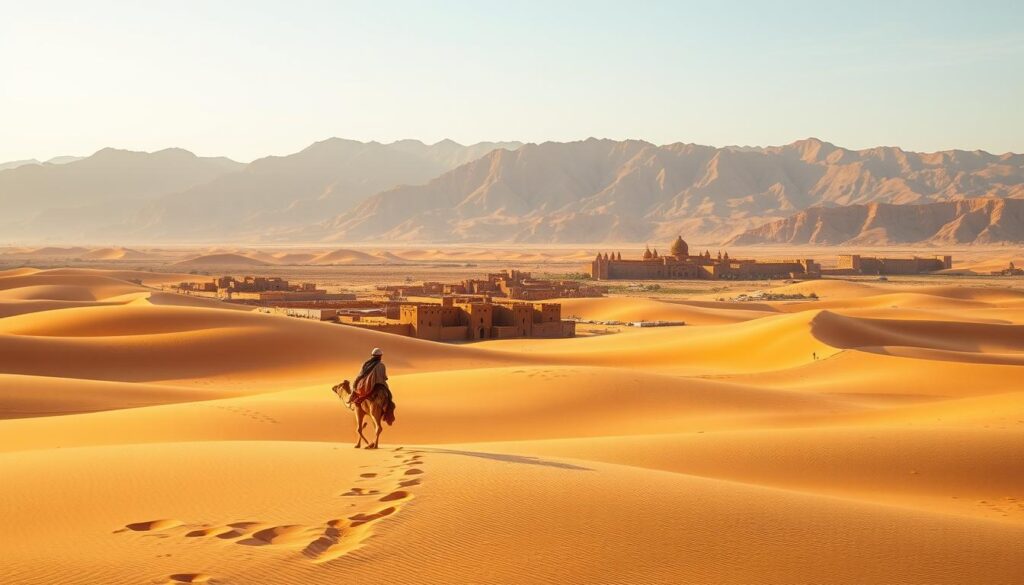
The Sahara Desert was a key route for trade between sub-Saharan Africa and the Mediterranean. Ancient trade routes in the Moroccan Sahara were important for exchanging goods like salt, gold, and ivory. These routes helped in economic and cultural exchanges.
The Trans-Saharan trade route was a major one. It connected West Africa to the Mediterranean. This route was crucial for the economic and cultural growth of Morocco and other regions. Today, we can see the legacy of these routes in Morocco’s culture and landmarks.
Cultural Exchange Across the Desert
The Sahara Desert has been a place for cultural exchange. Berbers, Arabs, and sub-Saharan Africans have influenced each other. This exchange has enriched Morocco’s culture, seen in its architecture, cuisine, and traditions.
Cultural exchange in the Sahara was not just about trade. It also involved sharing knowledge, beliefs, and technology. For example, Islam spread across North Africa through these routes. Today, the Moroccan Sahara’s cultural diversity shows the history of these exchanges.
| Cultural Influence | Description | Impact on Moroccan Sahara |
|---|---|---|
| Berber Culture | Indigenous to North Africa, Berber culture has significantly influenced the linguistic and cultural practices of the region. | The Berber heritage is evident in the local languages, customs, and traditional crafts. |
| Arab Culture | Arab influence brought Islam and the Arabic language to the region, profoundly impacting the cultural and religious landscape. | Arabic is the official language, and Islamic traditions are integral to daily life. |
| Sub-Saharan African Culture | Trade and migration from sub-Saharan Africa introduced new musical, culinary, and cultural practices. | The blend of sub-Saharan African cultures with local traditions has enriched the cultural tapestry of the Moroccan Sahara. |
For more information on the Sahara Desert’s historical significance, you can visit Britannica’s page on the Sahara Desert. It offers a detailed look at the desert’s geography, history, and cultural impact.
Climate and Weather in the Moroccan Sahara
Travelers planning to explore the Moroccan Sahara need to understand its climate. The Sahara Desert has extreme and varied weather conditions. These can be tough for visitors.
The Moroccan Sahara’s climate is known for its high temperatures and low humidity. Seasonal variations greatly affect the weather.
Seasonal Variations
Temperatures in the Moroccan Sahara change a lot between day and night, and with the seasons. Summers are very hot, with temperatures sometimes above 45°C (113°F). Winters can be cold, especially at night, with temperatures sometimes dropping below 0°C (32°F).
Spring and autumn are the best times to visit. These seasons have more comfortable temperatures. But, always be ready for sandstorms and sudden temperature changes.
Best Time to Visit the Moroccan Sahara
The best times to visit are spring (March to May) and autumn (September to November). These periods have better temperatures for trekking and exploring. It’s also great for stargazing and enjoying the Sahara’s beauty.
Think about what you want to do and how comfortable you need to be. This will help you enjoy your visit to the Moroccan Sahara.
Iconic Destinations in Morocco’s Sahara Region
Exploring Morocco reveals a Sahara region filled with iconic sites. These sites showcase the desert’s beauty and rich culture. The Sahara Desert, covering parts of North Africa, has a big part in Morocco. It’s a top spot for those who love the desert.
Merzouga and Erg Chebbi
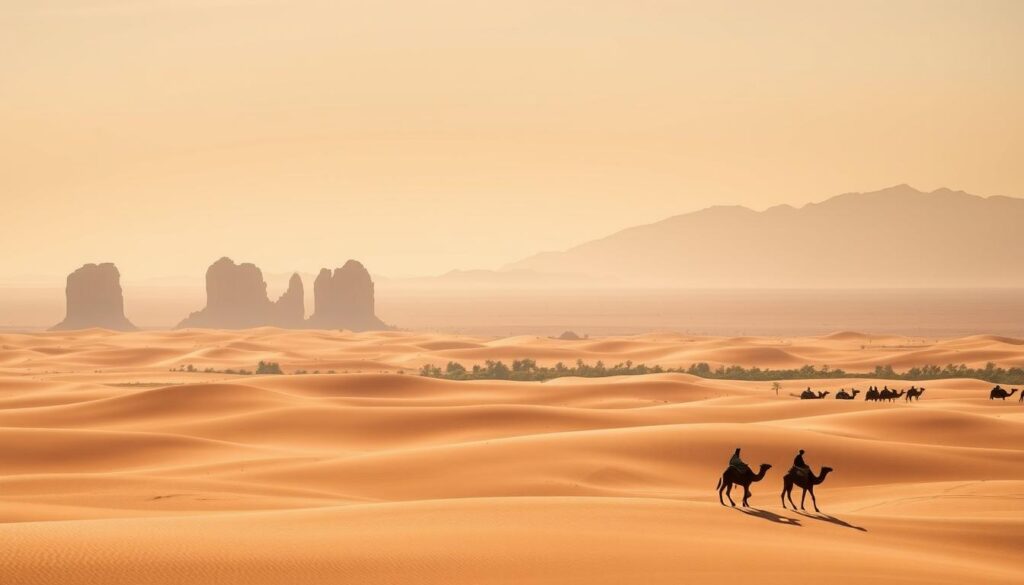
Merzouga is a small village near Erg Chebbi, Morocco’s famous dune sea. Erg Chebbi’s dunes, over 150 meters tall, offer stunning sunrises and sunsets. You can go camel trekking and spend a night in a desert camp under the stars.
Zagora and Erg Chigaga
Zagora is in Morocco’s southeast, leading to Erg Chigaga. Erg Chigaga’s dunes stretch for miles, perfect for adventure seekers. Here, you can ride camels, sandboard, and learn about the Berber culture.
M’Hamid El Ghizlane
M’Hamid El Ghizlane, or M’Hamid, is a peaceful desert town. It’s where the paved road ends and the Sahara starts. It’s great for a calm desert experience with camel treks, camping, and exploring oases and kasbahs.
Each place in Morocco’s Sahara offers a special experience. You can find adventure, relaxation, or cultural learning. Morocco’s Sahara has something for everyone.
Planning Your Trip to the Moroccan Sahara
Planning a trip to the Moroccan Sahara needs careful thought. The Sahara Desert is huge and dry, covering parts of North Africa, including Morocco. Knowing how to move around this vast desert is key for a great trip.
How to Get to the Sahara from Major Moroccan Cities
To get to the Sahara Desert in Morocco, start from big cities like Marrakech or Fez. Bus services and private transfers are easy to find. They take you to places like Merzouga or Zagora, which are entry points to the Sahara.
| City | Destination in Sahara | Travel Time |
|---|---|---|
| Marrakech | Merzouga | Approximately 8 hours |
| Fez | Zagora | Approximately 6 hours |
Tour Options vs. Independent Travel
Exploring the Moroccan Sahara offers two choices: join a guided tour or travel alone. Guided tours give you local insights and can take you to hidden spots. They also help you connect with the culture. Traveling alone lets you make your own schedule.
Whether you pick a guided tour or go solo, the Moroccan Sahara is a journey you won’t forget. It’s filled with stunning views and deep cultural roots.
Practical Information for American Travelers
For Americans heading to Morocco’s Sahara, being prepared is crucial. Knowing the practical details of your trip can greatly enhance your experience.
Visa Requirements and Entry Procedures
American tourists don’t need a visa for Morocco if staying less than 90 days. Your passport must be valid for at least six months after your trip. It’s wise to have proof of your next destination and enough money for your stay.
For the latest visa rules, visit the Moroccan embassy or consulate or check the official government website.
Currency and Payment Options
The Moroccan dirham (MAD) is the local currency. Credit cards are common in big cities, but cash is better in rural areas and the desert. You can exchange money or get dirhams from ATMs in major cities before going to the Sahara.
| Currency | Exchange Rate (approximate) | Acceptance |
|---|---|---|
| Moroccan Dirham (MAD) | 1 USD = 10 MAD | Widely accepted in cities, less in rural areas |
| US Dollar (USD) | – | Accepted in some tourist areas |
| Credit Cards | – | Accepted in larger towns and cities |
Communication and Internet Access
Mobile phones work well in Morocco, even in the desert, but can be spotty in very remote spots. Think about getting a local SIM card or a portable Wi-Fi hotspot for data. Many places like hotels, cafes, and tour operators offer Wi-Fi too.
As you explore the Sahara, be ready for times when you lose signal. Download maps and info before you go.
Essential Packing List for the Sahara Desert
Getting ready for your Sahara Desert trip means packing the right stuff. The Sahara is huge and has a tough climate. So, think carefully about what you take with you.
Clothing Recommendations
The Sahara’s weather is very harsh. You need clothes that are light, breathable, and protect you from the sun. Wear long-sleeved shirts and pants to cover up. Also, bring a hat and sunglasses for extra protection.
At night, it can get really cold. So, pack warm clothes for those times.
Key clothing items include:
- Lightweight, breathable clothing
- Long-sleeved shirts and pants
- Warm layers for cooler nights
- Sturdy, comfortable shoes
Other Necessary Items
There are more things you need to pack. The Sahara is huge and far from cities. So, be ready for anything. Carry a good water bottle or hydration pack to stay hydrated.
Also, bring a first-aid kit, a flashlight, and extra batteries. A portable charger for your devices is a good idea. And don’t forget a map or GPS to find your way in the desert.
| Item | Purpose |
|---|---|
| Water bottle or hydration pack | Staying hydrated |
| First-aid kit | Medical emergencies |
| Flashlight and extra batteries | Light source during nighttime |
Accommodation Options in the Moroccan Sahara
Morocco’s Sahara Desert offers many places to stay, from fancy desert camps to traditional riads. Your choice of lodging can really make your trip better. Whether you want to dive into local culture or enjoy luxury, the Moroccan Sahara has it all.
Desert Camps and Glamping
Desert camps are a special way to see the Sahara. They offer glamping that mixes comfort with desert beauty. You can go on camel treks, stargazing, and try traditional Moroccan food under the stars.
These camps vary from simple to fancy. So, you can find one that matches your style and budget.
Hotels and Riads in Desert Towns
If you like a traditional stay, hotels and riads in towns like Merzouga and Zagora are great. They offer warm hospitality and a peek into local life. Your stay will be both unforgettable and enriching.
You can explore, visit markets, and enjoy the desert’s calm.
Authentic Experiences in the Moroccan Sahara
The Moroccan Sahara offers many authentic experiences. You can go camel trekking or stargazing. These activities will give you memories you’ll never forget.
Exploring this vast desert lets you dive into local culture and natural beauty. It’s a unique adventure.
Camel Trekking Adventures
Camel trekking is a must-do in the Sahara. You can go on guided treks into the desert. There, you’ll camp under the stars and see amazing sunrises.
Stargazing in the Desert
The Sahara’s clear skies are perfect for stargazing. With little light pollution, you can see the night sky in all its glory. You can spot constellations and think about the universe’s vastness.
Connecting with Berber Culture
Meeting local Berber communities is a key part of any Sahara trip. You can visit traditional villages and learn about Berber customs. Enjoying local hospitality will give you a deeper understanding of the region’s rich culture.
| Experience | Location | Highlights |
|---|---|---|
| Camel Trekking | Erg Chebbi, Merzouga | Sunrise over dunes, desert camping |
| Stargazing | Desert camps, M’Hamid El Ghizlane | Clear skies, constellation viewing |
| Berber Culture | Traditional villages, Zagora | Local hospitality, cultural insights |
Saharan Cuisine and Food Experiences
Exploring the Sahara Desert reveals a unique food scene. Meals here are hearty and nourishing. They help travelers and locals survive the desert’s harsh conditions.
Traditional Desert Meals
Tagines are a staple in Saharan cuisine. These slow-cooked stews have meat, vegetables, and dried fruits. They’re cooked in earthenware pots with conical lids, perfect for the desert’s slow cooking needs.
Couscous is another favorite, served with vegetables and meat. You’ll also find khobz, a crusty bread great for dipping in stews.
Dining Etiquette in the Desert
In the Sahara, it’s important to eat with your right hand. The left hand is seen as unclean. Meals are often shared, and it’s polite to accept food when offered.
Some key dining tips include:
- Using your right hand when eating
- Accepting food and drink when offered
- Not finishing a meal completely, to show the host you are satisfied and can’t eat more
Photography Tips for the Moroccan Sahara
Photographing the Moroccan Sahara needs both technical skill and creative vision. The Sahara’s huge spaces and stunning views are a challenge and a chance for photographers.
Capturing Desert Landscapes
For amazing Sahara landscapes, time your shots right. The golden hour, just before and after sunrise and sunset, gives soft, warm light. This light makes the dunes look even more beautiful. Try different angles and setups to make your photos more interesting.
Tips for Landscape Photography:
- Use a tripod for stability, especially in low light conditions.
- Experiment with different lenses; a wide-angle lens can capture the vastness of the desert.
- Pay attention to the horizon; ensure it’s level to avoid distracting the viewer.
Equipment Considerations for Desert Conditions
The desert’s harsh environment means you need to think about your gear. Keep your equipment safe from sand and extreme temperatures.
| Equipment | Considerations |
|---|---|
| Camera Body | Weather-sealing or protective housing to prevent sand ingress |
| Lenses | Protective filters to safeguard against sand and dust |
| Tripod | Sturdy, lightweight materials for stability in windy conditions |
The Sahara Desert’s size and geography offer both challenges and opportunities for photographers. Knowing these can make your photography better.
Safety Considerations for Sahara Travel
Before you start your Sahara adventure, think about the safety of traveling in such a harsh place. The Sahara Desert, covering many countries in North Africa, has its own challenges. You need to plan and prepare carefully.
Health Precautions
Health is key when traveling to the Sahara. The desert’s extreme weather and remote spots can make health problems worse. Here’s what to do:
- Drink lots of water to stay hydrated
- Wear the right clothes and use sunscreen to protect from the sun
- Carry your medicines and a basic first-aid kit
Talking to a doctor before you go can give you advice that fits your needs.
Security in the Border Regions
The Sahara Desert is huge, covering parts of North Africa near sensitive borders. When you’re near the Sahara desert borders, know about the local security. Some places might be off-limits because of politics or military actions.
| Region | Security Concern | Precaution |
|---|---|---|
| Border areas | Potential for conflict or unrest | Stay informed, avoid restricted areas |
| Remote desert areas | Risk of getting lost or stranded | Travel with a reputable guide or group |
Knowing these safety tips can make your Sahara trip safer and more fun. Always check the latest travel advisories and local rules before and during your journey.
Environmental Challenges Facing the Sahara Desert
The Sahara Desert is facing many environmental challenges. These challenges affect its ecosystem and the global climate. It’s important to understand the balance of its environment and the pressures it faces.
Climate Change Effects
Climate change is greatly impacting the Sahara Desert. It’s changing the desert’s climate and ecosystems. Rising temperatures are altering weather patterns, leading to more frequent and severe droughts or sandstorms.
These changes can have devastating effects on local communities and wildlife.
Conservation Efforts in Morocco
Morocco is actively working to protect its part of the Sahara Desert. They are establishing protected areas and promoting sustainable land management practices. They also support research into desert ecosystems.
These efforts aim to preserve biodiversity, combat desertification, and ensure the long-term sustainability of the region.
| Conservation Initiative | Description | Impact |
|---|---|---|
| Protected Areas | Establishment of national parks and reserves | Preservation of biodiversity |
| Sustainable Land Management | Promotion of practices to reduce land degradation | Reduced desertification |
| Research Initiatives | Studies on desert ecosystems and climate change | Informed conservation policies |
Conclusion: Making the Most of Your Moroccan Sahara Adventure
The Sahara Desert is a big part of Morocco, blending natural beauty with cultural richness. Knowing is the Sahara Desert in Morocco and its many sides can make your trip better.
With Morocco desert facts in mind, you can plan your trip well. You’ll learn how to navigate the dunes and dive into local Berber culture. Morocco’s Sahara offers amazing adventures, from trekking to stargazing and trying traditional food.
Before you go, remember to respect the environment and local people. This way, you’ll have a real experience and help protect this amazing desert.



 Covers cities, coast, mountains, desert & food