
Are you thinking about a trip from Spain to Morocco? The distance is short, making it perfect for a quick vacation.
The Strait of Gibraltar is between the two countries. The closest points are just a few miles apart. You can go by ferry or flight, based on what you prefer and can afford.
Knowing the distance and how to get there is key to planning your trip. In this article, we’ll give you quick facts and tips to make your trip smooth and fun.
Key Takeaways
- The distance between Spain and Morocco is relatively short.
- You can travel from Spain to Morocco by ferry or flight.
- The Strait of Gibraltar separates the two countries.
- Travel options vary depending on your preference and budget.
- Planning ahead is essential for a smooth journey.
The Geographic Proximity of Spain and Morocco
Spain and Morocco are closer than you might think. The Strait of Gibraltar is a narrow waterway between them. This makes traveling between the two countries easy and convenient.
The Strait of Gibraltar: The Narrowest Point
The Strait of Gibraltar is the narrowest point between Spain and Morocco. It’s about 14 kilometers at its narrowest. This strait connects the Mediterranean Sea to the Atlantic Ocean, showing how close the two countries are.
Distance at Tarifa Point
At Tarifa Point in Spain, the distance to Morocco is the shortest. It’s about 14.4 kilometers across the strait. This makes it a great spot to see Africa from Europe on a clear day.
Visibility Between Continents
On a clear day, you can see Morocco’s coast from southern Spain, like Tarifa. This shows how close the two continents are.
Major Spanish and Moroccan Cities and Their Distances
Major cities like Tarifa in Spain and Tangier in Morocco are close. Tarifa is a popular spot for ferries to Tangier. The distance between these cities is about 30-40 kilometers by ferry, depending on the route.
| City in Spain | City in Morocco | Approximate Distance (km) |
|---|---|---|
| Tarifa | Tangier | 30-40 |
| Algeciras | Tangier Med | 35-45 |
Understanding How Far Spain to Morocco: Key Distances
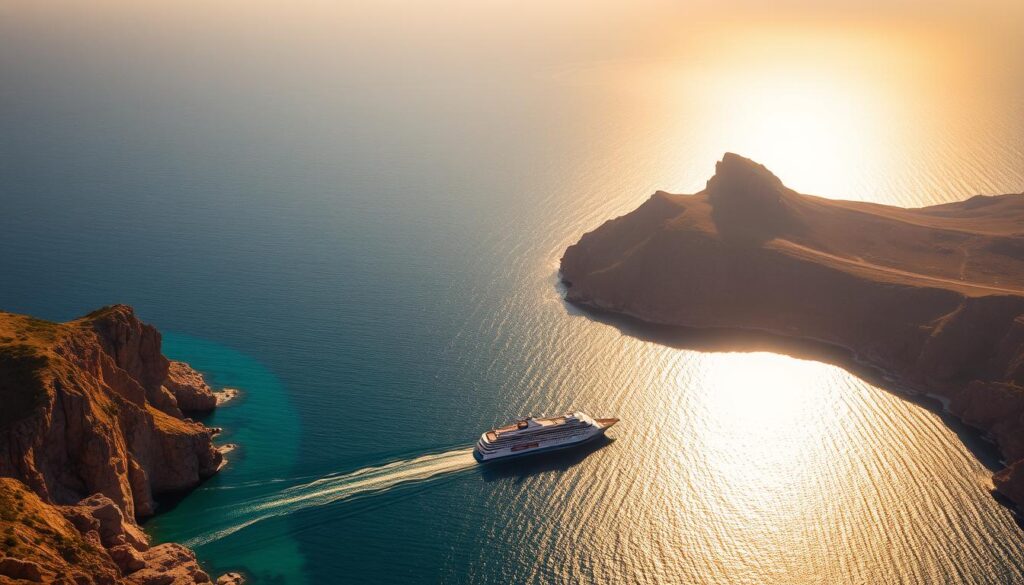
To plan your trip from Spain to Morocco, knowing the distances is key. There are two main ways to measure this: straight-line distances and travel distances.
Straight-Line Distances Between Key Points
The straight-line distance between Spain and Morocco shows how close they are. A key route is between Tarifa, Spain, and Tangier, Morocco.
Tarifa to Tangier: The Shortest Route
The distance from Tarifa to Tangier is about 31 kilometers (19 miles). It’s one of the shortest ferry routes globally. This makes it perfect for quick trips between Spain and Morocco.
Other Notable Distance Points
Other important distances include Algeciras to Tangier Med, which is 35 kilometers (22 miles), and Almería to Nador, about 155 kilometers (96 miles). These are key for travelers planning their trip.
Travel Distances vs. Geographic Distances
Travel distances are more useful for planning than straight-line distances. They consider the actual routes taken by ferries, flights, or other transport. For example, the ferry route from Tarifa to Tangier might be a bit longer than the straight-line distance.
Knowing these distances helps travelers choose the best option for their journey. Whether it’s a quick ferry ride or a flight, the spain to morocco ferry offers a short trip with beautiful views of the Strait of Gibraltar.
Spain to Morocco by Ferry: The Most Popular Route
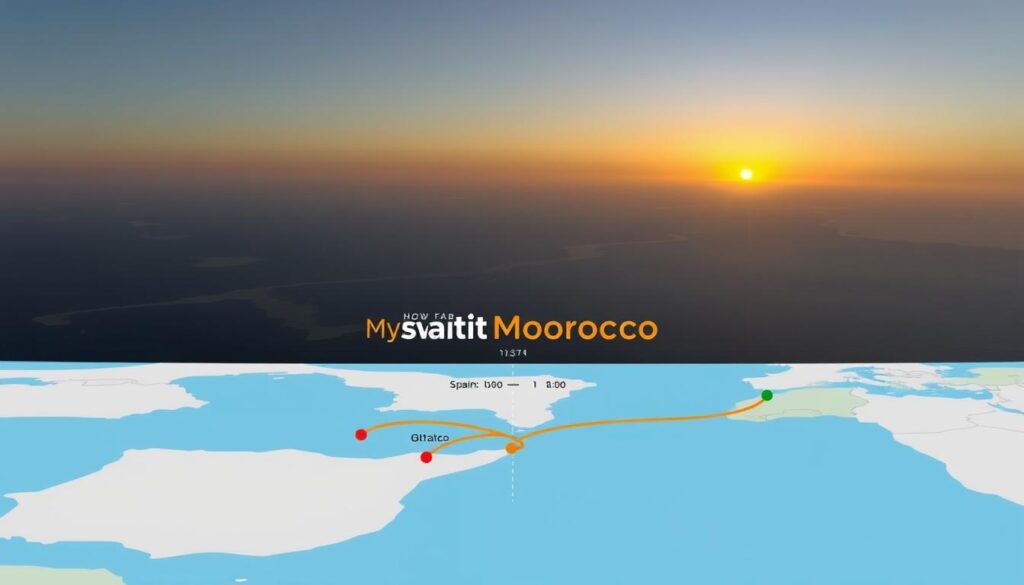
Traveling from Spain to Morocco by ferry is very popular. It connects many Spanish ports to Moroccan places. This way of traveling is easy and lets you see the beautiful Strait of Gibraltar.
Algeciras to Tangier Med: Route Details
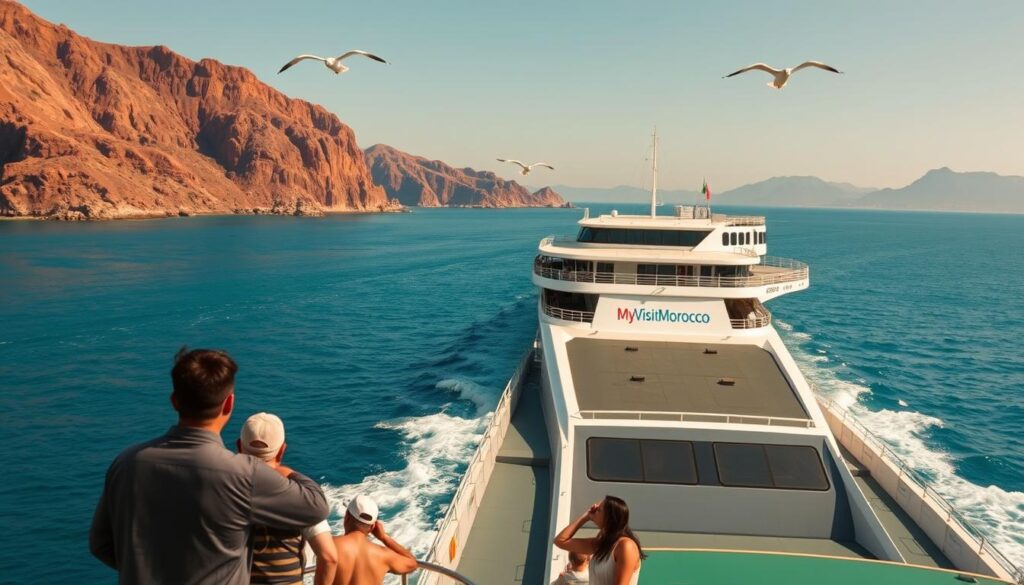
The Algeciras to Tangier Med ferry route is very busy. It’s short and has many sailings. This makes it a favorite for many travelers.
Ferry Companies and Schedules
Balearia and FRS are among the ferry companies on this route. They have sailings every day, with times changing with the season. You can find the latest times and book tickets on their websites or through Vagrants of the World.
Port Facilities and Services
Algeciras and Tangier Med ports have modern facilities. You’ll find restaurants, shops, and places to exchange money. Tangier Med also has services like luggage storage and tourist info.
Tarifa to Tangier City: A Faster Alternative
The Tarifa to Tangier City ferry is quicker. It’s great for those who don’t want to travel as far as Tangier Med.
“The ferry from Tarifa to Tangier is a great way to experience the crossing between Europe and Africa. The journey is quick, and the views are stunning.”
Ferry Durations and Frequencies
| Route | Duration | Frequency |
|---|---|---|
| Algeciras to Tangier Med | 1-2 hours | Multiple daily sailings |
| Tarifa to Tangier City | 35-40 minutes | Up to 8 sailings per day |
When planning your ferry trip from Spain to Morocco, check the latest schedules. Booking in advance helps you get the time you want.
Other Ferry Routes Between Spain and Morocco
Spain and Morocco are connected by many ferry routes. These routes meet different travel needs and preferences. The Algeciras to Tangier Med route is the most popular, but other services offer convenient alternatives.
Almería to Nador/Melilla Connections
The Almería to Nador ferry route links southern Spain with northern Morocco. It’s great for those going to or from eastern Morocco. Several companies operate this route, offering many departures each week.
Key Features:
- Frequency: Multiple weekly departures
- Duration: Approximately 7-8 hours
- Operators: Several ferry companies
Barcelona to Tangier Med: The Long-Distance Option
The Barcelona to Tangier Med ferry connects northeastern Spain with northern Morocco. It’s perfect for those who enjoy a longer journey or have cargo to transport.
Notable aspects include:
- Duration: Around 27-30 hours, depending on the route and stops
- Frequency: Regular departures, with variations depending on the season
Seasonal and Less Frequent Routes
Some ferry routes between Spain and Morocco run seasonally or less often. These include Motril to Al Hoceima and Málaga to Melilla.
Motril to Al Hoceima
The Motril to Al Hoceima ferry connects southern Spain with Al Hoceima in northern Morocco. This route is less frequent and may be seasonal, catering to specific travel demands.
Málaga to Melilla
The Málaga to Melilla ferry links southern Spain with Melilla in northern Morocco. It’s operated regularly, providing a vital link for passengers and vehicles.
| Route | Frequency | Duration |
|---|---|---|
| Almería to Nador | Multiple weekly | 7-8 hours |
| Barcelona to Tangier Med | Regular departures | 27-30 hours |
| Motril to Al Hoceima | Seasonal/less frequent | Varies |
| Málaga to Melilla | Regular | Approx. 6-7 hours |
Flying from Spain to Morocco: Time and Distance
Flying from Spain to Morocco is quick, thanks to direct flights from several airlines. This travel option saves a lot of time. It’s perfect for those who want to make the most of their trip.
Direct Flight Routes and Airlines
Many airlines offer direct flights from Spain to Morocco. They connect major cities like Madrid and Barcelona with key Moroccan destinations.
Madrid and Barcelona Connections
Madrid and Barcelona are the main hubs for flights to Morocco. Airlines like Iberia, Ryanair, and Air Arabia provide frequent direct flights. For example, a flight from Madrid to Marrakech takes just 1 hour and 20 minutes.
Regional Spanish Airports with Morocco Flights
Regional airports in Spain also offer flights to Morocco. Málaga, Seville, and Valencia have direct or connecting flights to Morocco. Airlines like Ryanair and Vueling operate these flights. This makes it easier for travelers from different parts of Spain to reach Morocco.
Flight Durations and Frequencies
Flight times from Spain to Morocco depend on the route. Direct flights from major cities take about 1 hour and 20 minutes. Flights with connections take 2-3 hours. There are many flights, especially on popular routes like Madrid to Marrakech.
Here are some approximate flight times:
– Madrid to Marrakech: 1 hour 20 minutes
– Barcelona to Tangier: 1 hour 30 minutes
– Málaga to Marrakech: 1 hour
Flight frequencies change by airline and season. But, you can usually find a flight that fits your schedule every day.
Spain to Morocco by Road: The Ceuta and Melilla Routes
Planning a road trip from Spain to Morocco? Knowing the routes to Ceuta and Melilla is key. These Spanish enclaves in North Africa are your entry points to Morocco.
Driving to Spanish Enclaves
Ceuta and Melilla are Spanish territories in Africa, surrounded by Morocco. Driving there needs careful planning.
Route to Ceuta
To get to Ceuta, drive south from Spain and then take a ferry from Algeciras. The trip from Madrid to Algeciras is about 660 km, taking 6-7 hours. Then, a ferry to Ceuta takes 35 minutes.
Route to Melilla
For Melilla, drive to Almería or Málaga in southern Spain and then take a ferry. The ferry ride from Almería to Melilla is 7-8 hours. Melilla is a cultural and architectural treasure, mixing Spanish and African styles.
Border Crossing Procedures
After arriving in Ceuta or Melilla, you’ll cross into Morocco. Knowing the border procedures is crucial for a smooth trip.
Documentation Requirements
Make sure you have a valid passport, car insurance for Morocco, and a Carnet de Passages en Douane (if needed). Check the latest requirements before you go.
Typical Wait Times and Tips
Border wait times can change, but Ceuta and Melilla are generally quick. Be ready for delays during busy times. Also, have some Moroccan dirhams for when you cross the border.
| Border Crossing | Average Wait Time | Required Documents |
|---|---|---|
| Ceuta to Morocco | 30 minutes – 1 hour | Passport, Car Insurance, Vehicle Registration |
| Melilla to Morocco | 30 minutes – 1 hour | Passport, Car Insurance, Vehicle Registration |
Can You Drive from Spain to Morocco?
Driving from Spain to Morocco is more than just a road trip. It needs careful planning, especially for ferry travel. If you’re taking your vehicle, you must know about ferry transport and the needed documents.
Taking Your Vehicle on the Ferry
Driving your vehicle on the ferry from Spain to Morocco is easy but requires some prep. The main ferry routes are from Algeciras to Tangier Med and from Tarifa to Tangier City.
Ferry operators have rules on vehicle size and fees. It’s crucial to check with your chosen ferry operator for the latest on vehicle size and weight limits, and costs.
Boarding Procedures
When boarding the ferry, arrive with enough time. Usually, you need to check in a few hours before. Make sure you have all your documents ready for ferry staff.
Documentation and Requirements
To drive your vehicle from Spain to Morocco, you must meet certain document needs. This includes having the right insurance and a temporary import permit.
Insurance and Green Card
Make sure your vehicle insurance is valid in Morocco. A Green Card is often needed as insurance proof. Check with your insurance provider to see if they cover Morocco.
Temporary Import Permit
You’ll need a Temporary Import Permit to bring your vehicle into Morocco. This permit lets you enter the country without paying import duties, as long as you leave within the set time.
Is There a Train from Spain to Morocco?
There’s no direct train from Spain to Morocco. But, rail connections are key for the journey. You can take a train to get close to the ferry ports and then continue.
Rail Connections to Ferry Ports
Rail networks in Spain efficiently reach the ferry ports. Renfe, the Spanish national railway, offers services to key ports.
Spanish Rail Network to Algeciras
You can take a train to Algeciras, a major ferry port. Renfe’s AVE and Media Distancia trains connect cities like Madrid to Algeciras.
Local Connections to Ferry Terminals
After arriving at Algeciras, local transport is available to the ferry terminal. It’s a short trip, making it easy to continue to Morocco.
Morocco’s Rail Network for Onward Travel
Once in Morocco, the rail network helps you travel further. ONCF, Morocco’s railway, offers services from Tangier to cities like Casablanca and Marrakech.
Popular Travel Routes from Spanish Cities to Morocco
Morocco is a short trip from Spain, full of history and beauty. You can visit Marrakech’s markets or Tangier’s beaches. There are many routes to choose from.
From Madrid to Morocco
Madrid, Spain’s capital, is a key spot for trips to Morocco. You can find several ways to get there.
Via Algeciras
One common path is taking a train or bus to Algeciras. This port city is in southern Spain. Then, a ferry to Tangier Med awaits. This trip combines beautiful views and cultural spots. You can book your ferry through TourHub for a smooth journey.
Direct Flights
For a quicker trip, take a direct flight from Madrid’s Adolfo Suárez Madrid–Barajas Airport (MAD) to Marrakech Menara Airport (RAK) or Tangier Ibn Battouta Airport (TNG). It’s the fastest way to Morocco from Madrid.
From Barcelona to Morocco
Barcelona also offers easy travel to Morocco. You can take a ferry to Tangier Med, though it’s longer than flying.
Direct flights from Barcelona–El Prat Airport (BCN) to Marrakech or Tangier are quicker. Many airlines offer these flights, making planning easy.
From Southern Spanish Cities (Málaga, Seville)
Málaga and Seville are close to Morocco. From Málaga Airport (AGP), you can fly directly to Marrakech or Tangier. Seville connects to Madrid, then to Morocco.
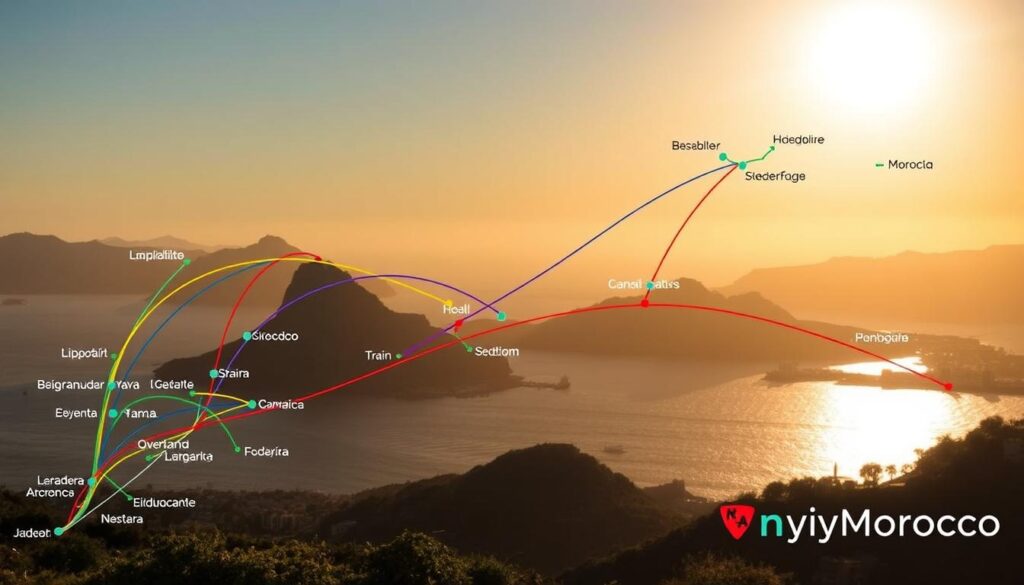
These cities are near Algeciras and Tarifa, perfect for ferry rides to Morocco. Their closeness makes them great starting points for your trip.
Travel Times: How Long Does It Take to Get from Spain to Morocco?
Planning a trip from Spain to Morocco? Knowing how long it takes is key. The time it takes depends on how you travel and the route you take.
Ferry Journey Times
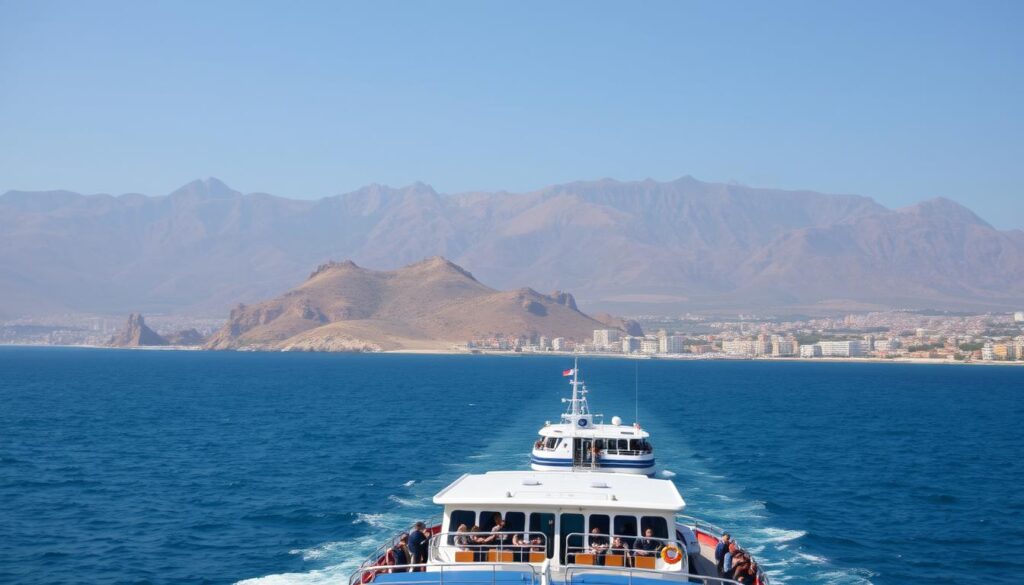
The ferry is a favorite for crossing from Spain to Morocco. The time it takes changes based on the route. For example, the trip from Algeciras to Tangier Med is about 1 hour. The journey from Tarifa to Tangier City is around 35-40 minutes.
For more details on ferry routes and times, check out Parenting To Go.
Flight Times
Flying is also a quick way to get from Spain to Morocco. Direct flights from cities like Madrid and Barcelona to places like Marrakech and Casablanca take about 1-2 hours.
Total Journey Times Including Connections
Remember, total travel time includes more than just flying or taking the ferry. You must add in check-in, security, and layovers. For flights, this can add 2-3 hours. For ferries, it’s about 1-2 hours for check-in and boarding.
From Major Spanish Cities
Travel times from big Spanish cities like Madrid, Barcelona, and Seville to Morocco vary. For instance, a flight from Madrid to Marrakech is 1.5 hours. But driving to the ferry and then taking it takes much longer.
Accounting for Border Procedures
Don’t forget to add time for border checks, especially if you’re driving or taking a ferry. Waiting in line for immigration can add to your total travel time.
Cost Comparison: Different Ways to Travel from Spain to Morocco
Looking to save money or travel in style? The cost of your trip from Spain to Morocco depends on your choice of transport. You can go by ferry or by plane, each with its own price tag.
Ferry Ticket Prices
Ferry prices from Spain to Morocco change based on the route, who’s running the ferry, and your ticket type. For example, the Algeciras to Tangier Med route is a favorite among travelers.
Economy vs. Premium Options
Economy tickets are cheaper, but premium options offer more comfort. Prices can vary a lot, so it’s smart to compare.
Vehicle Transport Costs
Traveling with a car? Your ticket price will include a fee for your vehicle. This fee depends on the ferry company and your car’s size.
Flight Costs
Flight prices from Spain to Morocco change based on the airline, when you book, and the season. You can find direct flights from big Spanish cities to Moroccan spots.
Budget vs. Comfort Options
Budget airlines are cheaper but offer less. Premium airlines cost more but are more comfortable. It’s good to compare to find what fits your budget and likes.
Visa and Entry Requirements for Morocco
Knowing Morocco’s visa and entry rules is key for a smooth trip from Spain. Morocco is known for its rich culture and beautiful landscapes. But, knowing the visa and entry rules is crucial for a hassle-free visit.
Visa Requirements by Nationality
The visa rules for Morocco change based on where you’re from. Some countries can visit without a visa, while others must apply for one in advance.
Visa-Free Countries
Citizens of the US, Canada, and many European countries can visit Morocco without a visa for up to 90 days. Always check how long you can stay based on your nationality.
Application Process for Others
If you can’t visit without a visa, you’ll need to apply. You’ll need to send documents like a valid passport, proof of where you’ll stay, and your travel plans to the Moroccan embassy or consulate. Apply early to avoid delays.
Border Procedures and Tips
When you arrive in Morocco, you’ll face border control. Make sure you have your passport, visa (if needed), and any other documents they ask for. Be ready to talk about your trip and where you’ll stay. It’s smart to bring a printed copy of your plans and hotel booking.
Also, know any special rules for your country. Some visitors must register with local authorities when they arrive. Always check with the Moroccan embassy or consulate before your trip for the latest info.
Best Time to Travel Between Spain and Morocco
Traveling from Spain to Morocco is best at certain times. It’s not just about the weather. It’s also about avoiding crowds and enjoying smoother trips. Knowing the best seasons can make your trip better.
Seasonal Considerations for Ferry Travel
Seasons affect ferry travel a lot. Weather, especially, is key for sea trips.
Weather Impact on Sea Conditions
Weather conditions like strong winds and waves can make ferry rides tough. The winter months (December to February) are usually rougher. The summer months (June to August) are calmer.
Peak Travel Periods to Avoid
Busy times like summer holidays and Easter can make ferries crowded. Traveling during these times can be stressful. Plan your trip to avoid these busy periods.
High and Low Seasons for Tourism
Morocco sees more tourists in spring (March to May) and autumn (September to November). The weather is nice, and there are many cultural events. The summer and winter are quieter, with fewer tourists and lower prices.
| Season | Weather | Ferry Conditions | Tourist Activity |
|---|---|---|---|
| Spring (Mar-May) | Mild | Calm | High |
| Summer (Jun-Aug) | Hot | Generally Calm | Peak |
| Autumn (Sep-Nov) | Pleasant | Calm | High |
| Winter (Dec-Feb) | Cool/Windy | Rough | Low |
Day Trips vs. Longer Stays: Is Morocco Close Enough for a Day Trip?
If you’re in southern Spain, Morocco is just a short ferry ride away. This makes it a great spot for both day trips and longer stays.
Feasibility of Day Trips from Southern Spain
Day trips to Morocco from southern Spain are easy and popular. The short distance lets you dive into Morocco’s vibrant culture without spending too much time.
Organized Tour Options
Many tour operators offer day trips from southern Spain to Morocco. These tours include ferry travel, guided tours, and sometimes camel rides or shopping.
Independent Day Trip Planning
Planning your own day trip is also an option. You can take a ferry from Tarifa or Algeciras to Tangier. With good planning, you can explore souks, historic sites, and enjoy local food.
Recommended Minimum Stay
While day trips are possible, staying longer in Morocco is better. A 3 to 4 day stay is recommended to see main attractions and experience local culture.
| Stay Duration | Recommended Activities |
|---|---|
| Day Trip | Ferry ride, visit Tangier, explore souks |
| 3-4 Days | Explore Tangier, visit Chefchaouen, experience local cuisine |
| Longer Stay | Visit Marrakech, explore the Atlas Mountains, relax in Essaouira |
Cultural Transition: From Europe to Africa
Traveling from Spain to Morocco brings a big change. You’ll move from European to African influences. It’s more than just crossing borders; it’s diving into a new way of life.
What to Expect When Crossing Continents
Leaving Spain for Morocco means seeing big differences. You’ll notice changes in culture, architecture, and how fast life moves. Moroccan culture is shaped by Islam and African roots, unlike what you’re used to in Europe.
Cultural Preparation Tips
To enjoy your trip, get ready for the culture. Knowing local customs and showing respect will make your visit better.
Language Considerations
Many Moroccans speak some Spanish, but Arabic is the main language. Knowing basic Arabic will help you get around and enjoy your stay more.
Customs and Etiquette
Morocco is a conservative place. Wear modest clothes, especially in mosques or rural spots. Also, be respectful during meals and when talking to locals.
| Cultural Aspect | Spain | Morocco |
|---|---|---|
| Primary Language | Spanish | Arabic |
| Dress Code | More liberal | Conservative |
| Cuisine | Tapas, Paella | Tagine, Couscous |
Knowing these cultural differences and adapting will make your trip richer and more respectful.
Conclusion: Bridging the Gap Between Spain and Morocco
Traveling from Spain to Morocco is a mix of Europe’s comfort and Africa’s excitement. You can pick from ferries, flights, or driving, based on your time and taste.
Spain and Morocco are close, perfect for a quick visit or a longer trip. Marrakech’s markets, Fez and Tangier’s history, or the Mediterranean beaches await you. Morocco is a treasure trove of experiences.
Knowing the distances and travel times helps in planning. Ferry rides from Algeciras or Tarifa are easy, or flights from Spanish cities are quicker. With good advice, you’re set to discover Morocco’s marvels.





 Covers cities, coast, mountains, desert & food