

Traveling from Spain to Morocco by ferry is easy and beautiful. You can pick from many ferry routes and companies that go between the two countries.
When planning your trip, you’ll need to know how to book tickets and what to expect. This guide will help you, whether you’re traveling for fun or work.
Key Takeaways
- Multiple ferry operators offer routes between Spain and Morocco.
- You can choose from various departure ports in Spain.
- Booking tickets in advance is recommended.
- The ferry journey offers scenic views of the coastline.
- Onboard amenities vary by operator.
Overview of Ferry Travel Between Spain and Morocco
The ferry route between Spain and Morocco is a scenic way to travel between Europe and Africa. Several ferry companies operate on this route. You can pick the one that fits your budget and preferences.
Why Choose Ferry Travel
Ferry travel between Spain and Morocco is a favorite among many. Here’s why:
- Scenic Views: See the beautiful Mediterranean coastline and the Strait of Gibraltar.
- Convenience: It’s quick and easy, with many departures daily.
- Flexibility: Choose from different ferry companies and ticket options.
For the latest ferry schedules and to book your tickets, visit Direct Ferries. It’s a trusted online booking site.
Brief History of the Spain-Morocco Ferry Routes
Ferry services between Spain and Morocco have a long history. They’ve been popular for decades. Companies like FRS Ferries, Baleària, and Trasmediterránea operate on this route.
These companies offer various services and amenities. They aim to make your journey comfortable and fun.
Popular Ferry Routes from Spain to Morocco
Several ferry routes connect Spain and Morocco. They offer different options for travelers. Each route has its own duration, frequency, and ports.
Algeciras to Tangier Med
The Algeciras to Tangier Med route is very popular. It has many sailings a day, giving travelers flexibility. The trip takes about 1 hour, making it fast and efficient.

Tarifa to Tangier Ville
The Tarifa to Tangier Ville route is scenic and quick. It takes about 35-40 minutes on a fast ferry. It’s perfect for day trips or shorter journeys.
Other Available Routes
There are more ferry services besides Algeciras to Tangier Med and Tarifa to Tangier Ville. You can also go from Algeciras to Ceuta or Málaga to Melilla. These routes offer more choices for travelers, depending on their destination.
| Route | Duration | Frequency |
|---|---|---|
| Algeciras to Tangier Med | 1 hour | Multiple sailings daily |
| Tarifa to Tangier Ville | 35-40 minutes | Several sailings daily |
| Algeciras to Ceuta | Varies | Frequent sailings |
Spanish Departure Ports
Spain’s ferry ports are your gateway to Morocco, offering a range of travel experiences. When planning your trip, it’s essential to choose a departure port that suits your needs.
Algeciras Port Information
Algeciras is one of the busiest ports in the region, with frequent ferry services to Morocco. It offers extensive facilities, including parking, restaurants, and shops. The port is well-connected to major Spanish cities, making it a convenient option for many travelers.
Tarifa Port Details
Tarifa provides a more laid-back atmosphere and is known for its picturesque views. While it has fewer ferry services than Algeciras, it’s still a popular choice for those traveling to Tangier. Tarifa’s port is compact, with basic amenities and easy access to the town center.
Barcelona and Other Spanish Ports
Other Spanish ports, such as Barcelona, also offer ferry services to Morocco, albeit less frequently. These ports can be a good option if you’re traveling from other parts of Spain or prefer a different route. It’s worth noting that services and frequencies can vary depending on the season.

| Port | Frequency of Services | Amenities |
|---|---|---|
| Algeciras | High | Extensive (parking, restaurants, shops) |
| Tarifa | Medium | Basic (limited restaurants, shops) |
| Barcelona | Low | Extensive (parking, restaurants, shops) |
When choosing your departure port, consider factors like service frequency, amenities, and connectivity to your starting location in Spain. This will help ensure a smooth start to your journey to Morocco.
Moroccan Arrival Ports
When you arrive in Morocco, you’ll land at one of several key ports. Each port has its own special features. Knowing about these ports helps you plan your trip smoothly.
Tangier Med Port Guide
Tangier Med is a modern port near Tangier. It’s a big hub for ferry travel between Spain and Morocco. The port has ticketing offices, cafes, and duty-free shops.
As you get off the ferry, you’ll see signs for immigration and customs. Tangier Med is linked to Tangier city by many transport options. This makes it easy to keep moving.

Tangier Ville Port Information
Tangier Ville, or Tangier City port, is in the heart of Tangier. It’s a historic port that offers a traditional experience. Ferries from Tarifa often come here, making it a great link between the two cities.
When you leave the port, you’ll find Tangier’s lively city center. Local taxis and public transport are easy to find.
Nador and Other Moroccan Ports
Nador is a big port in Morocco, getting ferries from Spain, especially Almería. It’s well-connected to the city and around, making it a good entry point in northern Morocco. Other ports like Al Hoceima also get ferries, but less often.
Looking for an affordable ferry from Spain to Morocco is simpler when you know the ports. This way, you can plan your trip better.
Ferry Companies Operating Spain to Morocco Routes
Many ferry companies run between Spain and Morocco. They offer different services and schedules for all kinds of travelers. Whether you’re on a leisure trip or a business journey, you’ll find a suitable option.
FRS Ferries
FRS Ferries is a top choice for the Spain to Morocco route. They are known for their reliable and efficient service. FRS Ferries has frequent sailings from Algeciras to Tangier Med and Tarifa to Tangier Ville.
They focus on making your journey comfortable. With amenities onboard, FRS Ferries is a favorite among travelers.
Baleària
Baleària is a big name in ferry travel between Spain and Morocco. They run on several routes, including Algeciras to Tangier Med and Barcelona to Tangier Med. Baleària is known for its modern fleet and wide range of facilities onboard.
They offer dining options and comfortable seating areas. This makes Baleària a great choice for many travelers.
Trasmediterránea
Trasmediterránea has been connecting Spain and Morocco for decades. They offer sailings from various Spanish ports to Moroccan destinations. Trasmediterránea provides both economy and premium services to meet different traveler needs.
GNV and Other Operators
GNV (Grimaldi Lines) and other operators also offer ferry services. GNV is famous for its modern vessels and variety of onboard amenities. They have entertainment options and comfortable accommodations.
Here’s a comparison of the services offered by these ferry companies:
| Ferry Company | Main Routes | Onboard Amenities |
|---|---|---|
| FRS Ferries | Algeciras to Tangier Med, Tarifa to Tangier Ville | Dining options, comfortable seating |
| Baleària | Algeciras to Tangier Med, Barcelona to Tangier Med | Modern facilities, dining options, entertainment |
| Trasmediterránea | Multiple routes from Spain to Morocco | Economy and premium services, basic amenities |
| GNV | Various routes, including Spain to Morocco | Modern vessels, entertainment options, comfortable accommodations |

Ferry to Morocco from Spain: Ticket Options and Pricing
Exploring ticket options and prices is key for a great ferry trip from Spain to Morocco. There are many choices to fit your budget and preferences.
Economy vs. Premium Tickets
Ferry tickets come in economy and premium classes. Economy tickets are cheaper and offer basic amenities. Premium tickets, on the other hand, provide more comfort and services like extra space and free food.
FRS Ferries offers a premium experience with luxury amenities. Baleària has options from economy to premium with various perks. Your choice depends on your budget and comfort needs.

Vehicle Transport Costs
Traveling with a vehicle adds extra costs. The price depends on your vehicle’s size and the ferry operator. Larger vehicles or caravans cost more.
Some ferry companies give discounts for round trips or advance bookings. Always check with your chosen ferry for their prices and any discounts.
Seasonal Price Variations
Ticket prices change with the season. Peak season, like summer and holidays, is pricier due to more travelers. Traveling off-season can save you money.
| Season | Economy Ticket Prices | Premium Ticket Prices | Vehicle Transport Costs |
|---|---|---|---|
| Peak Season (Summer) | $100-$150 | $250-$350 | $150-$250 |
| Off-Season | $80-$120 | $200-$300 | $120-$200 |
Knowing these factors helps plan your ferry trip from Spain to Morocco. It makes choosing your ticket easier.
How to Book Your Ferry Tickets
Booking your ferry ticket to Morocco from Spain is easy. You can do it online, at the terminal, or through a travel agency. Each method is straightforward.
Online Booking Platforms
Online booking platforms are the most convenient. They let you compare prices and schedules from different ferry companies. Visit FRS Ferries, Baleària, and Trasmediterránea websites to book your tickets.
Make sure you have all the necessary details ready when booking online. This includes your travel dates, vehicle information, and passenger details. Most platforms have a secure payment system. You’ll get a confirmation email with your booking details.
| Ferry Company | Online Booking | Terminal Booking | Travel Agency |
|---|---|---|---|
| FRS Ferries | Yes | Yes | Yes |
| Baleària | Yes | Yes | Yes |
| Trasmediterránea | Yes | Yes | Yes |
Booking at the Terminal
Booking at the terminal is a good option if you like a personal touch. Visit the ticket counters at Algeciras or Tarifa ports to buy your tickets. Be ready for long queues during peak seasons.
Using Travel Agencies
Travel agencies can also help with your ferry booking. They often bundle it with other services like hotel reservations or car rentals. This is great for complex itineraries or if you want a travel expert to handle the details.

Choose your booking method wisely. Make sure you have all the necessary documents and information ready. Whether you’re traveling by ferry from Spain to Morocco for fun or work, a well-planned booking will make your trip successful.
Traveling with Vehicles
Morocco is easy to reach by ferry from Spain. Taking your car along is simple with the right steps. Knowing what you need is key.
Car Documentation Requirements
You’ll need certain papers to bring your car. A valid car insurance policy that covers Morocco is a must. Check if your current policy works abroad.
You’ll also need your car’s registration and a valid driver’s license. A Green Card is a good idea too. It shows your car is insured worldwide.
Loading and Unloading Procedures
At the port, look for signs to the vehicle area. You’ll need to check in with the ferry company and show your papers. The process is usually easy, but knowing the ferry company’s rules helps.

Driving in Morocco: What to Know
After arriving in Morocco, you’ll drive on local roads. Driving here is different from Spain. Know the local traffic laws and road conditions.
It’s also smart to learn some Arabic or French. Not everyone speaks English. With some prep, driving in Morocco will be fun and easy.
Immigration and Customs Procedures
Getting ready for your ferry trip from Spain to Morocco? Knowing what to expect at immigration and customs is key. Having the right documents and understanding the rules can make your journey smoother.
Required Documents for US Citizens
US citizens heading to Morocco need a valid passport with a blank page for the stamp. Your passport must be good for at least six months after you leave Morocco. You don’t need a visa for stays up to 90 days, but check the latest visa rules first. You might also need to show proof of where you’re going next and enough money for your stay.
Customs Regulations and Restrictions
Morocco has rules for bringing in and taking out goods. You can bring personal items and gifts without paying duty, up to a certain value. But, things like narcotics, firearms, and certain animals are banned. If you have more than 100,000 MAD, you must declare it. For more info, visit the Moroccan customs website or talk to your local embassy or consulate.
| Item | Allowance | Restrictions |
|---|---|---|
| Currency | No limit on foreign currency | Declare amounts over 100,000 MAD |
| Alcohol/Tobacco | Limited duty-free allowance | Excess subject to duty |
| Gifts | Up to a certain value | Subject to customs inspection |
Border Control Process
The border control at Moroccan ports is usually quick. You’ll need to show your passport, ticket, and any visas. Officers might ask about your plans, where you’re staying, and how you’ll get back. Keep all your documents ready to avoid any hold-ups. Sometimes, you’ll need to fill out an arrival card, which you can get on the ferry or at the port.
“Traveling to Morocco is an adventure in itself, but being prepared for the immigration and customs process can make all the difference in starting your trip on the right foot.”

What to Expect During Your Ferry Journey
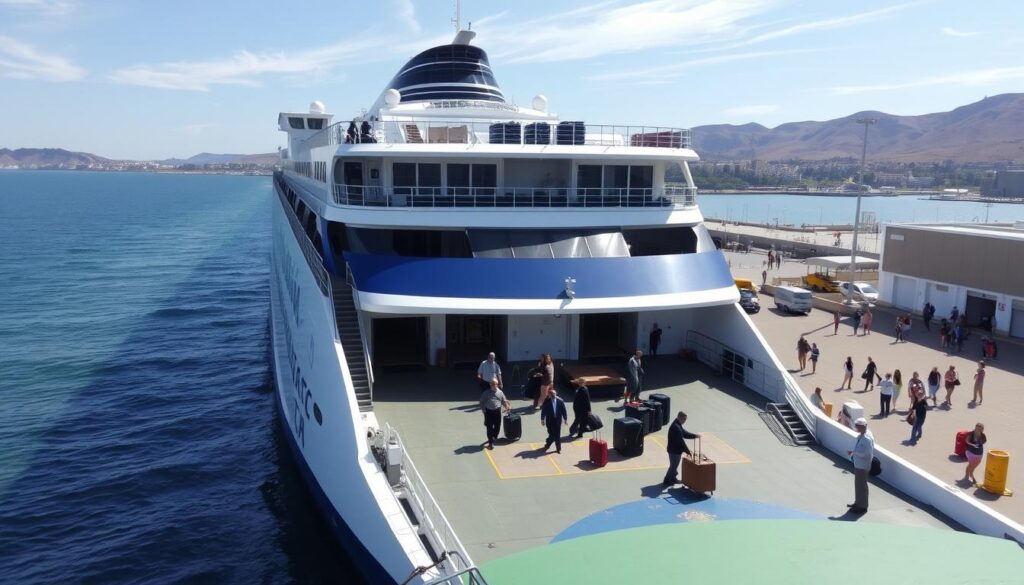
Traveling by ferry to Morocco from Spain is a mix of comfort and adventure. As you cross the Strait of Gibraltar, you’ll find many services to make your trip enjoyable.
Onboard Amenities and Facilities
Modern ferries between Spain and Morocco have lots of amenities. You’ll find comfy lounges, clean restrooms, and sometimes TVs or play areas for kids. There are also special areas for pets, so everyone in your family can relax.
Key amenities to look out for include:
- Comfortable seating areas
- Onboard shops or vending machines
- Clean and well-maintained restrooms
- Designated pet areas
Food and Beverage Options
Dining on the ferry offers several choices. You can pick from snacks and drinks to full meals in the onboard restaurant. Check the ferry operator’s website or the onboard café for details.
| Meal Type | Description | Price Range |
|---|---|---|
| Snacks | Light refreshments and snacks | $5-$10 |
| Full Meals | Hot meals served in the onboard restaurant | $15-$25 |
| Beverages | Soft drinks, coffee, and alcoholic beverages | $3-$8 |
Seating and Accommodation Choices
The seating or accommodation you pick can change your ferry journey. You can choose from economy class to private cabins. Economy class has comfy seats in a shared lounge, while premium options offer reclining seats and more privacy.
Consider your priorities:
- Comfort during the journey
- Budget constraints
- Need for privacy or extra services
Choosing the right seating or accommodation makes your journey to Morocco by ferry more enjoyable.
Practical Tips for Ferry Travel to Morocco
To have a smooth journey, being well-prepared is key. Whether you’re a seasoned traveler or new to international trips, the right info is crucial.
Best Time to Travel
The best time to travel by ferry from Spain to Morocco is in spring and early autumn. The weather is mild and pleasant. Avoid the peak tourist season, June to August, for smaller crowds and lower prices.
Language and Currency Considerations
Many Moroccans speak Spanish, French, or English, but Arabic and Berber are primary. Learning basic Arabic phrases can improve your trip. The Moroccan dirham is the local currency, with euros and credit cards accepted at major ports. For more on traveling to Morocco, visit our dedicated page.
Safety and Security Tips
Always be mindful of your belongings, especially in crowded places. Keep valuables secure and watch out for pickpocketing. Morocco is generally safe, but staying informed about local conditions is wise.
Dealing with Seasickness
If seasickness is a concern, take steps before your trip. Use over-the-counter meds, wristbands, and choose a middle cabin. Staying on deck and looking at the horizon can also help if you start to feel seasick.
Transportation Options After Arriving in Morocco
When you arrive in Morocco, you’ll find many ways to get to your destination. You can go to Marrakech, Fez, or other cities. Choose the best option for you based on your needs and budget.
Taxis and Public Transport
Taxis are easy to find in cities or nearby towns. You can pick from private or shared taxis at Moroccan ports. For longer trips, buses or trains are good choices. They are affordable and comfy. Booking ahead is wise, especially when many people are traveling.
Car Rentals
Getting a car lets you explore Morocco on your own schedule. Many car rental places are at ports and airports. Make sure to book early, especially when lots of people are traveling. Look at the rental terms and insurance options before you decide.
Connecting to Major Moroccan Cities
To get to big cities like Marrakech, Rabat, or Fez, you can mix transport methods. Trains are popular, with ONCF being the main railway. You can book tickets online or at the station. For other places, buses like Supratours are a good choice.
A traveler once said,
‘The journey to Marrakech was breathtaking, with the train gliding through the Moroccan countryside.’
Conclusion
Traveling by ferry from Spain to Morocco is easy and has many options. You can pick from Baleària, FRS Ferries, and Trasmediterránea, depending on your needs. Routes like Algeciras to Tangier Med and Tarifa to Tangier Ville offer different times and amenities.
To have a smooth trip, it’s best to book your ferry tickets early, especially in busy seasons. You can bring your car or travel on foot and see the Strait of Gibraltar’s beauty. This guide helps you prepare for a great trip.
Looking for a cheap ferry or a luxury ride? There’s a ferry for you. By picking the right company and route, you’ll have a comfortable and fun journey from Spain to Morocco.





 Covers cities, coast, mountains, desert & food