
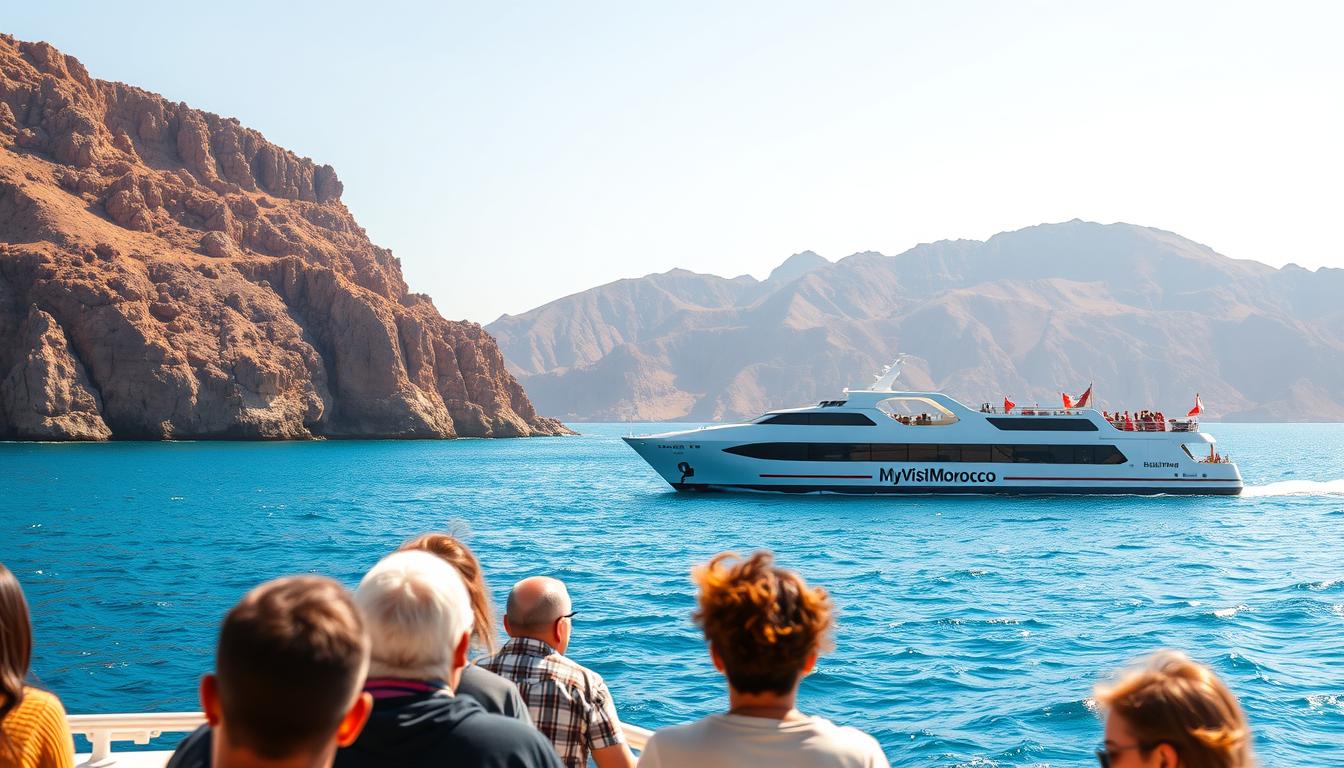
Traveling from southern Spain to Morocco is now easier than ever. This is thanks to the ferry services that link these areas. If you’re planning a trip, knowing the routes and travel tips is key for a smooth ride.
Enjoy a comfortable journey and stunning views of the Strait of Gibraltar. The ferry from southern Spain to Morocco is a favorite among travelers. It offers a unique experience.
Key Takeaways
- Multiple ferry operators offer services between Spain and Morocco.
- The most popular routes include Tarifa to Tangier and Algeciras to Ceuta.
- Booking in advance is recommended, especially during peak season.
- Travel documents, such as a valid passport, are required.
- Ferry schedules and prices vary depending on the operator and time of year.
Overview of Ferry Travel Between Spain and Morocco
Traveling by ferry from southern Spain to Morocco is a special experience. It combines convenience with the beauty of the sea. This journey is not just about getting to your destination. It’s about enjoying the ride and the views of the Mediterranean.
Why Choose Ferry Travel
Ferry travel between Spain and Morocco is popular for its relaxed pace. You can enjoy onboard amenities and bring your vehicle. Plus, you get to see the stunning views of the Strait of Gibraltar.
The advantages of ferry travel include flexibility and comfort. When you plan your trip on the southern Spain to Morocco ferry routes, you’ll love the ease and the views.
The Strait of Gibraltar: A Historical Crossing Point
The Strait of Gibraltar has been a key crossing for centuries. It has been a vital route for trade and cultural exchange for ages. Today, it’s still a major path for travelers.

As you travel by ferry, you follow in the footsteps of many. From ancient traders to modern-day adventurers, you’re part of a long tradition.
Major Ferry Routes from Southern Spain to Morocco
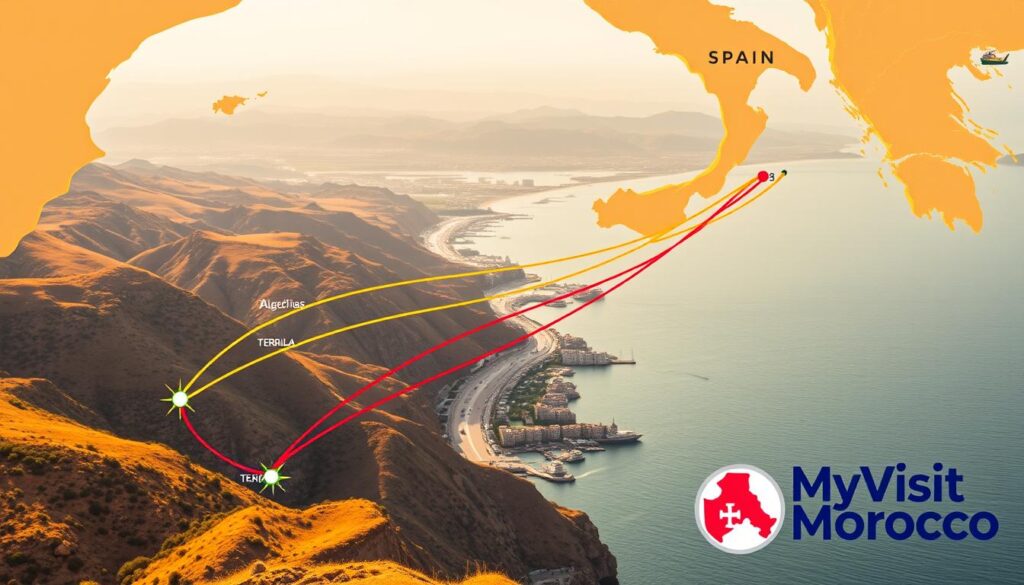
Travelers from southern Spain to Morocco can pick from several ferry routes. The top choices are Algeciras to Tangier Med and Tarifa to Tangier City. Each route has its own benefits and services.
Algeciras to Tangier Med
The Algeciras to Tangier Med route is very busy and convenient. It’s popular for its short crossing time and many sailings.
Fast Ferry Options
For a quicker trip, fast ferry options are available on the Algeciras to Tangier Med route. These ferries cut down travel time. They’re perfect for those in a hurry. You can learn more and book tickets on Packasandwich.
Conventional Ferry Services
There are also conventional ferry services on this route. These ferries have more space and amenities. They’re great for travelers with vehicles or those who want a relaxed trip.
Tarifa to Tangier City
The Tarifa to Tangier City route is known for its beautiful views. It’s a favorite among travelers who love scenic journeys. The trip is a bit longer than Algeciras to Tangier Med, but it’s unique.
Other Available Routes
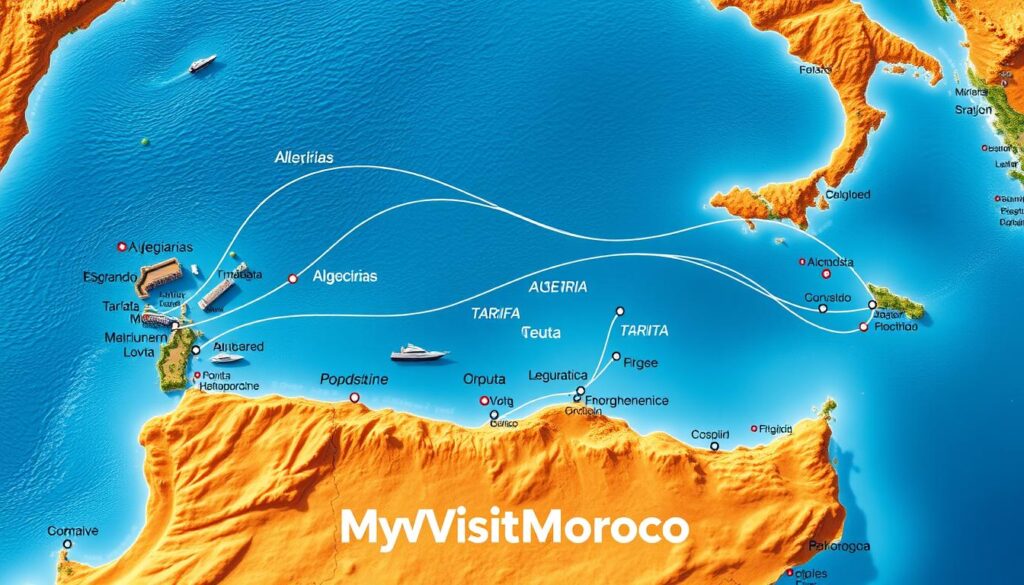
There are other ferry services connecting southern Spain to Morocco. These routes offer flexibility for travelers with specific plans. For example, Málaga, Almería, and other Spanish ports have routes to Morocco.
As a traveler, you can pick the ferry route that fits your needs. Whether you want speed, comfort, or views, there’s an option for you. With so many choices, you’re bound to find the right service.
Spanish Departure Ports
Southern Spain has many ports for ferry trips to Morocco. Each port has its own benefits. Picking the right one is key for a great trip.
Algeciras Port: Spain’s Busiest Ferry Terminal
Algeciras is a top ferry port in southern Spain. It’s a big link to Morocco. The port has modern facilities for lots of passengers and vehicles.
Port Facilities and Services
Algeciras port has lots to offer. You can shop duty-free, eat at restaurants, and exchange money. For more on ferry services, visit our dedicated page.
Getting to Algeciras
Getting to Algeciras is easy by car, bus, or train. It’s near the A-7 highway for drivers. Buses and trains also connect it to Málaga and Seville.
| Transport Mode | Frequency | Approximate Time |
|---|---|---|
| Bus | Every 30 minutes | 2 hours from Málaga |
| Train | Every hour | 1.5 hours from Seville |
| Car | N/A | 1 hour from Gibraltar |
Tarifa: The Southernmost Point of Europe
Tarifa is the southernmost point of Europe. It’s known for its relaxed vibe. It’s a favorite for those wanting a quick trip to Tangier.
Other Spanish Ports: Málaga, Almería, and Motril
Ports like Málaga, Almería, and Motril also go to Morocco. They offer different routes. They might be better based on where you start in Spain.
For the latest on ferry times and cost of ferry tickets from southern Spain to Morocco, check with the ferry companies. Or visit a travel site for more info.
Moroccan Arrival Ports
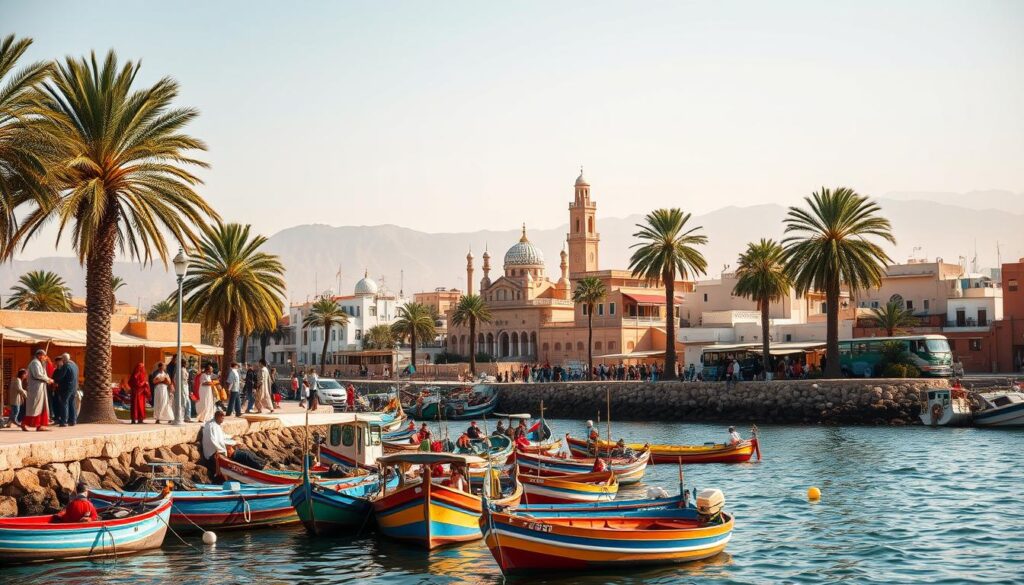
Morocco’s ports are where your ferry from southern Spain will land. They offer a glimpse into the country’s rich heritage and warm welcome. These ports are more than just places to arrive; they are doors to Morocco’s lively culture and history.
Tangier Med: Morocco’s Modern Port Complex
Tangier Med is a key port in Morocco, known for its modern setup and prime location. It’s a major spot for both people and goods.
Port Layout and Facilities
The port is built to manage lots of passengers and vehicles well. It has modern amenities like duty-free shops, restaurants, and places to exchange money. This makes your arrival as pleasant as possible.
Transportation to Tangier City
After arriving at Tangier Med, you can get to Tangier city in a few ways. You can take a taxi, bus, or shuttle. The trip usually takes 30-40 minutes, depending on traffic.
Tangier City Port
Tangier City Port is smaller than Tangier Med but offers a unique arrival experience. It’s right in Tangier’s heart, making it easy to get to the city’s top sights.
Nador and Other Moroccan Ports
Other important ports in Morocco include Nador, a major spot for ferries from southern Spain. These ports have the facilities needed for passengers and connect to different parts of Morocco.
Knowing about these ports’ layout and facilities can make your ferry arrival in Morocco better. Whether you’re off to Tangier or elsewhere, Morocco’s ports aim to make your arrival smooth and friendly.
Ferry Companies Operating the Southern Spain to Morocco Routes
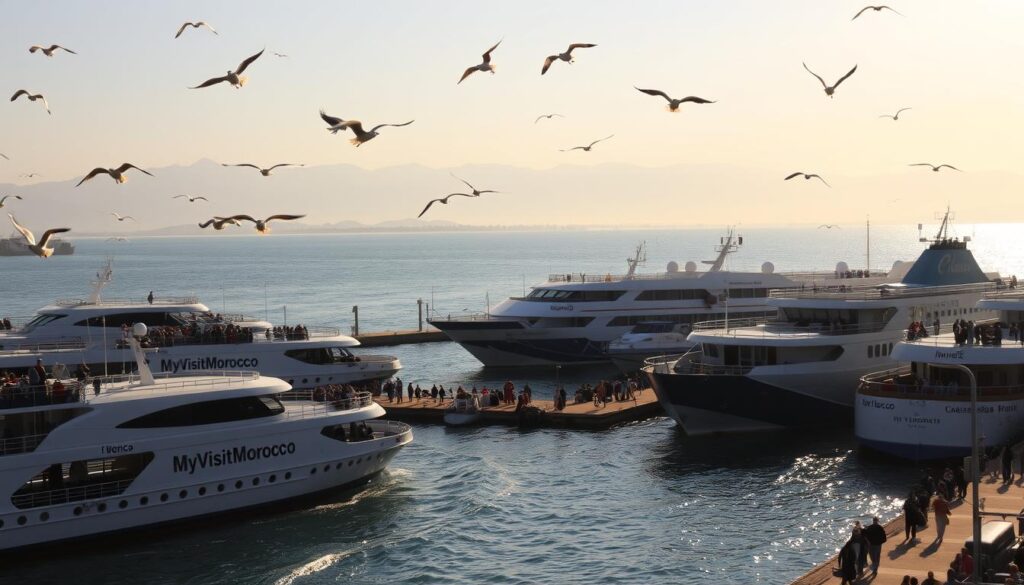
Many ferry companies link southern Spain to Morocco. They offer various services and routes. You can pick from different operators, each with its own comfort level, departure frequency, and amenities.
FRS Ferries
FRS Ferries leads in connecting southern Spain to Morocco. They run the Algeciras-Tangier Med route with many daily trips. Known for its modern ships and top service, FRS Ferries is a favorite among travelers. You can book your tickets and plan your trip on their website or through MarocMama.
Balearia
Balearia is a big name in ferry services between southern Spain and Morocco. They cover routes like Algeciras to Tangier Med and Almería to Nador. Balearia is praised for its comfy facilities and varied ticket choices, meeting different traveler needs.
Trasmediterránea
Trasmediterránea has a long history of Spain-Morocco ferry services. They serve from Spanish ports like Algeciras, Almería, and Málaga to Moroccan ports. Known for reliability and a wide network, Trasmediterránea offers flexibility to travelers.
AML and Other Operators
AML (Africa Morocco Link) is a major player on the Algeciras-Tangier route. They provide many sailings and various onboard services. Besides the big names, other operators also serve the southern Spain to Morocco routes. Each has its own special features and benefits. You can look into these options to find the best for your travel plans.
When picking a ferry company, think about the route, how often they sail, what’s on board, and ticket costs. This will help you choose a comfortable and convenient trip.
Ticket Prices and Booking Information
To plan your ferry trip from southern Spain to Morocco, knowing ticket prices and how to book is key. Ticket costs vary based on route, season, and service class.
Average Costs for Passengers and Vehicles
Ferry ticket prices from southern Spain to Morocco vary a lot. A one-way ticket for a person can cost between $30 to $100. A return ticket might cost between $50 to $200. Vehicles also have different prices, depending on their size.
Economy vs. Premium Options
Ferry companies offer economy and premium services. Economy tickets are cheaper but have fewer perks. Premium tickets offer more comfort and services like food and drinks.
Premium Ticket Benefits:
- Comfortable seating or cabins
- Access to lounges
- Food and beverage services
Group and Family Discounts
Many ferry operators give discounts for groups and families. Booking early can also get you better prices. Always check with the ferry company for the latest deals.
How to Book Ferry Tickets
You can book ferry tickets online through the ferry company’s website or on platforms like Direct Ferries. Here, you can compare prices, check schedules, and book cabins or vehicle tickets.
Tips for Booking:
- Book in advance to secure the best rates
- Check for any ongoing promotions or discounts
- Consider flexibility in your travel dates
Money-Saving Tips
To save on ferry tickets, travel during off-peak seasons, book early, or look for special deals. Some ferry companies also offer loyalty programs or membership benefits.
| Ticket Type | One-Way Price Range | Return Price Range |
|---|---|---|
| Economy Passenger | $30 – $60 | $50 – $100 |
| Premium Passenger | $60 – $100 | $100 – $200 |
| Vehicle (up to 5m) | $100 – $200 | $150 – $300 |
Ferry Schedules and Journey Times
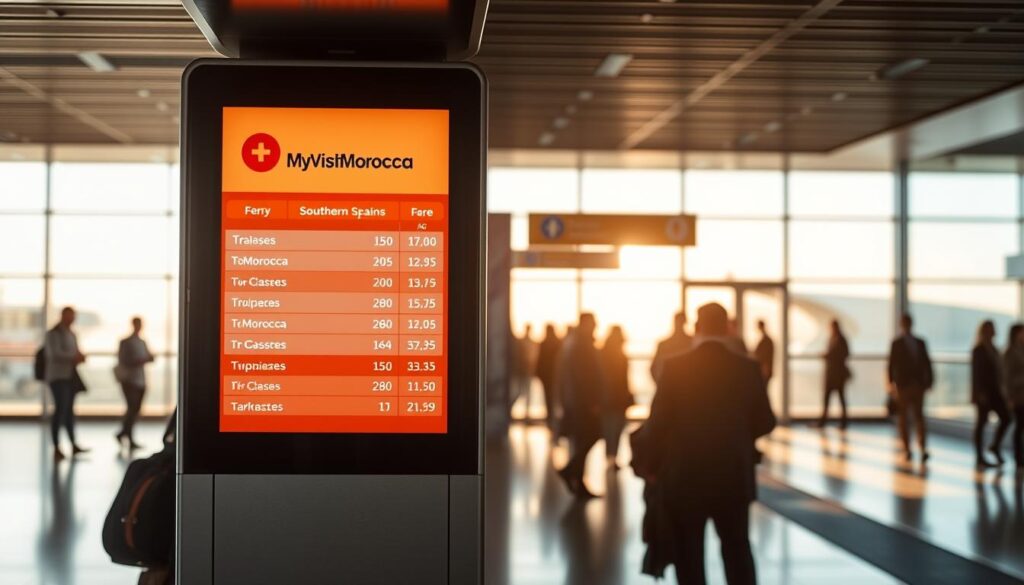
Knowing the ferry schedules from southern Spain to Morocco is key for a smooth trip. The number of sailings and how long they take can change a lot. This depends on the season and the route you pick.
High Season vs. Low Season Schedules
More ferries run during the high season, from June to September. You’ll find many daily trips on routes like Algeciras to Tangier Med. But, fewer sailings happen in the low season, especially in winter. Always check the latest Direct Ferries for the best times.
Typical Crossing Times
The time it takes to cross from Spain to Morocco varies. It’s usually between 35 minutes and 2 hours. For example, the fast ferry from Algeciras to Tangier Med is just 35 minutes. But, the regular ferry takes about 2 hours.
Traveling from Tarifa to Tangier City also has different times. It can be 35 minutes to 1 hour, depending on the ferry.
| Route | Crossing Time (High-Speed) | Crossing Time (Conventional) |
|---|---|---|
| Algeciras to Tangier Med | 35 minutes | 2 hours |
| Tarifa to Tangier City | 35 minutes | 1 hour |
Delays and Cancellations: What to Expect
Ferry operators try to stick to their schedules, but sometimes they can’t. Weather or technical problems might cause delays or cancellations. Winter months can be especially rough.
If your ferry is late or canceled, the operator will help. They might offer another trip or a refund. Always check their website or call customer service for updates.
“The Strait of Gibraltar is known for its unpredictable weather conditions, which can impact ferry schedules. Passengers are advised to stay informed about weather forecasts and ferry status before their journey.”
Knowing these things helps you plan better. It can make your trip smoother and less likely to be disrupted.
Travel Documents and Customs Requirements
To have a smooth trip on the spain to morocco ferry service, knowing your travel documents and customs is key. Traveling from southern Spain to Morocco means crossing international borders. So, being ready is essential.
Passport and Visa Requirements for Morocco
Morocco has its own rules for entering the country. Your passport must be valid for at least six months after you plan to leave Morocco.
Requirements for US Citizens
US citizens don’t need a visa for visits up to 90 days. But, your passport must still be valid for the required time.
Entry Forms and Procedures
When you arrive in Morocco, you’ll need to fill out an entry form. It’s a good idea to have your ferry ticket and accommodation details ready. These might be asked for.
Customs Regulations
When you enter Morocco, you can bring some items duty-free. But, there are limits on things like tobacco, alcohol, and gifts. Knowing these limits helps avoid problems.
| Item | Allowance |
|---|---|
| Tobacco Products | 200 cigarettes or 50 cigars |
| Alcohol | 1 liter of spirits or 2 liters of wine |
| Gifts | Value not exceeding MAD 5000 |
Health and Safety Requirements
Make sure you know about any health needs, like vaccinations. Morocco has rules about bringing in certain medicines.
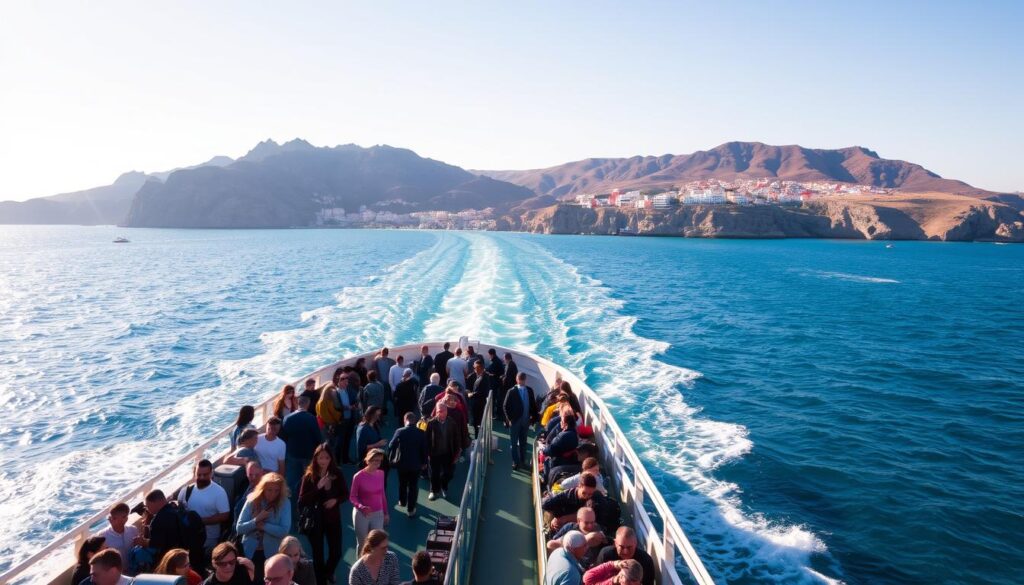
By knowing and following these rules, you’ll be set for your trip on the ferry from southern spain to morocco. This will make your journey smooth and worry-free.
What to Expect On Board the Ferry from Southern Spain to Morocco
Getting ready for your trip from southern Spain to Morocco? Knowing what’s on the ferry is key. The journey across the Strait of Gibraltar is more than just a ride. It’s filled with facilities and services to ensure your comfort and enjoyment.
Facilities and Amenities
Modern ferries between southern Spain and Morocco have lots to offer. You’ll find cozy seating inside and out, perfect for relaxing and taking in the views. There are also shops, play areas for kids, and entertainment options.
Staying connected is easy on most ferries. They offer Wi-Fi, but the quality can change with the sea and the operator.
Food and Beverage Options
Dining on the ferry is varied. You can grab snacks or enjoy a full meal. Expect to find Spanish, Moroccan, and international dishes.
Check with your ferry operator for dining options. Cafeterias and restaurants are available on some ferries. It’s smart to plan your meals ahead.
Seating and Cabin Options
Seating and cabins vary by operator and service class. Economy seats are comfy for short trips. For longer journeys, consider luxury cabins.
Economy Class Experience
Economy class offers shared seating that’s comfortable. Seats are designed for good views and some recline. It’s great for budget travelers or short trips.
Business and First Class Options
For luxury, choose business or first class. These offer recliner seats or private cabins with en-suite facilities. They’re perfect for longer trips or those who want to travel in style.
| Ferry Operator | Economy Class | Business/First Class | Onboard Amenities |
|---|---|---|---|
| FRS Ferries | Comfortable seating | Private cabins available | Wi-Fi, shops, children’s play area |
| Balearia | Reclinable seats | Luxury cabins with en-suite | Restaurant, cafeteria, entertainment for kids |
| Trasmediterránea | Comfortable seating areas | Business class with recliner seats | Wi-Fi, shops, snack bar |
For more info on ferry schedules and to book, visit https://marocmama.com/ferry-morocco-spain/. This site has all you need to know about ferry operators, routes, and booking.
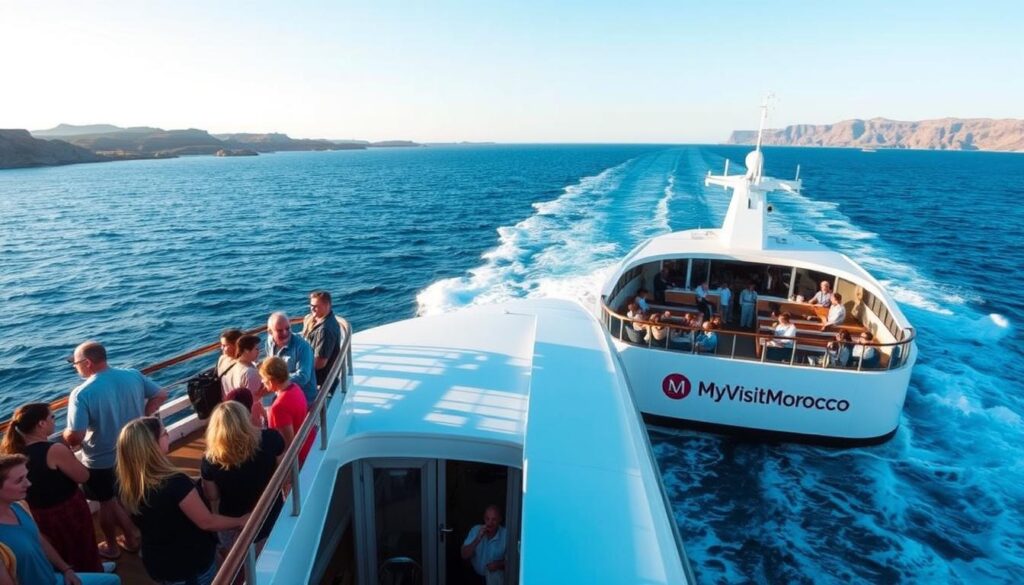
Traveling with Vehicles
Traveling with your vehicle from southern Spain to Morocco needs some prep. Whether it’s a car, motorcycle, or campervan, knowing the rules makes the trip easier.
Car Requirements and Documentation
Make sure you have the right papers for your car. You’ll need your vehicle’s registration and insurance that covers you in Morocco.
Insurance Requirements
Your car insurance must be valid in Morocco. Talk to your insurance company to see if they cover Morocco. Some ferry companies also offer insurance when you book.
Vehicle Import Permits
For short stays, you don’t need a special import permit. But, your vehicle must follow Moroccan rules. This might include a carnet de passages en douane or a Green Card for Morocco.
Motorcycles and Campervans
Motorcycles and campervans are also allowed on the ferries. But, there might be special rules or limits. Check with your ferry operator first. For campervans, make sure they meet safety and emissions standards.
Driving in Morocco: Essential Information
After arriving in Morocco, know the local driving rules. This includes road signs, speed limits, and any special rules like tolls or restricted areas. For more info, visit the Direct Ferries website.
Seasonal Considerations for Ferry Travel
When planning your ferry trip from southern Spain to Morocco, think about the seasons. The schedule for ferries between southern Spain and Morocco changes with the seasons. This affects your travel plans a lot.
The ferry season has three main parts: peak summer, winter, and special events. Each part has its own special features.
Summer Peak Season
Summer is the busiest time for travel by ferry from Spain to Morocco. Ferries run more often to meet the demand. But, it’s also the most crowded time.
- Tickets cost more because more people want to travel.
- There are more sailings, making it easier to plan your trip.
- Ports and ferries are very crowded.
Winter Crossings and Weather Conditions
Winter is a different story for ferry travel. It’s the low season, but you should know:
- The seas are rougher, and there might be more delays because of the weather.
- Ferries run less often, giving you fewer travel choices.
- Tickets are cheaper, which is good for those who don’t mind the weather.
Religious Holidays and Special Events
Morocco and Spain have holidays and events that can change ferry schedules. For example:
- Eid al-Fitr and Eid al-Adha are big in Morocco, and they might change ferry times.
- Local festivals in Spain and Morocco draw big crowds, affecting ferry travel.
- Check local calendars to avoid any travel problems.
Knowing about these seasonal changes can make your ferry trip smoother and more fun between southern Spain and Morocco.
Practical Tips for First-Time Travelers on the Ferry from Southern Spain to Morocco
Getting ready for your first ferry trip from southern Spain to Morocco? Knowing the basics can make your trip better. The ferry ride is a quick and easy way to travel between these two places. Several ferry companies connect southern Spain and Morocco, offering different routes and services.
Arriving at the Port: Timing and Procedures
It’s important to arrive at the port early. Most ferry companies open check-in 2 hours before departure. Make sure you have your passport, visa (if needed), and car documents (if you’re bringing a car). You’ll go through security checks, similar to airport screenings.
Managing Seasickness
For those who get seasick, there are ways to help. Choose a cabin in the middle or on a higher deck to feel less of the waves. You can buy over-the-counter meds, but talk to your doctor first. Some ferries also sell seasickness wristbands.
Language Considerations
While many Moroccans speak Spanish, Arabic and French are common too. Knowing a bit of these languages or carrying a translation guide can help. Luckily, many ferry staff speak English, making it easier for visitors.
Cultural Considerations When Entering Morocco
Morocco is rich in culture and diversity. When you arrive, be respectful of local customs and traditions. Dress modestly, especially at religious sites. Knowing local laws and regulations can also help avoid problems during your visit.
| Tip | Description | Benefit |
|---|---|---|
| Arrive Early | Reach the port with plenty of time to spare | Reduces stress and allows for a smoother check-in |
| Manage Seasickness | Use medication or choose a strategic cabin location | Enhances comfort during the journey |
| Language Preparation | Learn basic phrases in Arabic, French, and Spanish | Facilitates interaction with locals |
| Cultural Awareness | Understand and respect local customs and laws | Ensures a respectful and enjoyable trip |
By following these tips, your ferry journey from southern Spain to Morocco will be smooth and fun. Picking the best ferry options to Morocco from southern Spain means looking at route, service, and price. This makes your trip even better.
Alternatives to Ferry Travel
Ferries are a common way to travel between southern Spain and Morocco. But, you might want to try flying or using different transport types. This could better fit your travel needs.
Flying Between Spain and Morocco
Flying is quicker than taking a ferry. Many airlines fly between Spanish and Moroccan cities. For example, you can fly from Málaga to Marrakech in under 2 hours with Ryanair or Iberia.
Here’s a quick look at flight details:
| Route | Flight Duration | Frequency |
|---|---|---|
| Málaga to Marrakech | 1h 55m | Multiple daily flights |
| Seville to Casablanca | 1h 30m | Daily flights |
| Madrid to Tangier | 1h 20m | Multiple daily flights |
Combined Transport Options
Combining transport types is another option. You could take a bus or train to a port and then a ferry. Or fly to a major hub and then use local transport. Companies like Eurolines and Renfe offer services for this.
Cost and Time Comparison
When choosing your travel method, consider cost and time. Flying is faster but might cost more. Ferries are often cheaper, especially if you’re traveling with a vehicle. Here’s a rough guide:
| Mode of Transport | Approximate Cost | Travel Time |
|---|---|---|
| Ferry (Algeciras to Tangier) | $50-$150 | 1-2 hours |
| Flight (Málaga to Marrakech) | $100-$300 | 1h 55m |
| Bus/Train + Ferry | $30-$100 | Variable |
The best choice between ferry travel and other options depends on your priorities. Think about time, cost, and convenience.
Conclusion
Traveling by ferry from southern Spain to Morocco is a great choice. You can pick from several ferry routes to find the best one for you. This journey will take you to Morocco’s vibrant culture and rich history, making it unforgettable.
When you travel by ferry, you can choose from FRS Ferries, Balearia, and Trasmediterránea. Each company has different schedules, prices, and services. It’s important to research and book early to get the best deal for your trip.
This article has given you all the info you need to plan your ferry trip. You now know about ticket prices, booking, ferry schedules, and journey times. With this knowledge, you can make smart choices for a smooth and enjoyable journey.





 Covers cities, coast, mountains, desert & food