
Are you planning a trip from Spain to Morocco or vice versa? Knowing how close these two countries are is key for a smooth trip.
The distance between Spain and Morocco is quite short. This makes it a popular travel route.
You can travel between these countries by air, sea, or land. There are many options to fit your travel style.
With the latest 2025 info, you’ll be ready for your trip.
Key Takeaways
- Understand the geographical proximity of Spain and Morocco.
- Explore various travel options between the two countries.
- Get the latest information on traveling between Spain and Morocco.
- Discover the most convenient routes for your journey.
- Learn about the travel requirements and necessary documents.
The Geographical Proximity of Spain and Morocco
Spain and Morocco are close, thanks to the Strait of Gibraltar. This narrow waterway has greatly influenced their history and culture.
The Strait of Gibraltar: The Narrowest Point
The Strait of Gibraltar is the closest spot between Spain and Morocco. You can cross it in under an hour by ferry. The narrowest part is about 14 kilometers or 9 miles wide.
Exact Measurements in Miles and Kilometers
At its narrowest, the Strait of Gibraltar is 14.4 kilometers or 8.9 miles wide. This shows how close the two continents are.
Historical Significance of This Narrow Passage
The Strait of Gibraltar has always been important. It connects the Mediterranean Sea to the Atlantic Ocean.
“The control of the strait has been a strategic objective for many empires and nations throughout history.”
Visible Across Continents: When You Can See Morocco from Spain
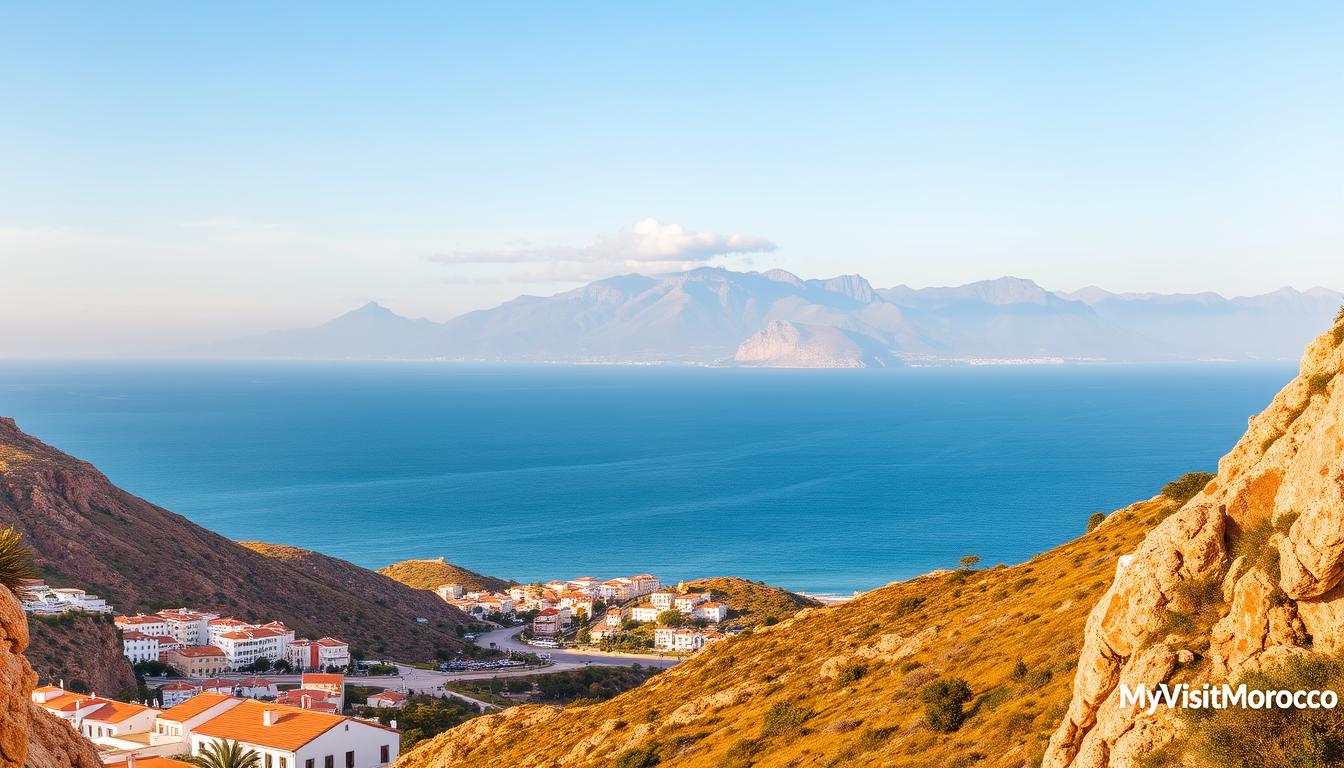
On a clear day, you can see Morocco from southern Spain. The view depends on the weather.
Best Viewpoints in Southern Spain
Places like Gibraltar and Tarifa offer great views. They let you see across the strait.
Weather Conditions for Optimal Visibility
Good visibility happens on days with low humidity and calm seas. Weather conditions are key for clear views.
Understanding the Distance Between Spain and Morocco
The distance between Spain and Morocco varies based on how you travel. Whether by plane, car, or ferry, the distance changes.
Aerial Distance Measurements
The shortest path between Spain and Morocco is over the Strait of Gibraltar. This is key for flight routes.
From Major Spanish Cities to Moroccan Destinations
The distance from cities like Madrid or Seville to Tangier or Marrakech is about 500 to 800 kilometers. This is roughly 310 to 497 miles.
Comparing Continental Europe to North Africa
Spain and Morocco are close, especially when flying. The shortest distance is about 27 kilometers (17 miles) at their closest points.
Traveling Distance Variations
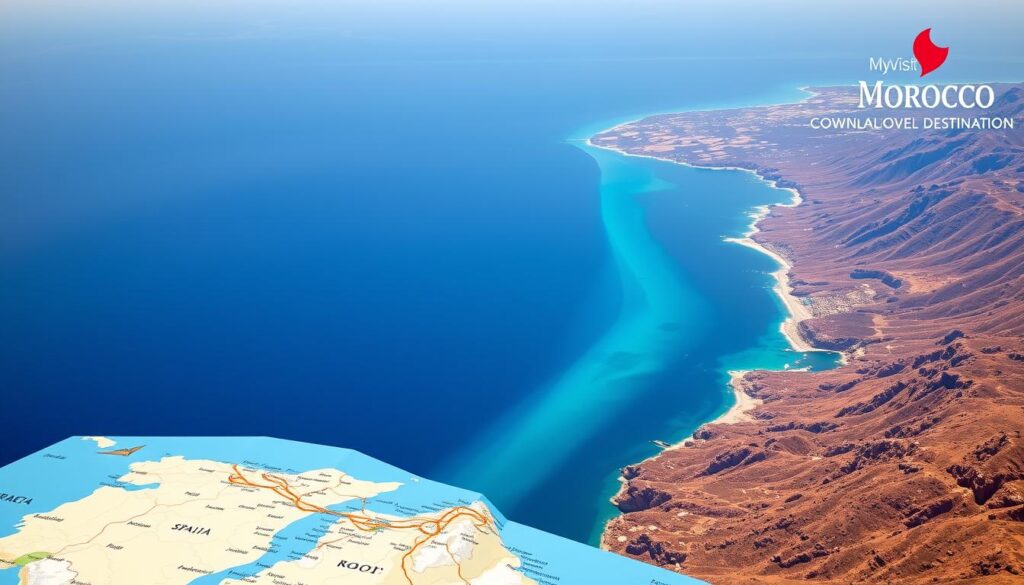
Traveling distance changes based on the route and mode of transport. It’s not always the same as the aerial distance.
Differences Between Direct and Practical Routes
Practical routes, like driving or taking a ferry, are often longer. For example, the ferry from Algeciras to Ceuta adds to the distance.
How Geography Affects Travel Distance
The region’s geography, like the Strait of Gibraltar and the Atlantic Ocean, impacts travel. Ferries and planes must go around these, affecting the total distance.
The Shortest Routes Between Spain and Morocco
Traveling between Spain and Morocco can be easier if you know the shortest routes. The Strait of Gibraltar separates these countries, offering several crossing options.
Tarifa to Tangier: The Closest Points
The sea crossing from Tarifa, Spain, to Tangier, Morocco, is very short. It’s a favorite among travelers for its convenience and quick journey.
Distance in Miles and Kilometers
The distance between Tarifa and Tangier is about 17 nautical miles. This is roughly 31 kilometers or 19 miles. It’s perfect for a quick trip.
Travel Options and Duration
Ferry services take around 35-40 minutes. Many operators run frequent trips, making it a good choice.
Algeciras to Ceuta: A Popular Crossing
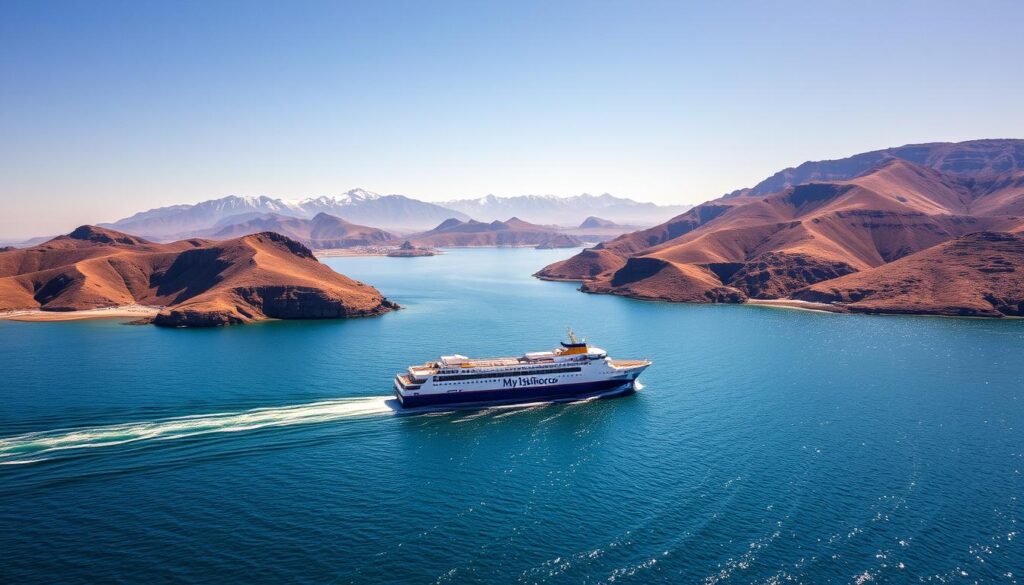
The route from Algeciras, Spain, to Ceuta, a Spanish enclave in Morocco, is also common. It’s known for its efficiency and ease of travel.
Route Details and Distance
The distance from Algeciras to Ceuta is about 17 nautical miles, similar to Tarifa to Tangier. The ferry ride takes 30-45 minutes.
Frequency of Crossings
Ferry services run often, with many departures per hour during busy times. This makes planning your trip easier.
| Route | Distance (Nautical Miles) | Travel Time (Minutes) | Frequency |
|---|---|---|---|
| Tarifa to Tangier | 17 | 35-40 | Multiple per day |
| Algeciras to Ceuta | 17 | 30-45 | Multiple per hour |
Knowing these routes helps plan your trip better, whether for fun or work. The short distances and frequent services make travel between Spain and Morocco easy.
Ferry Crossings: The Most Common Way to Travel
Ferry services are a great way to travel between Spain and Morocco. The distance between Spain and Morocco is short. This makes ferry crossings a favorite among travelers.
Major Ferry Routes and Operators in 2025
Many ferry operators connect Spain and Morocco. Key routes include Algeciras to Ceuta, Algeciras to Tangier, and Tarifa to Tangier.
Spain-Morocco Ferry Companies
FRS, Balearia, and AML are major ferry companies. They offer various services, from standard ferries to fast ones. This caters to all kinds of travelers.
Booking Options and Platforms
You can book ferry tickets online. Use the ferry companies’ websites or travel booking sites like Direct Ferries. Booking early is wise, especially in peak seasons.
Ferry Travel Times and Frequencies
Ferry travel times and frequencies differ. Fast ferries are much quicker than standard ones.
Fast Ferries vs. Standard Services
Fast ferries can cross from Tarifa to Tangier in 30 minutes. Standard ferries take 1-2 hours, depending on the route and weather.
Seasonal Schedule Variations
Ferry schedules change with the seasons. More services run during peak times. Always check the latest schedules before your trip.
| Route | Travel Time | Frequency |
|---|---|---|
| Tarifa – Tangier | 35 minutes (fast ferry) | Up to 10 times a day |
| Algeciras – Ceuta | 1 hour | Up to 5 times a day |
| Algeciras – Tangier | 2 hours (standard ferry) | Up to 8 times a day |
Flying Between Spain and Morocco
Flying from Spain to Morocco is a quick and easy option. It covers the distance between Spain and Morocco efficiently. Several airlines offer direct flights, giving travelers many choices.
Direct Flight Routes and Airlines
Many airlines fly directly between Spain and Morocco’s major cities. You can find the latest schedules and book online. Check out Sun-Trails for more information.
Major Carriers Serving Both Countries
Iberia, Royal Air Maroc, and Vueling run regular flights. They offer various classes, from economy to business. For more travel tips, visit My Visit Morocco.
Budget Airline Options in 2025
Ryanair and Air Arabia Maroc offer cheap flights. They’re great for budget travelers, but may charge extra for baggage.
Flight Times and Airport Options
Flights from Spain to Morocco take about 1 to 2 hours. This depends on the route and airports.
Spanish Airports with Moroccan Connections
Madrid-Barajas (MAD), Barcelona-El Prat (BCN), and Malaga-Costa del Sol (AGP) have direct flights. You can fly into Marrakech Menara (RAK) or Tangier Ibn Battouta (TNG) for easy access.
Moroccan Airports with Spanish Connections
Casablanca Mohammed V (CMN), Marrakech Menara (RAK), and Tangier Ibn Battouta (TNG) connect to Spain. These airports make planning your trip easy.
Flying between Spain and Morocco is quick and convenient. With many airlines and routes, you can find the perfect option for your needs and budget.
The Actual Distance Between Spain and Morocco
When planning a trip from Spain to Morocco, knowing the exact distance is key. This distance is not just interesting; it affects travel, trade, and cultural exchange between Europe and Africa.
Measuring the Gap Between Continents
The distance is mainly across the Strait of Gibraltar. This narrow waterway is the shortest path between the two continents. At its narrowest, it’s about 14 kilometers (9 miles) wide.
Geographic Measurements and Facts
The Geography of Morocco greatly influences the distance to Spain. The Strait of Gibraltar, the main waterway, is a key geographical feature. Here are some important measurements:
- The narrowest point between Spain and Morocco is 14 km.
- The strait’s width varies from 14 km to 44 km.
- The depth of the strait ranges from 300 to 900 meters.
How the Distance Has Been Perceived Throughout History
Historically, the distance between Spain and Morocco has been viewed differently. In ancient times, the Strait of Gibraltar was a major barrier. Later, as sea travel improved, it became a crucial trade route.
Comparing to Other International Borders
The distance between Spain and Morocco is among the shortest international crossings. It’s interesting to compare it with other borders to see how unique it is.
Unique Aspects of This Short International Crossing
The close proximity of Spain and Morocco has led to rich cultural exchange and trade. It’s also a popular route for travelers and migrants.
Similar Close-Proximity Countries Worldwide
There are a few places worldwide where countries are very close, like the Bosphorus or the Bab-el-Mandeb Strait. These narrow straits are important for global trade and politics.
Driving from Spain to Morocco: What to Expect
Driving from Spain to Morocco is more than just hitting the road. You’ll need to navigate ferry crossings and follow local rules. Knowing what to expect will make your trip smoother and more fun.
The Ferry Process for Vehicles
Getting your vehicle on the ferry is key. The ferry process has several steps, from paperwork to loading and unloading your car.
Vehicle Documentation Requirements
You’ll need certain documents to board the ferry. These include your car’s registration, insurance, and a valid driver’s license. Also, check with your ferry operator for any extra needs.
Loading and Unloading Procedures
Ferry operators have set rules for loading and unloading vehicles. You must follow their instructions closely. This means arriving on time and listening to the crew’s directions. You’ll need to drive your car onto the ferry and secure it as told.
Driving Requirements and Regulations
When you get to Morocco, you’ll need to follow local driving laws. This includes knowing the road rules, insurance needs, and any permits required.
Moroccan Driving Rules for Foreign Vehicles
Morocco has its own rules for foreign cars. You’ll need a valid driver’s license and car registration. It’s wise to have an International Driving Permit (IDP) too.
Insurance and Permit Requirements
Make sure your car insurance is good in Morocco. You might need extra coverage or a Green Card. Talk to your insurance company before you go to see your options.
Understanding the ferry process, driving rules, and regulations will prepare you for your trip. This knowledge will make your journey from Spain to Morocco stress-free and enjoyable.
Travel Times Between Major Spanish and Moroccan Cities
Planning your trip well means knowing how long it takes to get between major cities in Spain and Morocco. Whether you’re flying, taking a ferry, or driving, knowing these times helps you enjoy your trip more.
Madrid to Major Moroccan Destinations
Madrid is a big hub in Spain with many ways to get to major Moroccan cities. The time it takes depends on how you travel and where you’re going.
Madrid to Marrakech, Casablanca, and Fez
Flights from Madrid to Marrakech take about 1.5 hours. To Casablanca, it’s around 1 hour and 45 minutes. Fez is about 1 hour and 30 minutes away. Taking a train or bus takes longer and often includes a ferry ride.
Combined Transport Options and Times
Combining travel methods is another option. For example, flying from Madrid to Marrakech and then using a bus or taxi can take 4-6 hours. This depends on how long you wait between flights.
Barcelona to Major Moroccan Destinations
Barcelona also has many ways to get to Morocco. The times to major cities are similar to Madrid’s, with some differences based on the route and transport.
Barcelona to Tangier, Rabat, and Essaouira
Flights from Barcelona to Tangier are about 2 hours. Rabat is around 2.5 hours away, including layovers. Essaouira is also 2.5 hours away with a layover. The ferry from Barcelona to Tangier takes 8-10 hours.
Fastest Routes and Connections
The quickest way to Barcelona and major Moroccan cities is by flight. Some flights are direct, while others have layovers. Booking early can save time and money.
| Route | Mode of Transport | Approximate Time |
|---|---|---|
| Madrid to Marrakech | Flight | 1.5 hours |
| Madrid to Casablanca | Flight | 1 hour 45 minutes |
| Barcelona to Tangier | Ferry | 8-10 hours |
| Barcelona to Essaouira | Flight (with layover) | 2.5 hours |

The Spanish Enclaves: Ceuta and Melilla
Traveling from Spain to Morocco? Don’t miss Ceuta and Melilla, the Spanish enclaves. They sit on the North African coast, offering unique travel experiences. Knowing how to navigate these areas can make your trip better.
Traveling to Morocco Through Ceuta
Ceuta is a key entry point into Morocco from Spain. Its location makes it a favorite among travelers.
Border Crossing Procedures
When you cross from Ceuta into Morocco, follow the usual steps. You’ll need a valid passport. Be ready for possible delays and have local currency for fees.
Transportation Options from Ceuta
Getting to Moroccan cities from Ceuta is easy. Buses and taxis run regularly. Renting a car gives you more freedom.
Traveling to Morocco Through Melilla
Melilla offers a different path into Morocco. Its unique vibe and location set it apart from Ceuta.
Border Crossing Procedures
Going from Melilla to Morocco is similar to Ceuta. Know your documents and wait times. Having local currency helps too.
Transportation Options from Melilla
Melilla has many ways to reach Moroccan places. Buses, taxis, and car rentals are available. Choose what suits you best.
Border Crossing Procedures in 2025
Planning your trip from Spain to Morocco? Knowing the border crossing procedures is key. Whether by ferry or flight, being prepared makes your journey easier.
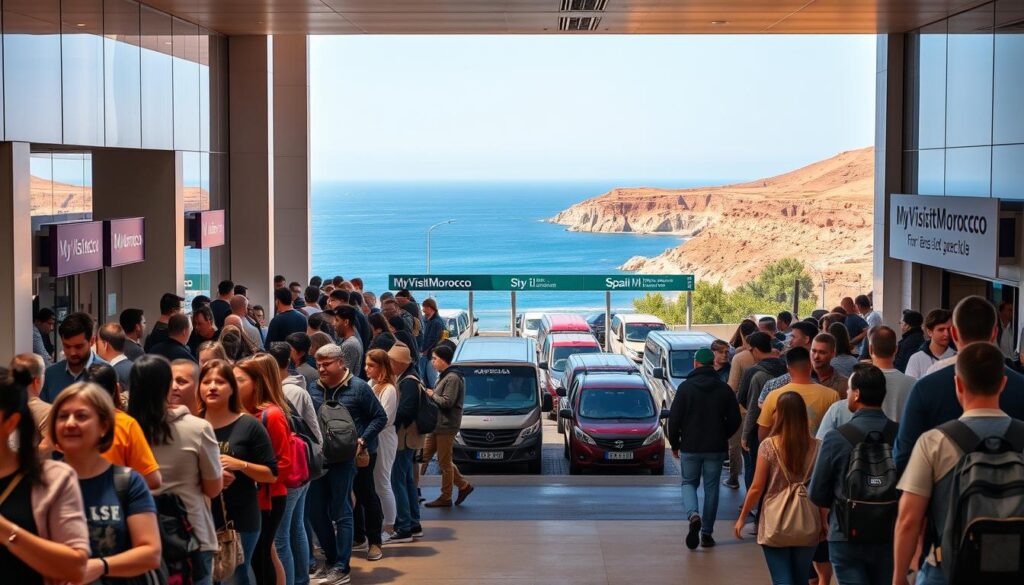
Required Documentation for US Travelers
US travelers must have the right documents for crossing the border. You’ll need a valid passport, visa (if needed), and travel documents.
Visa Requirements for Morocco
US citizens don’t need a visa for stays up to 90 days in Morocco. But, your passport must be valid for six months after your stay. Always check the latest visa rules before you go.
Entry Requirements for Spain
US citizens can visit Spain for up to 90 days without a visa. Your passport should be valid for three months after you leave Spain.
Customs and Immigration Process
Knowing the customs and immigration process helps at border crossings. For more on crossing the Strait of Gibraltar by boat, see Packasandwich.
What to Expect at Spanish Departure Points
At Spanish ports or airports, you’ll face immigration checks before leaving. Make sure you have all your documents ready for officials.
Moroccan Entry Procedures
When you arrive in Morocco, you’ll go through immigration and customs. Be ready to show your travel documents, proof of where you’ll stay, and a return or onward ticket if asked.
Cost Comparison of Different Travel Methods
Planning your trip from Spain to Morocco? Knowing the costs of different travel methods is key. The distance is short, but travel options vary in price.
Ferry Ticket Prices in 2025
Ferry travel is a favorite for crossing the sea. Ticket prices change based on the ferry, your seat, and if you’re bringing a vehicle.
Passenger-Only Fares
Traveling alone or without a vehicle? Look for passenger-only fares. These cost between €30 to €70 one way, depending on the ferry and service. Booking early can get you a better deal.
Vehicle Transport Costs
Traveling with a vehicle adds extra costs. Prices for transporting a vehicle range from €100 to €250 one way. The size of your vehicle and the ferry operator affect the price. Some offer discounts for round trips.
Flight Costs vs. Ferry Costs
Flying is quicker than taking a ferry. But, it can cost more.
Budget Analysis for Solo Travelers
For solo travelers, flights might be cheaper than ferry tickets if booked early. A one-way flight costs between €50 to €150. For more budget tips, check out Morocco travel budget.
Budget Analysis for Families and Groups
Ferry travel is often cheaper for families or groups. It’s more affordable for vehicles too. While flights are quicker, the total cost for everyone and vehicles is usually higher than ferry prices.
Planning a Day Trip Between Spain and Morocco
The distance between Spain and Morocco is short. This makes a day trip between the two countries possible. You can explore both places in just one day.
Is a Day Trip Feasible?
Before you plan your trip, think about the time and logistics. You can travel by ferry or by flying. But, the ferry is better for a day trip because it’s quicker.
Time Considerations and Limitations
The ferry ride from Spain to Morocco takes about an hour. The Tarifa to Tangier route is quick and popular. But, remember to add time for travel to the ports, customs, and immigration.
What You Can Realistically See in One Day
With limited time, choose your activities wisely. Visit places like the Kasbah in Tangier or historic Ceuta. Effective planning is key for a great day trip.
Recommended Day Trip Itineraries
Here are some itineraries for a successful day trip:
Tarifa to Tangier Day Trip
Start with the early ferry from Tarifa to Tangier. See the Medina, visit the Kasbah, and try local food. Then head back to Tarifa in the evening.
Algeciras to Ceuta and Tetouan
Begin in Algeciras and go to Ceuta. See Ceuta’s historic sites. Then, visit Tetouan, Morocco, to learn about its culture.
| Route | Ferry Duration | Main Attractions |
|---|---|---|
| Tarifa to Tangier | 1 hour | Tangier’s Medina, Kasbah |
| Algeciras to Ceuta | 1 hour | Ceuta’s historic sites, Tetouan |
For more details on traveling between Spain and Morocco, check out this guide. It has tips and guides to help you plan.
Seasonal Considerations for Cross-Strait Travel
Planning a trip from Spain to Morocco? Knowing the seasonal changes can greatly improve your trip. The Strait of Gibraltar is short, but the journey can change with the seasons.
Weather Impacts on Ferry Crossings
The weather is key for ferry trips from Spain to Morocco. In winter, strong winds and rough seas might cause delays or cancellations.
Winter Travel Challenges
Winter travel challenges include rough seas and strong winds. These can make ferry rides uncomfortable. Always check the weather forecast before you go and be ready for any changes.
Peak Season Crowds and Considerations
Summer is the peak travel season. It means more people and a higher demand for ferry services. Booking early is key to avoid any hassle.
Best Times of Year to Travel Between Countries
The best times to travel are spring (April-May) and autumn (September-October). The weather is mild and pleasant during these months.
Optimal Months for Smooth Crossings
These months offer smooth ferry crossings and comfortable travel. They’re perfect for exploring both countries.
Cultural Events Worth Planning Around
These periods also have cultural events and festivals. For example, the Marrakech International Film Festival in December. But, the weather in spring and autumn is better for visiting.
| Season | Weather Conditions | Ferry Service Frequency |
|---|---|---|
| Winter | Rough seas, strong winds | Reduced frequency |
| Spring | Mild, pleasant | Regular frequency |
| Summer | Warm, crowded | Increased frequency |
| Autumn | Mild, pleasant | Regular frequency |
By thinking about these seasonal factors, you can plan a better trip from Spain to Morocco. This way, you’ll enjoy your journey more.
Practical Tips for Crossing Between Spain and Morocco
To make the most of your travel experience between Spain and Morocco, consider these practical tips. Whether you’re taking a ferry or driving, being prepared will ensure a smoother journey.
Language and Communication
Effective communication is key to a successful trip. While many Moroccans speak some Spanish, especially in tourist areas, there are still language barriers to navigate.
Essential Spanish and Arabic Phrases
Learning a few essential phrases in Spanish and Arabic can go a long way. Phrases like “hello” (hello in Spanish is “hola,” and in Arabic, it’s “مرحبا” or “marhaba”), “thank you” (gracias in Spanish, “شكرا” or “shukraan” in Arabic), and “where is…” (¿dónde está… in Spanish, “أين هو…” or “ayna huwa…” in Arabic) can be very helpful.
Translation Apps and Services
In addition to learning key phrases, consider using translation apps like Google Translate. These apps can help you navigate more complex conversations or read signs and menus. As one traveler noted, “Using Google Translate was a lifesaver when trying to order food at a local restaurant in Marrakech.”
“The ability to communicate, even with simple phrases, can greatly enhance your travel experience.”
Money and Payment Considerations
Understanding the local currency and payment methods is crucial for a hassle-free trip.
Currency Exchange Options
You can exchange your currency upon arrival at major airports or border crossings. It’s also a good idea to have some local currency, the Moroccan dirham (MAD), for when you first arrive. You can check the current exchange rate on websites like XE.com to get an idea of how much you’ll need.
| Currency | Symbol | Exchange Rate (approx.) |
|---|---|---|
| Euro | € | 1 EUR = 10 MAD |
| US Dollar | $ | 1 USD = 9 MAD |
| Moroccan Dirham | MAD | – |
Credit Card Acceptance and ATM Availability
Major credit cards are widely accepted in tourist areas, but it’s still a good idea to have some cash, especially when venturing into smaller towns or rural areas. ATMs are readily available in cities and towns, allowing you to withdraw local currency as needed.
By being prepared and understanding the practical aspects of your journey, you can ensure a smooth and enjoyable trip between Spain and Morocco. For more information on traveling in Spain, you can visit this travel guide.
Conclusion: Bridging the Gap Between Continents
Exploring the distance between Spain and Morocco shows it’s more than numbers. It opens doors to different cultures and experiences. The Strait of Gibraltar, at its narrowest, is just 14 kilometers wide. This makes traveling by ferry or flight easy.
You now know all about traveling from Spain to Morocco. You can take a ferry, fly, or drive. Whether it’s a quick trip or a longer stay, you’re set. This knowledge lets you connect two continents and make lasting memories.
When planning your trip, think about the seasons, useful tips, and what you need. With the right prep, you’re ready for an adventure. You’ll see Spain and Morocco’s history, culture, and stunning landscapes.





 Covers cities, coast, mountains, desert & food