Are you planning a trip from Morocco to Spain or vice versa? Knowing the distance between Morocco and Spain is key for travelers.
These two countries are close, making travel easy by air or sea. You can fly from cities like Marrakech or Casablanca to Madrid or Barcelona in Spain.
Or, you can take a ferry from Morocco’s ports to Spain’s. Knowing the morocco to spain distance helps pick the best travel way.
Key Takeaways
- The distance between Morocco and Spain varies by transport.
- Flying is quick, with flights from major cities.
- Ferry services offer a flying alternative.
- Knowing the distance aids in trip planning.
- Both air and sea travel have their perks.
Geographic Proximity of Morocco and Spain
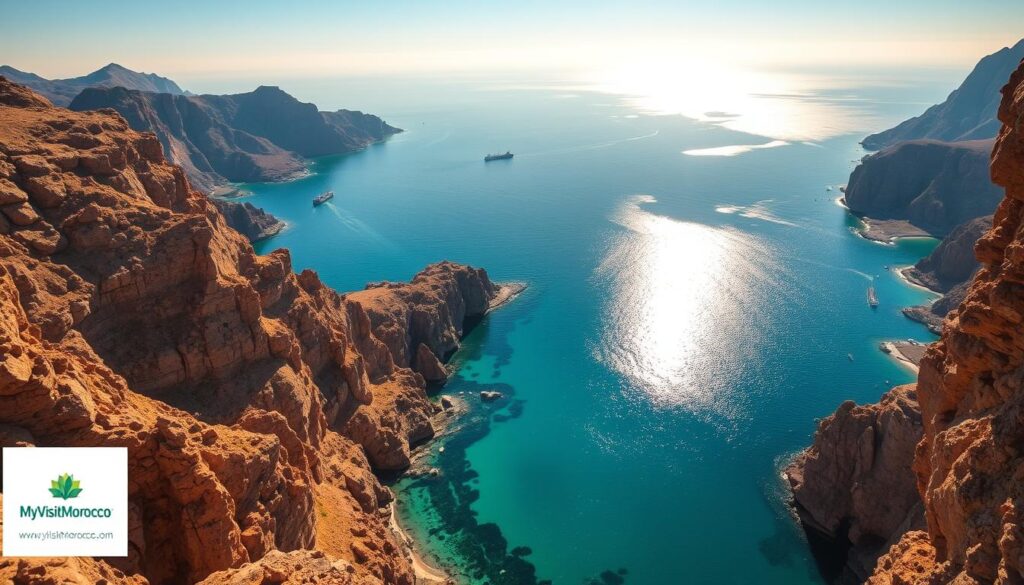
Did you know Morocco and Spain are really close? The Strait of Gibraltar separates them. This closeness has shaped their history and culture, and still affects their relationship today.
The Strait of Gibraltar: A Narrow Divide
The Strait of Gibraltar is a narrow waterway. It divides the Iberian Peninsula in Europe from Morocco in Africa. At its narrowest, it’s about 14 kilometers wide.
Geographic Significance
The strait connects the Mediterranean Sea to the Atlantic Ocean. It’s a key shipping route. There are ports and naval bases on both sides, making it very important.
Historical Importance
The Strait of Gibraltar has always been important. It has helped exchange goods, ideas, and cultures between Europe and Africa. This has left a lasting mark on architecture, cuisine, and traditions.
Closest Points Between the Two Countries
The closest points between Morocco and Spain are very interesting. They are important for both history and today’s world.
Tarifa to Tangier
The crossing between Tarifa, Spain, and Tangier, Morocco, is famous. It’s used for ferry services and has a rich history of unofficial crossings.
Spanish Enclaves: Ceuta and Melilla
Spain has two enclaves in North Africa, Ceuta and Melilla. They are European territories on the African continent. Their political status is complex and they are key points of contact between Spain and Morocco.
The close relationship between Morocco and Spain is clear through the Strait of Gibraltar and the Spanish enclaves. Understanding this connection helps us see the cultural, economic, and political ties between them.
Distance Between Morocco and Spain: Facts and Figures
Traveling from Morocco to Spain can be different depending on whether you fly or sail. Knowing the distance is key for planning your trip. It helps you make the best choices.
Aerial Distance Measurements
The distance in the air between Morocco and Spain is important for those flying. It’s measured between big cities or airports.
Major City Pairs and Their Distances
Here are some key city pairs and their distances: Tangier to Madrid is about 560 km (348 miles). Casablanca to Malaga is roughly 630 km (391 miles). These numbers help figure out flight times and plan your journey.
Shortest Possible Air Routes
The shortest flight path is between Tangier and Tarifa or Gibraltar. It’s about 30 to 40 km (19 to 25 miles). But, most flights go to bigger cities.
Maritime Distance Calculations
For sea travel, the distance matters a lot. It changes based on where you start and end.
Ferry Route Distances
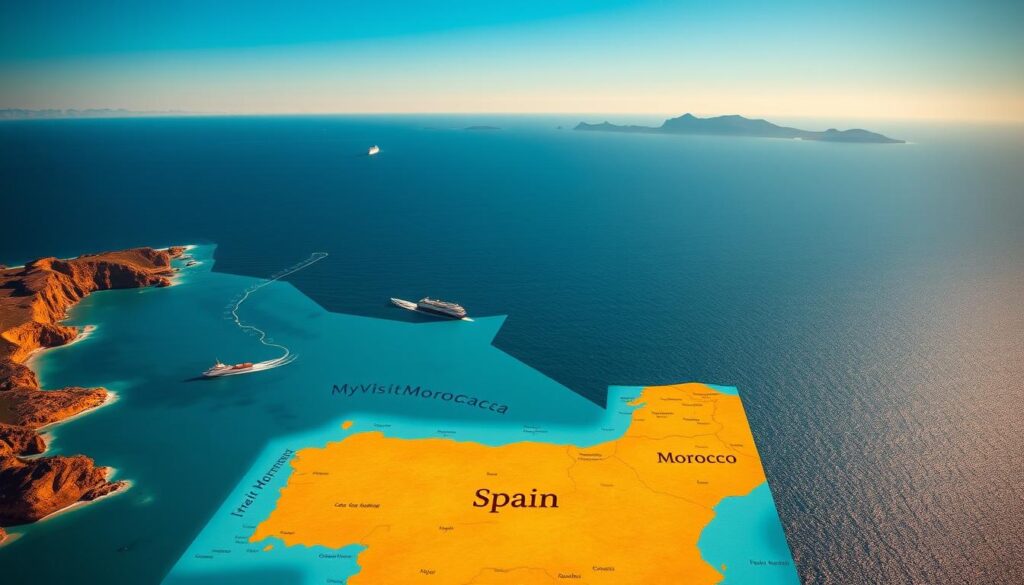
Ferry trips like Tangier to Tarifa or Ceuta to Algeciras are about 30-40 km (19-25 miles) and 7-8 km (4-5 miles). They’re good for people and cars.
Nautical Mile Measurements
Nautical miles are used for sea and air travel. Tangier to Tarifa is about 20-25 nautical miles. Knowing nautical miles helps understand sea travel better.
Distance in Miles vs. Kilometers
The distance between Morocco and Spain can be in miles or kilometers. For example, Tangier to Madrid is 348 miles or 560 km. Knowing both units is useful, as different places use different units.
| City Pair | Distance in Kilometers | Distance in Miles |
|---|---|---|
| Tangier to Madrid | 560 km | 348 miles |
| Casablanca to Malaga | 630 km | 391 miles |
| Tangier to Tarifa | 30-40 km | 19-25 miles |
Historical Connection Across the Mediterranean
Exploring Morocco and Spain’s history shows a story of trade, conquest, and cultural exchange. The distance between Morocco and Spain has helped in their rich history of interaction.
Ancient Trade Routes Between the Continents
The Strait of Gibraltar has always been key for trade and cultural exchange. It connected Europe and Africa, leading to significant interactions.
Phoenician and Roman Connections
The Phoenicians and Romans were crucial in setting up these early trade routes. Their influence went beyond trade, shaping culture and architecture in both regions.
Moorish Spain and North African Relations
The Moors’ rule in Spain strengthened ties between Morocco and Spain. They introduced Islamic architecture and cultural practices that still influence today.
Modern Border Development
The modern border between Morocco and Spain comes from historical events and diplomatic relations.
Colonial Influences
European colonial powers drew many African and Middle Eastern borders, including Morocco’s. Spain’s past in North Africa has had a lasting impact.
Contemporary Border Relations
Today, Morocco and Spain work together on trade, security, and migration. The Morocco Spain distance by road or sea still affects their relations.
| Historical Period | Key Events | Legacy |
|---|---|---|
| Ancient | Trade routes established | Cultural exchange |
| Moorish | Occupation of Spain | Islamic architecture |
| Colonial | Border delineation | Modern-day relations |
Knowing the history between Morocco and Spain helps us understand their current relations. The Morocco and Spain distance in miles is important in this context.
Traveling from Morocco to Spain by Air
Air travel between Morocco and Spain is now more popular. It offers many routes and airlines. You can travel between the two countries in just a few hours.
Major Flight Routes and Airlines
Many airlines offer flights between Morocco and Spain. You can find direct and indirect flights. The main airports in Morocco, like Casablanca and Marrakech, connect to big Spanish cities.
Direct Flights and Carriers
Direct flights are available from Morocco to Spain. Airlines like Royal Air Maroc, Iberia, and Ryanair provide these services. This makes planning your trip easier.
Seasonal Flight Variations
Flight schedules change with the seasons. More flights are available during summer and holidays. Fewer flights run during off-peak times.
Flight Duration and Frequency
The flight duration is short, from 1 to 2.5 hours. This depends on the route and any layovers. There are many flights daily on popular routes.
Shortest and Longest Routes
The shortest flights are between Tangier and Tarifa. Longer flights go from southern Morocco to northern Spain.
Weekly Flight Schedules
Weekly flight schedules are mostly the same. Some changes happen based on the day and season. Most routes have multiple flights per week.
Airport Options in Both Countries
Both Morocco and Spain have great airport infrastructures. They offer many options for travelers.
Major Moroccan Airports with Spanish Connections
Casablanca Mohammed V International Airport and Marrakech Menara Airport offer direct flights to Spain.
Spanish Airports Serving Morocco
Adolfo Suárez Madrid–Barajas Airport and Barcelona–El Prat Airport are key for flights to Morocco.
Sea Travel Options Between Morocco and Spain
Traveling by sea between Morocco and Spain is a scenic choice. Several ferry services cover the distance, offering various options for travelers.
Ferry Services and Operators
Several companies operate ferry services between Morocco and Spain. You can compare travel time, amenities, and prices when choosing a ferry.
Major Ferry Companies
FRS, Balandia, and Grimaldi Lines are major ferry operators. They offer different services and routes, including fast and conventional ferries.
Types of Vessels and Services
Ferry companies use different types of vessels. Some offer high-speed ferries for quick travel, while others have conventional ferries with more amenities. Choose based on your needs and budget.
Crossing Times and Schedules
Crossing times and schedules vary by route, vessel, and operator. Always check the latest schedules to plan your trip.
Fast Ferry Options
Fast ferries are the quickest, taking 35 minutes to 1 hour. They’re great for those in a hurry or who prefer a quick journey.
Conventional Ferry Durations
Conventional ferries take 2-3 hours but offer more amenities. Enjoy onboard services during your journey.
Port Facilities and Amenities
Both Moroccan and Spanish ports have facilities to make your journey comfortable. Enjoy shopping, dining, and more before your trip.
Moroccan Port Infrastructure
Ports in Morocco, like Tangier Med, have modern facilities. You can shop, eat, and exchange currency before your journey.
Spanish Port Facilities
Spanish ports, like Tarifa and Algeciras, also have great facilities. Find parking, luggage storage, and tourist info to plan your journey.
Morocco to Spain Distance by Various Routes
There are many ways to travel from Morocco to Spain. Each route has its own special features. Your choice depends on where you start and where you want to go.
Tangier to Tarifa Route
The Tangier to Tarifa route is very popular. It links Morocco’s north to Spain’s south.
Distance and Travel Time
The trip from Tangier to Tarifa is about 35 kilometers (22 miles). It takes 35-40 minutes by ferry. This makes for a quick journey across the Strait of Gibraltar.
Service Frequency
Ferries run often, with many departures daily. Check the latest times on the Packasandwich blog for more info on crossing the Strait of Gibraltar by boat.
Ceuta and Melilla Connections
Ceuta and Melilla are Spanish areas in Africa. They offer different paths between Morocco and Spain.
Ceuta to Algeciras
Ceuta to Algeciras is 17 nautical miles away. It takes about 1 hour by ferry. Ceuta is good for those going to western Morocco.
Melilla to Malaga/Almeria
Melilla is close to Malaga and Almeria in Spain. Malaga is 120 kilometers (75 miles) away, and Almeria is 230 kilometers (143 miles). You can pick from several ferry companies for this route.
Alternative Crossing Options
There are other ways to cross from Morocco to Spain besides Tangier to Tarifa.
Nador to Almeria
The Nador to Almeria route is 170 nautical miles. It takes 7-8 hours, depending on the ferry and its type.
Tangier Med to Barcelona
For eastern Spain or beyond, try Tangier Med to Barcelona. It’s 560 nautical miles and takes 28-30 hours. Make sure to check the ferry schedules in advance.
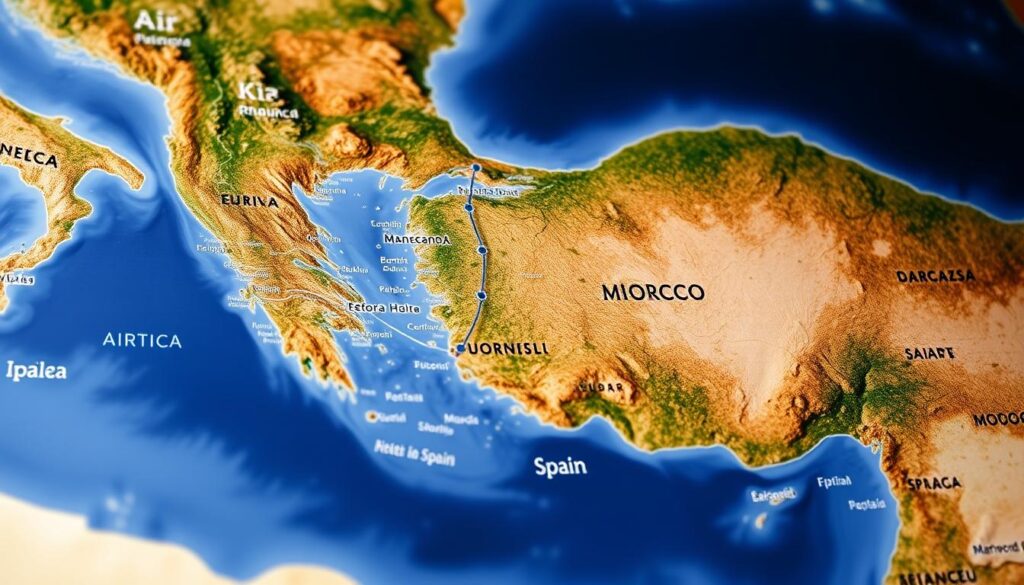
Travel Times Comparison: Air vs. Sea
Traveling from Morocco to Spain can be done by flying or taking a ferry. The time it takes varies a lot, depending on your choice.
Direct Flight Times Between Major Cities
Flying is the fastest way to get from Morocco to Spain. It’s great for those who are short on time, like business travelers.
Casablanca to Madrid
A direct flight from Casablanca to Madrid takes about 1 hour and 30 minutes. It’s a favorite for both business travelers and tourists, with many flights daily.
Marrakech to Barcelona
The flight from Marrakech to Barcelona is around 2 hours and 30 minutes. It’s popular for tourists going to Barcelona from Marrakech.
Ferry Crossing Duration by Route
Taking the ferry is a good choice for a slower journey. The time it takes depends on the route and the ferry service.
Fastest Sea Crossings
The quickest ferry rides, like from Tangier to Tarifa, are just 35 minutes. These fast ferries offer a quick and comfy trip across the Strait of Gibraltar.
Overnight Ferry Options
For an overnight trip, there are ferries with cabins. These journeys last about 8 to 10 hours, depending on the route and stops.
Choosing between flying and taking a ferry depends on what you value most: time, comfort, or scenery. Whether you prefer the speed of a flight or the calm of a ferry ride, knowing the travel times helps plan your trip better.
Visa Requirements and Border Procedures
Before you travel from Morocco to Spain, you need to know about visa rules and border steps. Knowing these will make your trip smoother and more fun.
Entry Requirements for Morocco
To get into Morocco, you must follow certain visa rules and customs laws. These rules change based on where you’re from.
Tourist Visa Policies
Some countries, like the United States, don’t need a visa to visit Morocco for 90 days. But, always check the latest visa rules for your country before you go.
Customs Regulations
When you arrive in Morocco, you must tell about certain items, like a lot of money or special goods. Knowing the customs rules helps you avoid problems at the border.
Entry Requirements for Spain (Schengen Area)
Spain, being in the Schengen Area, has its own entry rules. Knowing these helps you move through the border smoothly.
Schengen Visa Process
If you need a visa to enter Spain, you must apply at your home country’s Spanish embassy or consulate. You’ll need to give biometric data and some documents.
Border Control Procedures
When you arrive in Spain, you’ll face border control. You’ll need to show your passport, visa, and maybe other documents like a return ticket or where you’ll stay.
Remember, both Morocco and Spain have special rules for some nationalities. Always check with the embassies or consulates for the latest info.
Best Time to Travel Between Morocco and Spain
Planning a trip between Morocco and Spain? Knowing the best time to go is key. Both countries offer unique experiences, shaped by the season you visit.
Weather Considerations
Morocco and Spain have Mediterranean climates. But Morocco’s climate varies more due to its geography.
Sea Conditions by Season
Sea travel between Morocco and Spain changes with the season. Summer seas are calmer, while winter seas can be rough.
Climate Comparison
Morocco’s winters are warmer, and summers hotter than Spain’s. Knowing this helps you pack and plan your trip.
Peak vs. Off-Peak Travel Seasons
Traveling in peak seasons (summer and holidays) means more crowds and higher costs.
Tourist Density Impact
Popular spots get very crowded in peak season. This can change your travel experience.
Price Variations
Accommodation and travel prices rise in peak seasons.
Special Events and Festivals to Consider
Morocco and Spain have many festivals and events all year. These can be the highlights of your trip.
Moroccan Celebrations
Morocco’s festivals, like the Marrakech International Film Festival, draw global visitors.
Spanish Festivals
Spain’s festivals, like La Tomatina and the Running of the Bulls, are lively and fun.
| Season | Weather | Tourist Density | Price |
|---|---|---|---|
| Summer | Hot | High | High |
| Winter | Mild/Cool | Low | Low |
| Spring | Mild | Medium | Medium |
| Autumn | Warm | Medium | Medium |
Cost Comparison of Different Travel Methods
When planning your trip between Morocco and Spain, knowing the cost of different travel methods is key. You can choose from budget-friendly to luxurious options.
Budget Options for Crossing
Travelers on a tight budget have several affordable choices. You can pick from low-cost airlines or economy ferry tickets, both of which are priced well.
Low-Cost Airlines
Low-cost airlines offer great deals, with one-way tickets starting at €20. This is perfect for those looking to save money.
Economy Ferry Tickets
Economy ferry tickets are also budget-friendly, starting at €30 for a one-way trip. They’re great for those traveling with a car to explore both countries.
Premium Travel Experiences
For those ready to splurge, premium travel offers comfort and luxury. You can enjoy business class flights or luxury ferry accommodations for a more indulgent trip.
Business Class Flights
Business class flights provide a luxurious experience, with prices to match. Expect amenities like lie-flat beds and gourmet meals.
Luxury Ferry Accommodations
Luxury ferry accommodations offer a more relaxed journey. With private cabins and fine dining, it’s ideal for those who love the journey as much as the destination.
Hidden Costs and Fees to Consider
There are extra costs to think about when traveling between Morocco and Spain. Knowing these can help you plan your budget better.
Baggage and Vehicle Charges
Baggage fees and vehicle charges can increase your journey’s cost. Always check with your airline or ferry operator for their policies.
Port and Airport Taxes
Port and airport taxes are fees you should include in your budget. These fees can change, so researching them ahead of time is wise.
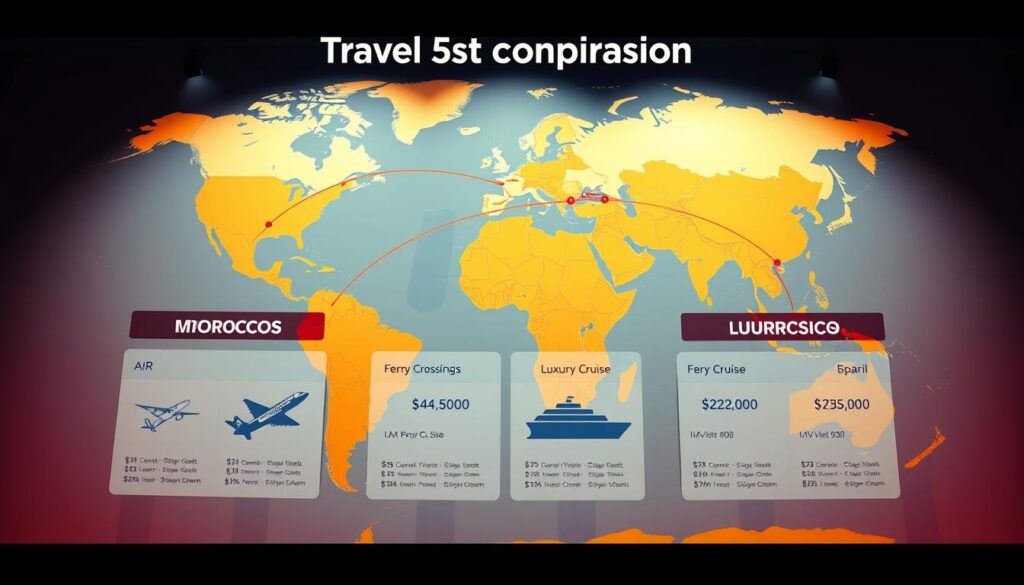
| Travel Method | Budget Option | Premium Option |
|---|---|---|
| Air Travel | €20 – €50 | €200 – €500 |
| Ferry Travel | €30 – €60 | €100 – €250 |
Day Trips and Short Excursions Between Countries
Exploring the area between Morocco and Spain is exciting. You can see the rich culture and stunning landscapes of both countries in one day. With good planning, it’s possible.
Feasibility of Day Trips
Day trips between Morocco and Spain are easy and getting more popular. The distance is short, so you can visit and return in a day.
From Spanish Costa del Sol to Tangier
Traveling from the Spanish Costa del Sol to Tangier, Morocco, is a favorite. You’ll see bustling markets and historic sites like the Kasbah and Grand Mosque.
From Tangier to Southern Spain
Going from Tangier to southern Spain lets you see charming towns like Tarifa and Algeciras. These places are known for their history and beautiful coasts.
Popular Day Tour Options
There are many day tour options for exploring Morocco and Spain. You can choose from guided tours or self-guided trips, depending on what you like and your budget.
Organized Tour Packages
Organized tours make things easy. They include transportation, guides, and sometimes food. They’re perfect for those who want a hassle-free day.
Self-Guided Excursions
Self-guided trips are for the adventurous. You can make your own plan and explore at your own pace. It’s a great way to find hidden spots.
Planning Tips for Short Visits
Planning well is key for a great day trip. Manage your time and choose the sights you really want to see.
Time Management Strategies
Plan your day carefully. Think about travel times, border crossings, and how long you’ll stay at each place.
Essential Sights for Limited Time
Focus on the top attractions. For example, visiting Tangier’s medina or southern Spain’s Moorish buildings is a great way to see both cultures.
As “The world is a book, and those who do not travel read only one page.” – Saint Augustine. Day trips between Morocco and Spain let you read more than one page. You get to see the rich cultural tapestry of both countries.
Cultural Experience: Bridging Two Continents
Traveling between Morocco and Spain is more than just crossing borders. It’s a journey into centuries of cultural heritage. The exchange between these two nations shows their deep historical bond.
Moorish Influence in Southern Spain
Andalusia in southern Spain is a treasure trove of Moorish culture. You can see it in the grand buildings and the daily lives of the people.
Architectural Heritage
The Alhambra in Granada and the Mezquita in Córdoba are marvels of Moorish design. They are symbols of history and beauty.
Cultural Traditions
The Tomorrowland festival in Andalusia mixes Spanish and Moorish traditions. It shows the area’s rich cultural mix.
Spanish Influence in Northern Morocco
Northern Morocco, especially Tangier and Tetouan, shows Spanish influence. You can see it in their language and culture.
Linguistic Impacts
In the north, many Moroccans speak Spanish. This is a legacy of the Spanish protectorate that once existed.
Cultural Exchanges
The local food, art, and buildings in these areas blend Spanish and Moroccan styles. This creates a unique cultural mix.
Unique Border Culture
The border areas between Morocco and Spain have their own culture. It’s shaped by the interactions between the two countries.
Multilingual Communities
People in these areas often speak Arabic, Spanish, and French. This helps in cultural exchange and understanding.
Fusion Cuisine and Arts
The food and arts in these areas are a mix of Moroccan and Spanish. This creates a special cultural scene.
Conclusion: Bridging the Gap Between Africa and Europe
The distance between Morocco and Spain is just 14 kilometers at its closest point. This shows how deeply these two regions are connected. You’ve seen how to travel between them, from flying to taking the sea route. You’ve also learned about visa rules and cultural experiences.
This connection is more than just being close. The relationship between Morocco and Spain is key for both continents. It helps in cooperation and exchange. Knowing the distance is crucial for planning your trip.
Thinking about your travel plans? This area is full of history, diverse landscapes, and friendly cultures. It’s a great place to explore.





 Covers cities, coast, mountains, desert & food