
best time to travel to spain portugal and morocco
Are you ready for an unforgettable journey through Spain, Portugal, and Morocco? The key to a successful trip is choosing the right time to visit these amazing places.
Knowing the climate and tourist seasons in these countries is crucial. It ensures a trip you’ll always remember.
Key Takeaways
- Spain’s climate varies greatly from north to south, affecting the best time to visit.
- Portugal’s mild climate makes it a great destination year-round.
- Morocco’s desert climate means extreme temperatures, so plan accordingly.
- Peak tourist season is June to August, but consider shoulder season for smaller crowds.
- Research specific festivals and events to catch during your trip.
Understanding the Mediterranean Climate
The Mediterranean climate has warm summers and mild winters. It greatly affects travel in Spain, Portugal, and Morocco. Knowing the climate helps pick the best travel times.
Climate Patterns Across the Region
The Mediterranean has hot, dry summers and mild, wet winters. Understanding these patterns is key for a great trip. Summer is perfect for beaches, while spring and autumn are best for exploring.
How Geography Affects Weather
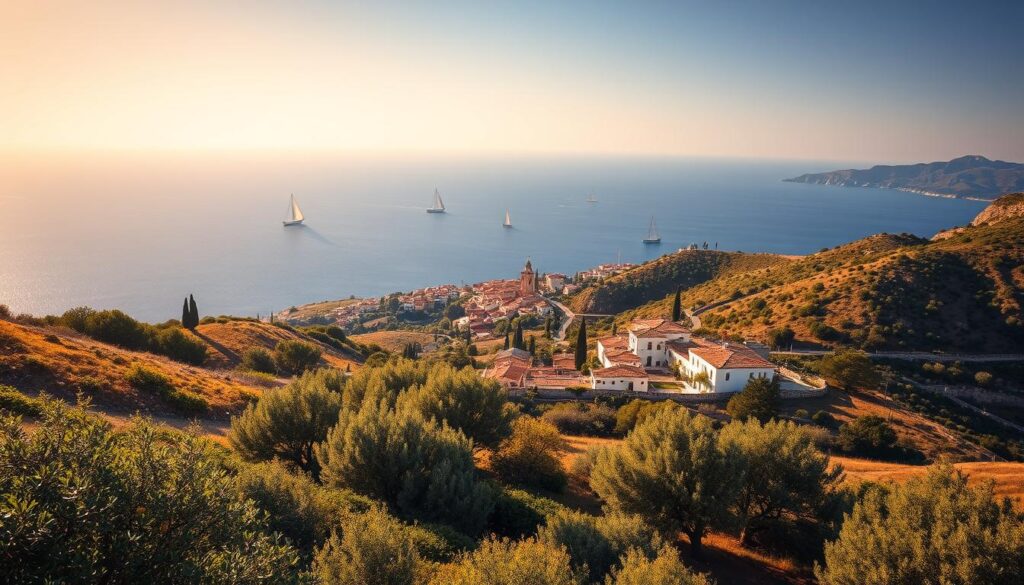
Geography shapes the weather in Spain, Portugal, and Morocco. Mountains, deserts, and coastlines create different climates in each country.
Coastal vs. Inland Temperatures
Coastal areas are generally milder than inland. For example, Portugal’s coast has steady temperatures all year. But inland areas can be much more extreme. Check local travel guides for more weather info.
Mountain and Desert Influences
Mountains, like Morocco’s Atlas, are cooler than valleys, even in summer. Deserts, like the Sahara, are very hot during the day but cold at night. Knowing this helps you pack and plan your trip.
Overview of Travel Seasons in Spain, Portugal, and Morocco
To enjoy your trip to these countries, knowing the travel seasons is key. The peak, shoulder, and off-seasons vary. This knowledge helps plan a better trip.
Peak Season (June-August)
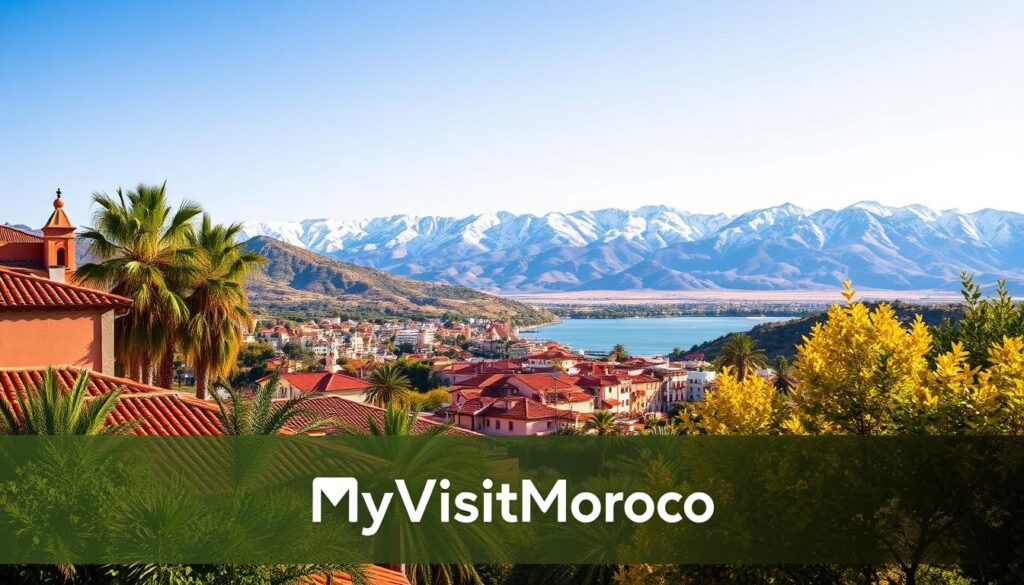
The peak season is the busiest, with warm weather and long days. It attracts tourists worldwide. Expect:
- High temperatures, especially in southern Spain and Morocco.
- Crowded spots like the Algarve in Portugal, Costa del Sol in Spain, and Marrakech in Morocco.
- Higher prices for places to stay and tourist services.
Despite the crowds, the peak season is lively. It features many festivals and events, like the Festival de Música de Sintra in Portugal and the Las Fiestas de San Juan in Spain.
Shoulder Seasons (April-May, September-October)
The shoulder seasons offer mild weather and fewer tourists. Enjoy:
- Mild temperatures, perfect for sightseeing and outdoor fun.
- Lower prices, making it a budget-friendly time to visit.
- A more relaxed vibe, for a true local experience.
Visiting the Morocco, Spain, and Portugal tours in the shoulder season is rewarding.
Off-Season (November-March)
The off-season has cooler weather and fewer tourists. Expect:
- Lower prices for places to stay and tourist services.
- Fewer crowds, for a peaceful visit to popular spots.
- Some places might be closed or have shorter hours.
Pros and Cons of Each Season
Each season has its good and bad sides. The peak season is lively but pricey and crowded. The off-season is cheaper but might limit your access to attractions.
| Season | Pros | Cons |
|---|---|---|
| Peak Season | Vibrant atmosphere, many festivals | High prices, crowded destinations |
| Shoulder Seasons | Comfortable weather, fewer tourists, lower prices | Some attractions might start to close |
| Off-Season | Lowest prices, peaceful experience | Some facilities closed, cooler temperatures |
Knowing these factors helps choose the best time to visit. It depends on what you prefer and what’s important to you.
Spring in Spain: March to May
Spring is a great time to visit Spain. The weather is mild, and the atmosphere is lively. It’s perfect for exploring the country’s diverse regions.
Weather Conditions
Spring in Spain has pleasant weather. Temperatures range from 64°F to 75°F (18°C to 24°C). It’s ideal for sightseeing and outdoor activities. It’s a great time to visit before the peak summer heat sets in.
Festivals and Events
Spring in Spain is filled with festivals and events. Two major ones are Semana Santa (Holy Week) and Feria de Abril (Seville Fair).
Semana Santa (Holy Week)
Semana Santa is a big tradition in Spain. It’s celebrated in cities like Seville, Málaga, and Córdoba. The week includes elaborate processions and cultural events. It’s a unique way to see Spain’s traditions.
Feria de Abril (Seville)
The Feria de Abril in Seville is a highlight of spring. It features colorful casetas, traditional music, and dancing. It’s a lively event that draws visitors worldwide. For more information, check out this travel guide.
Regional Variations
Spain’s regions have different weather in spring. The north, like Galicia and the Basque Country, is cooler and more humid. The south, like Andalusia, is warmer. Knowing these differences helps plan your trip better.
Summer in Spain: June to August
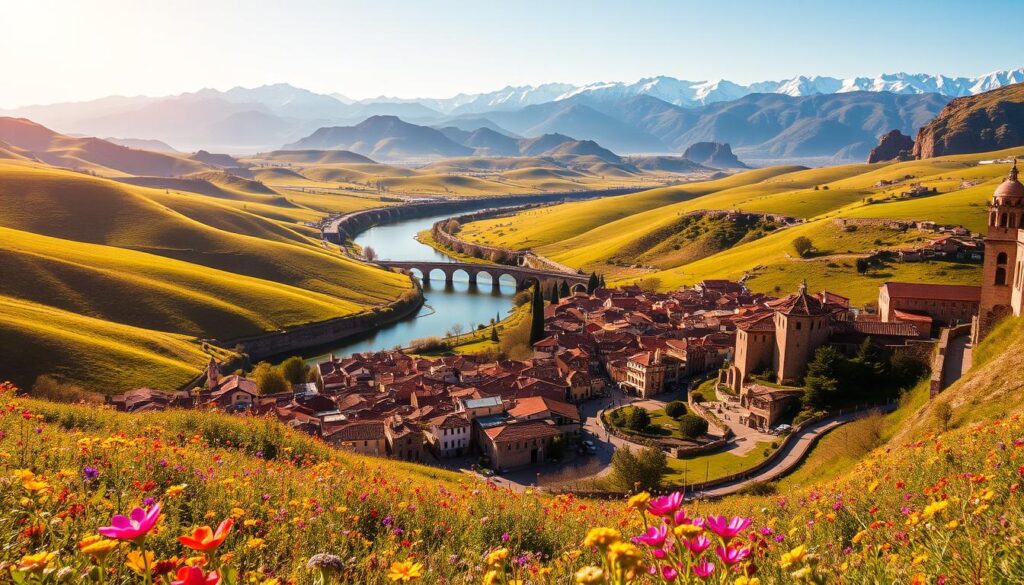
June to August is the peak tourist season in Spain. It’s a time filled with experiences for all kinds of travelers. The warm weather and long days are perfect for exploring Spain’s culture, landscapes, and cities.
Coastal vs. Inland Temperatures
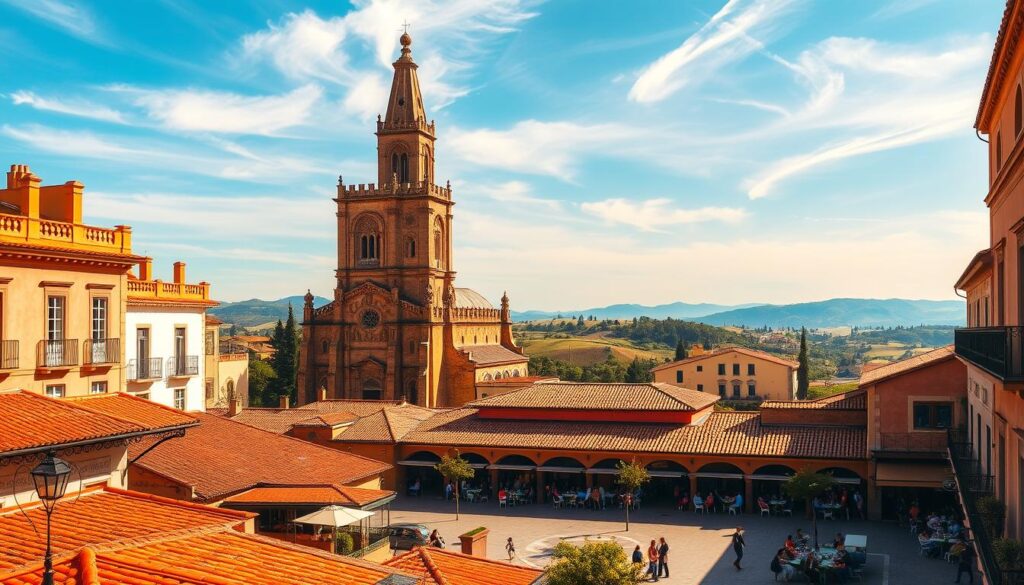
Spain’s coastal areas have milder temperatures than inland during summer. The coastal breeze offers a cool relief from the heat. Places like Barcelona and the Costa Brava are especially appealing. In contrast, cities like Madrid can get very hot, often over 35°C (95°F).
Popular Destinations
Barcelona and Costa Brava
Barcelona is a must-see in summer with its stunning architecture and lively streets. The beaches, like Barceloneta, are great for sunbathing. The Costa Brava, north of Barcelona, offers a quieter coastal experience with its secluded coves and clear waters.
Madrid and Central Spain
Madrid, the capital, is bustling with cultural events and festivals in summer. You can enjoy outdoor concerts, museum exhibitions, and the city’s nightlife. Central Spain, including Castile and León, showcases the country’s history with its medieval towns and landmarks.
Handling the Crowds
Summer is the busiest time, and popular spots can be crowded. To enjoy your visit, explore off-the-beaten-path areas. Visit popular sites early in the morning or late in the evening.
La Tomatina and Running of the Bulls
Summer in Spain is famous for its festivals. La Tomatina in Buñol is a unique event where people throw tomatoes. The Running of the Bulls in Pamplona is another thrilling experience that draws many.
- Plan ahead: Book accommodations and tickets for popular events in advance.
- Stay hydrated: The Spanish summer can be hot, so it’s essential to drink plenty of water.
- Explore beyond the cities: Spain’s rural areas offer a peaceful retreat from the crowds.
Fall and Winter in Spain: September to February
Spain is full of life from autumn to winter. You can enjoy the harvest season and winter sports. The cooler months let you see Spain’s true charm, from bustling cities to peaceful landscapes.
Autumn Highlights
Autumn in Spain is perfect for outdoor fun. The weather is mild, great for hiking and cycling. You’ll also find festivals like the grape harvest in La Rioja.
- Explore the beautiful autumn foliage in the northern regions.
- Participate in local harvest festivals.
- Enjoy the comfortable temperatures for outdoor activities.
Winter Travel Opportunities
Winter in Spain brings unique experiences. You can ski in the Pyrenees or enjoy the warm south.
Skiing in the Pyrenees
The Pyrenees offer top-notch skiing. Resorts like Sierra Nevada and La Molina are world-class.
The Pyrenees are a must-visit for any skiing enthusiast.
Christmas Traditions
Spain’s Christmas is special. You’ll see beautiful nativity scenes and festive markets.
“Spain’s Christmas celebrations are a unique blend of religious tradition and cultural festivity.”
Off-Season Benefits
Traveling off-season in Spain has perks. Prices are lower, and you’ll see the real Spain without crowds.
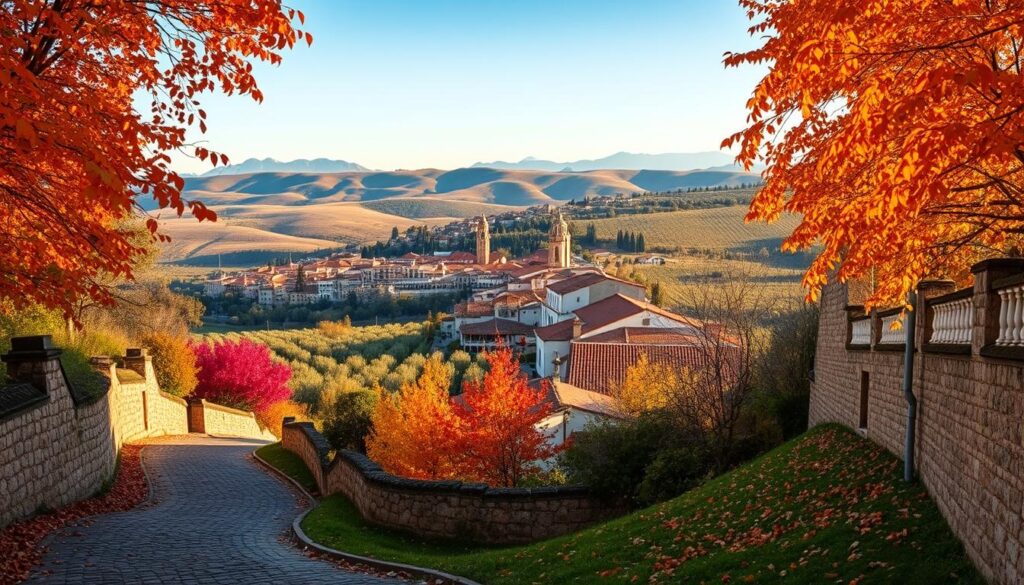
Visiting in fall and winter means a more relaxed trip. You’ll enjoy the season’s offerings and make unforgettable memories.
Portugal Through the Seasons
Portugal is alive with color and warmth all year round. Spring brings vibrant festivals, while summer is warm and lively. Autumn is mild and less crowded, and winter is cozy and quiet.
Spring (March-May)
Spring in Portugal is lovely, with temperatures between 17°C and 23°C. The countryside is a sight to see as flowers bloom. It’s great for hiking and cycling.
The Festa de Flores in Madeira is a must-see. It celebrates flowers with parades and fun.
Summer (June-August)
Summer is the busiest time in Portugal, with warm weather and high temperatures. Beaches are full of life, and coastal towns buzz with activity.
It’s perfect for beach lovers and those into water sports.
Fall (September-November)
Fall in Portugal is pleasant, with temperatures from 18°C to 25°C. It’s less crowded and accommodations are cheaper.
This season is great for exploring culture, with festivals like the Porto Wine Festival.
Winter (December-February)
Winters in Portugal are mild, especially in the Algarve. Temperatures range from 12°C to 17°C. It’s ideal for a calm vacation.
Key Festivals by Season
| Season | Festival | Location |
|---|---|---|
| Spring | Festa de Flores | Madeira |
| Summer | Festival do Avante! | Setúbal |
| Fall | Porto Wine Festival | Porto |
| Winter | Festa de Santo António | Lisbon |
Regional Weather in Portugal
The weather in Portugal changes a lot from one place to another. It’s important to know what to expect in different areas. Whether you’re visiting Lisbon’s historic sites, enjoying the Algarve’s beaches, or exploring the Azores and Madeira, knowing the local weather is key.
Lisbon and Central Portugal
Lisbon and its surroundings have a mild climate. Summers are warm, and winters are mild. Summer temperatures average 77°F (25°C), while winters range from 45°F to 55°F (7°C to 13°C). This makes it great for sightseeing all year.
The Algarve
The Algarve in southern Portugal has a pleasant Mediterranean climate. Summers are warm, with temperatures often hitting 86°F (30°C). Winters are mild, averaging around 55°F (13°C). It’s a top spot for beach lovers and golfers.
Northern Portugal
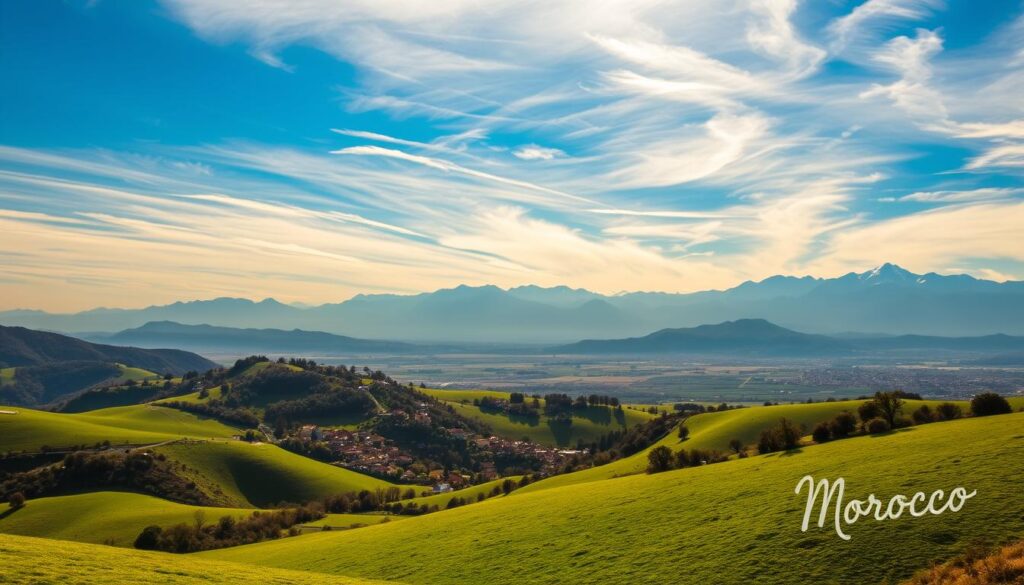
Northern Portugal has a varied climate. Winters are cooler, and summers are milder than the south. It gets more rain, especially in the mountains. Summer temperatures average 73°F (23°C), while winters can be quite cool, especially in the mountains.
The Azores and Madeira
The Azores and Madeira are island groups in the Atlantic with unique climates. The Azores are mild and humid, with temperatures from 52°F to 75°F (11°C to 24°C) all year. Madeira has a subtropical climate, with warm temperatures year-round, averaging 64°F to 75°F (18°C to 24°C).
Microclimates and What to Expect
The Azores and Madeira have diverse microclimates due to their geography. The Azores offer lush landscapes and hot springs. Madeira is famous for its tropical vegetation and pleasant weather all year. Knowing these microclimates can make your trip better.
| Region | Summer Temperature | Winter Temperature |
|---|---|---|
| Lisbon and Central Portugal | 77°F (25°C) | 45°F to 55°F (7°C to 13°C) |
| The Algarve | 86°F (30°C) | 55°F (13°C) |
| Northern Portugal | 73°F (23°C) | Cool, especially in mountains |
| The Azores | 75°F (24°C) | 52°F (11°C) |
| Madeira | 75°F (24°C) | 64°F (18°C) |
Morocco’s Diverse Climate Zones
Traveling through Morocco, you’ll see many climate zones. Each has its own special features. This variety comes from the country’s geography, with coastlines, mountains, and deserts.
Coastal Regions (Casablanca, Rabat)
The coastal areas of Morocco, like Casablanca and Rabat, have a mild Mediterranean climate. Winters are cool and wet, while summers are warm and dry. The ocean keeps temperatures pleasant, making these places great for tourists all year.
Imperial Cities (Marrakech, Fez)
In Morocco’s imperial cities, like Marrakech and Fez, the climate is more extreme. Summers are hot, and winters are cool. For expert travel advice, visit these cities in spring or autumn for better weather.
Atlas Mountains
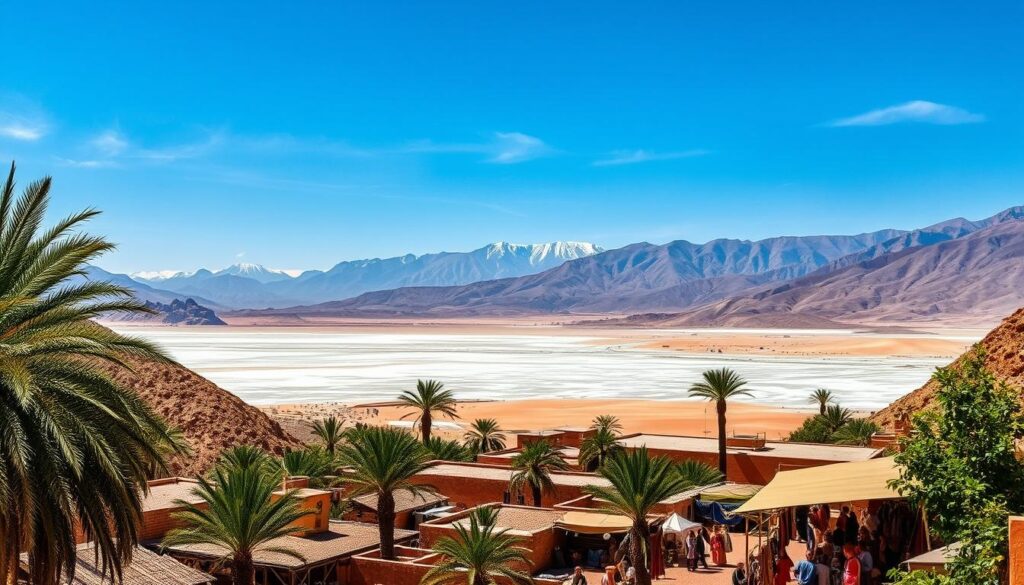
The Atlas Mountains have a cooler climate, with snow in winter. It’s perfect for trekking and hiking in spring and summer. Even in summer, the high altitudes keep temperatures cooler.
Sahara Desert
The Sahara Desert, a big part of Morocco, is very hot and dry. When visiting the Sahara, think about the season.
Seasonal Considerations for Desert Travel
The best time for desert travel is winter (December to February), when it’s a bit cooler. Summer can be over 45°C (113°F), making it hard to travel. Always drink plenty of water and protect yourself from the sun.
Knowing Morocco’s climate zones helps plan your trip. You can choose beach relaxation, cultural exploration, or mountain or desert adventures. For peak travel times, spring and autumn are best for comfortable weather everywhere.
Best Time to Travel to Spain, Portugal, and Morocco
Planning a trip to Spain, Portugal, and Morocco? Knowing the best time to visit is key. These countries offer rich cultures, landscapes, and climates. The timing of your visit greatly affects your travel experience.
Ideal Months for Combined Trips
Spring (April-May) and autumn (September-October) are the best times to visit. The weather is mild, and there are fewer tourists than in summer.
Weather Patterns Across All Three Countries
It’s important to know the weather patterns. Spain has a Mediterranean to Atlantic climate, with warm summers and mild winters. Portugal has a mild climate all year. Morocco’s climate varies from coastal to desert and mountainous, each with its own weather.
| Country | Spring (Mar-May) | Summer (Jun-Aug) | Autumn (Sep-Nov) | Winter (Dec-Feb) |
|---|---|---|---|---|
| Spain | Mild, 15-25°C | Hot, 25-35°C | Mild, 15-25°C | Cool, 5-15°C |
| Portugal | Mild, 15-20°C | Warm, 20-25°C | Mild, 15-20°C | Mild, 10-15°C |
| Morocco | Warm, 20-25°C | Hot, 30-40°C | Warm, 20-25°C | Cool, 10-15°C |
Avoiding Extreme Temperatures
To avoid extreme temperatures, consider the following:
Summer Heat in Southern Spain and Morocco
Summer in southern Spain and Morocco is very hot. Visiting in the shoulder season can help you avoid the heat.
Winter Rainfall Patterns
Winter is wet in parts of Spain and Portugal. Morocco also gets rain in the north during winter. Planning for spring or autumn can help you avoid the rain.
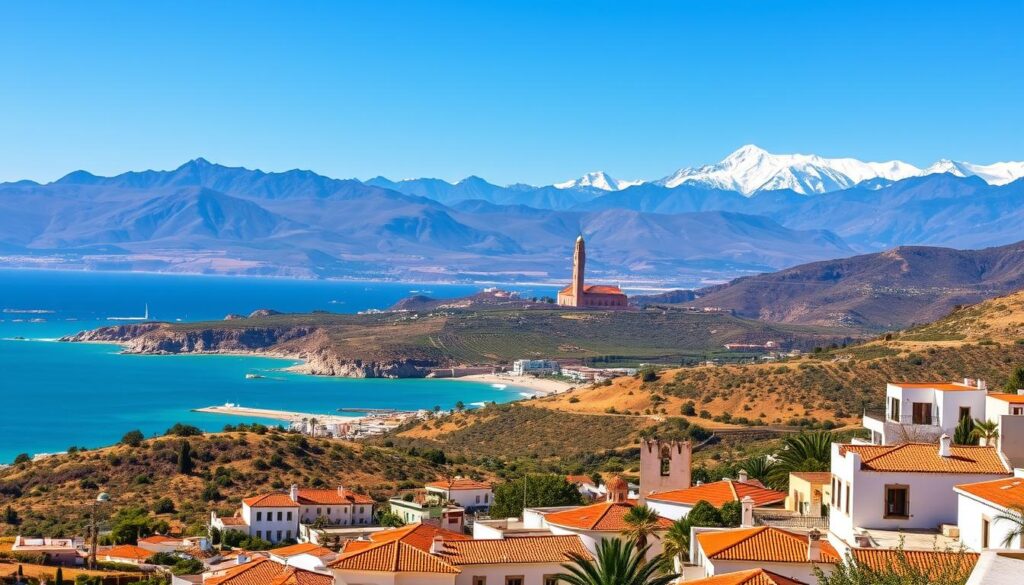
By considering these factors, you can plan a trip that suits your preferences. This makes the most of your time in Spain, Portugal, and Morocco.
Planning a Multi-Country Itinerary
Planning a trip to Spain, Portugal, and Morocco well is crucial. These countries have different landscapes, cultures, and histories. Knowing the season helps you enjoy your trip more.
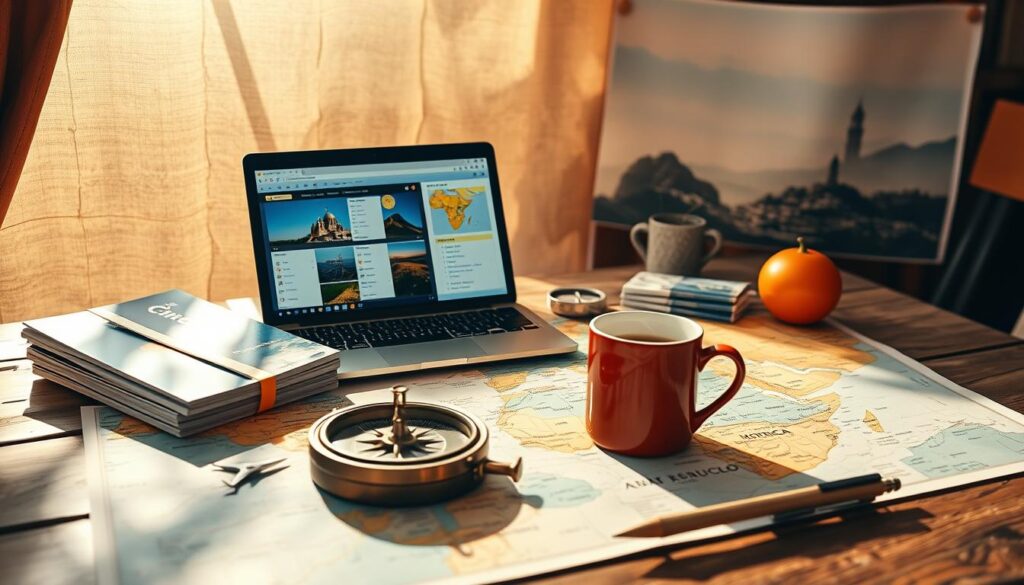
Ideal Routes by Season
The best route varies with the season. In spring, traveling from Spain to Portugal and then Morocco is great. The weather is mild, and you can see cultural festivals and natural beauty.
In summer, coastal routes in Spain and Portugal are refreshing. Morocco’s desert is best visited early morning or late evening to avoid the heat.
Transportation Considerations
Traveling between these countries is easy. You can take the train from Spain to Portugal and enjoy the views. Rail passes make international travel convenient.
For Spain to Morocco, ferries are a good choice. They offer a comfortable ride and let you bring vehicles.
Border Crossings
Border crossings are usually smooth. But, always check current rules and travel advisories before your trip.
Ferry Options Between Spain and Morocco
Ferries between Spain and Morocco run often. You can catch multiple daily departures from places like Algeciras to Tangier. The trip takes about two hours.
Train Connections Between Spain and Portugal
Trains from Spain to Portugal are fast and efficient. They connect big cities like Madrid to Lisbon. This is a quick and convenient way to travel.
By thinking about these points, you can plan a smooth trip to Spain, Portugal, and Morocco. This way, you’ll have a great travel experience.
Seasonal Activities and Experiences
Looking for beach vacations, cultural sightseeing, or outdoor adventures? The time you visit Spain, Portugal, and Morocco matters. Each season offers its own charm and activities.
Beach Vacations
Summer is the best time for beach lovers in these countries. The weather is warm, and days are long. Spain’s Costa Brava and Costa del Sol are top spots. Portugal’s Algarve and Morocco’s Essaouira are also great for beach relaxation.
Cultural Sightseeing
Spring and autumn are perfect for cultural trips. The weather is mild, and there are fewer crowds. Visit historic cities like Madrid, Lisbon, and Marrakech. Don’t miss the Alhambra in Granada, the Jerónimos Monastery in Lisbon, and the Bahia Palace in Marrakech.
“The best way to experience the culture of a place is by immersing yourself in its history and traditions.” –
Outdoor Adventures
Spring and autumn are great for outdoor activities. Hike in the Pyrenees between Spain and France, or in Morocco’s Atlas Mountains. Portugal’s Serra da Estrela mountains also offer excellent hiking.
Food and Wine Experiences
Autumn is perfect for food and wine lovers. The harvest season brings festivals and events celebrating local produce.
Harvest Seasons and Food Festivals
In Spain, the Rioja wine region hosts harvest festivals. Portugal’s Douro Valley is a must-visit for wine enthusiasts. Morocco’s rich culinary heritage offers many food experiences, including the Marrakech International Film Festival during harvest season.
| Country | Season | Experience |
|---|---|---|
| Spain | Autumn | Harvest festivals in Rioja |
| Portugal | Autumn | Wine harvest in Douro Valley |
| Morocco | Various | Culinary experiences in Marrakech |
By planning your trip with seasonal activities in mind, you can make your visit to Spain, Portugal, and Morocco unforgettable.
Budget Considerations Throughout the Year
Planning your trip to Spain, Portugal, and Morocco? Knowing the budget changes throughout the year is key. Traveling in the right season can save you money on places to stay, flights, and things to do.
Accommodation Prices by Season
Prices for places to stay change a lot with the seasons. In peak season (June to August), hotels and vacation rentals cost more because more people travel. But, the off-season (November to March) has lower prices, with many places offering discounts to attract guests.
For example, a hotel room in Madrid might be $150 a night in peak season. But, it could be $80 a night in the off-season. Vacation rentals in Portugal’s Algarve region also offer big discounts in the shoulder season (April to May and September to October).
Flight Cost Variations
Flight prices to Spain, Portugal, and Morocco also change with the seasons. Prices go up in summer and during holidays. But, flying in the off-season or on less busy days can be cheaper.
A flight from New York to Madrid might cost $500 in the off-season. But, it could be $800 or more in peak times. Being flexible with your travel dates can help you find better flight deals.
Saving Money in Each Country
To save money in Spain, Portugal, and Morocco, you need some insider tips. Here are a few:
Off-Season Discounts
Look for off-season discounts on places to stay and tourist spots. Many museums and historical sites have lower prices or special deals during the off-season.
Regional Price Differences
Know that prices can vary within each country. Tourist areas are usually pricier than local spots. Exploring local markets and eating at local restaurants can be cheaper and more authentic.
| Country | Peak Season Cost | Off-Season Cost |
|---|---|---|
| Spain | $150/night | $80/night |
| Portugal | $120/night | $60/night |
| Morocco | $100/night | $50/night |
As a travel expert,
“The key to a budget-friendly trip is flexibility and planning. Knowing the seasonal cost changes can greatly affect your travel expenses.”
Conclusion
Now that you’ve looked into the best times to visit Spain, Portugal, and Morocco, it’s time to start planning. The spring (March to May) or autumn (September to October) are great times to travel. The weather is nice in all three countries during these periods.
If you’re planning a trip to Spain, Portugal, and Morocco, these seasons are perfect. You can explore cultural spots, enjoy outdoor fun, and try local foods. For a seasonal travel guide, these times are ideal.
When picking the best time to visit, remember summer can be busy and hot. Winters are mild but might be cooler in the evenings. Choosing the right season ensures a great trip to these stunning places.




 Covers cities, coast, mountains, desert & food