best month to travel to morocco
Planning a trip to Morocco is exciting, but choosing the right time is key for a good trip. Morocco’s weather changes a lot, depending on where you are and when you go.
So, when is the best time to visit Morocco? It’s when you avoid too much heat or cold. Morocco has everything from the hot Sahara Desert to the cool Atlas Mountains. So, picking a time with nice weather is important.
Traveling at the right time lets you enjoy Morocco’s culture, beautiful views, and lively markets. You won’t have to deal with bad weather.
Key Takeaways
- Morocco’s climate varies greatly across different regions.
- Avoiding extreme weather is key to a comfortable trip.
- The ideal time to visit depends on the region’s climate.
- Pleasant weather enhances the overall travel experience.
- Morocco’s diverse landscapes offer something for every traveler.
- Planning ahead ensures a more enjoyable journey.
Morocco’s Climate Overview
Morocco’s climate is shaped by its geography, from coastlines to deserts. The country’s varied landscapes lead to different climates in each area. This makes Morocco a unique place for travelers to explore.
Geographic Diversity and Its Impact on Weather
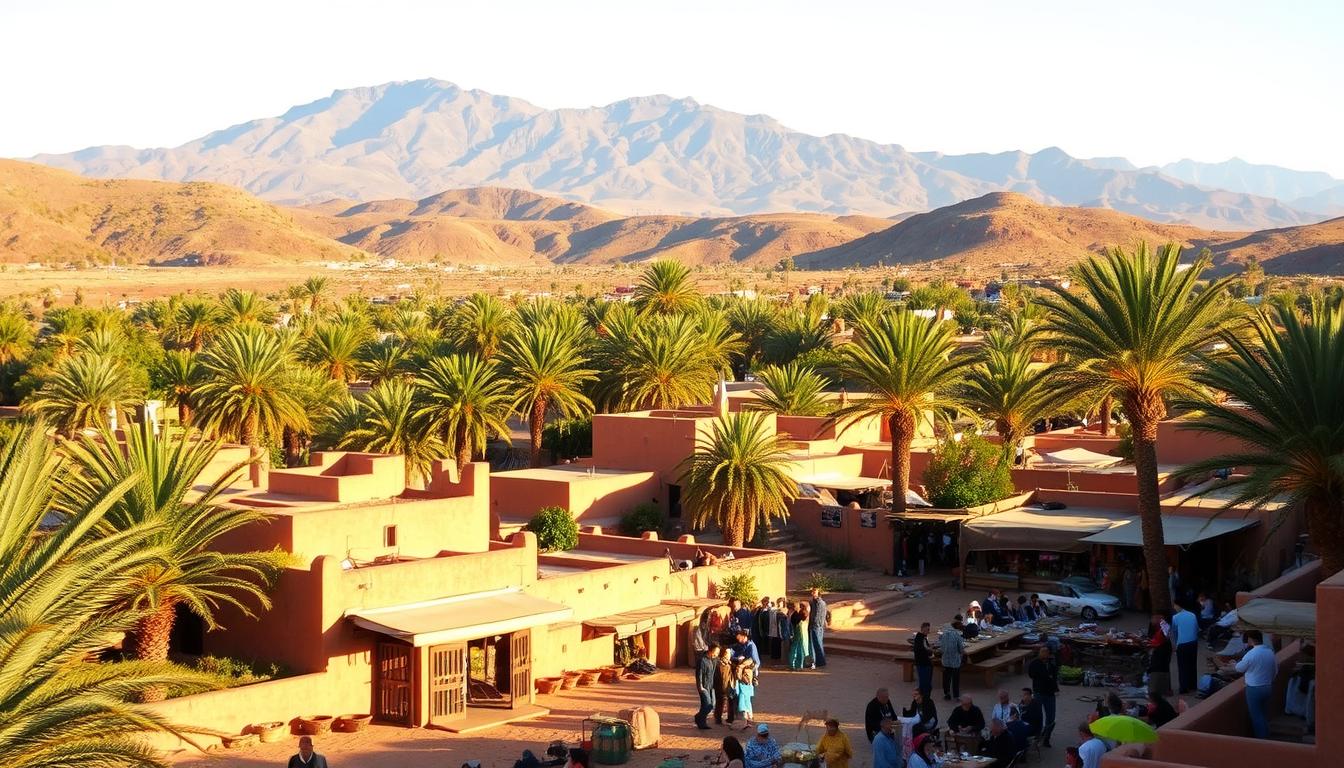
Morocco has coastlines, mountains, and deserts. This mix greatly affects the weather. The Atlas Mountains block rain, leading to different amounts of rain on each side. Coastal areas are generally milder than inland, where temperatures can be extreme.
The geography also shapes local ecosystems. Each area supports its own plants and animals. Knowing these differences helps travelers plan their trips better.
Four Distinct Climate Zones to Consider
Morocco has four main climate zones:
- Mediterranean Climate: This climate has warm summers and mild winters, found in the north.
- Atlantic Coastal Climate: Coastal areas have cooler summers and milder winters.
- Mountainous Climate: The Atlas Mountains are colder, with lots of snow in winter, perfect for skiing.
- Desert Climate: The Sahara Desert has very hot days and cold nights.
Each climate zone offers a special experience. You can enjoy the Atlantic coast or explore the Sahara. Knowing these zones helps plan a trip that fits your interests.
Understanding Morocco’s Seasonal Patterns
Morocco’s seasons vary greatly, from the Mediterranean to desert climates. Each region has its own weather and climate changes throughout the year.
The Mediterranean-Influenced North
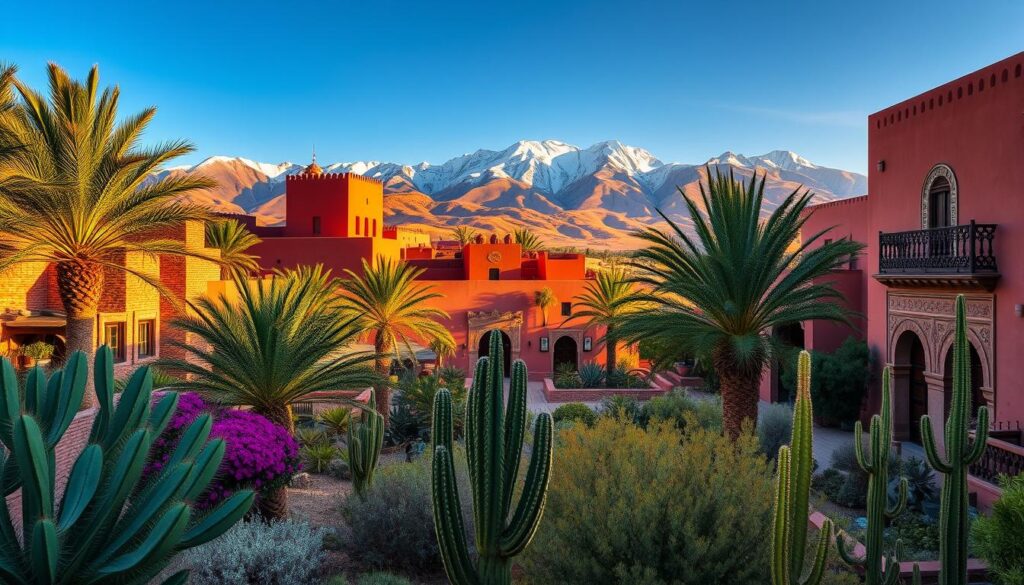
The north of Morocco, near the Mediterranean, has mild winters and warm summers. Spring and autumn are the best times to visit, with pleasant weather.
The Atlantic Coast Climate
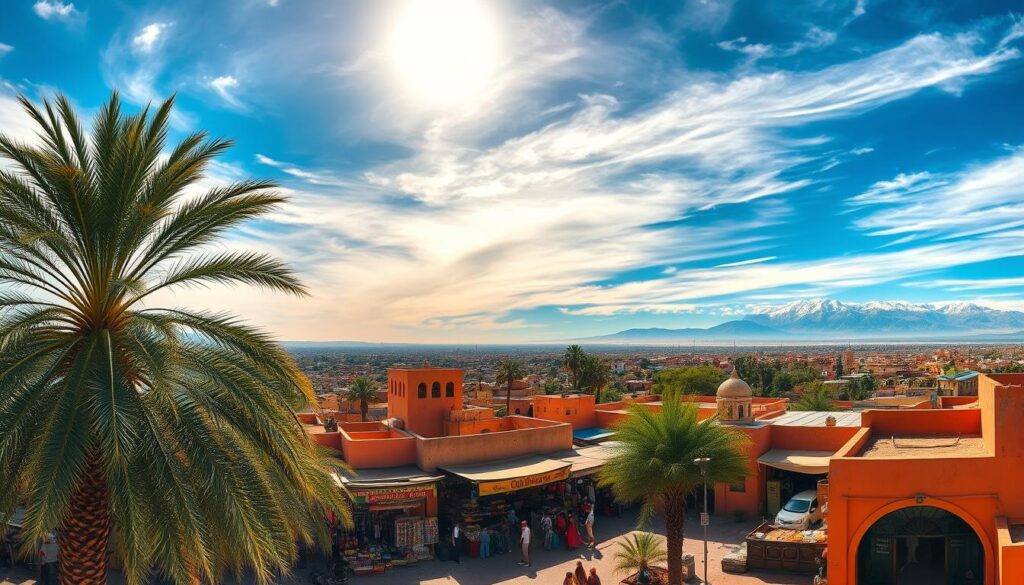
The Atlantic coast, home to cities like Casablanca and Rabat, has a milder climate. It has cooler summers and milder winters than inland areas. The coastal breeze makes it comfortable during hot months.
The Sahara Desert Experience
The Sahara Desert has extreme temperatures, with hot days and cold nights. Visiting in the shoulder season can be more comfortable, avoiding the summer heat.
Knowing Morocco’s seasonal patterns helps plan your trip. It ensures you enjoy your visit, no matter where you go.
Peak vs. Off-Peak: When Most Tourists Visit
Knowing when the peak tourist season in Morocco is key for planning your trip. The country’s fame as a travel spot makes some times busier than others.
High Season Crowds and Pricing
In peak season, Morocco’s hot spots are packed, and prices for places to stay and tourist services go up. Tourists should expect larger crowds and higher costs during this time.
| Aspect | Peak Season | Shoulder Season |
|---|---|---|
| Crowds | Large | Moderate |
| Prices | Higher | Lower |
Benefits of Shoulder Season Travel
Traveling in the shoulder season has its perks, like fewer people and lower prices. You can enjoy a more relaxed experience exploring Morocco’s cities and attractions.
Winter in Morocco: December to February
Morocco in winter is a hidden gem. It offers temperatures and activities for all kinds of travelers. The country’s mild climate is a big plus, especially when compared to many places in Europe and North America.
Temperature Ranges and Precipitation
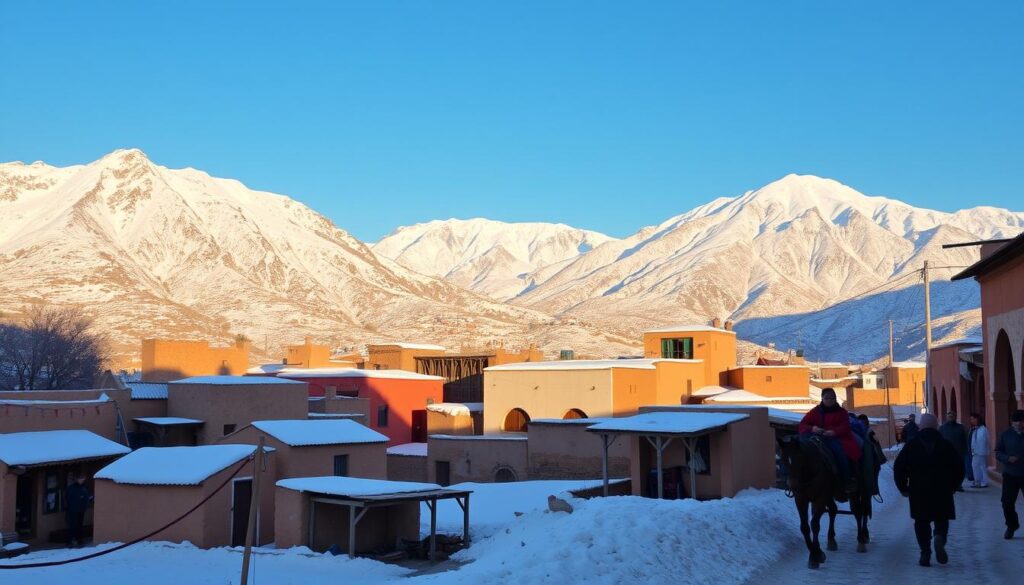
Winter temperatures in Morocco vary by region. Coastal areas like Casablanca and Rabat are cooler, with highs around 17°C (63°F). Inland cities, such as Marrakech, are more pleasant, with highs up to 22°C (72°F). The Atlas Mountains get snow, perfect for winter sports.
Precipitation is more common during these months. December is one of the wettest months in the north.
Winter Activities and Experiences
Winter is great for exploring Morocco’s cities without the crowds. You can enjoy hiking in the Atlas Mountains, visit historical sites, or relax in coastal towns. The Sahara Desert is also accessible, offering a calm landscape without the summer heat.
Pros and Cons of Winter Travel
Traveling to Morocco in winter has its good and bad sides. The advantages include lower prices for accommodations and tourist services, and a more relaxed atmosphere. However, some rural areas might be hard to reach due to rain or snow.
| Aspect | Pros | Cons |
|---|---|---|
| Weather | Mild temperatures in many regions | Rain and potential snow in the north and mountains |
| Tourist Season | Fewer crowds, more relaxed experience | Some attractions might have limited hours |
| Activities | Ideal for hiking, city exploration, and desert visits | Limited water sports due to cooler sea temperatures |
Spring Awakening: March to May
March to May is a great time to visit Morocco. The weather is mild, perfect for exploring the country’s landscapes and culture.
Weather Patterns and Regional Variations
In spring, Morocco’s climate is pleasant. Temperatures rise from 68°F (20°C) in March to 75°F (24°C) in May. The Atlas Mountains are cooler than the desert areas.
Regional Temperature Variations:
| Region | March | April | May |
|---|---|---|---|
| Marrakech | 64°F (18°C) | 70°F (21°C) | 77°F (25°C) |
| Sahara Desert | 68°F (20°C) | 75°F (24°C) | 86°F (30°C) |
| Atlas Mountains | 50°F (10°C) | 55°F (13°C) | 60°F (16°C) |
Spring Festivals and Events
Spring in Morocco is full of festivals and cultural events. The Marrakech Popular Arts Festival happens in July. But, some regional festivals start in late spring, featuring local music, dance, and crafts.
Advantages of Spring Visits
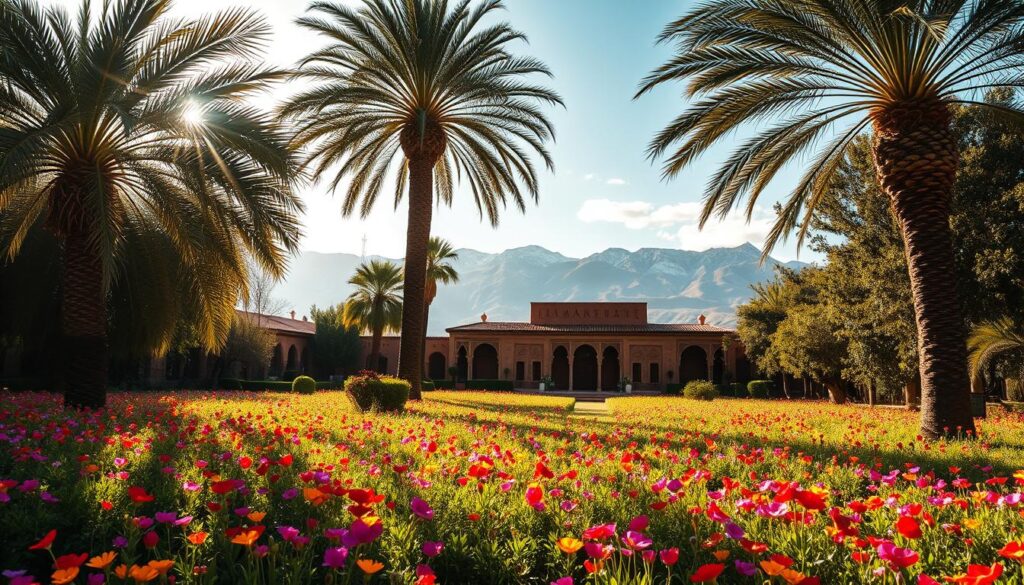
Visiting Morocco in spring has many benefits. The weather is perfect for trekking, exploring the Sahara, or enjoying Marrakech’s souks. With fewer tourists, you can have a more relaxed visit.
Spring is a wonderful time to see Morocco’s culture, landscapes, and hospitality.
Summer Heat: June to August
Visiting Morocco in the summer can be tough because of the heat. The desert gets very hot, so plan your trip well.
Temperature Extremes and How to Cope
Summer in Morocco brings very high temperatures, over 100°F (38°C) in the Sahara. To beat the heat, drink lots of water and travel when it’s cooler.
- Stay in air-conditioned places when you can.
- Wear light, breathable clothes to stay cool.
- Use sun protection, like sunscreen and a hat.
Coastal Retreats and Mountain Escapes
To get away from the heat, visit Morocco’s coastal towns or mountains. Essaouira on the Atlantic coast and the Atlas Mountains are cooler and away from the desert.
Summer Travel Considerations
Traveling to Morocco in summer means watching out for sandstorms in the desert. For more tips on when to visit, check Audley Travel. They offer great advice on Morocco’s climate and events.
Autumn Charm: September to November
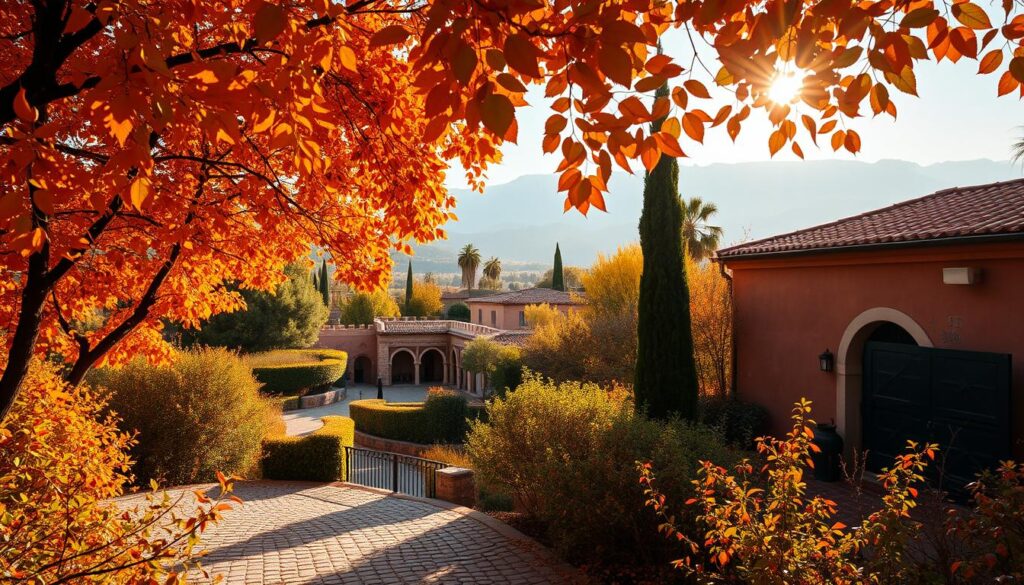
Autumn in Morocco is a mix of mild weather and rich culture. As summer fades, the country becomes a perfect spot for travelers. They can find comfort and adventure here.
Weather Expectations Across Regions
Autumn brings different weather to Morocco’s areas. Coastal spots stay mild, with temperatures between 15°C and 25°C. This makes them great for exploring.
Inland cities like Marrakech have warm days and cool nights. The Atlas Mountains get crisper as autumn goes on. Meanwhile, the Sahara Desert cools down, making desert treks more comfortable.
Harvest Season and Cultural Experiences
Autumn is harvest time in Morocco. You can see the lively rural scenes by visiting olive groves. Or, join local harvest festivals and souks full of fresh produce.
The season is also full of cultural events. Traditional music festivals and crafts fairs offer a peek into Moroccan heritage.
Some highlights of autumn cultural experiences include:
- Visiting the olive groves in the Atlas Mountains
- Participating in local harvest festivals
- Exploring the vibrant souks
- Attending traditional music and crafts festivals
Why Autumn Might Be Ideal
Autumn is a great time to visit Morocco. The weather is pleasant, and there are many cultural events. Plus, it’s less crowded than summer.
The season is perfect for city tours, mountain hikes, or desert adventures. You’ll also find good deals on places to stay, making your trip even better.
“The autumn season in Morocco is a time of transition, offering travelers a unique opportunity to experience the country’s diverse landscapes and cultures in a more relaxed atmosphere.”
Autumn in Morocco is great for culture lovers, outdoor fans, or food enthusiasts. It’s a season that showcases Morocco’s beauty and culture, making it a perfect time to visit.
The Best Month to Travel to Morocco for Different Experiences
The best time to visit Morocco depends on what you want to do. You might want desert thrills, urban excitement, or coastal relaxation. Morocco has different climates and landscapes for each experience, with the best times to visit varying.
Desert Adventures: When to Visit the Sahara
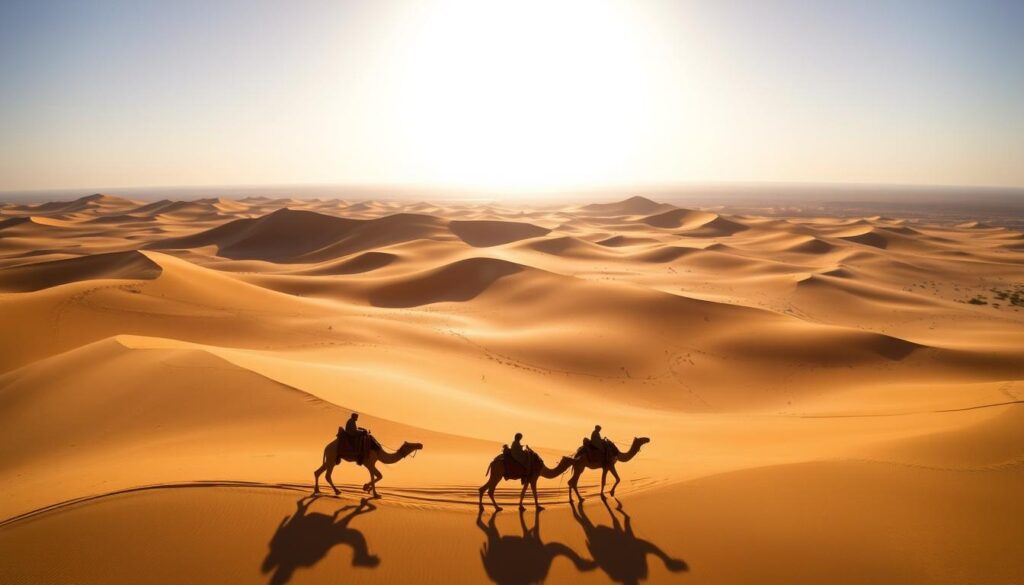
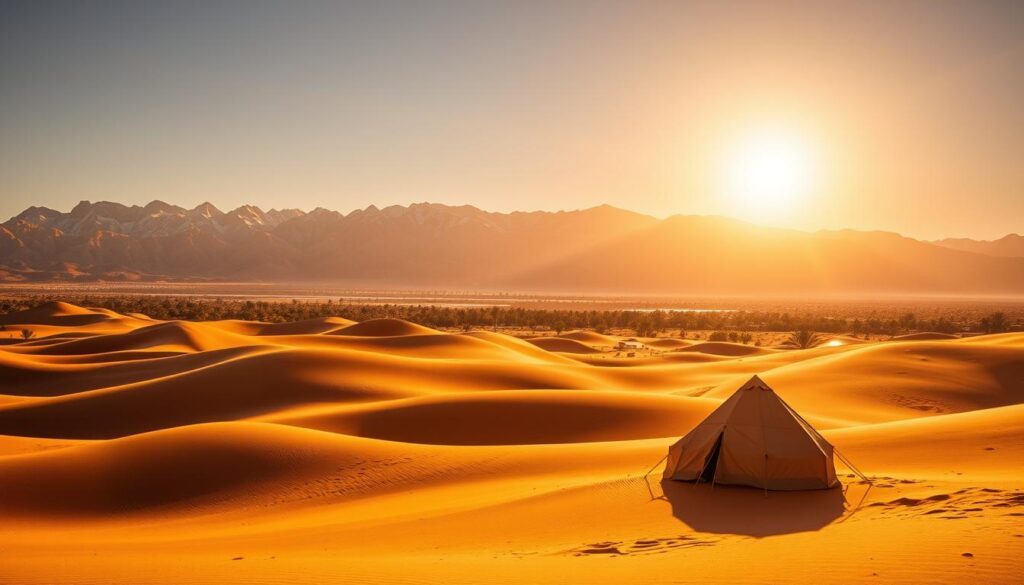
Winter is the best time for Sahara Desert adventures, from December to February. Temperatures are cooler, ranging from 50°F to 65°F (10°C to 18°C). It’s perfect for camel trekking and camping under the stars. Avoid the peak summer months when it can get over 120°F (49°C) in the day.
City Exploration: Ideal Times for Marrakech, Fez, and Casablanca
Spring (March to May) and autumn (September to November) are best for city trips. Marrakech, Fez, and Casablanca have mild weather, with highs between 75°F to 85°F (24°C to 30°C). It’s great for exploring souks, historical sites, and cultural landmarks. Enjoy the bustling streets without the extreme heat of summer.
Coastal Getaways: Perfect Timing for Beach Visits
Summer (June to August) is perfect for beach trips along the Atlantic coast. Places like Essaouira and Taghazout have warm weather, ideal for swimming, surfing, and sunbathing. But, expect more crowds and higher prices during this busy season.
Choosing the right time for your activities makes your Morocco trip better. Whether you seek adventure, cultural experiences, or relaxation, the right timing will improve your journey.
Avoiding Extreme Weather Conditions
When planning your trip to Morocco, it’s key to know the country’s varied climate. The weather changes a lot from north to south and from coast to desert. So, being ready is a must.
For more detailed info on the best time to visit Morocco, check out Go Way’s guide on the best time to visit Morocco.
Escaping the Scorching Summer Heat
Summer in Morocco is very hot, especially in the desert. To beat the heat, visit coastal towns like Essaouira or the Atlas Mountains. These places have cooler temperatures.
Navigating Rainy Periods and Flash Floods
Morocco gets most of its rain in winter, with flash floods common in valleys and low areas. Keeping up with weather forecasts and avoiding travel in heavy rain can help avoid these dangers.
Dealing with Desert Winds and Sandstorms
The desert areas of Morocco face sandstorms and strong winds. Travelers should wear the right clothes and check local weather forecasts before desert trips.
Regional Considerations for Timing Your Visit
Morocco’s geography is diverse, making the best time to visit different in each region. Knowing these differences helps plan a trip that fits your interests. Whether you want to see cities, relax on beaches, or explore mountains, timing is key.
Northern Morocco’s Ideal Months
Northern Morocco, like Tangier and Tetouan, has a Mediterranean climate. This means mild winters and warm summers. The best times to visit are spring (March to May) and autumn (September to November). The weather is just right for sightseeing.
For more details on when to visit Morocco, check out this guide on Enchanting Travels.
Central Morocco’s Best Times
Central Morocco, especially Marrakech, has a more extreme climate. It’s hot in summer and cool in winter. The best times to visit are spring (March to May) and autumn (September to November). These periods are great for exploring souks and enjoying the city’s culture.
Southern Morocco and the Desert Edge
Southern Morocco, near the Sahara Desert, has a dry desert climate. The best time to visit is winter (December to February). The weather is milder, perfect for desert adventures like camel trekking and camping.
| Region | Ideal Time to Visit | Climate Characteristics |
|---|---|---|
| Northern Morocco | Spring (Mar-May), Autumn (Sep-Nov) | Mild winters, warm summers |
| Central Morocco | Spring (Mar-May), Autumn (Sep-Nov) | Hot summers, cool winters |
| Southern Morocco | Winter (Dec-Feb) | Arid desert climate, extreme temperatures |
Cultural Festivals and Events Calendar
Morocco’s diverse culture shines through its many festivals and celebrations all year. You can find music, food, and traditional customs events. Plan your trip to see Morocco’s rich heritage up close.
Winter Celebrations and Traditions
Winter in Morocco is filled with cultural events. The Marrakech International Film Festival happens in December, drawing filmmakers and movie fans. You can also enjoy New Year’s celebrations in cities like Marrakech and Rabat, with traditional music and dance.
Spring Festivals Worth Planning Around
Spring is a perfect time to visit Morocco. The Rose Festival in El Kelaa M’Gouna celebrates the rose harvest with music and dance. Don’t miss the Mawazine Festival in Rabat, featuring traditional and modern music.
Summer Cultural Events
Summer in Morocco is warm and full of cultural events. The Essaouira Gnawa Music Festival is a must-see for music fans, with Gnawa and international acts. The Fez Festival of World Sacred Music also showcases musicians from different cultures.
Autumn Festivities and Celebrations
Autumn in Morocco brings harvest festivals and cultural events. The Marrakech Popular Arts Festival showcases traditional Moroccan arts like music and dance. The Imilchil Wedding Festival celebrates Berber culture in a unique way.
Planning your trip around these festivals lets you dive deep into Morocco’s culture. Whether you love music, dance, or traditions, Morocco has something for everyone.
Ramadan: Special Considerations for Travelers
Visiting Morocco during Ramadan is a unique experience. It’s important to understand and respect local customs and traditions during this holy month.
How Ramadan Affects Your Travel Experience
In Morocco, many Muslims fast from dawn to sunset during Ramadan. This can change your travel plans. Restaurants and cafes might be closed during the day, except in tourist areas. You should plan your meals carefully.
Also, some tourist spots might have different hours or be closed. For more information, check out traveling during Ramadan in Morocco.
Tips for Visiting During the Holy Month
Here are some tips for visiting Morocco during Ramadan:
- Respect those fasting by not eating, drinking, or smoking in public during the day.
- Plan your day around the iftar (break-fast) time, when places open up.
- Stay hydrated and energized if you’re out during the day.
- Enjoy the lively Ramadan nights with their unique atmosphere and celebrations.
By understanding and respecting local customs, you can have a rewarding and enriching visit to Morocco during Ramadan.
Budget Traveler’s Guide to Seasonal Pricing
Traveling to Morocco on a budget? Knowing when to book and plan is crucial. The country’s different regions and seasons affect costs. So, it’s important to plan smartly.
When to Find the Best Accommodation Deals
Accommodation prices in Morocco change with the seasons. Off-peak seasons (usually November to March) are the best time to find deals. Cities like Marrakech and Fez offer discounts on hotels and riads.
Even in off-peak times, booking early can get you the best rates. This way, you can enjoy Morocco without overspending.
Transportation and Activity Costs Throughout the Year
Transport costs, like car rentals and flights, stay pretty consistent. But, activity prices change with demand. Desert tours and historical site visits cost more in peak seasons (June to August and December).
Booking activities in the shoulder season (April to May or September to November) can save you money. This way, you can enjoy Morocco’s culture without breaking the bank.
Understanding these seasonal changes helps plan a budget-friendly trip to Morocco. You’ll have a memorable experience without overspending.
Packing Essentials for Different Seasons
To have a comfortable trip to Morocco, knowing what to pack for each season is key. Morocco’s climate changes a lot depending on the region and time of year. So, it’s important to pack right.
Winter Packing List
Winter in Morocco (December to February) means cooler mornings and evenings, especially in the mountains. You’ll need thermal layers, a warm coat, and gloves. Even though it rarely snows, it can still get quite chilly.
Spring Travel Essentials
Spring (March to May) is mild, but it’s wise to bring layers for the cooler times. Remember to pack sun protection like sunscreen, a hat, and sunglasses. The sun can be very strong.
Summer Must-Haves
Summer (June to August) is very hot, especially in the desert. You’ll need light, breathable clothing, a sun hat, and sunglasses. Also, carry a refillable water bottle to stay hydrated.
Autumn Packing Recommendations
Autumn (September to November) is lovely, with warm days and cooler nights. Bring layers for the temperature changes. And don’t forget comfortable shoes for exploring.
| Season | Essential Items |
|---|---|
| Winter | Thermal layers, warm coat, gloves |
| Spring | Layers, sun protection (sunscreen, hat, sunglasses) |
| Summer | Light, breathable clothing, sun hat, sunglasses, refillable water bottle |
| Autumn | Layers, comfortable shoes |
Traveler Types: When Should You Visit?
Morocco’s climate and cultural events change throughout the year. The best time for you to visit depends on your interests. Whether you’re traveling with family, seeking adventure, or looking for luxury, timing is key.
Family Travelers and School Holidays
For families, spring (March to May) and autumn (September to November) are the best times. The weather is mild, perfect for city tours and outdoor fun. Plus, you might find cheaper accommodations and tourist services by avoiding summer.
Adventure Seekers and Outdoor Enthusiasts
Adventure lovers and outdoor fans should visit in spring or autumn. These seasons are great for hiking, desert exploration, or water sports. The weather is just right.
Cultural Explorers and History Buffs
Cultural enthusiasts and history buffs will love Morocco all year. But spring and autumn festivals are the best times. You’ll enjoy music festivals and traditional celebrations.
Luxury Travelers and Relaxation Seekers
Luxury seekers and those looking to relax will enjoy Morocco’s top resorts. Marrakech and coastal towns are ideal. Shoulder seasons (April-May or September-October) offer a peaceful vibe with fewer crowds.
Think about your travel style and plans to pick the best time for Morocco. This way, your trip will be unforgettable and fun.
Conclusion: Making Your Decision
Now you know more about Morocco’s climate and seasons. You can pick the best month to visit. Whether you love cities, coastlines, or the Sahara, choosing the right time is crucial for a great trip.
This article has given you a detailed look at Morocco’s seasons. You’ve seen the good and bad of each time of year. From cool winters to hot summers, and from spring blooms to autumn harvests, each season has its own charm.
Think about what you want to do on your trip. Do you want to see cultural festivals, go on outdoor adventures, or try local food? By planning your visit around your interests, you’ll have an amazing time in Morocco.
Now you’re all set to plan your Moroccan adventure. Pick your travel dates carefully. Get ready to dive into Morocco’s rich culture and stunning landscapes.



 Covers cities, coast, mountains, desert & food