berber coat
Get ready to dive into the rich history of a traditional garment that’s been a key part of Moroccan fashion for ages. The Berber coat is more than just clothes; it’s a symbol of Moroccan heritage and identity.
This coat’s unique design and meaning have made it a big part of Moroccan culture. As you explore traditional Berber coats, you’ll see their role in today’s Moroccan style.
Key Takeaways
- The traditional Berber coat is a significant part of Moroccan heritage.
- Its unique design and symbolism reflect Moroccan culture.
- The coat continues to influence Moroccan fashion in modern times.
- Understanding the Berber coat provides insight into Moroccan identity.
- The traditional garment is a staple in Moroccan fashion.
The Rich Heritage of Berber Culture in Morocco
For centuries, Berber culture in Morocco has shown great strength and variety. The Berber community, also called the Amazigh or Imazighen, has a deep cultural heritage. This heritage is closely linked to Morocco’s history.
Who Are the Berber People?
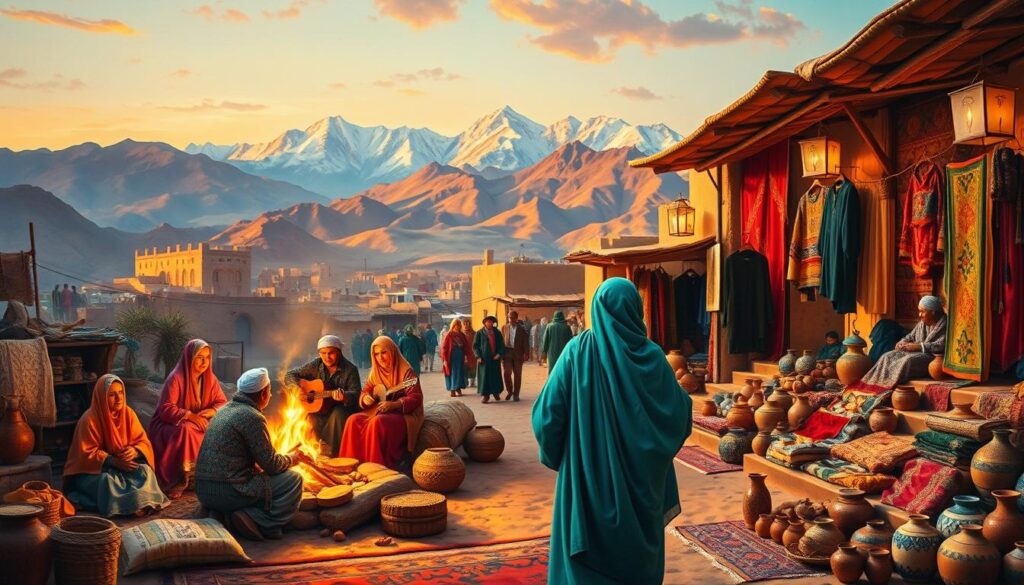
The Berber people are the original inhabitants of North Africa, with a big presence in Morocco. They have their own language, culture, and history, which goes back before the Arab conquest. Berbers are known for their strong identity and ability to keep their culture alive, even when things change.
Berber communities live mainly in Morocco’s mountains. They keep their traditional way of life. They are skilled in making things, farming, and trading. They play a big role in Morocco’s culture and economy.
The Importance of Textiles in Berber Society
Textiles are very important in Berber society. They are not just clothes but also a way to express and communicate. Berber textiles are famous for their bright colors, detailed patterns, and symbols. These symbols tell about the wearer’s status, identity, and cultural values.
| Textile Type | Significance | Characteristics |
|---|---|---|
| Berber Blankets | Used in ceremonies and as symbols of hospitality | Vibrant colors, geometric patterns |
| Traditional Clothing | Reflects cultural identity and status | Intricate embroidery, symbolic motifs |
Exploring Berber culture shows how important textiles are in their lives and ceremonies. These traditions still shape modern Moroccan society.
Historical Evolution of the Berber Coat
The Berber coat’s history is a story of cultural strength and identity. For centuries, it has been a key part of Moroccan life. It has changed with the times but always kept its importance.
Ancient Origins and Development
The Berber coat comes from ancient Berber tribes in Morocco. Textiles were very important for them, showing their culture and daily life. The early designs showed the region’s geography and culture, telling stories of status and beliefs.
As time went on, the coat changed. It used new materials like wool, which was warm and easy to find. Wool became a key part of the coat’s design.
Colonial Influences and Preservation Efforts
When colonial powers came to Morocco, they brought new ideas and materials. This changed the Berber coat, but also made it richer. People worked hard to keep their culture alive, blending old and new styles.
Today, the Berber coat is a symbol of Berber identity and strength. It shows the people’s ability to overcome challenges and stay creative through history.
The Berber Coat: Structure and Traditional Design
The traditional Berber coat is a true work of art from Morocco. It has a special structure and design. This coat is not just pretty; it’s also practical and holds deep cultural value.
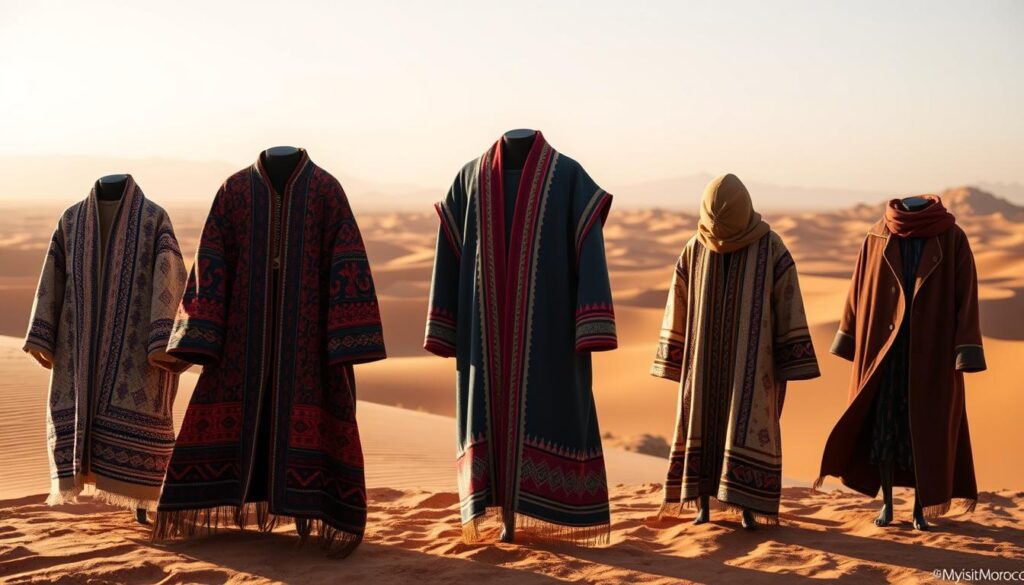
The Berber coat stands out with its distinctive silhouette. It often has a hood and a front that closes with buttons or ties. Made from thick, warm wool, it’s perfect for Morocco’s cold mountains.
Defining Characteristics and Components
The Berber coat has several key parts. These include its woolen fabric, traditional embroidery, and distinctive patterns. The embroidery is more than just decoration. It tells stories of the wearer’s status, tribe, and history.
Textile experts say, “The embroidery on Berber coats is a language of its own. It conveys messages and tells stories through intricate patterns and designs.”
“The beauty of Berber coats lies in their ability to convey cultural heritage through their designs and patterns.”
Regional Variations Across Morocco
Berber coats vary a lot across Morocco. This shows the different cultures and traditions in each area. For example, coats from the Atlas Mountains are bright and have geometric patterns. Coats from other places might be more subtle and have different designs.
The regional differences are not just about looks. They also show what materials are available and what the communities need. Exploring these differences helps us understand the rich cultural heritage of Berber coats.
Materials and Craftsmanship
Berber coats are famous for their top-notch craftsmanship and quality materials. The traditional wool Berber coat is a great example. It shows the skill in using materials and craftsmanship passed down through generations.
Traditional Wool Processing Techniques
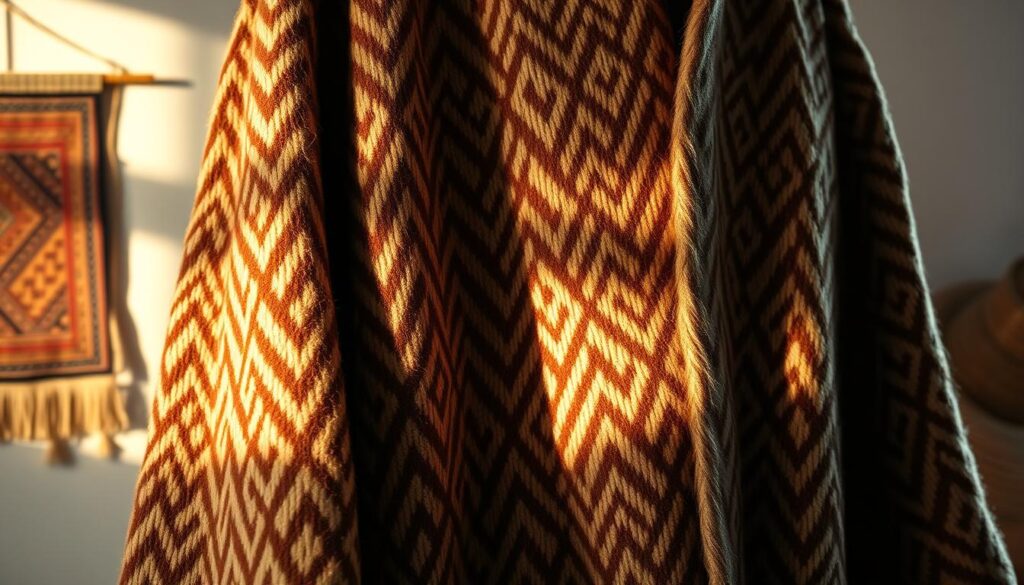
Making a Berber coat starts with picking and processing wool. This material is prized for its warmth and strength. Berber artisans shear wool from sheep in the Atlas Mountains.
The wool is then cleaned, carded, and spun into yarn. This is a hard process that needs a lot of skill. The yarn is dyed with natural dyes from plants and minerals. This gives the Berber coat its special colors and patterns.
Natural Dyes and Their Significance
Natural dyes are key in making Berber coats. Different plants and materials are used for different colors. For example, indigo plants make blue, and pomegranate rinds and other natural things make reds and yellows.
- Indigo plants for blue shades
- Pomegranate rinds for red and yellow hues
- Minerals for earth tones
Using natural dyes makes Berber coats look unique. It also shows the Berber people’s strong bond with nature.
The Art of Handmade Berber Coat Creation
Making a handmade Berber coat is an art passed down by Berber women for generations. You’re about to learn about the detailed steps in making these stunning garments.
The Weaving Process
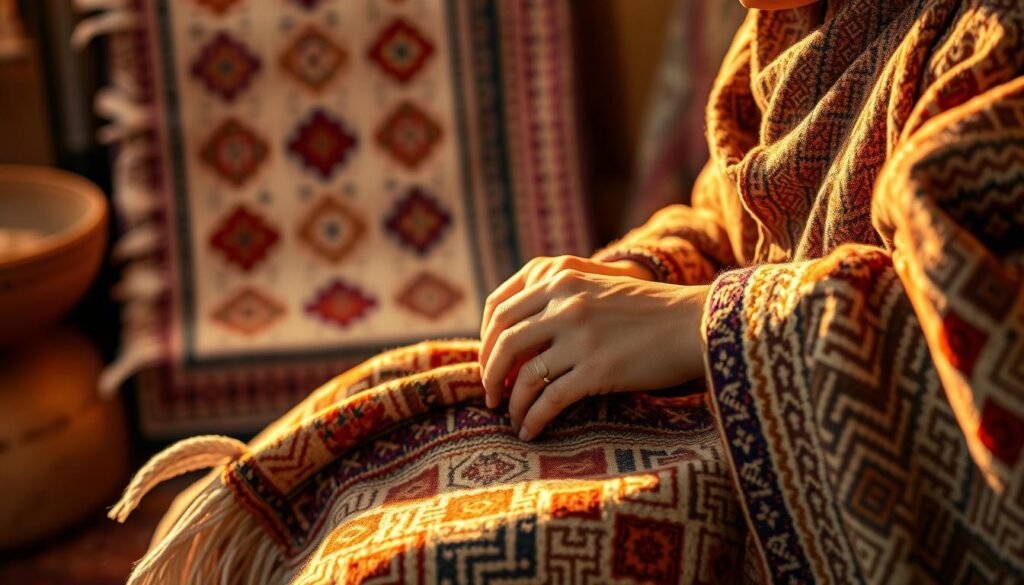
Weaving is key in making a Berber coat. Berber weavers use a loom to weave threads into fabric. Their skill shows in the patterns and designs.
Watching the weaving, you’ll see the detail and patience needed. The threads are dyed naturally, giving the coat its unique look and cultural value.
Embroidery and Decorative Elements
Embroidery and decorations make each Berber coat special. These elements add beauty and carry deep meanings. The patterns can symbolize protection, prosperity, or spiritual beliefs.
Looking at the embroidery, you’ll see the craftsmanship and stories behind it. The vibrant colors and detailed stitching show the artisan’s creativity and skill. Each coat is a piece of Berber heritage.
Symbolism and Meaning in Berber Coat Designs
The Berber coat is more than a piece of clothing. It’s a canvas filled with symbols of protection, prosperity, and spirituality. Each pattern, color, and motif has its own story to tell.
Geometric Patterns and Their Cultural Significance
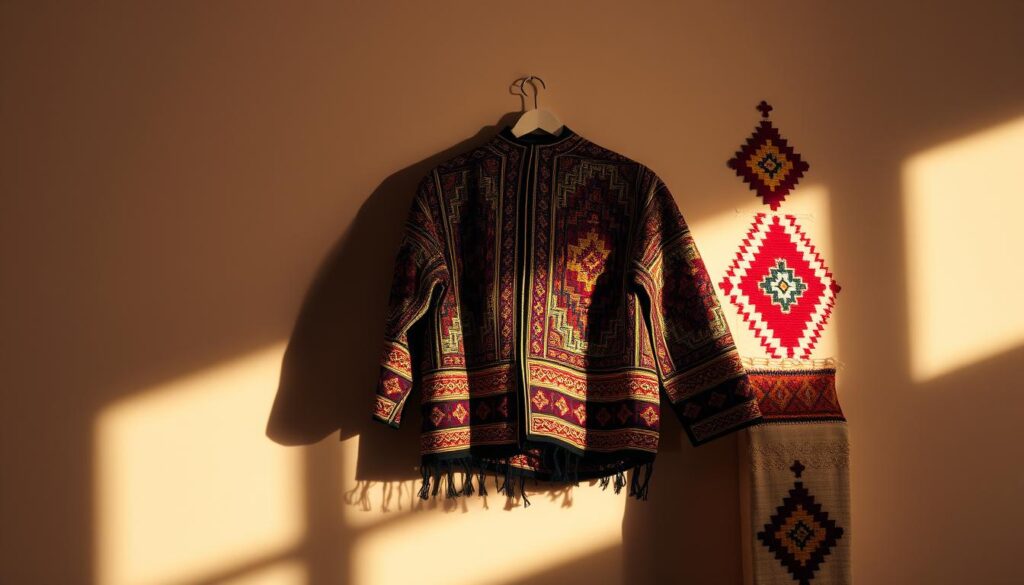
Geometric patterns are key in Berber textiles. They carry deep cultural meaning. Triangles, diamonds, and zigzags symbolize different parts of Berber life, like nature and spirituality.
A triangle might stand for balance, while a zigzag pattern could mean overcoming life’s hurdles. These patterns also tell about the wearer’s status, marriage, or tribe. They help us understand the richness of Berber culture and their traditional clothes.
Color Symbolism in Berber Textiles
Colors in Berber textiles have special meanings. Red means protection and strength, and blue is for spirituality or the heavens. The choice of colors shows the weaver’s intentions, like warding off evil or attracting good luck.
The symbolism in Berber coat designs makes each piece special. It shows the beauty and heritage of Berber culture. When you look at these textiles, you’re not just seeing beauty. You’re hearing the stories and meanings woven into every thread.
The Wool Berber Coat: Functionality and Adaptation
The wool Berber coat is designed to handle Morocco’s changing climates. It has been a key part of Berber culture for centuries. It keeps people warm and safe from harsh weather.
Climate Considerations in Design
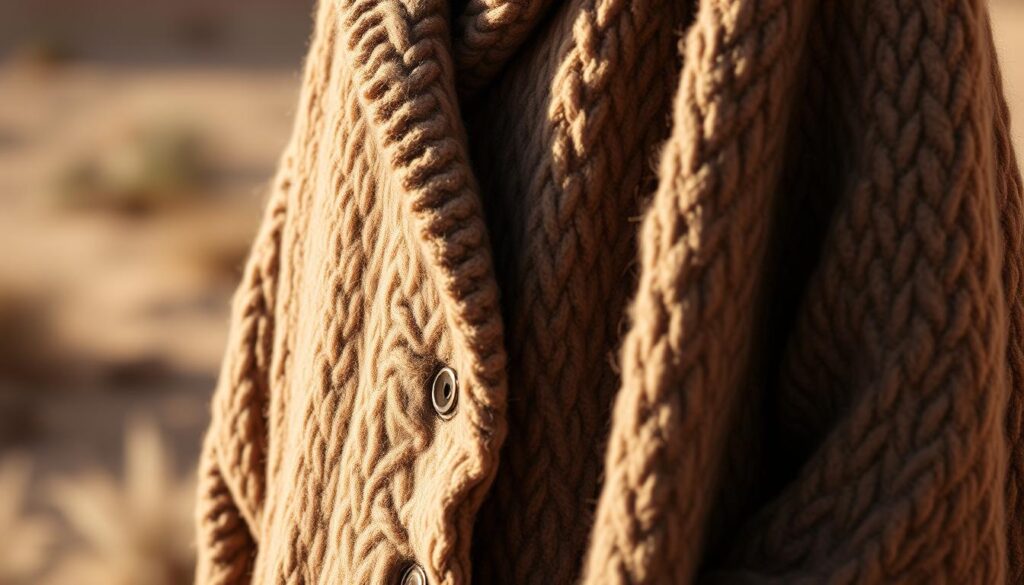
The coat’s design tackles Morocco’s extreme weather. It goes from freezing mountains to hot deserts. The coat’s thickness and wool type are chosen to keep you warm but also cool.
Climate-specific features include natural wool for warmth. It also has a design for airflow to avoid overheating in milder weather.
Seasonal Variations and Usage
The Berber coat’s use changes with the seasons. In winter, it’s essential for staying warm. In summer, lighter versions are used for cooler nights or sun protection.
Seasonal adaptations show the coat’s versatility. It fits casual and formal settings. Layering or adding Berber jewelry can change its look.
Identifying an Authentic Berber Coat
Looking for a real Berber coat means knowing what makes it special. It’s not just a piece of clothing. It’s a part of the Berber culture, showing their history and traditions.
Hallmarks of Authenticity
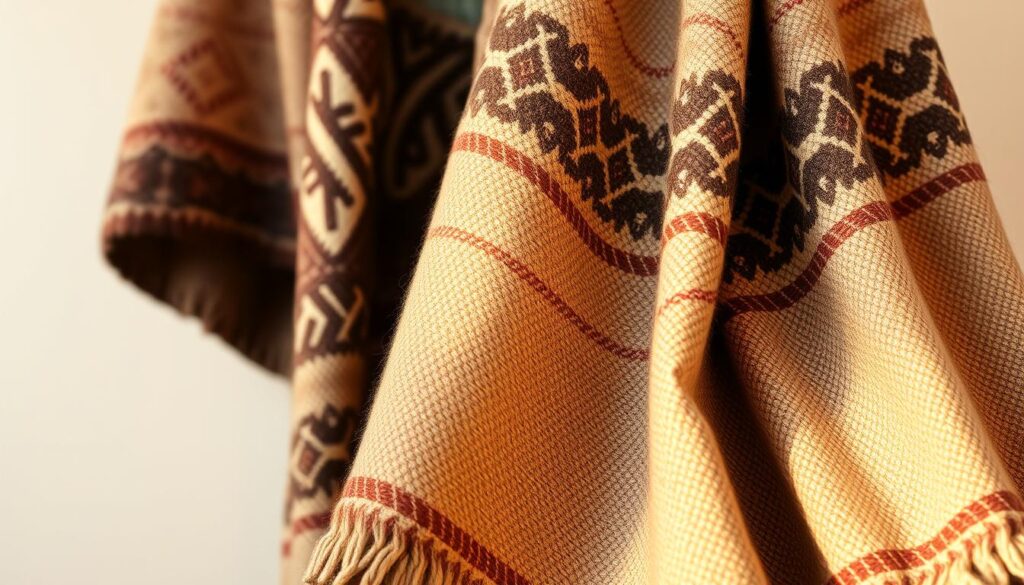
An authentic Berber coat shows off traditional skills. It’s made from natural stuff like wool, which is key in Berber textiles. The way it’s woven, often on a loom, tells you it’s real.
Intricate patterns and designs that mean something to Berber culture are woven or stitched into the fabric. These patterns are a big part of what makes a Berber coat special.
The coat’s quality and how it’s made are also important. Real Berber coats last a long time and are made with great care. They use natural dyes from plants and minerals, which gives them their unique colors.
Common Imitations and How to Avoid Them
With more people wanting Berber coats, fake ones have become common. These can look like Berber coats but lack the cultural value. They might also be made from synthetic materials, which don’t feel or look the same as real Berber textiles.
To spot fakes, follow these tips:
- Buy from places known for Berber or Moroccan textiles.
- Check the material and how it’s made.
- Do your homework on the seller and read what others say about them.
By being careful and informed, you can get a real Berber coat. It will look great and carry the rich culture of the Berber people.
The Vintage Berber Coat Market
As a collector, you’re drawn to the unique history and craftsmanship of vintage Berber coats. These traditional Moroccan garments are highly sought after by collectors and fashion enthusiasts worldwide.
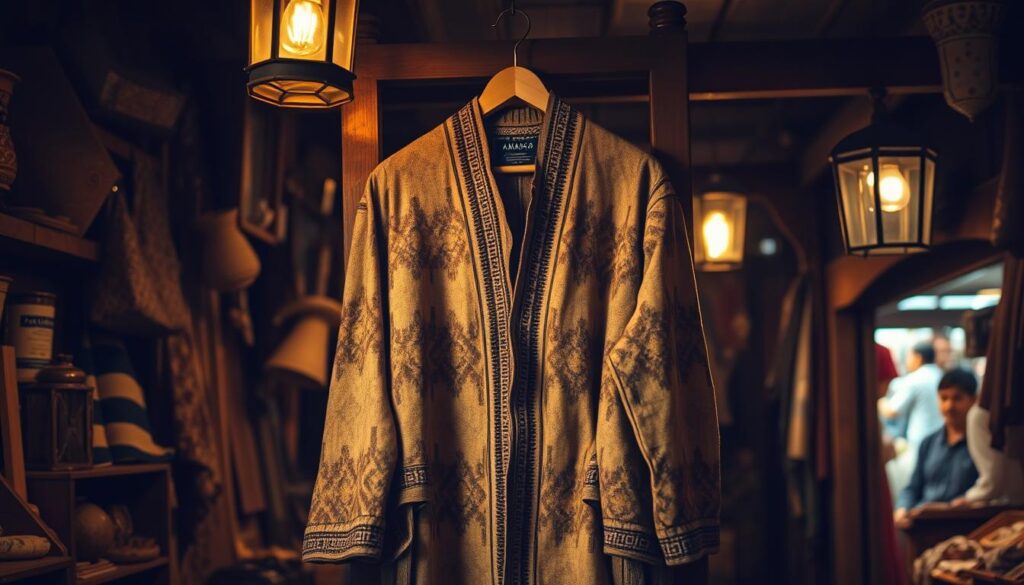
The market for vintage Berber coats is booming. Many enthusiasts look for rare and well-preserved pieces. The value of these coats comes from their beauty, cultural significance, and historical importance.
Collecting and Valuing Antique Pieces
Understanding the value of vintage Berber coats is key when collecting. Age, condition, rarity, and provenance are important. Also, consider the craftsmanship, like the weaving technique and materials used.
To value antique pieces accurately, research the market. Look at similar items sold at auctions or through reputable dealers. This helps gauge their worth.
Where to Find Genuine Vintage Berber Coats
Finding genuine vintage Berber coats takes patience and diligence. Start by checking reputable antique dealers, vintage clothing stores, and online marketplaces focused on traditional Moroccan textiles.
Also, attend cultural events, auctions, and textile fairs. These can be great places to find rare and authentic vintage Berber coats. Always check the authenticity of the piece and avoid reproductions or misrepresented items.
Modern Interpretations of Traditional Designs
Modern takes on the Berber coat are giving this traditional Moroccan garment a fresh spin. Fashion keeps changing, and designers are coming up with new ways to update classic Berber designs. This makes them appealing to today’s fashion lovers.
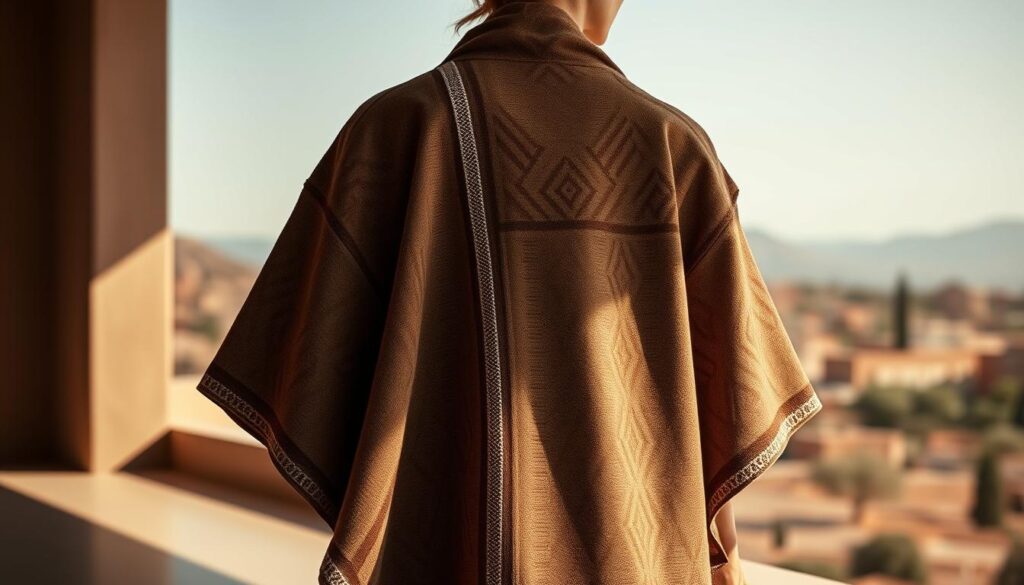
Today’s designers are inspired by Berber traditions. They mix old motifs and techniques with new styles. This mix creates trendy Berber coats that attract a new crowd of fashion fans.
Contemporary Designers Drawing on Berber Traditions
Many modern designers are reworking Berber coat designs. They merge traditional Berber elements with today’s fashion. For example, some use classic Berber patterns in fresh colors. Others try out new materials and textures.
Fusion of Traditional and Modern Elements
The mix of old and new is key in modern Berber coat designs. Designers blend traditional Berber embroidery or weaving with modern shapes. This creates Berber coats that are both fashionable and meaningful.
The Berber Coat in Global Fashion Trends
The Berber coat is loved for blending traditional craftsmanship with today’s fashion. It’s a favorite among fashion lovers worldwide.
The Berber coat’s fame comes from its unique look and the growing interest in cultural fashion. Designers and fashion brands have noticed its charm. They’re adding Berber coat elements to their designs.
International Runway Appearances
The Berber coat has hit the international runways big time. Designers show off their take on this Moroccan classic. These shows prove the coat’s versatility and appeal to modern tastes.
Runways in New York, Paris, and Milan have featured Berber-inspired designs. This shows the coat’s big impact on high fashion. Traditional Berber patterns in modern designs are a hit, showing the coat’s lasting charm.
Celebrity Endorsements and Popularity
Celebrities and influencers have made the Berber coat even more popular. They wear it on red carpets, in photoshoots, and on social media. Their support has made the coat a must-have fashion item.
Social media has boosted the Berber coat’s popularity even more. Fashion fans and influencers share their own Berber coat styles. This grassroots support has made the coat a global fashion favorite.
Caring for Your Berber Coat
How well you care for your Berber coat affects its life span. This includes cleaning and storing it right. This way, the designs and materials stay in top shape for years.
Cleaning and Maintenance Tips
For your Berber coat’s quality, gentle cleaning is key. Don’t machine wash it, as it can harm the fabric and mess up the colors. Spot clean stains with a mild detergent and cold water instead.
If you need a deeper clean, get help from a pro who knows about traditional textiles.
- Use a soft-bristled brush to gently remove dirt and debris.
- Avoid harsh chemicals that can damage the wool or affect the dye.
- Air out your Berber coat regularly to prevent moisture buildup.
Storage and Preservation Methods
Storing your Berber coat right is important. Keep it in a cool, dry spot away from sunlight to stop fading. Use a breathable bag or cloth to keep dust off, and don’t fold or compress it too much.
Stuff the sleeves and body with acid-free tissue paper to keep its shape. By following these tips, your Berber coat will last for many years.
Ethical Considerations When Purchasing Berber Textiles
When you think about buying Berber textiles, it’s key to know the ethical side. These textiles come with complex issues like fair trade, sustainability, and supporting artisan communities.
Supporting Artisan Communities
Berber textiles are made by skilled artisans over generations. Buying these textiles helps these communities. But, it’s important to make sure artisans get fair pay. Look for sellers who are open about their prices and work directly with artisans.
Sustainable Production Practices
The making of Berber textiles also brings up sustainability questions. They’re made from natural materials like wool, which is good for the planet. But, synthetic dyes and modern methods can harm the environment. Choose textiles made with natural dyes and old ways to help the planet.
| Practice | Impact | Recommendation |
|---|---|---|
| Fair Trade | Ensures artisans receive fair compensation | Look for transparent pricing |
| Natural Materials | Biodegradable and renewable | Opt for wool and natural dyes |
| Traditional Techniques | Preserves cultural heritage and minimizes environmental impact | Choose handmade products |
By thinking about these ethical points, you can make choices that help both artisans and the planet.
Styling Your Berber Coat for Modern Wardrobes
The Berber coat is more than just a piece of clothing. It’s a statement that can change your look for everyday and special occasions. It’s versatile, fitting into both casual and formal outfits.
Casual and Everyday Looks
To look stylish yet casual, try this:
- Distressed denim jeans
- A simple white or black top
- Comfortable ankle boots
This combo is great for errands or coffee with friends. The Berber coat elevates a simple outfit.
Statement Pieces for Special Occasions
For big events, make your Berber coat stand out by:
- Pairing it with a flowy evening dress
- Adding bold, statement jewelry
- Wearing it over a sleek jumpsuit
The trick is to mix the coat’s classic look with modern touches. This way, you get a look that’s both current and enduring.
Conclusion: The Enduring Legacy of the Berber Coat
The Berber coat shows the rich culture of Morocco. It represents the history, traditions, and identity of the Berber people. This garment’s lasting impact goes beyond just being clothing.
The Berber coat’s cultural value comes from its traditional making, symbolic designs, and role in Berber society. By valuing this heritage, you help keep traditional practices alive. You also celebrate Berber identity.
The Berber coat’s influence on modern fashion is clear. It is loved by people worldwide. By learning about it, appreciating its making, and supporting artisans, you join its legacy. This legacy honors Moroccan heritage and cultural importance.




 Covers cities, coast, mountains, desert & food