
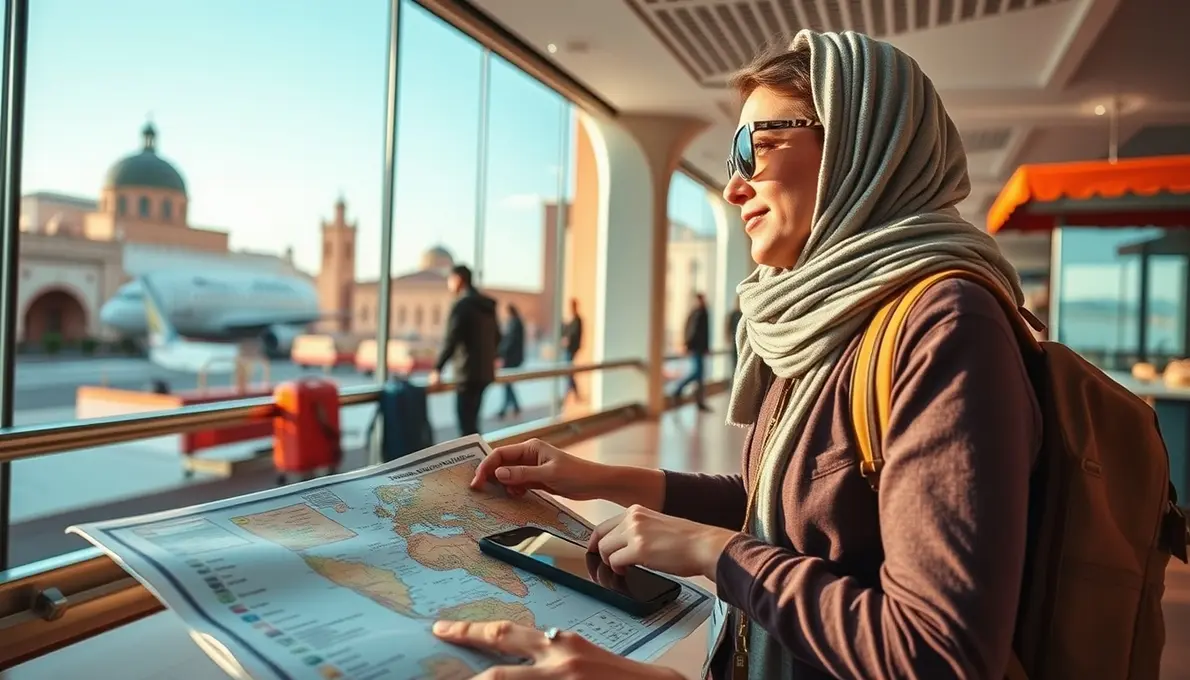
Arriving in and departing from Morocco can be an exciting part of your travel adventure, but navigating unfamiliar airports can sometimes feel daunting. These essential Morocco airport tips are designed to ensure your entry and exit are as smooth and stress-free as possible. From understanding customs procedures to managing baggage and transfers, this guide will provide practical advice focused specifically on Moroccan airports, helping you start and end your journey on a positive note. We’ll cover key aspects of arrival and departure, offering insights that only someone with on-the-ground experience could provide.
Mastering Your Morocco Arrival: Immigration and Customs
Your first impression of Morocco often begins at the airport, and a smooth arrival depends heavily on navigating immigration and customs efficiently. Moroccan airports, particularly the larger hubs like Casablanca (CMN), Marrakech (RAK), and Fès (FEZ), are generally well-organized, but understanding the process beforehand makes a significant difference.
Upon disembarking, follow the signs for “Immigration” or “Passport Control.” You’ll typically encounter two lines: one for Moroccan citizens and residents, and another for foreign visitors. Make sure you’re in the correct line. Before reaching the immigration officer, you will usually need to complete an arrival card. These cards are often distributed by flight attendants before landing, so it’s a good idea to fill it out then to save time. If not, look for a dedicated desk or counter in the immigration hall where blank cards are available. These forms request basic information such as your name, passport details, flight number, address in Morocco (the name of your first hotel or riad is sufficient), and the purpose of your visit. Have your passport and completed arrival card ready as you approach the immigration desk. The immigration officer will typically stamp your passport; sometimes they may ask a few simple questions about your visit or duration of stay. Maintain a polite and calm demeanor.
After clearing immigration, you’ll proceed to baggage claim. Look for screens displaying your flight number to identify the correct carousel. Luggage carts are usually available, often requiring a small coin deposit (Dirhams or sometimes Euros are accepted) or simply free to use, depending on the airport. Once you’ve collected your baggage, you’ll head towards customs. For most tourists, unless you are carrying unusually high-value items, restricted goods, or large amounts of currency, this is usually a straightforward walk-through. There are often “Nothing to Declare” and “Goods to Declare” channels. If you have nothing to declare, you can typically walk through the green channel. Be aware that random checks do occur, so ensure you are not carrying any prohibited items. For specific details on what you can and cannot bring, consulting an official source like Morocco arrival tips is always recommended. Always keep your customs declaration form (if you filled one out) handy, although it’s less commonly required for typical tourist arrivals than the immigration card. These Morocco airport tips are crucial for a hassle-free start.
The whole process, from disembarking to exiting customs, can take anywhere from 30 minutes to over an hour, depending on the flight volume and efficiency of the specific airport on that day. Weekends and peak holiday seasons tend to be busier. Patience is key. Having Moroccan Dirhams in small denominations ready for transportation, or having a plan for obtaining local currency (ATMs are usually available in the arrival hall), will also reduce immediate post-arrival stress.
Essential Departure Strategies for Moroccan Airports
Departing from Morocco requires a structured approach to avoid last-minute rushes and ensure a smooth exit. These Morocco airport tips focus on preparing you for check-in, security, and customs procedures at Moroccan airports. Knowing what to expect significantly lightens the load of travel day.
Firstly, always aim to arrive at the airport well in advance of your scheduled flight, especially for international departures. For most international flights, arriving three hours prior to departure is a safe bet. This accounts for potential queues at check-in, security, and unexpected delays. Airport traffic in cities like Casablanca and Marrakech can also be unpredictable, so factor in extra travel time to the airport itself.
Upon arrival at the airport, head to your airline’s check-in counter. Even if you’ve checked in online, you’ll likely need to drop off your luggage. Have your passport and boarding pass ready. If you haven’t checked in online, the airline agent will assist you. This is also the time to confirm any specific baggage allowances or restrictions your airline may have. After checking in your bags, you’ll proceed to security.
Security checks at Moroccan airports generally follow international standards. You’ll need to place your carry-on luggage, electronics, and any liquids (adhering to the standard 100ml rule for containers, placed in a clear plastic bag) through the X-ray scanner. You will also walk through a metal detector. Be prepared to remove jackets, belts, and sometimes shoes, just like in many other international airports. Listen carefully to the instructions given by the security personnel. They are usually clear and helpful.
Following security, you’ll reach the departure lounge and passport control for exit immigration. This process is similar to arrival: you’ll present your passport and boarding pass to an immigration officer who will stamp your passport, indicating your departure. There might be a short exit card to fill out, though this is less common at departure than it is on arrival. Ensure all your documents are in order and easily accessible. Once you clear exit immigration, you can proceed to your departure gate. There are usually duty-free shops, cafes, and restaurants in the departure lounge if you have time to spare. Keep an eye on the departure boards for gate changes or boarding announcements. These Morocco airport tips are designed to make your departure as seamless as your arrival.
Navigating Moroccan Airports: Transport and Facilities
Understanding the transport options to and from Moroccan airports, as well as the available facilities, is crucial for efficient travel. This section provides key Morocco airport tips regarding ground transportation and what to expect inside the terminals.
Ground Transportation from Moroccan Airports
Once you’ve cleared customs on arrival, your immediate need will be transport to your accommodation. Moroccan airports offer several reliable options:
- Official Airport Taxis (Grands Taxis): These are perhaps the most common and convenient option. You’ll usually find a designated taxi rank just outside the arrivals hall. It’s advisable to agree on a fare before starting your journey to avoid any misunderstandings. Airport taxis often have a fixed, albeit higher, rate for city transfers compared to street taxis. Familiarize yourself with the approximate cost to your destination before stepping out. For example, from Marrakech Menara Airport to the Djemaa el-Fna area, typical prices are around 70-120 MAD, depending on the time of day and negotiation skills.
- Pre-booked Private Transfers: Many riads, hotels, and tour operators offer pre-booked airport transfers. While often slightly more expensive than a taxi, they offer peace of mind, especially if you’re arriving late at night or with a lot of luggage. Your driver will usually meet you inside the arrivals hall with a sign bearing your name. This is a highly recommended option for first-time visitors seeking maximum convenience.
- Airport Buses: Some major airports, like Marrakech (RAK) and Casablanca (CMN), have dedicated airport bus services that connect to central city locations. These are the most budget-friendly option. For example, in Marrakech, Bus No. 19 runs regularly between the airport and the city center (including Djemaa el-Fna and Gueliz). In Casablanca, a train service connects Mohammed V International Airport (CMN) to Casa Port and Casa Voyageurs train stations. Always check the latest schedules and routes as they can change.
- Car Rental: All major Moroccan airports have several international car rental agencies (e.g., Avis, Hertz, Europcar) as well as local companies. If you plan to explore Morocco independently, renting a car can be a great option. Make sure to book in advance, thoroughly inspect the vehicle before driving off, and understand local driving conditions and regulations.
Airport Facilities and Amenities
Moroccan airports, especially the larger ones, are well-equipped to cater to travelers’ needs:
- ATMs and Currency Exchange: You’ll find ATMs (Guichets Automatiques) and currency exchange offices in the arrivals and departures halls. It’s generally recommended to withdraw local currency (Dirham) from an ATM for better exchange rates, but having a small amount of cash on hand, even Euros, can be useful immediately after arrival.
- Duty-Free Shopping: Departure halls feature duty-free shops offering a range of products, including local crafts, perfumes, tobacco, and alcohol.
- Food and Beverage: Cafes, snack bars, and some restaurants are available in both arrival and departure areas, offering choices from traditional Moroccan tea and pastries to international fast food.
- Wi-Fi: Most major airports offer free Wi-Fi, though connection quality can vary. It’s usually sufficient for basic messaging and browsing. Look for “ONDA” or the airport’s specific network.
- Lounges: If you have business class tickets or elite status with an airline alliance, or are willing to pay for access, most larger airports have private lounges offering more comfort, complimentary refreshments, and quiet workspaces.
- Sim Cards: You can often purchase local SIM cards from major Moroccan telecommunication providers (e.g., Maroc Telecom, Inwi, Orange) right in the arrivals hall. This is a convenient way to stay connected from the moment you land. These Morocco airport tips ensure you’re well-prepared for connectivity.
Handling Unexpected Delays and Contingencies
Even with the best planning, travel can sometimes throw a curveball. Knowing how to handle unexpected delays or issues at Moroccan airports can significantly reduce stress. These Morocco airport tips prepare you for common contingencies, turning potential problems into manageable situations.
Flight Delays or Cancellations
If your flight is delayed or cancelled, the first step is to seek information directly from your airline. Look for the airline’s customer service desk or gate agent. They can provide updates on the new departure time, reasons for the delay, and options for rebooking or compensation, depending on the severity and cause of the disruption. Many airlines now offer real-time updates via their apps or websites, so checking these resources on your smartphone can also be very helpful.
If a significant delay or overnight cancellation occurs, inquire about accommodation and meal vouchers. Airlines are generally obligated to provide these for passengers stranded due to their fault. Keep all your boarding passes and receipts for any unexpected expenses, as these might be needed for compensation claims later.
For onward travel plans, such as connecting flights, hotel bookings, or tour departures, inform your providers as soon as possible about your changed schedule. Having travel insurance that covers delays and cancellations can provide an additional layer of financial protection.
Lost or Damaged Luggage
Discovering your luggage hasn’t arrived or has been damaged is a frustrating experience. If your bag is missing, proceed immediately to the baggage claim office (often labelled “Lost & Found” or “Baggage Services”) which is usually located within the baggage claim area or just past customs. You’ll need to fill out a Property Irregularity Report (PIR) form. You’ll need your flight details, baggage tag number (the sticker usually attached to your boarding pass), and a description of your bag. Keep the PIR form carefully, as it’s your primary reference for tracking your luggage. Provide a contact number and address in Morocco (your hotel/riad name and city) where the airline can deliver the bag if it’s found.
For damaged luggage, follow a similar process. Report it before leaving the airport, have a PIR form filled out, and ideally take photos of the damage as evidence. Most airlines will offer repair or replacement depending on the extent of the damage.
Before you travel, it’s a good practice to:
- Take a photo of your packed suitcase.
- Attach a recognizable tag or ribbon to make your bag stand out.
- Keep essential items (medication, important documents, a change of clothes) in your carry-on.
- Consider investing in luggage trackers for extra peace of mind.
Missing Your Connection
If you’re traveling on a single ticket with a connecting flight and miss it due to a delay by the first flight, the airline responsible for the delay is generally obligated to rebook you on the next available flight to your destination. Go immediately to the airline’s transfer or customer service desk.
If you booked separate tickets for connecting flights, the situation is trickier, as the airlines are not obligated to assist with the subsequent flight. This is why booking flights on a single itinerary is usually safer for connections. In this scenario, you would be responsible for booking a new flight. Travel insurance (specifically covering missed connections on separate tickets, if you have it) would be your best recourse.
Communication Challenges
While many airport staff in major Moroccan airports speak some English or French, language barriers can occasionally arise. Having a translation app on your phone can be useful. Remain polite and patient. Asking to speak to a supervisor or someone who speaks your language can also be an option.
By being aware of these potential issues and knowing your options, you can better navigate the unexpected and ensure a more resilient travel experience through Morocco’s airports. These proactive Morocco airport tips are invaluable for any traveler.
Mastering Customs Declarations and Restricted Items in Morocco
Successfully navigating Moroccan customs is a critical aspect of a smooth airport experience, both on arrival and departure. Understanding what you need to declare and what items are restricted or prohibited is vital to avoid delays and potential legal issues. These detailed Morocco airport tips will guide you through the process, focusing on typical tourist situations.
On Arrival: What to Declare
For most tourists, customs on arrival is a straightforward affair, often involving simply walking through the “Nothing to Declare” green channel. However, it’s crucial to be aware of the rules, especially concerning cash, dutiable goods, and certain personal items.
- Currency: You can bring in Moroccan Dirhams (MAD) up to a maximum of 2,000 MAD. Any amount over this is subject to declaration. For foreign currency, you can freely import any amount, but if you intend to re-export foreign currency exceeding the equivalent of 100,000 MAD, or if you wish to convert any leftover MAD back into foreign currency upon departure, you must declare the amount upon arrival. It is wise to declare large sums of foreign currency (e.g., over $5,000 or €5,000) simply as a precautionary measure to facilitate re-export or currency exchange later. Keep any declaration forms.
- Alcohol and Tobacco: Morocco permits the import of a reasonable quantity for personal use. Typically, this means:
* One liter of spirits or two liters of wine per person.
* 200 cigarettes, 50 cigars, or 250 grams of tobacco per person.
Exceeding these limits without declaring could result in confiscation or duty charges.
- Pharmaceuticals: Personal medications are generally allowed, but it’s always best practice to carry them in their original packaging, accompanied by a copy of your prescription or a doctor’s note, especially for strong pain killers or controlled substances. This avoids any misinterpretation by customs officials.
- High-Value Items: If you’re bringing in expensive electronic equipment (laptops, professional cameras, drones) or jewelry that you intend to take back out of the country, it’s a good idea to declare them upon arrival. This provides proof that you brought them into Morocco, preventing potential questioning or duties on departure.
- Food Items: Generally, small quantities of packaged food for personal consumption are allowed. However, fresh produce, meat, and dairy products can be subject to stricter rules and are best avoided, unless processed and commercially sealed.
Restricted and Prohibited Items
Morocco has strict rules on certain items. Be aware that:
- Drones: The import and use of drones are highly restricted in Morocco. You need specific authorization from the Moroccan security authorities in advance. Without it, your drone will almost certainly be confiscated upon arrival and stored until your departure, or even permanently. This is a common and often overlooked restriction for many travelers.
- Firearms and Ammunition: Strictly prohibited without explicit authorization.
- Narcotics: Morocco has a zero-tolerance policy for illegal drugs. Penalties are severe.
- Items for Commercial Use: Goods imported in quantities suggesting commercial intent rather than personal use will be subject to duties and requires proper import documentation.
- Religious or Political Propaganda: Material deemed offensive or subversive is prohibited.
On Departure: What to Keep in Mind
Departing from a Moroccan airport also involves customs, although it’s typically less intensive for tourists.
- Souvenirs and Handicrafts: You can generally export most souvenirs and handicrafts without issue. However, for genuinely old or antique items, especially those that might be considered cultural heritage, you might need an export permit to prove they are not classified as national treasures. This is usually more relevant for high-value art or artifacts.
- Argan Oil and other Local Products: These are permitted for export in reasonable quantities for personal use.
- Currency: As mentioned, if you declared foreign currency upon arrival, you can re-export that amount. If you wish to convert leftover Moroccan Dirhams back to foreign currency, you will typically need your arrival currency declaration form and proof of initial exchange (bank receipts). Without these, conversion might be limited or refused, and you cannot export MAD exceeding 2,000 MAD.
Always be honest and forthcoming with customs officials. Trying to conceal prohibited items or deliberately misrepresent quantities can lead to significant problems. Planning ahead and knowing these Morocco airport tips for customs checks will help ensure your entry and exit are problem-free.
Conclusion
Navigating Moroccan airports for both arrival and departure doesn’t have to be a source of anxiety. By familiarizing yourself with these essential Morocco airport tips, from understanding immigration and customs protocols to knowing your transport options and preparing for contingencies, you can ensure a smooth and pleasant experience. Remember to always allow ample time, have your documents readily accessible, and remain patient and polite. With these practical insights, your journey through Morocco’s airports will be just another enjoyable part of your incredible Moroccan adventure.

FAQs
What documents do I need for arrival and departure at Moroccan airports?
For both arrival and departure, you will need a valid passport with at least six months of validity remaining from your date of entry. On arrival, you’ll also typically complete an arrival card provided on your flight or at immigration. For departure, you’ll need your passport and boarding pass. Depending on your nationality, you may also require a visa to enter Morocco, which should be secured before travel.
Is it easy to get a SIM card at Moroccan airports?
Yes, it is very easy to purchase a local SIM card upon arrival at major Moroccan airports like Casablanca (CMN) and Marrakech (RAK). Kiosks for major local providers such as Maroc Telecom, Inwi, and Orange Morocco are usually located in the arrivals hall after you clear customs. You can buy a SIM card with a data package, which is a convenient and affordable way to stay connected during your trip.
What are the best transportation options from the airport to my accommodation?
The best transportation option depends on your budget and preference. Official airport taxis (Grands Taxis) are readily available outside the terminals, but it’s advisable to agree on a fare beforehand. Many hotels and riads offer convenient pre-booked private transfers, which provide peace of mind. Some larger airports also have affordable public bus or train services connecting to city centers.
Can I bring a drone into Morocco?
Bringing a drone into Morocco is highly restricted and generally requires prior authorization from Moroccan security authorities. Without explicit permission obtained in advance, your drone will almost certainly be confiscated upon arrival at the airport and held until your departure, or potentially permanently. It is not advisable to travel with a drone unless you have secured all necessary official permits beforehand.





 Covers cities, coast, mountains, desert & food