
Are you ready to explore Morocco’s vibrant cities, relax on its beautiful coast, or trek through the Sahara Desert? Morocco is a year-round destination. But, certain times of the year are more suitable than others.
Knowing the optimal travel period can greatly enhance your Moroccan adventure. You should think about the weather, festivals, and events. This will help you make the most of your trip.
Key Takeaways
- Morocco’s diverse climate makes it a year-round destination.
- The ideal time to visit depends on your preferences and activities.
- Weather, festivals, and events can impact your travel experience.
- Plan ahead to make the most of your Moroccan adventure.
- Research the optimal travel period for your desired activities.
Understanding Morocco’s Climate and Geography
Morocco’s landscapes, from the Atlas Mountains to the Sahara Desert, are unique. Knowing these areas helps travelers enjoy their visit. Each region in Morocco has its own climate and features.
Morocco’s Diverse Geographical Regions
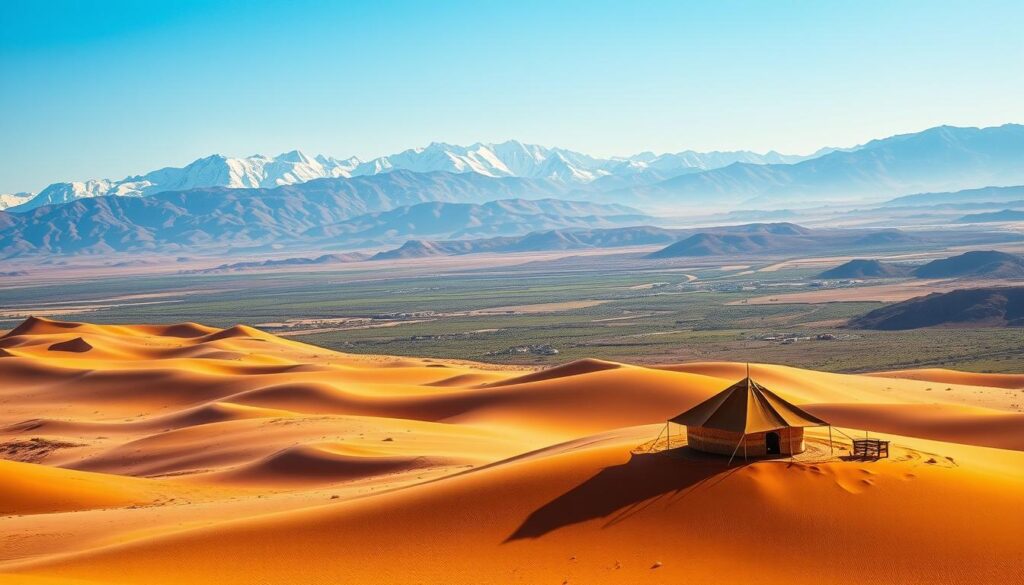
Morocco has many geographical areas, like the Atlas Mountains, the Sahara Desert, and coastal spots by the Mediterranean Sea and Atlantic Ocean. The Atlas Mountains have a cool climate, perfect for outdoor activities. The Sahara Desert, however, is very hot and dry, needing careful planning.
The coastal areas, like Casablanca and Essaouira, have a milder climate. They are cooler in summer and warmer in winter than inland. A traveler said, “Coastal towns in Morocco are a cool break from the desert’s heat.” Knowing these differences helps plan your trip.
Overview of Morocco’s Climate Patterns
Morocco’s climate changes a lot from north to south. The north has a Mediterranean climate, with warm summers and mild, wet winters. The south is more desert-like, with little rain and big temperature swings.
The mountains have their own climate, with cold winters and snow. Coastal areas are milder all year. A saying goes, “The mountains are Morocco’s backbone,” showing their importance. This means the best time to visit Morocco depends on your plans.
When Is the Best Time to Travel to Morocco?
Morocco is a great place to visit all year. But, some times are better than others for a comfortable trip. The weather changes a lot, depending on where you are.
Spring (March-May): The Ideal Season
Spring is the best time to travel to Morocco. The weather is mild and nice. It’s great for city tours, mountain treks, or desert adventures.
Temperatures are just right, from 15°C to 25°C (59°F to 77°F). This makes it easy to do lots of things without getting too hot or cold.
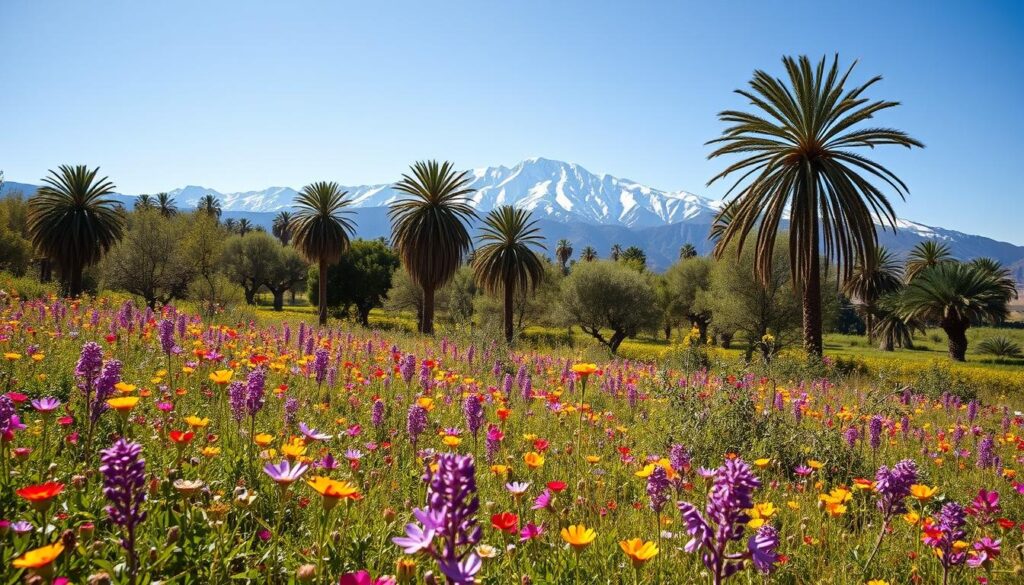
The flowers bloom and the greenery is lush in spring. It’s also a good time for cultural events. For more trip planning tips, check out Memphis Tours.
Fall (September-November): The Second-Best Option
Fall is another great time to visit Morocco. The weather is warm, and there are fewer tourists than in summer. It’s perfect for souk visits, historical site tours, or camel rides.
Fall also has many cultural events. It’s a peak travel time for those who like milder weather and a calm vibe.
Year-Round Planning Considerations
Spring and fall are the best times to visit Morocco. But, think about what you want to do and where you’re going. For desert trips, be ready for big temperature changes. For mountain visits, check the weather to avoid snow.
Traveling to Morocco in Spring (March-May)
Spring in Morocco is truly magical. It brings mild weather and many festivals that show off the country’s rich culture. As winter disappears, the scenery changes, making it a great time to explore.
Weather Conditions and Temperatures
Spring in Morocco is lovely, with temperatures in the mid-70s to mid-80s Fahrenheit (23-30°C). This weather is perfect for seeing the cities and the peaceful desert.
Spring Festivals and Events
Spring in Morocco is full of life, with many festivals and events. The Marrakech Popular Arts Festival is a highlight. It celebrates Moroccan culture through music, dance, and art. These events offer a unique look into Moroccan culture and are a must-see for travelers.
Pros and Cons of Spring Travel
Traveling to Morocco in spring has its good and bad points. The weather is great, and the festivals add to the trip’s cultural richness. But, it’s also a busy time, with more people and higher prices for places to stay and tourist services.
| Aspect | Pros | Cons |
|---|---|---|
| Weather | Pleasant temperatures | Occasional rain showers |
| Tourist Season | Vibrant festivals and events | Larger crowds |
| Prices | Still relatively affordable | Higher prices for accommodations |
Visiting Morocco in Summer (June-August)
Summer in Morocco can be tough but rewarding with the right prep. You can enjoy the culture, landscapes, and events, even when it’s hot.
Managing the Heat: Coastal vs. Inland Areas
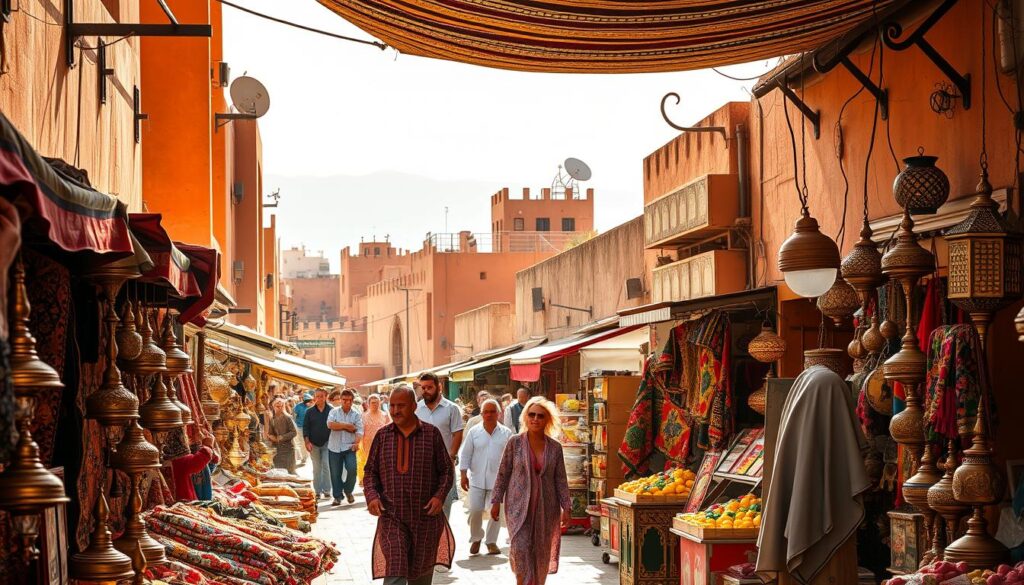
Traveling to Morocco in summer means knowing the temperature differences. Coastal spots like Essaouira and Casablanca are cooler. But, inland places like Marrakech can get very hot, over 100°F (38°C).
Summer Festivals and Cultural Events
Summer is perfect for seeing Morocco’s culture through festivals and events. The Essaouira Gnawa Music Festival is a highlight. For more cultural events and tips on Marrakech, see top travel tips for visiting Marrakech.
Pros and Cons of Summer Travel
Summer travel in Morocco has good and bad sides. You can enjoy beaches, nightlife, and cultural events. But, the heat and sandstorms can be tough. Here’s a quick look:
| Pros | Cons |
|---|---|
| Enjoy beautiful beaches and vibrant nightlife | Extreme heat, especially in inland areas |
| Experience rich cultural heritage through festivals | Potential sandstorms |
| Exciting cultural events like Essaouira Gnawa Music Festival | Higher prices for accommodations and tourist services |
Exploring Morocco in Fall (September-November)
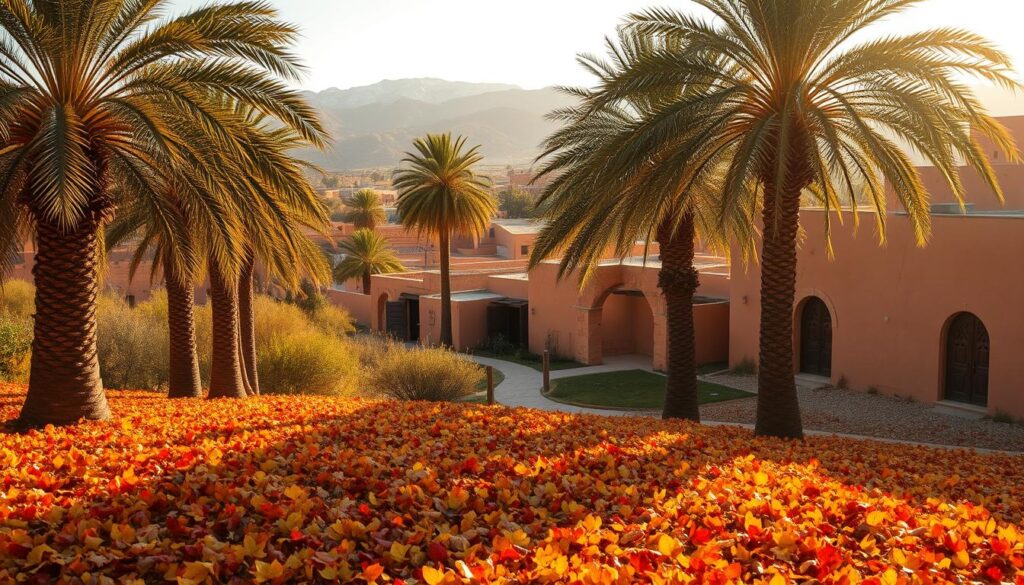
Fall in Morocco is a great time to visit. The weather is mild, and there are exciting festivals. You can explore bustling cities and serene deserts. It’s an ideal season for travelers.
Weather Patterns and Regional Variations
The fall weather in Morocco is mild, perfect for exploring. Coastal areas like Casablanca and Rabat have a Mediterranean climate. They have warm days and cool nights.
Inland cities, such as Marrakech, are warmer during the day but cool at night. The Atlas Mountains offer crisp air and beautiful landscapes.
Fall Festivals and Harvest Season
Fall in Morocco is a time of celebration. The Festival des Cultures du Monde in Rabat celebrates global cultures. You can also enjoy the grape harvest in Meknes and Fes with wine tastings and tours.
Pros and Cons of Fall Travel
Traveling to Morocco in fall has its benefits and drawbacks. The weather is pleasant, and there are fewer crowds. However, some places might still be busy, and accommodation prices could be higher.
| Region | Weather in Fall | Activities |
|---|---|---|
| Coastal Cities | Mild, with average highs around 75°F (24°C) | Explore medinas, visit historical sites, enjoy seafood |
| Inland Cities | Warm days, cool nights | Visit souks, explore palaces, enjoy local cuisine |
| Atlas Mountains | Crisp air, cooler temperatures | Hike, trek, visit Berber villages |
Winter Travel in Morocco (December-February)
Winter in Morocco lasts from December to February. It brings different weather and festivals. You can enjoy mild coastal air, snowy mountains, and lively festivals.
Winter Weather Across Different Regions
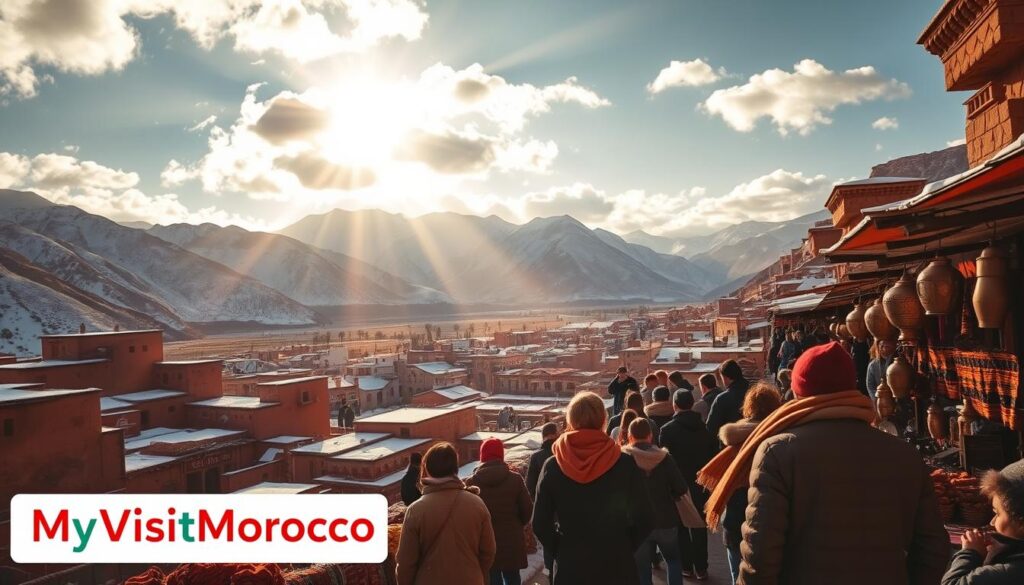
Morocco’s weather changes with its geography. Coastal areas like Casablanca and Rabat have mild weather, from 45°F to 65°F. The Atlas Mountains get a lot of snow, perfect for winter sports.
Winter Festivals and Holiday Celebrations
Winter is a great time to see Morocco’s culture. The Eid al-Adha is celebrated with lots of enthusiasm. You can also catch the Marrakech International Film Festival in December or January.
Pros and Cons of Winter Travel
Traveling to Morocco in winter has good and bad points. You can enjoy the weather, see snow, and join festivals. But, some places might be hard to reach, and some places might be closed.
| Region | Weather Conditions | Activities |
|---|---|---|
| Coastal Areas | Mild temperatures (45°F – 65°F) | City tours, cultural visits |
| Atlas Mountains | Snowfall | Winter sports, skiing |
| Desert Regions | Cool temperatures (40°F – 70°F) | Desert excursions, stargazing |
Regional Guide: Best Times to Visit Moroccan Cities
Planning a trip to Morocco? Knowing when to visit its cities is key. Morocco’s landscapes and climates vary greatly. This means the best time to visit changes from one place to another. Whether you love Marrakech’s energy, Fes and Meknes’ history, or Merzouga’s desert, timing is everything.
Marrakech: Optimal Visiting Seasons
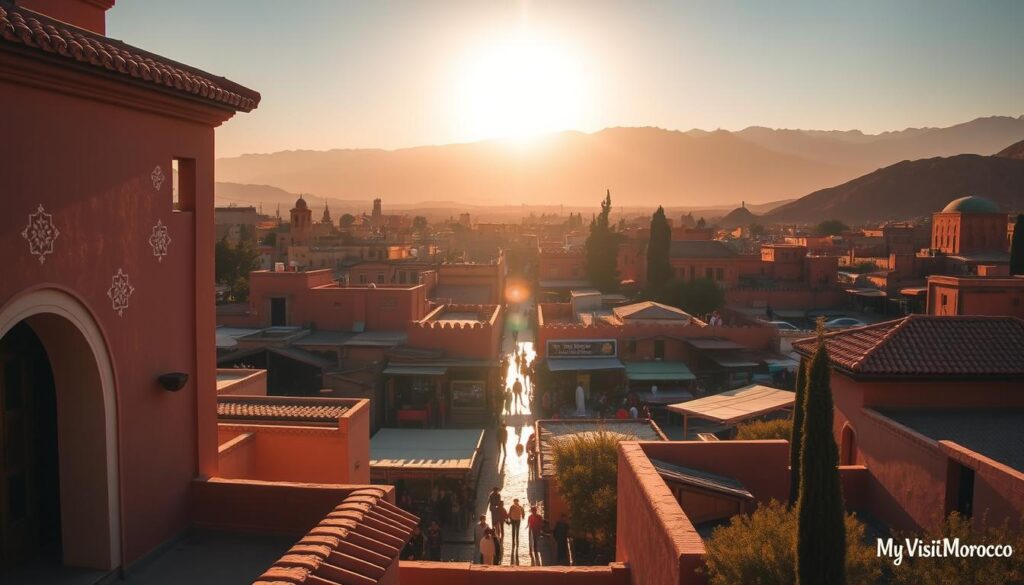
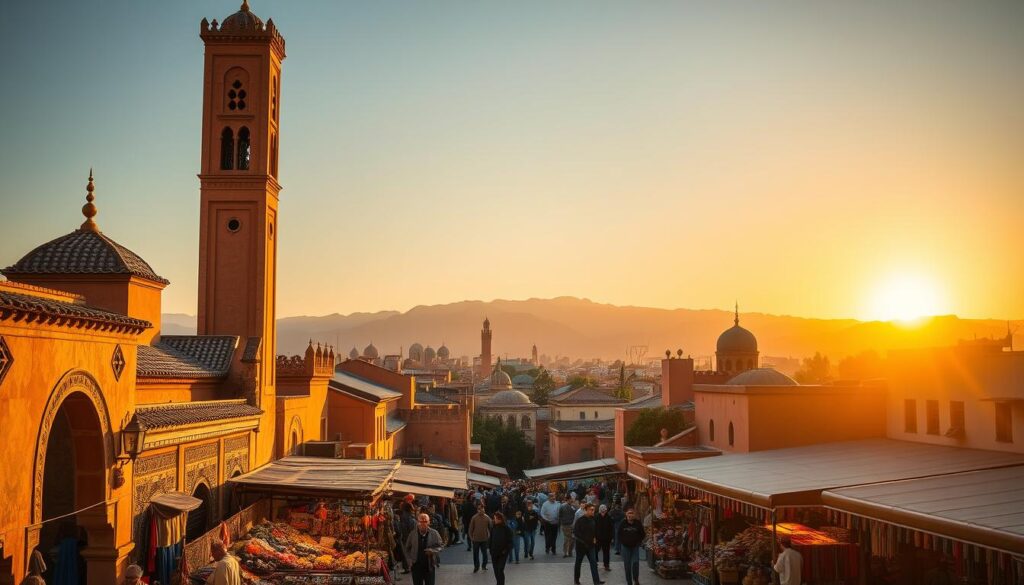
Marrakech is lively and best seen in spring (March to May) or fall (September to November). These times have nice weather, perfect for seeing the souks and Majorelle Garden. Spring is full of flowers and mild weather, while fall is warm but not hot, great for outdoor fun.
Fes and Meknes: When to Explore
Fes and Meknes are rich in history and culture. Spring is the best time to visit, with mild weather for exploring the medinas and landmarks. Fall is also good, with pleasant weather for a comfortable visit.
Coastal Cities: Casablanca, Rabat, and Essaouira
Casablanca, Rabat, and Essaouira have a milder climate all year. Casablanca and Rabat are perfect for those who like milder weather. Essaouira is great for surfers with its windy conditions. You can visit these cities anytime, depending on your mood.
Desert Regions: Merzouga and Zagora
Merzouga and Zagora are best in the cooler months, October to February. The weather is easier to handle, perfect for desert adventures. Stay away in summer because it’s too hot.
Traveling to the Sahara Desert: Seasonal Considerations
To enjoy your Sahara Desert trip, knowing the best times and how to prepare is key. The Sahara is a unique place that needs careful planning because of its extreme weather.
When planning, think about the seasons and how they affect your trip. The desert’s huge size means different areas have different conditions.
Best Months for Desert Excursions
The best time for desert excursions is from October to February. The weather is cooler, making it easier to explore and enjoy activities like camel trekking or camping.
| Month | Average High Temperature | Average Low Temperature |
|---|---|---|
| October | 28°C (82°F) | 15°C (59°F) |
| November | 23°C (73°F) | 10°C (50°F) |
| December | 20°C (68°F) | 7°C (45°F) |
| January | 19°C (66°F) | 6°C (43°F) |
| February | 22°C (72°F) | 8°C (46°F) |
Preparing for Desert Climate Extremes
Even in the cooler months, the desert’s climate can be extreme. Sandstorms can happen, and it can get cold at night. Always wear layers, including warm clothes for the evenings. Bring goggles and masks to protect yourself from sandstorms.
Knowing and preparing for these seasonal factors will make your Sahara Desert trip unforgettable.
Morocco’s Major Festivals and When to Experience Them
Morocco’s diverse culture shines through its many festivals and celebrations. All year, the country hosts events that show off its rich heritage and traditions.
Religious Festivals and Celebrations
Morocco is mostly Muslim, and its big festivals are often religious. Eid al-Fitr marks the end of Ramadan, a holy month of fasting. It’s celebrated with feasting, gifts, and prayers together.
Eid al-Adha honors Abraham’s sacrifice. These festivals deeply connect with Moroccan culture, giving a glimpse into its spiritual side.
A local expert says, “Morocco’s religious festivals are more than spiritual; they’re times of joy and community.”
“The atmosphere during Eid is truly magical, with families coming together and sharing meals.”
Cultural and Music Festivals
Morocco is alive with cultural and music festivals. The Marrakech International Film Festival is a big deal, drawing filmmakers and movie lovers worldwide. The Fez Festival of World Sacred Music celebrates music’s universal language, featuring musicians from everywhere.
These events highlight Morocco’s cultural richness and its power to unite through art.
| Festival | Location | Date |
|---|---|---|
| Marrakech International Film Festival | Marrakech | December |
| Fez Festival of World Sacred Music | Fez | June |
Food and Harvest Festivals
Morocco’s food heritage is celebrated in many festivals. The Rose Festival in El Kelaa M’Gouna is famous, with rose products and rose harvesting. The Orange Festival in Berkane celebrates citrus harvests with music and dance.
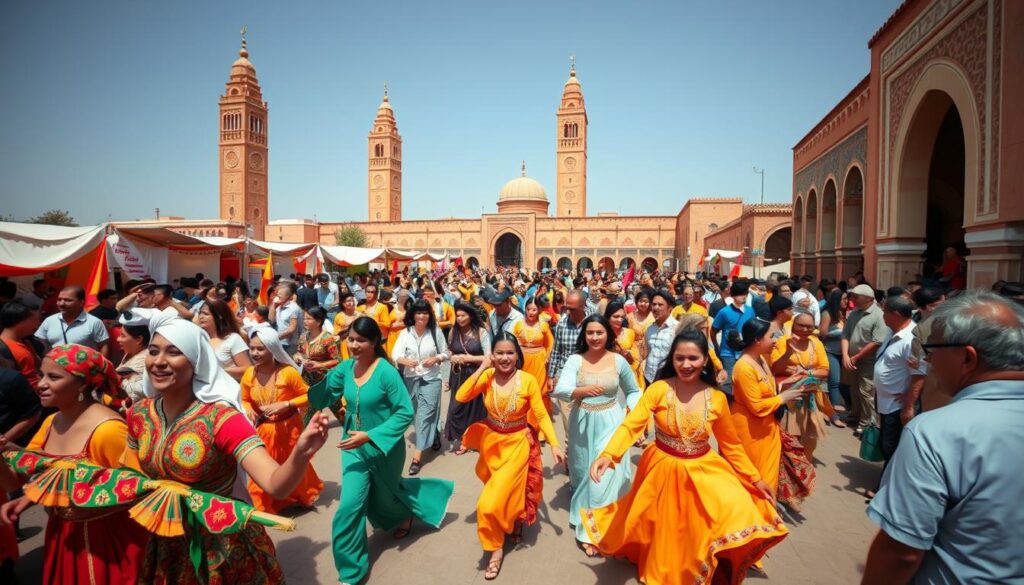
Visiting Morocco’s festivals can make your trip unforgettable. You’ll learn a lot about the country’s culture and traditions. Whether you’re into religious events, cultural happenings, or food, Morocco has a festival for you.
Budget Travel: Finding the Best Value Seasons
Traveling to Morocco can cost a lot, depending on the season. It’s key to pick the best time for a budget trip. Knowing when prices are lower can help you save money.
High Season vs. Low Season Pricing
Summer and holidays are Morocco’s high season. Prices for places to stay and tourist services go up. But, winter is the low season, with cheaper rates. Some spots might be closed or open less.
| Season | Price Range | Characteristics |
|---|---|---|
| High Season (Summer, Holidays) | High | Peak tourist season, higher demand, and prices |
| Low Season (Winter) | Low | Fewer tourists, lower prices, some attractions closed |
| Shoulder Season (Spring, Fall) | Moderate | Balanced weather and prices, fewer crowds |
Shoulder Season: The Best of Both Worlds
The shoulder season, spring and fall, is perfect. You get nice weather and lower prices. It’s great for seeing Morocco’s cities and nature without the crowds.
For more tips on planning your trip, check out Nomadic Matt’s Morocco Travel Guide.
Choosing the right season makes your Morocco trip more affordable and fun.
Packing Tips for Different Moroccan Seasons
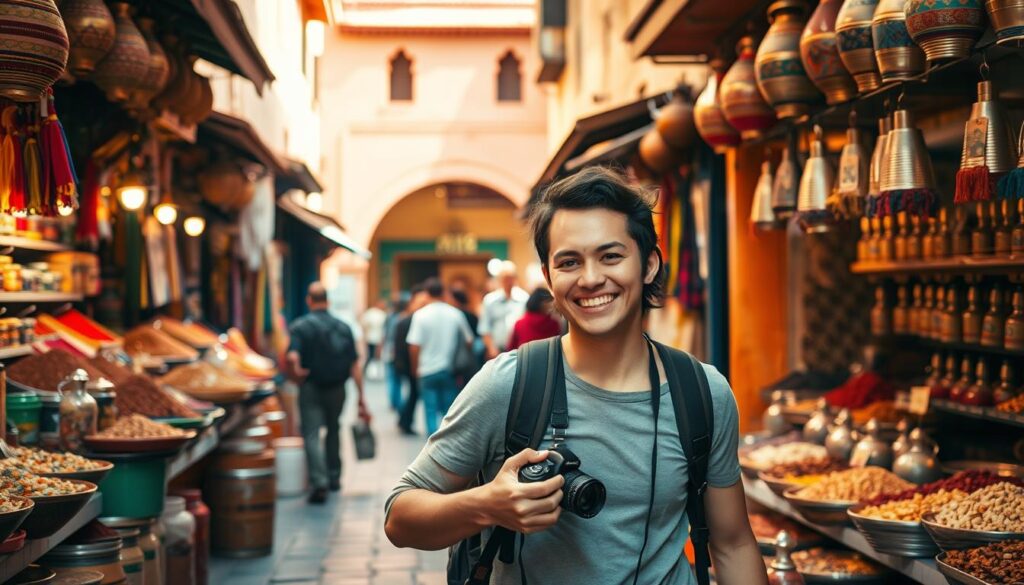
Morocco’s climate changes a lot, so packing the right things is key for a comfy trip. Knowing the seasons and local customs helps you get ready for a great Moroccan adventure.
Essential Items Year-Round
There are some things you should always take to Morocco, no matter the season. These include comfy walking shoes, sun protection (like sunglasses and sunscreen), and a refillable water bottle. Comfortable clothing that you can layer is also a good idea. It lets you adjust to different temperatures and places.
Seasonal Packing Lists
Your packing list will change a lot based on the season you visit.
- For summer (June to August), pack light, airy clothes. Don’t forget a scarf or shawl to shield from the sun.
- In winter (December to February), you’ll need warmer clothes. This is especially true for the cooler mornings and evenings.
- Spring (March to May) and autumn (September to November) are usually mild. But, it’s still wise to bring layers for when it gets chilly.
| Season | Recommended Clothing |
|---|---|
| Summer | Light, airy clothes, sun hat, sunglasses |
| Winter | Warmer layers, coat, gloves (for the Atlas Mountains) |
| Spring/Autumn | Layers, comfy shoes, light jacket |
Cultural Considerations for Clothing
Morocco is a conservative country, and dressing modestly shows respect. Make sure your clothes cover your shoulders and knees, especially when visiting mosques or rural spots. Modest dressing respects local customs and lets you blend in. It also makes your experience more authentic.
Traveling to Morocco During Ramadan
Ramadan in Morocco is a special time that visitors should understand and respect. It’s a month of fasting, reflection, and spiritual growth for Muslims. This time greatly affects the local culture and daily life.
What to Expect During the Holy Month
During Ramadan, many restaurants and cafes close during the day. The atmosphere is more subdued. But, in the evenings, cities come alive with vibrant markets and special foods.
You can expect a unique cultural experience. Many Moroccans show hospitality to visitors during this time.
It’s important to be mindful of the fasting period and dress modestly. Avoid eating and drinking in public during the day. This shows respect to those fasting.
Tips for Respectful Travel During Ramadan
To have a positive experience, consider these tips: Dress modestly, covering your shoulders and knees. Avoid public displays of affection and be patient with locals who may be fasting.
Learning a few basic Arabic phrases, like “Ramadan Mubarak” (Blessed Ramadan), shows respect. For more detailed guidance, check out Morocco Mama’s guide.
Weather-Related Travel Challenges in Morocco
Knowing about Morocco’s weather challenges is key for a great trip. The climate can change quickly, so being ready is important.
Dealing with Heat Waves and Sandstorms
In summer, Morocco’s desert gets very hot, over 40°C (104°F). It’s hard to be outside. Drink lots of water, wear light clothes, and stay inside when it’s hottest.
Sandstorms are also a problem in the desert. They make it hard to see and breathe. Here’s how to stay safe:
- Check the weather forecast
- Wear masks and goggles
- Make sure your car is ready for the desert
Table: Precautions for Heat Waves and Sandstorms
| Precaution | Heat Waves | Sandstorms |
|---|---|---|
| Stay Hydrated | Yes | Yes |
| Wear Protective Clothing | Yes | Yes |
| Plan Indoor Activities | Yes | No |
| Use Masks and Goggles | No | Yes |
Navigating Occasional Rainfall and Flooding
Morocco is usually dry, but it rains sometimes, especially in winter. This rain can cause flooding in low-lying areas. If it floods, don’t drive or walk in the water. It might be dirty and have dangers.
Keep up with local weather news and listen to what local officials say.
“The key to a successful trip to Morocco is being prepared for its varied climate conditions. Understanding and respecting the local weather patterns can greatly enhance your travel experience.”
Health and Safety Considerations by Season
Morocco’s climate and geography change a lot with the seasons. Knowing the health risks for your visit is key. It’s important to understand the dangers each season brings.
Summer Health Precautions: Heat and Hydration
In summer, Morocco’s desert gets very hot. To stay safe, drink lots of water and avoid hard work when it’s hottest. Watch for signs of heat exhaustion and heatstroke. If you see these, get help right away.
| Summer Health Risk | Precaution |
|---|---|
| Dehydration | Drink plenty of water |
| Heat Exhaustion | Rest in cool areas, seek shade |
| Heatstroke | Seek immediate medical attention |
Winter Travel Safety Tips
In winter, Morocco’s mountains can be cold. Some places might even snow. Wear the right clothes and be careful in the mountains. Always check the weather before you go.
Year-Round Health Recommendations
Some health tips are good for any time of year in Morocco. Make sure your vaccinations are current. Protect yourself from insect-borne illnesses. And don’t forget a basic first-aid kit when you travel.
Conclusion: Planning Your Perfect Moroccan Adventure
When planning your trip to Morocco, think about when you want to go. The country’s weather and landscapes change with the seasons. You can see bustling cities, enjoy the coast, or explore the desert.
Knowing Morocco’s weather and cultural events helps you plan your trip. Whether you want a calm vacation or an exciting adventure, Morocco has it all.
This guide helps you get started on planning your trip. Think about the weather, festivals, and local sights for a great experience. As you prepare, choose the best time to visit and make your trip unforgettable.



 Covers cities, coast, mountains, desert & food