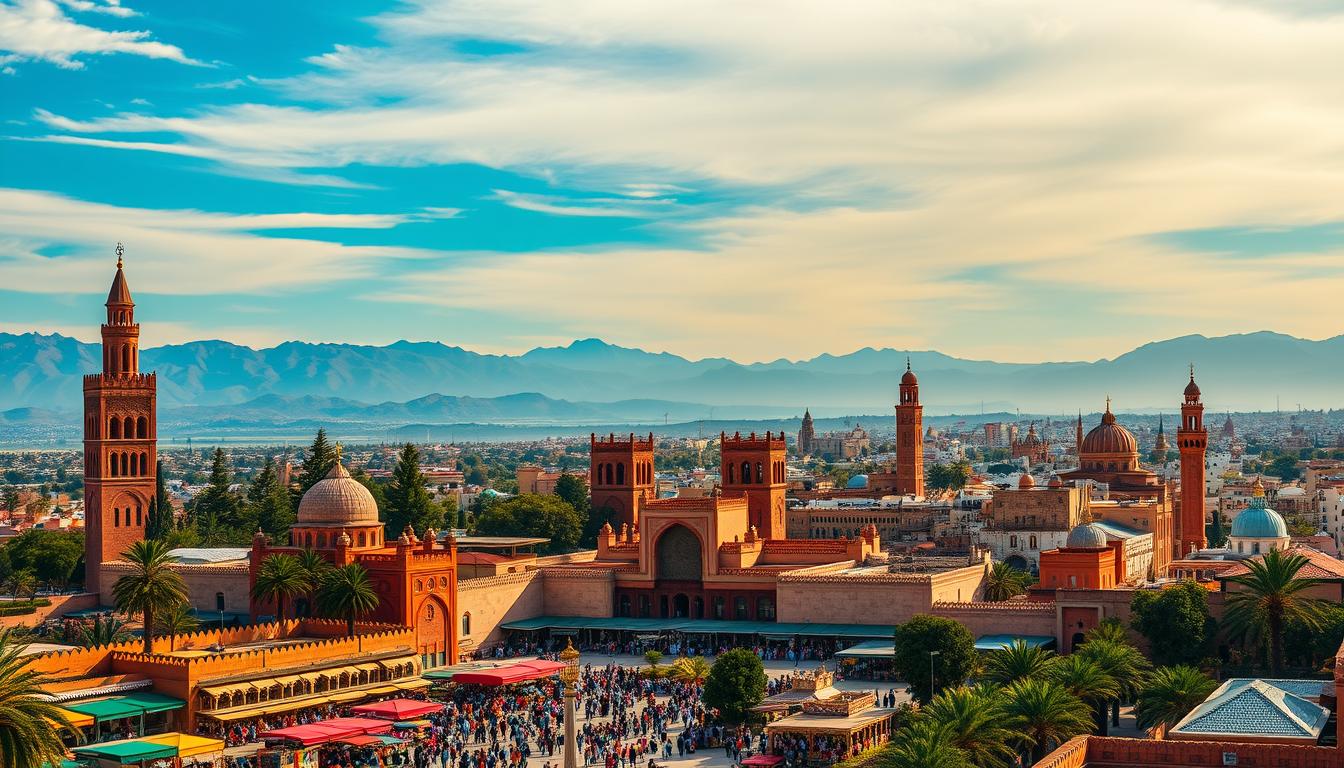
Morocco is in North Africa’s Maghreb region. It’s famous for its rich culture and beautiful landscapes. You can see vibrant cities, ancient history, and stunning nature in Morocco.
From Fès’s busy souks to the calm Sahara Desert, Morocco has a lot to offer. It’s a top spot for travelers.
Morocco’s culture is a mix of Berber, Arab, and European. Its geography is just as varied, with the Atlas Mountains and coastlines by the Atlantic and Mediterranean. Exploring Morocco shows why it’s loved by so many.
Key Takeaways
- Morocco’s rich cultural heritage and diverse geography make it a unique destination.
- The country’s vibrant cities, such as Casablanca and Rabat, offer a blend of modern and traditional experiences.
- Morocco’s natural beauty, including the Atlas Mountains and Sahara Desert, attracts travelers worldwide.
- The country’s history, influenced by Berbers, Arabs, and Europeans, is reflected in its architecture and cuisine.
- Morocco’s coastal exposure to the Atlantic Ocean and Mediterranean Sea adds to its appeal.
The Enchanting Kingdom of Morocco
Morocco sits at the crossroads of Africa, Europe, and the Middle East. This spot has made it a mix of many cultures. It’s a place of great interest to explore.
A Brief Overview of Morocco’s Global Significance
Morocco is known for its rich history and vibrant culture. Its cultural identity comes from the Berbers, Arabs, and Europeans. This mix makes Morocco a unique place.
Its rich history and cultural diversity draw many visitors. Morocco plays a big role in global affairs.
- Rich cultural heritage
- Diverse historical influences
- Vibrant traditions and customs
Morocco’s Unique Position Between Africa, Europe, and the Middle East
Morocco’s location is key for trade and cultural exchange. It sits between Africa, Europe, and the Middle East. This spot has helped Morocco blend different cultures.
The mix of African, European, and Middle Eastern cultures is seen in Morocco’s architecture, food, and art. It’s a place that draws in those who love culture.
Some key aspects of Morocco’s unique position include:
- Strategic trade routes
- Cultural exchange and diversity
- A blend of architectural styles
Morocco’s Ancient Imperial Cities
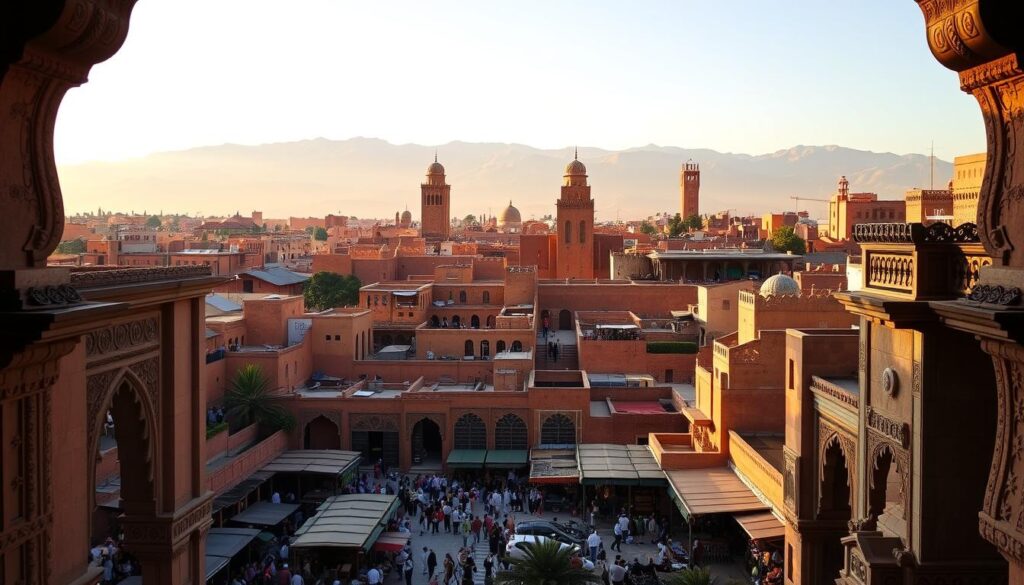
Exploring Morocco’s ancient imperial cities reveals a world full of vibrant culture and history. These cities are the heart of Morocco, showcasing its rich heritage through architecture, traditions, and history.
Marrakech: The Red City
Marrakech is famous for its red buildings and lively vibe. The city’s energy is best seen at Jemaa el-Fnaa Square, a UNESCO World Heritage site.
Jemaa el-Fnaa Square and Its Vibrant Atmosphere
Jemaa el-Fnaa is more than a square; it’s an experience. At night, it turns into a lively spot with street performers, food stalls, and excitement.
The Majestic Koutoubia Mosque
The Koutoubia Mosque stands tall in Marrakech. Its impressive minaret is a must-see, offering a peek into Morocco’s cultural heritage.
Fez: The Medieval Metropolis
Fez is a city that keeps its ancient charm alive. Its ancient medina, with its narrow streets, shows its rich history.
The World’s Oldest University: Al-Qarawiyyin
Al-Qarawiyyin University, founded in 859 AD, is the world’s oldest university still in operation. For more on Fez, visit Crossroads Cultural Exchange.
The Ancient Medina of Fez
The medina of Fez is a maze of ancient streets. It’s filled with historical landmarks and traditional crafts, offering a true Moroccan experience.
Rabat and Meknes: Royal Capitals
Rabat and Meknes, both former capitals, are rich in history and royal heritage. Rabat boasts beautiful beaches and historic sites. Meknes is known for its ancient architecture and historical significance.
| City | Historical Significance | Main Attractions |
|---|---|---|
| Marrakech | Known as the Red City, rich in cultural heritage | Jemaa el-Fnaa, Koutoubia Mosque |
| Fez | Medieval metropolis, ancient medina | Al-Qarawiyyin University, Ancient Medina |
| Rabat | Current capital, historical sites | Casbah of the Udayas, Hassan Tower |
| Meknes | Former capital, ancient architecture | Bab Mansour, Mausoleum of Moulay Ismail |
The Mesmerizing Sahara Desert Experience
Morocco’s Sahara Desert is a magical place. Its golden sands and starry skies make it feel like another world. It’s a top natural attraction in Morocco, offering many experiences that visitors love.
Camel Treks and Berber Camps
Take a camel trek across the Sahara’s huge dunes. It’s like traveling on old trade routes. When the sun sets, you’ll reach a Berber camp.
There, you’ll find warm hospitality and delicious food. The Berbers share their stories and traditions. It’s a chance to see their unique way of life.
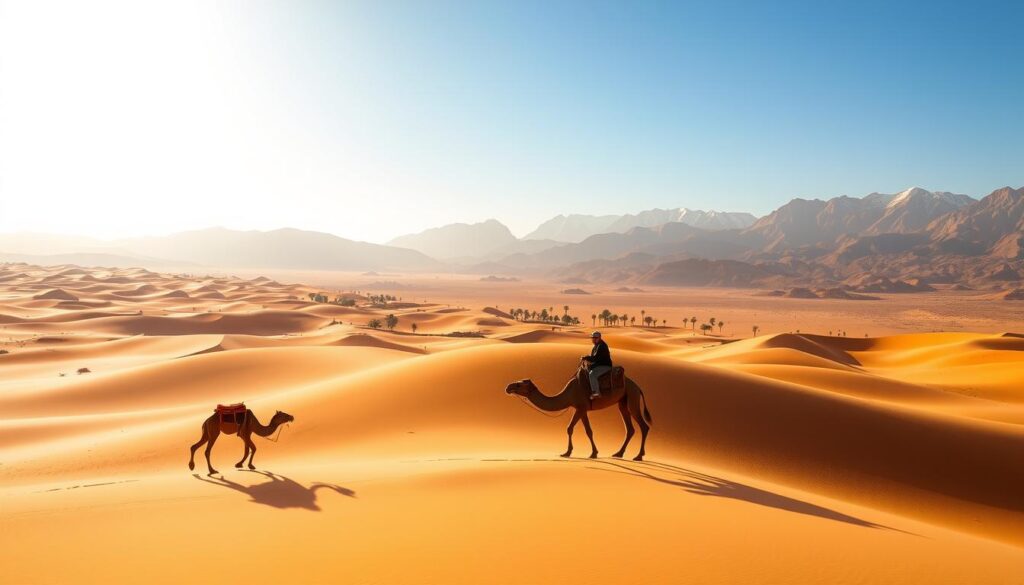
Stargazing in the World’s Largest Hot Desert
The Sahara’s dark skies are perfect for stargazing. With little light pollution, the stars shine brightly. It’s an experience you won’t forget.
As you look up at the stars, the desert’s calm surrounds you. It’s a moment of deep connection with nature.
Erg Chebbi and Erg Chigaga: Morocco’s Famous Sand Dunes
Erg Chebbi and Erg Chigaga are Morocco’s stunning sand dunes. Erg Chebbi is near Merzouga and loved by tourists. Erg Chigaga, near M’Hamid, is quieter.
Both places offer sandboarding, camel rides, and the chance to enjoy the desert’s beauty.
| Experience | Location | Highlights |
|---|---|---|
| Camel Treks | Erg Chebbi, Merzouga | Sunset rides, Berber camps |
| Stargazing | Desert-wide | Minimal light pollution, clear skies |
| Sandboarding | Erg Chebbi, Erg Chigaga | Adventure, scenic views |
Exploring the Sahara is an amazing mix of adventure, culture, and nature. It’s an experience that will leave you with memories of Morocco’s beautiful desert.
Moroccan Cuisine: A Feast for the Senses
Exploring Morocco reveals a world of flavors. The cuisine reflects the country’s history and culture. It’s a mix of Arab, Mediterranean, and African tastes. This blend creates dishes that excite your senses.

Tagine: Morocco’s Signature Dish
The tagine is a famous Moroccan dish. It’s cooked in an earthenware pot. The stew has meat, veggies, and dried fruits, all spiced up.
This dish is a big part of Moroccan culture. It’s often served at special times.
Mint Tea: The Ceremony and Tradition
Mint tea is a big part of Moroccan life. It’s a sign of hospitality. Making mint tea is a special ritual.
It involves green tea, fresh mint, and sugar. The tea is served in small glasses. It’s enjoyed during social events.
Couscous: The Friday Tradition
Couscous is a key dish in Morocco, eaten on Fridays. It’s made from semolina flour. It’s served with veggies, meat, and sauce.
Making couscous is hard work. It’s steamed over a flavorful broth.
Spices and Flavors of Moroccan Cooking
Moroccan cooking is known for its spices. Spices like cumin, coriander, cinnamon, and ginger are used. They create deep, rich flavors.
Visit Morocco to taste this rich heritage.
The Iconic Blue City of Chefchaouen
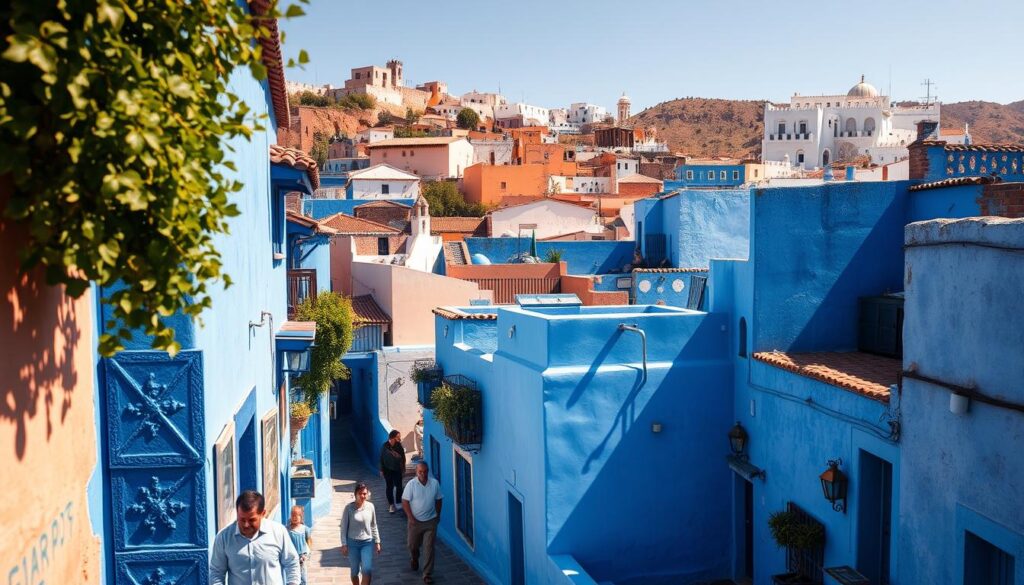
In Morocco’s Rif Mountains, Chefchaouen is a town famous for its blue buildings. It’s a peaceful spot for those looking to escape and enjoy nature.
The History Behind the Blue Walls
The blue walls in Chefchaouen started in the 1930s. Some say it’s from the Jewish community, who saw blue as the sky and heaven. Today, it draws artists and tourists.
Exploring Chefchaouen’s Picturesque Streets
Walking through Chefchaouen’s streets, you’ll see blue houses and flowers. It’s a calm place to explore, with alleys and local artists. Don’t miss the Kasbah and its views.
| Aspect | Description |
|---|---|
| History | Founded in 1471, Chefchaouen has a rich history influenced by various cultures. |
| Architecture | Known for its blue-painted buildings, creating a unique and picturesque landscape. |
| Attractions | Kasbah, Spanish Mosque, and surrounding natural beauty. |
Moroccan Craftsmanship and Artisanal Traditions
Moroccan artisans are known for their skill and creativity. They work in leather tanneries and weave intricate carpets. Their work shows the country’s rich cultural heritage, passed down through generations.

Leather Tanneries of Fez
Fez is famous for its ancient leather tanneries. Here, traditional techniques are used to make high-quality leather goods. Visitors can see the tanning process and buy handmade leather products.
The culture of Morocco values artisanal traditions. Leatherwork is a big part of this.
Carpet Weaving and Textile Arts
Moroccan carpet weaving is highly respected. It shows the country’s Berber heritage with its intricate designs and vibrant colors. Artisans use traditional looms to create beautiful carpets.
The art of textile production is key to Moroccan culture. Many families pass down their weaving techniques.
Pottery, Metalwork, and Woodcarving
Moroccan artisans are also skilled in pottery, metalwork, and woodcarving. These crafts feature intricate designs and vibrant colors. They blend traditional and modern techniques.
Visitors can explore souks and workshops to see the diversity of Moroccan craftsmanship. This craftsmanship is a big part of the country’s architectural heritage, influencing Moroccan architecture.
The Magnificent Atlas Mountains
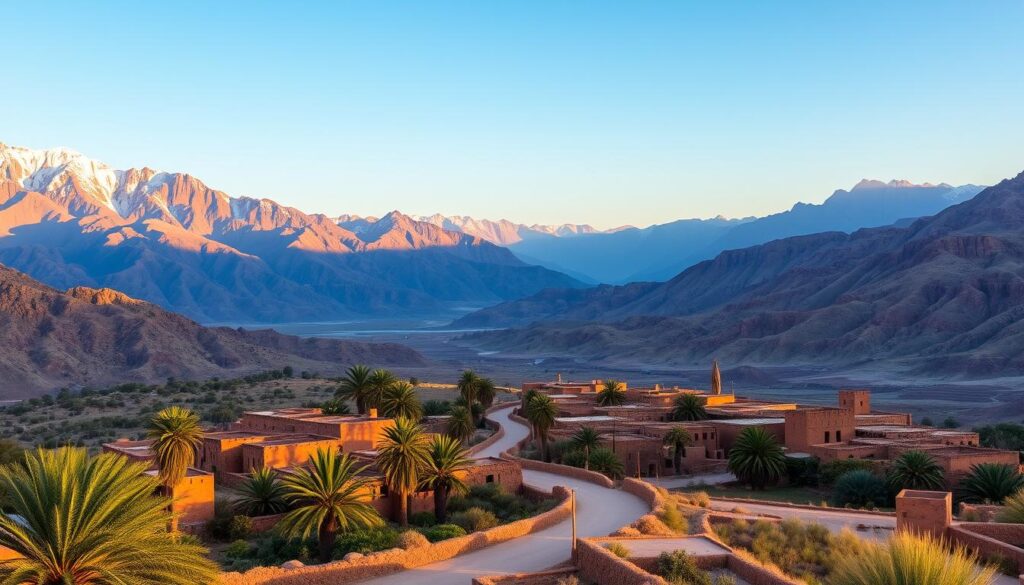
The Atlas Mountains stretch across Morocco, offering a stunning view. You can enjoy the outdoors through various activities.
Hiking and Outdoor Adventures
The Atlas Mountains are perfect for hikers and those who love adventure. You can go on guided treks, see beautiful valleys, and try rock climbing and mountain biking. For tips on planning your trip, check out our Morocco destination guides for morocco travel tips.
Berber Villages and Mountain Culture
The Atlas Mountains have traditional Berber villages. Here, you can dive into local culture. Visit villages, learn about Berber history and customs, and try traditional food.
Mount Toubkal: North Africa’s Highest Peak
Mount Toubkal is a must for experienced hikers. It’s the highest peak in North Africa, offering amazing views. Exploring the valleys around it adds to the beauty of the Atlas Mountains, making it a top morocco tourist attraction.
What Is Morocco Famous For? Its Vibrant Souks and Markets
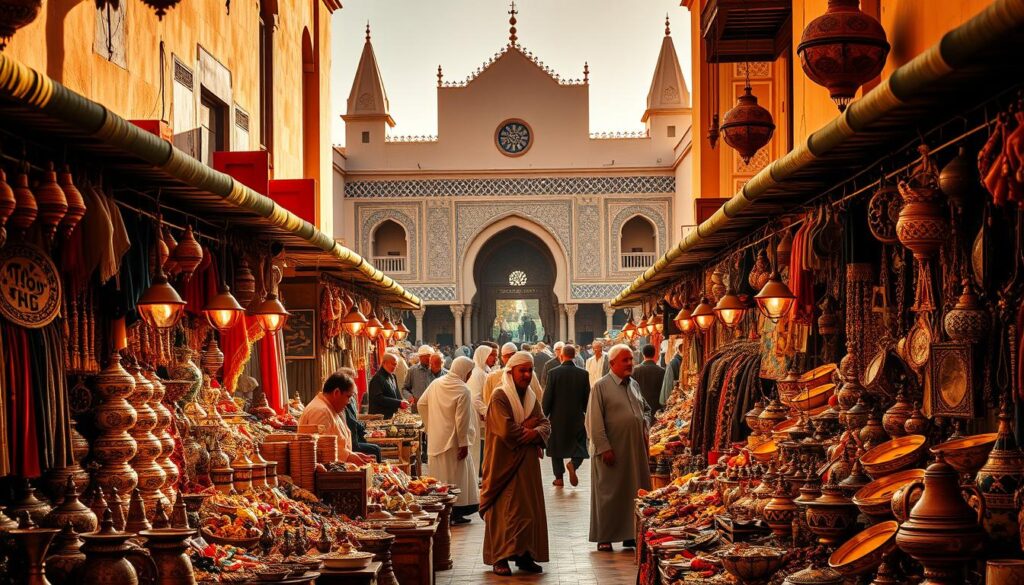
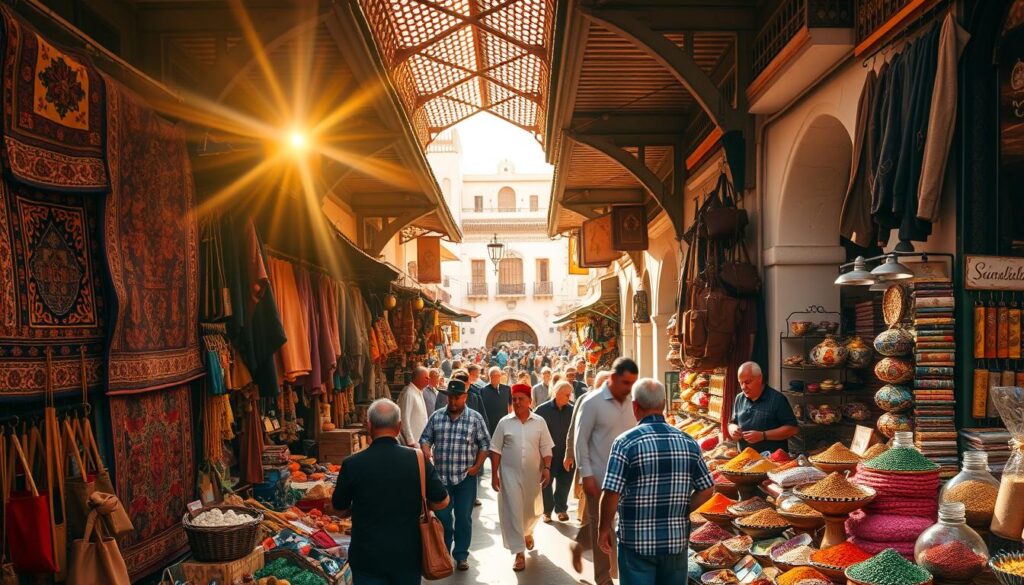
Morocco’s souks and markets are a key part of its culture. They offer a world of colors, smells, and sounds. You’ll find traditional goods like textiles, ceramics, spices, and perfumes.
Navigating the Maze-Like Medinas
The medinas in Morocco’s cities are like mazes. Narrow alleys and winding streets lead to discovery. You’ll find souks for leather, metalwork, and spices.
Consider a local guide to help you through the medina. They know the best paths.
The Art of Haggling in Moroccan Markets
Haggling is a big part of souk life in Morocco. Vendors expect you to negotiate. It’s all part of the fun.
To haggle well, start with a lower price than you want to pay. Be ready to meet in the middle. Stay friendly and respectful to get a good deal.
Famous Souks and What to Buy
Some top souks are in Marrakech, Fez, and Rabat. They have traditional goods like crafts, textiles, and souvenirs. Look for zellige tiles, carved wood, and colorful baskets.
| Souk | Location | Specialties |
|---|---|---|
| Souk Semmarine | Marrakech | Textiles, carpets, and handicrafts |
| Souk el Attarine | Fez | Spices, perfumes, and traditional medicine |
| Souk al Maghrib | Rabat | Handicrafts, souvenirs, and local snacks |
Exploring Morocco’s souks and markets is a journey into rich culture and craftsmanship. Whether for souvenirs or to dive into local culture, Morocco’s markets are unforgettable.
Moroccan Architecture and Design
Exploring Morocco reveals a unique architectural heritage. It combines Islamic, Moorish, and Berber styles. These styles are seen in the intricate details, vibrant colors, and balanced proportions of Moroccan buildings.
Intricate Mosaic Tilework (Zellige)
Moroccan architecture is famous for its Zellige, or mosaic tilework. These small, glazed tiles form complex geometric patterns. They create a colorful display on walls, floors, and ceilings. The art of Zellige has been around for centuries, needing great skill and precision.
Riads: Traditional Moroccan Houses
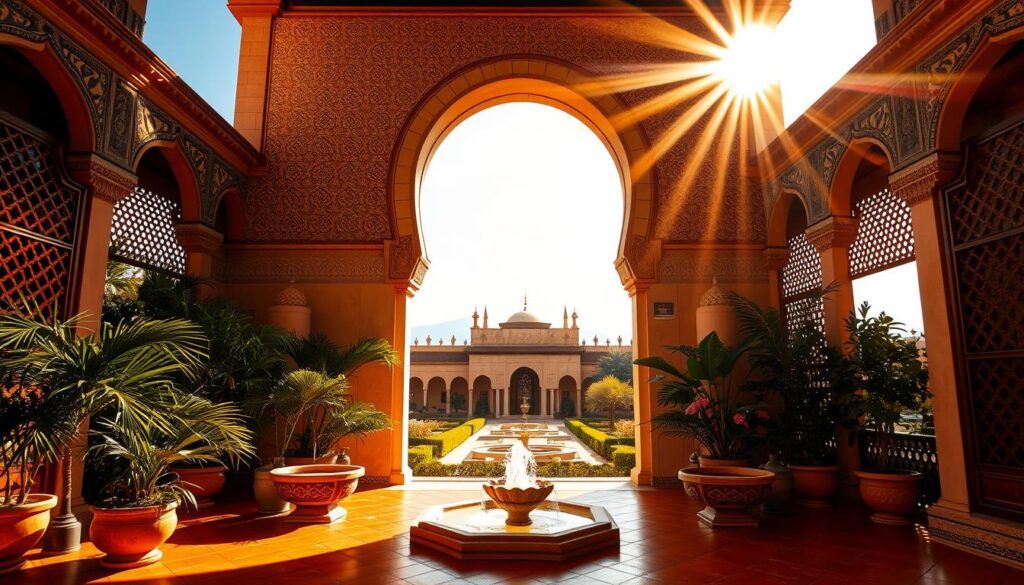
A riad is a traditional Moroccan house with a garden or courtyard inside. Originally homes, many riads now serve as hotels, restaurants, and cultural centers. They offer a peaceful atmosphere with their beautiful gardens and fountains.
Moorish and Islamic Architectural Influences
Moroccan architecture has been influenced by Moorish and Islamic styles. You’ll see arches, domes, and minarets. The intricate calligraphy and geometric patterns show the country’s rich cultural heritage.
The Stunning Gardens of Morocco
Moroccan gardens are known for their beauty and calm. Water features like fountains and ponds add to the peaceful vibe. The gardens are filled with fragrant flowers, herbs, and citrus trees, creating a peaceful escape from the outside world.
The Rich History of Morocco
Exploring Morocco reveals a country with a rich and varied history. This history has shaped its unique identity. Morocco’s past is a mix of different cultures and empires.
Ancient Berber Heritage
The Berber people have been at the heart of Moroccan identity since ancient times. Their culture and traditions still influence the country. The Berbers were known for their bravery and resistance to outsiders.
Islamic Golden Age in Morocco
Islam arrived in Morocco in the 7th century, marking a period of cultural and intellectual growth. Important centers of learning, like the University of Al Quaraouiyine in Fez, emerged. It’s still one of the oldest universities in the world.
Colonial Influences and Independence
Morocco was ruled by France and Spain from the early 20th century until it gained independence in 1956. This period greatly influenced the country’s architecture, education, and culture. The mix of colonial and traditional influences has created Morocco’s unique identity.
| Period | Significant Events | Cultural Impact |
|---|---|---|
| Ancient Berber | Resistance to external rule | Shaped Moroccan identity |
| Islamic Golden Age | Rise of centers of learning | Intellectual and cultural growth |
| Colonial Era | French and Spanish rule | Influenced architecture, education, and culture |
Morocco’s Famous Landmarks and UNESCO Sites
Exploring Morocco, you’ll find many historical sites recognized by UNESCO. These landmarks show Morocco’s rich culture and draw visitors worldwide. We’ll look at key sites like Ait Ben Haddou, Volubilis, and the Hassan II Mosque.
Ait Ben Haddou: The Famous Kasbah
Ait Ben Haddou is a historic kasbah on the old route between the Sahara and Marrakech. It’s a great example of pre-Saharan architecture, seen in many films and TV shows. Its earthen buildings, set in a fortified village, show the Berber culture.
Volubilis: Roman Ruins in North Africa
Volubilis is a site with some of North Africa’s best Roman ruins. This ancient Roman city was a key trade and culture center. Its remains give us a peek into the Roman Empire’s history in Morocco.
The Hassan II Mosque in Casablanca
The Hassan II Mosque in Casablanca is a landmark and a marvel of Moroccan architecture. Its minaret and zellij tilework make it a symbol of Morocco’s cultural heritage.
| Landmark | Location | Significance |
|---|---|---|
| Ait Ben Haddou | Ouarzazate Region | Historic kasbah and UNESCO site |
| Volubilis | Meknes Region | Roman archaeological site |
| Hassan II Mosque | Casablanca | Iconic mosque and architectural marvel |
These landmarks show Morocco’s diverse history and culture. They highlight its architectural and historical importance globally. Visiting these sites gives a unique look into Morocco’s rich heritage and its role as a cultural and historical center.
Moroccan Hammams: The Traditional Bath Experience
In Morocco, the hammam is more than a bathhouse. It’s a cultural gem that shows the country’s deep heritage. For centuries, hammams have been key to Moroccan life. They offer a place for socializing, cleansing, and unwinding.
Cultural Significance
Hammams hold a special place in Moroccan culture. They’re not just for personal hygiene. They’re where people come together to chat, relax, and refresh. For women, hammams are especially important before big events like weddings.
What to Expect
A visit to a hammam is a unique and refreshing experience. It starts with a warm welcome and a scrub with black soap and a kessa glove. Then, you get a thorough rinse and a soothing massage. Some hammams even offer extra services like aromatherapy and exfoliation.
| Hammam Experience | Description | Benefits |
|---|---|---|
| Black Soap Scrub | Exfoliating treatment using traditional black soap | Removes dead skin cells, leaving skin smooth |
| Kessa Glove Massage | Massage using a loofah glove | Improves circulation, relaxes muscles |
| Aromatherapy | Treatment using aromatic essential oils | Promotes relaxation, reduces stress |
Morocco’s Stunning Coastlines
Traveling along Morocco’s coast reveals a world of stunning beauty and rich culture. The coastline stretches along the Mediterranean and Atlantic Oceans. It offers a wide range of experiences for visitors.
Essaouira: The Windy City by the Sea
Essaouira is a charming coastal town famous for its windy weather, beautiful beaches, and lively arts scene. Visitors can enjoy water sports, explore the historic medina, and try the local cuisine. It features fresh seafood and traditional Moroccan dishes.
Mediterranean and Atlantic Beaches
Morocco’s beaches attract many tourists. The Mediterranean coast has calm, clear waters. The Atlantic coast is rougher and better for surfing. Popular spots include Tangier, Saidia, and Agadir.
Surfing and Water Sports in Morocco
Morocco is a favorite spot for surfers and water sports fans. The Atlantic coast has consistent waves. Surfing is especially popular in Taghazout, near Agadir. It’s a hub for surfers worldwide.
| Location | Main Attraction | Best Time to Visit |
|---|---|---|
| Essaouira | Windy beaches and vibrant arts scene | Spring and Autumn |
| Tangier | Mediterranean beaches and historic sites | Summer |
| Taghazout | Surfing and water sports | September to April |
Moroccan Music, Arts, and Festivals
Exploring Morocco’s culture reveals the importance of music, arts, and festivals. These elements weave together to form the country’s identity. Moroccan culture is a mix of various influences, seen in its music, arts, and festivals.
Gnawa Music and Its Cultural Importance
Gnawa music combines Berber, African, and Arabic traditions. It’s known for its deep rhythms and is played at cultural and spiritual events. Gnawa music brings people together, fostering community and spiritual bonds.
Famous Festivals: Fez Sacred Music Festival and More
Morocco celebrates many festivals, showcasing its cultural richness. The Fez Sacred Music Festival is a highlight, with musicians from everywhere. Other festivals include the Marrakech Popular Arts Festival and the Essaouira Gnawa and World Music Festival.
Contemporary Moroccan Arts Scene
The modern arts scene in Morocco is booming. Artists draw from the country’s rich heritage, creating innovative works. From traditional crafts to modern art, Moroccan artists reflect the country’s diverse identity.
| Festival | Location | Description |
|---|---|---|
| Fez Sacred Music Festival | Fez | Features sacred music performances from around the world |
| Marrakech Popular Arts Festival | Marrakech | Celebrates traditional Moroccan arts and culture |
| Essaouira Gnawa and World Music Festival | Essaouira | Showcases Gnawa music and other world music genres |
“Morocco’s rich cultural heritage is reflected in its vibrant music scene, traditional arts, and lively festivals, making it a unique destination for cultural enthusiasts.”
Planning Your Visit to Morocco
Planning a trip to Morocco is more than booking flights and hotels. You need to know the country’s climate and cultural norms. Being prepared is key to a great trip.
Best Time to Visit Different Regions
Morocco’s weather changes a lot by region. Coastal areas are mild all year, perfect for any visit. But, the desert is best in spring (March to May) or autumn (September to November). Summer is very hot, and winter can be cold.
Essential Travel Tips for First-Time Visitors
Morocco can be both thrilling and confusing for first-timers. Here are some tips: always bargain at markets, dress modestly, and drink lots of water, especially in the desert or cities in summer.
| Region | Best Time to Visit | Tips |
|---|---|---|
| Coastal Areas | Year-round | Enjoy mild climate, explore cities like Essaouira |
| Desert Regions | Spring/Autumn | Be prepared for temperature extremes, camel treks |
| Mountain Regions | Summer | Hiking, explore Berber villages |
Navigating Cultural Differences and Etiquette
Respecting local customs is crucial for a smooth visit. Morocco is conservative, so dress modestly. A friendly greeting and a smile can make a big difference. Knowing some Arabic phrases can also improve your experience.
By keeping these tips in mind, you can have a respectful and fun trip to Morocco.
Conclusion: The Timeless Allure of Morocco
Morocco is a treasure trove of culture, landscapes, and cities. It has ancient cities and the Sahara Desert. These make it a top spot for travelers.
The country’s history shines through in its architecture and souks. Its mix of cultures offers a unique experience. You can explore mountains, coastlines, or try local food in Morocco.
Morocco is famous for its attractions. It’s known for its warm welcome, traditions, and beauty. Planning a trip to Morocco will show you why it’s loved by so many.



 Covers cities, coast, mountains, desert & food