
Visit Morocco
Start your adventure in Morocco with our detailed travel guide. This guide is packed with tips to make your trip memorable. You’ll explore Morocco’s history, culture, and stunning views.
When you plan your trip, you’ll see Morocco’s unique heritage and landscapes. Our guide will show you the best places to visit. From busy cities to peaceful nature, we’ve got you covered.
Key Takeaways
- Discover Morocco’s rich history and cultural heritage.
- Explore the diverse landscapes and vibrant cities.
- Get insider tips on planning your trip.
- Learn about the best times to visit.
- Find out how to navigate Morocco like a local.
Why Morocco Should Be Your Next Destination
Planning your next trip? Think about Morocco. It’s a place with diverse landscapes, rich culture, and friendly people. Morocco vacation packages show off its mix of African, Arab, and European cultures, drawing travelers from all over.
A Land of Diverse Landscapes
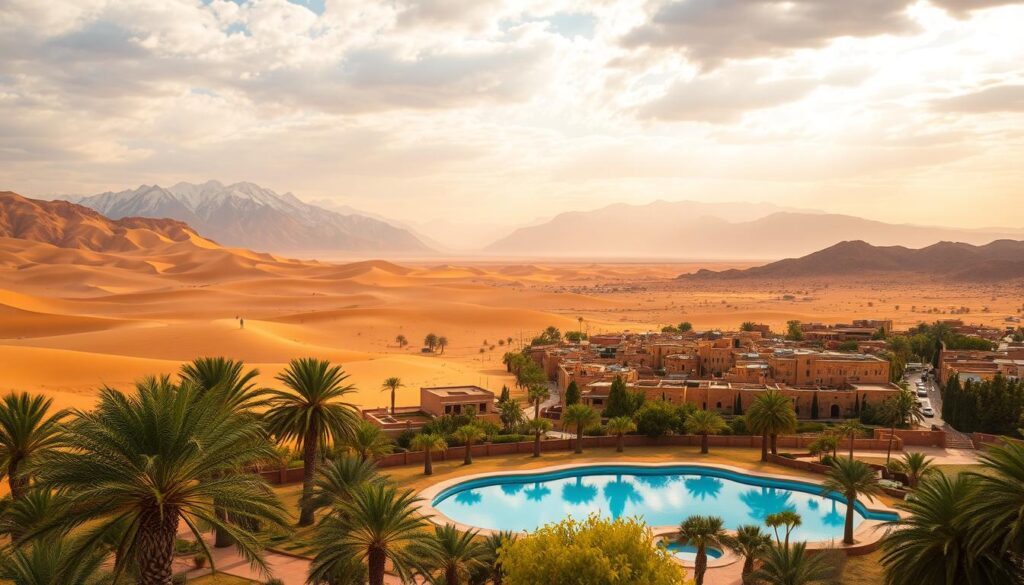
Morocco boasts a variety of landscapes. You’ll find the Atlas Mountains and the Sahara Desert. It also has coastal areas by the Atlantic and Mediterranean, offering different climates and environments. Adventure lovers will enjoy exploring mountains, deserts, and coastlines in Morocco.

Rich Cultural Heritage
Morocco’s culture is vibrant and rich. Its cities, landmarks, and crafts tell its story. Rabat, the capital, has historic sites like the Kasbah of the Udayas. Moroccan culture mixes Arab, Berber, and European traditions, seen in its buildings, food, and art.
Legendary Hospitality
Moroccans are famous for their warm welcome. They invite visitors into their homes and share their culture. The tradition of “ziyara” or visitation shows respect and generosity to guests. You can experience this hospitality by staying in riads or joining in local customs.
| Aspect | Description | Experience |
|---|---|---|
| Diverse Landscapes | Mountains, Deserts, Coastlines | Hiking, Camel Rides, Surfing |
| Cultural Heritage | Historic Sites, Traditional Crafts | Visiting Medina, Craft Workshops |
| Hospitality | Warm Welcome, Local Customs | Staying in Riads, Participating in Local Traditions |
Best Time to Visit Morocco
Morocco’s climate varies, so the best time to visit depends on what you want to do. You might want to see the cities, relax by the sea, or hike in the mountains. Knowing the weather patterns is crucial for a great trip.
Seasonal Weather Patterns
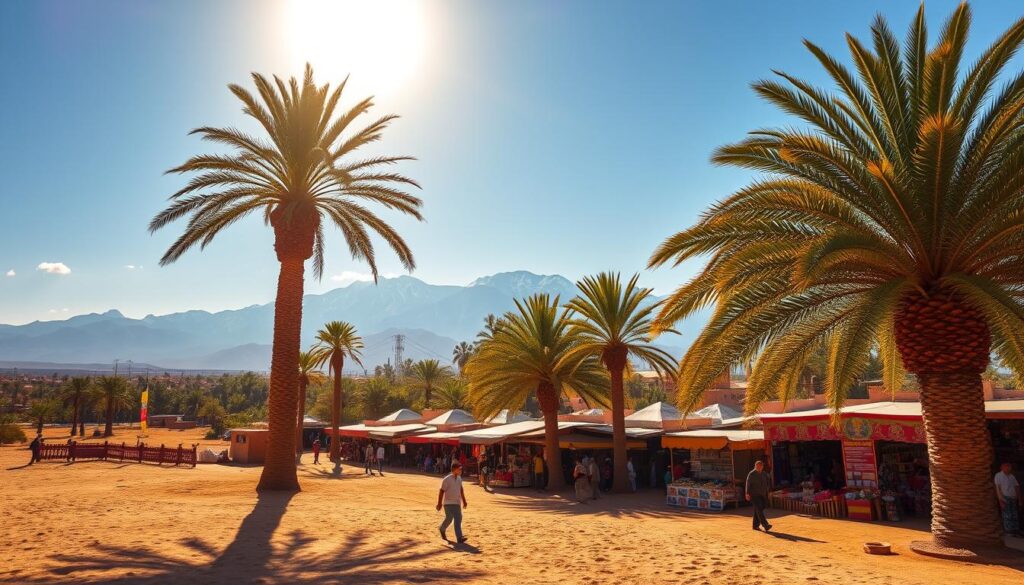
In the north, Morocco has a Mediterranean climate. The south is desert-like. Spring and autumn are the best times to visit, with nice weather and fewer people around. Summers are hot, especially in the desert, while winters are cool in the mountains and mild by the sea.
Peak vs. Off-Peak Travel Periods
Summer and holidays are the busiest times in Morocco. To avoid the crowds, travel in the shoulder season, from April to May or September to October. Off-peak travel means fewer people and lower prices for places to stay and things to do.
Festival Seasons Worth Considering
Morocco’s festivals are lively and show off the local culture. The Marrakech International Film Festival in December and the Essaouira Gnawa Music Festival in June are highlights. These events are unforgettable and a great way to see Morocco.
Plan your trip with the weather, busy times, and festivals in mind. This way, you can explore the best places and have an amazing adventure in Morocco.
Essential Planning and Preparation
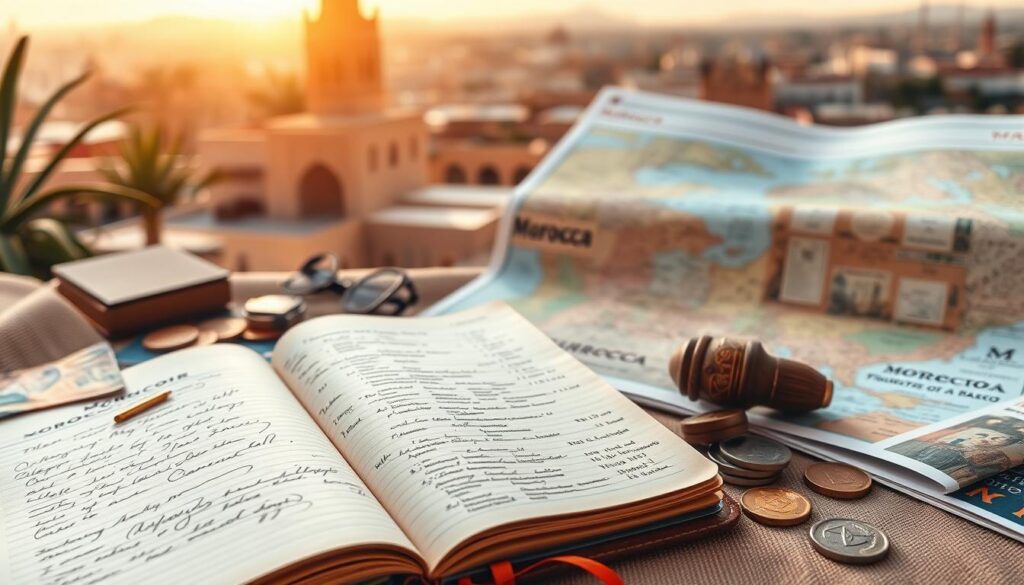
When you plan to visit Morocco, knowing the basics is crucial. Morocco is full of culture and beauty. To enjoy it fully, you need to prepare well.
Visa Requirements for American Travelers
U.S. travelers to Morocco should know about visa rules. For visits up to 90 days, no visa is needed for tourism or business. But, your passport must be valid for six months after your stay.
Always check visa rules before you go. They can change.
Flight Options from the United States
Many airlines offer flights from the U.S. to Morocco. You can land at Marrakech Menara Airport (RAK) or Casablanca Mohammed V International Airport (CMN). Look for the best deals by comparing flights and booking early.
Flying into Marrakech gets you right into Morocco’s lively culture.
Travel Insurance Considerations
Travel insurance is key for your Morocco trip. It protects against unexpected events like trip cancellations or medical issues. Make sure your policy covers your planned activities in Morocco.
“Travel insurance is not just a precaution; it’s a necessity for any traveler venturing into the unknown,” experts say.
By planning well, you’ll enjoy Morocco’s souks, deserts, and beaches. Whether in Marrakech or Essaouira, Morocco offers a memorable journey.
Budget Planning for Your Moroccan Adventure
To enjoy your Visit Morocco to the fullest, planning your budget is key. Morocco can be quite affordable if you plan well.
Accommodation Costs by Region
Accommodation prices in Morocco change a lot based on where you are. For example, a riad in Marrakech can cost between $20 and $200 per night. On the other hand, you can find hostels for as little as $10 per night. For more details, check out the Morocco Budget Travel Guide.
| Region | Budget-friendly | Mid-range | Luxury |
|---|---|---|---|
| Marrakech | $10-$20 | $50-$100 | $200+ |
| Fes | $8-$15 | $30-$70 | $150+ |
| Rabat | $12-$25 | $40-$90 | $180+ |
Food and Transportation Expenses
When planning your Morocco travel, remember to budget for food and transport. Eating at local souks can be very cheap, with meals starting at $3. Transport costs vary; a bus ride is just $1, while taxis start at $5. For tips on managing these costs, visit Morocco Travel Resources.
Activity and Sightseeing Budgeting
Morocco is full of cultural and historical sites, many with an entrance fee. Don’t forget to budget for activities like desert tours or cooking classes. Plan to spend $50-$100 per person for tours and $30-$60 for cooking classes. Focus on the activities you’re most excited about to get the most out of your trip.
Where to Stay When You Visit Morocco
Choosing the right place to stay in Morocco can make your trip better. You’ll get to dive deeper into the Moroccan culture. There are many places to stay, from cozy Riads to fancy resorts and affordable options.
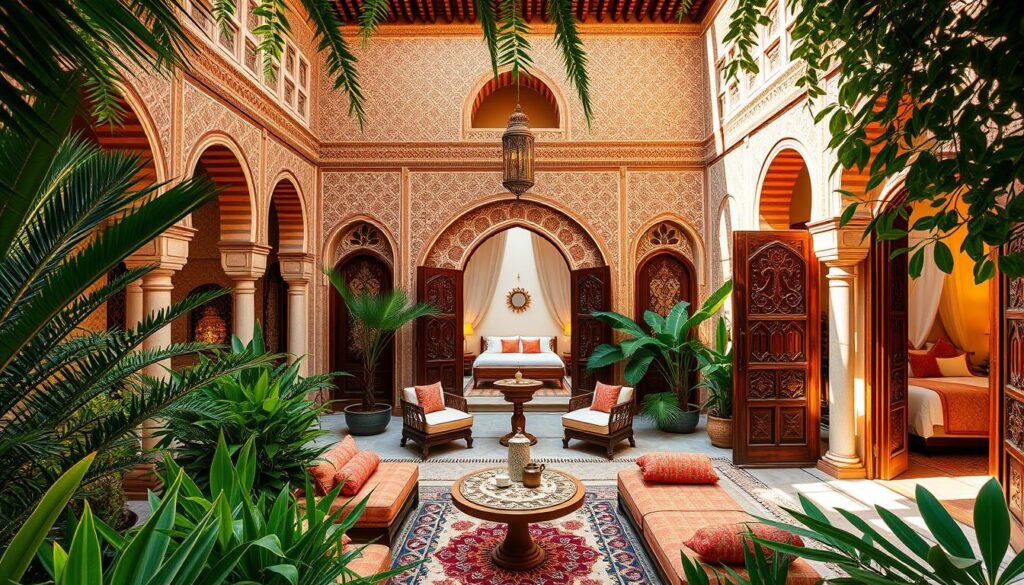
Traditional Riads: An Authentic Experience
Traditional Riads are a big part of Moroccan architecture. They offer a real and immersive experience. These houses have beautiful gardens or courtyards, making them peaceful spots in busy medinas like Marrakech and Fez.
Staying in a Riad lets you really feel the local culture. Many Riads have been turned into boutique hotels and guesthouses. They offer warm hospitality and unique decor.
Luxury Resorts and Hotels
If you want luxury, Morocco has many high-end resorts and hotels. These places mix modern comforts with Moroccan design. They offer a luxurious and culturally rich stay.
Many of these luxury spots are in great locations. You can find them along the coast in places like Essaouira or in the mountains.
Budget-Friendly Accommodations
For those watching their budget, Morocco has many affordable places to stay. You can find hostels, guesthouses, and budget hotels. These places are often in central areas, making it easy to see local sights without spending a lot.
| Accommodation Type | Average Cost per Night | Amenities |
|---|---|---|
| Traditional Riads | $80-$150 | Interior gardens, traditional decor, local cuisine |
| Luxury Resorts and Hotels | $250-$500 | Modern amenities, spa services, fine dining |
| Budget-Friendly Accommodations | $20-$50 | Basic amenities, central locations, communal spaces |
Exploring Morocco’s Imperial Cities
As you explore Morocco, you’ll find the rich history and culture of its Imperial Cities. These cities show the country’s diverse heritage. From Marrakech’s busy streets to Fes’s ancient buildings, you can see the best of Morocco. Visit these Imperial Cities to experience it all.
Marrakech: The Red City
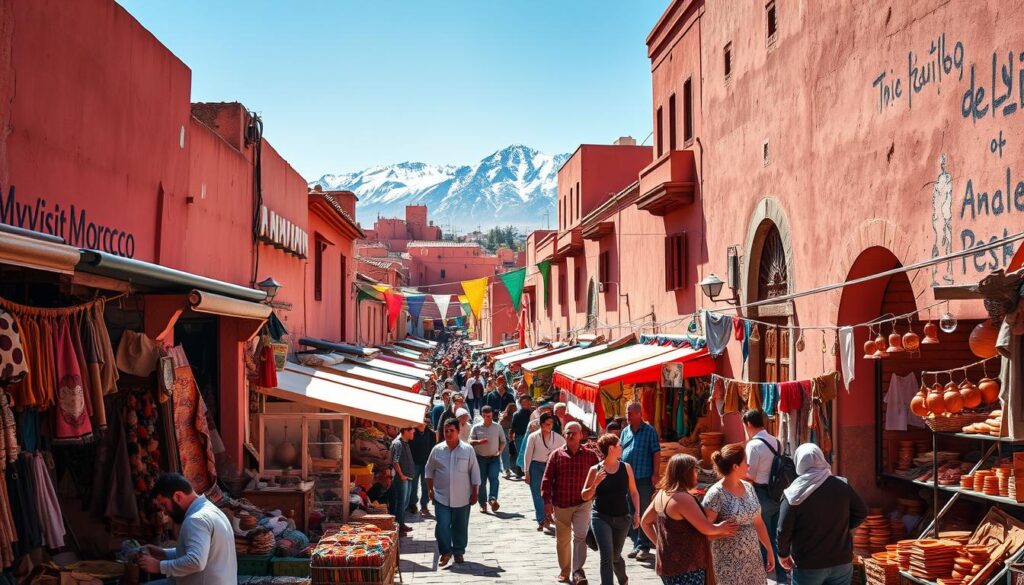
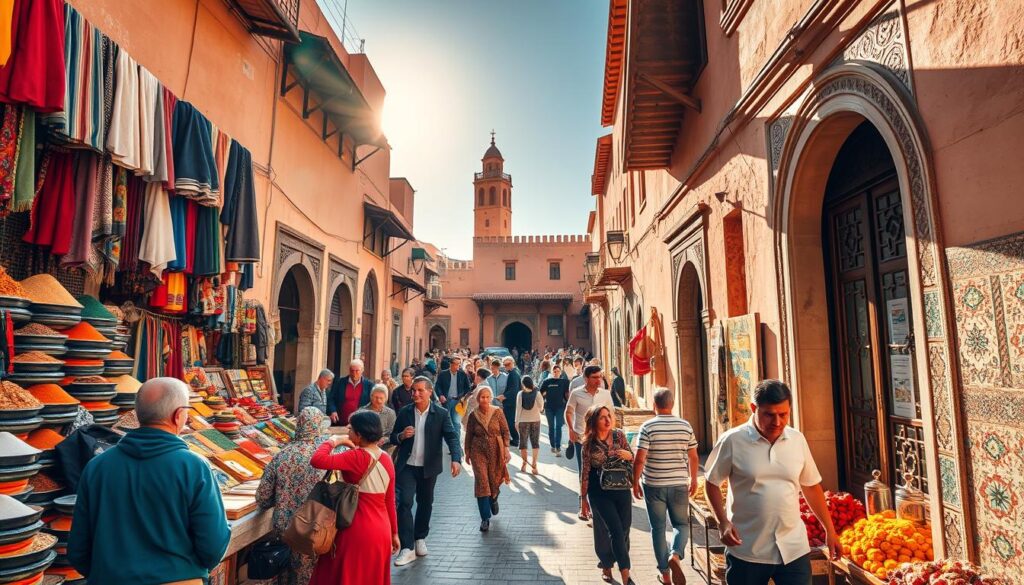
Marrakech, known as the Red City, is full of life. Its souks are filled with colorful textiles, spices, and crafts. You can also see historic landmarks like the Koutoubia Mosque and Bahia Palace.
Walking through Marrakech’s alleys, you’ll hear, smell, and taste the city’s vibrant atmosphere.
Fes: The Cultural Capital
Fes is Morocco’s cultural heart, rich in history and tradition. Its ancient medina is a UNESCO World Heritage Site. Walking its narrow streets, you’ll find hidden treasures like the Al-Attarine Madrasa and Bou Inania Madrasa.
Fes feels like stepping back in time. Here, tradition and heritage are alive.
Rabat and Casablanca: Modern Morocco
Rabat and Casablanca show Morocco’s modern side. Rabat has historic sites like the Kasbah of the Udayas and Hassan Tower. Casablanca is known for its nightlife, shopping, and the Hassan II Mosque.
Visiting these cities gives you a look at Morocco’s changing identity. For more travel tips, check out destination guides.
| City | Main Attractions | Best Time to Visit |
|---|---|---|
| Marrakech | Souks, Koutoubia Mosque, Bahia Palace | Spring and Autumn |
| Fes | Ancient Medina, Al-Attarine Madrasa, Bou Inania Madrasa | Spring and Autumn |
| Rabat | Kasbah of the Udayas, Hassan Tower | Anytime |
| Casablanca | Hassan II Mosque, Old Medina | Anytime |
Venturing Beyond: Natural Wonders of Morocco
Morocco is full of natural wonders, from the Sahara’s dunes to the Atlas Mountains’ peaks. It’s a country with diverse landscapes, each offering unique experiences for visitors.
The Sahara Desert Experience
The Sahara Desert is a top natural attraction in Morocco. You can take a camel ride through the dunes, feeling the desert’s calm. Camping under the stars is a must, with many luxury desert camps available. For a special experience, try a hot air balloon ride over the dunes at sunrise.
Atlas Mountains Adventures
The Atlas Mountains are great for outdoor activities like hiking and trekking. In winter, you can even ski. The mountains are also home to traditional Berber villages, where you can learn about local culture. Adventure seekers will love the mountains’ stunning views.
Coastal Escapes in Essaouira and Agadir
Morocco’s coast is a peaceful escape from busy cities. Essaouira has a charming medina, beautiful beaches, and a lively arts scene. Agadir is famous for its wide sandy beaches and water sports. Both places are perfect for relaxing.
| Location | Main Attractions | Best Time to Visit |
|---|---|---|
| Sahara Desert | Camel rides, desert camping, hot air balloon rides | October to April |
| Atlas Mountains | Hiking, trekking, skiing, Berber villages | Year-round, depending on activity |
| Essaouira and Agadir | Beach relaxation, water sports, local culture | June to September |
For more insights into Morocco’s hidden gems, visit Morocco Paths to explore beyond the typical tourist trail.
Immersing in Moroccan Culture
When you Visit Morocco, diving into the local culture is key. Morocco mixes tradition and modernity beautifully. This creates a rich cultural scene that’s both fascinating and enlightening.
Traditional Customs and Etiquette
It’s important to understand and respect local customs when meeting Moroccans. For example, use your right hand for handshakes and say hello. Also, dress modestly, especially in rural areas or mosques.
Key Etiquette Tips:
- Use your right hand when giving or receiving something.
- Dress modestly, covering your shoulders and knees.
- Remove your shoes before entering a mosque or a local home.
Religious Practices and Respect
Morocco is an Islamic country. Knowing a bit about Islamic practices can make your visit better. For instance, during Ramadan, many places close during the day. It’s polite to not eat in public then.
| Practice | Description | Respect Tip |
|---|---|---|
| Ramadan Fasting | Muslims fast from dawn to sunset. | Avoid eating in public during fasting hours. |
| Prayer Times | Five daily prayers are observed. | Be mindful of prayer times when planning activities. |
Participating in Local Festivals and Events
Morocco has many festivals all year, like the Marrakech International Film Festival and the Essaouira Gnawa Music Festival. Joining these events gives you a deeper look into Moroccan culture. They are unforgettable experiences.
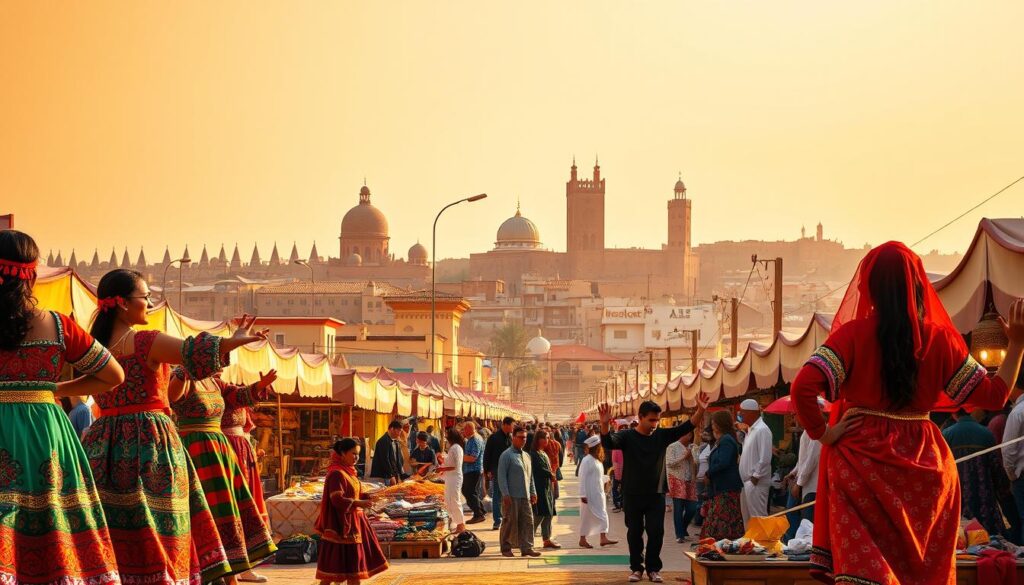
At local festivals, always respect the customs and traditions. Talking with the locals can make your experience even richer. You’ll learn more about the cultural background of the events.
Savoring Moroccan Cuisine
Morocco’s food scene is a mix of tradition, new ideas, and welcoming people. When you visit Morocco, you’ll find that the food is a big part of the trip. It shows the country’s rich Moroccan culture.
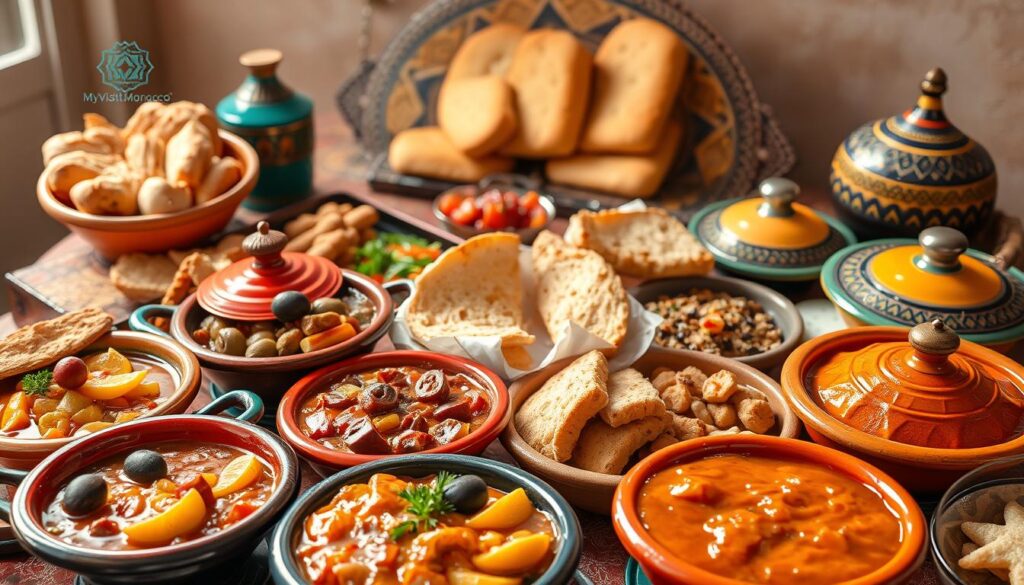
Essential Dishes to Try
Moroccan food has many dishes that will excite your taste buds. Some must-try dishes are:
- Tagine: A slow-cooked stew cooked in a special pot.
- Couscous: A traditional dish from North Africa, made from semolina flour, served with veggies and meat.
- Harira: A rich soup with tomatoes, lentils, and chickpeas.
Dining Etiquette and Tips
Respecting local customs is key when eating in Morocco. Here are some tips:
- Use your right hand when eating, as the left hand is seen as unclean.
- Try a bit of everything on your plate to show you appreciate the meal.
- Don’t finish a meal completely, as it might mean the host didn’t provide enough food.
Cooking Classes and Food Tours
To really get into Moroccan cuisine, take a cooking class or food tour. These activities let you learn about local ingredients, cooking methods, and the cultural value of dishes. You’ll get to explore markets, cook traditional meals, and enjoy what you made with new friends.
Getting Around Morocco
Morocco’s varied landscapes need a good grasp of travel options. Whether you’re in Marrakech’s lively streets or the calm Sahara Desert, knowing how to move around is key.
Public Transportation Options
Morocco boasts a solid public transport system with buses and trains. The ONCF train network is top-notch for long trips, linking cities like Marrakech, Fes, and Rabat. For shorter trips or rural spots, buses are good, with Supratours covering many routes.
| Transport Mode | Route Coverage | Frequency |
|---|---|---|
| Trains (ONCF) | Major cities | Frequent |
| Buses (Supratours) | Rural and urban areas | Regular |
Hiring Private Drivers and Guides
Hiring a private driver or guide offers a unique experience. It lets you explore Morocco on your terms and learn about local culture and history. Many drivers are experts and can guide you, making your trip better.
Self-Drive Considerations
Renting a car for freedom is a good choice. Yet, driving in Morocco, especially in cities, can be tough. Make sure you have the right documents, like an International Driving Permit. If driving abroad worries you, think about renting with a local driver.
Knowing your travel options helps plan your Moroccan trip well. You can then enjoy the best places in Morocco easily.
Shopping and Souvenirs in Moroccan Markets
Shopping in Morocco’s markets is an adventure that lets you dive into the local culture. You’ll find everything from traditional crafts to unique souvenirs in the vibrant souks.
Navigating the Souks
Exploring Morocco’s souks can feel overwhelming. But with some tips, you can enjoy your shopping. Start by learning the market’s layout and finding different sections. Don’t hesitate to ask for help. Be prepared to haggle, as it’s common in Moroccan markets.
Bargaining Etiquette
Bargaining in Morocco is an art that needs patience, respect, and a smile. Start with a lower price than you want to pay and be ready to negotiate. Building a rapport with the vendor can help you get better deals. The goal is to find a price both sides can agree on.
Authentic Crafts and What to Avoid
When looking for souvenirs, choose authentic Moroccan crafts like handmade pottery, carpets, and jewelry. Watch out for fake goods and items that are too touristy. Supporting local artisans helps the community.
By being informed and mindful, you can have a great time in Morocco’s markets. You’ll take home souvenirs that show off the country’s rich culture.
Essential Packing and Safety Tips
To enjoy your Moroccan adventure, being prepared is key. When you travel to Morocco, think about the culture, weather, and health issues. This will help you have a smooth and fun trip.
What to Wear in Morocco
Morocco is a conservative place, so dress modestly. Cover your shoulders and knees, especially in mosques or rural spots. Lightweight, breathable clothes are best for the warm weather. For more packing tips, check out Vagrants of the World.
Health Precautions and Medicine
Before going to Morocco, talk to your doctor about shots or meds you might need. Pack a travel kit with basics like pain relievers and antacids. For health and safety info, visit My Visit Morocco.
Safety Considerations for American Travelers
As an American, stay updated on local conditions and be cautious. Be mindful of your surroundings, especially in busy places. Morocco is mostly safe, but watch out for small thefts. Keep up with government travel advisories to stay safe while traveling in Morocco.
Conclusion: Making the Most of Your Moroccan Adventure
Looking back on your Morocco trip, you’ll remember the warm welcome from the locals. From Marrakech’s lively streets to the Sahara’s calm, your journey is packed with memories. By exploring off the beaten path, you’ve seen Morocco’s true culture and daily life.
Want to dive deeper into Moroccan culture? Learn about the local customs and traditions that set Morocco apart. Visit Desert Morocco Adventure to understand the heart of Morocco and its people better.
This guide has prepared you to fully enjoy your Moroccan adventure. We’re sure you’ll come back home with a newfound appreciation for this experience.



 Covers cities, coast, mountains, desert & food