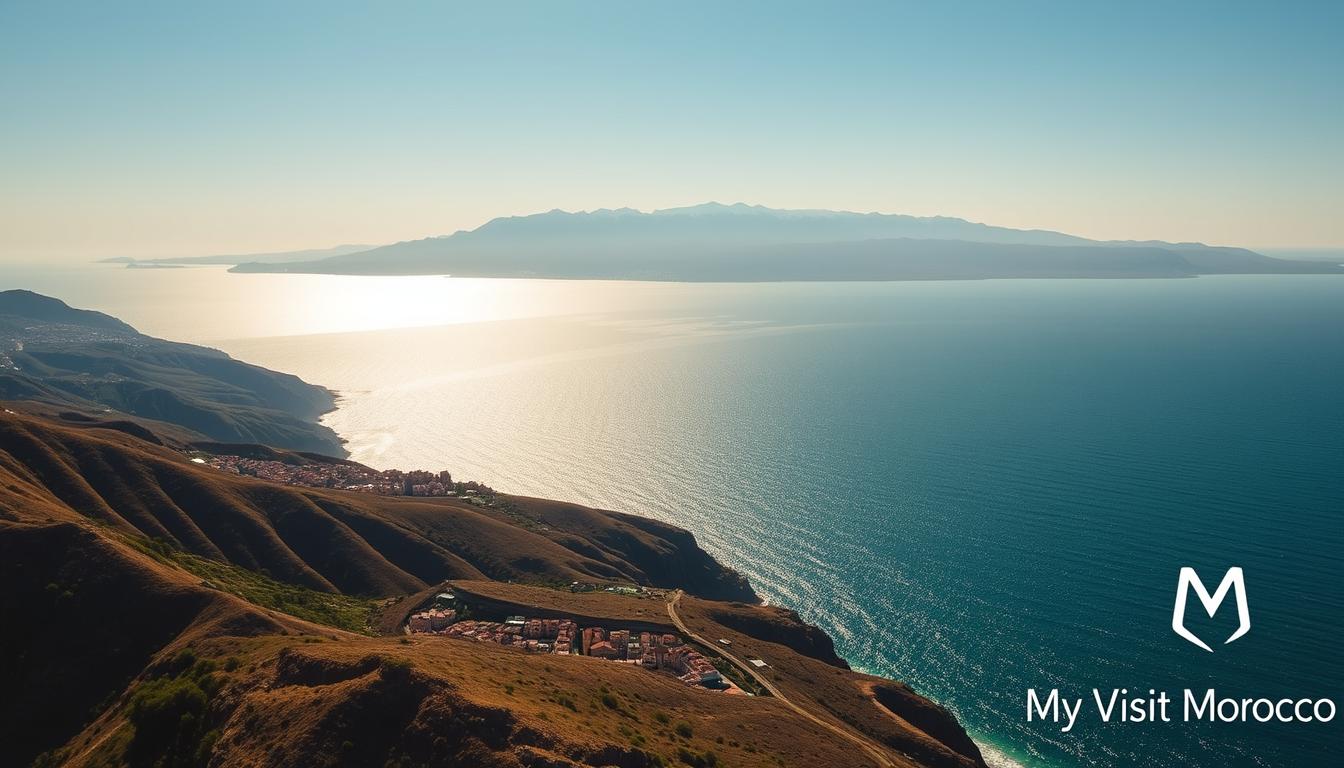
Are you planning a trip from Spain to Morocco? Knowing the distance and travel options is key for a smooth trip.
Traveling from Spain to Morocco is exciting. You’ll find many options to fit your needs.
Morocco is close to Spain, making it a great travel spot. Knowing how far apart they are helps plan your trip well.
Key Takeaways
- Understand the distance and travel options between Spain and Morocco.
- Choose the best travel method based on your time and budget.
- Plan your itinerary to make the most of your trip.
- Be aware of the travel requirements and documents needed.
- Prepare for cultural differences and local customs.
The Geographic Proximity of Spain and Morocco
Planning a trip from Spain to Morocco? Knowing how close these countries are is key. Their proximity makes travel easy and enriches cultural exchange.
The Strait of Gibraltar: A Narrow Divide
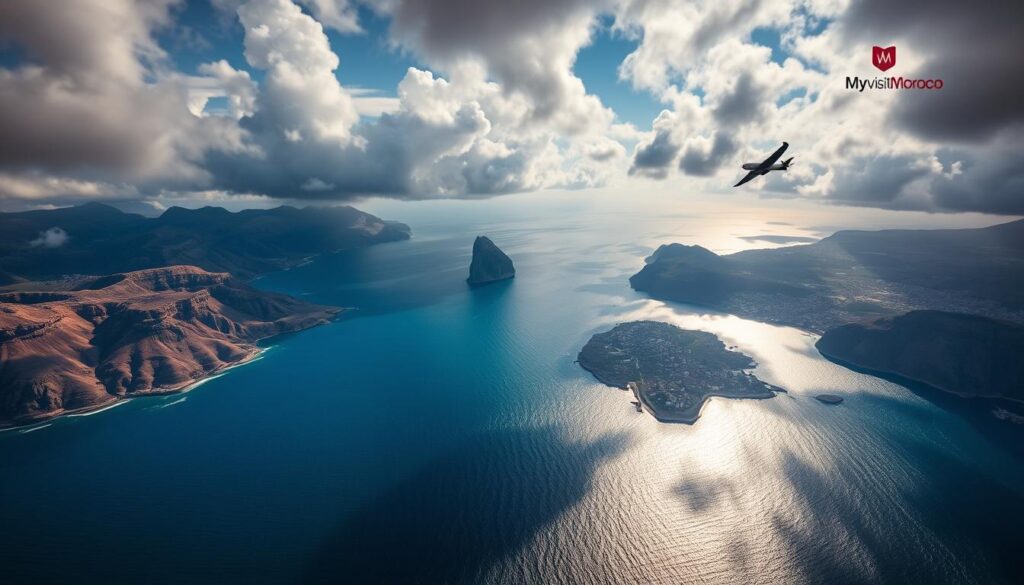
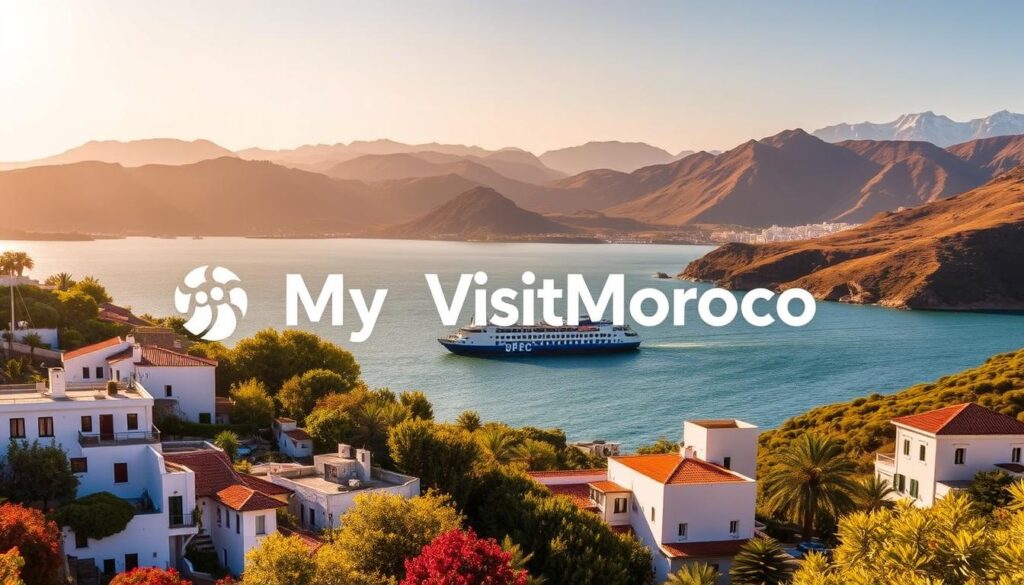
The Strait of Gibraltar separates Spain from Morocco. It’s a narrow waterway that links the Mediterranean Sea to the Atlantic Ocean. At its narrowest, it’s about 14 kilometers wide, making it a key spot between Europe and Africa.
Closest Points Between the Two Countries
The closest points between Spain and Morocco are not just about geography. They also hold historical and cultural significance.
Tarifa to Tangier: The Shortest Crossing
The distance from Tarifa, Spain, to Tangier, Morocco, is the shortest sea route. It’s a favorite among travelers. Regular ferries make it a convenient way to travel between the two countries.
Ceuta and Melilla: Spanish Territories in Africa
Ceuta and Melilla are Spanish territories in Africa, right next to Morocco. They show the historical Spanish influence in the area. They offer a mix of Spanish and African cultures.
| Location | Distance to Morocco | Significance |
|---|---|---|
| Tarifa, Spain to Tangier, Morocco | Approximately 30 km by ferry | Shortest sea crossing |
| Ceuta | Directly borders Morocco | Spanish territory in Africa |
| Melilla | Directly borders Morocco | Spanish territory in Africa |
Knowing about the geography and politics of Spain and Morocco can make your trip better. It lets you see the rich history and culture of this area.
Understanding the Spain to Morocco Distance
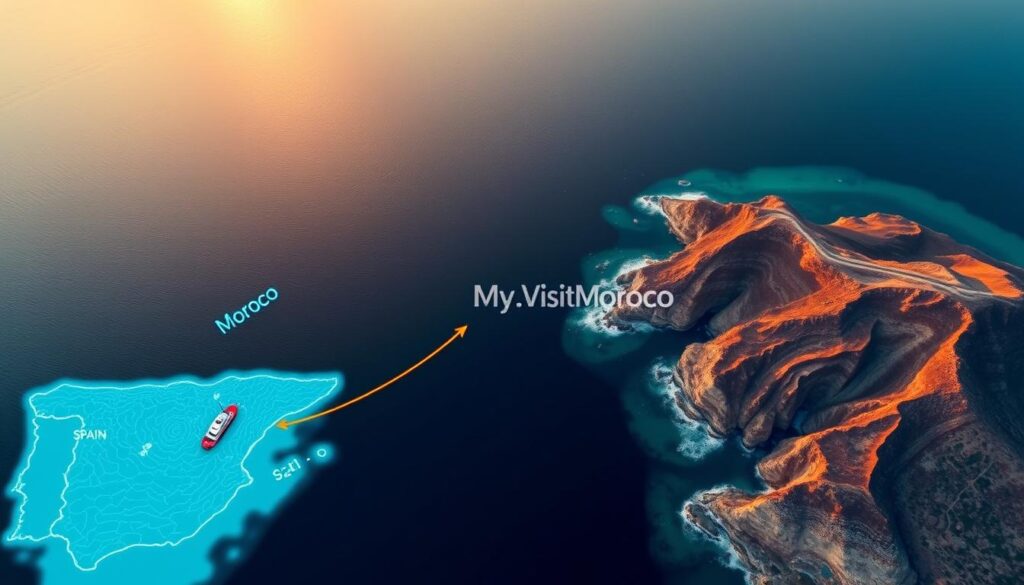
When planning a trip from Spain to Morocco, knowing the distance is key. The two countries are close, making travel between them exciting and easy.
Aerial Distance Between Major Cities
The distance between major cities in Spain and Morocco is short. This makes traveling by air or sea a breeze.
Madrid to Marrakech
The flight from Madrid, Spain’s capital, to Marrakech, Morocco’s major city, is about 719 kilometers (447 miles). It’s a quick flight.
Barcelona to Casablanca
The distance from Barcelona, Spain, to Casablanca, Morocco’s largest city, is around 859 kilometers (534 miles). This route is also flown often.
Travel Distance vs. Geographic Distance
The distance between Spain and Morocco is short. But, the actual travel time and distance can change a lot. This depends on how you travel and the roads or sea routes.
Impact of Transportation Infrastructure
The roads and sea routes between Spain and Morocco are important. They affect how long it takes to get there. Good roads and sea routes make travel faster.
Actual Travel Times
Ferry rides from Spain to Morocco can take 30 minutes to hours, depending on the route. Flights are much quicker, taking about 1-2 hours.
| Route | Distance (km) | Travel Time by Ferry | Travel Time by Flight |
|---|---|---|---|
| Algeciras to Tangier | 35 | 1 hour | N/A |
| Madrid to Marrakech | 719 | N/A | 1.5 hours |
| Barcelona to Casablanca | 859 | N/A | 2 hours |
Travel Options from Spain to Morocco
Planning a road trip from Spain to Morocco? Knowing your travel options is key. The two countries are close, making travel easy with many transport choices.
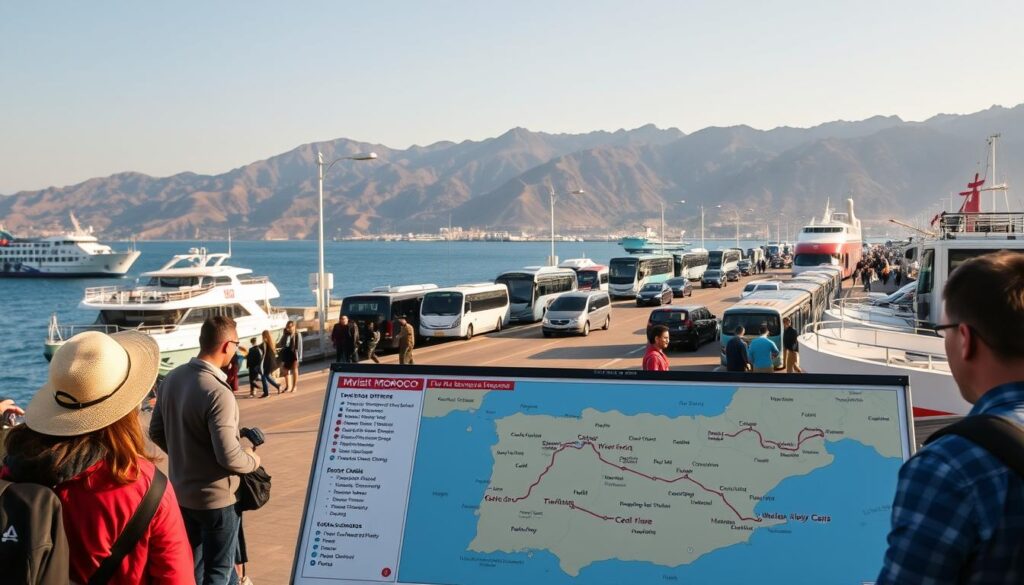
By Sea: Ferry Services
Ferry services are a top pick for crossing the Strait of Gibraltar. They’re great for both people and vehicles, perfect for road trips.
Passenger-Only Services
Some ferries only carry passengers. This is good for those who don’t want to bring a car. Companies like FRS and Balearia have many sailings, offering flexibility.
Vehicle Transport Options
Many ferries take cars, motorcycles, and trucks. This is great for road trippers wanting to explore Morocco with their vehicle. Remember to book early, especially when it’s busy.
“The ferry crossing from Spain to Morocco is not just a mode of transport; it’s an experience in itself, offering breathtaking views of the Mediterranean.”
By Air: Flight Connections
Want to travel fast? Flights from Spain to Morocco are easy to find. Many airlines offer direct and indirect flights to major cities.
Direct Flights
Direct flights link many Spanish cities to Moroccan ones like Marrakech and Tangier. Iberia and Air Arabia offer these flights, saving you time.
Budget Airline Options
Looking for cheap flights? Low-cost carriers like Ryanair and EasyJet have affordable options. They’re perfect for those on a tight budget.
Traveling by sea or air has its perks. The best choice depends on your trip plans, budget, and what you prefer.
Spain to Morocco Ferry Routes in Detail
There are many ferry routes between Spain and Morocco. These routes are great for traveling between the two countries. They also offer beautiful views of the Strait of Gibraltar.
Algeciras to Tangier Med
The Algeciras to Tangier Med ferry route is very popular. FRS and Balearia operate this route. They offer many daily sailings, making it easy for travelers.
The trip usually takes about 1 hour. This depends on the ferry and the operator.
Tarifa to Tangier Ville
The Tarifa to Tangier Ville ferry is great for a direct trip to Tangier city center. FRS runs this route. It takes about 35 minutes, making it the fastest way to get there.
Barcelona to Tangier Med
The Barcelona to Tangier Med ferry route is good for those from eastern Spain. It’s a bit longer, but it’s a good option for travelers from different parts of Spain.
Other Ferry Connections
There are other ferry routes too. For example, the Almería to Nador and Málaga to Melilla routes offer different travel options.
Almería to Nador
The Almería to Nador ferry route is great for avoiding busy ports. It’s perfect for those going to eastern Morocco.
Málaga to Melilla
For trips to Melilla, the Málaga to Melilla ferry is the best choice. Ferry operators make sure the journey is smooth.
Spain Morocco Transit Time: What to Expect
Knowing how long it takes to get from Spain to Morocco is key for travelers. It helps plan your trip well and enjoy your time more. Whether you choose a ferry or a flight, knowing what to expect makes your journey better.
Ferry Crossing Duration
Ferry trips from Spain to Morocco vary in time. It depends on the route and the ferry type. You can expect a journey from 30 minutes to a few hours.
Fast Ferries vs. Regular Services
Fast ferries, like those from Algeciras to Tangier Med, cut down travel time to about 30 minutes. Regular ferries take longer but offer a more relaxed trip.
Boarding and Disembarkation Time
Don’t forget to add boarding and getting off the ferry times to your travel plan. Arrive at the port early to avoid missing your ferry. For more ferry details, check this resource.
Flight Times Between Major Cities
Traveling by air is quick, especially between big cities in Spain and Morocco. Flights from Madrid or Barcelona to Marrakech or Casablanca are under 2 hours.
Direct Routes
Direct flights are the fastest way to travel between the two countries. Several airlines offer these routes. Booking early can get you the best prices.
Connecting Flights
If direct flights aren’t an option, connecting flights are a good choice. They might take longer but offer more flexibility in travel dates and times.
Planning a Spain to Morocco Road Trip
Planning a road trip from Spain to Morocco needs careful thought. You must consider the route, prepare your vehicle, and gather the right documents. This trip is about more than just reaching your destination. It’s about enjoying the views and cultural experiences along the way.
Driving Routes and Considerations
There are a few ways to cross the Strait of Gibraltar when driving from Spain to Morocco. The most common is taking a ferry from Algeciras or Tarifa to Tangier.
Popular Road Trip Itineraries
Some travelers start in big cities like Madrid or Seville. They explore southern Spain before heading to Morocco. Others drive straight to the ferry ports.
Road Conditions in Both Countries
Roads in Spain are usually well-kept, with good highways. Morocco’s main roads are also in good shape, connecting big cities. But, it’s wise to be ready for different road conditions.
Vehicle Requirements and Documentation
Make sure your vehicle is in top shape before you go. Check the tires, oil, and brakes. Also, you’ll need certain documents to cross the border.
Insurance Requirements
Having valid car insurance that covers Spain and Morocco is crucial. Check with your insurance to see if they cover Morocco.
Temporary Import Permits
You’ll need a temporary import permit to drive in Morocco. You can get this at the border or through a travel agent who specializes in Morocco.
With the right planning, vehicle preparation, and documents, your road trip from Spain to Morocco will be a success. Enjoy the journey!
Crossing from Spain to Morocco: Border Procedures
Planning your trip from Spain to Morocco? Knowing the border procedures is key. It makes your journey smooth and stress-free.
Immigration Requirements
When you cross from Spain to Morocco, you must follow certain rules. You’ll need the right visas and fill out entry forms.
Visa Policies for Different Nationalities
Visa rules change based on where you’re from. Some countries need a visa, while others don’t. Always check the latest visa rules before you go.
Entry Forms and Declarations
When you arrive in Morocco, you’ll need to fill out an entry form. It asks for your personal details and how long you plan to stay.
| Nationality | Visa Requirement | Maximum Stay |
|---|---|---|
| EU Citizens | No visa required | 90 days |
| US Citizens | No visa required | 90 days |
| Other Nationalities | Varies | Varies |
Customs Regulations
There are also customs rules to follow when crossing from Spain to Morocco. You must declare some items and know what’s banned.
Prohibited and Restricted Items
Morocco has strict rules on bringing in and taking out certain items. This includes cultural artifacts, drugs, and some foods.
Currency Declaration Requirements
If you have a lot of money (over €10,000), you must tell customs about it.
By following these border rules, your trip from Spain to Morocco will be enjoyable and hassle-free.
Best Times to Travel Between Spain and Morocco
Planning your trip from Spain to Morocco? Knowing the best times to travel can make your journey better. It’s all about choosing the right season.
Seasonal Considerations
The weather in Spain and Morocco changes with the seasons.
In summer, both places are warm, perfect for beach lovers. But, it’s also the busiest time, with more people and higher costs.
Weather Patterns Affecting Travel
Morocco gets very hot in summer, especially in the desert. Spring and autumn are cooler, ideal for exploring outdoors.
Religious Holidays and Festivals
Morocco celebrates Islamic holidays like Ramadan. This can impact your travel. Some places might close during the day, but evenings are lively. Learn more on Morocco FAQs.
Peak vs. Off-Peak Travel Periods
Knowing when it’s busy or quiet helps plan your trip better.
Tourist Season Impact on Prices
Prices go up in peak season (June to August). Off-peak seasons are cheaper.
Booking Recommendations
Book early, especially in busy seasons. Check ferry services from southern Spain to Morocco on Ferry Services.
| Season | Weather | Tourist Season | Price Range |
|---|---|---|---|
| Spring (March to May) | Mild | Shoulder | Moderate |
| Summer (June to August) | Hot | Peak | High |
| Autumn (September to November) | Mild | Shoulder | Moderate |
| Winter (December to February) | Cool | Off-Peak | Low |
Cultural Transitions: From Europe to North Africa
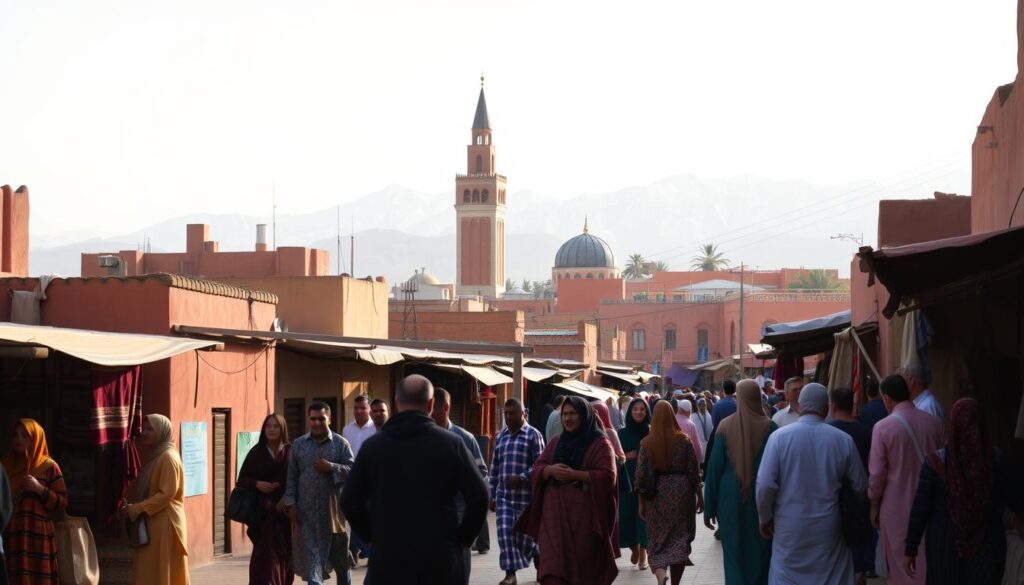
Traveling from Spain to Morocco brings a big change. It’s not just about the distance. It’s also a shift from European to North African culture.
Language Differences
One of the first things you’ll notice is the change in language. In Spain, Spanish is the main language. But in Morocco, Arabic, French, and Berber languages are common. This mix of languages can be both interesting and hard for travelers.
Cultural Etiquette
Cultural rules change a lot from Spain to Morocco. In Morocco, you should greet with a handshake or a kiss on both cheeks. Always use your right hand when giving or receiving something. Also, dress modestly, especially in rural areas or mosques.
Religious Considerations
Morocco is an Islamic country. Islamic practices are a big part of everyday life. When visiting during Ramadan, be kind to fasting locals by not eating in public during the day.
Visiting During Ramadan
Visiting Morocco in Ramadan is special. Many restaurants close during the day. But, breaking the fast at sunset is a memorable experience.
Dress Codes and Behavior
Dressing modestly is key, especially in mosques or rural areas. Avoid showing too much affection in public. And always be respectful of local customs.
Knowing about these cultural changes can make your trip from Spain to Morocco better. Understanding language, etiquette, and religious practices helps you enjoy this journey more.
Accommodation Options Along the Route
Planning your trip from Spain to Morocco means finding the right place to stay. The right choice can make your journey more enjoyable. Whether you want to relax or explore, there’s something for everyone.
The spain to morocco distance is not long, but there are many places to stay. You’ll find something that fits your style and budget.
Where to Stay in Southern Spain
Southern Spain has many places to stay, from budget-friendly to luxury. You can pick from:
- Coastal resorts with modern amenities
- Historic cities with traditional Spanish architecture
Coastal Accommodations
The Costa del Sol has hotels and apartments with beautiful sea views. Marbella and Malaga are top choices.
City-Based Options
Cities like Seville and Granada offer a rich cultural experience. They have historic sites and lively nightlife.
First Night Recommendations in Morocco
Your first night in Morocco sets the tone for your trip. Consider staying in:
- Tangier for its coastal charm
- Other entry points like Tetouan or Ceuta for a local feel
Tangier Accommodations
Tangier has modern hotels and traditional riads. Staying in the Medina gives you an authentic experience.
Other Entry Point Options
At other ports, choose local hotels or guesthouses. They offer a peek into local life.
Budget Planning for Spain to Morocco Travel
To enjoy your trip from Spain to Morocco, knowing your budget is key. Good budget planning means you can travel without worrying about money.
Transportation Costs
Transport costs are a big part of your budget. You can travel by ferry or flight. Ferry prices change based on the route and service type. A one-way ticket from Algeciras to Tangier Med costs between €30 to €100 per person.
For more details on Morocco travel costs, check out specialized travel guides.
Accommodation Expenses
Accommodation costs in Morocco vary a lot. You can find budget-friendly riads for €20 to €50 per night. Booking early is wise, especially when it’s busy.
Food and Activities Budget
Morocco’s food is amazing and affordable. You can eat for as little as €5 in local places. For tours, expect to pay €20 to €50 per person.
Dining Options and Costs
- Eating at local souks: €5-€10 per meal
- Mid-range restaurants: €10-€20 per meal
- Fine dining experiences: €30-€50 per meal
Sightseeing and Excursion Prices
- Guided city tours: €20-€30 per person
- Desert excursions: €50-€100 per person
- Historical site visits: €10-€20 per person
With smart budget planning, your trip from Spain to Morocco can be both fun and affordable. You’ll get to see Morocco’s rich culture and stunning beauty.
Safety Tips for First-Time Travelers
Traveling from Spain to Morocco for the first time? Knowing the local safety tips is crucial. As you cross the border, you’ll see a mix of cultures and a lively vibe. But, it’s important to stay alert to have a smooth trip. “The journey of a thousand miles begins with a single step,” and knowing safety guidelines can make a big difference.
Common Travel Scams to Avoid
Morocco, like any popular tourist spot, has its scams. Being careful in tourist areas and when using transport can help you avoid trouble.
Tourist Areas to Be Cautious
Places like Marrakech’s Jemaa el-Fnaa and Fez’s souks are busy and safe during the day. But, watch out for pickpocketing and scams. Keep your things close and be skeptical of deals that seem too good.
Transportation Safety
Always agree on the taxi fare before you start. Official taxis have meters; if not, agree on the price first. For more on transport and safety, check our guide on traveling from Spain to Morocco.
Health and Safety Precautions
Morocco is generally safe, but health precautions can improve your trip. Make sure you’re up-to-date on vaccinations and have a plan for emergencies.
Recommended Vaccinations
Check with your doctor about vaccinations for Morocco. Getting routine shots and considering Hepatitis A and Typhoid is a good idea.
Emergency Contact Information
Have all emergency numbers ready, like your embassy and local services. Also, register with your government’s travel advisory for safety updates.
Being informed and prepared makes your trip from Spain to Morocco safe and memorable. Enjoy the rich culture and stunning landscapes this journey offers.
Conclusion: Bridging Continents and Cultures
Exploring travel options between Spain and Morocco shows the spain to morocco distance is more than a number. It’s a doorway to different cultures and adventures.
The Strait of Gibraltar is only 13km wide, making it easy to cross. You have many ways to travel, like ferries and flights, to find what works best for you.
A planned underwater tunnel aims to connect the two continents. But it won’t be ready until 2040. So, for now, you’ll use the current travel options. Still, the close distance makes it perfect for exploring both Europe and North Africa.
Whether you’re interested in Spain’s historic cities or Morocco’s lively markets, the distance is just a small step. It opens up a world of exciting possibilities.




 Covers cities, coast, mountains, desert & food