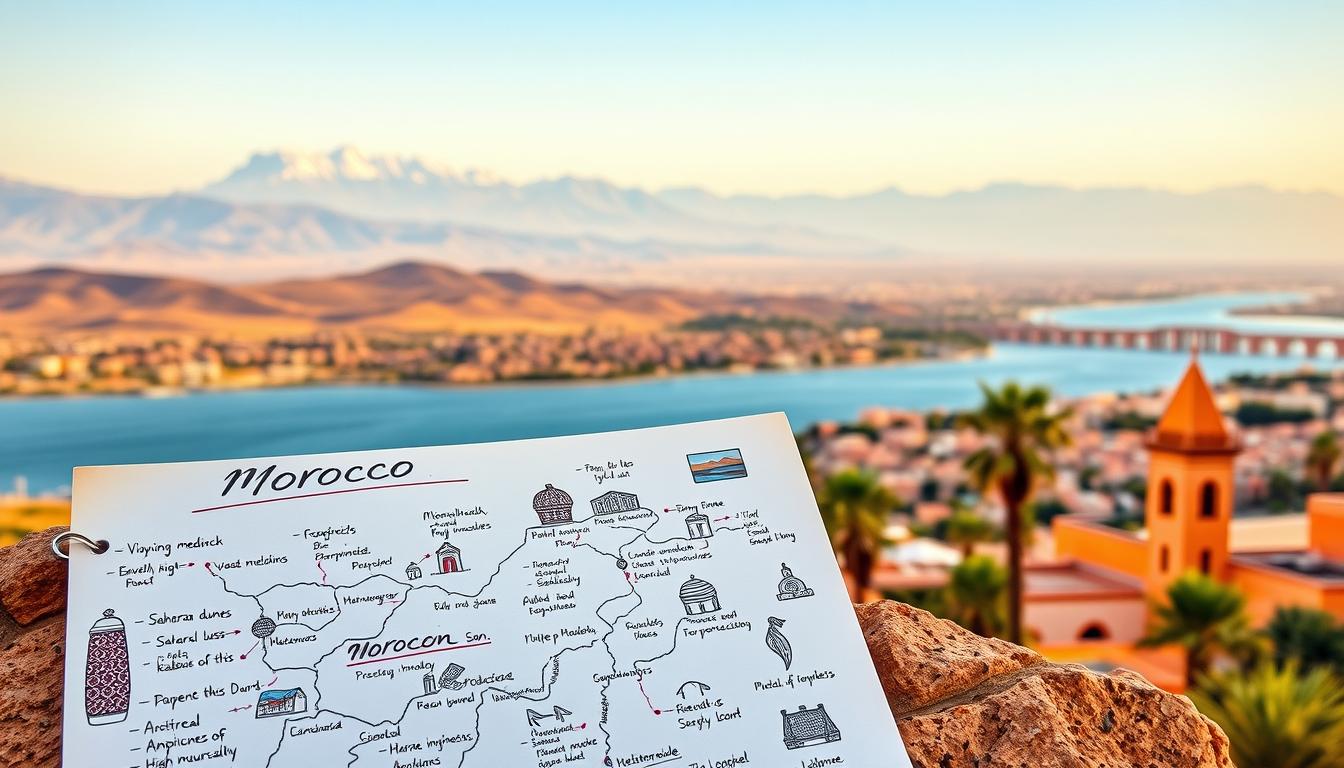
Start an unforgettable journey through Morocco with our 7-day plan. See the country’s lively cities, rich culture, and stunning nature.
In Morocco, you’ll find a mix of African, Arab, and European cultures. Our guide will help you enjoy your trip fully.
Key Takeaways
- Explore vibrant cities like Marrakech and Fez
- Discover Morocco’s rich cultural heritage
- Experience breathtaking natural landscapes
- Follow a carefully planned 7-day travel itinerary
- Make the most of your trip with our expert guide
Your Gateway to Moroccan Adventure
Morocco is calling with its deep history, varied landscapes, and welcoming people. As you get ready for your trip, you’ll find a place full of contrasts. From lively cities to peaceful deserts, there’s so much to see.
What Makes Morocco a Captivating Destination
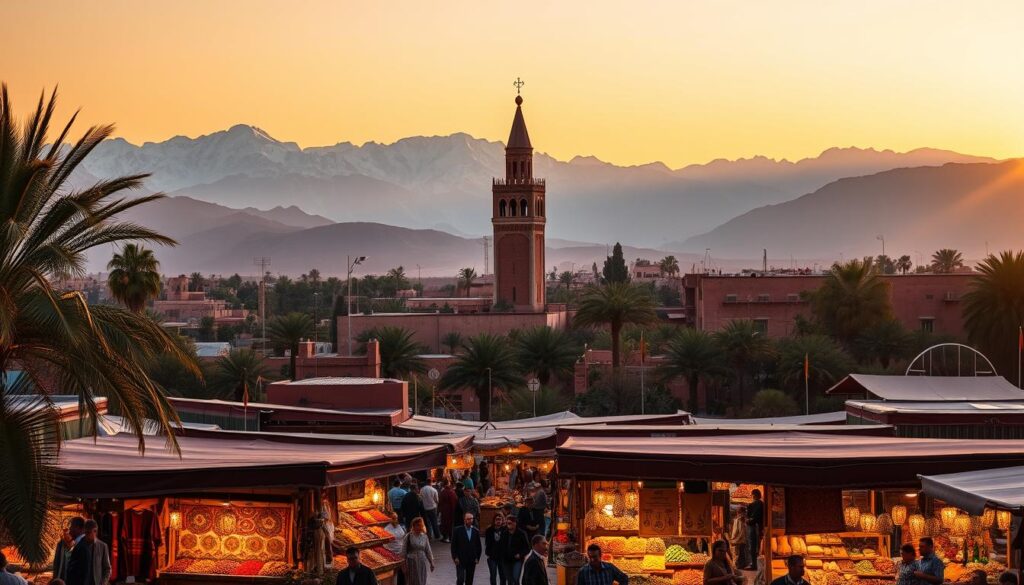
Morocco is a goldmine of cultural experiences and top attractions. You can wander through colorful souks, try delicious food, and dive into the country’s history. Don’t miss the Hassan II Mosque in Casablanca, the ancient city of Fes, and the breathtaking Sahara Desert.
How to Make the Most of This Itinerary
To get the most out of your Moroccan adventure, plan your trip well. Check out this guide to explore different areas and events. Learning about local customs will also enrich your journey. For more travel tips, visit myvisitmorocco.com.
Best Time for One Week in Morocco
Choosing the right time to visit Morocco can make your trip better. The weather changes a lot in Morocco, depending on the season and where you are. It’s important to plan your trip well.
Seasonal Weather Patterns
Morocco has a Mediterranean climate in the north and a desert climate in the south. Spring (March to May) and autumn (September to November) are the best times to go. The weather is mild and there are fewer people around.
These seasons are perfect for seeing cities like Marrakech and Fes. You can also enjoy the Atlas Mountains’ beauty.
Summer is very hot, especially in the desert. Winters can be cool, especially in the mountains. Knowing this helps you pack right and plan your trip well.
Regional Climate Variations
Morocco’s different landscapes mean the weather changes a lot. The coastal areas are milder. The desert regions get very hot during the day and cold at night.
The Atlas Mountains are cooler, making them a great place to visit in summer.
| Region | Spring | Summer | Autumn | Winter |
|---|---|---|---|---|
| Coastal Areas | Mild | Warm | Mild | Cool |
| Desert Regions | Hot | Very Hot | Warm | Cold |
| Atlas Mountains | Cool | Mild | Cool | Cold |
Getting to Morocco from the United States
Planning your trip to Morocco? Knowing your flight options and what to expect when you arrive is key. Morocco is a favorite among American travelers. Several major airlines offer direct and connecting flights.
Flight Options and Major Routes
Many airlines fly from the U.S. to Morocco, including Royal Air Maroc, American Airlines, and Delta. Direct flights are available from big U.S. cities like New York and Washington D.C. to Casablanca, Morocco’s main international airport.
| Airline | Route | Frequency |
|---|---|---|
| Royal Air Maroc | New York to Casablanca | Daily |
| American Airlines | New York to Casablanca | Multiple times a week |
| Delta | Atlanta to Casablanca | Multiple times a week |
Entry Requirements and Arrival Tips
Make sure your passport is valid for at least six months after your planned departure from Morocco. U.S. citizens don’t need a visa for tourism stays up to 90 days. But, always check the latest entry requirements.
When you arrive, you’ll go through immigration and customs. Have your travel documents and hotel info ready. Morocco welcomes tourists, and with some prep, your arrival will be easy.
Day 1: Casablanca – First Taste of Morocco
Your Moroccan adventure starts in Casablanca, where old meets new. As you settle in, excitement grows to explore this lively city.
Morning: Arrival and Settling In
After arriving, take time to relax and get settled. Casablanca mixes old traditions with modern life. Start by exploring your hotel area to feel the local vibe.
Afternoon: Hassan II Mosque and Corniche
The afternoon is for two key spots: the Hassan II Mosque and the Corniche. The Hassan II Mosque is rare, open to those not Muslim, showing Morocco’s rich faith.
Architectural Highlights of the Mosque
The mosque’s design is a mix of old and new, with detailed stone work and a huge minaret. It shows the talent of Moroccan craftsmen.
Coastal Views Along the Corniche
Next, walk the Corniche, a scenic path by the sea. It has cafes and eateries, perfect for enjoying the ocean view.

Evening: Introduction to Moroccan Cuisine
In the evening, try Moroccan cuisine at a local spot. Don’t miss out on tagine or couscous, paired with mint tea, a Moroccan favorite.
Day 2: Rabat – Exploring the Capital
On your second day in Morocco, you’ll explore Rabat, a city rich in history and culture. Rabat, the capital city, is a treasure trove of historical landmarks that showcase its significance.
Morning: Travel to Rabat and Kasbah of the Udayas
You’ll start your day by traveling to Rabat. First, you’ll visit the Kasbah of the Udayas. This 12th-century fortress offers breathtaking views of the Atlantic Ocean. It’s known for its well-preserved architecture and beautiful gardens.

Afternoon: Hassan Tower and Chellah Necropolis
In the afternoon, you’ll see the Hassan Tower, an iconic landmark. Although it’s not finished, the tower is impressive. Nearby, you’ll explore the Chellah Necropolis, a historic site from the Roman era. It’s a serene place with Roman ruins and Islamic architecture.
| Location | Highlights |
|---|---|
| Kasbah of the Udayas | Historic fortification, beautiful gardens, Atlantic views |
| Hassan Tower | Iconic landmark, impressive architecture |
| Chellah Necropolis | Roman ruins, Islamic architecture, serene atmosphere |
Evening: Dinner in the Medina
As the day ends, you’ll enjoy a traditional Moroccan dinner in the Medina of Rabat. The Medina offers a variety of dining experiences. You’ll try local cuisine that is both flavorful and aromatic. It’s a chance to immerse yourself in the local culture.
Day 3: Chefchaouen – The Blue Pearl
Your journey continues with a scenic drive to Chefchaouen, known as the Blue Pearl. This charming town is nestled in the Rif Mountains. It’s famous for its blue-painted buildings and winding streets.
Morning: Scenic Drive to Chefchaouen
The drive to Chefchaouen is as breathtaking as the town itself. You’ll wind through mountains, seeing lush green landscapes and picturesque villages. As you go up, the air gets cooler, and the scenery gets more dramatic.
Afternoon: Wandering the Blue Streets
When you arrive, you’ll feel the town’s laid-back vibe. The sea of blue hues covers houses, stairs, and alleyways. Take your time to wander, soaking in the tranquility and capturing the vibrant colors.
Photography Opportunities
Chefchaouen is a photographer’s dream. The blue buildings and rugged mountains offer endless photo opportunities. Don’t miss the reflections in water features and the light on the blue walls.
Local Artisan Shops
As you explore, you’ll find local artisan shops. They sell handmade crafts, textiles, and souvenirs. Support local artisans and pick up unique souvenirs to remember your time in Chefchaouen.
Evening: Sunset from Spanish Mosque
For a stunning view, visit the Spanish Mosque. It offers panoramic views of Chefchaouen and the mountains. Watch the sunset paint the sky with gold and red, and enjoy the calm as the day ends.
| Activity | Time | Location |
|---|---|---|
| Scenic Drive | Morning | Rif Mountains |
| Wandering Blue Streets | Afternoon | Chefchaouen |
| Sunset Viewing | Evening | Spanish Mosque |
For more insights on exploring Chefchaouen and its surroundings, you might find this guide helpful in planning your trip.
Day 4: Fes – Cultural Heart of Morocco
On your fourth day, you’ll visit Fes, a city where old traditions and culture shine. Fes is Morocco’s cultural heart, filled with important historical sites.
Morning: Journey to Fes
Start your day with a scenic drive to Fes. This city has been a hub of learning and spirituality for ages. Upon arrival, you’ll be amazed by its ancient buildings and lively vibe.
Afternoon: Ancient Medina and Tanneries
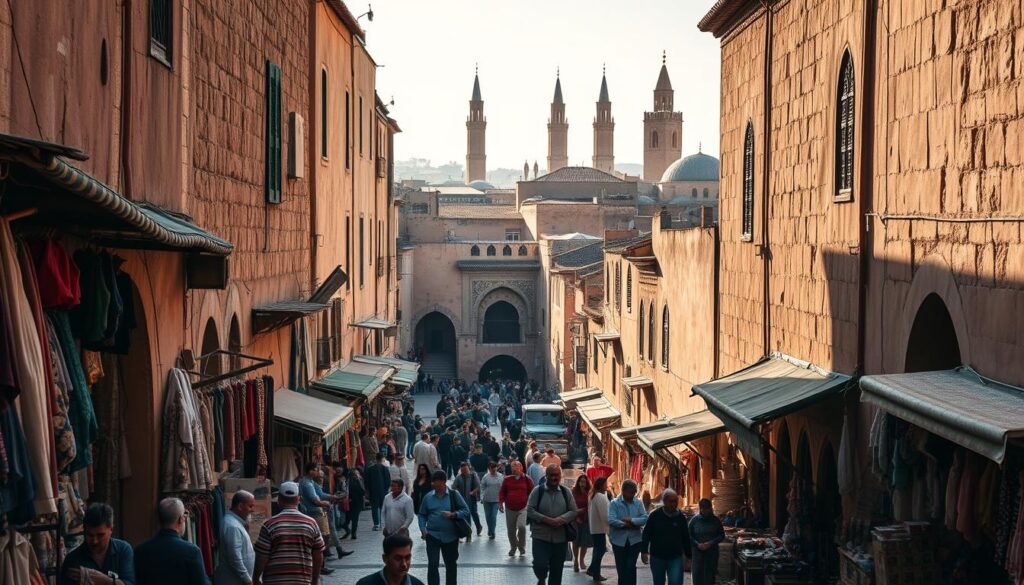
Explore the ancient medina of Fes, a UNESCO World Heritage site, in the afternoon. You’ll walk through its narrow streets, taking in the sights and sounds. Don’t miss the famous tanneries, where leather-making traditions have lasted for centuries.
Navigating the World’s Largest Car-Free Urban Area
As you wander the medina, you’ll see one of the world’s biggest car-free areas. The maze-like streets will lead you to historical landmarks, showing Fes’s rich history.
Historical Madrasas and Fountains
You’ll also see historical madrasas and beautiful fountains. These highlight Fes’s architectural beauty and its role as a learning and cultural center.
Evening: Traditional Hammam Experience
In the evening, enjoy a traditional Hammam experience. This ancient ritual includes steam baths, scrubs, and massages. It’s a unique way to relax and experience Moroccan culture.
| Activity | Location | Time |
|---|---|---|
| Journey to Fes | En route to Fes | Morning |
| Explore Ancient Medina | Fes Medina | Afternoon |
| Visit Tanneries | Fes Tanneries | Afternoon |
| Traditional Hammam | Local Hammam | Evening |
Day 5: Merzouga – Sahara Desert Adventure
The Sahara Desert calls, and Day 5 is your chance to explore its vast dunes. Merzouga, a small village, is your entry point. You can join a 5-day combined Atlas Morocco tour for a full Sahara experience.
Morning: Drive Through the Middle Atlas
Start with a drive through the Middle Atlas Mountains. You’ll see cedar forests and Berber villages. As you head to Merzouga, the scenery changes to endless sand dunes, ready for your desert adventure.
Afternoon: Camel Trek into the Dunes
In Merzouga, ride a camel into the Erg Chebbi dunes. The camel’s steady pace lets you enjoy the stunning views around you.
Desert Wildlife and Landscapes
Look out for Sahara wildlife as you trek. The endless dunes create a surreal scene that’s both stunning and awe-inspiring.
Berber Guide Interactions
Your Berber guide will share local stories and traditions. You’ll learn about desert history and life from them, making your experience richer.
Evening: Overnight in Desert Camp
At sunset, you’ll reach a desert camp. Enjoy Moroccan food and watch the stars come out. Staying overnight lets you experience the Sahara’s quiet beauty under the stars.

Day 6: Ouarzazate and Ait Ben Haddou
On Day 6, you’ll explore Ouarzazate and Ait Ben Haddou. This day is packed with history, architecture, and film industry insights.
Morning: Sahara Sunrise and Departure
Begin with a stunning Sahara Desert sunrise. Then, head to Ouarzazate, famous for film production. The drive shows off desert and mountain views.
Afternoon: UNESCO World Heritage Kasbah
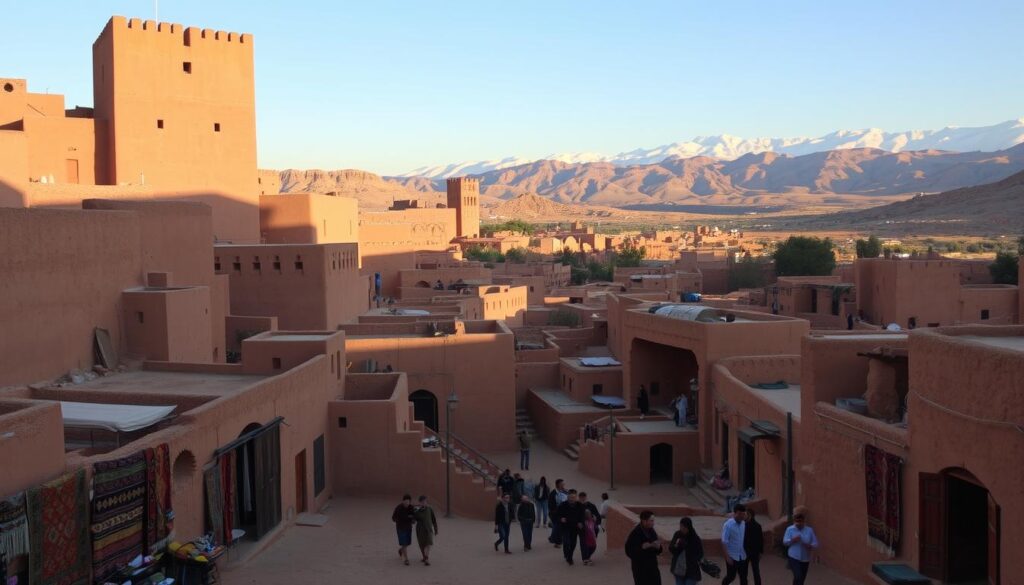
Arrive in Ouarzazate to see Ait Ben Haddou kasbah, a UNESCO site. It sits on a hill, offering amazing views.
Film History of the Region
Ait Ben Haddou has starred in Game of Thrones and Lawrence of Arabia. Its architecture and location make it perfect for filming.
Architectural Significance
The kasbah shows off the region’s architectural skills. Built with earth, it stands strong. Its design shows the creativity of its builders.
Evening: Relaxing in Ouarzazate
After exploring, relax in Ouarzazate. Walk the streets, visit markets, or enjoy the calm. Ouarzazate mixes old and new, perfect for unwinding.
Highlights of your visit include:
- Exploring the ancient Ait Ben Haddou kasbah
- Learning about the region’s film history
- Appreciating the architectural significance of the kasbah
- Relaxing in the city of Ouarzazate
Day 7: Marrakech – Grand Finale
Your last day in Morocco is in Marrakech, a city that mixes old traditions with new ways. You’ll dive into the local culture and feel the city’s lively vibe.
Morning: Travel to Marrakech
After a smooth trip, you’ll reach Marrakech, ready to see its wonders. Spend some time getting settled and knowing your area.
Afternoon: Jemaa el-Fnaa and Souks
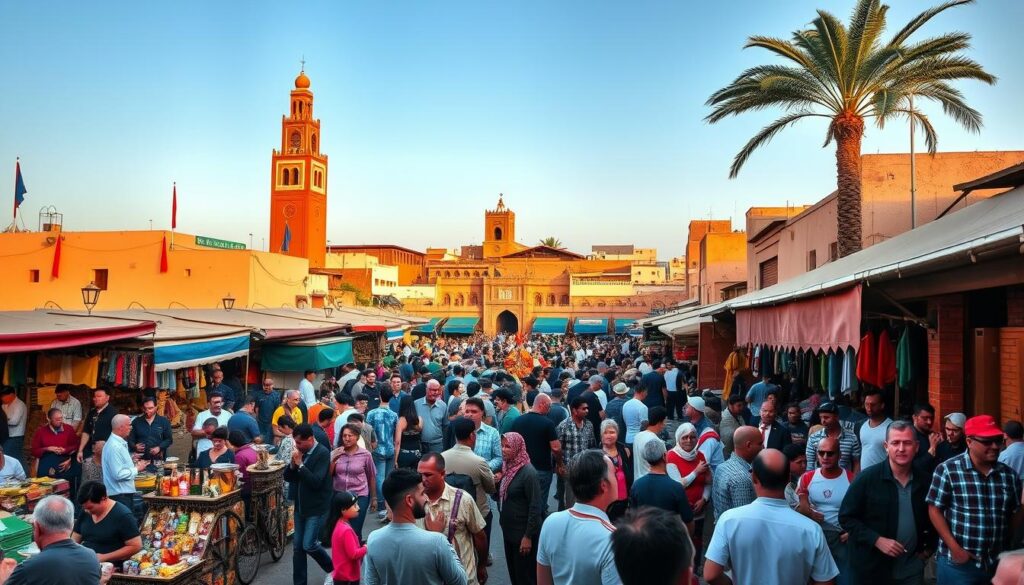
The afternoon is for the heart of Marrakech: Jemaa el-Fnaa. This famous square is full of sights, sounds, and smells. You’ll see:
- Haggle for special souvenirs in the souks
- Try local foods from street vendors
- Watch amazing acts by snake charmers and musicians
Navigating the Marketplace
When you’re in the souks, stay alert and keep your things safe. Talk to the vendors; they’re very friendly.
Street Performers and Food Stalls
The street acts in Jemaa el-Fnaa make the place even more lively. Make sure to try grilled meats and Moroccan pastries from the street food.
Evening: Farewell Dinner and Entertainment
End your trip with a farewell dinner at a local riad. Enjoy traditional Moroccan food. Riads also have traditional Gnawa music for a special touch.
As your Moroccan trip ends, you’ll remember Marrakech’s energy, culture, and kindness. These memories will last forever.
Transportation Options During Your Week in Morocco
Knowing how to get around Morocco is crucial for a great trip. When planning your 7-day adventure, think about how you’ll travel between places and around local spots.
Private Drivers vs. Public Transport
Hiring a private driver is a top choice for traveling in Morocco. It offers flexibility and comfort, letting you make your own schedule. For tips, check out transportation tips.
Public transport, like buses and trains, is cheaper and lets you meet locals. But, it might not run as often or be as reliable, especially outside cities.
For a real Moroccan experience, try supratours. These trains carry cars and people, giving you a special view of the countryside.
Car Rental Considerations and Safety
Car rental is a good choice if you’re okay with driving in a new place. Pick a trusted rental company and make sure the car fits your plans. Driving in Morocco, especially in places like Marrakech, can be tough due to heavy traffic.
To stay safe, always wear a seatbelt, avoid driving at night, and keep valuables hidden. For more help, look at travel resources.
Where to Stay: Accommodation Guide
Choosing the right accommodation in Morocco can make your trip better. The country has many options, from traditional riads to modern hotels. Each one meets different tastes and needs.
Traditional Riads vs. Modern Hotels
Riads offer a true Moroccan experience. They show off the country’s rich culture. With their interior gardens and detailed architecture, they provide a peaceful and real stay.
Modern hotels are great for those who want comfort. They have pools, spas, and restaurants. This makes them perfect for a modern stay.
Recommended Properties for Each Destination
In Marrakech, stay in a riad to dive into the lively culture. In Fes, pick a hotel close to the ancient Medina for easy exploration. For a special Sahara Desert stay, choose a desert camp for camel rides and stargazing.
For a tailored Moroccan adventure, pick the right place to stay at each stop. This way, you can make your trip unforgettable and full of new experiences.
For more travel tips and booking help, check out the Morocco Travel Guide.
Moroccan Cuisine: Essential Food Experiences
Starting your Moroccan journey opens a world of tastes. Moroccan food mixes Berber, Arab, and Mediterranean styles. This mix comes from the country’s location and history.
Must-Try Dishes and Regional Specialties
Moroccan food is rich and varied. Each dish has its own special touch. Here are some dishes you should try:
- Tagine: a slow-cooked stew cooked in a special pot.
- Couscous: a dish from North Africa, made from semolina flour, with veggies and meat.
- Harira: a thick soup with tomatoes, lentils, and chickpeas.
Don’t miss out on Msemen in the north and B’stilla in the south. They’re local favorites.
Dining Etiquette and Food Safety Tips
Respecting local customs is key when eating in Morocco. Here are some tips:
- Use your right hand when eating, as the left hand is considered unclean.
- Try a little of everything on your plate to show appreciation for the meal.
- Be mindful of food safety by avoiding undercooked meat and untreated water.
Knowing these customs and safety tips will make your dining in Morocco safe and unforgettable.
Shopping in Moroccan Markets
Morocco’s markets are a feast for the senses. You’ll find colorful textiles, fragrant spices, and detailed handicrafts. The souks are a whirlwind of colors, sounds, and smells.
Navigating the Souks Like a Local
To shop like a local, know the market’s layout and be ready to haggle. Learn where to find different items. For example, traditional clothes and handmade jewelry have their own sections. Locals are friendly and can guide you.
Bargaining Strategies and Authentic Souvenirs
Bargaining should be fair and respectful. Begin with a lower offer than you want to pay. Look for unique, handmade items that show off local culture. Here are tips for authentic souvenirs:
| Authentic Souvenirs | Bargaining Tips |
|---|---|
| Handmade jewelry | Start with a low offer |
| Traditional clothing | Be respectful and polite |
| Local handicrafts | Be prepared to walk away |
Cultural Etiquette for American Travelers
Traveling in Morocco as an American can be greatly improved by knowing the local customs. Morocco is rich in culture, and understanding its traditions is crucial for a good trip.
Dress Code and Religious Considerations
Morocco is a conservative place, so dressing modestly is wise, especially at religious sites. Covering your shoulders and knees shows respect. Women must cover their hair in mosques.
Remember, during Ramadan, it’s best not to eat, drink, or smoke in public during the day.
Social Interactions and Photography Guidelines
Moroccans are very welcoming, but it’s important to be polite. Greeting people with a handshake or a friendly “hello” is a good start. Always ask before taking someone’s picture, especially in rural areas or at cultural events.
Some places of worship might not allow photos.
Packing List for One Week in Morocco
Getting ready for Morocco? A good packing list is key for a smooth trip. Morocco’s weather and culture change a lot, so you need to be ready for anything.
Essential Clothing and Accessories
Morocco’s weather changes a lot from north to south and with the seasons. Pack clothes that are comfy and can be layered. This way, you’re set for any weather.
Bring light clothes for hot days and warm layers for cool nights, especially in the desert or mountains. Don’t forget a hat, sunglasses, and sunscreen for outside. Also, wear modest clothes that cover your shoulders and knees when visiting mosques or rural places.
Health, Safety, and Technology Items
For health and safety, a basic first-aid kit is a must. Include any personal meds, band-aids, and antiseptic wipes. Also, bring a water bottle to stay hydrated and cut down on plastic.
For tech, a smartphone with a good camera, a portable charger, and a universal power adapter for Morocco are essential. For more travel tips and info, check our FAQ page.
Conclusion: Memories from Your Moroccan Journey
As you finish your 7-day trip to Morocco, the memories of your desert adventure stay with you. They show the country’s varied landscapes and deep culture. From Marrakech’s busy streets to the Sahara’s calm dunes, Morocco has touched your heart. You can relive this amazing journey by planning your trip with a detailed itinerary at Travel Wander Grow.
Your Moroccan trip is filled with unforgettable moments. You saw the stunning Hassan II Mosque and the old medina of Fez. You also explored Chefchaouen’s blue streets and enjoyed peaceful desert nights under the stars. Every experience, from the traditional hammam to the tasty local food, adds to your trip’s memories.
Looking back, Morocco’s contrasts stand out. It’s a mix of old and new, warm people, and stunning landscapes. Your Moroccan adventure will inspire future travels and deepen your love for different cultures.




 Covers cities, coast, mountains, desert & food