Planning a trip to Morocco is an exciting prospect, especially for those whose travel dreams revolve around savoring new flavors and immersing themselves in rich cultural tapestries. However, ensuring these enriching experiences don’t break the bank requires careful financial foresight. This comprehensive Morocco travel budget guide is crafted specifically for food lovers and cultural explorers, offering practical insights into managing costs without compromising on authentic encounters. We’ll delve into everything from the daily Moroccan food costs to accommodation and activity expenses, helping you craft a realistic and enjoyable budget.
Setting Your Gastronomic Goals and Cultural Immersion Budget
Before anything else, define what “food lover” and “cultural explorer” truly mean to your travel style. Are you happy sampling street food and local eateries, or do you envision dining in more upscale establishments a few times? For cultural immersion, are you content with wandering medinas and visiting free sites, or do you plan on attending cooking classes, hiring private guides for historical tours, or experiencing traditional hammams? Your answers significantly impact your overall Morocco travel budget guide. A street food aficionado will spend far less on daily meals than someone seeking out top-tier tagine restaurants. Similarly, self-guided exploration is budget-friendly, while curated experiences demand a higher financial commitment. Understanding these preferences forms the bedrock of an accurate budget.
Decoding Moroccan Food Costs: From Street Bites to Fine Dining
Moroccan cuisine is a highlight for many travelers, and happily, it can be enjoyed across a wide spectrum of budgets. Understanding the typical Moroccan food costs will empower you to manage your expenses effectively.
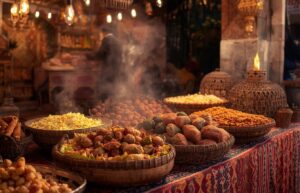
Street Food & Casual Eateries: This is where food lovers truly thrive on a budget. A hearty bowl of harira soup (a traditional lentil and tomato soup) can be found for as little as 5-10 Dirhams (MAD) – roughly $0.50-$1 USD. A delicious kefta (meatball) or merguez (sausage) sandwich from a bustling stall might set you back 15-25 MAD ($1.50-$2.50). Pancakes (msemen), pastries, and fresh juices are similarly affordable, often costing 5-15 MAD. Lunch or dinner at a simple local ‘snack’ (cafeteria-style restaurant) specializing in grilled meats, tagines, or couscous can range from 30-60 MAD ($3-$6) per person, including a drink. This is an excellent way to eat well and experience local life without overspending.
Mid-Range Restaurants: For a sit-down meal in a more comfortable setting, perhaps with a view or more extensive menu, expect to pay between 80-150 MAD ($8-$15) per person for a main course and a drink. Many riads also offer multi-course dinners for their guests, which often fall into this price range, sometimes slightly higher. This is a good option for a relaxing evening meal after a day of exploring.
Upscale Dining: If you’re looking for a more refined experience, perhaps in a beautifully restored riad or a restaurant with live music, prices can range from 200-400+ MAD ($20-$40+) per person for a full meal. While this will impact your overall Morocco travel budget guide, it’s worth splurging occasionally for a memorable culinary experience if your budget allows.
Breakfast: Many accommodations, especially riads, include a Moroccan breakfast in their room rate. This typically consists of bread, msemen, honey, jams, olives, and mint tea or coffee. If breakfast isn’t included, you can easily find affordable options at local cafes for 15-30 MAD.
Drinks: Mint tea is ubiquitous and often offered as a gesture of hospitality. In cafes, it usually costs 10-15 MAD. Freshly squeezed orange juice, especially popular in places like Djemaa el-Fna in Marrakech, is a steal at 5-10 MAD. Bottled water is essential, and a large bottle (1.5L) costs around 6-10 MAD in shops. Alcohol is available in licensed restaurants and hotels but can be pricier than in Western countries. A beer might cost 30-50 MAD, and a glass of wine 40-70 MAD.
Budgeting for Your Cultural Deep Dive: Activities and Experiences
Cultural exploration in Morocco comes in many forms, each with its own cost implications. This section of your Morocco travel budget guide helps you allocate funds effectively.
Free & Low-Cost Immersion: The beauty of Morocco is that much of its cultural richness is free. Wandering the labyrinthine medinas, observing local life in the souks, people-watching in bustling squares, and visiting many mosques (from the exterior, for non-Muslims) and public gardens won’t cost a dirham. Many historical sites, like the ruins of El Badi Palace in Marrakech or the Roman city of Volubilis, have modest entrance fees, typically ranging from 20-70 MAD ($2-$7). Bargaining in the souks is an experience in itself and costs nothing to try!
Hiring Guides: For a deeper understanding of historical sites, medinas, or specific crafts, hiring a licensed local guide is highly recommended. Expect to pay around 250-500 MAD ($25-$50) for a half-day or 500-800 MAD ($50-$80) for a full day, depending on the city and the guide’s expertise. Sharing a guide with other travelers can reduce individual costs. Negotiate the price and clarify what’s included (e.g., entrance fees) beforehand.
Workshops & Classes: For food lovers, a Moroccan cooking class is an unforgettable experience. These typically range from 400-800 MAD ($40-$80) per person, usually including market visits, ingredients, instruction, and eating the meal you prepare. Other cultural workshops, like learning mosaic art or Berber carpet weaving, can have similar costs.
Live Entertainment & Hammams: Enjoying a traditional performance, such as gnawa music or belly dancing, might be part of an organized dinner show, which falls into the higher end of the dining budget. For a relaxing cultural experience, a visit to a local hammam can be very affordable. A basic public hammam experience (where you bring your own soap and scrub yourself) can cost as little as 20-50 MAD. A more tourist-oriented hammam with a scrub and massage will be much pricier, ranging from 200-500+ MAD ($20-$50+).
Excursions & Day Trips: Popular excursions like a desert Sahara tour are a significant budget item. A 3-day/2-night desert trip from Marrakech to Merzouga, including transport, accommodation, and some meals, typically costs between 1000-2500 MAD ($100-$250) per person for a standard shared tour. Private tours will be substantially more expensive. Day trips to nearby towns or attractions (e.g., Ourika Valley, Essaouira) can be done independently by grand taxi or bus for much less, or via organized tours costing 200-400 MAD ($20-$40).
Accommodation Choices: Balancing Comfort, Culture, and Cost
Your choice of accommodation plays a crucial role in your overall Morocco travel budget guide. Morocco offers a wide range of options, from budget-friendly hostels to luxurious riads.
Hostels & Guesthouses: For budget-conscious travelers, hostels are an excellent choice, particularly in major cities. A dorm bed can cost anywhere from 80-150 MAD ($8-$15) per night. Private rooms in hostels or basic guesthouses can be found for 200-350 MAD ($20-$35). This is a fantastic way to meet other travelers and keep costs down, though privacy and amenities will be basic.
Riads & Mid-Range Hotels: Riads are traditional Moroccan houses with internal courtyards, often beautifully restored, offering a truly unique cultural experience. A comfortable room in a well-located riad typically ranges from 400-800 MAD ($40-$80) per night, often including breakfast. You can find excellent value in this category, balancing comfort, authenticity, and cost. Mid-range hotels outside the medinas will offer similar pricing, often with more Western amenities like pools or gyms.
Boutique Riads & Upscale Hotels: For those seeking a splurge or a special occasion, luxury riads and 4-5 star hotels can cost upwards of 1000-2000+ MAD ($100-$200+) per night. These offer exquisite decor, top-notch service, and often gourmet dining. While they will greatly increase your Morocco travel budget, they provide an unparalleled level of comfort and aesthetic appeal.
Location Matters: Staying within the medina is generally more atmospheric and allows for easy access to sights, but can sometimes be pricier or harder to reach by taxi. Staying outside the medina can offer more modern accommodations and easier transport access, sometimes at a lower price.
Navigating Transport: Smart Choices for Your Morocco Travel Budget Guide
Getting around Morocco efficiently and affordably is key to managing your budget, especially if you’re exploring multiple cities.
Local Transport within Cities:
- Walking: In medinas, walking is often the only option and the best way to soak in the atmosphere. It’s free and fantastic for cultural exploration.
Petit Taxis: These small, metered taxis are great for getting around within cities. Ensure the driver uses the meter. If not, negotiate a price before* getting in. A short ride usually costs 10-30 MAD. Fares typically increase slightly after dark.
- Horse-drawn Carriages (Calèches): Popular in Marrakech, these offer a scenic if slower way to travel, particularly around the Nouvelle Ville or to specific attractions. Negotiate the price beforehand; expect to pay 50-100+ MAD for a ride depending on distance and duration.
- Buses: City buses are the cheapest option but can be crowded and confusing for first-time visitors. A ride is usually 4-7 MAD.
Inter-City Transport:
- Trains (ONCF): Morocco has an excellent and affordable train network connecting major cities like Casablanca, Rabat, Fes, Meknes, and Marrakech. This is generally the most comfortable and reliable option for longer distances. Fares vary by class (1st and 2nd class) and distance. For example, a 2nd class ticket from Marrakech to Fes might cost 150-200 MAD ($15-$20). Booking in advance, especially for 1st class, is advisable during peak seasons.
- Long-Distance Buses (CTM & Supratours): These are also comfortable, reliable, and generally cheaper than trains, particularly for routes not covered by the train network, such as to Essaouira, Agadir, or the Sahara Desert. Book tickets a day or two in advance, especially for popular routes. An 8-hour bus journey might cost 100-150 MAD ($10-$15).
- Grand Taxis: These shared taxis run on fixed routes between towns and cost slightly more than buses but are faster and more direct if you fill all seats (6 passengers). You can also hire a grand taxi privately, but this will significantly increase the cost, making it closer to a private transfer. Always negotiate the price for the entire car if hiring privately.
- Rental Cars: Renting a car offers flexibility, especially for exploring rural areas or making specific stops. However, it’s generally not recommended for first-time visitors or city driving, where navigating medinas and heavy traffic can be challenging. Factor in fuel costs (around 12-15 MAD/liter), insurance, and parking fees. A small car rental might start from 250-400 MAD ($25-$40) per day.
Crafting a Realistic Daily Budget: What to Expect
Now, let’s pull all these threads together to outline what a realistic daily budget for a food-loving, cultural explorer might look like. Remember, these are averages, and your spending will depend entirely on your choices.
Budget Traveler ($40-$60 USD per day):
- Accommodation: Hostels or basic guesthouses (dorm bed/very basic private room): $10-$20
- Food: Mostly street food, local snacks, and simple cafes: $10-$20
- Activities: Mostly free exploration, limited entrance fees, shared group excursions: $10-$15
- Transport: Walking, city buses, 2nd class trains/buses between cities: $5-$10
- Miscellaneous/Buffer: $5
This budget means you’ll be immersed in local life, eating delicious and authentic food, and enjoying the energy of Morocco without major splurges.
Mid-Range Traveler ($70-$120 USD per day):
- Accommodation: Comfortable private room in a riad or mid-range hotel: $40-$70
- Food: Mix of street food, mid-range restaurants, occasional nicer dinner: $25-$40
- Activities: Entrance fees, a guided tour, perhaps a cooking class or a hammam, shared excursions: $20-$30
- Transport: Petit taxis, 1st class trains/buses, occasional grand taxi: $10-$15
- Miscellaneous/Buffer: $10
This budget allows for more comfort, more curated experiences, and greater flexibility in dining choices, offering a fantastic balance for cultural explorers.
Higher-End Traveler ($150+ USD per day):
- Accommodation: Upscale riad or boutique hotel: $80-$150+
- Food: Combination of mid-range to upscale restaurants, some street food: $50-$80+
- Activities: Private guides, several workshops, desert tours, spa treatments: $50-$100+
- Transport: Private transfers, comfortable trains, rental car for specific journeys: $25-$50+
- Miscellaneous/Buffer: $25+
At this level, you can enjoy luxury accommodations, private experiences, and high-quality dining without constantly worrying about costs.
These estimates for your Morocco travel budget guide do NOT include international flights to and from Morocco. Remember to adjust these figures based on your actual travel style and duration. Don’t forget a buffer for unexpected expenses – a good rule of thumb is an additional 10-15%.
Essential Money Matters and Smart Savings Tips
Having a solid financial strategy is as important as knowing the prices of things. This section covers key financial logistics for your Morocco travel budget guide.
Currency: The local currency is the Moroccan Dirham (MAD). Dirhams are a “closed” currency, meaning you cannot legally import or export them. You will need to exchange money upon arrival or use ATMs.
ATMs & Credit Cards: ATMs are widely available in cities and larger towns. Most accept international debit and credit cards. Inform your bank of your travel plans to avoid card lockout. While many hotels and larger restaurants accept credit cards, cash is king, especially for smaller purchases, souks, and street food. Always carry small denominations of Dirhams.
Exchanging Money: You’ll find currency exchange offices at airports and throughout major cities. Rates tend to be competitive. Avoid exchanging money at your hotel, as rates are usually less favorable.
Bargaining: In souks and for taxis (if the meter isn’t used), bargaining is expected and part of the cultural experience. Start at about 50% of the asking price and work your way up. Remain friendly and jovial throughout the process. For food in local eateries, prices are usually fixed.
Tipping: Tipping is customary in Morocco.
- Restaurants: 5-10% is standard for good service.
- Cafes: A few Dirhams for a tea or coffee.
- Taxi drivers: Round up the fare or add 5-10 MAD for reasonable service.
- Guides: 50-100 MAD for a half-day, 100-200 MAD for a full day, depending on the service.
- Hotel staff: A few Dirhams for porters or housekeepers.
Saving Money Tips:
- Eat Local: Embrace street food and local ‘snacks.’ Not only is it delicious and authentic, but it’s incredibly budget-friendly, significantly impacting your Moroccan food costs.
- Stay Hydrated Smartly: Buy large bottles of water from small shops/supermarkets instead of constantly buying smaller, pricier ones.
- Riad Breakfasts: Choose riads that include breakfast. This is a common and excellent value inclusion.
- Public Transport: Utilize trains and long-distance buses for inter-city travel over grand taxis or private transfers.
- Pack Light & Smart: Avoid excess baggage fees. Also, consider packing a reusable water bottle or a small first-aid kit to avoid buying these locally at inflated tourist prices.
- Negotiate Wisely: Practice your bargaining skills in the souks. Don’t be afraid to walk away if the price isn’t right.
- Avoid Tourist Traps: Research restaurants and shops. Places directly adjacent to major attractions or heavily advertised to tourists often have inflated prices.
Maximizing Your Value for a Memorable Moroccan Journey
Beyond just reducing costs, think about how to enhance the value of every dirham you spend. For food lovers, this means seeking out truly authentic culinary experiences. Engage with vendors at local markets, ask about daily specials in small eateries, and consider a cooking class to learn the secrets of Moroccan cuisine. For cultural explorers, value comes from genuine interaction. Learning a few basic Darija phrases (hello, thank you, please, how much) can open doors to warmer interactions and better deals. Rather than just seeing sights, try to understand their history and significance, perhaps through an informed guide.
Consider timing your trip during the shoulder seasons (spring or autumn). The weather is pleasant, and prices for accommodation and flights might be slightly lower than peak season, offering better value without compromising the experience. Don’t be afraid to embrace local customs; sipping mint tea while bargaining for a souvenir or sharing a communal tajine at a bustling eatery are moments that add immense value to your cultural exploration, regardless of the monetary cost.
Conclusion
Creating a detailed Morocco travel budget guide is not about restricting your experiences, but empowering you to have the most fulfilling trip possible within your financial means. For food lovers and cultural explorers, Morocco offers an abundance of affordable and enriching experiences, from the tantalizing street food to the captivating medinas and ancient historical sites. By understanding key expenses like Moroccan food costs, choosing appropriate accommodation, and leveraging efficient transport options, you can savor every moment without financial stress. With careful planning and a willingness to embrace local rhythms, your Moroccan adventure will be both unforgettable and financially sensible.
FAQs
How much cash should I carry daily in Morocco?
It’s advisable to carry a mix of smaller denominations for daily expenses like street food, local transport, small purchases, and tips. For a mid-range traveler, having 200-400 MAD ($20-$40) in cash per person per day is a good starting point, adjusting for any pre-paid tours or larger planned expenses. Rely on ATMs for larger withdrawals.
Is it cheaper to eat in restaurants or buy food from markets and cook?
For travelers, eating in local “snacks” (casual eateries) and from street food vendors is almost always cheaper and more convenient than buying ingredients from markets and attempting to cook, especially if you’re staying in a riad without kitchen facilities. A proper Moroccan cooking class, however, is a fantastic cultural experience where you learn to prepare traditional dishes.
What are some common hidden costs to consider for a Morocco travel budget guide?
Beyond accommodation, food, activities, and transport, remember to budget for things like travel insurance, visa fees (if applicable), international roaming charges or local SIM card, souvenirs, and tips. Also, factor in a buffer for unexpected expenses or spur-of-the-moment splurges.
Can I save money by booking tours and accommodation in advance, or is it better to wait?
For popular tours like Sahara desert trips and desirable riads, especially during peak season, booking in advance is generally recommended to secure your spot and often better prices. For day trips from major cities, you might find slightly cheaper deals by booking once you arrive, but the best-rated operators can still be booked up. For flexibility and to ensure quality, booking key components of your trip ahead is a smart move for your Morocco travel budget guide.



 Covers cities, coast, mountains, desert & food