You’re about to dive into Morocco’s complex religious scene. Islam is the main faith here, but other religions also play a big role.
As you look into Morocco’s religious mix, you’ll see different faiths and their shares. Knowing these numbers helps us understand Moroccan society better.
Key Takeaways
- Morocco’s religious identity is predominantly Islamic.
- The country has a diverse religious composition.
- Other significant religious communities exist alongside Islam.
- Understanding religious demographics is key to grasping Moroccan society.
- The religious landscape is complex and multifaceted.
The Religious Landscape of Morocco
Exploring Morocco reveals a complex religious scene. It’s shaped by centuries of history and cultural influences. The country’s main religion is Islam, but it also has a rich mix of beliefs and practices.
Overview of Morocco’s Religious Composition
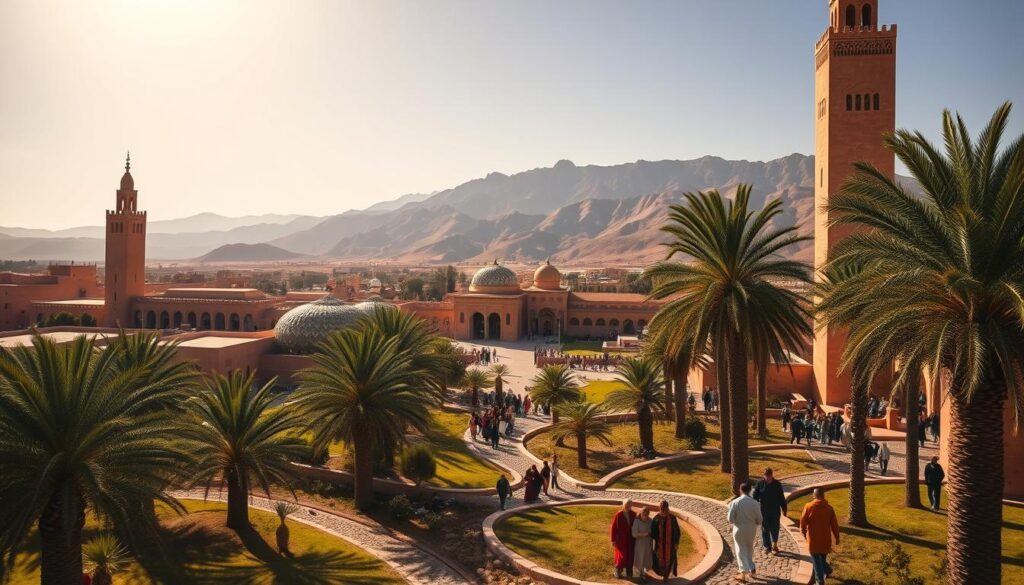
In Morocco, over 99% of people are Muslim. The rest are Christians, Jews, and other minorities. Islam deeply influences Moroccan society, culture, and politics. You can see Islam’s impact in the country’s architecture, festivals, and social norms.
Historical Context of Religion in Morocco
Islam came to Morocco in the 7th century with Arab conquerors. Over time, Moroccan beliefs were shaped by Sufism and the monarchy’s role. Knowing this history helps understand Morocco’s religious demographics and heritage today.
Islam: The Predominant Religion in Morocco
Exploring Morocco’s religious scene shows Islam’s big role. Most people here are Muslim. This makes Islam a big part of daily life.
Sunni Islam and the Maliki School
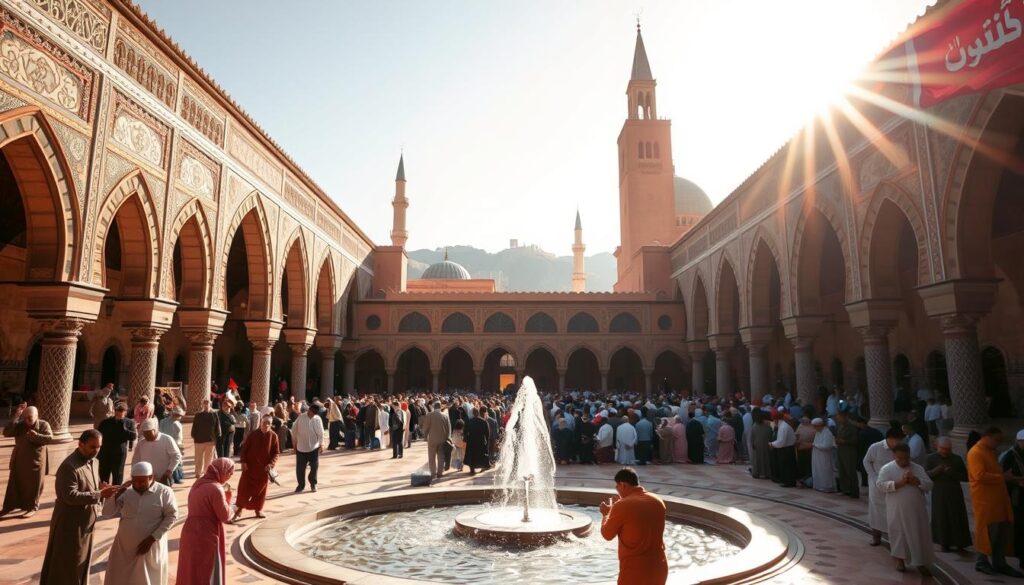
Morocco is mostly Sunni Muslim. Most follow the Maliki School. This school values the Prophet Muhammad’s sayings and the community’s agreement in law.
The Maliki School has greatly influenced Morocco’s religion and laws. Sunni Islam is seen in the country’s practices. Mosques are key places for worship and community.
| Aspect | Description | Significance |
|---|---|---|
| Predominant Sect | Sunni Islam | Shapes religious practices and legal framework |
| Jurisprudence School | Maliki School | Influences interpretation of Islamic law |
| Role of Mosques | Places of worship and community hubs | Central to community life |
Sufism and Its Influence
Sufism, a mystical part of Islam, is big in Morocco. It shapes the country’s faith and culture. Sufi orders and rituals are common, focusing on spiritual growth.
Sufism’s mark is seen in Morocco’s culture, like architecture and music. Sufi shrines and zawiyas are pilgrimage spots, drawing visitors from everywhere.
Morocco Religion Percentage: Current Statistical Breakdown
To understand Morocco’s religious makeup, we need to look at the latest stats. The country is mostly Islamic, but knowing the exact numbers of each group helps us see its society better.
Official Census Data
The latest census shows most Moroccans are Muslim. 99% of the population identifies as Muslim, with most being Sunni Muslims. The remaining 1% includes Christians, Jews, and others.
| Religious Group | Percentage |
|---|---|
| Muslims | 99% |
| Christians, Jews, and Others | 1% |
Independent Research Findings
Independent studies back up the census data, giving us a closer look at Morocco’s religious groups. A report by World Population Review shows a big Islamic majority. It also points out small but lively communities of Christians, Jews, and others.
“Morocco is a country where Islam is deeply ingrained in the culture and society, yet it also hosts a diverse range of religious beliefs and practices.” –
Both the census and independent studies show Islam’s big role in Morocco. They also highlight the country’s religious diversity. Understanding these stats is key to seeing Morocco’s complex society and culture.
The Muslim Population in Morocco
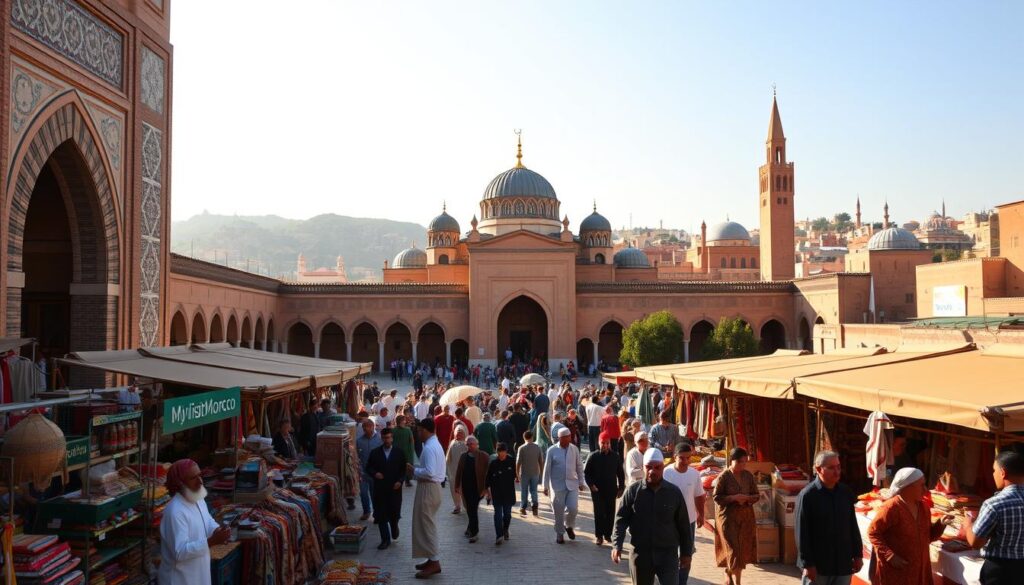
To grasp the Muslim population in Morocco, we must look at their numbers, where they live, and their religious habits. Islam is the main religion, deeply influencing Moroccans’ daily lives.
Demographics and Distribution
In Morocco, most Muslims are Sunni, following the Maliki school. They are found all over the country, in cities and towns. More than 99% of Moroccans are Muslim, according to estimates.
Religious Practices and Observances
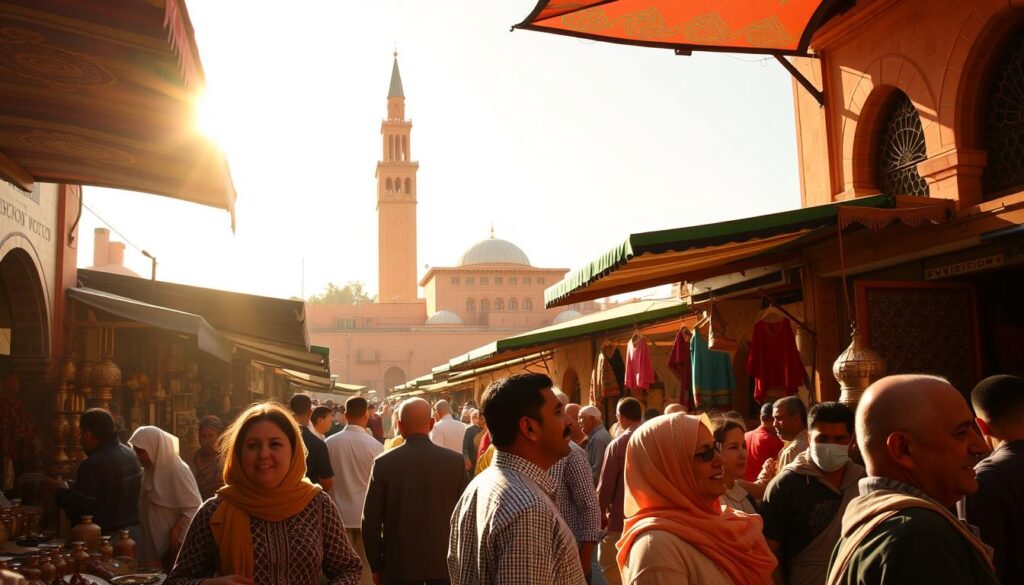
Moroccan Muslims follow many religious habits every day. These include daily prayers and big religious events.
Daily Prayer Rituals
Daily prayers, or Salat, are key in Islam. Moroccans pray five times a day, facing Mecca. It’s a time for personal reflection and spiritual renewal.
Ramadan and Eid Celebrations
Ramadan, a month of fasting, is deeply respected by Moroccan Muslims. It ends with Eid al-Fitr, a joyous celebration. Eid al-Adha also marks a significant event, commemorating the Prophet Ibrahim’s sacrifice. These times are for coming together, giving to charity, and feasting.
“The month of Ramadan is a time for spiritual growth, self-reflection, and devotion to faith.” This quote shows Ramadan’s importance in Moroccan Muslims’ lives.
“The month of Ramadan is a time for spiritual growth, self-reflection, and devotion to faith.”
In summary, Morocco’s Muslim population is deeply committed to their faith. Knowing about their numbers and religious practices helps us understand Moroccan society better.
Religious Minorities in Morocco
Islam is the main religion in Morocco, but there are also other religious groups. These groups add to the country’s diversity and culture.
Christianity in Morocco
Christianity has been in Morocco since the Roman times. Today, it’s mostly expats and a few Moroccan converts who make up the Christian community.
Catholic and Protestant Communities
The Catholic community is the largest Christian group in Morocco. They have many churches across the country. Protestant groups also exist, with churches that offer services in different languages for expats.
Challenges and Growth
Christian communities face challenges in a mostly Muslim society. Recent reports show the complex situation of religious freedom in Morocco. This affects Christians’ ability to practice openly.
Other Non-Muslim Communities
Morocco is also home to Jews and Bahá’ís, among others. The Jewish community has a long history in Morocco. Many Jews have made significant contributions to the country’s culture and history.
| Religious Minority Group | Estimated Population | Places of Worship |
|---|---|---|
| Christians | Approximately 20,000 | Multiple churches across major cities |
| Jews | Less than 5,000 | Synagogues in major cities like Casablanca |
| Bahá’ís | Small, exact numbers not available | Places of worship not publicly advertised |
The Jewish Heritage of Morocco
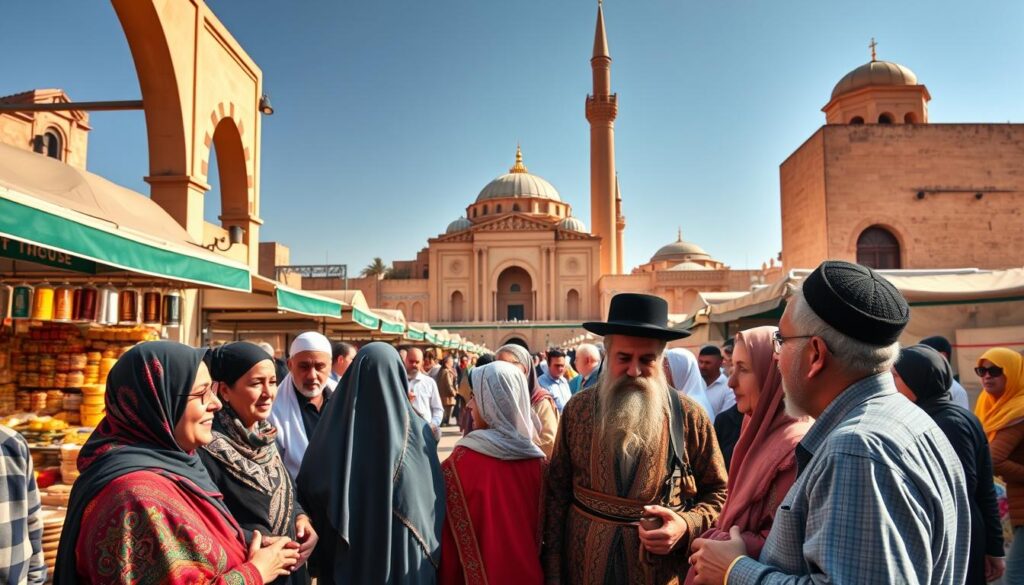
Morocco’s Jewish heritage is a rich tapestry woven over centuries. It reflects the country’s unique cultural and religious landscape. Exploring this heritage, you’ll see the Jewish community’s significant contributions to Morocco’s history, culture, and economy.
Historical Presence and Contributions
The Jewish community in Morocco has a history spanning over 2,000 years. Ancient Jewish settlements played a crucial role in the country’s early development.
Ancient Jewish Settlements
Some of the earliest Jewish settlements in Morocco date back to the Roman era. Communities established themselves in cities like Fez and Marrakech. These settlements were significant for their religious practices and cultural and economic contributions.
Cultural and Economic Impact
The Jewish community in Morocco had a profound impact on the country’s culture and economy. They were involved in trades like textiles, metals, and finance. They played a key role in the development of Morocco’s cities. For more information on the Jewish heritage in specific cities, you can visit exploring Casablanca’s Jewish heritage.
Current Status of the Jewish Community
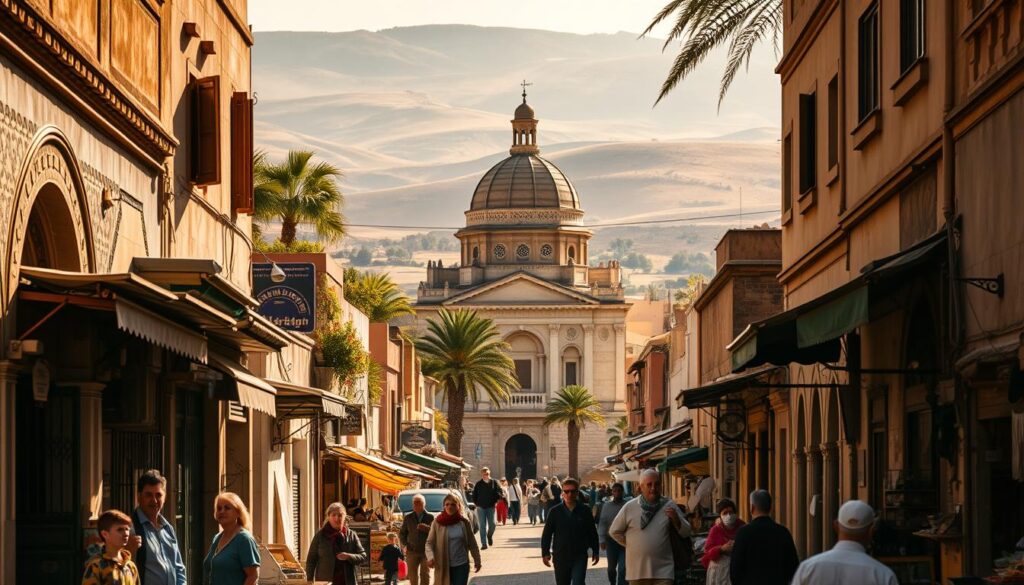
Today, the Jewish community in Morocco continues to thrive, albeit with a significantly reduced population compared to its historical peak.
Population Centers and Synagogues
While many Moroccan Jews have emigrated to other countries, particularly Israel and France, there are still vibrant Jewish communities in cities like Casablanca and Rabat. These communities maintain historic synagogues and continue to celebrate Jewish traditions.
Preservation Efforts
Efforts are being made to preserve Morocco’s Jewish heritage sites, including synagogues, cemeteries, and historic neighborhoods. The Moroccan government, along with international organizations, is working to restore and protect these sites. They recognize their cultural and historical significance.
| City | Number of Synagogues | Jewish Population |
|---|---|---|
| Casablanca | 5 | 2,500 |
| Rabat | 2 | 500 |
| Marrakech | 3 | 1,000 |
Indigenous Beliefs and Practices
Exploring Morocco’s religious diversity means looking at its indigenous beliefs and practices. These traditions are a mix of many cultures. The Berber people have greatly influenced Morocco’s religious identity.
Berber Religious Traditions
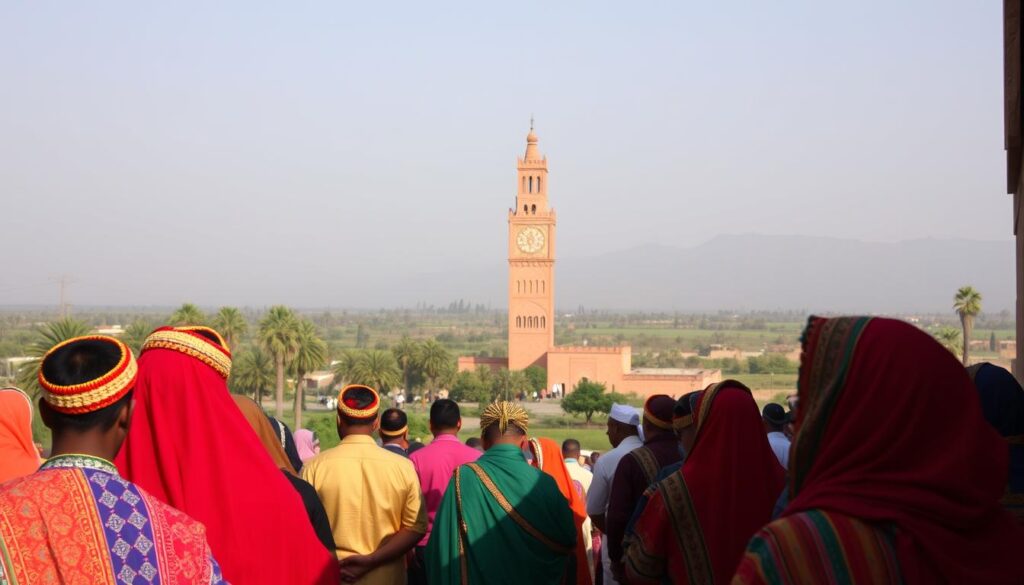
The Berbers, Morocco’s original inhabitants, have their own unique religious traditions. They have a deep bond with nature and the land. Animist practices, where they honor natural elements, are common among them.
You can still see these traditions in rural areas. Berbers there hold onto ancient rituals.
Syncretism with Islam
Over time, Berber traditions have merged with Islamic practices. This mix is seen in many parts of Moroccan culture. For example, Islamic holidays are celebrated with Berber traditions.
This shows how these beliefs live together in harmony. This blend makes Morocco’s religious diversity very interesting.
- The incorporation of Berber traditions into Islamic practices.
- The celebration of festivals with mixed origins.
- The daily practices that reflect a blend of beliefs.
Religious Freedom and Legal Framework
To understand Morocco’s religious freedom, we need to look at its laws and constitution. The country’s constitution is key in shaping its religious scene.
Constitutional Provisions
Morocco’s constitution ensures freedom of religion, but with some rules. The constitution makes Islam the state religion. The king is both the head of state and the “Commander of the Faithful.” This shows how closely the state and religion are tied. Learn more about religious freedom in Morocco at this link.
Practical Implementation and Challenges
Even with laws in place, making religious freedom work is hard. The government usually respects religious freedom, but there are still limits.
Conversion Issues
Changing from Islam to another religion is a tricky topic. Moroccan law doesn’t ban conversion, but it’s frowned upon. Those who convert might face social and legal hurdles.
Religious Expression Limitations
Expressing religious beliefs has its own set of rules. Public displays of faith that go against Islamic teachings or the monarchy’s religious role might be restricted. These rules can affect different religious groups.
Regional Variations in Religious Demographics
Exploring Morocco shows that religious demographics change a lot from one area to another. The country’s varied landscapes, from cities to countryside, shape the religious practices of its people.
Urban vs. Rural Religious Composition
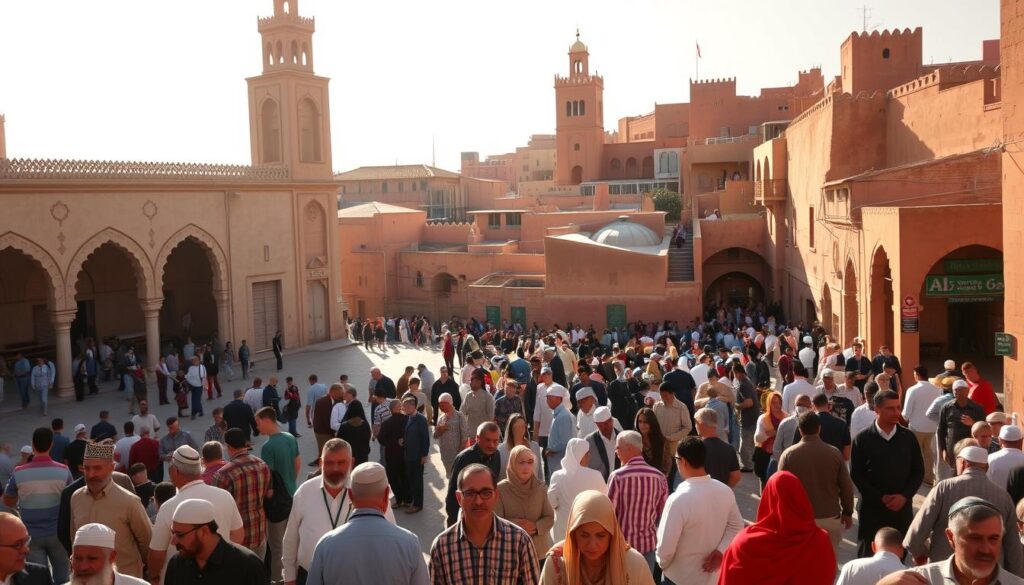
In cities like Casablanca and Rabat, most people are Muslim. But, in rural areas, you’ll find a mix of religions, including Berber traditions. Urban and rural areas have different ways of practicing religion.
Geographic Distribution of Religious Communities
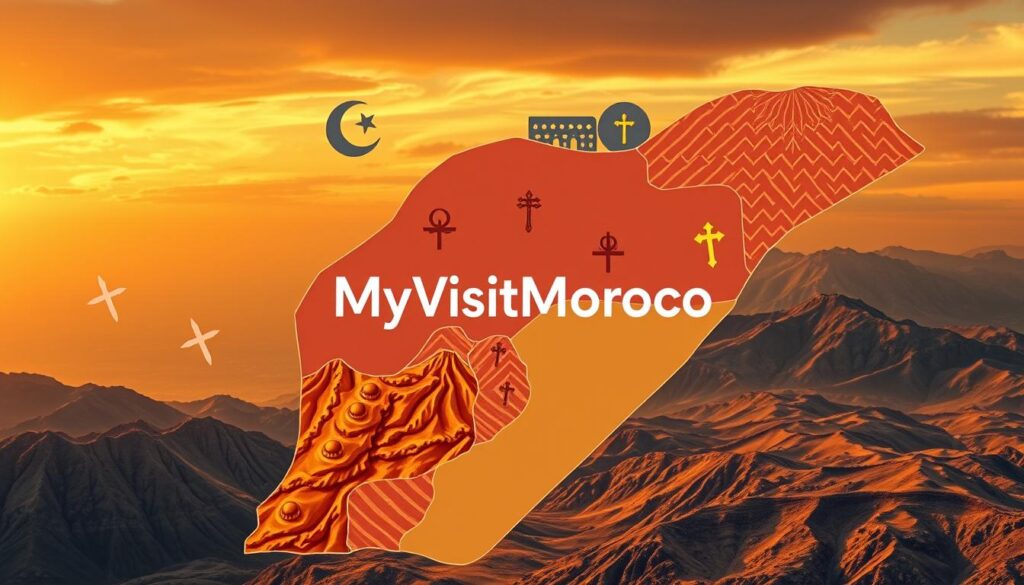
Religious groups in Morocco are spread out in different ways. For example, the Souss-Massa region is home to many Berbers with their own religious customs. Knowing these regional differences helps us understand Morocco’s rich religious diversity.
The Role of the Monarchy in Religious Affairs
The Moroccan monarchy has a big role in the country’s religious scene. The King has a lot of influence over religious matters. He is both the head of state and the religious leader, linking the monarchy to Morocco’s religious identity.
The King as “Commander of the Faithful”
The King of Morocco is called the “Commander of the Faithful.” This title shows his role as the protector and promoter of Islam. It’s not just a title; it’s a real power to shape religious policies and practices.
As “Commander of the Faithful,” the King looks after the Muslim community in Morocco. He oversees religious institutions, picks religious leaders, and guides religious education. His influence helps keep different religious views in balance, promoting stability and unity.
Royal Initiatives for Religious Moderation
The Moroccan monarchy has started many projects to support religious moderation and fight extremism. These include educational programs, religious reforms, and efforts to talk across different faiths. The King wants to show a moderate Islam to fight radical views and build a tolerant society.
One key example is the Mohammed VI Institute for Training Imams. It aims to teach imams about a moderate Islam. This shows the monarchy’s effort to support a peaceful and inclusive religious environment.
| Royal Initiatives | Objectives | Impact |
|---|---|---|
| Mohammed VI Institute | Train imams in moderate Islam | Promotes religious moderation |
| Religious Reforms | Update religious education | Counters radical ideologies |
| Interfaith Dialogue | Foster tolerance and coexistence | Enhances religious harmony |
Religious Education in Morocco
In Morocco, religious education is key to the country’s culture and society. The education system teaches religious knowledge and values to the young. This ensures Morocco’s religious traditions continue.
Public School Curriculum
The public school curriculum in Morocco includes religious education. Students learn Islamic studies, covering Islam’s principles, Islamic history, and text interpretation. This education helps students understand Islamic values and apply them in life.
Religious Institutions and Training
Morocco also has religious institutions for specialized training. These institutions offer education from primary to advanced levels.
Quranic Schools
Quranic schools, or “Madrasas,” focus on the Quran and Islamic law. Students memorize the Quran and study Islamic law and its applications.
University-Level Religious Studies
At the university level, students can get advanced degrees in religious studies. This includes Islamic theology, law, and comparative religion. The University of Al-Karaouine is a top institution for Islamic studies.
| Level of Education | Institution Type | Focus Areas |
|---|---|---|
| Primary | Public Schools, Quranic Schools | Basic Islamic Principles, Quranic Studies |
| Secondary | Public Schools, Specialized Islamic Schools | Islamic History, Jurisprudence, Theology |
| University | Universities, Islamic Studies Institutes | Advanced Islamic Theology, Comparative Religion, Islamic Law |
Morocco’s education system aims to deepen understanding of Islamic values. It shapes the country’s culture and society. By offering comprehensive religious education, Morocco aims to create a society that values its religious heritage.
Changing Trends in Morocco’s Religious Landscape
Morocco’s religious scene is always changing. This is because of things like secularization, modernization, and religious revival movements.
Secularization and Modernization
Morocco is slowly becoming more secular and modern. More people are saying they’re not religious or are less religious. The internet and global media have played a big role in this, showing Moroccans different views and ways of life.
Religion’s role in public life is also changing. Islam is still the main religion, but there’s more acceptance of other religions. Laws are getting more inclusive, protecting everyone’s rights.
| Trend | Description | Impact |
|---|---|---|
| Secularization | Decrease in religious adherence | Increased religious diversity |
| Modernization | Adoption of modern values and lifestyles | Greater tolerance and pluralism |
Religious Revival Movements
At the same time, Morocco is seeing a rise in religious revival movements. These aim to make Islamic practices stronger and encourage a more devout life. They focus on going back to Islam’s roots and following its teachings.
These movements are changing Morocco’s religious scene. They make religious discussions more lively and affect how people practice their faith. It’s important to understand these trends to get a full picture of Morocco’s religious identity.
Impact of Religion on Moroccan Culture and Society
Religion deeply influences Moroccan daily life and traditions. It’s not just about personal faith. It’s a key part of the country’s culture and society.
Religious Festivals and Celebrations
Morocco’s calendar is filled with religious festivals. Eid al-Fitr and Eid al-Adha are celebrated with great enthusiasm. These events show the people’s religious devotion and unite communities.
The Prophet’s Birthday is also a big celebration. It’s marked with processions and festivities. These events are important for understanding Moroccan culture.
Influence on Art, Architecture, and Literature
Religion has a big impact on Moroccan art, architecture, and literature. Islamic principles shape the architecture. Literary works often deal with faith and spirituality.
Islamic Architectural Heritage
Morocco’s buildings show Islamic design, with intricate patterns and arches. The Koutoubia Mosque in Marrakech is a famous example. It draws visitors from all over.
Religious Themes in Moroccan Arts
Moroccan arts, like calligraphy and pottery, often have religious themes. These arts reflect the country’s religious identity and add to its cultural richness.
| Aspect | Influence of Religion | Examples |
|---|---|---|
| Architecture | Islamic design principles | Koutoubia Mosque, Marrakech |
| Arts | Religious themes and motifs | Calligraphy, pottery, textiles |
| Literature | Exploration of faith and spirituality | Works of Moroccan authors reflecting on religious identity |
Interfaith Relations and Dialogue
In Morocco, different religious groups live together. This diversity is a big part of the country’s culture. It’s important to understand and respect each other’s beliefs for peace.
Government Initiatives for Religious Harmony
The Moroccan government works hard to bring people together. They set up forums and conferences for religious leaders. These events help everyone learn to respect and understand each other’s faiths.
“The Moroccan government’s efforts to promote interfaith dialogue reflect its commitment to religious tolerance and cultural diversity.”
Grassroots Interfaith Movements
Community groups also play a big role in Morocco. They bring people from different faiths together. They talk, share stories, and work on projects together.
| Initiatives | Description | Impact |
|---|---|---|
| Government Forums | Bringing together religious leaders for dialogue | Promotes mutual respect and understanding |
| Community Service Projects | Joint projects involving different religious communities | Fosters cooperation and social cohesion |
Through dialogue and harmony, Morocco is building a stronger society. It celebrates its diversity and promotes peace.
International Perspectives on Morocco’s Religious Diversity
Morocco is known for its rich mix of religious beliefs. This diversity plays a big role in its international relations and global image.
Diplomatic Relations Based on Religious Tolerance
Morocco’s openness to different religions has helped it build strong ties with other countries. Its commitment to religious harmony is seen as a plus by the world. This makes Morocco stand out as a moderate Muslim nation.
The Moroccan monarchy’s role in promoting religious tolerance is key. As the “Commander of the Faithful,” the King ensures Islam is practiced in a way that welcomes everyone. This supports Morocco’s diplomatic efforts.
Tourism and Religious Heritage
Morocco’s religious sites attract many tourists. Visitors come to see historic mosques, synagogues, and other places of worship. This tourism boosts the local economy and helps people understand Morocco’s diverse religious culture.
There’s a big effort to keep Morocco’s religious sites in good shape. This includes making them open to visitors while protecting their cultural and religious value. Finding the right balance is important for both preserving history and supporting tourism.
Conclusion: Understanding Morocco’s Religious Tapestry
You now know a lot about Morocco’s religious scene. Islam is the main religion here. The country has a big Muslim majority and a rich Islamic history.
There are also Christians and Jews, making up a small but important part of the population. This mix shows the diversity of Morocco’s religious landscape.
The morocco religious demographics show a complex picture. There are differences between cities and countryside. Knowing this helps us understand Morocco’s culture and society.
As Morocco grows, its religious scene will keep changing. This will always be a big part of who they are.



 Covers cities, coast, mountains, desert & food