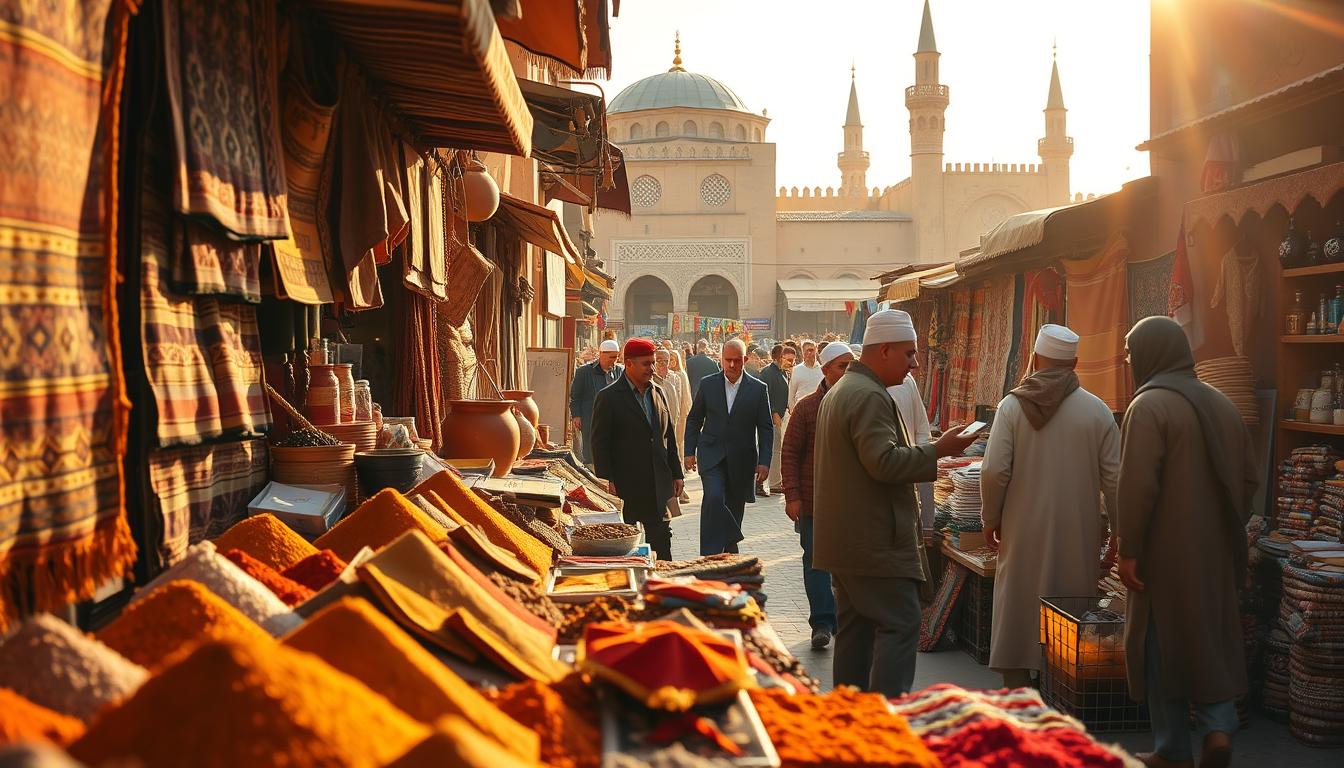
Exploring Morocco reveals a world of cultures and traditions. The streets of Marrakech buzz with life, while the Atlas mountains offer peace. Here, history and modern times meet beautifully.
Get ready to dive into the world of Moroccan society. We’ll uncover the details of their daily lives and what makes them unique. You’ll see how Moroccan traditions are still important today.
Key Takeaways
- Understanding the blend of traditional and modern influences in Moroccan daily life.
- Exploring the significance of Moroccan traditions in shaping societal identity.
- Gaining insights into the cultural diversity of Morocco.
- Discovering how historical context influences contemporary Moroccan society.
- Learning about the role of community in Moroccan culture.
The Cultural Mosaic of Morocco
Morocco’s culture is a mix of many traditions. It sits at the crossroads of Africa, Europe, and the Arab world. This mix is seen in the daily lives of its people.
Geographic and Historical Influences
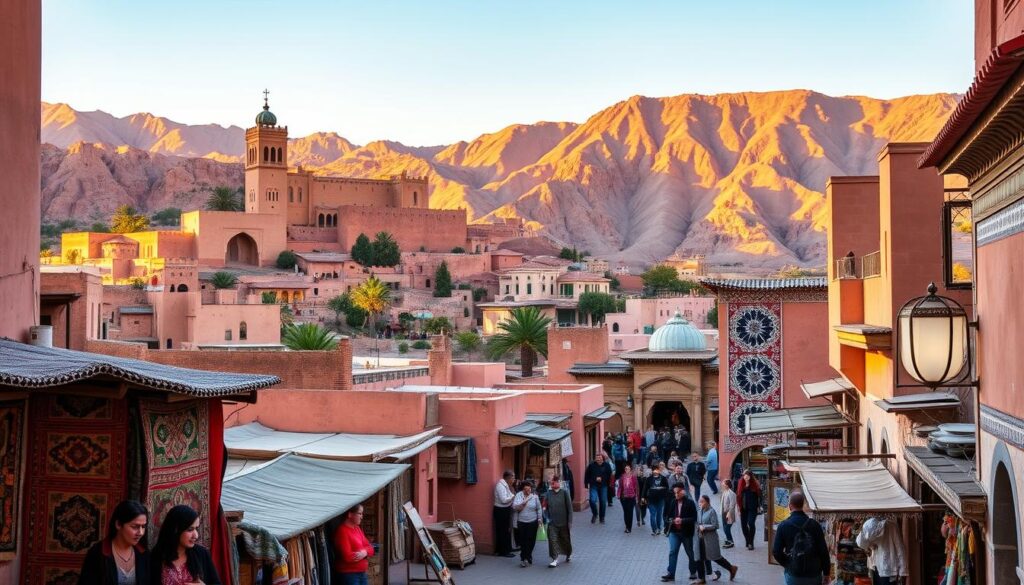
Morocco’s geography has shaped its culture. The Atlas Mountains and Sahara Desert have influenced different cultural practices. For example, Berber communities in the mountains keep their traditions alive. Meanwhile, the coastal areas have been influenced by Europe and Arabs.
The history of Morocco also plays a big role in its culture. Its location has made it a center for trade and cultural exchange. This has created a rich cultural heritage, blending different elements into a unique Moroccan identity.
- The impact of Arab conquests on the language and religion
- The influence of European colonialism on architecture and cuisine
- The role of Berber traditions in shaping cultural practices
The Blend of Arab, Berber, and European Heritage
Morocco’s culture is a mix of Arab, Berber, and European influences. This mix is seen in its architecture, cuisine, and traditions. For instance, the traditional Djellaba garment shows the country’s cultural heritage, with designs from Arab and Berber traditions.
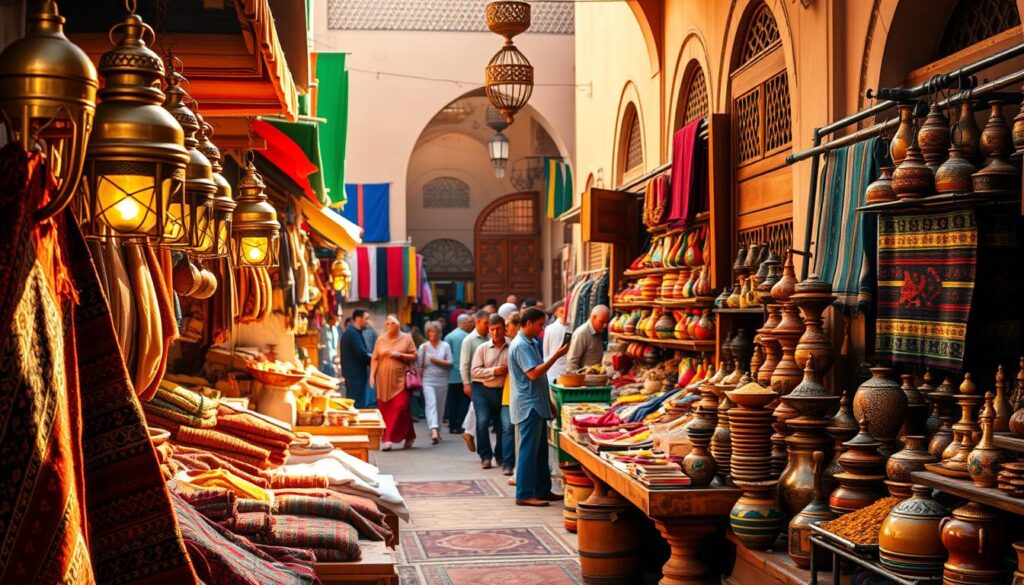
The Arab influence is seen in the language and religion, with Islam being important. Berber traditions are reflected in music, dance, and art. European influences are found in architecture and cuisine.
Some key aspects of this blend include:
- The use of Arabic and Berber languages
- The celebration of Islamic holidays and traditions
- The incorporation of European architectural styles
The Rich History That Shaped Modern Morocco
Exploring Morocco means diving into its rich history. This history has shaped the country’s modern identity. From the ancient Berber roots to the Islamic influence and Arab conquest, each era has left its mark.
Ancient Berber Roots
The Berbers, Morocco’s indigenous people, have a long history. Their culture is rich and diverse. The Berbers were known for their fierce independence and resistance to external rule.
Berber Contributions: The Berbers have greatly influenced Moroccan culture. They have contributed to the language, customs, and traditional crafts.
Islamic Influence and Arab Conquest
The arrival of Islam in the 7th century was a turning point. The Arab conquest brought a new religion and culture. This blend has shaped Morocco’s architecture, art, and way of life.
Colonial Period and Independence
Morocco’s location made it valuable to European powers during the colonial era. The French and Spanish protectorates modernized Morocco. But, this also sparked a rise in Moroccan nationalism, leading to independence in 1956.
| Period | Key Events | Legacy |
|---|---|---|
| Ancient Berber | Indigenous culture, resistance to external rule | Berber languages and customs |
| Islamic/Arab Conquest | Introduction of Islam, Arabic language | Islamic architecture, art, and culture |
| Colonial Period | French and Spanish protectorates, modernization | Administrative systems, infrastructure, nationalism |
Ethnic Diversity in Moroccan Society
Exploring Moroccan society reveals a vibrant mix of ethnic communities. Each group has its own identity and cultural practices. This diversity comes from Morocco’s strategic location and complex history.
Berber Communities and Their Distinct Identity
Berber communities, also known as Amazigh, are Morocco’s indigenous people. They have a rich cultural heritage, including their own languages, customs, and traditions. Berbers have greatly influenced Moroccan identity, seen in architecture, art, and cuisine.
You can learn more about Berber culture by visiting the Moroccan People website. It offers insights into their daily life and traditions.
Some key features of Berber communities include:
- Unique languages and dialects
- Traditional clothing and adornments
- Rich oral storytelling and music traditions
Arab Populations and Other Ethnic Groups
Arab populations have deeply influenced Moroccan society. They introduced Islam and the Arabic language, which are now key to the country’s identity. Other groups, like the Haratin and the Gnaoua, also add to Morocco’s cultural diversity.
The Haratin, for example, have a unique history and cultural practices. These are different from both Berber and Arab communities.
| Ethnic Group | Cultural Characteristics |
|---|---|
| Berbers (Amazigh) | Indigenous people with their own languages and traditions |
| Arabs | Introduced Islam and Arabic language |
| Haratin | Unique history and cultural practices |
| Gnaoua | Rich musical and spiritual traditions |
Understanding Morocco’s ethnic diversity helps us appreciate its complex cultural landscape. Learning about different ethnic groups enriches our understanding of Morocco’s history, traditions, and daily life.
Languages of Morocco: A Linguistic Tapestry
Exploring Morocco reveals a rich tapestry of languages. This diversity shows the country’s varied cultural background. Morocco is home to many languages, each spoken in different areas and communities.

Darija: Moroccan Arabic
Darija, or Moroccan Arabic, is widely spoken in Morocco. It’s the native tongue of most people and used daily. This language has been shaped by Arabic, Berber, French, and Spanish, making it special.
Amazigh Languages
Amazigh languages, or Berber, are key to Morocco’s culture. They’re spoken by the Amazigh people, who are native to the area. There’s a push to teach and use these languages more, including in schools.
French, Spanish, and English Influence
Morocco’s past as a colonized country is seen in its languages. French and Spanish are common, especially in official and school settings. English is growing in popularity, especially among the young and in tourist spots. This shows Morocco’s cultural and historical links to Europe.
The mix of languages in Morocco creates a unique culture. Talking to locals, you’ll see how languages blend. This highlights the country’s rich cultural heritage.
Morocco People and Culture: Religious Practices and Beliefs
In Morocco, religion is a big part of daily life. It’s the foundation of the country’s culture. You’ll see how religious practices and beliefs are part of everyday life.
Islam as the Predominant Faith
Islam is the main religion in Morocco. It shapes the culture, traditions, and daily life. You can see Islam’s influence everywhere, from the call to prayer to religious holidays.
Daily Religious Practices
Moroccans follow Islamic practices like the Five Daily Prayers and fasting in Ramadan. These actions show their devotion and bring Muslims together.
The call to prayer from minarets reminds everyone of faith’s importance. Many visit mosques for prayer and socializing, finding spiritual comfort.
Sacred Spaces and Architecture
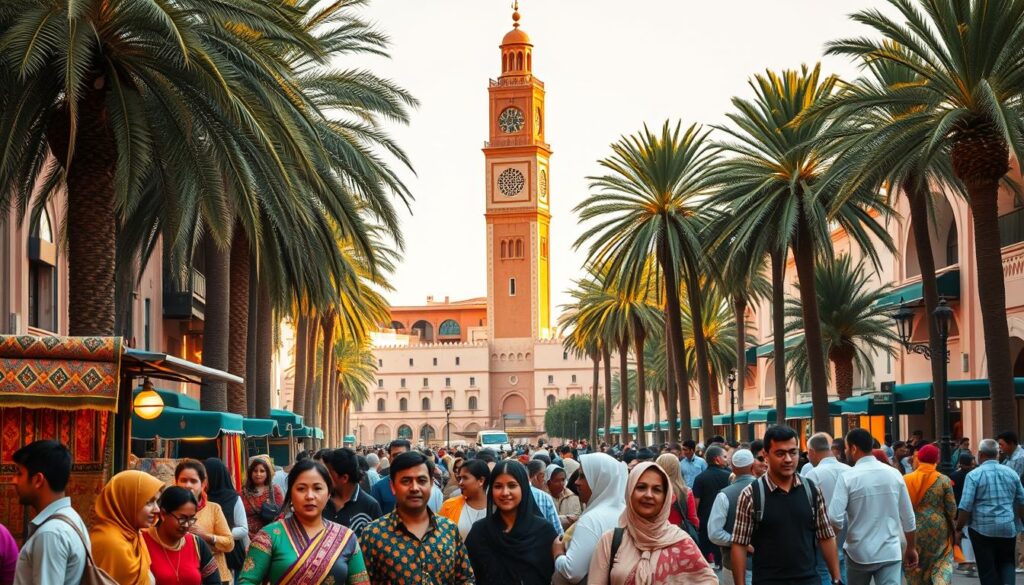
Morocco’s mosques and Islamic architecture show its spiritual heritage. The designs and calligraphy in these buildings highlight Islamic art.
Religious Tolerance and Minority Communities
Morocco values religious tolerance, even though Islam is the main faith. Minority communities live alongside Muslims, making society diverse and inclusive.
Spiritual Traditions and Maraboutism
Morocco also values maraboutism, honoring saints and their shrines. This tradition mixes Islamic beliefs with local customs, enriching the country’s spiritual scene.
Exploring Morocco’s religious practices and beliefs offers a deeper look at its spiritual identity. The mix of religious and cultural practices makes Morocco a captivating place to discover.
Family Structure and Social Dynamics
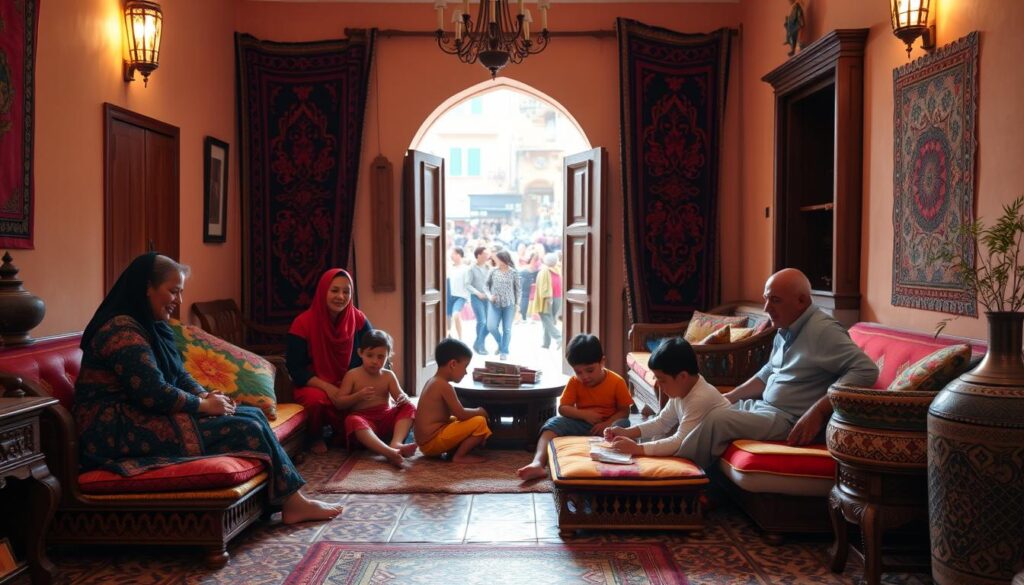
Moroccan society values family ties highly. Extended family structures shape individual identities. Family is at the heart of Moroccan culture, affecting daily life and social interactions.
The Importance of Extended Family
In Morocco, the extended family is key. It offers emotional and financial support. Family gatherings and celebrations are common, strengthening bonds and solidarity.
The extended family also helps pass down traditions and cultural values. This is crucial for younger generations.
Gender Roles in Transition
Moroccan society is changing, with growing women’s rights and empowerment. Women are taking on more roles in education, business, and politics. For more on family dynamics in Morocco, visit Moroccan Legacy.
Marriage Customs and Celebrations
Marriage is a big deal in Moroccan culture. It’s celebrated with big ceremonies and festivities. Marriage customs vary by region, showing the country’s cultural diversity.
The wedding celebrations include traditional music, dance, and feasting. They bring together family and friends to celebrate the union.
Exploring Moroccan society, you’ll see how family and social dynamics are connected. Family ties, changing gender roles, and traditional marriage customs make up Moroccan culture’s rich tapestry.
Traditional Moroccan Dress and Adornment
Traditional Moroccan dress and adornment show the country’s rich culture. You’ll see a mix of history, geography, and culture in the traditional attire of Morocco.

The Iconic Djellaba and Kaftan
The djellaba is a long robe with a hood, worn by both men and women. It’s for everyday wear. The kaftan, more elaborate, is for special events, showing elegance and heritage. For more on Moroccan traditional clothing, check out this detailed exploration.
Regional Variations in Attire
Morocco’s diverse geography and culture lead to many regional outfits. From the Atlas Mountains to Marrakech and Fez, each area has its own style. These styles reflect local customs and histories.
Jewelry and Personal Adornment
Jewelry is key in Moroccan adornment, with designs that mean status, spirituality, or identity. Silver and gold jewelry, with precious stones, show the artisan’s skill and the wearer’s elegance.
Exploring traditional Moroccan dress, you’ll find each piece has a story. Every garment celebrates the country’s rich heritage. And every adornment is a joyous celebration of its vibrant culture.
Moroccan Cuisine: A Feast for the Senses
Moroccan food is a treat for the senses. It offers a wide range of dishes that show the country’s rich culture. You’ll learn about key dishes, cooking ways, and the importance of dining manners and food traditions in Morocco.
Signature Dishes and Cooking Methods
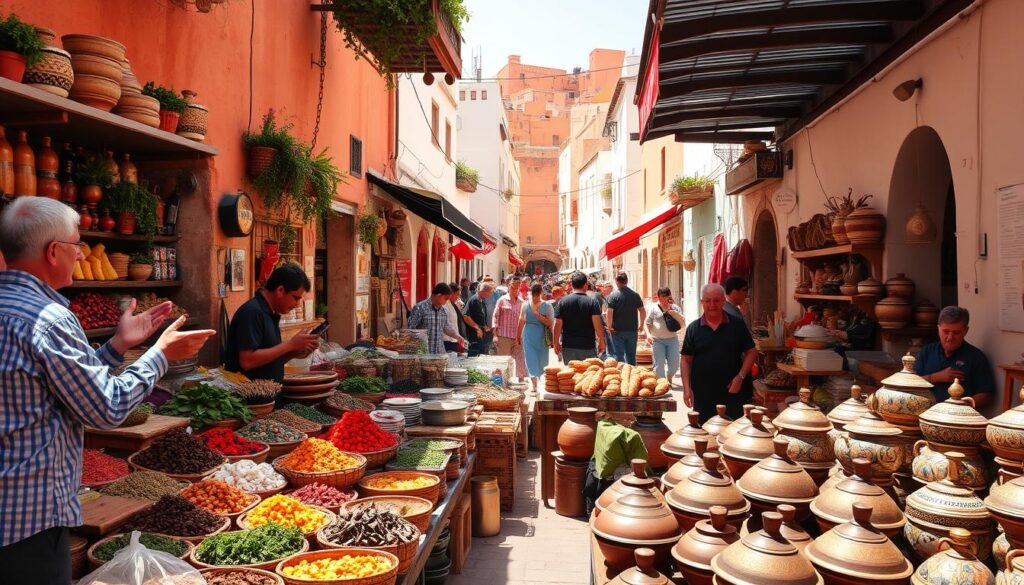
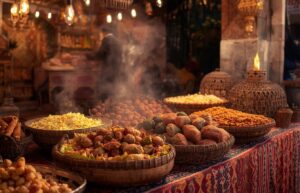
Moroccan food is known for its bold flavors and smells. This is thanks to many spices and special cooking methods. Tagine and couscous are two famous dishes you’ll find everywhere.
Tagine and Couscous Traditions
Tagine is a stew cooked in a special pot. It’s made with meat, veggies, and dried fruits, making it very tasty. Couscous, a staple made from semolina flour, is often served with meat and veggies.
Spices and Flavor Profiles
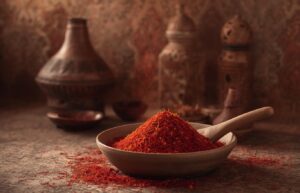
Moroccan food is famous for its spice mixes, like ras el hanout. This mix can have up to 30 spices, giving Moroccan dishes their unique taste.
The Art of Moroccan Tea
Moroccan tea, especially green tea with mint, is a big part of their culture. Making and serving tea is seen as an art, showing respect and hospitality. For more on Moroccan culture, check out this article.
Dining Etiquette and Food Traditions
Dining in Morocco is a time for family and friends to come together. It’s important to eat with your right hand and not finish your meal. This shows the host provided enough food.
| Dish | Description | Main Ingredients |
|---|---|---|
| Tagine | Slow-cooked stew | Meat, vegetables, dried fruits |
| Couscous | Traditional North African dish | Semolina flour, vegetables, meat |
| Moroccan Tea | Green tea with mint | Green tea leaves, fresh mint |
Arts and Crafts: Preserving Cultural Heritage
Exploring Morocco reveals a world of arts and crafts that showcase the country’s cultural heritage. Moroccan crafts are known for their beauty, detail, and historical importance. They play a key role in keeping Morocco’s identity alive.

Traditional Carpet Weaving and Textiles
Carpet weaving is a celebrated craft in Morocco, with techniques passed down through generations. Moroccan carpets are not just beautiful; they also hold deep symbolic meanings. Each region in Morocco has its own unique weaving style and technique.
To learn more about Moroccan culture and its arts, visit Moroccan Culture and Arts.
Pottery and Ceramics
Moroccan pottery and ceramics are highly valued for their craftsmanship and beauty. From the famous blue ceramics of Fez to the terracotta pots of the countryside, each piece showcases the skill of Moroccan potters. The designs are often centuries old, blending function with beauty.
Metalwork, Leatherwork, and Woodcarving
Morocco is also famous for its metalwork, leatherwork, and woodcarving. Artisans create stunning items like intricate lanterns, ornate jewelry, and finely tooled leather goods. These crafts highlight the artisans’ skills and help preserve Morocco’s cultural heritage.
Exploring Moroccan arts and crafts deepens your appreciation for the country’s rich cultural tapestry. It also honors the artisans who keep these traditions alive.
Music and Dance in Moroccan Culture
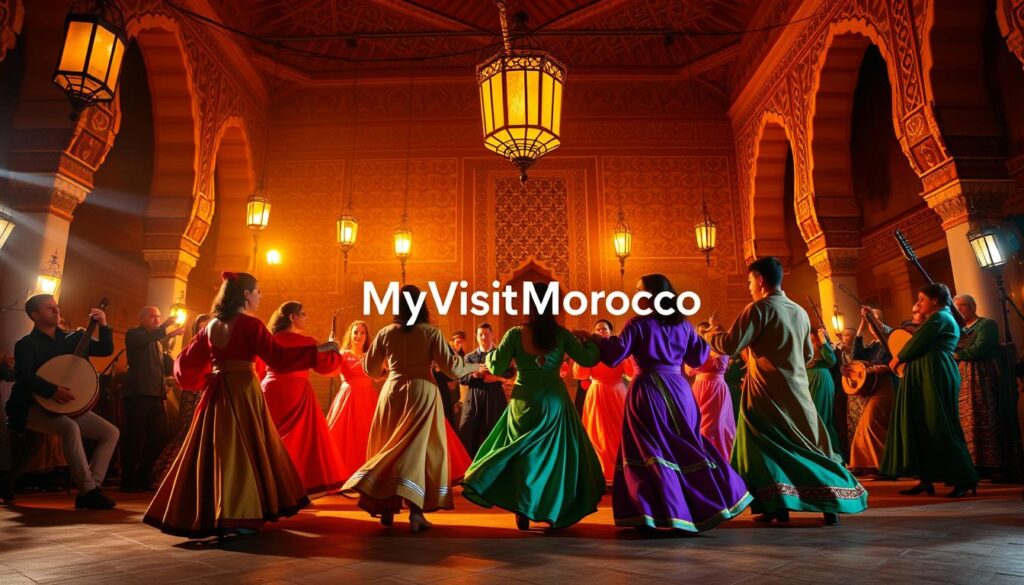
Exploring Morocco reveals the importance of music and dance in its culture. The country’s rich musical and dance heritage reflects its history and cultural influences. This diversity is a key part of Morocco’s identity.
Andalusian Classical Music
Andalusian classical music comes from the courts of Al-Andalus (Islamic Spain). It’s known for its complex rhythms and poetic lyrics. This music is a cherished part of Morocco’s culture, enjoyed at special events.
Gnawa and Spiritual Music Traditions
Gnawa music has African roots and is deeply spiritual. It’s performed by the Gnawa people, descendants of West African slaves. Gnawa music’s hypnotic rhythms are heard at spiritual ceremonies and festivals.
Regional Folk Music and Dance Forms
Morocco’s varied geography has led to many folk music and dance styles. Each region, from the Atlas Mountains to cities, has its own traditions. These styles are a big part of local celebrations and Morocco’s cultural tapestry.
| Music/Dance Form | Region | Characteristics |
|---|---|---|
| Andalusian Classical | Urban centers | Complex rhythms, poetic lyrics |
| Gnawa | Essaouira, Marrakech | Spiritual, hypnotic rhythms |
| Berber Folk | Atlas Mountains | Traditional instruments, folk dances |
Festivals and Celebrations Throughout the Year
Morocco’s celebrations show its rich cultural heritage. You’ll see the country’s traditions and history through its festivals. These events are a big part of Morocco’s North African identity.
Religious Celebrations: Eid and Ramadan
Morocco is mostly Muslim, and religion is key in its culture. Ramadan is a month of fasting. People gather at night for food and family.
The streets light up with lanterns. Eid al-Fitr ends Ramadan with prayers, food, and gifts.
Eid al-Adha honors the Prophet Ibrahim’s sacrifice. It includes prayers, animal sacrifices, and giving meat to the poor.
Cultural Festivals and Moussems
Morocco’s festivals show its diverse culture. Moussems celebrate local saints and traditions. You’ll see music, dance, and crafts.
- The Marrakech Popular Arts Festival highlights music, dance, and crafts.
- The Essaouira Gnawa Music Festival focuses on Gnawa culture with music and workshops.
Modern Festivals and Events
Morocco also has modern festivals. These include film, music, and cultural events. They draw visitors from everywhere.
The Rabat International Film Festival showcases Moroccan and international films. The Tangier International Film Festival features new talent and films.
Experiencing Moroccan Culture as a Visitor
Morocco is a treasure trove of cultural experiences waiting for you. As a visitor, you can dive into the local culture. Learn about cultural etiquette, visit important landmarks, and enjoy authentic experiences.
Cultural Etiquette for Travelers
When in Morocco, it’s key to respect local customs. Dressing modestly is a must, especially in mosques or rural areas. Greet people with “As-salamu alaykum” (peace be upon you), a common Moroccan greeting. Also, avoid eating with your left hand, as it’s seen as impolite.
Here are some etiquette tips:
- Respect for elders and authority figures
- Dressing modestly, covering shoulders and knees
- Removing your shoes when entering homes or mosques
- Using your right hand when eating or giving/receiving something
Must-Visit Cultural Landmarks
Morocco boasts many cultural landmarks. Marrakech, a UNESCO World Heritage site, is famous for its souks, architecture, and history. Don’t miss the Bahia Palace in Marrakech, the Chellah Necropolis in Rabat, and the ancient city of Fez.
Authentic Cultural Experiences
To really get to know Moroccan culture, try authentic experiences. Stay in a traditional riad to feel Moroccan hospitality. Attend a Gnawa music performance or visit artisans to learn about crafts like pottery or weaving.
Here are some experiences to try:
- Attending a traditional Moroccan cooking class
- Visiting a local souk to experience the sights and sounds
- Participating in a homestay program to live with a local family
Conclusion: The Enduring Spirit of Moroccan Culture
Exploring Morocco’s culture shows its rich and complex heritage. It’s made up of many traditions and influences. Moroccan traditions are alive in daily life, customs, and practices.
The country’s history is shaped by different ethnic groups. This includes the Amazigh people, Arabs, and Europeans. You can see this by visiting cultural landmarks and trying authentic experiences. For more on Morocco’s culture, check out Crossroads Cultural Exchange.
Morocco’s culture is not just old; it’s alive and changing. Reflecting on its traditions and customs will deepen your appreciation for Moroccan culture.



 Covers cities, coast, mountains, desert & food