Are you ready to explore one of the most fascinating countries in North Africa? Morocco is full of vibrant markets and stunning natural landscapes. This guide will help you make the most of your trip, whether you’re a seasoned traveler or just starting out.
You’ll find the top Morocco attractions that make it a must-visit spot. From Marrakech’s bustling streets to Taghazout’s serene beaches, Morocco has something for everyone.
Key Takeaways
- Explore the vibrant markets and souks of Marrakech
- Visit the stunning natural landscapes of the Atlas Mountains
- Relax on the beautiful beaches of Taghazout
- Discover the rich history and culture of Morocco’s ancient cities
- Experience the warm hospitality of the Moroccan people
The Allure of Morocco’s Diverse Landscapes and Rich Heritage
Morocco’s heritage is a mix of cultures, seen in its architecture, traditions, and landscapes. Exploring this country, you’ll find a unique blend of African, Arab, and European influences. This makes Morocco a top destination to visit.
A Crossroads of African, Arab, and European Influences
Morocco’s culture is a rich mix of African, Arab, and European influences. This is seen in its architecture, with styles from Islam, France, and Spain. You can see this diversity in Morocco’s cities and landmarks. For more insights, check out this guide to essential experiences in Morocco.
From Mountains to Deserts: Natural Wonders Await
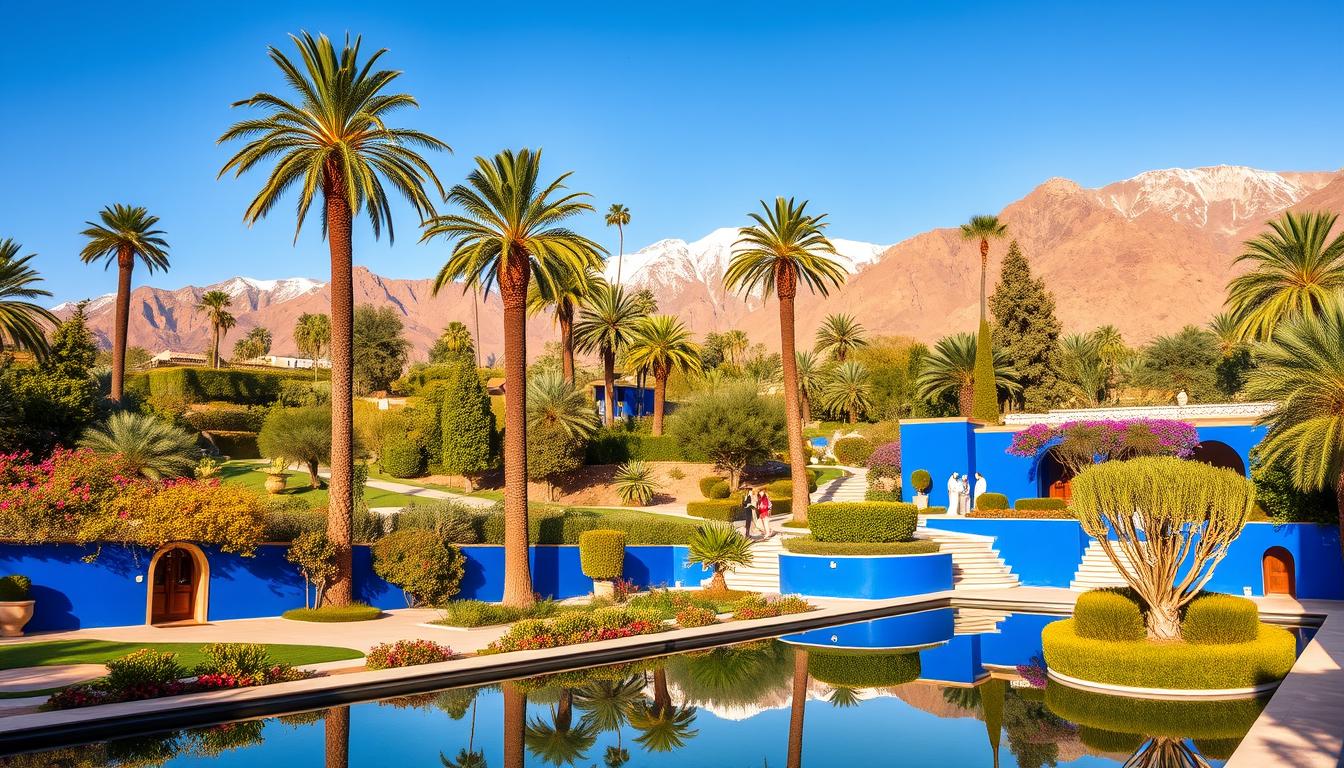
Morocco’s landscapes are diverse and full of wonders. From the Atlas Mountains to the Sahara Desert, the beauty is stunning. Places like Toubkal National Park and desert oases offer adventure and peace. Morocco’s landscapes cater to all tastes.
Marrakech: The Red City’s Timeless Appeal
When you arrive in Marrakech, you’re surrounded by its rich culture and charm. This lively place is a top spot for anyone visiting Morocco. It offers many experiences for all kinds of travelers.
Exploring the Vibrant Jemaa el-Fnaa Square
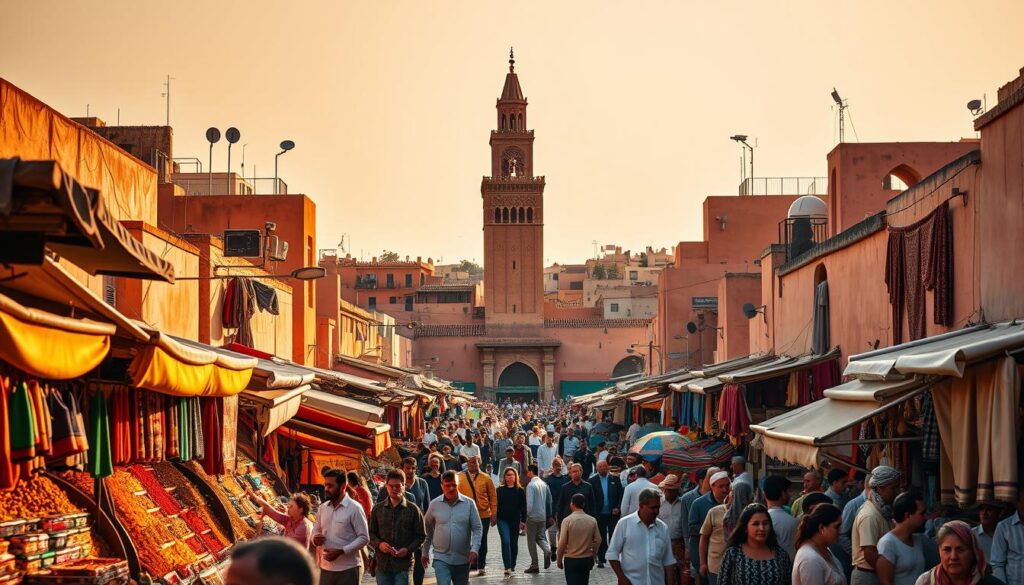
Jemaa el-Fnaa Square is Marrakech’s heart. By day, it’s a busy market with fresh goods and crafts. At night, it turns into a lively spectacle with street performers and night markets that amaze everyone.
Street Performers and Night Markets
The square is filled with street performers like musicians and dancers. The night markets have everything from souvenirs to snacks. It’s perfect for finding unique gifts or enjoying the scene.
Food Stalls and Local Delicacies
Don’t miss the food stalls at Jemaa el-Fnaa. They serve traditional dishes and fresh juices. These foods show off Morocco’s rich food culture. Try the local specialties during your visit.
The Magnificent Bahia Palace and Koutoubia Mosque
Marrakech boasts impressive landmarks like the Bahia Palace and Koutoubia Mosque. The Bahia Palace showcases Islamic craftsmanship with its tile work and wood carvings. The Koutoubia Mosque, with its tall minaret, is a symbol of Marrakech’s history.
Navigating the Labyrinthine Medina
The Medina of Marrakech is a maze of alleys and markets. It’s full of hidden riads and secret gardens. You’ll also find artisan workshops where local crafts are made.
Hidden Riads and Secret Gardens
Many riads in Marrakech are hidden behind simple facades. They offer a peaceful escape in the busy city. These traditional houses show Morocco’s architectural beauty.
Artisan Workshops and Traditional Crafts
Marrakech is famous for its crafts like woodworking and textiles. Visiting workshops lets you see these skills up close. For more on Morocco’s destinations, check out Morocco Destination Guides.
Fes: Morocco’s Cultural and Spiritual Heart
Fes, Morocco’s spiritual and cultural heart, invites travelers with its ancient charm. It’s the oldest of Morocco’s four imperial cities. Fes offers a unique mix of history and culture, perfect for those seeking traditional and spiritual experiences.
The Ancient Fes el-Bali Medina
The Fes el-Bali Medina is a UNESCO World Heritage site. It’s one of the largest and most preserved medieval Islamic cities. Inside its ancient walls, you’ll find a maze of narrow alleys and historic landmarks.
The World’s Oldest University: Al-Qarawiyyin
At the Medina’s heart is the Al-Qarawiyyin University, founded in 859 AD. It’s the oldest continuously operating university in the world. This historic place has been a hub of learning for centuries, drawing scholars from the Islamic world.
Navigating the 9,000 Alleyways
Exploring the Medina’s 9,000 alleyways can be challenging. Yet, it’s an adventure that reveals hidden treasures, from ancient mosques to traditional crafts. For a smoother journey, consider a morocco trip planner to guide you through the city’s top sights.
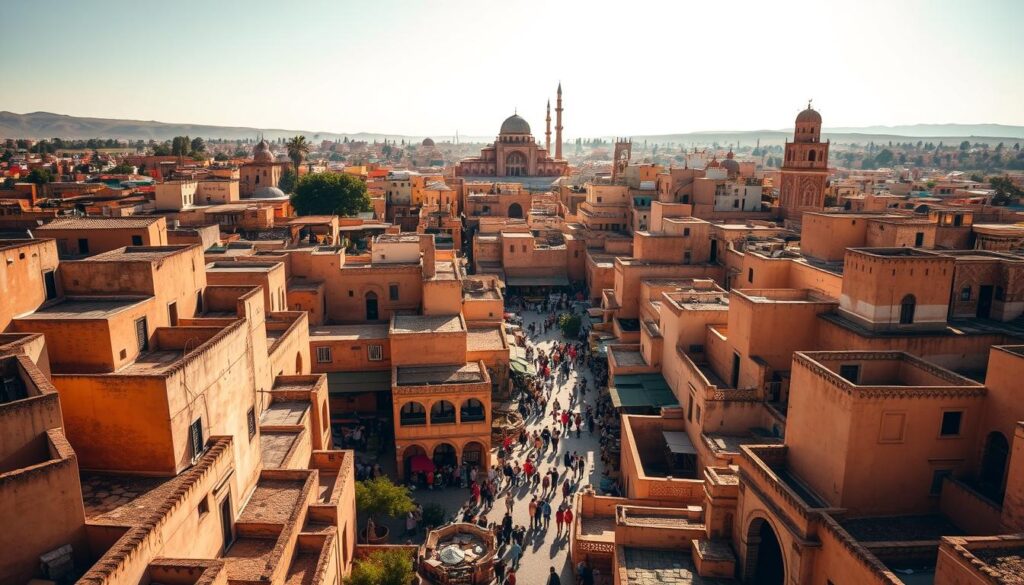
Traditional Craftsmanship at the Tanneries
Fes is famous for its traditional craftsmanship, especially at the Tanneries. Here, visitors can see the ancient art of leather-making. The Tanneries offer a peek into a centuries-old tradition, passed down through generations.
- Explore the vibrant colors and traditional techniques used in leather production.
- Learn about the history and significance of the Tanneries in Fes.
Islamic Architecture and Religious Sites
Fes boasts many examples of Islamic architecture, including mosques, madrasas, and zawiyas. These sites not only highlight the city’s rich spiritual heritage but also its architectural beauty.
- Visit the Bou Inania Madrasa, a masterpiece of Merinid architecture.
- Explore the spiritual significance of the city’s many mosques and religious sites.
In conclusion, Fes captures the cultural and spiritual essence of Morocco, making it a top attraction for travelers. Whether you’re wandering the ancient Medina, visiting the Al-Qarawiyyin University, or seeing traditional craftsmanship at the Tanneries, Fes offers an unforgettable journey.
Chefchaouen: The Enchanting Blue Pearl
Chefchaouen is nestled in the Rif Mountains. It’s a peaceful spot known for its blue buildings. This town mixes nature and culture, making it a must-visit destination in Morocco.
The History Behind the Blue-Washed Buildings
The blue buildings have an interesting story. Jewish refugees started painting them blue in the 1930s. The color represents the sky and heaven. Walking around, you’ll see different blues that make Chefchaouen magical.
Photography Spots and Hidden Gems
Chefchaouen is perfect for photographers. Its blue buildings, narrow streets, and mountains make it special. Some top spots include:
- The vibrant Plaza Uta el-Hammam
- The historic Kasbah
- The Spanish Mosque, which offers breathtaking views
Plaza Uta el-Hammam and the Kasbah
The Plaza Uta el-Hammam is the town’s center. It’s full of cafes and shops. The Kasbah, a historic fortress, is also a must-see. It shows the town’s history and culture.
Hiking to the Spanish Mosque for Sunset Views
Hiking to the Spanish Mosque is unforgettable. It offers views of Chefchaouen and the mountains. Watching the sunset here is a 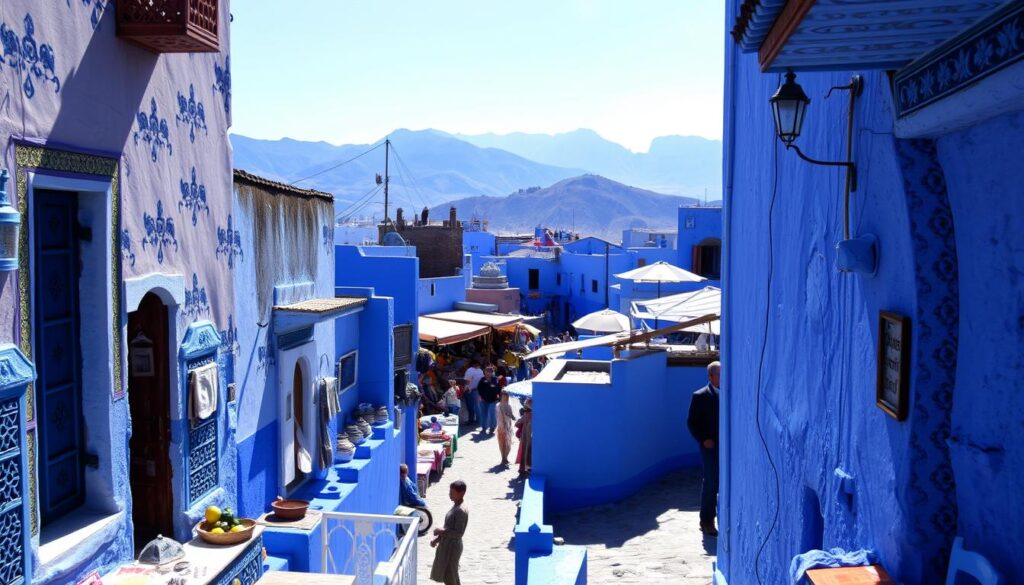
Chefchaouen is great for history buffs, photographers, or anyone wanting to relax. It’s a top destination in Morocco for a memorable trip.
The Sahara Desert: Morocco’s Golden Treasure
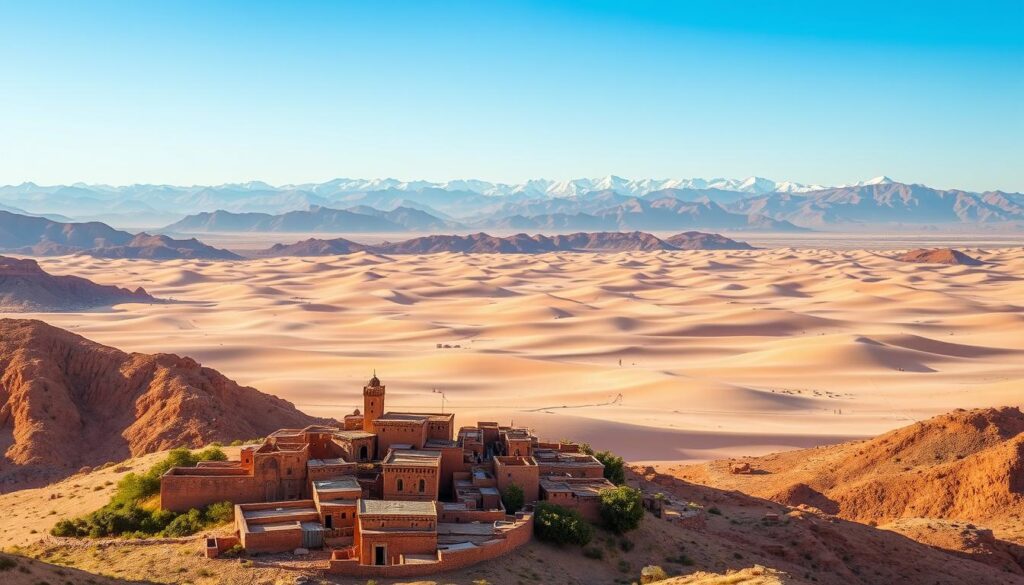
The Sahara Desert in Morocco is a treasure of golden dunes and rich culture. It invites travelers to explore its vast beauty. You’ll find golden dunes, peaceful oases, and star-filled skies.
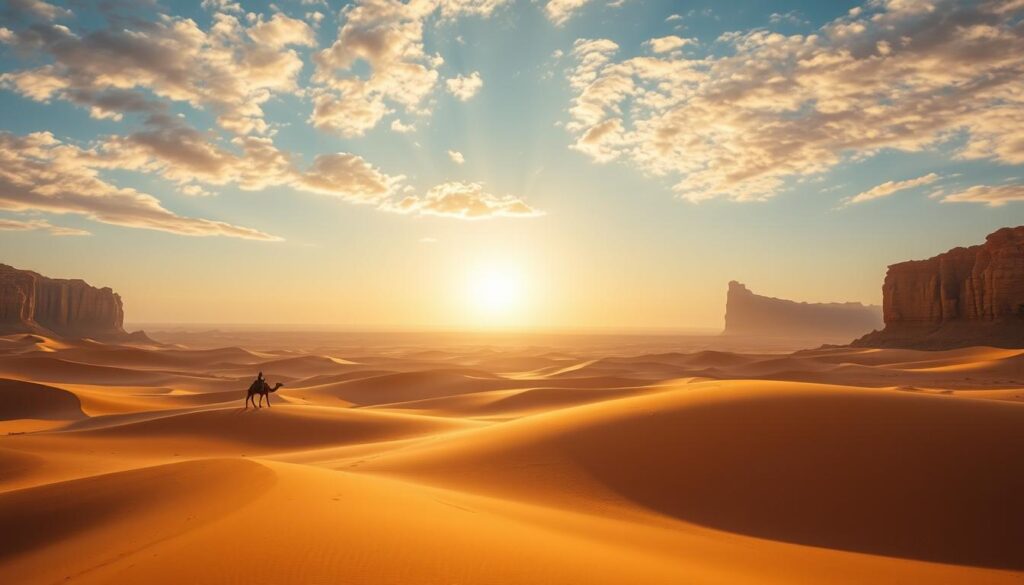
Camel Treks and Overnight Camps in Merzouga
Exploring the Sahara Desert on a camel trek is unforgettable. Riding through the golden sands, you feel the desert’s calm. For a deeper experience, stay at an overnight desert camp. Enjoy local food, watch the sunset, and see the stars.
Erg Chebbi Dunes Experience
The Erg Chebbi Dunes are a breathtaking sight. Towering sand dunes stretch as far as you can see. You’ll see the sand change colors from golden to orange with the sun.
Luxury vs. Traditional Desert Camps
Choosing an overnight desert camp, you can pick luxury or traditional. Luxury camps have high-end amenities like comfy lodging and fine dining. Traditional camps offer a real desert feel with simple but cozy tents and local food.
| Feature | Luxury Desert Camps | Traditional Desert Camps |
|---|---|---|
| Accommodations | High-end tents with comfortable beds | Simple tents with basic amenities |
| Dining | Fine dining with local and international cuisine | Traditional Moroccan cuisine |
| Activities | Camel treks, stargazing, and guided tours | Camel treks, sandboarding, and cultural experiences |
Stargazing and Cultural Experiences with Berber Guides
Hiring a Berber guide is a great way to learn about the Sahara’s culture. They share the desert’s history, ecology, and traditions. They also point out stars and constellations in the night sky.
To plan your Sahara Desert adventure, visit 7 Continents 1 Passport for expert tips and guidance on creating an unforgettable Morocco itinerary.
Essaouira: The Windswept Coastal Gem
Essaouira is a laid-back coastal town with a rich heritage. It’s perfect for anyone visiting Morocco. The town boasts a historic Medina, a lively port, and fresh seafood. It’s a mix of history, culture, and adventure.
The Historic Medina and Portuguese Fortifications
The Medina of Essaouira is a UNESCO World Heritage Site. It’s surrounded by 18th-century Portuguese fortifications. Walking through its narrow alleys, you’ll see a blend of Arab, European, and African styles.
The Skalla ramparts give you amazing views of the Atlantic Ocean and nearby islands.
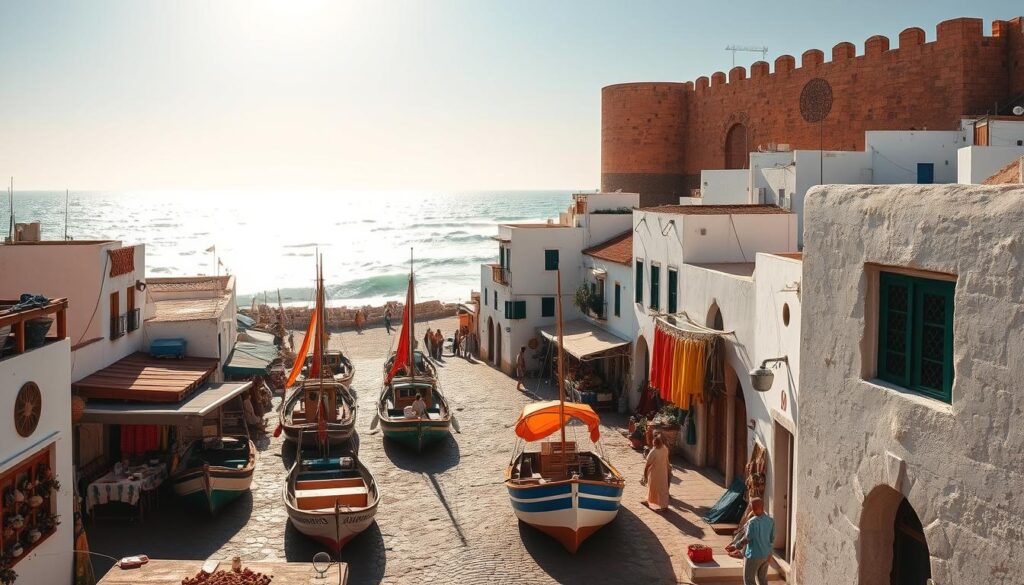
Water Sports and Fresh Seafood Experiences
Essaouira is great for water sports and seafood lovers. Its windy conditions are perfect for kitesurfing and windsurfing. The town’s seafood is known for its quality and taste.
Kitesurfing and Windsurfing Opportunities
Essaouira has consistent winds and warm waters. It’s one of the best places for kitesurfing and windsurfing. Schools and rental facilities are available for all skill levels.
The Vibrant Port and Fish Market
The port of Essaouira is lively with fresh seafood. You can enjoy the daily catch at local restaurants or buy fish at the market. The atmosphere and food are unforgettable.
| Activity | Location | Best Time |
|---|---|---|
| Kitesurfing | Sidi Kaouki Beach | March to October |
| Windsurfing | Essaouira Bay | April to September |
| Fresh Seafood | Essaouira Port | Year-round |
Wondering if Essaouira is worth visiting? The answer is yes. It has a rich history, cultural significance, and exciting activities.
Learn more about visiting Essaouira at this link.
“Essaouira is a place where the rhythm of life is dictated by the sea and the wind, a place that will leave you enchanted and wanting more.” – Traveler’s quote
Casablanca: Modern Morocco and Architectural Wonders
Casablanca is Morocco’s bustling economic center. It’s a place where old and new meet. You’ll see traditional Moroccan culture and French modern touches as you explore.
The Magnificent Hassan II Mosque
The Hassan II Mosque is a key landmark in Casablanca. It’s a stunning example of Islamic architecture. This mosque is more than a place of prayer; it’s a symbol of the city’s rich history.
Architectural Details and Guided Tours
The mosque’s design is amazing, with detailed stone carvings and beautiful mosaics. Its tall minaret reaches 210 meters. You can take a guided tour to see its grandeur and learn about its past.
The Oceanfront Location and Prayer Hall
The mosque sits right on the Atlantic coast. Its location by the sea makes it even more beautiful. It can hold up to 25,000 people, making it one of the biggest mosques globally.
Art Deco Heritage and Contemporary City Life
Casablanca is also famous for its Art Deco style and lively modern culture. The city’s newer areas are full of cool shops, art spaces, and hip cafes.
| Aspect | Description |
|---|---|
| Architecture | Blend of Islamic, French, and Art Deco styles |
| Cultural Experiences | Guided tours, local cuisine, and traditional crafts |
| Landmarks | Hassan II Mosque, Old Medina, and Royal Palace |
Casablanca has something for everyone. From its amazing buildings to its lively culture, it’s a top spot on any Morocco travel guide. Whether you love history, culture, or just good food, Casablanca is a must-see.
The Atlas Mountains: Trekking Through Breathtaking Landscapes
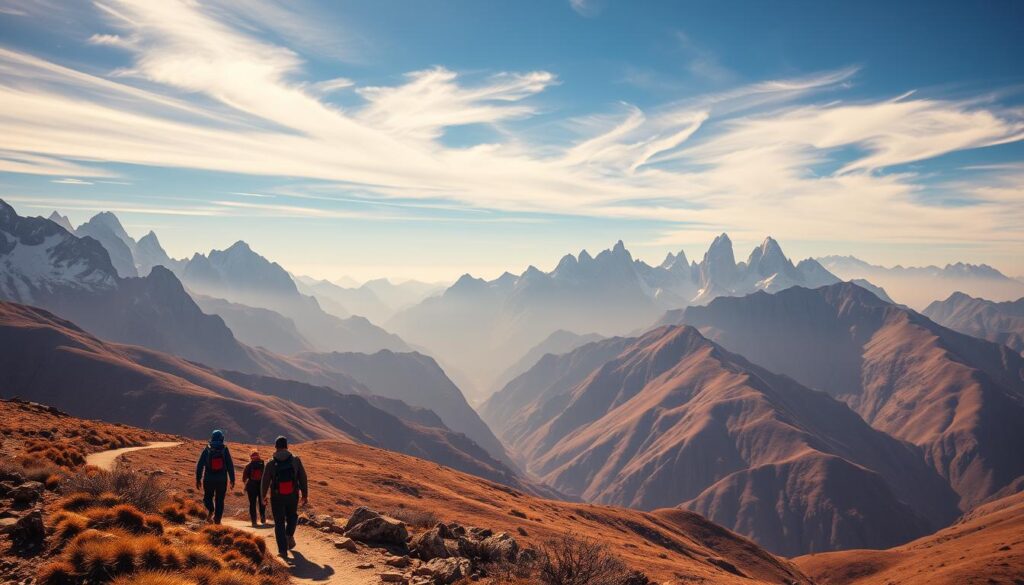
Exploring the Atlas Mountains is an unforgettable experience. It combines natural beauty with cultural richness. The range offers a diverse array of trekking opportunities, from leisurely day hikes to more challenging summit adventures.
Toubkal National Park and Summit Adventures
Toubkal National Park is a top trekking destination in the Atlas Mountains. It’s home to North Africa’s highest peak, Jbel Toubkal. For experienced hikers, summiting Toubkal is a thrilling adventure that offers panoramic views of the surrounding landscape. You can plan your trek using a reliable Morocco trip planner to ensure a well-organized itinerary.
Berber Villages and Mountain Hospitality
The Atlas Mountains are not just about the scenery; they are also home to traditional Berber villages. Here, you can experience authentic mountain hospitality. Visitors can explore these villages, learning about the local culture and way of life.
Traditional Homestays and Cultural Immersion
For a truly immersive experience, consider staying in a traditional homestay. This allows you to live with local families, share meals, and gain a deeper understanding of Berber culture. It’s a unique opportunity to see firsthand the customs and traditions that have been preserved for generations.
Seasonal Considerations for Mountain Visits
When planning your visit to the Atlas Mountains, it’s essential to consider the season. Spring and autumn are ideal times for trekking, offering mild temperatures and beautiful landscapes. Here are some key seasonal considerations:
- Spring: Wildflowers bloom, making the scenery particularly vibrant.
- Autumn: The harvest season offers a chance to see local agricultural practices.
- Winter: Snow-covered peaks provide a dramatic backdrop, but some trails may be inaccessible.
- Summer: Warm weather is ideal for trekking, but it’s also the peak tourist season.
By incorporating the Atlas Mountains into your Morocco itinerary, you’ll be able to experience some of the country’s most stunning natural beauty and rich cultural heritage. It makes it a true Morocco sightseeing must.
Morocco Must Visit Culinary Experiences
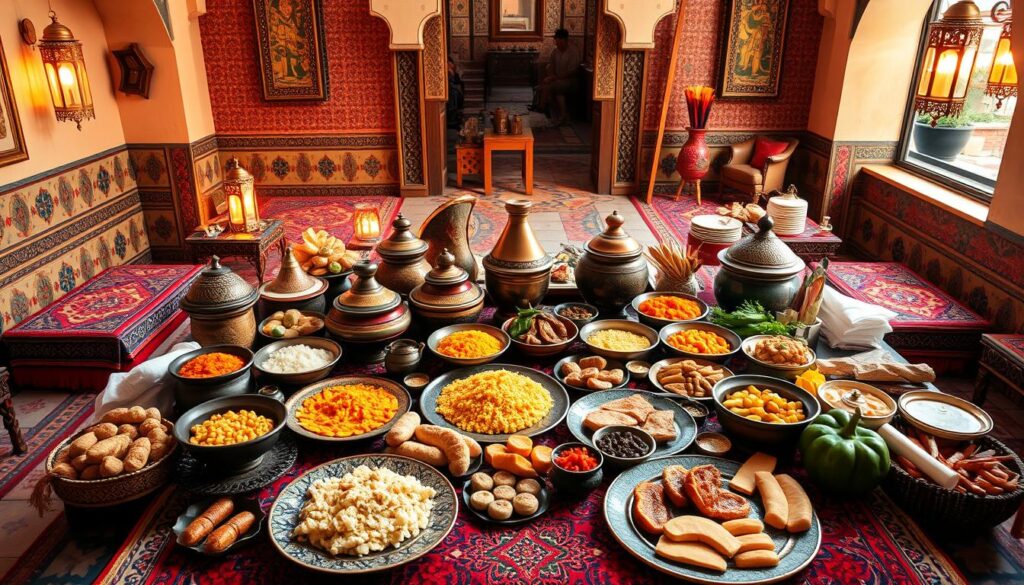
Exploring Morocco is like embarking on a culinary journey. The country’s food reflects its rich cultural heritage. Moroccan cuisine combines African, Arab, and European flavors, offering a unique taste experience.
Tagine, Couscous, and Traditional Moroccan Dishes
Moroccan food is known for its bold flavors and aromas. Dishes like tagine and couscous are must-tries. Tagine is a slow-cooked stew with meat, veggies, and dried fruits. Couscous is a traditional dish from North Africa, made from semolina flour.
You can find these dishes at many local restaurants. They are especially popular during a Morocco vacation.
Mint Tea Ceremonies and Sweet Delicacies
No Moroccan meal is complete without mint tea. This traditional tea is served with fresh mint leaves. It’s a big part of Moroccan hospitality.
You should also try sweet treats like baklava and ghriba. They pair perfectly with your tea.
Food Tours and Cooking Classes
For the best Moroccan cuisine, try a food tour or cooking class. These experiences let you explore local markets and learn cooking techniques. You’ll also get to sample the country’s top dishes.
Some tours include visits to souks and cooking classes. Here, you can learn to make traditional Moroccan dishes.
Market-to-Table Experiences
One highlight of Moroccan cuisine is the market-to-table experience. You can visit souks, pick fresh ingredients, and cook with local chefs. This hands-on experience deepens your appreciation for local culture and food.
Regional Culinary Variations
Morocco’s food varies greatly by region. From coastal towns to the Atlas Mountains, each area has its own flavors and specialties. Be sure to try local dishes to experience Morocco’s diverse culinary heritage.
This will make your trip memorable, with valuable Morocco vacation tips.
Hidden Gems: Lesser-Known Destinations in Morocco
Many travelers visit Morocco’s famous cities, but there are hidden gems too. These places offer a unique and authentic experience. You’ll find charming towns and cities that show Morocco’s diverse culture and beauty.
Tangier: The Gateway Between Continents
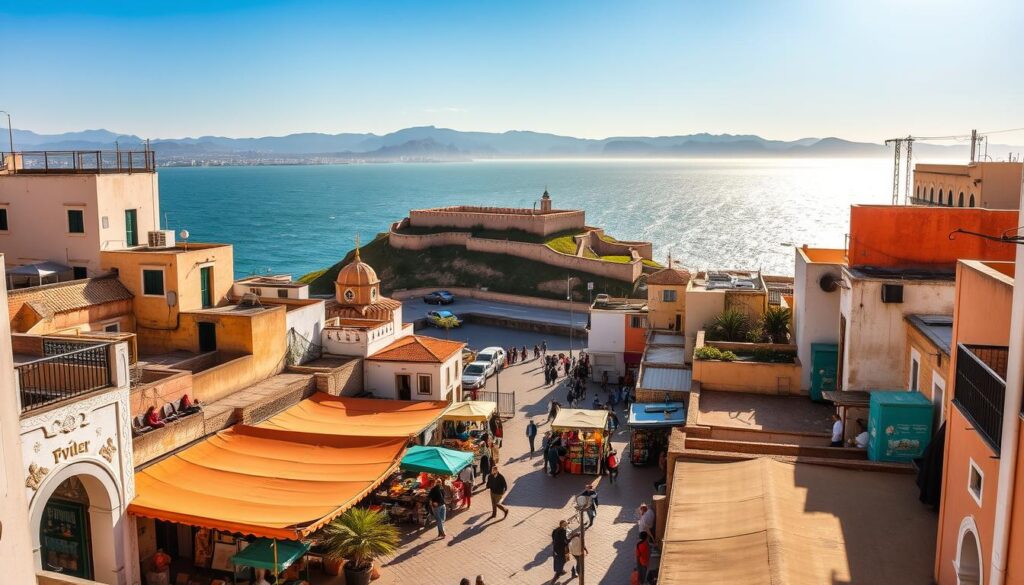
Tangier is a city on Morocco’s north coast with a rich history. It’s a cosmopolitan city influenced by African, European, and Arab cultures. You can explore the medina, visit the American Legation Museum, and enjoy the city’s lively vibe.
Meknes: The Underrated Imperial City
Meknes is an imperial city often missed by travelers. It has impressive history and architecture, like the massive Bab Mansour gate and the Roman ruins of Volubilis. You can see the city’s historic sites, including the Royal Stables and the Mausoleum of Moulay Ismail.
Asilah: Coastal Art and Portuguese Heritage
Asilah is a charming coastal town with a rich cultural heritage. It’s famous for its murals and street art and historic sites, like the Portuguese fort and the Grand Mosque. You can relax in the town, visit markets, and try fresh seafood.
Shopping in Morocco: From Souks to Artisan Workshops
Morocco’s shopping scene is unlike anywhere else. The vibrant markets are filled with colors, sounds, and smells. They offer a deep dive into the local culture.
Navigating Morocco’s Vibrant Markets
Morocco’s souks are like big, winding puzzles. They might seem scary at first, but they’re full of treasures. You’ll find everything from fresh food to handmade crafts. Remember, haggling is part of the fun.
Authentic Souvenirs and Handicrafts
When you shop in Morocco, look for real souvenirs and crafts. These items show off the country’s rich culture. Some top picks include:
Carpets, Leather, and Metalwork
Moroccan carpets are famous for their detailed designs and bright colors. Leather goods like bags and jackets are also popular. Plus, the metalwork in decorations and jewelry is stunning.
Ceramics, Textiles, and Argan Oil
Moroccan artisans are great at ceramics and textiles. They make beautiful items for decoration or use. Argan oil, known for its health benefits, is another unique find.
Bargaining Tips and Ethical Shopping
Bargaining is a big part of shopping in Morocco. Start with a lower offer than you want to pay. Think about the impact of your purchases on the environment and society. Choosing local and sustainable items makes your shopping more meaningful.
Practical Travel Tips for Your Moroccan Adventure
To enjoy your trip to Morocco, knowing the best times to visit and how to get around is key. Morocco’s climate and geography change a lot, so the best time to visit varies by region.
Best Times to Visit Different Regions
The coastal areas like Essaouira are best in spring (March to May) and autumn (September to November). The weather is mild then. For trekking, the Atlas Mountains are perfect in summer. But, the Sahara Desert is cooler in winter, avoiding the heat.
Transportation Options Around the Country
Morocco has a good transport system, with trains, buses, and taxis. Trains are great for big city trips like Marrakech and Fes. Renting a car gives you more freedom, especially for rural areas.
Accommodation Choices from Riads to Desert Camps
Morocco has many places to stay, from fancy Riads in Marrakech to desert camps. Book early, especially in busy seasons.
Safety Considerations and Visa Requirements
Morocco is mostly safe, but be careful with your belongings. Always check the latest visa rules before you go, as they can change.
Cultural Etiquette and Respectful Tourism in Morocco
When you start your Moroccan journey, knowing the local culture is key. Morocco mixes tradition and modern life. Being aware of this mix helps you enjoy your trip more.
Dress Codes and Religious Considerations
Morocco values modest dress, especially at religious sites. Cover your shoulders and knees to show respect. Also, during Ramadan, don’t eat or drink in public during the day to respect those fasting.
Photography Ethics and Interacting with Locals
Being polite when meeting locals is important. Always ask before taking someone’s photo. Remember, some people might not want to be photographed, so respect their wishes.
Asking Permission and Respecting Privacy
Always get permission before taking a photo, especially of people or religious sites. Saying “Can I take your picture?” in Arabic (Hal asmah li an aswir lak?) shows you care about their feelings.
Gift-Giving and Tipping Customs
Gift-giving is big in Morocco. Choose thoughtful, nicely wrapped gifts. Also, tip guides, drivers, and service staff for their hard work.
By following these cultural tips, you’ll have a great trip to Morocco. You’ll make friends with the locals and enjoy the country’s rich history.
Planning Your Perfect Morocco Itinerary
Planning your Moroccan adventure is key. Morocco has a lot to offer, from Marrakech’s markets to the Sahara’s calm. You’ll also find Essaouira’s coastal beauty and Fes’s history.
One-Week Essential Morocco Route
A one-week trip can give you a taste of Morocco. Start in Marrakech, where you can see the Jemaa el-Fnaa square and the Bahia Palace. Next, visit Fes to see its old medina and tanneries.
End your trip in the Sahara Desert. Here, you can go on a camel trek and sleep under the stars.
- Marrakech: Jemaa el-Fnaa, Bahia Palace
- Fes: Ancient medina, Tanneries
- Sahara Desert: Camel trek, Overnight camp
Two-Week Comprehensive Journey
With two weeks, you can explore more of Morocco. After Marrakech and Fes, go to Chefchaouen. It’s famous for its blue buildings and mountains.
Then, visit Essaouira for its beaches and calm vibe. For a detailed plan, check out Morocco 10-day itinerary.
| Destination | Key Experiences |
|---|---|
| Marrakech | Jemaa el-Fnaa, Bahia Palace |
| Fes | Ancient medina, Tanneries |
| Chefchaouen | Blue-washed buildings, Mountain scenery |
| Essaouira | Relaxed atmosphere, Beautiful beaches |
Off-the-Beaten-Path Alternatives
For a unique trip, try Meknes, Asilah, or the Atlas Mountains. These places offer cultural and scenic experiences away from the crowds.
Conclusion: Why Morocco Should Top Your Travel Bucket List
Morocco is a treasure trove of diverse landscapes, rich cultural heritage, and warm hospitality. It’s a morocco must visit destination. From the snow-capped Atlas Mountains to the endless dunes of the Sahara Desert, Morocco’s natural beauty is awe-inspiring.
The country’s vibrant cities, such as Marrakech and Fez, offer a glimpse into its rich history. You can explore ancient medinas, bustling souks, and architectural marvels. Morocco has something for everyone, whether you’re looking to explore or experience the local cuisine and culture.
You can hike through the Atlas Mountains, relax on the pristine beaches of Essaouira, or immerse yourself in the Morocco sightseeing musts like the Bahia Palace and Koutoubia Mosque. Morocco’s unique blend of African, Arab, and European influences will leave you with unforgettable memories.
As you plan your trip, consider exploring Morocco’s hidden gems and off-the-beaten-path destinations. With its warm hospitality and welcoming culture, you’re sure to have a truly unforgettable experience in this incredible country.



 Covers cities, coast, mountains, desert & food