
Exploring Morocco’s vibrant culture reveals a rich mix of languages. The official language of Morocco is Modern Standard Arabic. Standard Moroccan Berber is also an official language.
Moroccan Arabic, or Darija, is spoken by about 91.9% of people. Berber languages like Tashelhit, Central Atlas Tamazight, and Tarifit are spoken by around 24.8% of Moroccans.
Key Takeaways
- Modern Standard Arabic is the official language of Morocco.
- Berber languages are spoken by around 24.8% of the population.
- Moroccan Arabic is the most widely spoken dialect.
- French is widely used in official and business contexts.
- English is becoming increasingly popular, especially among younger Moroccans.
The Linguistic Landscape of Morocco
Exploring Morocco reveals a society where many languages live together. This diversity shows the country’s rich history, culture, and location.
A Brief Overview of Morocco’s Multilingual Society
In Morocco, you’ll find Arabic, Amazigh (Berber), French, Spanish, and English. Arabic is the official language, and Amazigh got official status in 2011. French is key in official, educational, and business settings.
| Language | Speakers | Primary Use |
|---|---|---|
| Arabic | Majority | Official, Daily Communication |
| Amazigh (Berber) | Significant Minority | Cultural Identity, Local Communities |
| French | Educated Population | Education, Business, Government |
The Influence of Geography and History on Language Distribution
Morocco’s geography and history have shaped its languages. Its location at the crossroads of Africa, Europe, and the Arab world has mixed cultures and languages. The  Atlas Mountains, for example, have kept some communities’ languages unique.
Colonialism has also shaped Morocco’s languages. French and Spanish are spoken in different areas. Knowing this helps understand Morocco’s complex language scene.
Arabic: The Primary Morocco Language
In Morocco, Arabic is more than just a language. It’s a key part of the country’s culture and identity. It’s used in government, education, media, and daily talks.

There are two main types of Arabic in Morocco: Modern Standard Arabic (MSA) and Moroccan Darija. Knowing the difference between these is important for understanding Morocco’s language.
Modern Standard Arabic vs. Moroccan Darija
Modern Standard Arabic is the formal, official Arabic used everywhere in the Arab world. It’s used in official documents, news, and formal education. Moroccan Darija, or Darija, is the everyday Arabic spoken in Morocco.
- Modern Standard Arabic is used in formal settings and is understood by educated Moroccans.
- Moroccan Darija is the language of everyday conversation, varying significantly from MSA and other forms of Arabic spoken in different countries.
While MSA is taught in schools and used in official contexts, Darija is used at home, with friends, and in casual talks. This shows the complex language identity of Morocco.
The Role of Arabic in Moroccan Culture and Identity
Arabic is deeply connected to Moroccan culture and identity. It’s not just for talking but also a symbol of national unity and heritage.
“The Arabic language is a vital component of Morocco’s cultural fabric, influencing literature, art, and social norms.”
Arabic is important in religious practices, with the Quran recited in Arabic. This religious importance makes Arabic even more important in Moroccan daily life.
In conclusion, Arabic is the heart of Morocco, with its different forms adding to the country’s cultural richness. Understanding Arabic, in both its formal and everyday forms, is essential for grasping Moroccan society’s complexities.
Amazigh (Berber): The Indigenous Language
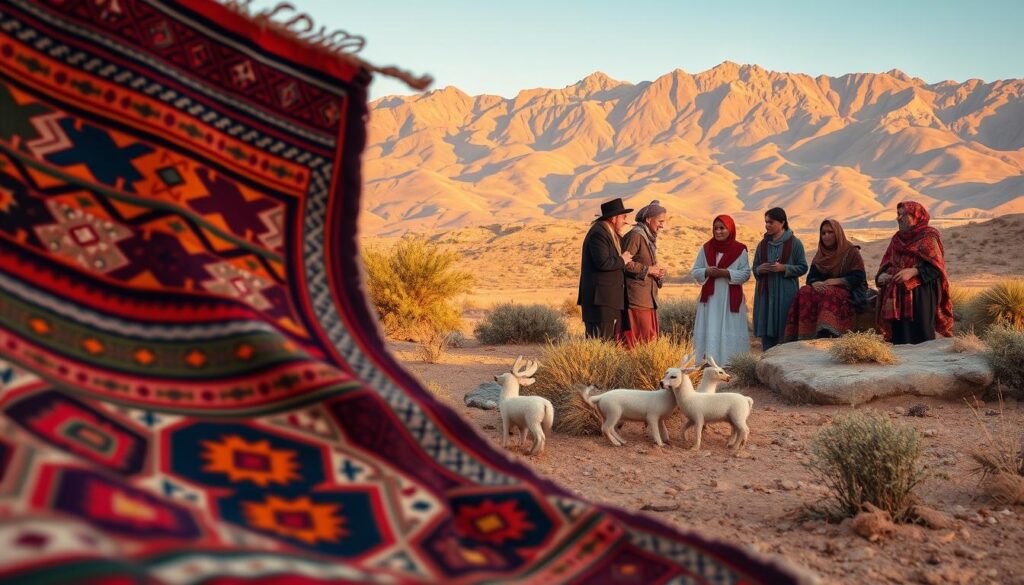
The Amazigh language, also known as Berber, is deeply rooted in Moroccan history. It is a key part of the country’s rich linguistic diversity. Spoken for thousands of years, Amazigh is the indigenous language of Morocco.
The Three Main Berber Dialects in Morocco
Morocco boasts three main Berber dialects. Each has its own unique traits and is spoken in different areas.
Tarifit in the Rif Region
Tarifit is mainly spoken in northern Morocco’s Rif region. It’s one of the most common Berber dialects in the country.
Tamazight in the Middle Atlas
Tamazight is found in the Middle Atlas mountains. It’s known for its special grammar and words.
Tashelhit in the High Atlas and South
Tashelhit, or Shilha, is spoken in the High Atlas and southern Morocco. It’s widely spoken and has a rich storytelling tradition.
The Revival and Official Recognition of Amazigh
Recently, there’s been a big push to keep Amazigh alive. This is thanks to efforts to save Morocco’s indigenous culture. Amazigh being recognized as a national language is a big step forward. You can learn more about the Berber languages and their history on Wikipedia.
Where Berber Languages Are Predominantly Spoken
Berber languages are mainly spoken in rural areas, especially in Morocco’s mountains. The Rif, Middle Atlas, and High Atlas mountains have large Berber-speaking populations.
French: The Language of Business and Education
French is very important in Morocco, especially in business and education. It has made a big impact on the country’s schools and daily life.

The Colonial Legacy and Modern Usage
Morocco’s history with France is why French is still important today. The French language was used for government, education, and business back then. It still plays a big role today, even after Morocco gained independence.
Now, French is used with Arabic and Moroccan Darija in official and professional settings. It’s very important in schools, government, and business. Knowing French is key for anyone wanting to work in these areas.
French in Professional and Educational Settings
French is key in Morocco’s schools, especially in college. It’s the main language used in many universities. It’s used in subjects like science, technology, engineering, and math (STEM).
French in Higher Education
In college, French is often the language of teaching, especially in science and tech. Many Moroccan universities work with French schools. This makes French very important in higher education.
French in Government and Business
In government and business, French is used for official papers, contracts, and talks. Many government offices and companies use French. Knowing French can really help your career in Morocco, especially in finance, tourism, and international trade.
Spanish and Other European Languages in Morocco
Morocco is not just about Arabic and Amazigh. European languages also play a big role. The country’s history with Europe has shaped its language scene.
Spanish Influence in Northern Morocco
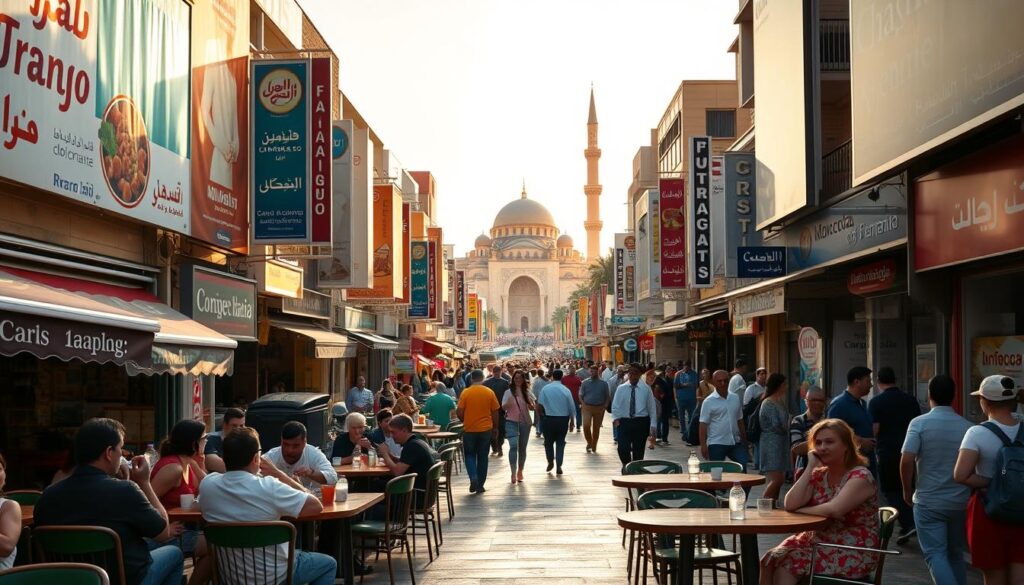
The north of Morocco has been shaped by Spanish. Spanish is spoken in places like Tetouan and Tangier. It has mixed with local tongues, affecting both language and culture.
English and Other European Languages
French is still a big deal in Morocco, but English is gaining ground. It’s especially popular with the young and in tourist spots. English is key for business and tourism.
The Growing Importance of English
As Morocco connects more with the world, English is becoming more vital. Many Moroccans are learning it for better jobs, especially in tourism and trade.
Other European Languages in Tourism and Business
German and Italian are also around, mainly in tourism. Some Moroccans in tourism learn these to help European visitors. It helps them communicate better and serve guests well.
Regional Language Variations Across Morocco
Exploring Morocco reveals a rich tapestry of languages shaped by geography and history. People communicate differently across regions, showing the unique culture and geography of each area.
Urban vs. Rural Language Patterns
In cities like Marrakech and Casablanca, you’ll hear Modern Standard Arabic, Moroccan Darija, and French. These cities are more diverse, with English common among the young and in tourism. Rural areas, however, stick to Berber languages and local dialects more.
Language Distribution by Geographic Region
Morocco’s regions each have their own language profiles. Coastal cities, mountains, and deserts show a wide range of language variations.
Coastal Cities and International Influence
Tangier and Rabat, with their international focus, value English and French. You’ll hear a mix of languages here, showing their global ties.
Mountain Communities and Language Preservation
The Rif Mountains keep Berber languages alive. These communities hold onto their cultural identity through their language.
Desert Regions and Linguistic Traditions
The desert is home to Amazigh communities with rich linguistic traditions. Here, you can see dialects and cultural practices preserved for centuries.
| Region | Predominant Languages | Cultural Influences |
|---|---|---|
| Coastal Cities | Arabic, French, English | International business, tourism |
| Mountain Communities | Berber languages, Arabic | Traditional practices, local culture |
| Desert Regions | Amazigh dialects, Arabic | Ancient traditions, nomadic culture |
For more on Arabic dialects in Morocco, check out Middle East Eye. They offer insights into various dialects.
Code-Switching: How Moroccans Mix Languages
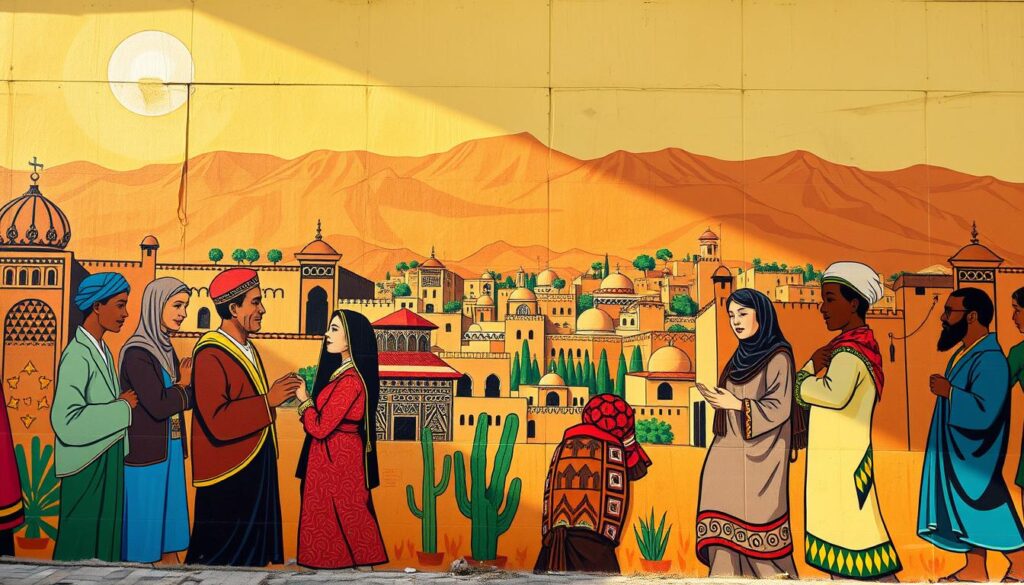
Walking through Morocco’s lively streets, you’ll see code-switching everywhere. It’s when people switch between languages in one talk. This is common in Morocco because of its many languages.
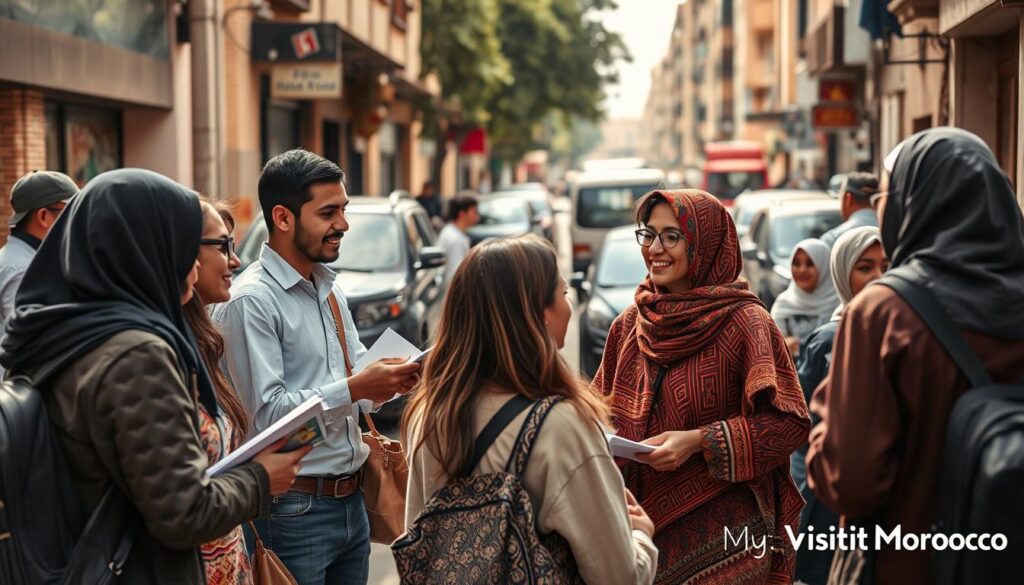
Switching languages is a big part of how Moroccans talk. It shows the country’s rich culture. People mix Arabic, French, and Berber (Amazigh) in their chats, making a unique mix of languages.
The Art of Linguistic Blending in Daily Conversation
Moroccans mix Arabic, French, and Berber in their talks. This isn’t random; it’s a smart way of speaking. It changes based on who’s talking, what they’re talking about, and where they are.
For example, a chat might start in Moroccan Darija (the local Arabic), then switch to French for tech talk. It goes back to Darija for casual stuff.
Situational Language Selection
Choosing a language in Morocco depends on the situation. In school, Modern Standard Arabic and French are used. But in everyday talks, Moroccan Darija is more common.
Being good at switching languages shows you’re well-versed in Morocco. Studies say this skill is not just about language. It also shows who you are and where you fit in society [a study on code-switching practices].
The Evolution of Moroccan Dialects
To understand Moroccan dialects, we must look at the country’s history and culture. The dialects in Morocco mix different languages, thanks to its location between Africa, Europe, and the Arab world.
Historical Influences on Moroccan Arabic
Moroccan Arabic, or Darija, has been shaped by history. It has taken on elements from many cultures that have touched Morocco.
Andalusian and Jewish Influences
The Andalusian Arabic has greatly influenced Moroccan Arabic. Many words from al-Andalus (Spain) are found in it. Jewish communities in Morocco also added Hebrew and other languages to the dialect.
Berber Substrate in Moroccan Arabic
The Berber language has deeply influenced Moroccan Arabic. Many Berber words are used in Darija, especially in farming and daily life.
Ottoman and European Loanwords
Ottoman Turkish and European languages like French and Spanish have also shaped Moroccan Arabic. Words related to politics, food, and technology are common.
Modern Changes and Adaptations in Moroccan Speech
Today, Moroccan dialects are changing with the times. Media, technology, and globalization are big influences. In cities, people often switch between Arabic, French, and Berber.
Younger Moroccans mix old dialects with new slang and words from other languages. This shows how language in Morocco is always changing.
Language and Education in Morocco
Language is key in Morocco’s education system. It shapes the curriculum and learning environment. This is crucial for students’ success.

Language Policies in Schools and Universities
Morocco’s schools and universities have complex language policies. Arabic is the official language and a core part of the curriculum. French also has a big role, especially in higher education and science.
Arabic is the main teaching language, rooted in Morocco’s history and culture. French is used in higher education and science. This shows Morocco’s ties with France and its importance in professional and academic fields.
The Debate Over Language of Instruction
The debate on teaching language in Morocco is ongoing. It involves cultural identity, education quality, and economic benefits. Two main views are Arabization and Francization.
Arabization vs. Francization
Arabization pushes for Modern Standard Arabic as the main teaching language. It aims to unite Morocco’s Arab culture. Francization, however, supports French, especially in science and technology. It helps Morocco stay competitive globally.
The Place of Amazigh in Education
The Amazigh language, also known as Berber, is now recognized and taught in schools. This move celebrates Morocco’s Amazigh heritage and promotes cultural diversity.
Key points about language in education include:
- Multilingual Curriculum: Using many languages to reflect Morocco’s diverse culture.
- Cultural Relevance: Making sure the teaching language fits the students’ culture.
- Global Competitiveness: Balancing local and international languages to prepare students for the world.
As Morocco updates its education policies, language will keep being a major focus. It will shape the curriculum and the future of its youth.
Learning Arabic in Morocco: Options for Foreigners
Morocco is a great place for foreigners to learn Arabic. It has a rich culture and many languages. You can learn Modern Standard Arabic or Moroccan Darija, the local dialect.
Language Schools and Programs
Morocco has many language schools for foreigners. These schools offer classes for all levels.
University-Based Programs
Many Moroccan universities have Arabic programs for international students. These programs include courses, cultural activities, and places to stay. For example, you can check out language centers that teach Arabic to foreigners.
Private Language Institutes
Private institutes in Morocco offer flexible classes and one-on-one tutoring. They are in big cities like Marrakech, Fez, and Rabat. This makes it easy for foreigners to get good language education.
Online Learning Resources
There are also online Arabic courses focused on Moroccan Darija. These are great for those who like learning from home or want to add to their classroom learning.
Immersion Experiences and Cultural Centers
Learning a language is better with immersion. Morocco has many ways to immerse yourself in Arabic. You can live with a host family, join cultural workshops, and go to community events.
Cultural centers in Morocco also offer events and language exchange programs. For example, the Al-Ifriqiya Cultural Center in Marrakech has Arabic courses and cultural activities.
| Language Learning Option | Description | Location |
|---|---|---|
| University-Based Programs | Comprehensive Arabic courses for international students | Major universities in Morocco |
| Private Language Institutes | Flexible courses with one-on-one tutoring options | Major cities like Marrakech, Fez, and Rabat |
| Online Learning Resources | Arabic language courses with a focus on Moroccan Darija | Online platforms |
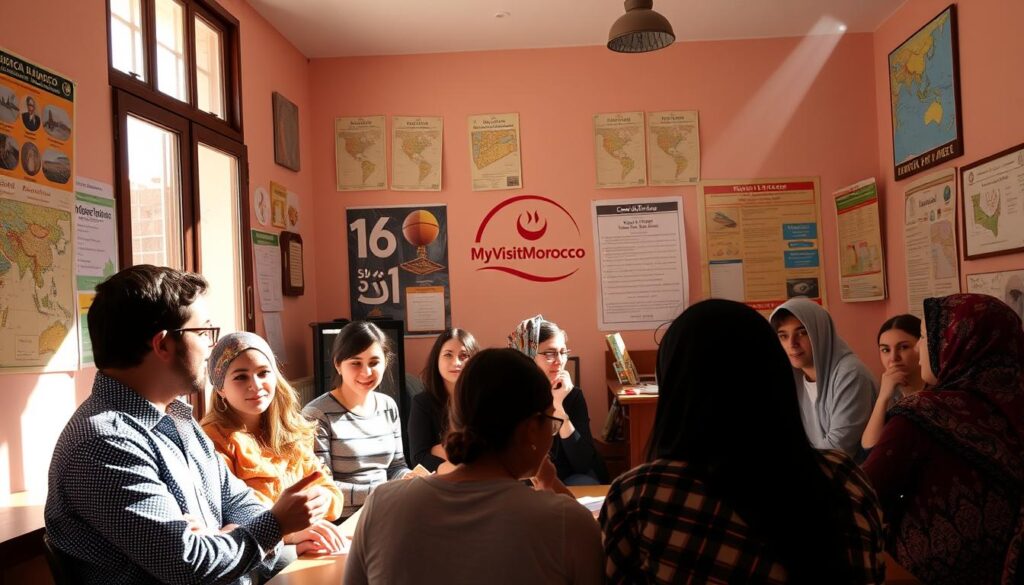
Morocco’s language diversity attracts many learners. By picking the right school or program, foreigners can have a great time learning Arabic in Morocco.
“The experience of learning Arabic in Morocco is not just about the language; it’s about immersing yourself in a rich cultural heritage that is both challenging and rewarding.”
Essential Phrases for Travelers in Morocco
Getting ready for your Morocco trip? Learning key phrases in Arabic and other local languages is super helpful. Morocco is a place where many languages are spoken. While French and English are common, especially in tourist spots, speaking the local language can make your trip better.
Greeting and Courtesy Expressions
It’s important to greet locals with respect. Say “As-salamu alaykum” (Peace be upon you) and “Shukraan” (Thank you). These words are not just polite but also help you make friends.
Practical Phrases for Navigation and Shopping
For getting around Morocco, knowing phrases like “Man yakun qarib?” (Where is…?) and “Kam hadha?” (How much?) is useful. They’re great for shopping or asking for directions.
Emergency and Health-Related Vocabulary
In an emergency, saying “Help!” (“Musa’da!”) or “I need a doctor” (“Ana bihaja ila tabib”) is key. It’s also good to know the names of common health problems and medicines.
| English | Arabic Phrase | Pronunciation |
|---|---|---|
| Hello | مرحبا | Marhaba |
| Thank you | شكرا | Shukraan |
| Where is…? | أين يوجد…؟ | Ayna yujad…? |
| Help! | مساعدة! | Musa’da! |
Language Barriers: Challenges and Solutions
Effective communication in Morocco is more than just basic phrases. It involves understanding the country’s complex language dynamics. You’ll face challenges, but there are solutions to help you communicate better.
Common Communication Difficulties
One big challenge is the difference between Modern Standard Arabic and Moroccan Darija. Modern Standard Arabic is for formal situations, while Darija is used daily. Also, Amazigh (Berber) languages in some areas add to the complexity.
It’s key to grasp these differences for better communication. Not everyone speaks French or Spanish, which were introduced during the colonial era and are still used in some places.
Translation Services and Language Apps
Translation services and language apps can help a lot. They make it easier to communicate in Morocco.
Professional Translators and Guides
Professional translators and guides are very helpful, especially in formal or complex situations. They offer linguistic help and cultural insights, which are crucial for understanding Moroccan society.
Digital Translation Tools
Digital translation tools, like mobile apps, are great for travelers. Apps like Google Translate can translate text, speech, and conversations in real-time. They’re essential for everyday situations.
Language Learning Apps for Morocco
For a deeper experience, try language learning apps for Moroccan Arabic or Berber languages. These apps teach you essential phrases and expressions. They improve your interactions with locals.
Using these resources helps overcome language barriers in Morocco. This makes your experience more enjoyable and enriching.
The Cultural Significance of Language in Morocco
Language is very important in Morocco. It connects to the country’s history, identity, and daily life. Moroccan culture shows its diverse heritage through language, shaped by many civilizations.
Language as an Expression of Identity
In Morocco, language shows who you are. It ties to your culture, where you’re from, and your social status. The mix of Arabic, Amazigh (Berber), and French shows Morocco’s rich language scene. Language choice can tell others about your group or beliefs.
Linguistic Etiquette and Social Norms
Knowing how to talk is key in Morocco. There are rules for speaking that everyone follows. For example, how formal or informal you are depends on who you’re talking to.
Formal vs. Informal Address
In Moroccan Arabic, how you address someone matters a lot. Using formal language shows respect, especially to elders or in work settings. Always use formal language with people you don’t know well or who are older or in charge.
Religious Language and Expressions
Religion is big in Moroccan culture. Islamic phrases like “Insha’Allah” and “Alhamdulillah” are common. Using these shows respect for Moroccan culture and can help you connect with locals.
Taboo Topics and Expressions
Some topics and words are off-limits in Morocco. Knowing this helps you talk better with people. Avoiding sensitive subjects and using proper language is crucial to avoid offense.
For more on Moroccan culture, check out the Culture of Morocco on Wikipedia. It offers a detailed look at Morocco’s cultural scene.
The Future of Languages in Morocco
The future of languages in Morocco is a mix of old and new. The country is facing the challenges of globalization. This will change how languages are used in daily life.
Emerging Language Trends
In Morocco, new language trends are emerging. Many people want to learn English for business and tourism. Moroccan Darija, the local Arabic, is also getting more attention in media and talks.
There’s a push to use Amazigh languages too. This shows a growing interest in Berber culture and identity.
- Increased use of English in education and business
- Rise of Moroccan Darija in media and popular culture
- Promotion and recognition of Amazigh languages
Digital Influence on Moroccan Language Use
The digital world is changing how Moroccans use languages. Social media, online learning, and digital tools make learning languages easier. Language learning apps and online courses are getting popular.
They help people learn new languages or get better at ones they already know. The internet also helps spread Moroccan dialects and languages. It connects Moroccans all over the world.
Language and Business: Communication in Moroccan Commerce
Knowing the languages used in Moroccan commerce is key for any business in the country. Morocco’s business world is varied, with many languages important in different areas.
Languages in Different Business Sectors
In Morocco, the language choice varies by sector. Arabic and French are mainly used in official and formal business. Arabic is key for government contracts and public sector work. French is common in manufacturing, engineering, and tech.
Moroccan Darija (Moroccan Arabic) is used in informal business and is vital for local partnerships. English is growing in importance, especially among young entrepreneurs and in hotels.
Language Skills for Working in Morocco
For those working in Morocco, the right language skills can boost their career. Arabic, whether Modern Standard or Moroccan Darija, is highly valued in government and public sectors.
French is also beneficial, especially in technical, legal, and business fields. As Morocco opens up to global trade, English skills are becoming more important. This is especially true in multinational companies and tourism.
Conclusion: Embracing Morocco’s Linguistic Diversity
Morocco’s language scene is a colorful mix of Arabic, Berber, French, and more. As you’ve seen, knowing about these languages helps you get Morocco’s culture and identity.
The Morocco language scene is mostly Arabic, especially Moroccan Darija. Berber languages also play a big role in Morocco’s heritage. The Berber language has three main dialects, adding to Morocco’s cultural identity.
Exploring Moroccan dialects shows how people switch between languages often. This mix is seen in daily talks, business, education, and culture.
Accepting Morocco’s language mix means seeing the value of each language. Whether you’re traveling, working, or learning a language, knowing Arabic in Morocco and other languages makes your experience richer. It also helps you connect more with the Moroccan people.


 Covers cities, coast, mountains, desert & food