

Start an adventure in Morocco with our 7-day travel itinerary. It’s packed with the country’s highlights. You’ll see lively cities, ancient sites, and stunning nature. You’ll dive into the local culture and feel the warm welcome.
This trip takes you from Casablanca‘s busy streets to the calm Sahara dunes. It’s a mix of city life and desert beauty. For more tips on planning, check out Rough Guides. They share the top spots and fun things to do.
Key Takeaways
- Explore vibrant cities like Marrakech and Fez
- Visit historic landmarks and experience local culture
- Enjoy breathtaking natural landscapes, including the Sahara Desert
- Immerse yourself in Morocco’s unique hospitality
- Plan your trip according to the best time to visit: March to May or September and October
- Budget accordingly for accommodations, food, and activities
Discovering the Magic of Morocco
Start your journey to Morocco, where old traditions meet new charm. This country is full of history, culture, and beautiful views. A 7-day Morocco trip lets you see different parts of Morocco, from the Atlas Mountains to the Sahara Desert.
Why Morocco Should Be Your Next Destination
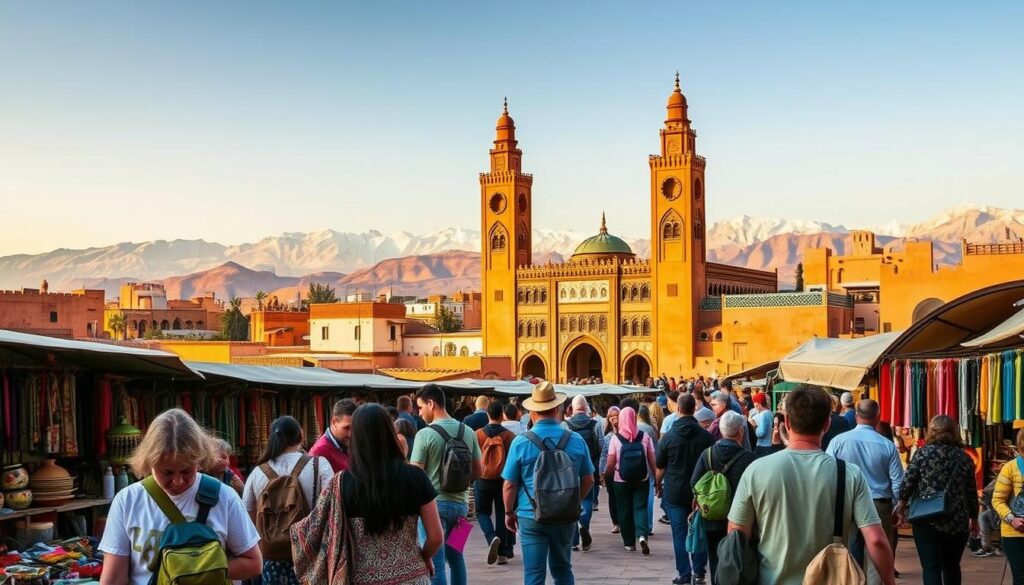
Morocco is a special place, mixing old and new. You can explore Morocco in a week by seeing cities like Marrakech and Fes. You can also visit ancient medinas and relax on Essaouira’s beaches. The mix of landscapes and culture makes Morocco a great choice for travelers. For more trip planning tips, visit Alexander Roberts Travel.
- Experience the vibrant souks and markets
- Explore historical sites like the Hassan II Mosque
- Relax in the serene Atlas Mountains
What Makes a 7-Day Trip to Morocco Special
A good best Morocco travel plan makes your 7-day trip memorable. You can see places like Casablanca, Fes, and Marrakech without feeling rushed. Enjoy local food, stay in riads, and try activities like camel trekking in the Sahara. For more planning advice, check out My Visit Morocco.
- Visit the bustling Jemaa el-Fnaa Square in Marrakech
- Explore the ancient medina of Fes
- Enjoy a camel ride through the Sahara Desert dunes
Best Time to Visit Morocco
The best time to see Morocco depends on what you like and where you want to go. Morocco’s weather changes a lot from one place to another.
Seasonal Considerations
Spring (March to May) and autumn (September to November) are the best times to visit. The weather is nice then, perfect for seeing cities and historical sites. This is great for your weeklong Morocco itinerary.
Summer is very hot, especially in the desert. Winters are mild in the south but cool in the mountains.
Weather Patterns Across Regions
Morocco’s weather changes a lot. Coastal areas have cool, wet winters and mild summers. The Sahara desert is hot and dry. The Atlas Mountains have cold winters and mild summers.
Knowing these weather patterns helps you plan a better trip. It makes your Morocco travel guide more useful and your trip more enjoyable.
Planning Your Morocco Itinerary 7 Days in Advance
Planning your 7-day trip to Morocco is key to a great adventure. A well-thought-out itinerary lets you explore the top destinations in Morocco smoothly.
Before you begin, consider a few important things. Let’s start with the travel documents you’ll need.
Essential Travel Documents
You’ll need a valid passport with at least six months’ validity to enter Morocco. Some nationalities might also need a visa. Make sure to check visa requirements early to avoid any last-minute problems. As part of your essential Morocco trip planner, have all your documents ready.
Booking Accommodations and Transportation
Booking your stay and transport early is a good idea. Morocco has many places to stay, from riads to modern hotels. You can book online or directly with hotels. For getting around, choose from public transport, private drivers, or rental cars. Booking early can save you money and ensure availability.
| Transportation Mode | Advantages | Disadvantages |
|---|---|---|
| Public Transport | Cost-effective, local experience | Limited routes, less frequent |
| Private Drivers | Convenient, flexible | More expensive, requires negotiation |
| Rental Cars | Flexibility, scenic routes | Driving challenges, parking issues |
Budgeting for Your Moroccan Adventure
Creating a budget is crucial for your essential Morocco trip planner. Think about costs for places to stay, food, transport, and activities. Morocco can be affordable, but prices vary. For example, eating at local riads is cheaper than tourist areas. Also, activities like desert tours or camel rides have different prices.

By planning ahead and budgeting well, you can have a stress-free and memorable trip to Morocco. You’ll visit its top destinations easily.
Getting to Morocco: Flights and Entry Points
Planning your trip to Morocco means knowing the entry points and flight options. Morocco is known for its rich history and diverse culture. It draws travelers from all over the world.
Major Airports and Airlines
Morocco is easy to reach by air, with several international airports. Casablanca’s Mohammed V International Airport (CMN) is the main hub, connecting to many global destinations. Marrakech Menara Airport (RAK) is another key entry point, especially for tourists. Airlines like Royal Air Maroc and others offer flights to Morocco.
| Airport | City | Code |
|---|---|---|
| Mohammed V International Airport | Casablanca | CMN |
| Marrakech Menara Airport | Marrakech | RAK |
Visa Requirements for American Travelers
For American travelers, knowing the visa requirements is key for a 7-day Morocco itinerary. U.S. citizens usually don’t need a visa for tourism up to 90 days. But, your passport must be valid for at least six months after your planned departure. It’s wise to have proof of onward travel and enough money for your stay.

Transportation Options Within Morocco
Morocco has many ways to get around, making travel easy. Whether you’re on a 7 day Morocco trip or longer, knowing your options is crucial for a smooth trip.

Public Transportation vs. Private Drivers
Public transport in Morocco includes buses and trains. They are cheap and work well. For example, trains link big cities like Marrakech, Fes, and Rabat, making travel easy.
But, hiring a private driver gives more freedom. It’s perfect for those wanting to explore Morocco in a week without public transport’s schedule worries. Learn more about traveling in Morocco on My Visit Morocco.
Renting a Car in Morocco
Renting a car is great for those who like to travel at their own pace. It’s especially useful for exploring rural areas or scenic routes. But, you must know the local driving rules and conditions.
For a 7 day Morocco trip, a car lets you stop at attractions as you go.
Navigating Moroccan Cities
Exploring Moroccan cities is exciting, with their lively souks and historic sites. Walking is the best way to see city centers. But, be ready for crowds and narrow streets.
For longer trips or if you don’t want to walk, taxis or ride-sharing are good options. For detailed itineraries, Road Trips and Wine might help.
Day 1: Arriving in Casablanca
When you arrive in Casablanca, you’re stepping into a world full of culture and beauty. This city, Morocco’s largest, mixes modern and traditional sights. Your first day here will start an amazing Morocco travel guide journey.

Hassan II Mosque and Corniche
The Hassan II Mosque is a must-see in Casablanca. It’s one of the biggest mosques in the world. The mosque shows off Moroccan skill in building.
After seeing the mosque, walk along the Corniche. This waterfront has great views of the Atlantic Ocean. It’s perfect for a calm walk with its gardens, cafes, and restaurants.
Exploring Mohammed V Square
Mohammed V Square is another key spot in Casablanca. It’s filled with colonial buildings. Here, you can learn about the city’s history and culture.
As you wander, you’ll feel the city’s lively vibe. You’ll see locals going about their day.
Where to Stay in Casablanca
Finding the right place to stay is important for a good start in Morocco. Casablanca has many hotels and riads, from cheap to fancy. Stay in the city center or near the Corniche for easy access to sights.
Your hotel choice is a big part of your best Morocco travel plan. It helps you rest well and get ready to see more.
Day 2: Journey to Fes
On your second day in Morocco, you’ll head from Casablanca to Fes. This city is full of history and culture. It’s a key part of your weeklong Morocco itinerary, showing you the country’s rich past.
Traveling from Casablanca to Fes
The trip from Casablanca to Fes is about 310 kilometers. It takes 3-4 hours by car, depending on traffic. You can choose a private transfer or take the train from Casa Voyageurs to Fes’s Train Station.
The train is a comfy and quick way to get there. It has many daily departures.
| Mode of Transport | Duration | Cost |
|---|---|---|
| Private Transfer | 3-4 hours | $100-$150 |
| Train | 3-4 hours | $20-$50 |
First Impressions of Fes
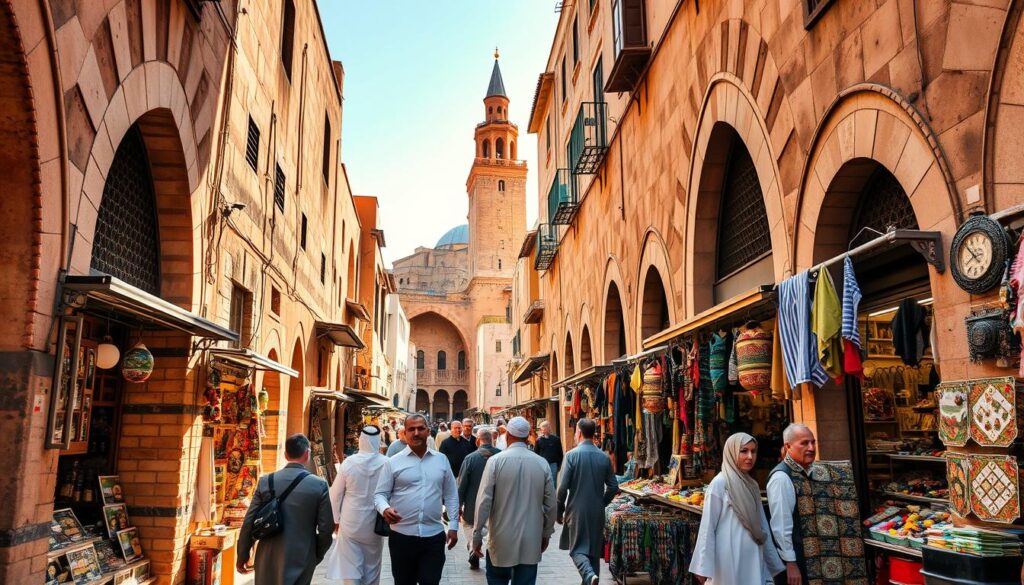
When you arrive in Fes, you’ll see its ancient charm and rich history. It’s a city full of cultural and historical wonders. You’ll see its medieval architecture and lively souks.
Exploring Fes, you’ll find the essential Morocco trip planner has planned for you. You’ll wander the narrow streets of the Medina and see historic sites.
Evening in Fes: Dinner and Relaxation
After a day of travel and sightseeing, enjoy a calm evening in Fes. Try local food at a riad or traditional restaurant. For a real experience, visit the Fes Medina for dinner.
Relax and enjoy the city’s warm welcome. Get ready for another exciting day in this Moroccan gem.
Day 3: Exploring Fes’s Ancient Medina
Walking through Fes’s ancient streets, you enter a world filled with history and culture. The Medina of Fes, or Fes El Bali, is a UNESCO World Heritage site. It’s one of the biggest car-free urban areas in the world. This old city is full of historical landmarks, traditional crafts, and cultural experiences.
Navigating the Fes El Bali
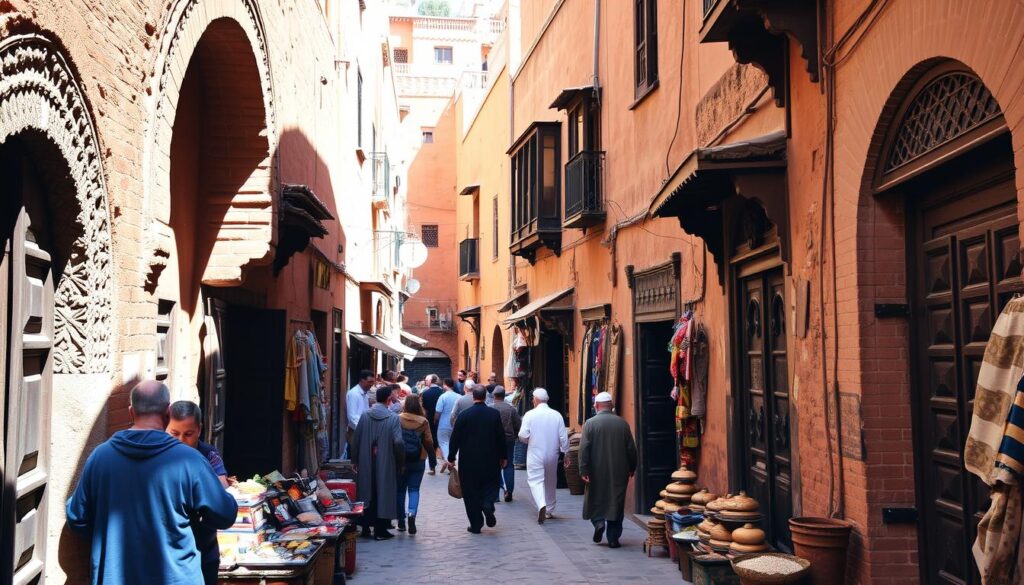
Exploring Fes El Bali’s narrow streets and alleys can be challenging. But it’s also a big part of the fun. The medina is so big and complex that even locals can get lost. But getting lost here is part of its charm, leading you to hidden gems and unexpected experiences.
To fully enjoy your exploration, consider hiring a local guide. They can share the history and significance of the landmarks you visit.
Must-Visit Sites in Fes
Fes is filled with historical and cultural landmarks you must see. The Al-Attarine Madrasa is a must-visit, known for its beautiful tile work. The Bou Inania Madrasa is another important site, a key religious building in Fes.
The Dar Batha Museum is located in a 19th-century palace. It showcases traditional Moroccan crafts like woodwork, ceramics, and weaving.
Shopping in the Souks
Shopping in Fes’s souks is an adventure in itself. You’ll find a wide range of local goods, from handicrafts to spices. As you explore, you’ll come across souks selling everything you need for a memorable trip to Morocco.
Be ready to haggle, as it’s a big part of the local culture. Don’t miss the alleys and side streets, where you might find unique souvenirs and local treasures.
Day 3 of your Morocco itinerary 7 days is all about exploring Fes’s ancient Medina. It’s a journey through time, immersing you in the rich history and culture of Morocco. Whether you’re navigating the streets, visiting landmarks, or shopping in the souks, Fes El Bali promises an unforgettable experience.
Day 4: Desert Journey to Merzouga
Day 4 of your 7-day Morocco trip takes you through the Middle Atlas Mountains to the Sahara Desert. This day is a highlight of your journey. You’ll see diverse landscapes and experience Morocco’s natural beauty.
Scenic Drive Through the Middle Atlas Mountains
The drive starts with a scenic route through the Middle Atlas Mountains. These mountains are known for lush forests and picturesque villages. You’ll pass through cedar forests, where the air is crisp and the scenery is serene.
Stops in Ifrane and Cedar Forest
You’ll make stops in charming towns like Ifrane, known as “Little Switzerland.” It has European-style architecture and beautiful surroundings. A visit to the Cedar Forest lets you stretch your legs and see majestic trees, some centuries old. For more information, visit Morocco’s destination guides.
Arriving at the Edge of the Sahara
As you get closer to Merzouga, the landscape changes dramatically. The towering dunes of the Sahara Desert come into view. Arriving at the edge of the Sahara is awe-inspiring, with vast sand dunes stretching as far as the eye can see. You can book a 4-day Morocco desert trip for an unforgettable adventure into the heart of the dunes.
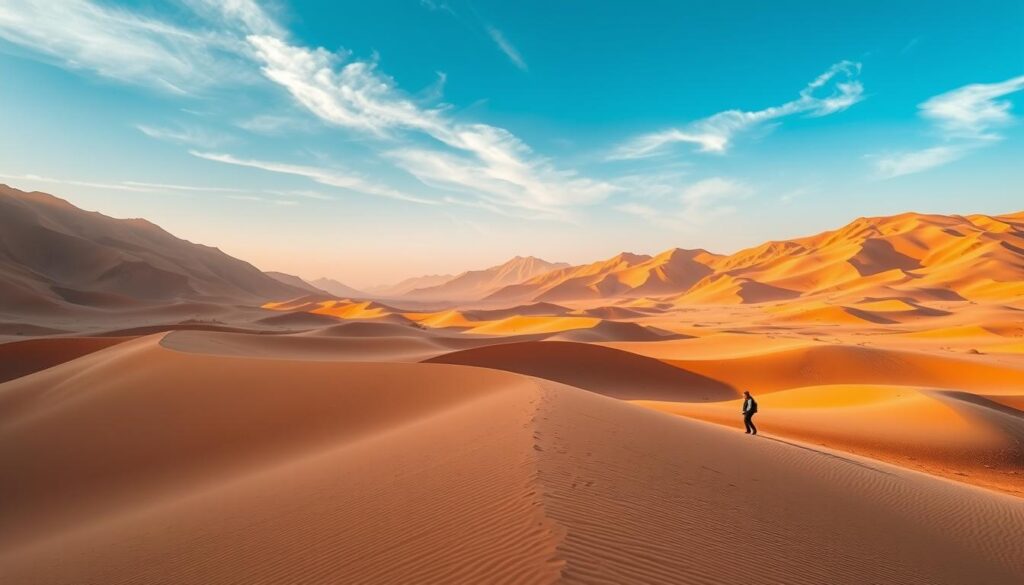
“The Sahara Desert is a vast and wondrous place, full of surprises and breathtaking beauty,” many travelers have said. Your arrival at Merzouga marks the start of an unforgettable desert experience. Camel treks and desert camps await you.
Day 5: Sahara Desert Experience
On Day 5, your best Morocco travel plan takes you into the Sahara Desert. It’s a day filled with stunning natural beauty. This part of your weeklong Morocco itinerary is a mix of adventure and peace.
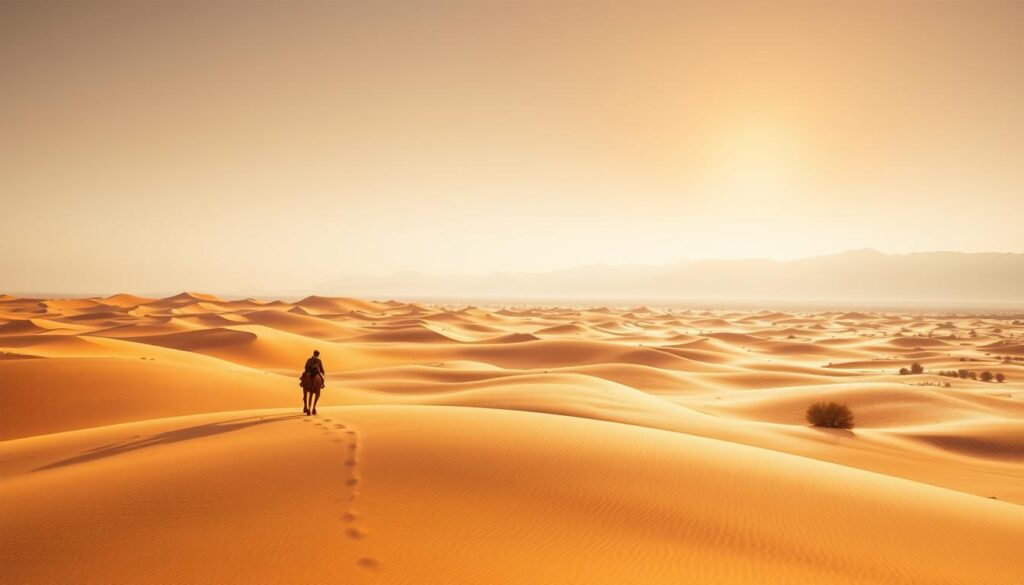
Camel Trek into the Dunes
Your desert journey starts with a camel trek into the dunes. It’s a calm and memorable experience. As you ride, the Sahara’s vastness opens up before you. The camel’s steady pace sets the mood for a day of discovery.
Night Under the Stars in a Desert Camp
After trekking, you reach a desert camp for the night. The evening is cozy by the campfire. The sky above is a twinkling show of stars, creating a magical atmosphere.
Berber Culture and Music
You’ll also dive into Berber culture through music and hospitality. This experience deepens your understanding of Moroccan heritage.
Looking back at Day 5, the Sahara Desert memories linger. The camel trek and Berber culture add richness to your weeklong Morocco itinerary.
Day 6: Traveling to Marrakech via Ouarzazate
Your trip from Merzouga to Marrakech is a feast for the eyes. You’ll drive through the “Road of a Thousand Kasbahs.” This drive is a key part of your Morocco travel guide experience. It shows you Morocco’s rich history and stunning architecture.
The Road of a Thousand Kasbahs
The drive from Merzouga to Marrakech via Ouarzazate is breathtaking. You’ll see many kasbahs, or fortified buildings, along the way. These ancient structures are made of rammed earth and show the region’s architectural skill and cultural heritage.
| Kasbah | Location | Notable Feature |
|---|---|---|
| Ait Ben Haddou | Ouarzazate Region | UNESCO World Heritage Site |
| Taourirt Kasbah | Ouarzazate | Well-preserved earthen architecture |
| Telouet Kasbah | High Atlas Mountains | Historic significance and stunning views |
Ait Ben Haddou UNESCO Site
A visit to Ait Ben Haddou is essential. This ancient village, famous in films, shows Berber architecture. Walking its narrow alleys and seeing its buildings will deepen your understanding of local culture and history.
Arriving in Vibrant Marrakech
After seeing Morocco’s stunning landscapes, you’ll reach Marrakech. This city is full of life, from its busy souks to its grand landmarks. Marrakech will amaze you and leave a mark on your essential Morocco trip planner.
Once you’re settled, explore Marrakech’s lively streets. Dive into the local culture and get ready for more adventures.
Day 7: Marrakech Exploration
As you start your last day in Morocco, Marrakech is ready to amaze you. It’s full of culture and stunning views. You’ll see some of Morocco’s best spots, making your trip one to remember.
Jemaa el-Fnaa Square and Souks
Your day kicks off at Jemaa el-Fnaa Square. Here, snake charmers and street performers add to the excitement. Don’t miss trying local treats like orange juice or Moroccan pastries.
The souks nearby are a shopper’s dream. You’ll find everything from colorful fabrics to beautiful jewelry.
Bahia Palace and Majorelle Gardens
Next, check out the Bahia Palace. It’s a stunning example of Islamic architecture. Then, visit the Majorelle Gardens, a garden filled with vibrant colors and peace.
Final Moroccan Dinner Experience
End your trip with a traditional Moroccan dinner at a riad. It’s a chance to enjoy local food and think about your adventures. This dinner celebrates the warm welcome and delicious food you’ve experienced.
Cultural Etiquette and Practical Tips
Starting your 7-day Morocco trip? Knowing the local culture is key for a smooth journey. Morocco’s rich history and diverse traditions make it a fascinating place. Being respectful of these customs will make your trip better. For more tips on traveling in Morocco, check out Morocco Travel Tips.
Respecting Local Customs
Morocco is a Muslim country, so visitors should dress modestly, especially at religious sites. It’s also vital to respect local traditions and customs. For example, remove your shoes when entering mosques or private homes. Knowing these customs will help you interact with locals better.
Dress Code Recommendations
It’s wise to dress conservatively, covering your shoulders and knees. Women might find a scarf useful to cover their heads at mosques. Men should avoid revealing clothes. For more on what to expect and how to prepare, see Morocco FAQs.
Safety Tips for American Travelers
Being mindful of your surroundings is important. Always watch your belongings, especially in crowded places. American travelers should also sign up for the U.S. Department of State’s Smart Traveler Enrollment Program (STEP). This way, you’ll get important safety updates.
What to Pack for Your 7-Day Morocco Adventure
Getting ready for your 7-day Morocco trip means packing the right stuff. Morocco’s weather changes a lot, from cool mountains to hot deserts. So, think carefully about what you’ll bring.
Essential Items for Different Regions
When you travel to Morocco, pack clothes for different weather. Comfortable walking shoes are key for walking in medinas and ancient sites. For cooler nights, especially in the mountains, wear layers.
Don’t forget sun protection for desert trips. This includes a hat, sunglasses, and sunscreen.
Electronics and Adapters
Remember to pack the right electronics and adapters. Morocco uses Type C and E sockets with 220V power. A universal travel adapter will keep your devices charged.
Also, bring a portable power bank. It’s great for extra power during long trips or camel rides.
With the right packing, you’ll be ready for Morocco’s varied adventures. Your 7-day trip will be unforgettable and worry-free.
Conclusion: Making the Most of Your Week in Morocco
Starting your Morocco 7-day trip, you’ll find a mix of culture, stunning views, and friendly people. A good plan for a week lets you see different parts of Morocco. You can go from Marrakech’s busy streets to the calm Sahara Desert.
Your 7-day trip will be full of new experiences. You’ll learn about local traditions, try tasty food, and see famous places like the Hassan II Mosque and Bahia Palace.
Looking back, Morocco will have made a big impact on you. It will make you want to come back and see more. Whether you love the lively souks, the high Atlas Mountains, or the peaceful desert, a week in Morocco is unforgettable.





 Covers cities, coast, mountains, desert & food