Exploring Morocco‘s rich culture is more fun when you know its name in different languages. If you’re heading to this North African country or just curious about languages, learning how to say “Morocco” in Spanish is key.
In Spanish, “Morocco” is called “Marruecos.” This tidbit is handy for travelers, language students, and anyone interested in cultural exchange between Spanish-speaking areas and Morocco.
Key Takeaways
- Knowing how to say country names in different languages boosts cultural understanding.
- “Morocco” is “Marruecos” in Spanish.
- These translations help travelers and language learners alike.
- Cultural exchange between Morocco and Spanish-speaking countries is important.
- Learning languages opens up new cultural adventures.
The Meaning and Translation of Morocco in Spanish
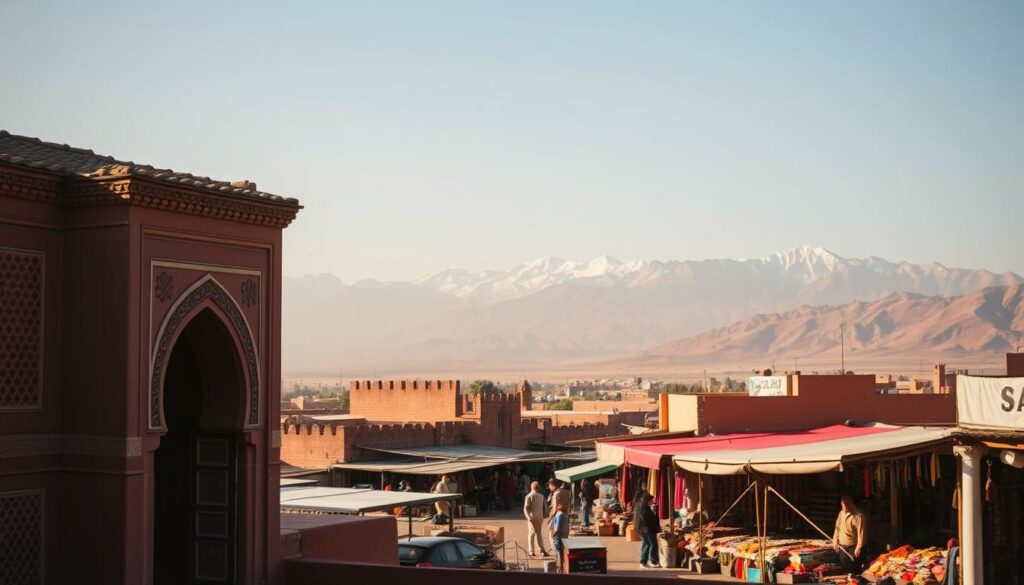
When you travel to or talk about Morocco, knowing its Spanish name is key. Morocco, known for its deep history and culture, is called “Marruecos” in Spanish.
The Official Spanish Word for Morocco
The official Spanish name for Morocco is “Marruecos.” This term is used in official settings like government, schools, and media. If you want to talk about the country in Spanish, use “Marruecos.” Here’s a simple table to show how it’s used:
| English | Spanish |
|---|---|
| Morocco | Marruecos |
| I’m going to Morocco | Voy a Marruecos |
Pronunciation Guide for “Marruecos”
Getting “Marruecos” right is important for clear communication. Say it as “Mah-rway-kohs.” Start with “Mar-” like “marine,” then “-rue-” like “way,” and end with “-cos” like “kose.” Repeating it a few times will help you get it right.
Historical Context: Spain and Morocco Relations
The history between Spain and Morocco is rich and complex. Their bond is rooted in geography, shared history, and political ties.
Geographical Proximity and Influence
The Strait of Gibraltar separates Spain and Morocco. This narrow waterway connects the Mediterranean to the Atlantic. It has made their cultural, economic, and historical exchanges easy.
But, their close location has also led to both cooperation and conflict.
Historical Interactions Through Centuries
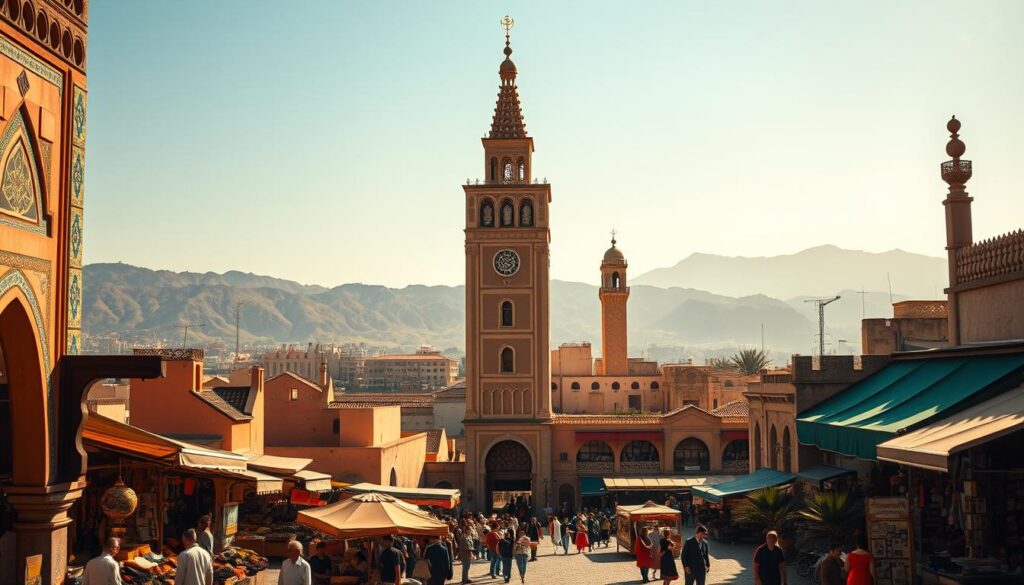
Spain and Morocco have been connected for nearly 800 years. The Moorish rule in Spain left a mark on architecture, language, and culture. Over time, they have traded, shared cultures, and fought.
Spanish Protectorate in Morocco
From 1912 to 1956, Spain controlled a big part of northern Morocco. This period introduced Spanish language, culture, and governance. Today, this legacy still shapes their relationship.
| Period | Event | Impact |
|---|---|---|
| 8th-15th century | Moorish occupation of Spain | Cultural and architectural legacy |
| 1912-1956 | Spanish Protectorate in Morocco | Introduction of Spanish language and culture |
| Present day | Ongoing relations | Cooperation in trade, culture, and education |
Linguistic Origins of “Marruecos”
Exploring ‘Marruecos’ reveals how Arabic shaped Spanish words. It’s more than a place name; it shows the deep ties between Spain and Morocco.
Etymology and Word Evolution
The word ‘Marruecos’ comes from “al-Maghrib,” meaning “the west” in Arabic. This term evolved through language changes. It shows the cultural and linguistic richness of Spanish.
Key stages in the evolution include:
- The original Arabic term “al-Maghrib”
- The Mozarabic influence during the Islamic period in Spain
- The Castilian Spanish adaptation into ‘Marruecos’
Arabic Influence on the Spanish Name
Arabic deeply influenced Spanish, with ‘Marruecos’ being a clear example. Arabic was the language of the Islamic Caliphate in Spain. It left many Arabic words in Spanish, especially in science, art, and daily life.
| Arabic Term | Spanish Equivalent | Meaning |
|---|---|---|
| al-Maghrib | Marruecos | Morocco/The West |
| al-Khwarizmi | algoritmo | Algorithm |
| al-ʿUddah | aluda | A type of agricultural tool |
To learn Morocco in Spanish, knowing its history and language changes is key. ‘Marruecos’ tells a story of cultural exchange.
Cultural Significance of Morocco in Spanish Society
Exploring Spain’s culture, you’ll find Morocco’s big impact. The historical and cultural links between Spain and Morocco are deep. They shape many parts of Spanish society.
Cultural Connections Between Spain and Morocco
Spain and Morocco are close geographically. This closeness has led to a rich cultural exchange. You can see this in architecture, food, and language.
The Alhambra in Granada, Spain, shows the Moorish influence. It has left a lasting mark on Spanish culture.
“The cultural exchange between Spain and Morocco is a two-way street,” says a cultural historian. Both countries influence each other’s traditions and customs. This is seen in many festivals and celebrations in both nations.
Representation in Spanish Literature and Art
Morocco is a big theme in Spanish literature and art. It reflects the complex history and culture between the two countries. Many Spanish authors have been inspired by Moroccan culture.
In art, Spanish artists have been inspired by Moroccan culture. They use its vibrant colors and patterns. This enriches the art of both countries.
For example, Mariano Fortuny was fascinated by Moroccan culture. His paintings show this, with detailed and colorful Moroccan scenes.
Spanish Language in Morocco Today
Spanish is still spoken in some parts of Morocco. This is thanks to centuries of contact between the two nations. It shows the deep historical and cultural bond between Morocco and Spain.
Spanish-Speaking Communities in Morocco
Spanish-speaking groups mainly live in northern Morocco. They keep their language alive because of their ties with Spain.
Northern Morocco’s Spanish Heritage
Northern Morocco, especially Tangier and Tetouan, has a strong Spanish influence. You can see it in the buildings, food, and language. Many locals still speak Spanish as a second language.
Modern Spanish Usage
Today, Spanish is used in business, education, and tourism in Morocco. It connects Morocco to Spanish-speaking countries, helping with cultural and economic ties.
Educational and Institutional Presence
Spanish is taught in some schools and universities in Morocco. This helps young people learn the language. The Instituto Cervantes also promotes Spanish language and culture in Morocco.
The ongoing use of Spanish in Morocco shows the lasting connection between the two countries. As Morocco keeps interacting with Spanish-speaking nations, Spanish will remain important.
How to Say Morocco in Spanish: Practical Guide
Traveling to Morocco or talking about it in Spanish is easier with the right words. The Spanish term for Morocco is “Marruecos.”
Knowing basic phrases and terms about Morocco in Spanish is key. It helps you communicate better.
Basic Phrases and Terminology
Here are some essential phrases to start with:
- Marruecos – Morocco
- Marroquí – Moroccan (adjective)
- La cultura marroquí – Moroccan culture
- El pueblo marroquí – The Moroccan people
For more travel tips to Morocco, check out Wikivoyage’s Morocco page.
Regional Pronunciation Differences
“Marruecos” is the standard term for Morocco in Spanish. But, how it’s pronounced can vary by region. For example, the way it’s said in Spain might differ from Latin America.
| Region | Pronunciation of “Marruecos” |
|---|---|
| Spain | /maˈrwe.kos/ |
| Latin America | /maˈrwe.kos/ (similar, with some variation) |
Knowing these differences can improve your communication with Spanish speakers from different areas.
Regional Variations: How Different Spanish-Speaking Countries Refer to Morocco
Exploring the Spanish language shows us how different countries talk about Morocco. This shows the rich cultural and historical backgrounds of Spanish-speaking areas.
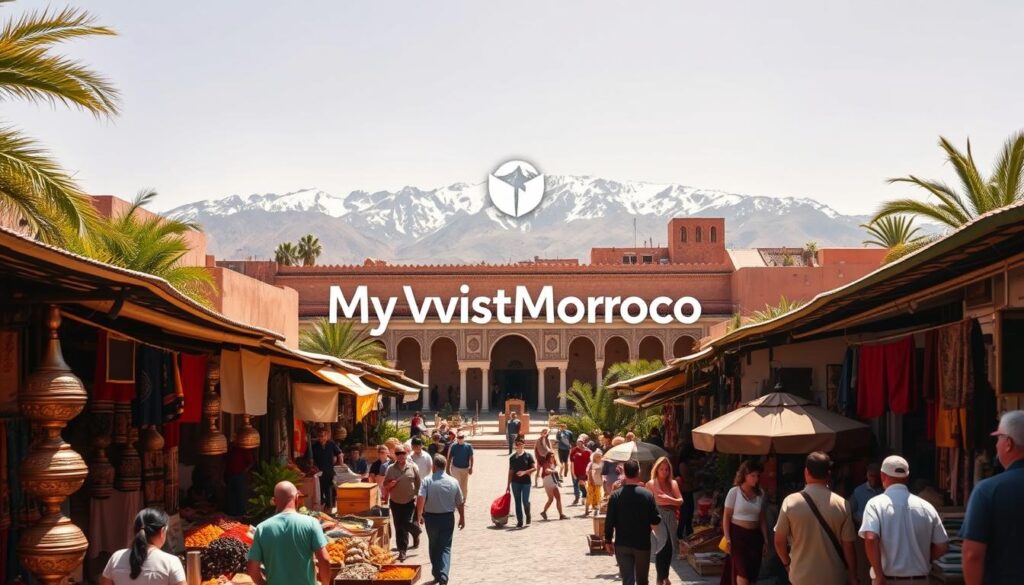
Latin American Spanish References to Morocco
In Latin America, “Marruecos” is the common term for Morocco, just like in Spain. But, how it’s used can change. For example, in some places, “Marruecos” is used more in formal talks. In casual chats, it might mean the culture or people, not just the country.
Quotes from Latin American literature often show this fine line. They highlight the cultural exchange between Latin America and Morocco.
European Spanish Usage and Dialects
In Spain, “Marruecos” is the standard name for Morocco. It’s used the same way everywhere. But, different areas have their own ways of saying it, shaped by history and location.
The impact of Arabic on European Spanish, especially in Andalusia, is clear. It shows the deep ties between Spain and Morocco.
Learning about these differences helps us see the Spanish language’s complexity. It shows the rich cultural backgrounds of Spanish-speaking areas.
Learning About Morocco in Spanish: Educational Resources
The Spanish language opens a window to Morocco, with many educational resources available. Whether you’re a student, traveler, or cultural enthusiast, learning about Morocco in Spanish is rewarding.
Online Courses and Digital Materials
Start with online courses and digital materials on Morocco in Spanish. You’ll find structured courses, articles, and videos.
Language Apps and Platforms
Language apps like Duolingo, Babbel, and Rosetta Stone have Spanish courses. Platforms like Coursera and edX offer courses on Islamic studies and North African history. These provide valuable context.
Video Resources
YouTube channels like SpanishDict and SpanishPod101 are great for learning Spanish. They also explore Moroccan culture and documentaries.
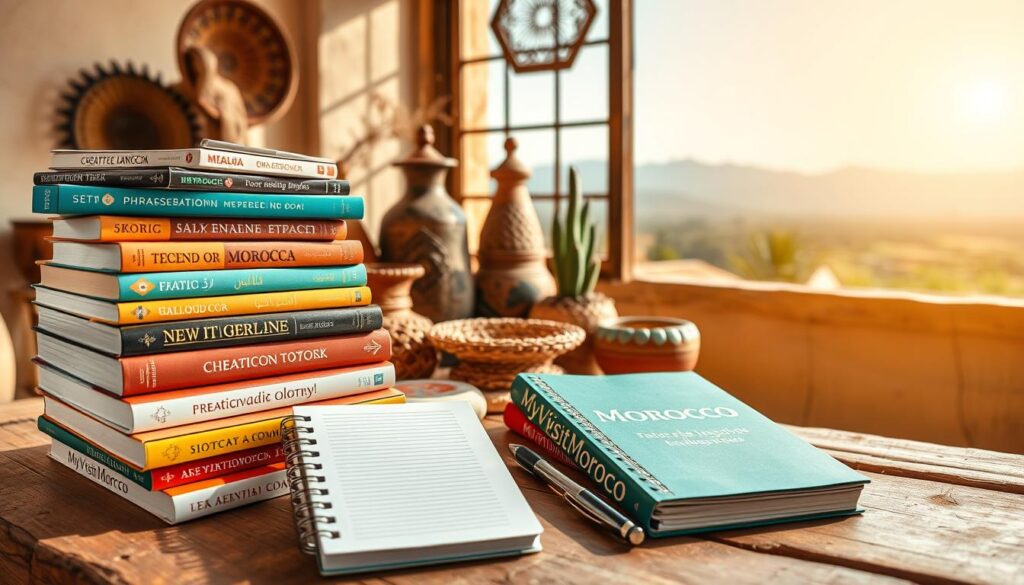
Books and Academic Resources
For book lovers, there are many resources on Morocco and Spanish. You can find historical accounts, cultural studies, and linguistic analyses.
Using these resources, you can learn more about Morocco in Spanish. This will improve your cultural understanding and language skills.
Traveling to Morocco: Spanish Language Tips
Morocco, known as “Marruecos” in Spanish, is a place where language brings cultures together. As you get ready for your trip, knowing Spanish can make your journey better. Arabic is the official language, French is common, and Spanish is found in the north.
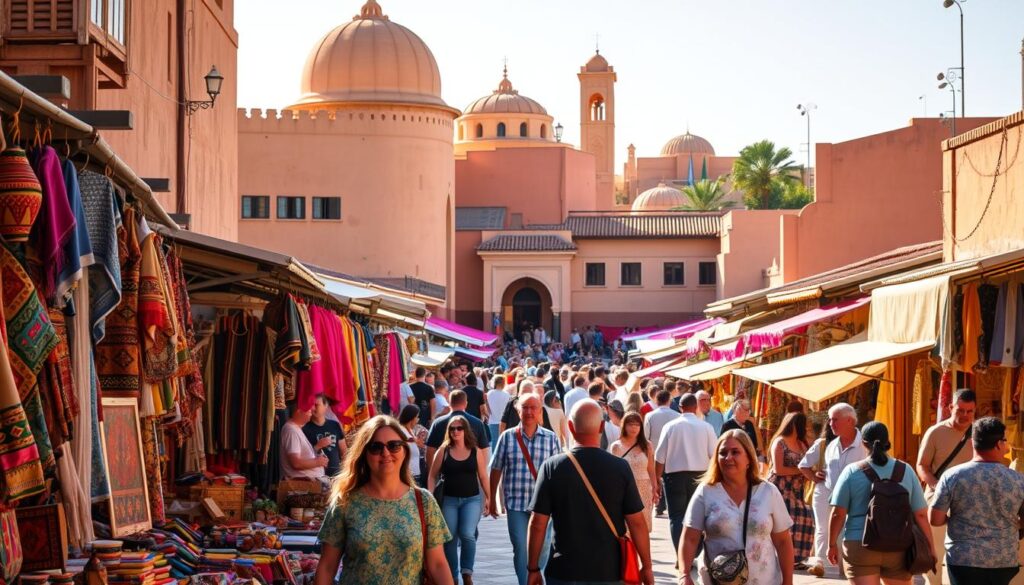
Essential Travel Phrases in Spanish and Arabic
Many Moroccans speak some Spanish, especially in tourist spots. But, learning basic Arabic phrases is also helpful. Here are some key phrases:
| Phrase | Spanish | Arabic | English Translation |
|---|---|---|---|
| Hello | Hola | مرحبا (Marhaba) | Hello |
| Thank you | Gracias | شكرا (Shukraan) | Thank you |
| How much? | ¿Cuánto cuesta? | كم ثمن هذا؟ (Kam thaman hadha?) | How much does this cost? |
Language Expectations for Spanish-Speaking Tourists
As a Spanish speaker, you might find locals who understand or speak Spanish, especially in areas with Spanish history. Still, learning Arabic shows respect for the culture. Many places in tourist areas have menus and signs in Spanish and other languages.
“The beauty of Morocco lies not just in its landscapes, but in its rich cultural tapestry, where languages like Spanish and Arabic blend in the vibrant souks and medinas.”
By understanding the local language and culture, your trip to Morocco will be more rewarding and fun.
Spanish-Moroccan Bilingualism and Language Exchange
In areas where Spain and Morocco meet, speaking two languages is common. This is because these countries are close, leading to a mix of Spanish and Moroccan Arabic.
This mix of languages comes from history, culture, and geography. As a result, people near the border have a special way of speaking. It shows the blend of Spanish and Moroccan cultures.
Code-Switching Phenomena Between Languages
Code-switching is a key part of Spanish-Moroccan bilingualism. It’s when someone switches between Spanish and Moroccan Arabic in one talk or sentence. This switch depends on the situation and the person’s background.
For example, someone might use Spanish for work but switch to Moroccan Arabic with family. This back-and-forth between languages makes the community’s language use rich and flexible.
Bilingual Communities Along the Border
The border areas between Spain and Morocco are full of linguistic diversity. These places have their own ways of speaking and cultural practices. They mix Spanish and Moroccan traditions.
Being bilingual in these areas helps people talk across borders. It also builds bridges between cultures, fostering understanding and respect.
Moroccan Arabic and Its Spanish Loanwords
Did you know Moroccan Arabic has many Spanish loanwords? This comes from their shared history. The mix of languages is clear in Moroccan Arabic. It shows the complex history and cultural ties between Morocco and Spain.
Historical Language Exchange Patterns
The language exchange between Moroccan Arabic and Spanish goes back centuries. The Spanish protectorate in Morocco in the 20th century played a big role. Many Moroccans learned Spanish, adding Spanish words to their dialect.
Common Spanish Words in Moroccan Dialect
Moroccan Arabic uses a lot of Spanish words in daily talk. These words fall into different categories:
Everyday Vocabulary
- balcon (balcony) from Spanish “balcón”
- fu (strong/force) related to the Spanish word “fuerza”
- kura (chair) similar to the Spanish “silla”
Technical and Specialized Terms
- televisor (television) directly borrowed from Spanish “televisor”
- radio (radio) also used in Spanish
- policia (police) similar to the Spanish “policía”
The Spanish loanwords in Moroccan Arabic show the area’s rich culture and language. Knowing these words gives us a peek into Morocco and Spain’s shared history.
Spanish Media Coverage and Terminology About Morocco
The way Spanish media talks about Morocco shows a lot about the country’s culture and politics. Exploring how Morocco is seen in Spanish media reveals the complexity of their relationship.
News and Current Affairs Terminology
Spanish media has specific words for Morocco, especially in news and current events. The term “Marruecos” is the Spanish word for Morocco and is often seen in headlines. You might also find terms about politics, economy, or social issues.
Let’s look at some examples:
| Spanish Term | English Translation | Context |
|---|---|---|
| Marruecos | Morocco | General reference |
| Relaciones bilaterales | Bilateral relations | Diplomatic and economic cooperation |
| Inmigración | Immigration | Social issues and policies |
Cultural and Social Representation
Morocco is also seen in Spanish media through cultural and social views. Articles might talk about Moroccan culture, traditions, and how Spanish culture affects Morocco, and vice versa.
For example, cultural festivals, educational exchanges, and Spanish translations of Moroccan literature show the rich relationship between the two countries.
Looking deeper, you’ll see that Morocco’s representation in Spanish media is more than just reporting. It’s about building cultural understanding and exchange.
Business and Trade: Spanish-Moroccan Terminology
Spain and Morocco are getting closer economically. Knowing Spanish-Moroccan business terms is key. It helps you move through the economic world smoothly.
Commercial Language and Business Terms
Some terms are often used in Spanish-Moroccan trade. “Contrato de comercio” (trade contract) and “acuerdo comercial” (trade agreement) are vital. Also, “exportación” (export) and “importación” (import) are important for goods flow.
For more on business between Spain and Morocco, check out this article about Dakhla’s business potential.
Industry-Specific Vocabulary
Each industry has its own words. In farming, “cultivo de cítricos” (citrus cultivation) is used. In energy, “energía renovable” (renewable energy) is key.
Knowing these terms helps you talk clearly and make smart choices. It prepares you to succeed in the Spanish-Moroccan business world.
Morocco in Spanish: Language Learning Resources
To learn about Morocco in Spanish, you need to check out different learning tools. Look into specialized dictionaries, phrasebooks, and cultural programs. These help you understand the language better, especially when it comes to Morocco.
Specialized Dictionaries and Phrasebooks
Using specialized dictionaries and phrasebooks is key. They offer translations and phrases specific to Morocco. This lets you talk and understand better.
Some top picks include bilingual dictionaries for Spanish and Arabic. Also, phrasebooks with travel and cultural phrases are great.
Cultural Immersion Programs
Cultural immersion programs are a great way to learn. They include staying with local families, language classes, and cultural activities. This gives you a full view of Moroccan culture and its Spanish connection.
Joining these programs boosts your language skills. You’ll also appreciate Moroccan culture more, especially in Spanish.
Conclusion: Bridging Cultures Through Language
Learning how to say “Morocco” in Spanish is more than just words. It opens a door to the shared cultural heritage of Spain and Morocco. The word “Marruecos” is not just a term; it’s a symbol of their history together.
Exploring the Morocco-Spain connection through language shows how it can bridge gaps. Whether you’re traveling, learning a new language, or interested in cultural exchange, knowing “Morocco” in Spanish is valuable. It helps you understand and appreciate the complex ties between these two countries.
The presence of Spanish in Morocco and vice versa shows their lasting historical bond. By embracing this exchange, you can connect more deeply with the cultures of Spain and Morocco. This enriches your experiences and broadens your views.



 Covers cities, coast, mountains, desert & food