Exploring Morocco’s vibrant culture is more fun with French. Many Moroccans speak French, making it key in education, government, and business.
Morocco’s history with French is deep. Being part of Francophonie, Morocco’s ties with French are strong. About 33% of Moroccans use French as a second language. It’s vital for connecting with the local culture.
Key Takeaways
- French is widely used in Morocco’s education system.
- A significant percentage of Moroccans can read and write in French.
- French plays a crucial role in Moroccan government and commerce.
- Understanding French can enhance your experience in Morocco.
- Morocco’s membership in the Francophonie highlights its connection to the French language.
The French Name for Morocco
To understand the French name for Morocco, we need to look at its history and where the name comes from. The French call it “Maroc,” which comes from the Arabic “al-Maghrib,” or “the west.” This shows Morocco’s importance in both geography and culture.
Etymology and Historical Origins
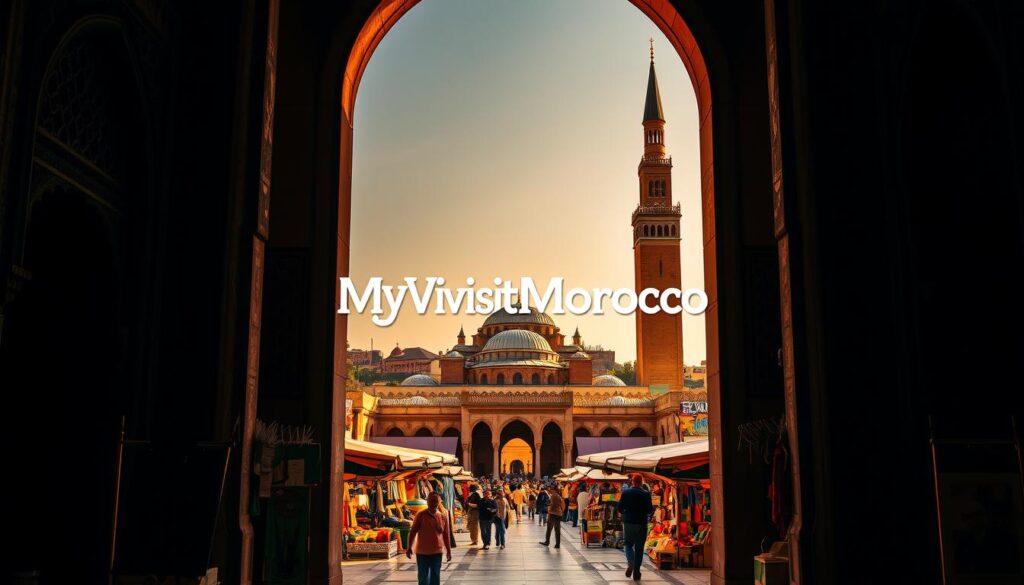
The name “Maroc” comes from medieval times. Back then, the area was known for its lively trade and cultural exchanges. The name has lasted through many historical periods, including the Almoravid and Almohad dynasties. These dynasties were key in shaping the region’s identity. The French name “Maroc” shows the deep connection between France and Morocco.
- The name “Maroc” is used in both official and everyday settings.
- It shows the lasting impact of French on the area.
Official Terminology in Diplomatic Context
In diplomatic talks, “Maroc” is the name used in official papers and talks. This is true for French-speaking countries and global organizations. Using “Maroc” in diplomatic talks highlights the cultural and historical bond between France and Morocco. It helps with communication and cooperation.
- Diplomatic relations often start with the French name.
- International agreements and treaties often mention “Maroc.”
“Morocco” in French: Spelling and Pronunciation
The French language gives a special view of Morocco, from how it’s spelled to how it’s said. Knowing the right spelling and how to say it is key for learners and travelers.
How to Write “Morocco” in French
In French, “Morocco” is written as “Maroc.” This spelling is seen in official papers, media, and daily talk. The change from “Morocco” to “Maroc” comes from France and Morocco’s historical and language connections.
Pronunciation Guide with Audio Examples
The French way to say “Maroc” is “mah-ROK.” The stress is on the second syllable. For those new to French, the “oc” at the end sounds like “ok” in “okay,” but with a French “k” sound.
| Language | Spelling | Pronunciation |
|---|---|---|
| French | Maroc | mah-ROK |
| English | Morocco | mor-OK-oh |
Regional Variations in Pronunciation
While “Maroc” is usually said as “mah-ROK,” there are local differences. But in France and official settings, “mah-ROK” is the standard.
Knowing these details can make you appreciate French more. It shows how French interacts with other cultures, especially Morocco.
Historical French Influence in Morocco
From 1912 to 1956, Morocco was under French rule. This period changed Morocco’s language and culture deeply. The French rule shaped the country’s government, schools, and culture.

The Protectorate Period (1912-1956)
French became the main language for administration, education, and business during this time. This change had a big impact on Morocco. It introduced French, making it a key part of Morocco’s identity.
The French also brought modern changes. They worked on roads, schools, and healthcare.
“The French protectorate in Morocco was characterized by a complex interplay of cultural exchange and colonial power dynamics.”
Linguistic Evolution During Colonial Times
Learning French became common in Morocco. It became the language of government, business, and schools. A bilingual elite emerged, helping modernize Morocco.
| Language | Role During Protectorate | Legacy |
|---|---|---|
| French | Language of administration, education, and commerce | Continues to be widely used in official contexts |
| Arabic | Official language, though often overshadowed by French | Remains the official language, with efforts to promote its use |
Post-Independence Language Policies
After gaining freedom in 1956, Morocco had to redefine its language. Arabic was made official again, but French stayed important in education, government, and business. There were efforts to make Arabic more common in schools.
Today, Morocco is bilingual, with many speaking Arabic and French. This shows the lasting impact of French rule on Morocco’s culture and identity.
The Status of French in Modern Morocco
The role of French in Morocco is complex, showing the country’s rich history and current cultural scene. Arabic, Berber languages, and French all play parts in Morocco’s language mix. French is key in official and daily life.
Official Languages vs. Practical Usage
Arabic is Morocco’s official language, but French is used a lot in government, schools, and business. This mix shows Morocco’s past and its ties to the world. French is used in official papers, courts, and government work, along with Arabic.
French in Education and Business Sectors
In Morocco’s schools, French is important, especially in science and tech. Many universities and professional schools teach in French. In business, French helps with trade and talks with European countries.
Here’s a table showing French’s role in Morocco:
| Sector | Role of French |
|---|---|
| Education | Primary language for science and technology |
| Business | Used for international trade and communication |
| Government | Used in official documents and administration |
Generational Differences in French Proficiency
Younger Moroccans, who learned French in school, speak it better than older people. Older folks might know less French, based on their school days and colonial times.
As Morocco grows, French will keep being important. This is because of global trends, education, and cultural sharing. For more on French, check out Wikipedia’s French language page.
Moroccan Cities and Landmarks in French
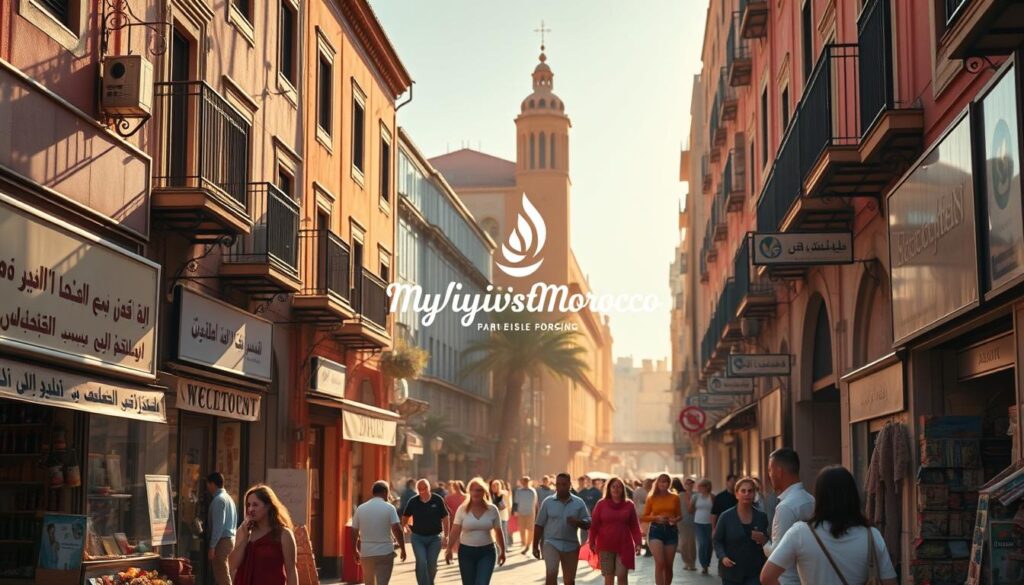
Exploring Morocco becomes more interesting when you know the French names of its cities and landmarks. Morocco’s history with France has left a mark on its geography and tourism.
Major Cities and Their French Names
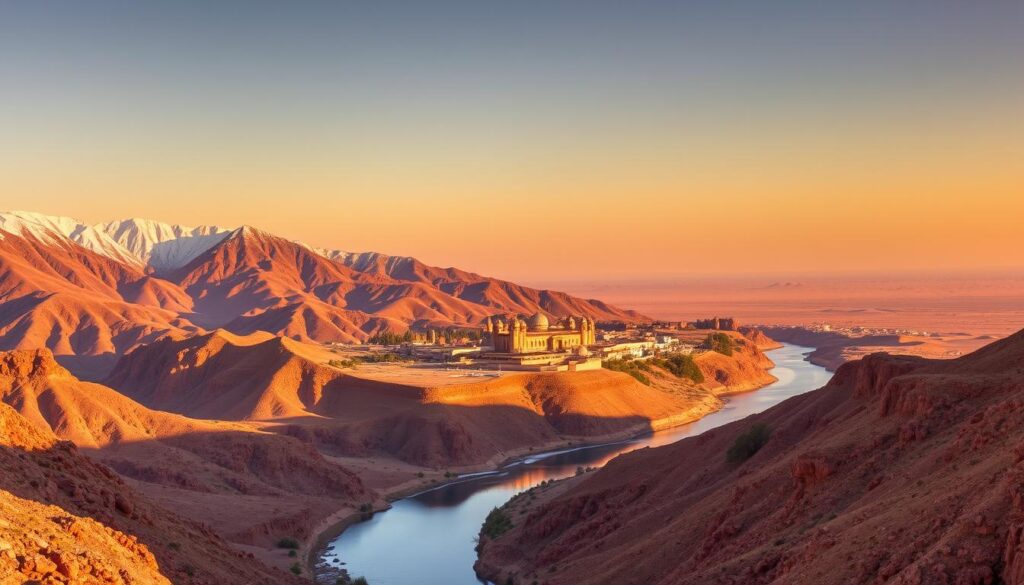
Many of Morocco’s big cities have French names that tourists and locals use. For example, Marrakech is the same in French. But, the way you say it might be different.
Rabat, the capital, also keeps its French name. But, Casablanca is called Dar el-Beida or Casa in everyday talk. Yet, its French name is still Casablanca.
Other cities like Tangier (Tanger in French) and Fez (Fès in French) have their own French names.
Famous Landmarks and Their French Designations
Morocco boasts many historical and cultural landmarks with French names. The Koutoubia Mosque in Marrakech is known by its Arabic name in French too. The Bahia Palace in Marrakech also keeps its French name.
Knowing these names helps travelers appreciate Morocco’s rich culture.
Pronunciation Tips for Travelers
Getting the pronunciation right can make your trip better. For instance, “Marrakech” is said as “mah-rah-kesh” with a soft “ch” sound. “Rabat” sounds more like “rah-baht.”
Practicing these can make you feel more at home and show respect for the culture.
Navigating Morocco Using French
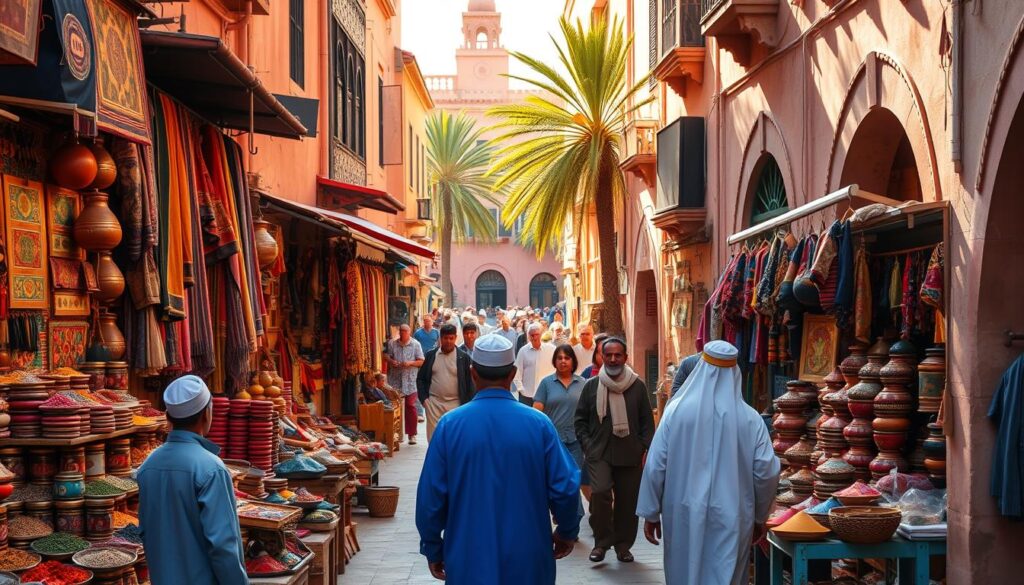
Planning a trip to Morocco? Knowing French will make your journey better. Morocco’s rich culture is easier to explore when you can communicate. Learning French phrases helps you move around Marrakech, historic cities, and deserts.
Transportation Vocabulary and Useful Phrases
To travel around Morocco, knowing French transportation terms is key. “Gare” means train station, and “aéroport” is airport. For directions, say “Où est…?” (Where is…?).
Useful phrases include “Je voudrais aller à…” (I would like to go to…) and “Combien ça coûte?” (How much does it cost?).
Important terms are “bus” (autobus), “train” (train), “taxi” (taxi), and “location de voiture” (car rental). On public transport, ask “Où est la gare routière?” (Where is the bus station?) or “À quelle heure part le train?” (What time does the train leave?).
Direction and Location Terms
Knowing direction and location terms in French helps you navigate Morocco. Key phrases are “à gauche” (left), “à droite” (right), “devant” (straight), “tourner à gauche/droite” (turn left/right), and “ici” (here).
For directions, say “Où est…?” followed by the place’s name. For locations, knowing “près de” (near), “loin de” (far), and “à côté de” (next to) is helpful. For example, “L’hôtel est près de la plage” means “The hotel is near the beach.”
Reading Signs and Maps in French
Reading signs and maps in French aids your navigation. Common signs are “Sortie” (exit), “Entrée” (entrance), “Interdit” (prohibited), and “Information” (information). Understanding the scale (“échelle”) and legend (“légende”) on maps is crucial.
For a detailed itinerary, check out resources like Morocco 10-Day Itinerary. This will enhance your travel experience.
Travel experts say, “Learning a few key phrases in the local language can transform your travel experience from good to great.” With French vocabulary, you’ll confidently explore Morocco.
Essential French Phrases for Morocco Tourism
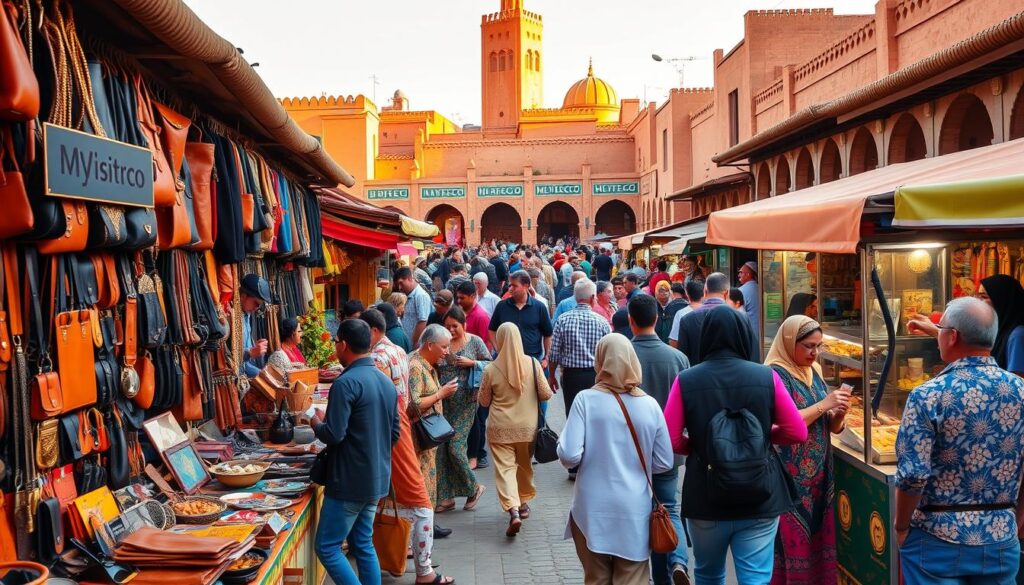
Traveling to Morocco is more fun when you know some French phrases. Morocco values French, especially in tourist spots. It’s a country rich in culture.
Greetings and Basic Communication
Starting with greetings is key in Morocco. Say “Bonjour” for good morning or day. For evening, use “Bonsoir“.
Showing respect is important. Say “Merci” for thank you and “S’il vous plaît” for please.
For better chats, learn “Comment ça va?” (How are you?) and “Je m’appelle [name]” (My name is [name]). These help you connect and make talking easier.
Shopping and Negotiation Terms
When shopping, knowing how to negotiate in French helps. Start with “Combien ça coûte?” (How much does it cost?) and “Je voudrais négocier le prix” (I would like to negotiate the price).
To buy, say “Je vais prendre ceci” (I will take this). For packaging, use “Pouvez-vous m’aider avec l’emballage?” (Can you help me with the packaging?).
Emergency and Health-Related Vocabulary
In emergencies, knowing the right words is crucial. Say “Au secours!” (Help!) or “Appelez la police!” (Call the police!). For sickness, say “Je suis malade” (I am sick).
Knowing “médecin” (doctor) and “pharmacie” (pharmacy) helps in health issues.
A travel expert says, “Learning a few key phrases in the local language can make a significant difference in your travel experience.” Using French in Morocco makes your trip better and shows respect for the culture.
Moroccan Culture Through French Vocabulary
Exploring Moroccan culture through French vocabulary gives a unique view of its rich heritage. You’ll see how French terms help us understand Moroccan arts, crafts, and architecture.
Arts, Crafts, and Architecture Terminology
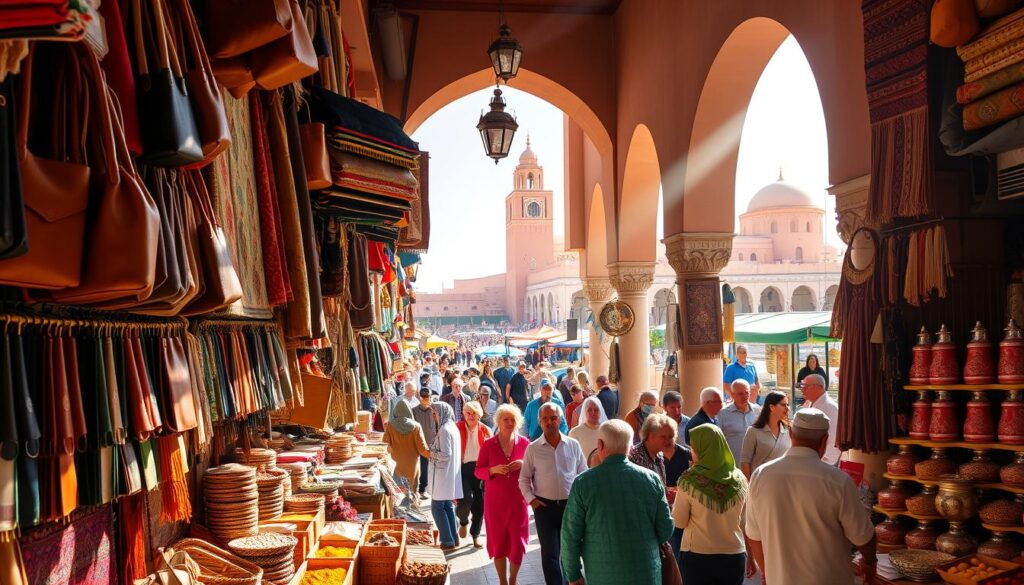
Moroccan arts and crafts are famous for their detailed designs and bright colors. French words like “zellij” (tile work), “taajira” (traditional jewelry), and “arabo-mauresque” architecture are key. Knowing these terms helps us appreciate Moroccan craftsmanship more.
| French Term | English Translation | Description |
|---|---|---|
| Zellij | Tile work | Intricate mosaic tile work often used in Moroccan architecture. |
| Taajira | Traditional jewelry | A type of jewelry that is intricately designed and often worn on special occasions. |
| Arabo-mauresque | Arabo-Moorish | A style of architecture that combines Arab and Moorish influences. |
Cultural Practices and Traditions
Moroccan culture is full of traditions influenced by French. Terms like “henna” (henna night), “zakat” (charity), and “Ramadan” give us a peek into Moroccan culture and religion. These traditions are a big part of Moroccan identity and are celebrated with great enthusiasm.
Religious Terms and Expressions
Religion is very important in Moroccan culture, and French vocabulary helps describe religious terms. Words like “mosquée” (mosque), “imam” (imam), and “hadith” (sayings of the Prophet) are crucial for understanding Morocco’s religious scene.
Learning these French terms about Moroccan culture helps us understand and appreciate its rich heritage more deeply.
Moroccan Cuisine in French
Exploring Moroccan cuisine with French terms makes dining more fun for everyone. Moroccan food mixes Arab, Mediterranean, and Berber flavors. Knowing French names adds to your food adventure.
Traditional Dish Names and Ingredients
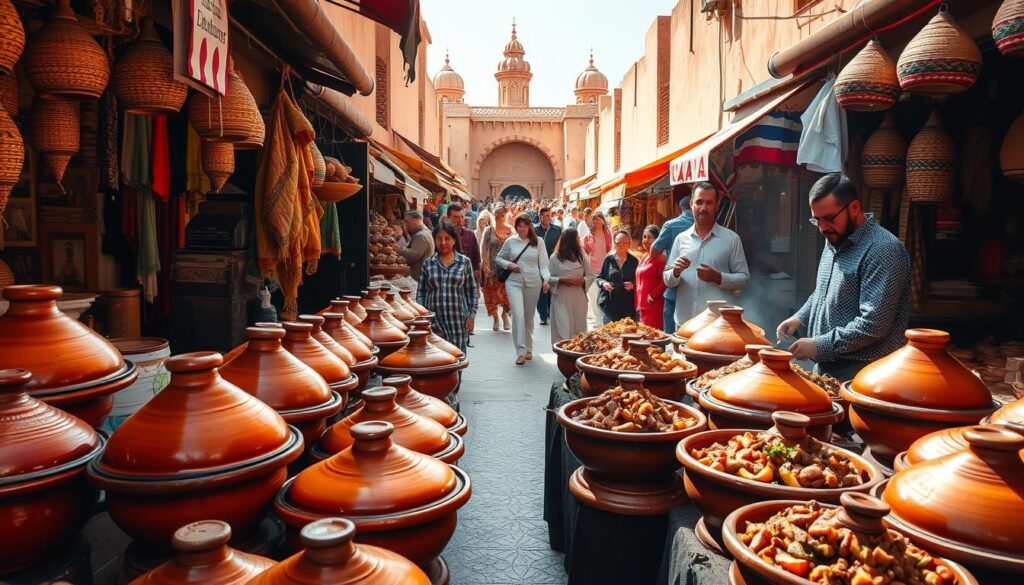
Moroccan dishes have French names that are easy to learn. For example, ‘Tagine’ is ‘Tajine’ in French, and ‘Couscous’ stays the same. Knowing these names helps you order at Moroccan restaurants.
Popular dishes include ‘Tajine de Poulet’ (Chicken Tagine), ‘Couscous avec Légumes’ (Couscous with Vegetables), and ‘Pastilla’ (a savory pie). Learning these terms makes your meals more enjoyable.
Restaurant and Dining Vocabulary
Knowing French for dining in Morocco is useful. Terms like ‘Carte’ (menu), ‘Serveur/Serveuse’ (waiter/waitress), and ‘L’addition, s’il vous plaît’ (the bill, please) make dining smoother.
Also, knowing French for cooking methods and ingredients helps you choose better. For example, ‘grillé’ means grilled, and ‘épices’ means spices.
Food-Related Cultural Customs
Moroccan cuisine is deeply rooted in the country’s culture and traditions. Meals are a chance to come together. Understanding this culture makes your dining experience richer.
The traditional Moroccan tea ceremony is a big part of dining here. Knowing customs like eating with your right hand and not finishing a meal shows respect. It makes your dining experience more enjoyable.
French-Arabic Language Fusion in Morocco
In Morocco, you’ll see a mix of French and Arabic. This mix shows the country’s rich culture. It comes from Morocco’s history and its role as a meeting place for cultures.
The mix of French and Arabic in Morocco is more than just using words from both. It’s about making a new way to talk. You’ll see this in everyday talks, where people switch between languages easily.
Code-Switching Phenomena in Daily Conversation
In Morocco, people often switch between French and Arabic in one talk. They might start in French, then use Arabic for emphasis. Then, they might go back to French for specific terms. This shows how many Moroccans are good at speaking both languages.
For example, someone might talk about a business deal in French. Then, they might use Arabic to discuss the price. Finally, they might switch back to French to wrap up the deal. This switching is not random. It depends on who they’re talking to, the situation, and what they want to say.
Unique Moroccan French Expressions
Moroccan French has its own special words that aren’t in regular French. These words mix French and Arabic, giving Moroccan French its own flavor. For example, saying “Ça va, wallah?” combines French “Ça va” with Arabic “wallah” (I swear).
These expressions add color and show cultural and social details unique to Morocco. They tell us about Morocco’s history, values, and daily life.
Darija Words Adopted into Moroccan French
Darija, Morocco’s Arabic dialect, has added many words to French spoken there. Especially in food, culture, and daily life. For example, “tagine” (a Moroccan stew) is used in French to talk about both the dish and the pot it’s cooked in.
Adding Darija words to French makes the language richer and more specific. It shows how language in Morocco is always changing and growing.
Geographic Features of Morocco in French
Morocco’s geography is as diverse as it is breathtaking. French terms can make your travel experience better. The country’s varied landscape was described using French during the colonial period. This still influences the language today.
Mountains, Deserts, and Coastlines
Morocco has several mountain ranges, including the Atlas Mountains (Les Montagnes de l’Atlas). The highest peak, Jbel Toubkal, is in the High Atlas (Le Haut Atlas). The Sahara (Le Sahara) desert attracts tourists worldwide.
Morocco’s coastline along the Atlantic Ocean (L’Océan Atlantique) and Mediterranean Sea (La Mer Méditerranée) has beautiful beaches and ports.
| Feature | French Name |
|---|---|
| Atlas Mountains | Les Montagnes de l’Atlas |
| Sahara Desert | Le Sahara |
| Atlantic Coast | La Côte Atlantique |
Climate and Weather Vocabulary
Morocco’s climate changes from north to south. The Mediterranean climate (Le climat méditerranéen) in the north has mild, wet winters and hot, dry summers. The desert climate (Le climat désertique) of the Sahara is very hot during the day and cold at night.
“Le climat marocain est très varié, allant du climat méditerranéen au nord au climat désertique dans le sud.”
Natural Attractions and Their French Names
Morocco has many natural attractions with French names. The Todra Gorge (Les Gorges du Todra) is a stunning canyon in the eastern High Atlas. The Ouzoud Falls (Les Cascades d’Ouzoud) is known for its lush surroundings and water cascades.
Learning the French names of Morocco’s geographic features can make your travel better. It helps you appreciate the country’s natural beauty more.
Fascinating Morocco Facts in French
Exploring Morocco reveals interesting facts about its history, culture, and today’s life, all in French. Morocco’s rich heritage combines Arab, Berber, and French influences.
Historical Milestones and Their French Descriptions
Morocco’s history is filled with key moments, like the Marrakech Medina, a UNESCO World Heritage site. The French call this area “La Médina de Marrakech.” Learning about these events in French deepens our understanding of Morocco’s past.
The French Protectorate period (1912-1956), known as “Le Protectorat français,” left a big mark. It influenced Morocco’s architecture, education, and government.
Cultural Facts and Terminology
Moroccan culture is full of traditions and customs. The term “Zawiya” means a Sufi shrine or mosque, showing the country’s spiritual depth. In French, it’s called “Zaouïa.”
“Zakat” or charity is key in Moroccan culture. In French, it’s “La Zakat,” showing the importance of giving in Islam.
Contemporary Morocco in French Media
Today, Morocco is a lively country, with its culture and issues often talked about in French media. News like “Le Matin” and “TelQuel” share updates on Morocco’s politics, society, and more.
Knowing about these topics in French keeps you up-to-date with Morocco’s changing scene.
Learning Resources for Moroccan French
Learning French is easier with the right tools, especially for those interested in Morocco. Whether you’re traveling, love languages, or want to understand Moroccan culture better, there’s a lot to help you. You can find many resources to improve your French skills.
Books, Dictionaries, and Online Materials
Books and dictionaries can help you learn French with a Moroccan twist. “French for Travelers in Morocco” is a great guide. Online, you’ll find websites and blogs with Moroccan culture and language tips.
The French-Moroccan Dictionary is a top online resource. It offers translations and explanations for the Moroccan context. You can also join online forums and communities focused on French and Morocco.
| Resource Type | Title | Description |
|---|---|---|
| Book | French for Travelers in Morocco | A guide for travelers to Morocco, covering essential French phrases and cultural insights. |
| Dictionary | French-Moroccan Dictionary | A dictionary that provides translations and explanations specific to the Moroccan context. |
| Online Material | French Language Learning Website | A website offering lessons and resources for learning French, including sections on Moroccan culture. |
Language Apps and Specialized Courses
Language apps and courses can also boost your French skills. Apps like Duolingo offer full French courses. Platforms like Coursera and edX have courses on French and Moroccan culture.
When picking a course, think about how you learn best and what you want to achieve. Some courses focus on speaking French, while others explore Moroccan culture and history.
Conclusion
Exploring Morocco in French has shown how important the language is for travel. It helps you move through Marrakech’s busy streets and enjoy the rich culture. French is key to truly experiencing Morocco.
If you’re a traveler, language learner, or culture lover, you now know more. You can say Moroccan city names correctly, talk to locals, and understand the language better.
Keep exploring Morocco or other French-speaking places. Remember, language opens doors to deeper cultural understanding. By learning French, you’ll make your travels more rewarding and connect with people and culture on a deeper level.

 Covers cities, coast, mountains, desert & food