
morocco in august weather
Planning a trip to Morocco in August means knowing the weather conditions across the country. August is very hot, with different temperatures in each region.
If you’re going to Marrakesh, expect highs of 100°F (38°C). The Sahara Desert is too hot to visit then. But, the Atlas mountains are cooler, with an average of 84°F (29°C).
Places like Agadir and Tangier have milder temperatures, with highs in the low 80s (Fahrenheit). Chefchaouen is even cooler, with an average of 79°F (26°C). It’s a great choice for those who want a milder Morocco climate in August.
Key Takeaways
- Marrakesh experiences highs of 100°F (38°C) in August.
- The Sahara Desert is too hot to visit during August.
- The Atlas mountains have a daily average temperature of 84°F (29°C).
- Agadir and Tangier have moderate temperatures, with highs in the low 80s (Fahrenheit).
- Chefchaouen has a daily average temperature of 79°F (26°C).
Understanding Morocco’s Climate in August
Planning a trip to Morocco in August? It’s key to know the climate. August is one of the hottest months, with high temperatures across the country.
General Weather Patterns Across the Country
Morocco’s geography affects its climate. Coastal areas like Casablanca and Rabat have milder temperatures. But, cities like Marrakech and Fez get very hot.
The desert, including the Sahara, is scorching during the day. But, it cools down at night.
| Region | Average High Temperature | Average Low Temperature |
|---|---|---|
| Coastal Areas | 28°C (82°F) | 18°C (64°F) |
| Inland Cities | 38°C (100°F) | 23°C (73°F) |
| Desert Regions | 40°C (104°F) | 25°C (77°F) |
Historical Weather Data for August
August is Morocco’s peak summer month. High temperatures often hit over 38°C (100°F) in some spots. Nights can drop significantly, especially in the desert.
“The desert landscape, with its majestic dunes and extreme temperature fluctuations, is a unique aspect of Morocco’s climate.”
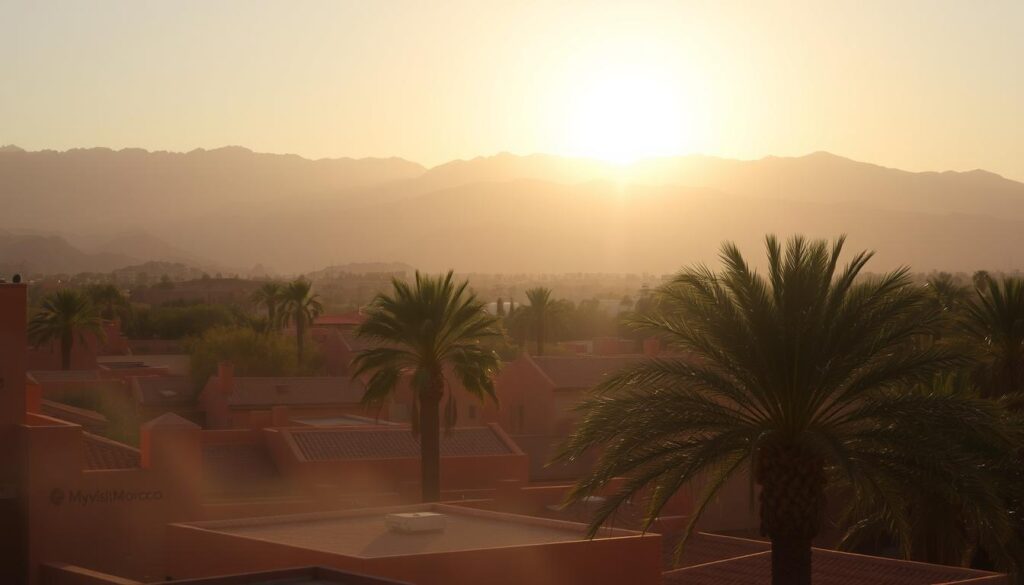
Knowing Morocco’s August climate helps plan your trip. You can pack right and enjoy your travel experience.
Morocco in August Weather: Regional Breakdown
Morocco’s weather in August changes a lot from one place to another. You’ll see mild coastal areas and hot desert regions as you travel. Each place has its own climate.
Coastal Areas: Casablanca, Rabat, and Essaouira
The coastal cities of Morocco, like Casablanca, Rabat, and Essaouira, are cooler in August. The sea breeze keeps them comfortable. These places are perfect for avoiding the heat.
- Casablanca: Known for its moderate climate, with average highs around 79°F (26°C).
- Rabat: Experiences similar temperatures to Casablanca, with a pleasant ocean breeze.
- Essaouira: Famous for its windy conditions, Essaouira is a refreshing coastal destination.
Interior Cities: Marrakech and Fez
Interior cities like Marrakech and Fez are very hot in August. Temperatures can go over 104°F (40°C). These cities are rich in history and culture, but the heat is intense.
According to a study, the interior is much hotter than the coast because of its location.
Desert Regions: Sahara and Merzouga
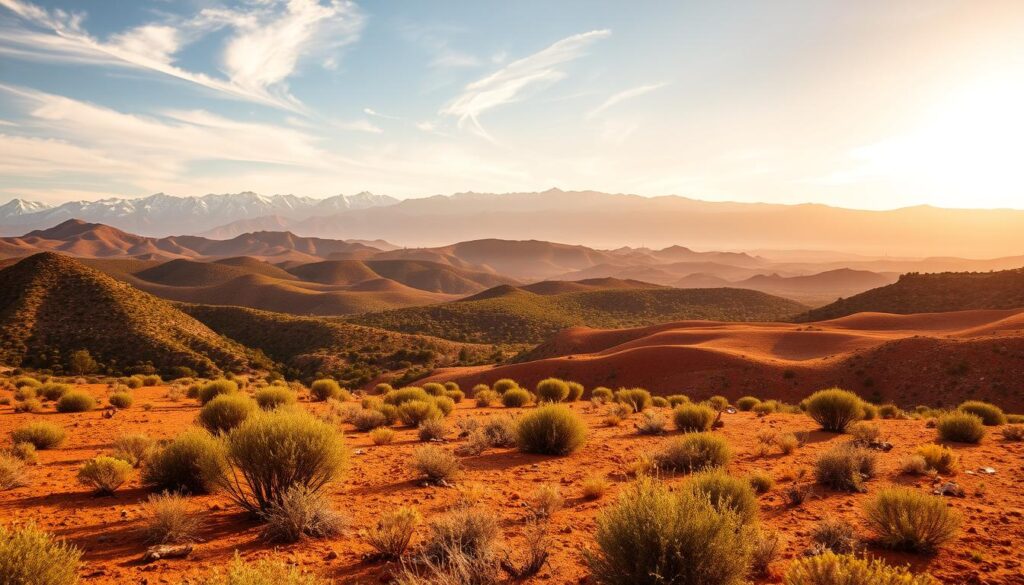
The desert areas, like the Sahara and Merzouga, are extremely hot in August. Temperatures can hit 122°F (50°C). Travelers must stay hydrated and avoid traveling during the hottest times.
Temperature Expectations Throughout the Day
Knowing how temperatures change during the day is key for planning in Morocco in August. The heat varies a lot, affecting your plans and comfort.
Morning and Evening Temperatures
In the mornings and evenings of August, Morocco’s weather is cooler. This makes it perfect for seeing sights and doing outdoor activities. Expect temperatures to be around 75°F to 80°F (24°C to 27°C). This lets you enjoy exploring the vibrant cities or taking a stroll through the historic medinas without the heat.
Afternoon Heat Peaks
The afternoon in Morocco can get very hot, with temperatures often hitting over 100°F (38°C). To beat the heat, stay indoors or in cool spots. You can also find air-conditioned spaces or grab a refreshing drink at a café.
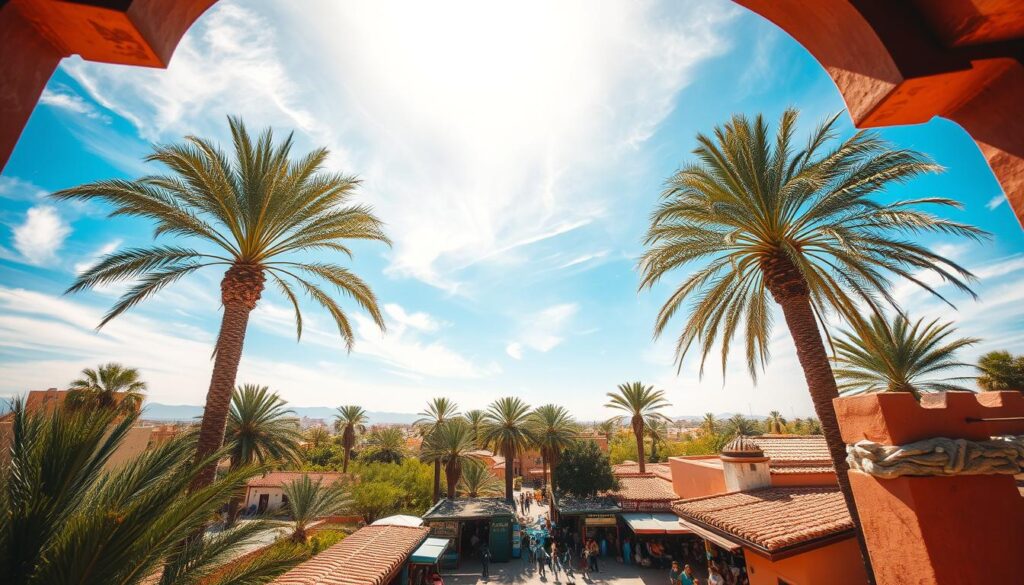
Knowing these temperature changes helps you plan your day better. This way, you can stay cool and enjoy Morocco in August.
Humidity Levels and Comfort Index
August in Morocco is hot and humid, with different levels across the country. Exploring Morocco’s varied landscapes, from coast to city, requires knowing the humidity. This knowledge is crucial for a comfortable trip.
Coastal Humidity vs. Inland Dry Heat
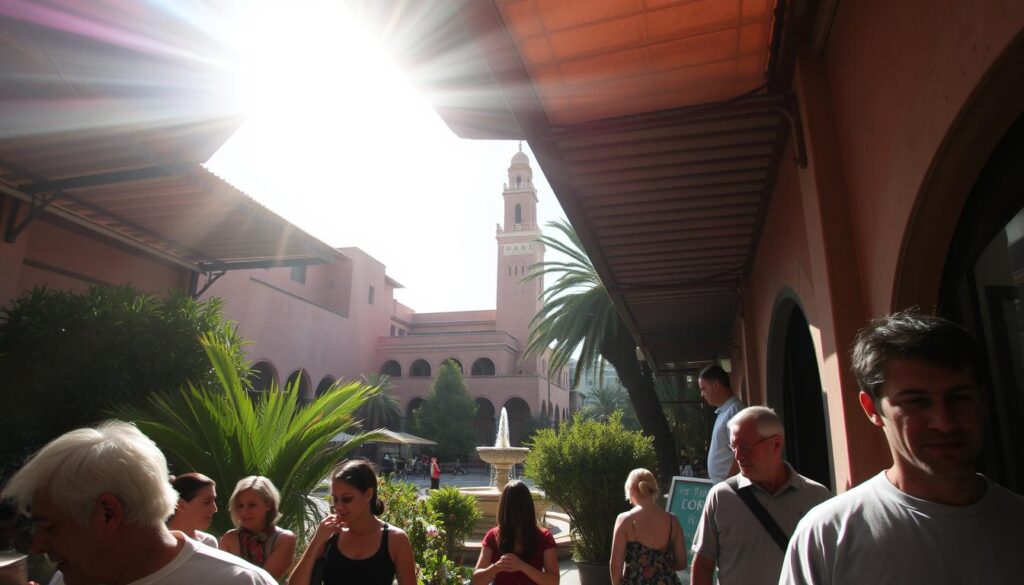
Coastal areas like Casablanca and Rabat are more humid because of the Atlantic Ocean. This makes the heat feel more intense, especially in summer. In contrast, cities like Marrakech and Fez have dry heat, which is hot but feels better than coastal humidity.
The desert, including Merzouga, is very dry. It presents a unique challenge for travelers.
How Humidity Affects Your Experience
Humidity greatly affects your comfort outdoors. High humidity makes you feel hotter than the actual temperature. This can be uncomfortable.
Dry heat, while hot, is easier to cool down from. Knowing these differences helps you pack right and stay hydrated. This ensures a better trip.
Rainfall and Precipitation Chances
Morocco’s weather in August is usually hot and dry. You can expect little to no rain in most areas. This makes August a great time for outdoor fun and exploring Morocco’s varied landscapes without rain getting in the way.
Is Rain Common in August?
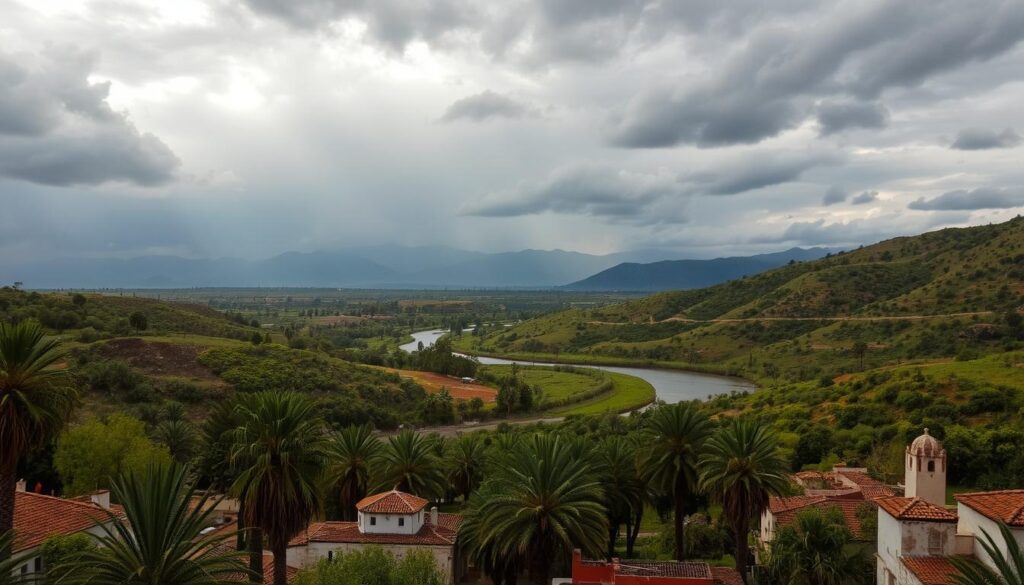
Rain in August is very rare in Morocco. The Sahara Desert and other dry areas are especially dry then. Even in cooler spots like the coast and mountains, it doesn’t rain much.
- The average rainfall in August is less than 10 mm in most parts of Morocco.
- Some places, like Marrakech, might not see any rain in August.
- The Atlas Mountains can get thunderstorms, but they don’t usually bring a lot of rain.
Preparing for Unexpected Weather Changes
Even though rain is unlikely, it’s smart to be ready for sudden weather changes. Here are some tips:
- Carry a lightweight rain jacket or poncho for any unexpected rain.
- Keep an eye on local weather forecasts to know about any unusual weather.
- Remember, while rain is rare, heatwaves are common. Stay hydrated and protect yourself from the sun.
Being prepared ensures your August trip to Morocco is fun and weather-free.
Sun Exposure and UV Index
It’s important to know about the UV index and sun exposure in Morocco in August. The desert sun is very strong. So, it’s key to protect yourself.

Average Daylight Hours
In August, Morocco gets about 12 hours of daylight. This means more time in the sun, which can lead to sunburn and heat sickness. Try to stay in the shade when the sun is strongest.
UV Protection Recommendations
To shield yourself from the sun’s harmful rays, follow these tips:
Sunscreen Guidelines for Morocco’s Intense Sun
Choose a broad-spectrum sunscreen with SPF 30 or higher. Apply it well before going outside. Reapply every two hours or after swimming or sweating. For tips on staying cool in heat waves, check out this resource.
Protective Clothing and Accessories
Wear light, loose clothes that cover your skin. Also, use a hat and sunglasses with UV protection. These steps can help avoid sunburn and heat problems.
Packing Essentials for Morocco’s August Heat
Traveling to Morocco in August means you need to pack smart to stay cool. The right clothes and accessories are key. They should keep you comfortable and respect local culture.
Clothing Recommendations
Choose clothes that are both comfortable and culturally sensitive. Go for lightweight, breathable fabrics. These allow for good airflow.
Balancing Cultural Sensitivity and Comfort
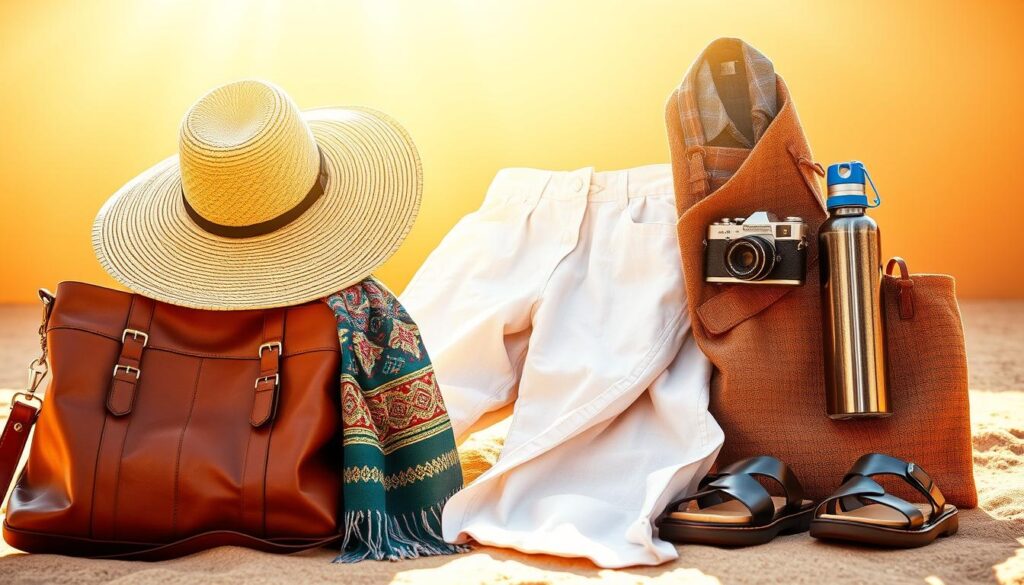
Morocco is a conservative country, so dress modestly. Loose-fitting clothing that covers your shoulders and knees is best. You can stay cool with light-colored, loose garments that also protect you from the sun.
Fabric Choices for Hot Weather
Opt for clothes made from natural fibers like cotton or linen. These are breathable and keep you cool. Stay away from synthetic fabrics that can make you hotter.
Health and Comfort Items
There are many health and comfort items to pack for a pleasant trip.
First Aid and Medication Considerations
Make sure to include a first-aid kit with essentials like sunscreen, antiseptic wipes, and any personal medications. Don’t forget oral rehydration salts to fight dehydration.
Tech and Accessories for Hot Weather
Pack portable fans or cooling towels to stay cool. A power bank is also crucial to keep your devices charged all day.
With these essentials, you’ll be ready to enjoy Morocco in August. You’ll stay comfortable and respect local customs.
Best Destinations in Morocco for August Travel
Morocco in August can be very hot. But, there are places that are cooler and more comfortable. These spots offer a break from the heat.
Coastal Retreats: Essaouira and Agadir
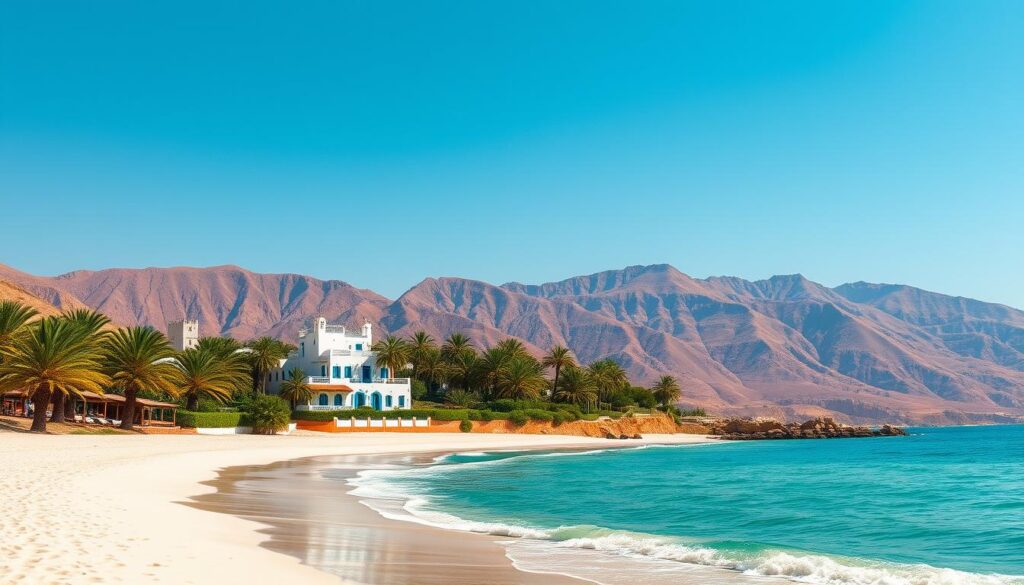
Essaouira and Agadir are great for avoiding the inland heat. Essaouira has cool ocean breezes and a relaxed vibe. Agadir has beautiful beaches and lively nightlife. Both are cooler than the desert.
Mountain Escapes: Atlas Mountains and Chefchaouen
The Atlas Mountains and Chefchaouen are cool and peaceful. The Atlas Mountains are great for hiking and trekking. Chefchaouen is known for its beautiful views and calm atmosphere.
“The Atlas Mountains are a haven for nature lovers and adventure seekers, providing a cool respite from the summer heat.”
Urban Experiences with Cooling Options
Staying in cities like Marrakech and Rabat has its perks. Many riads and hotels have air conditioning. You can also explore souks and historical sites in the cooler morning or evening.
| Destination | Average High Temperature in August | Cooling Options |
|---|---|---|
| Essaouira | 24°C (75°F) | Ocean breezes |
| Agadir | 26°C (79°F) | Beachside resorts with pools |
| Atlas Mountains | 20°C (68°F) | Mountain air, trekking, and hiking |
By picking the right places, your trip to Morocco in August can be more enjoyable.
Places to Avoid During Morocco’s Summer Heat
Planning a trip to Morocco in summer? Know which places to avoid. Morocco is great, but some areas are too hot.
Desert Excursions: Timing and Precautions
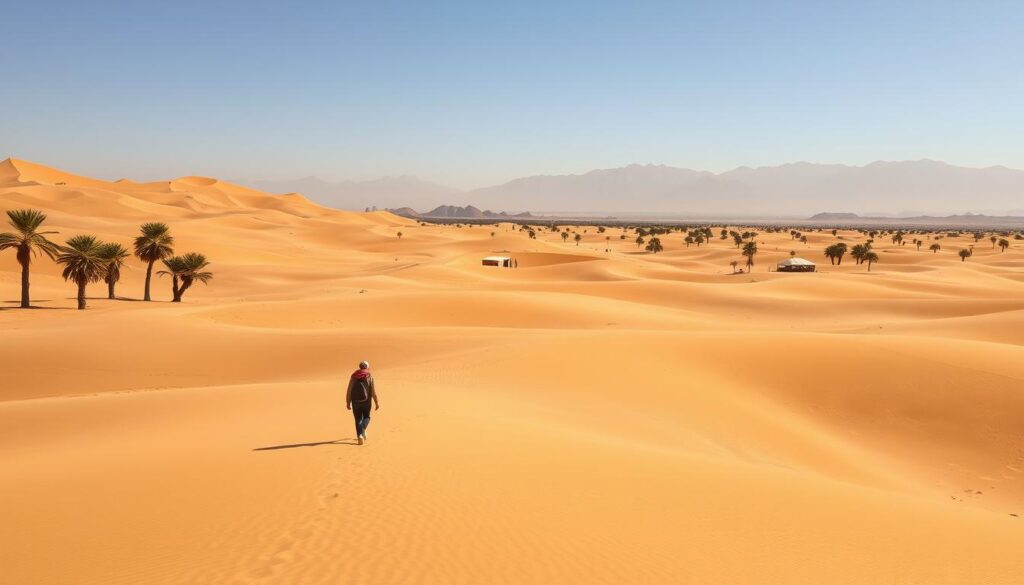
Summer desert trips are tough due to the heat. For Sahara tours, go early morning or late evening to miss the worst heat. Remember to bring lots of water, wear protective clothes, and drink plenty of water.
Inland Cities with Extreme Temperatures
Marrakech and Fez get very hot in summer. The heat is worst in the afternoon. Visit in cooler months or stay cool with air-conditioned places and lots of water.
Staying Hydrated and Healthy in Morocco’s Summer
Morocco’s summer heat is intense. It’s key to keep your health and hydration in check. As you explore, make sure to drink enough water to stay comfortable and happy.
Water Consumption Guidelines
Drink at least 2-3 liters of water per day. Adjust this based on how active you are and the temperature. Carry a refillable water bottle to always have water ready. For more travel health tips, see our guide on 25 Essential Morocco Travel Tips.
Signs of Heat-Related Illness to Watch For
Knowing the signs of heat-related illnesses is important. Look out for dizziness, nausea, headaches, and a fast heartbeat. If you see these, find shade, drink water, and rest. In serious cases, you might need to see a doctor.
Local Remedies and Cooling Drinks
Morocco has many local drinks to keep you cool and hydrated. Try Moroccan mint tea and fresh lime juice. They’re not just refreshing but also help keep your body’s fluids balanced. Adding these to your daily routine can make your trip even better.
By following these tips and listening to your body, you can enjoy Morocco’s beauty, even in the summer.
Cultural Events and Festivals in August
August in Morocco is a lively month, filled with cultural events and festivals. These events highlight the country’s rich heritage. Even with the summer heat, the cultural scene is buzzing, offering a unique look into Moroccan traditions.
Traditional Celebrations During Summer
Summer months, including August, host many traditional celebrations. These events feature music, dance, and local food, giving visitors a deep dive into Moroccan culture. Expect to see colorful decorations, hear traditional tunes, and try local dishes.
These celebrations can be tied to religious events or secular ones. They celebrate Morocco’s history and cultural variety.
Indoor vs. Outdoor Events
Some cultural events in August are held indoors to beat the heat. Others take place outdoors, making the most of the warm weather. Outdoor events include concerts, festivals, and traditional shows in historic spots.
At outdoor events, it’s key to stay hydrated and shielded from the sun. Many events have shaded areas or indoor parts to help beat the heat.
Accommodation Tips for Beating the Heat
To beat the heat in Morocco during August, picking the right place to stay is key. The right place can make your trip much more comfortable and enjoyable.
Traditional Riads vs. Modern Hotels
Morocco is known for its traditional riads, offering a unique and authentic stay. These houses with gardens inside are peaceful, helping you avoid the August heat. Modern hotels, on the other hand, have air conditioning, a must in summer.
Choosing between a riad and a hotel depends on what you value most. Riads give a personal, authentic feel. Hotels offer the latest amenities and services.
Air Conditioning and Pool Availability
Make sure your stay has air conditioning to keep cool in August. Many riads and hotels in tourist spots have this. Also, having a pool is great for cooling off and relaxing. Look for places with pools to make your stay better.
By thinking about these points and picking the right place, you can have a great trip to Morocco, even in the summer.
Transportation Considerations in Hot Weather
Morocco’s hot August weather makes traveling a bit tricky. You’ll want to choose ways to travel that keep you cool.
Air-Conditioned Options
Using air-conditioned transportation is a great idea. Many buses and trains in Morocco have AC. This makes them perfect for hot days.
You can book a coach bus tour for a cool ride. It ensures a comfortable trip between places.
Best Times for Travel Between Cities
Think about when you travel to stay cool. Going early in the morning or late at night is best. These times are cooler and less crowded.
Traveling at these times makes your trip more enjoyable. You can also see the beautiful views without the heat.
Plan your travel well to have a great time in Morocco. You’ll enjoy a more comfortable journey.
Budget Considerations for August Travel to Morocco
Traveling to Morocco in August can be pricey, but smart planning can help you save money. This is the peak season, and prices for places to stay, tours, and other travel costs are higher. Yet, the heat might lead to discounts in some spots, so it’s key to understand the pricing.
High Season Pricing vs. Heat Discounts
August is a busy time for travel, but the heat might scare some off. This could mean discounts in some areas. Look for deals on places to stay in less crowded spots or special offers for activities in cooler times of day.
It’s important to compare prices to find the best deals. Some tour operators and hotels offer packages for early morning or late evening trips. These can be cheaper and more comfortable ways to see Morocco.
Cost-Saving Tips for Summer Travelers
To enjoy Morocco in August without spending too much, follow these tips:
- Book your places to stay and tours early to get better prices.
- Choose hotels or riads with air conditioning or pools to beat the heat.
- Do your activities in the cooler parts of the day, like morning or evening.
- Drink plenty of water and rest in cool, shaded or air-conditioned spots to stay healthy.
- Explore local transport options, which are often cheaper than private transfers.
By watching your spending and looking for discounts, you can have a great trip to Morocco in August, even with the heat.
Alternative Times to Visit Morocco
Thinking about a trip to Morocco? You might find better times to go than August. Morocco welcomes visitors all year round.
Planning your trip around the weather and tourist seasons can make it more enjoyable. Morocco’s climate varies greatly. You’ll find cool mountains and warm deserts.
Spring and Fall Weather Comparison
Spring (March to May) and fall (September to November) are the best times to see Morocco. The weather is mild, with temperatures between 65°F and 75°F. These seasons are great for city tours, historic sites, and nature.
In spring, the scenery is stunning, with lush green landscapes. It’s perfect for hiking. Fall offers a cozy climate, ideal for enjoying local food and culture.
Winter Travel Benefits
Winter (December to February) is also a good time to visit Morocco. It’s great for escaping cold weather. The southern regions are especially mild, perfect for sightseeing and outdoor fun.
You can enjoy beautiful beaches, explore the Sahara Desert, or visit lively markets. All without the summer heat.
Conclusion: Making the Most of Your August Trip to Morocco
Planning well can make your trip to Morocco in August great. Knowing the morocco in august weather helps you pick the best places and stay cool.
The coastal areas are cooler than the cities, perfect for escaping the heat. The desert offers amazing sunrises and sunsets.
Pack right, drink lots of water, and protect yourself from the sun. Don’t miss cultural events and cool spots at your hotel.
With these travel tips, you’ll enjoy Morocco’s history, culture, and views, even in August. Morocco will surely impress you.
In this conclusion, Morocco in August is great for those who prepare. Start planning your trip now and see Morocco’s beauty.



 Covers cities, coast, mountains, desert & food