
Exploring Moroccan culture reveals that religion is key in everyday life.
The history of religion in Morocco is rich and varied. Islam is the main religion, deeply affecting traditions and customs.
This article will explore Moroccan religious practices. We’ll look at their history and importance today. Learning about Moroccan religion helps us understand the country’s culture.
Key Takeaways
- Moroccan culture is deeply intertwined with its religious beliefs.
- The history of religion in Morocco has shaped its current religious practices.
- Understanding Moroccan religion provides insight into the country’s cultural identity.
- The predominant religion in Morocco is Islam.
- Religion influences daily life and traditions in Morocco.
The Religious Landscape of Morocco
Exploring Morocco, you’ll see Islam’s big role in its identity and life. Islam shapes many parts of Moroccan life, from daily habits to cultural traditions.
Overview of Moroccan Religion
Morocco has a deep religious history, mainly Islam. Most Moroccans follow Sunni Islam, with the Maliki school of thought. This unity helps keep the country together and defines its culture.
Muslim Population in Morocco
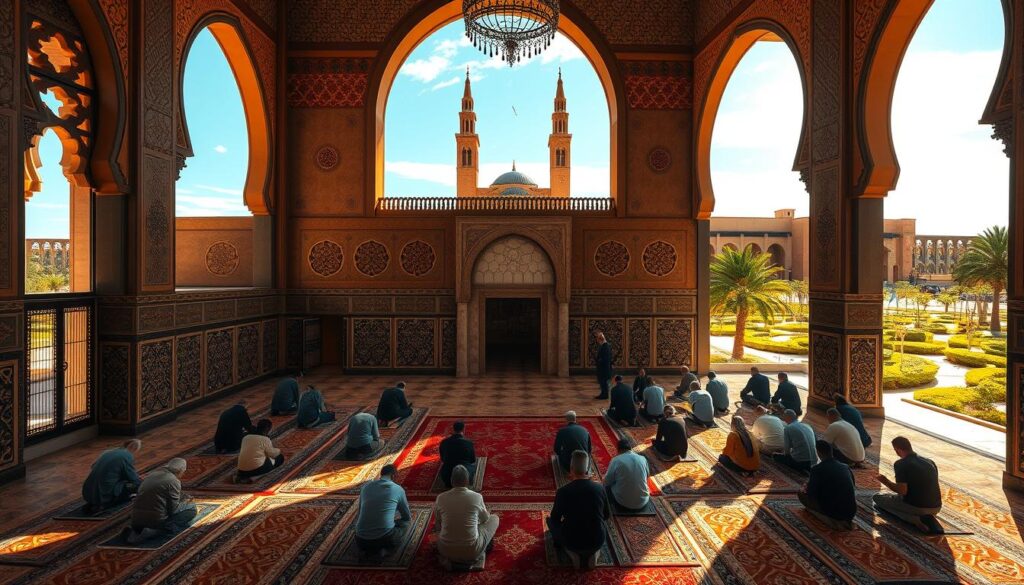
Over 99% of Moroccans are Muslim. This big Muslim population affects the country’s laws, customs, and social norms. Islam is more than a belief; it’s a way of life that guides daily actions, cultural practices, and community bonds.
Constitutional Status of Religion
The Moroccan Constitution makes Islam the state religion. It protects and promotes Islam. The monarch, as the “Commander of the Faithful,” is key in religious matters. This shows Morocco’s strong commitment to Islamic values.
Religion and state are closely linked in Morocco. This affects many areas of life, from personal rights to public policies. Knowing this helps understand Moroccan society and culture better.
Moroccan Religious Beliefs Through History
Exploring Morocco’s religious history reveals a rich tapestry of faiths. The country’s strategic location and cultural exchanges have shaped its diverse religious landscape.

Indigenous Berber Spiritual Traditions
The indigenous Berber communities of Morocco had their own spiritual ways before Islam arrived. They believed in a strong connection to nature and honored their ancestors. Berber spiritual practices varied by region, focusing on fertility and protection.
Jewish Heritage in Morocco
Morocco has a long history with Jewish communities. For centuries, Jews have been part of Morocco’s culture and economy, especially in Fez and Marrakech. Their legacy is seen in architecture, cuisine, and festivals.
Christian Influences and Presence
Islam is the main religion in Morocco, but there’s a historical Christian presence. Christian communities were present during the Roman era and under French and Spanish rule. Today, Christians are fewer, but their influence is seen in architecture and culture.
The mix of religious beliefs in Morocco has created a unique culture. Understanding these influences helps us appreciate Morocco’s complex society.
The Arrival and Spread of Islam in Morocco
Exploring Morocco’s history shows a key moment was the arrival of Islam. This happened in the 7th and 8th centuries with the Arab conquest. It changed the region’s religious scene.

The Arab Conquest (7th-8th Centuries)
The Arab conquest of Morocco started in the 7th century. It marked the start of Islam’s spread here. This time was key for Morocco’s religious identity.
The conquest was more than just war. It was a time of cultural and religious exchange. This exchange had a lasting effect.
Idrisid Dynasty and Islamic Foundations
The Idrisid dynasty began in the 8th century. They were important for Islam in Morocco. They were leaders and religious figures.
Their rule helped establish Islamic practices and traditions. They are seen as the foundation of Moroccan Islam.
The Almoravid and Almohad Religious Reforms
The Almoravid and Almohad dynasties came after the Idrisids. They brought big religious changes. The Almoravids focused on making Islamic practices pure.
The Almohads worked on theological reforms and promoted Islamic learning. These changes deeply affected Moroccan religious practices. They shaped the country’s Islamic identity.
The legacy of these events still shapes Moroccan Islam today. It’s a mix of tradition and religious practice. Knowing this history helps understand Morocco’s complex religious scene.
Morocco Islam: The Maliki School and Sunni Tradition
The Maliki school is a key part of Moroccan identity, rooted in Sunni Islam. It shapes the country’s culture and laws. Most Muslims in Morocco follow this school, which guides their religious and legal lives.

Core Tenets and Practices
The Maliki school is one of the four main Islamic law schools. It focuses on the Quran, Hadith, and the Prophet’s companions’ consensus. In Morocco, this school impacts many areas, like family law, inheritance, and money matters.
Influence on Moroccan Legal System
The Maliki school’s teachings deeply influence Morocco’s laws. The country’s laws are based on Islamic principles, with the Maliki school’s views being key. This shows how closely religion and state are tied in Morocco.
Relationship with Other Islamic Schools
Even though the Maliki school is the most followed in Morocco, there’s respect for other schools. The country’s religious leaders talk and work with other Islamic traditions. This shows Morocco’s support for Islamic unity and diversity.
In summary, the Maliki school and Sunni tradition are crucial to Morocco’s religious life. They affect both religious practices and laws. Knowing about these aspects helps us understand Moroccan Islam better.
Sufism and Mystical Traditions in Moroccan Religion
The mystical side of Islam, especially Sufism, is key in Moroccan faith. Sufism focuses on the spiritual side of belief. It seeks spiritual growth through different practices and rituals.
Major Sufi Orders in Morocco
Morocco has many important Sufi orders. Each has its own practices and spiritual history. For example, the Qadiriyya and Tijaniyya orders are well-known. They have a big following and offer deep spiritual teachings.
Maraboutism and Saint Veneration
Maraboutism is the honoring of saints in Morocco. It’s a big part of Sufi life. People visit the tombs of these saints to seek blessings and guidance.
For more on Sufism in Morocco, check out this study.
Sufi Festivals and Gatherings
Sufi festivals, or moussems, show off Moroccan culture and Sufi traditions. They include music, dance, and spiritual readings. These festivals honor the saints and Sufi heritage.
In summary, Sufism adds a special touch to Moroccan religious beliefs and culture. It brings people together through its orders, practices, and festivals. Sufism is a big part of Morocco’s spiritual life.
The Monarchy and Religious Authority
The Moroccan king is a key figure in both politics and religion. He plays a big role in the country’s spiritual life. His duties mix old traditions with new ideas.
The King’s Religious Title
The king is called “Commander of the Faithful.” This title shows his big religious power. It means he must protect and spread Islam in Morocco.
As Commander of the Faithful, the king keeps Islamic traditions alive. He makes sure these values are respected.
Legitimacy of the Alaouite Dynasty
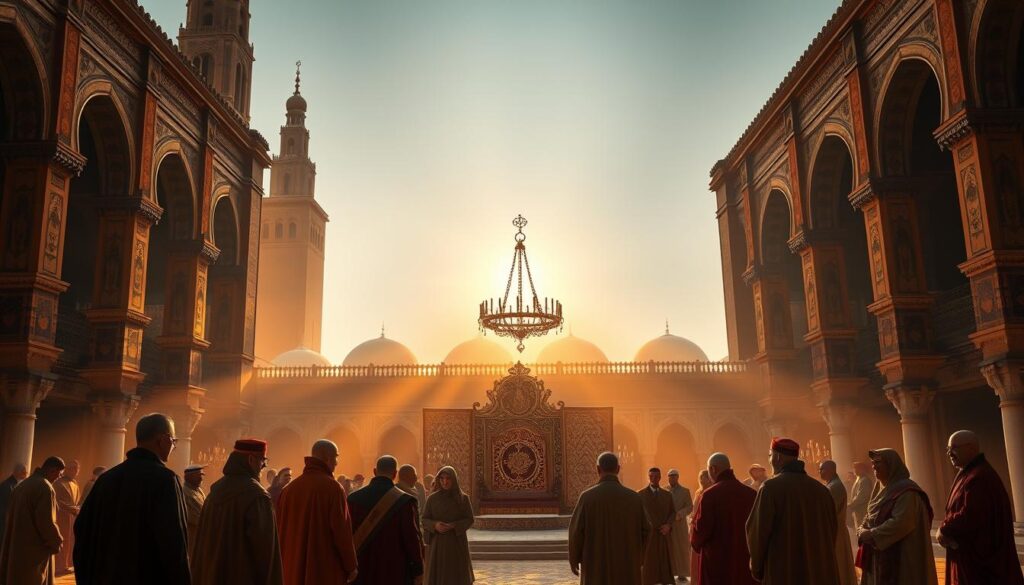
The Alaouite dynasty, where the current king comes from, is very important. They say they come from the Prophet Muhammad. This makes the king very respected by Muslims in Morocco.
Modern Reforms
King Mohammed VI has brought big changes. He wants to make Morocco more open and tolerant. He’s worked to give women more say in religious education.
He also fights against extreme views. This helps make Moroccan religion more inclusive and balanced.
| Aspect | Traditional Role | Modern Reforms |
|---|---|---|
| Religious Leadership | King as Commander of the Faithful | Promotion of moderate Islam |
| Women’s Roles | Limited participation in religious education | Enhanced involvement in religious studies and leadership |
| Extremism | Presence of extremist views | Active measures to combat extremism |
The Moroccan monarchy blends old and new in its religious role. This shapes the country’s spiritual scene and its culture.
Religious Diversity in Morocco
Did you know Morocco has many religious groups, not just Muslims? Its rich history lets different faiths live together, making its culture unique.

Jewish Communities and Their Legacy
Jews have lived in Morocco since the Roman times. They’ve made a big impact on culture, architecture, and traditions. Fez, for instance, has the oldest Jewish quarter in the Arab world.
Christian Denominations in Modern Morocco
Islam is the main religion, but Morocco also has a growing Christian community. This includes both locals and foreigners. Christians can worship freely, with many churches in cities like Casablanca and Rabat.
Baha’i and Other Minority Faiths
There are also Baha’is and followers of other faiths in Morocco. These groups add to the country’s religious diversity. They are generally respected and tolerated.
Interfaith Relations and Coexistence
Morocco is known for its religious harmony. It values dialogue and respect among faiths. This is seen in the many cultural and religious festivals that bring people together.
Exploring Morocco’s religious scene shows its diversity is a strength. It enriches the culture and society. The peaceful coexistence of different faiths shows Morocco’s open and welcoming nature.
Moroccan Mosques and Sacred Architecture
Morocco’s mosques and shrines show its rich history. You’ll see Islamic, Jewish, and cultural influences in its architecture. This makes the country’s sacred sites truly special.
Historic Mosques of Morocco
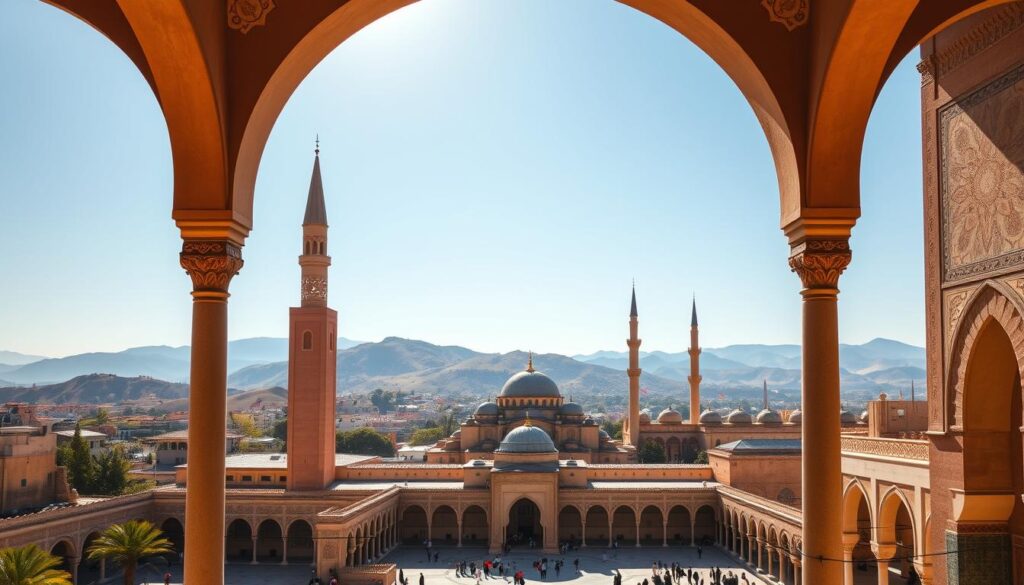
Morocco has some of the world’s most stunning mosques. These buildings are not just for prayer. They also showcase the country’s culture and faith.
Hassan II Mosque in Casablanca
The Hassan II Mosque is a top sight in Casablanca. Built in 1993, it mixes old Moroccan and new styles. Its 210-meter minaret is among the tallest and offers amazing views of the Atlantic.
Qarawiyyin Mosque in Fez
The Qarawiyyin Mosque in Fez is ancient and important. Founded in 859 AD, it’s a key place for Islamic learning. It’s also one of the oldest universities in the world.
Zawiyyas and Sufi Shrines
Morocco has many zawiyyas and Sufi shrines. These places are linked to local saints and mystics. They draw pilgrims from everywhere.
Zawiyyas are spiritual hubs for Sufi rituals. Their architecture is simple yet beautiful. You’ll see detailed tile work and decorations.
Jewish Heritage Sites and Synagogues
Morocco’s Jewish sites and synagogues show its diversity. The Jewish community here dates back to the Roman times. You can find synagogues and mellahs in Fez, Marrakech, and Essaouira.
These places showcase Moroccan Jewish craftsmanship. They also remind us of the country’s multicultural past. Efforts to save these sites show Morocco’s dedication to its diverse heritage.
Moroccan Religious Practices in Daily Life
In Morocco, religion is a big part of everyday life. This shows the country’s strong Islamic roots. When you see how Moroccans live, you’ll see how faith shapes their days.
Prayer Customs and Traditions
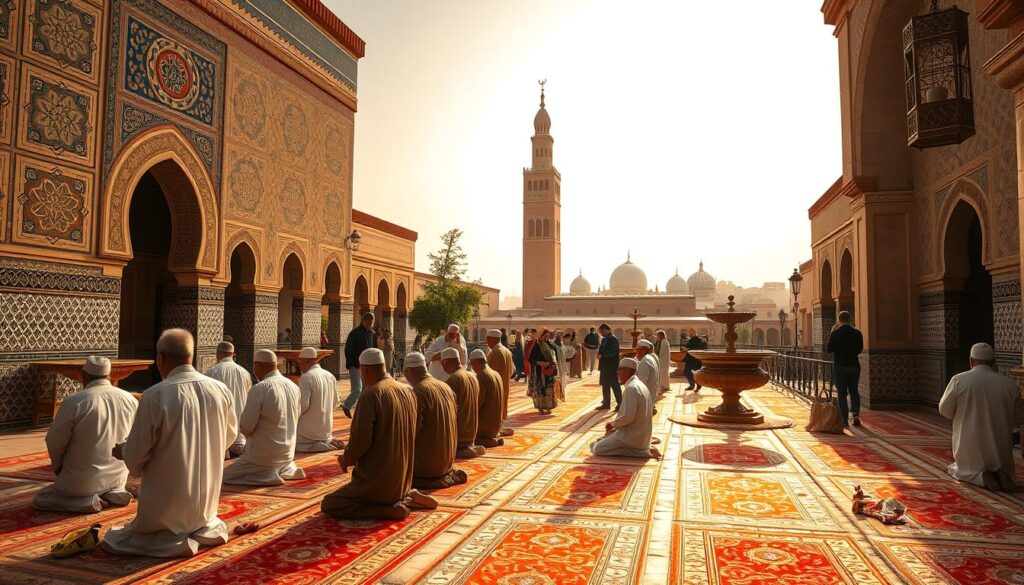
Prayer is key in Morocco. Muslims pray five times a day, known as Salat. Before praying, they do Wudu, washing their hands, face, and feet.
Many go to mosques for prayer, especially on Fridays. The call to prayer, or Adhan, comes from minarets, telling people it’s time to pray.
Dietary Practices and Halal Culture
Moroccan food follows Islamic rules. They eat Halal foods, avoiding pork and alcohol. Meat must be slaughtered the right way.
- Traditional dishes like tagines and couscous are made with Halal ingredients.
- During Ramadan, people fast from dawn to sunset, not eating or drinking.
- Halal rules apply to more than food, including money and business.
Religious Education and Quranic Schools
Learning about religion is important in Morocco. Kids go to Madrasas to learn the Quran and Islamic teachings.
These schools help keep Islamic knowledge alive. Many Moroccans keep learning about their faith all their lives.
Religious Etiquette for Visitors
Visitors to Morocco should respect local customs. Here’s how:
- Dress modestly, covering your shoulders and knees, especially in mosques or rural areas.
- Take off your shoes before entering a mosque or a Moroccan home.
- Avoid showing too much affection, as it’s seen as rude in Moroccan culture.
- Don’t eat or drink in public during Ramadan.
Understanding and respecting Moroccan religious practices helps you appreciate the culture more. It makes your visit more meaningful.
Religious Festivals in Moroccan Culture
Exploring Morocco, you’ll see that religious festivals are key to its culture. These events show the country’s deep spiritual roots and its diverse culture.

Ramadan Observances and Traditions
Ramadan is a holy month of fasting in Morocco. Muslims fast from dawn to sunset, not eating or drinking. They break their fast with Iftar in the evening, often with family and friends.
The cities and towns buzz with life during Ramadan. People go to mosques for Tarawih prayers together.
Eid al-Fitr and Eid al-Adha Celebrations
Eid al-Fitr marks the end of Ramadan with prayers, feasting, and gifts. Eid al-Adha honors the Prophet Ibrahim’s sacrifice. Both Eids are big in the Moroccan calendar, showing the country’s Islamic traditions.
Moussems and Saint Festivals
Morocco has Moussems, or saint festivals, to honor Sufi saints. These festivals have music, dance, and spiritual rituals. For example, the Moussem of Moulay Idriss II in Fes is a big event that shows Morocco’s Sufi heritage.
Jewish Holidays in Morocco
Morocco’s Jewish community celebrates Rosh Hashanah and Yom Kippur with religious services and meals. These holidays remind us of Morocco’s Jewish history. The Mellah in Fes and other Jewish areas across Morocco highlight this history.
These festivals make Morocco’s culture unique, blending Islamic, Sufi, and Jewish traditions. Experiencing these events helps you understand Morocco’s rich religious diversity.
Religion and Moroccan Cultural Identity
In Morocco, religion deeply influences culture. It shapes art, architecture, music, and literature. You can see how religious beliefs enrich the country’s heritage.
Religious Influences on Art and Architecture
Moroccan art and buildings show off intricate designs and patterns. These often mirror Islamic calligraphy and symbols. Majestic mosques and zawiyyas across the country show the strong religious impact.
Music and Religious Expression
Music is a big part of Moroccan culture. Many traditional songs are influenced by religious practices. Sufi music, for instance, is deeply spiritual and emotive, used in devotions.
Literature and Religious Thought
Moroccan literature is deeply rooted in religious ideas. Many authors explore Islamic themes and symbols. The works of famous Moroccan writers showcase the country’s rich literary history.
Traditional Clothing and Religious Symbolism
Traditional clothes like the djellaba and hijab hold religious meaning. They show cultural identity and religious values.
| Cultural Aspect | Religious Influence |
|---|---|
| Art and Architecture | Islamic calligraphy and geometric patterns |
| Music | Sufi devotional music |
| Literature | Islamic themes and motifs |
| Traditional Clothing | Modest dress and religious symbolism |
Exploring Moroccan culture shows that religion is more than a part of life. It’s a key element that shapes the country’s identity.
Contemporary Challenges in Moroccan Religious Life
Morocco’s religious identity is changing due to new challenges. The country is facing the impact of modernity on its religious life. This brings various influences and challenges.
Balancing Tradition and Modernity
Morocco struggles to keep traditional practices while accepting modernity. It’s about updating religious teachings for today’s world. Yet, they must stay true to Islam’s core values.
Religious Extremism and Government Responses
Morocco has battled religious extremism, leading to government actions. They’ve introduced religious reforms and educational programs. These aim to promote a balanced view of Islam.
Women’s Roles in Moroccan Religious Practice
Women’s roles in Moroccan religion are growing. They’re taking part in religious education and leadership. This move is part of a push for gender equality in religious settings.
Youth Perspectives and Changing Attitudes
Young Moroccans are bringing fresh views to religion. They’re influenced by global trends and local changes. Their religious views range from traditional to more open.
These challenges show how Moroccan religious life is constantly evolving. It’s adapting to new social, cultural, and political situations.
Conclusion: The Enduring Legacy of Moroccan Religious Traditions
Moroccan religion is a mix of many cultures and histories. It combines Islamic, Jewish, and Christian traditions in a unique way. This blend has created a distinct religious identity for the country.
Exploring Moroccan religion’s history shows its importance in the nation’s culture. It’s clear that understanding this heritage is key to appreciating Moroccan culture.
The history of the Jewish community in Morocco is a big part of its story. Once the largest in the Muslim world, the community’s numbers have decreased. Yet, Jewish heritage remains a vital part of Moroccan culture.
Today, Moroccan religion is still important in shaping the country’s identity. It influences people’s daily lives. Morocco’s religious traditions are a source of strength as it faces modern challenges.
By embracing its diverse religious heritage, Morocco shows the value of tolerance and coexistence. This makes Morocco a fascinating subject for study and exploration.



 Covers cities, coast, mountains, desert & food