
When you explore the Moroccan countryside, you enter a world far from city life. Here, you’ll find traditional villages, beautiful landscapes, and real local life.
By exploring rural Morocco, you’ll see the country’s varied geography, rich culture, and special experiences. Your trip to Morocco will be an adventure you’ll never forget.
Key Takeaways
- Discover traditional villages and authentic local life in rural Morocco.
- Explore the diverse geography and natural landscapes of the Moroccan countryside.
- Immerse yourself in the local culture and unique experiences.
- Learn about the best places to visit and stay in rural Morocco.
- Experience the warm hospitality and traditional greetings of the local people.
The Hidden Treasures Beyond Morocco’s Cities
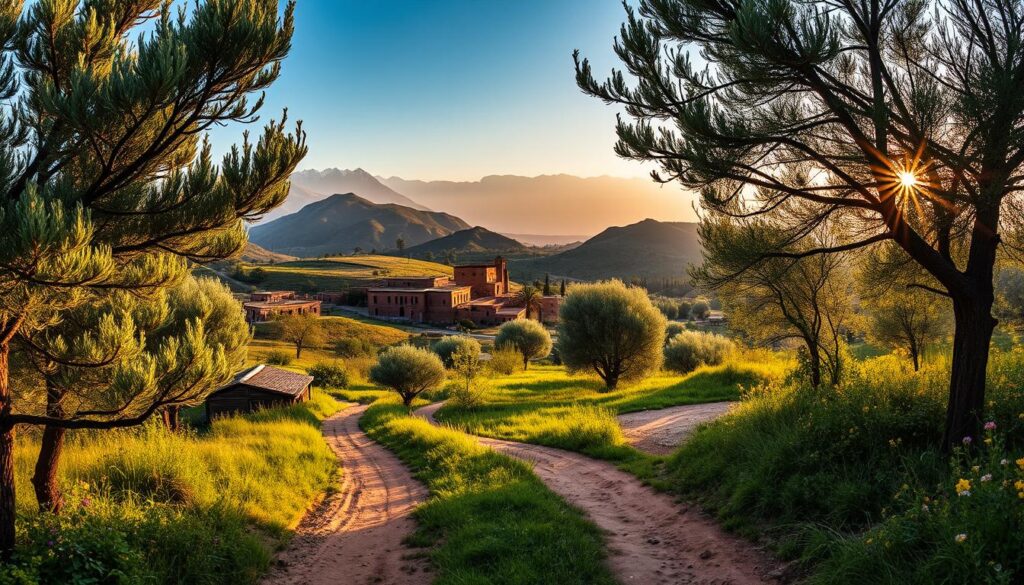
When you leave Morocco’s cities, you find a world full of hidden gems. The countryside is peaceful, with traditional villages and a strong community. It’s a unique rural retreat experience.
A Different Side of Morocco
You’ll see a different Morocco, rich in history and culture. The rural areas have ancient traditions, lively markets, and stunning natural views. Exploring these places, you’ll feel the locals’ warm welcome and learn more about Moroccan life.
Rough Guides say the southern oases routes show Morocco’s varied landscapes and culture.
The Rural-Urban Contrast
The difference between Morocco’s rural and urban areas is clear. Cities are lively with modern life, but the countryside is more authentic. You’ll see the difference in pace, architecture, and customs.
In the rural areas, you’ll enjoy the simplicity and charm of traditional Moroccan life. It’s a world away from city life.
The Moroccan Countryside: A Geographic Overview
Exploring the Moroccan countryside reveals a wide range of landscapes and climates. The area is filled with mountains, valleys, and deserts, each with its own beauty and attractions.
Diverse Landscapes and Regions
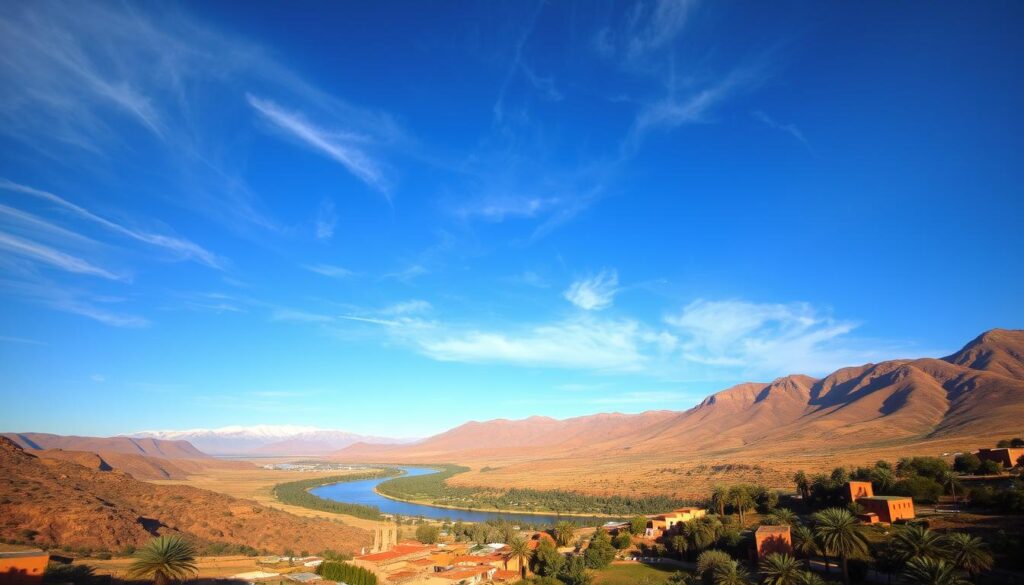
Morocco’s countryside showcases the country’s natural beauty. You’ll see everything from the snow-capped Atlas Mountains to the vast Sahara Desert. Traditional villages are scattered throughout, offering a glimpse into local culture and life.
Notable areas include the High Atlas with its mountain villages and Berber culture. The Draa Valley is famous for its palm groves and historic kasbahs.
Climate and Seasonal Variations
The climate in Morocco’s countryside changes a lot from one place to another. Mountains can be cold and snowy in winter, while deserts are hot all year. Coastal areas have a milder climate, thanks to the Atlantic Ocean.
Knowing the seasonal variations is key for planning your trip. Spring (March to May) and autumn (September to November) are the best times to visit. These seasons offer mild weather and fewer tourists.
When you’re out exploring, it’s important to be ready for the local climate and geography. Whether hiking in mountains or trekking in deserts, the right gear and knowledge are crucial.
The High Atlas: Mountain Villages and Berber Culture
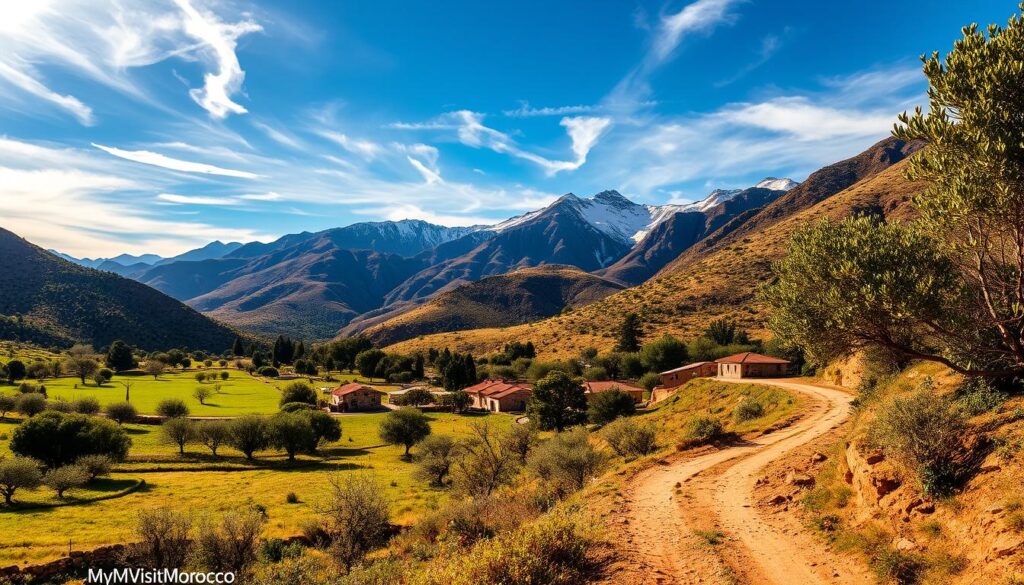
Exploring the High Atlas reveals stunning villages and the lively Berber culture. The area boasts beautiful mountains, traditional villages, and a rich cultural history.
Imlil and the Toubkal Region
Imlil sits at the base of Jbel Toubkal, North Africa’s highest peak. It’s a key spot for treks and offers a peek into Berber traditions. Wander the village’s paths, visit homes, and enjoy the Berber’s warm welcome.
Ait Bougmez: The Happy Valley
Ait Bougmez, or the Happy Valley, is a green valley surrounded by mountains. It’s home to traditional villages, where you can see local life. It’s perfect for learning about Berber culture and enjoying the High Atlas’s beauty.
Traditional Berber Architecture
The High Atlas is famous for its Berber architecture. You’ll see stone houses and kasbahs that show the Berber’s skill and creativity. Exploring these buildings lets you learn about their history and importance.
Visiting the High Atlas is a chance to see traditional Moroccan villages and dive into Berber culture. It’s among the best places to visit in Morocco for those wanting to discover rural Morocco.
Exploring the Rif Mountains and Northern Countryside
When you explore the Rif Mountains and northern countryside, you find a mix of nature and culture. This area in Morocco is famous for its beautiful villages, stunning views, and old traditions. These traditions have been kept alive for many years.
Chefchaouen’s Rural Surroundings
The countryside around Chefchaouen is a sight to see, with its blue houses and calm vibe. You can see local farms and meet the friendly people. The area is known for its organic farming and traditional crafts.
Talassemtane National Park
Talassemtane National Park is a gem in the Rif Mountains. It has amazing mountain views and lots of wildlife. You can hike and see plants and animals up close. The park is home to many endemic species, making it great for nature fans.
Cannabis Cultivation and Cultural Context
The Rif Mountains are also famous for growing cannabis, a topic with a complex history. By visiting local communities, you can learn about their culture and traditions. It’s important to be respectful and sensitive when exploring this topic.
For a deeper look at the Rif Mountains and northern countryside, think about joining a guided tour. For example, this tour lets you see the area’s beauty and culture.
| Region | Main Attractions | Cultural Significance |
|---|---|---|
| Rif Mountains | Chefchaouen, Talassemtane National Park | Cannabis cultivation, traditional crafts |
| Northern Countryside | Picturesque villages, organic farms | Preservation of traditional practices |
“The Rif Mountains are a treasure trove of natural beauty and cultural heritage, offering a unique and enriching experience for visitors.”
Oasis Communities and Desert Fringes
Exploring rural Morocco, you find stunning oasis communities and historic kasbahs. These areas show how locals have used traditional farming and water management for centuries. It’s a testament to their resourcefulness and resilience.
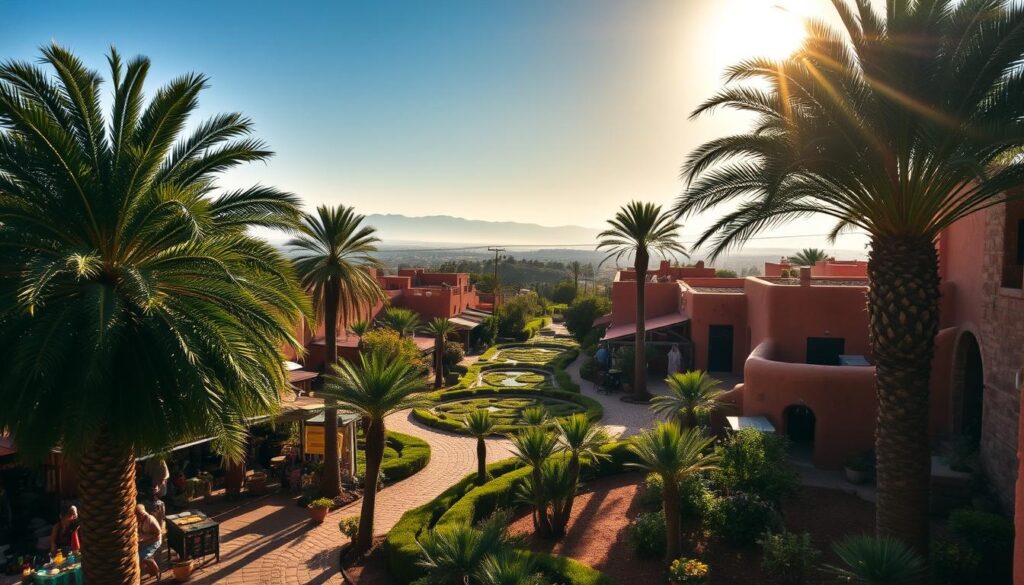
The Draa Valley Settlements
The Draa Valley is famous for its lush palm groves and old irrigation systems. These have supported the local people for many years. Visiting the settlements, you’ll see the rich culture and warm welcome of the locals.
Skoura and the Route of a Thousand Kasbahs
Skoura is a key spot on the Route of a Thousand Kasbahs. It’s known for its well-kept kasbahs and beautiful views. The area highlights the region’s history and architectural beauty.
Desert Agriculture and Water Management
Desert farming in oasis communities uses advanced water management. The locals have created complex systems to use and save water. This lets them grow crops in the tough desert climate.
| Region | Main Crops | Water Management Techniques |
|---|---|---|
| Draa Valley | Date palms, olives | Ancient irrigation systems, foggaras |
| Skoura | Dates, almonds | Khettaras, canal systems |
When exploring rural Morocco, the oasis communities give a unique look into traditional life. The desert’s challenges have made the locals resilient and innovative.
“The oases of Morocco are like islands in the desert, where the palm trees stand tall and the water flows, creating an oasis of life in the harshest of environments.”
Visiting these places lets you see the natural beauty and cultural depth of rural retreat Morocco. It’s a memorable and enriching journey.
Traditional Moroccan Villages and Architecture
Exploring the Moroccan countryside reveals stunning traditional villages. These places are filled with beauty and history. They show off Morocco’s rich culture through unique buildings that have lasted for centuries.
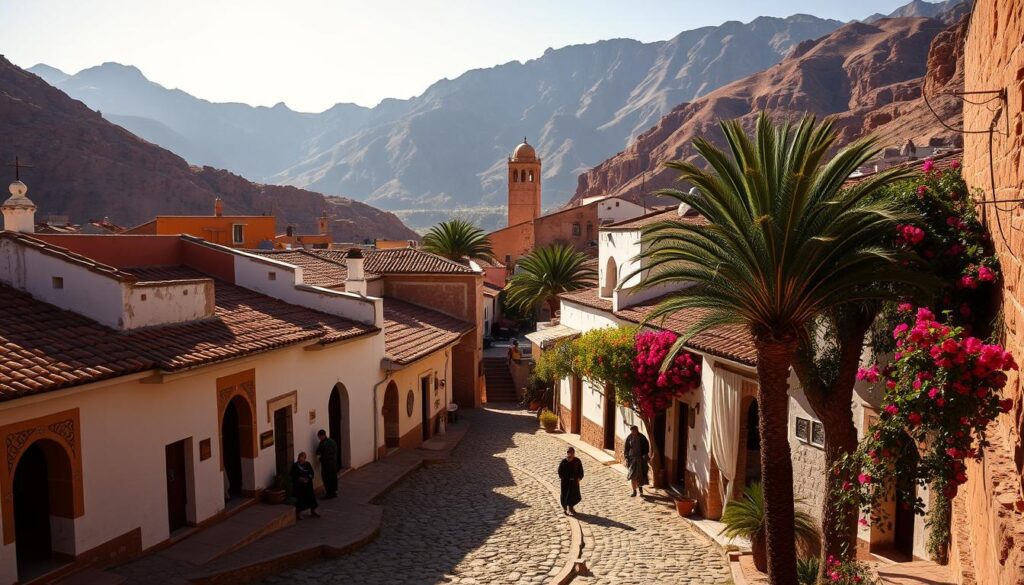
Kasbahs and Ksour
Kasbahs and ksour are key parts of Morocco’s past. They were strongholds and trade centers. Kasbahs are fortified homes or palaces. Ksour are fortified villages.
These buildings use earth and wood. Their design shows the culture and geography of their area.
Earthen Architecture Techniques
Traditional Moroccan villages use earth in their buildings. Techniques like rammed earth and adobe have been passed down. They keep buildings cool and strong.
Using local materials shows the cleverness and green approach of Moroccan builders.
Village Layout and Social Spaces
Traditional Moroccan villages are designed for community. They have central squares and mosques for people to meet. This layout promotes a strong community spirit.
Exploring these villages gives insight into Morocco’s culture and history. It shows how these places have shaped the country’s social fabric.
Daily Life in Rural Morocco
Exploring rural Morocco, you’ll find a world deeply rooted in the land and community. The smell of fresh bread fills the air. You’ll hear farmers calling out as they work in the fields.

Family Structures and Gender Roles
Family is central in rural Morocco. Traditional families often focus on farming. Men work in the fields, while women manage the home and sometimes help with farming.
You’ll see children learning the skills needed to carry on family traditions.
Agricultural Rhythms and Seasonal Work
The agricultural calendar sets the pace of life in rural Morocco. Work like harvesting olives or almonds brings people together. The seasons change daily routines, from summer’s early morning harvests to winter’s cozy firesides.
Religious Practices and Celebrations
Religion is a big part of daily life, with communities coming together for prayers and celebrations. The Islamic calendar influences many religious practices. You might experience the joy of Eid celebrations or the quiet of Ramadan.
Exploring rural Morocco, you’ll see a life rich in traditions, hard work, and community. The beauty of Morocco’s rural landscapes adds to the warmth and hospitality of its people.
Cultural Traditions of the Moroccan Countryside
Exploring the Moroccan countryside reveals a world of cultural traditions. The air buzzes with traditional music. The colors of local textiles show the region’s rich heritage.
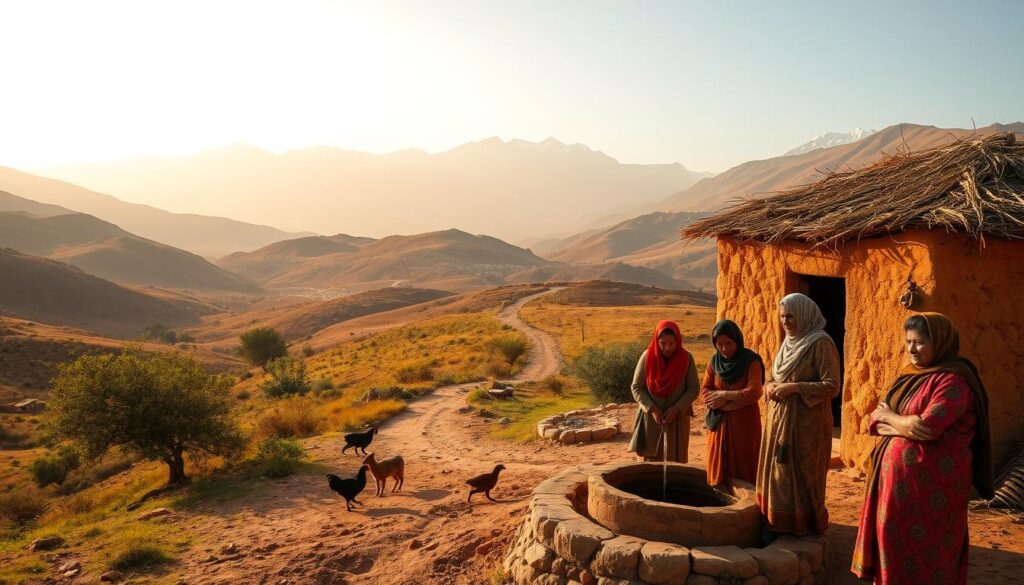
Rural Morocco is known for its strong community spirit. It’s deeply connected to traditional practices. You’ll find music, dance, textile arts, and storytelling, all waiting to be discovered.
Music and Dance Traditions
Music and dance are key in rural Moroccan culture. Each tribe has its own style and traditions. The Ahidous and Ahwach dances are favorites at celebrations.
These dances are full of energy and are performed with traditional instruments. The guembri and nakers create a lively rhythm that gets everyone moving.
- The Ahidous dance is known for its energetic moves and is mainly performed by men.
- The Ahwach dance, however, involves both men and women and is famous for its complex footwork.
Weaving and Textile Arts
Weaving and textile arts are highly valued in rural Morocco. Many communities create beautiful fabrics and crafts. The traditional Berber weaving techniques have been passed down for generations.
Visitors can see weavers at work. They create intricate patterns and designs that tell stories of their heritage.
“The art of weaving is not just about creating something beautiful; it’s about preserving our cultural identity.” – A local weaver
Oral Storytelling and Local Legends
Oral storytelling is a cherished tradition in rural Morocco. Stories are shared to pass down local legends, myths, and historical events. These stories are told around the fire or during gatherings.
They help connect with the past and strengthen community bonds. Exploring the countryside, you might hear these stories. It’s a great way to learn about local culture and life.
Rural Moroccan Cuisine and Food Traditions
Exploring Morocco’s countryside reveals a rich culinary heritage. It shows the country’s diverse cultures and landscapes. Traditional dishes in rural Morocco are hearty, made with local ingredients. They are often cooked over open fires or in communal ovens.
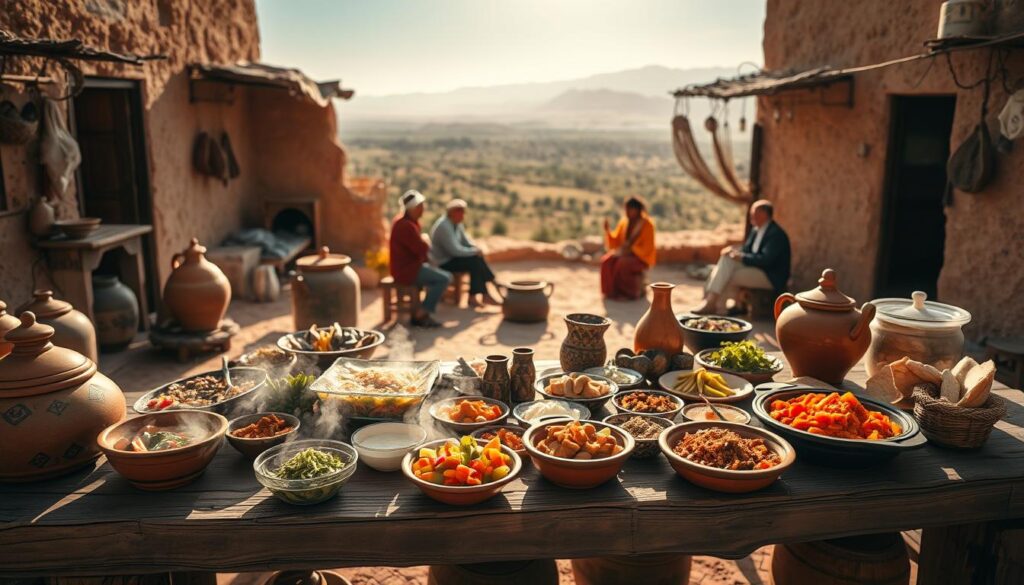
Tagines and Clay Pot Cooking
The tagine is a key part of Moroccan cuisine. It’s a slow-cooked stew cooked in a clay pot. Tagines have meat, vegetables, and dried fruits, all cooked evenly in the pot. This method makes dishes tender and flavorful, bringing people together.
Bread Making and Communal Ovens
Bread is essential in Moroccan cuisine, especially in rural areas. It’s baked in communal ovens. Locals gather to knead and bake bread together. This tradition strengthens community bonds and offers a chance to socialize. The bread, often flavored with herbs or olive oil, goes well with many dishes.
Seasonal Harvests and Celebrations
Moroccan cuisine changes with the seasons, with dishes based on what’s in season. Communities celebrate harvests with meals and festivities. These events honor the land and bring families and friends together to enjoy traditional foods.
Exploring rural Moroccan cuisine gives a unique look into the country’s culture and daily life. As you see the beautiful countryside, you’ll understand the importance of local food traditions.
Rural Markets and Souks
Exploring the Moroccan countryside reveals the lively rural markets and souks. These places are more than just shopping spots. They are where locals come together, share news, and build community ties.
Weekly Market Traditions
In rural Morocco, weekly markets are a big deal. Farmers, artisans, and traders gather to sell their goods. You can find everything from fresh produce to handmade crafts here. Visiting these markets lets you dive into local culture and economy.
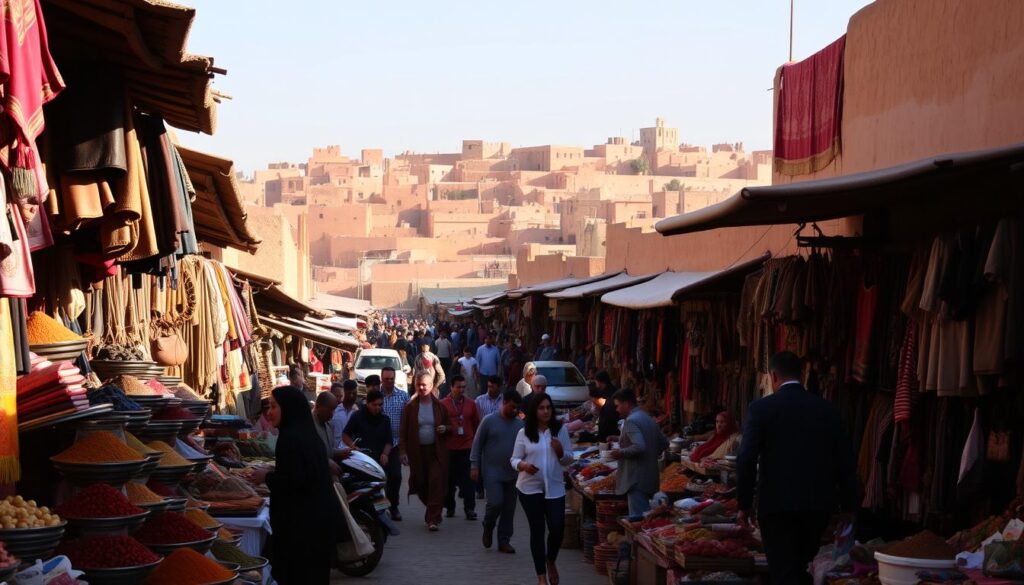
Navigating Rural Souks as a Visitor
Visiting rural souks as a tourist needs some planning and respect for local ways. Dress modestly and be ready to bargain. Many vendors enjoy talking about their products and traditions.
Carry local currency, as not all vendors take cards. Trying local foods and drinks can make your visit even better. It also helps you connect with the community.
Authentic Accommodation in the Moroccan Countryside
Exploring rural Morocco reveals unique places to stay that show off local culture and traditions. The countryside has many authentic accommodations. These let you dive into the local scene and community.
Guesthouses and Eco-Lodges
Guesthouses and eco-lodges are great for those wanting comfort and to be green. Many are run by families, offering a cozy welcome and delicious meals. They mix old architecture with new comforts, creating a special atmosphere.
Homestays with Local Families
Homestays with local families offer a deep dive into daily life. You can join in on daily tasks, learn crafts, and taste local food. It’s a way to connect with the community and understand rural Moroccan life.
| Accommodation Type | Features | Benefits |
|---|---|---|
| Guesthouses | Family-run, traditional architecture | Warm welcome, home-cooked meals |
| Eco-Lodges | Sustainable practices, modern amenities | Comfort, environmental consciousness |
| Homestays | Immersion in local life, traditional crafts | Meaningful connections, cultural insight |
Camping and Outdoor Options
Camping is a great choice for those who love the outdoors in Morocco’s countryside. Guided tours make camping safe and fun. You get to see the beauty of rural Morocco up close.
Choosing a guesthouse, homestay, or camping, your Moroccan countryside stay will be unforgettable. Each choice gives a different view of rural life. You’ll connect with the land and its people in a special way.
Activities and Experiences in Rural Morocco
Exploring Morocco’s countryside is a mix of adventure and learning about culture. You can hike, farm, and craft with locals. There’s something for everyone, no matter what you like.
Hiking and Trekking Routes
Rural Morocco is perfect for hikers, with the Atlas Mountains offering amazing trails. You can see the Ourika Valley and visit Berber villages. The Toubkal region is also great, with trails to the highest peak in North Africa.
Participating in Agricultural Activities
Joining in local farming is a deep dive into rural life. You can help with olive harvesting or field work. It’s a chance to learn about old farming ways and meet locals. Agritourism lets you stay on a farm and help out every day.
Craft Workshops and Cultural Exchanges
Rural Morocco is rich in culture, with many craft workshops and exchanges. You can learn to weave, make pottery, or carve wood. This is a great way to see how locals live. Homestays and cultural programs let you live with a family and see their traditions up close.
| Activity | Location | Description |
|---|---|---|
| Hiking | Atlas Mountains | Explore the scenic trails and Berber villages |
| Agricultural Activities | Rural villages | Participate in harvesting and farming tasks |
| Craft Workshops | Local communities | Learn traditional crafts such as weaving and pottery |
Practical Tips for Visiting the Moroccan Countryside
When you’re ready to explore Morocco’s countryside, think about the trip’s details. The countryside is full of natural beauty and culture. But, you need to plan well to enjoy it.
Transportation Options and Logistics
Traveling through the Moroccan countryside can be tricky. You have a few ways to get around. Renting a car gives you freedom, or you can use buses and taxis.
For a real local feel, hire a guide or join a tour. They often include transport. For tips on planning, check Minimalist Journeys.
Language and Communication
Many people in tourism speak some English. But, learning Arabic or Berber can help a lot. It makes talking to locals better.
Downloading a translation app can also help with harder conversations.
Health and Safety Considerations
Traveling to the countryside means taking care of your health and safety. Make sure you’re vaccinated before you go. Also, drink plenty of water and wear light clothes to avoid heatstroke.
Keep an eye on your things, especially in busy places. Registering with your government’s travel advisory can also help. For more safety tips, visit My Visit Morocco.
| Health Precaution | Description |
|---|---|
| Vaccinations | Consult your doctor about necessary vaccinations before traveling to Morocco. |
| Heatstroke Prevention | Stay hydrated, wear light clothing, and avoid strenuous activities during peak heat hours. |
| Personal Belongings | Be mindful of your belongings, especially in crowded areas and markets. |
Conclusion: Embracing the Timeless Charm of Rural Morocco
By the end of your trip to the Moroccan countryside, you’ll know more about the local culture and traditions. The charm of rural Morocco will leave a lasting impression on you. You’ll want to come back and see more of this stunning country.
Looking for a place to relax, have an adventure, or dive into culture? A rural retreat in Morocco is perfect for you.
Exploring rural Morocco lets you see the real heart of the country. You’ll find lively souks and peaceful landscapes. You can join in local activities and feel the warmth of the Moroccan people.
When planning your next visit, think about the different seasons. Each one brings a unique feel to rural life. Morocco’s rich culture and stunning nature will capture your heart and create memories you’ll always treasure.



 Covers cities, coast, mountains, desert & food