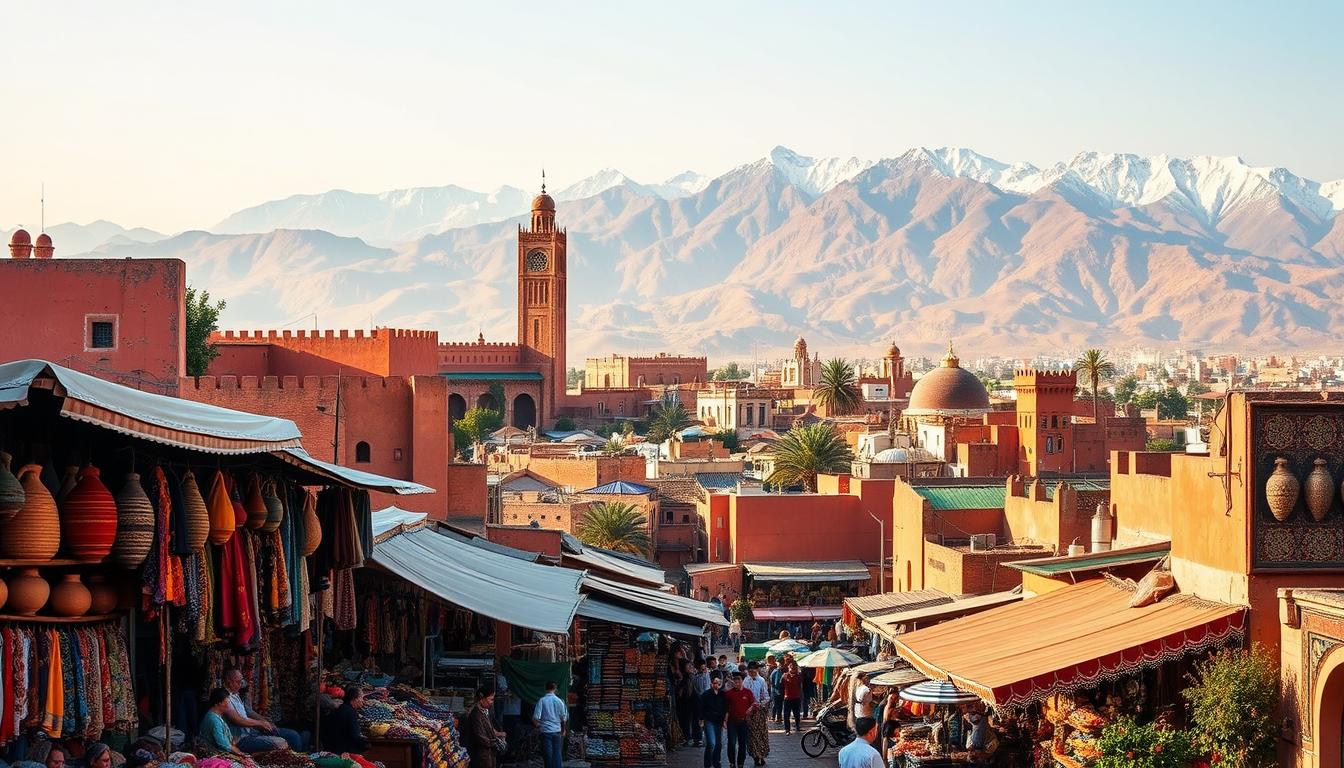
Get ready to explore the amazing world of Morocco. This country mixes old traditions with new ways. It’s a place that fascinates both travelers and culture lovers.
Morocco is home to the stunning Atlas Mountains and lively souks. Its varied landscapes and deep history make it a treasure trove of interesting cultural practices. As you discover Morocco, you’ll see how Arab, Berber, and French cultures blend together.
Key Takeaways
- Morocco’s cultural heritage is a unique blend of Arab, Berber, and French influences.
- The country’s diverse geography ranges from mountains to deserts and coastlines.
- Morocco’s history is marked by significant events that have shaped its culture.
- The souks and medinas are vibrant areas that showcase the country’s rich traditions.
- Moroccan cuisine is a delicious reflection of its cultural diversity.
Morocco at a Glance: A North African Gem
Morocco sits between Europe and Africa, making it a key spot for cultures and trade. This location has shaped its history, culture, and tourism. It’s a place that draws in travelers from all over.
Where is Morocco Located?
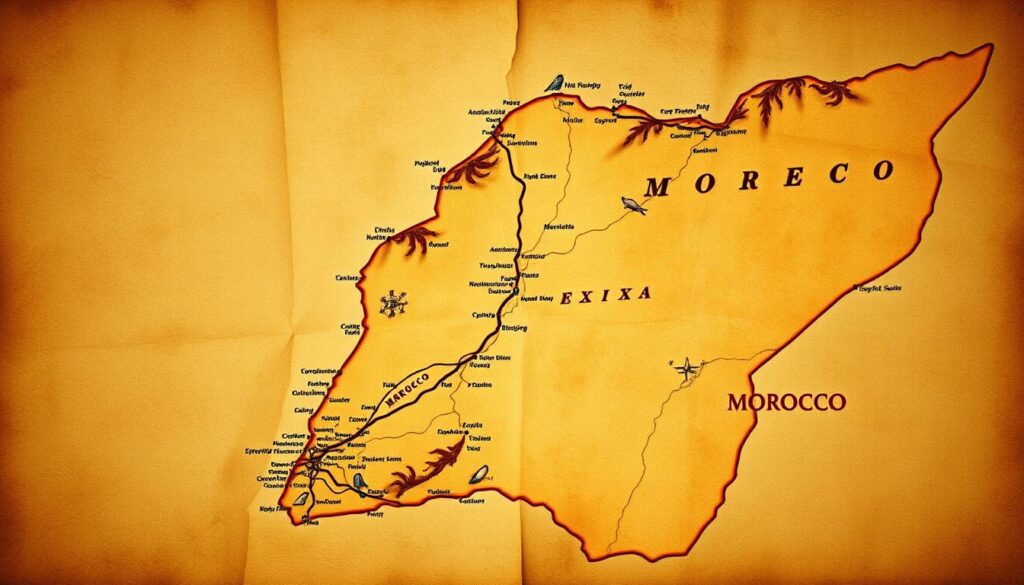
Morocco is in North Africa’s Maghreb region. It’s bordered by the Atlantic Ocean to the west, the Mediterranean Sea to the north, and the Sahara Desert to the south. Its location makes it a key spot for trade and tourism.
The country has mountains, deserts, and coastlines. Each area offers something special. For example, the Atlas Mountains are great for trekking and visiting Berber villages.
The Kingdom’s Unique Position Between Continents
Morocco’s location at the crossroads of Africa, Europe, and the Arab world is unique. It has a rich cultural mix. This mix is seen in its architecture, food, and traditions.
- Cultural exchange between Europe and Africa
- Blend of African, Arab, and Mediterranean influences
- Rich historical heritage and diverse landscapes
This unique position also boosts tourism in Morocco. Visitors love its lively cities, historical sites, and natural beauty. Morocco has something for everyone, from Marrakech’s souks to the Sahara’s calm.
The Rich Tapestry of Moroccan History
Exploring Morocco reveals a country with a long and varied history. It spans from ancient Berber tribes to the modern nation it is today. Morocco’s history is a story of change and continuity.
Ancient Berber Origins
The earliest people in Morocco were the Berbers. They were farmers, traders, and warriors. Their influence is still seen in Morocco’s language, customs, and traditions. The Berber culture is a vital part of Morocco’s heritage, with many Moroccans proud of their Berber roots.
Islamic Influence and Dynasties
The arrival of Islam in the 7th century was a big change for Morocco. It brought cultural and religious changes, shaping the country’s architecture, art, and literature. Dynasties like the Idrisid and Almoravid left behind monuments, mosques, and madrasas. The intricate zellij tilework and ornate architecture show the Islamic influence on Moroccan craftsmanship.
| Period | Significant Events | Legacy |
|---|---|---|
| Ancient Berber | Indigenous Berber tribes inhabited Morocco | Berber language and cultural traditions |
| Islamic Influence | Islam arrived in Morocco in the 7th century | Islamic architecture, art, and literature |
| Colonial Period | Morocco was colonized by European powers | Modern infrastructure and cultural exchange |
Colonial Period and Independence
Morocco’s colonial period, under French and Spanish rule, greatly shaped the country. The fight for independence, led by Mohammed V, ended with Morocco gaining freedom in 1956. The legacy of this period still affects Morocco’s politics, economy, and culture. Today, Morocco is a constitutional monarchy, blending its rich history with modern goals.
Morocco’s Diverse Geography and Landscapes
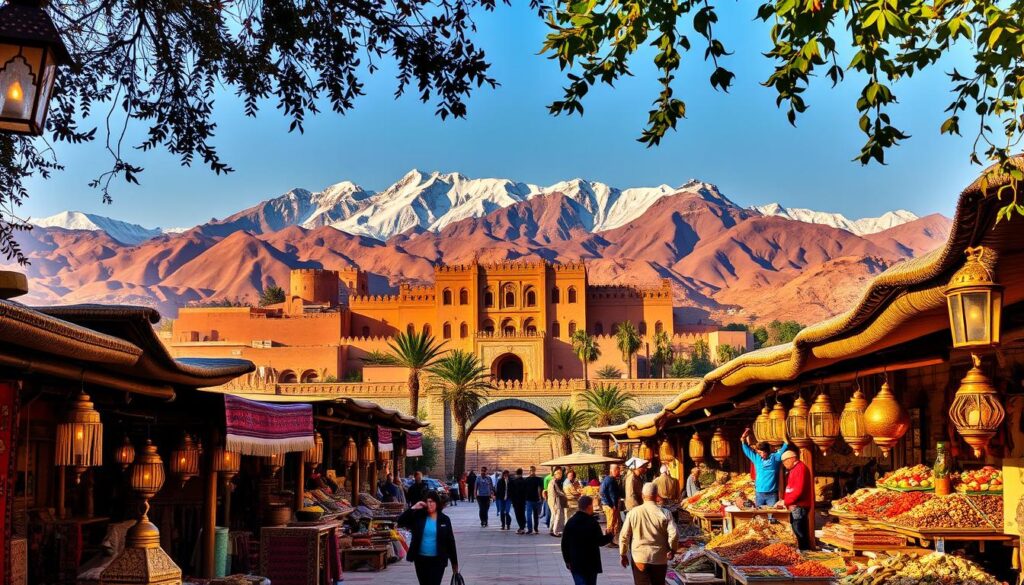
Exploring Morocco reveals a world of different landscapes. You’ll see snow-capped mountains, vast deserts, and beautiful coastlines. These diverse landscapes are full of natural wonders.
The Atlas Mountains
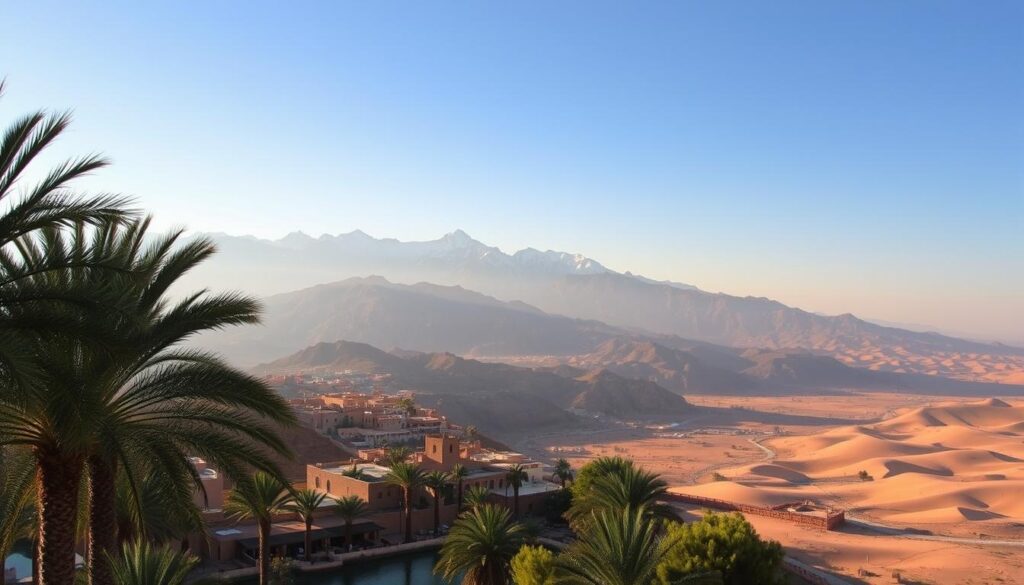
The Atlas Mountains stretch across Morocco, offering stunning views. They give a peek into the traditional Berber culture. You can hike here, visiting remote villages and enjoying the scenery.
The mountains are also a haven for nature lovers. They are home to a variety of plants and animals.
Sahara Desert Regions
Morocco’s Sahara Desert is a key part of its geography. It has huge sand dunes and oases. Taking a camel trek here lets you experience the desert’s calm and see amazing sunsets.
The desert is also home to unique wildlife. These animals have adapted to the desert’s harsh conditions.
Coastal Areas and Mediterranean Influences
Morocco’s coast is known for its beauty. It has rugged cliffs, sandy beaches, and charming fishing villages. The Mediterranean has shaped the coast’s cuisine, architecture, and culture.
Exploring coastal towns is a must. You can enjoy fresh seafood and relax in the laid-back atmosphere.
Morocco’s varied geography makes it a special place for tourists. It offers many experiences, from hiking and desert adventures to relaxing on the coast. Morocco has something for everyone.
The Imperial Cities of Morocco
The imperial cities of Morocco are filled with history and culture. As you travel through these places, you’ll see Morocco’s past and present come alive.
Marrakech: The Red City
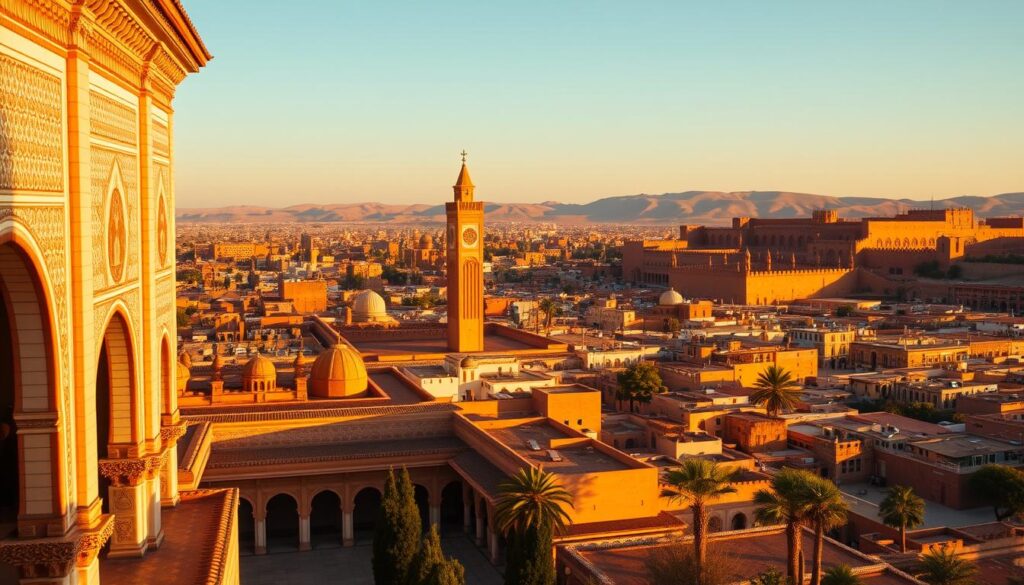
Marrakech, or the Red City, is a top spot in Morocco. It’s alive with markets, beautiful buildings, and a rich culture. You can see the famous Jemaa el-Fnaa square, check out the Bahia Palace, and enjoy the Majorelle Garden.
Fez: The Cultural Capital
Fez is Morocco’s cultural heart, with a long history and traditions. It has the ancient University of Al Quaraouiyine, one of the oldest schools in the world. You can walk through the old medina, see the Dar Batha Museum, and admire the Bou Inania Madrasa’s design.
Rabat: The Administrative Center
Rabat, Morocco’s capital, is the country’s government center. It’s famous for its landmarks like the Kasbah of the Udayas and Hassan Tower. You can see the Royal Palace, visit the Museum of History and Civilizations, and enjoy views of the Bou Regreg estuary.
Meknes: The Imperial City
Meknes is another key imperial city in Morocco, known for its big buildings and history. You can see the Mausoleum of Moulay Ismail, explore old city gates, and see the huge granaries and stables from Sultan Moulay Ismail’s time.
| City | Known For | Must-Visit Attractions |
|---|---|---|
| Marrakech | Vibrant markets and architecture | Jemaa el-Fnaa, Bahia Palace |
| Fez | Cultural heritage and education | University of Al Quaraouiyine, Dar Batha Museum |
| Rabat | Historical landmarks and administration | Kasbah of the Udayas, Hassan Tower |
| Meknes | Grand architecture and history | Mausoleum of Moulay Ismail, ancient city gates |
Exploring these cities will help you understand Moroccan traditions and history better.
“Morocco is a country where tradition and modernity blend seamlessly, and its imperial cities are a testament to this unique blend.”
Moroccan Architecture and Design
Exploring Morocco reveals a wealth of architectural treasures. These show the country’s rich cultural heritage. Moroccan architecture combines Islamic, Arab, and Berber styles, thanks to its strategic location.
Riads and Traditional Homes
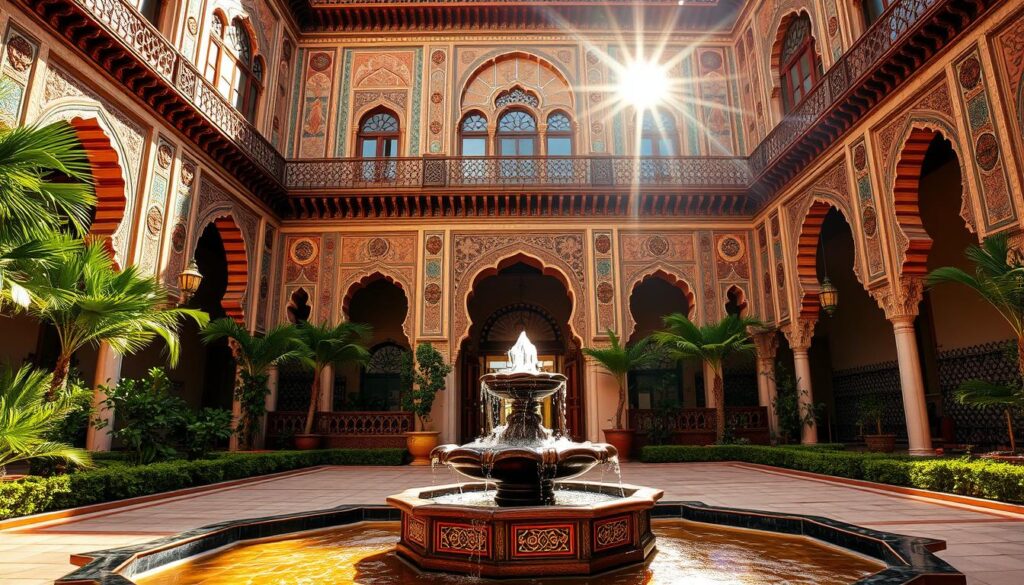
Riads, traditional Moroccan homes, feature interior gardens and detailed decorations. They highlight the value of private spaces in Moroccan traditions. Riads blend Islamic and Arab architectural influences.
Mosques and Religious Buildings
Mosques and religious buildings in Morocco stand out for their stunning design and history. The Islamic influence is clear in their architecture, with minarets, domes, and intricate tilework. These places are not just for worship but also unique places in Morocco that draw visitors worldwide.
The Art of Zellige Tilework
Zellige tilework is a key feature of Moroccan architecture. It uses small, glazed tiles in complex patterns. This craft shows Morocco’s artisanal heritage. Zellige adorns mosques and riads, adding beauty and elegance.
The Vibrant Medinas of Morocco
When you enter the vibrant medinas of Morocco, you step into a world filled with ancient traditions and lively markets. These medinas are key to Moroccan culture and identity. They give you a unique look into the country’s rich history and heritage.
Navigating the Ancient Marketplaces
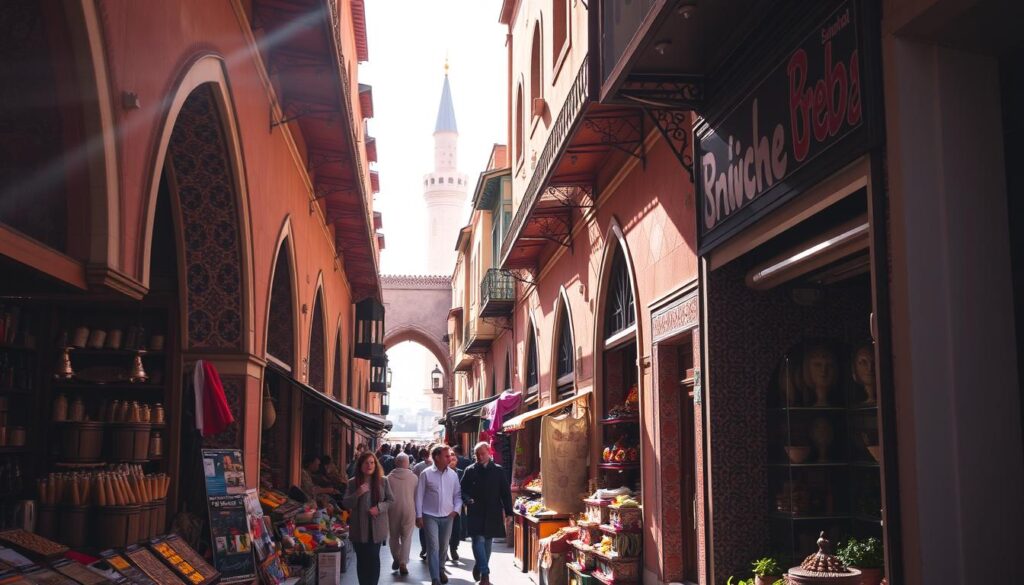
Exploring the medinas can seem tough, but with some tips, you can enjoy it more. First, get a map of the medina. Don’t hesitate to ask locals for help. The narrow alleys and busy souks are part of the charm.
Remember to haggle when you shop. It’s a common practice in Moroccan markets.
Artisan Crafts and Traditional Shopping
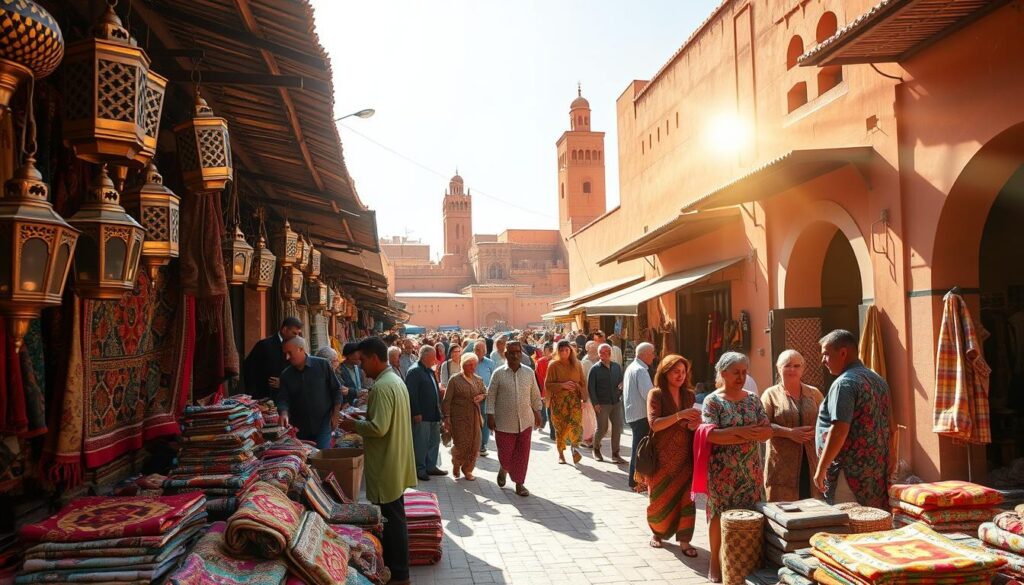
The medinas are full of artisan crafts like textiles, pottery, and metalwork. You can find special souvenirs and gifts, such as traditional clothes, jewelry, and crafts. For a deeper experience, visit local workshops and see artisans at work.
Also, try the local Moroccan cuisine, which is a big part of Moroccan culture. For more info on Morocco’s cities and cultural experiences, check out Morocco Travel Guide. It’s a great resource for planning your trip and learning more about tourism in Morocco.
Moroccan Cuisine: A Feast for the Senses
Moroccan cuisine is a treat for your senses. It ranges from the spices in souks to the tagines in imperial cities. You’ll find a world of flavors and aromas that show the country’s rich culture.
Tagine: The National Dish
The tagine is more than a dish; it’s a symbol of Moroccan hospitality. It’s a slow-cooked stew with meat, veggies, and dried fruits. Spices like cumin, coriander, and cinnamon add to its rich flavor.
Mint Tea Culture
Mint tea is a big part of Moroccan culture. It shows hospitality and friendship. Made with green tea, fresh mint, and sugar, it’s served in small glasses.
Spices and Flavors of Morocco
Moroccan food is known for its bold spices. You’ll find cumin, coriander, ginger, and cinnamon. The mix, called ras el hanout, changes by region but always adds a unique taste.
Street Food Adventures
Exploring Moroccan street food is exciting. You’ll find grilled meats, seafood, and snacks like msemen and zlabia. Don’t miss trying these local treats during your visit.
Traditional Moroccan Clothing and Fashion
The designs and colors of Moroccan clothing are full of history and tradition. As you wander through the souks and markets, you’ll see the variety of clothes Moroccans wear. These clothes show their rich cultural heritage.
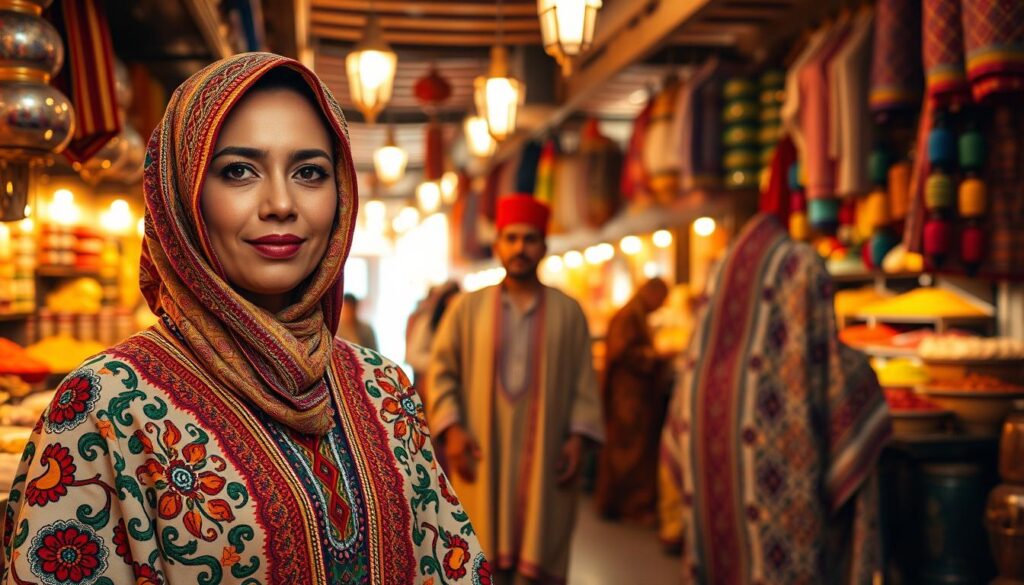
Everyday Attire: The Djellaba
The djellaba is a long, hooded cloak for both men and women. It’s a key part of Moroccan daily wear, keeping them warm and safe. You’ll notice different colors and designs, which can tell you about the wearer’s region or status.
Ceremonial Clothing and Special Occasions
For big events like weddings and holidays, Moroccans wear fancy clothes. These outfits are filled with detailed embroidery and special patterns. They show off the country’s long tradition of textiles. You can see these beautiful clothes at festivals and celebrations.
The Symbolic Colors of Moroccan Dress
Colors in Moroccan clothes mean a lot. For example, green is for luck and prosperity, and blue is for protection. Knowing these colors helps you understand Moroccan traditions and culture.
| Color | Symbolism |
|---|---|
| Green | Prosperity, Good Fortune |
| Blue | Protection |
| Red | Good Luck, Celebration |
Learning about interesting facts about Morocco through its clothes is fascinating. From the djellaba to fancy outfits, each piece has a story. It’s about tradition, identity, and community.
Languages and Communication in Morocco
Exploring Morocco reveals a mix of languages that show the country’s rich history. Language is key in Moroccan culture and daily life. Knowing the languages can make your trip better.
Arabic and Berber Languages
Arabic is Morocco’s official language, seen in official places, media, and schools. But, the country also has Berber languages, spoken by the Berber people. Berber languages are a big part of Morocco’s culture, with Tamazight being very common. Lately, there’s more effort to keep Berber languages alive through education and media.
French Influence and Other Languages
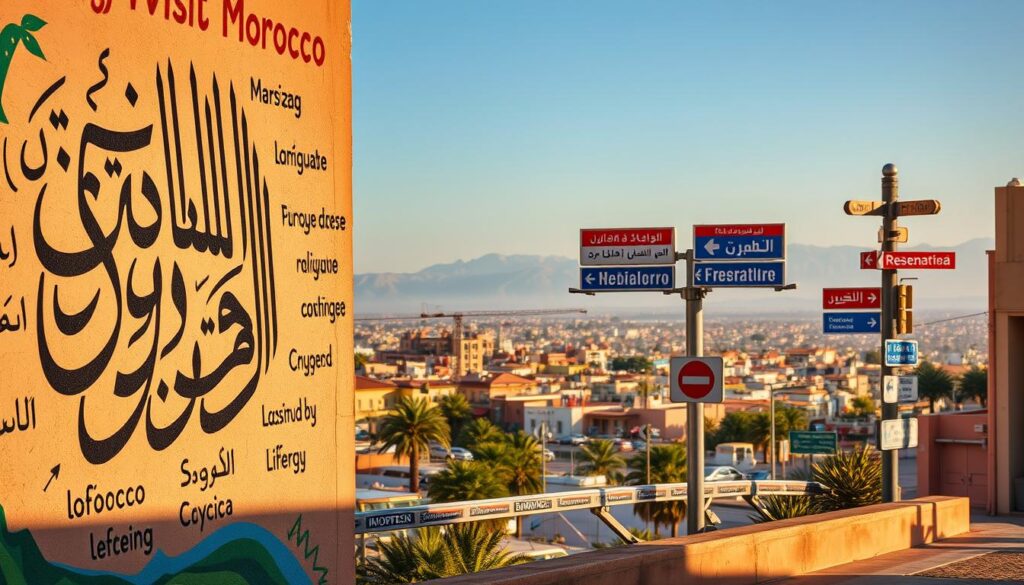
French is also popular in Morocco because of its colonial past. It’s used a lot in business, schools, and government. You’ll see French and Arabic together in signs and documents. Many Moroccans also speak English, especially in tourist spots. For more on Morocco’s history and culture, check out Wikipedia’s Morocco page.
Here are some key languages you might find in Morocco:
- Arabic (official)
- Berber languages (Tamazight, Tarifit, Tashelhit)
- French (widely spoken)
- English (growing in use, especially in tourism)
Moroccan Festivals and Celebrations
Morocco’s culture shines through its many festivals and traditions. The country’s diverse heritage is seen in its celebrations. These range from religious holidays to cultural and music festivals.
Religious Holidays and Observances
Morocco is mostly Muslim, and Islamic holidays are key. Eid al-Fitr and Eid al-Adha are big celebrations. They include communal prayers, feasting, and charity.
The Islamic New Year and the Prophet’s Birthday are also honored. These holidays show Morocco’s Islamic identity and values of community and compassion.
Cultural and Music Festivals
Morocco’s cultural scene is lively, with many festivals. The Marrakech International Film Festival and the Fez Festival of World Sacred Music are famous. They highlight Morocco’s cultural richness and mix of old and new arts.
| Festival | Location | Description |
|---|---|---|
| Marrakech International Film Festival | Marrakech | Celebrating cinema from around the world, with a focus on Moroccan and African films. |
| Fez Festival of World Sacred Music | Fez | A festival that brings together musicians from around the world to celebrate sacred music. |
| Mawazine Festival | Rabat | A music festival featuring a mix of local and international artists. |
Moroccan festivals and celebrations offer a glimpse into the country’s culture and traditions. Whether it’s a religious holiday or a cultural festival, these events show Morocco’s rich heritage and hospitality.
15 Interesting Facts About Morocco You Probably Didn’t Know
Morocco is full of fascinating facts. You’ll find historical surprises, cultural curiosities, and natural wonders. Exploring the country reveals many interesting aspects that make it unique.
Historical Surprises
Morocco’s history is full of surprises. For example, Volubilis is a UNESCO World Heritage Site with well-preserved Roman ruins. Its location made it a key spot for trade and culture. The Roman ruins in Morocco show the country’s role as a crossroads between Europe and Africa.
Essaouira is another historical surprise. Founded by the French in the 18th century, it has French and Moroccan architectural styles. Essaouira’s unique blend of styles reflects its rich cultural heritage.
| Historical Site | Location | Significance |
|---|---|---|
| Volubilis | Meknes-Tafilalet | Roman ruins and UNESCO World Heritage Site |
| Essaouira | Marrakech-Tensift-El Haouz | 18th-century French-founded city with unique architecture |
Cultural Curiosities
Moroccan culture is vibrant and full of traditions. Gnawa music and dance, with roots in sub-Saharan Africa, is a unique part of Moroccan culture. Gnawa culture is a big part of Morocco’s identity, with its rhythms and melodies adding to the country’s music.
The traditional Moroccan hammam is another cultural curiosity. It’s a place where people relax, socialize, and cleanse their bodies. The hammam experience offers a glimpse into Morocco’s cultural practices.
Natural Wonders
Morocco has many natural wonders, like the Atlas Mountains and the Sahara Desert. The Todra Gorge is a narrow canyon carved by the Todra River. It’s surrounded by cliffs and is great for hiking and rock climbing. The Todra Gorge shows Morocco’s natural beauty with its unique formations and scenery.
The Merzouga Dunes are another natural wonder. They’re a vast area of sand dunes in the Sahara Desert. They’re perfect for camel treks and desert camping. The Merzouga Dunes are a must-see for their beauty and unforgettable sunrises and sunsets.
| Natural Wonder | Location | Description |
|---|---|---|
| Todra Gorge | Atlas Mountains | Narrow canyon with towering cliffs |
| Merzouga Dunes | Sahara Desert | Vast expanse of sand dunes |
The Sahara Experience: Desert Adventures
The Sahara Desert in Morocco is a treasure trove of adventure and tranquility. It offers an experience unlike any other. As you explore this vast and majestic landscape, you’ll discover the rich cultural heritage and breathtaking natural beauty that make Morocco a unique destination for travelers.
Camel Treks and Nomadic Traditions
One of the most iconic experiences in the Sahara is a camel trek across the dunes. It allows you to immerse yourself in the nomadic traditions of the Berber people. As you ride through the golden sands, you’ll be surrounded by the serene silence of the desert.
Punctuated only by the occasional call of a camel or the rustle of the wind. You can learn more about the nomadic way of life and the history of camel treks in Morocco by visiting Planet Janet Travels. They share insightful experiences and tips for exploring the Sahara.
Overnight Stays in Desert Camps
To fully experience the magic of the Sahara, consider an overnight stay in a desert camp. These camps offer a range of accommodations, from luxurious tents to more rustic options. This allows you to choose the level of comfort that suits your preferences.
As night falls, you’ll be treated to a dazzling display of stars. The sound of traditional Berber music and storytelling around the campfire will enchant you.
| Desert Camp Activities | Description |
|---|---|
| Camel Treks | Explore the Sahara dunes on camelback, immersing yourself in the nomadic traditions of the Berber people. |
| Stargazing | Enjoy the breathtaking night sky, with minimal light pollution, offering a dazzling display of stars. |
| Traditional Music and Dance | Experience the rich cultural heritage of Morocco through traditional Berber music and dance performances. |
As you plan your visit to Morocco, the Sahara Desert experience is sure to be a highlight. It offers a unique blend of adventure, culture, and natural beauty. This will leave you with unforgettable memories.
Moroccan Hospitality and Social Customs
Moroccan culture values hospitality highly, treating visitors with respect and kindness. Exploring this country will deepen your understanding of local customs and traditions. This will make your interactions with the locals more enjoyable.
Greeting Etiquette and Social Interactions
In Morocco, greetings are key in social interactions. Say “As-salamu alaykum” (peace be upon you) when meeting someone. They’ll reply with “Wa alaykum as-salam” (and upon you be peace). Handshakes are common, but wait for the other to start.
It’s polite to use your right hand when giving or receiving something. Moroccans value respect and courtesy. Engaging in friendly conversations is encouraged.
Talking about family, food, or local culture can help you connect. But, it’s wise to steer clear of politics or religion unless you know the person’s views.
Home Visits and Gift-Giving Traditions
Being invited to a Moroccan home is a sign of respect and friendship. You’ll be greeted warmly and offered refreshments. Remember to remove your shoes before entering the living area.
Gift-giving is a cherished tradition in Morocco. Bringing a small gift, like sweets or pastries, is a thoughtful gesture. For more insights into Moroccan customs, explore additional resources.
“Hospitality is a sacred duty in Moroccan culture, and visitors are often treated like honored guests.”
By understanding and respecting these customs, you’ll navigate social situations with confidence. You’ll also build meaningful connections with the people you meet in Morocco.
Planning Your Visit to Morocco
Planning your trip to Morocco is key to a great experience. Think about when to go, how to get around, and cultural norms. Morocco is rich in history, culture, and geography, making it a top travel spot.
Best Times to Visit Different Regions
The climate in Morocco changes a lot from one area to another. The Atlas Mountains are cool and nice in summer. The Sahara Desert is best in spring or autumn to miss the heat and cold.
- Spring (March to May) is great for the imperial cities like Marrakech and Fez.
- Autumn (September to November) is best for the coast.
- Winter is good for the Sahara, but it gets cold at night.
Transportation Tips and Getting Around
Traveling in Morocco is easy with many options. You can take the train between big cities, which is comfy and quick. For shorter trips, grands taxis are handy, though they can be full. Renting a car lets you explore freely, but driving can be tough, especially in cities. For a real Moroccan feel, try a guided tour.
Safety and Cultural Sensitivity
Morocco is mostly safe for tourists, but it’s smart to be careful. Watch your stuff, especially in busy places and markets. Knowing and following local customs is important too. For example, dress modestly and use your right hand when giving or receiving things. Morocco is Muslim, so being respectful will make your trip better and your interactions with locals more positive.
Conclusion: The Timeless Appeal of Morocco
Exploring Morocco reveals a land full of history, culture, and stunning views. From lively medinas to the calm Sahara Desert, Morocco’s beauty is unmatched. Its mix of Arab, Berber, and French cultures makes it truly unique.
Moroccan food is a feast for the senses, with its spices and tagines. The locals’ warm welcome shows why Morocco is so special. Whether you love cities, mountains, or coastlines, Morocco has it all.
Planning a trip to Morocco? You’ll find its charm and beauty unforgettable. Morocco’s history, culture, and landscapes will captivate you and stay with you always.



 Covers cities, coast, mountains, desert & food