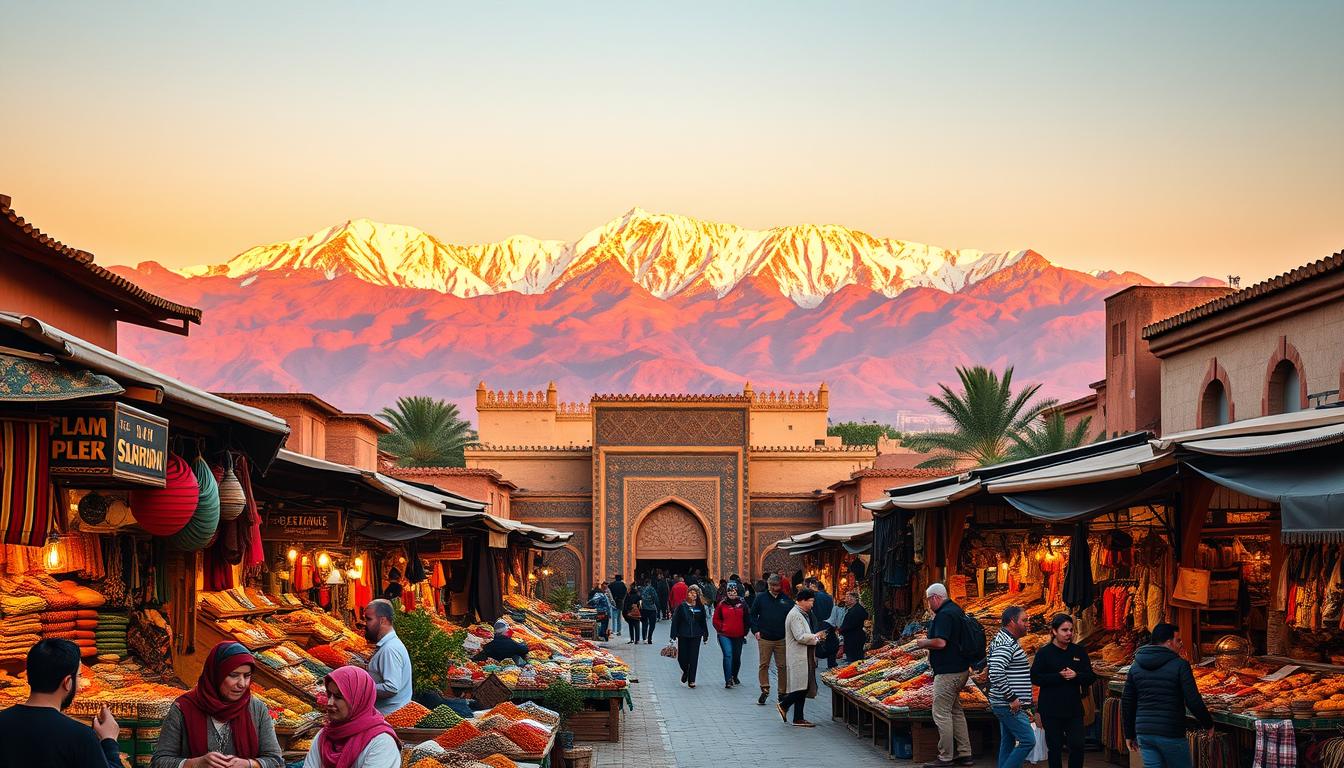
Planning a trip to Morocco means diving into a world of rich history and diverse culture. Morocco is a constitutional monarchy with Arabic, Berber, and French influences. It promises a unique travel adventure.
Expect to see lively cities like Casablanca and Marrakech. You’ll also explore the majestic Atlas Mountains and the vast Sahara Desert. Knowing the local customs, language, and geography will make your trip better. Morocco, with Arabic and Tamazight as official languages, blends tradition with modernity seamlessly.
Key Takeaways
- Morocco is a constitutional monarchy with a diverse cultural heritage.
- The official languages are Arabic and Tamazight.
- Major cities include Casablanca, Marrakech, and Rabat.
- The country is known for its vibrant souks and historical landmarks.
- Understanding local customs and language will enhance your travel experience.
Morocco at a Glance: Geographic and Basic Information
Morocco is in North Africa, known for its varied landscapes and rich culture. It’s a mix of Arab, Berber, and European influences. This blend shapes its unique identity.
Location and Landscape Diversity
Morocco borders the Atlantic Ocean to the west and the Mediterranean Sea to the north. The Sahara Desert lies to the south. This geography creates different climates and landscapes. You’ll find the snow-capped Atlas Mountains and vast deserts.
It’s said that Morocco is where mountains and deserts meet, and the sea and sky come together.

Major Cities and Regions
The country is split into several regions, each with its own vibe. Marrakech is famous for its lively souks and history. Fes is known for its ancient architecture. Casablanca is the economic center.
Other key areas include the High Atlas mountains, the Sahara Desert, and coastal towns along the Atlantic.
Population and Demographics
Morocco has about 37 million people, with a mix of Arab, Berber, and European roots. The population is mostly young, with a median age of 30. Knowing about Morocco’s demographics helps understand its society and economy.
A study says Morocco’s young population brings both chances and challenges for its growth.
Morocco’s diverse landscapes, rich culture, and lively people make it an exciting place to visit. Whether you’re into history, culture, or just want to see something new, Morocco has plenty to offer.
A Brief History of Morocco’s Rich Past
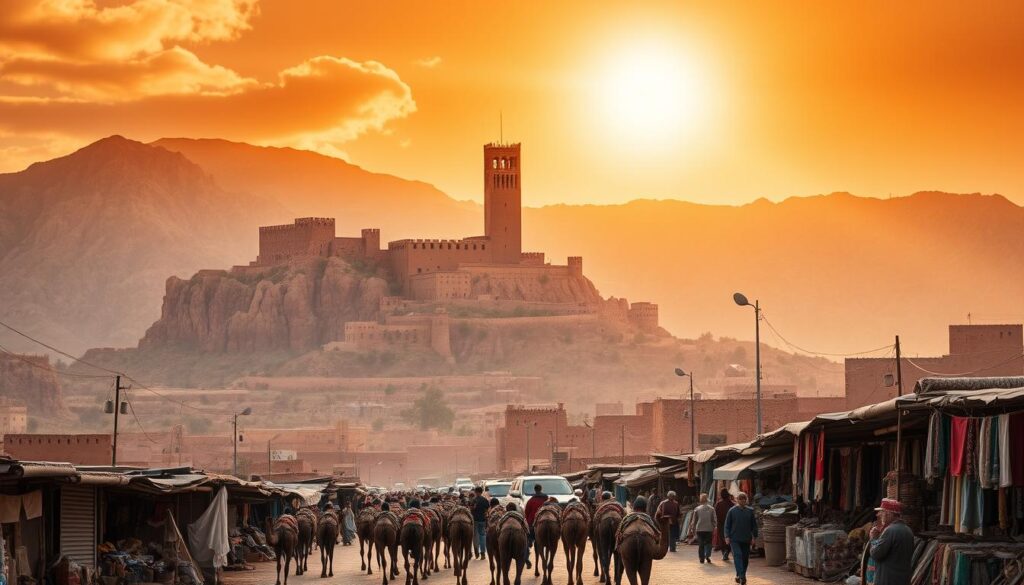
Exploring Morocco means diving into its history. This is crucial for understanding its culture. Morocco’s story is complex, with many cultures and civilizations adding to its heritage.
Ancient Berber Origins
The Berbers were Morocco’s first known people, dating back to around 2000 BCE. Their culture is known for resilience and adaptability. These traits have shaped Morocco’s identity.
The Berbers’ influence on Moroccan culture is still evident today. You can see it in their language, customs, and traditions.
Islamic Influence and Dynasties
Islam arrived in Morocco in the 7th century CE. This was a big change, bringing cultural and religious unity. Over the years, many dynasties rose and fell.
The Idrisid dynasty, founded in 788 CE, is especially notable. It established the first Islamic state in Morocco. This period mixed Islamic and Berber cultures, creating a unique blend.
“Morocco’s history is a testament to the country’s ability to absorb and integrate diverse influences, creating a distinct cultural identity.”
Colonial Period and Independence
Morocco was ruled by France and Spain in the late 19th and early 20th centuries. This had a big impact on its politics, economy, and society. Morocco gained independence from France in 1956, starting a new chapter in its history.
Modern Morocco and Its Global Position
Today, Morocco is a constitutional monarchy with a growing economy. It plays a big role in regional and global affairs. The country balances its rich history and culture with modernity and global influences.
Important Facts About Morocco’s Unique Cultural Identity
Exploring Morocco reveals a culture that mixes Berber, Arab, and European influences. This rich heritage shows in traditions, arts, and everyday life.
Berber, Arab, and European Influences
Moroccan culture is shaped by Berber and Arab roots, with European touches from the French. Berber culture is seen in language, customs, and traditional arts. Visit local markets or learn about Moroccan history to see this mix.
Traditional Arts and Crafts
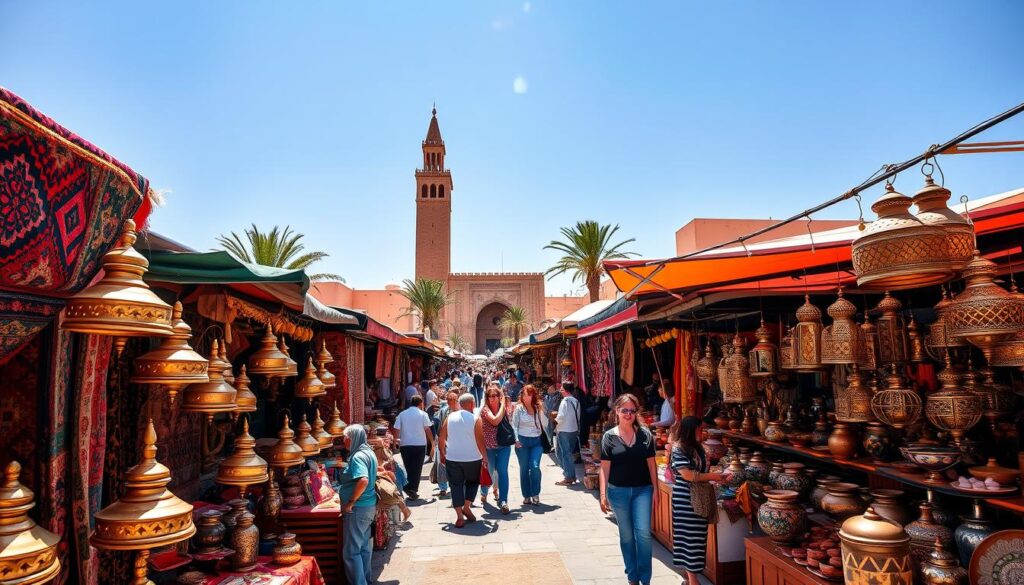
Morocco is famous for its traditional crafts like woodwork, pottery, and textiles. These skills are passed down, keeping designs and techniques unchanged. Some top crafts include:
- Zellij tile work
- Hand-woven carpets
- Intricate wood carvings
Music and Dance Traditions
Music and dance are key in Moroccan culture, with different styles in each area. The Gnawa people, for instance, have a unique music that combines Berber, Arab, and African sounds.
| Region | Traditional Music/Dance |
|---|---|
| North | Gnawa music |
| South | Berber folk dances |
Contemporary Moroccan Culture
Modern Moroccan culture is evolving, influenced by global trends and technology. Today’s art, literature, and music show a mix of old and new.
Getting to know Morocco’s culture makes your trip more meaningful. It lets you see the beauty of this unique country.
Essential Travel Logistics: Visa, Currency, and Documentation
To have a smooth trip to Morocco, know about visa, currency, and documents. These travel basics will make your journey easier.
Visa Requirements for American Travelers
As an American, you don’t need a visa for tourism or business in Morocco for up to 90 days. Your passport must be valid for at least six months after you leave. Always check the latest visa rules before you go, as they can change.
Currency and Money Matters
The official money in Morocco is the Moroccan dirham (MAD). While some places might take euros or US dollars, local currency is best. You can exchange your money at the airport or a bank.
Where to Exchange Money
Exchange your money at airports, banks, or currency offices. It’s smart to compare rates to find the best one. Don’t exchange at hotels, as they often charge more.
Credit Cards and ATMs
Major credit cards are accepted in tourist spots, hotels, and big restaurants. ATMs are everywhere, letting you get dirhams with your card. Watch out for foreign transaction fees.
Important Documents to Carry
Make sure you have a valid passport. Also, make photocopies of your passport, visa (if needed), and travel insurance. Leave a copy with someone you trust back home. It’s wise to have digital copies too.
Climate and Best Times to Visit Different Regions
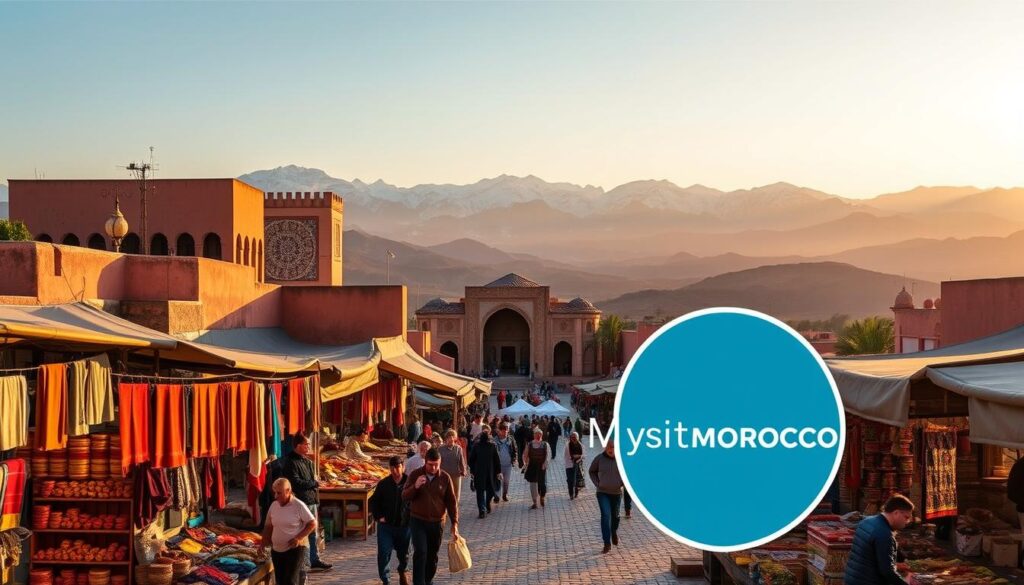
Morocco’s geography is diverse, leading to different climates in various regions. From the Sahara Desert to the Atlas Mountains, each spot has its own weather. This can affect your travel plans.
Seasonal Variations Across Morocco
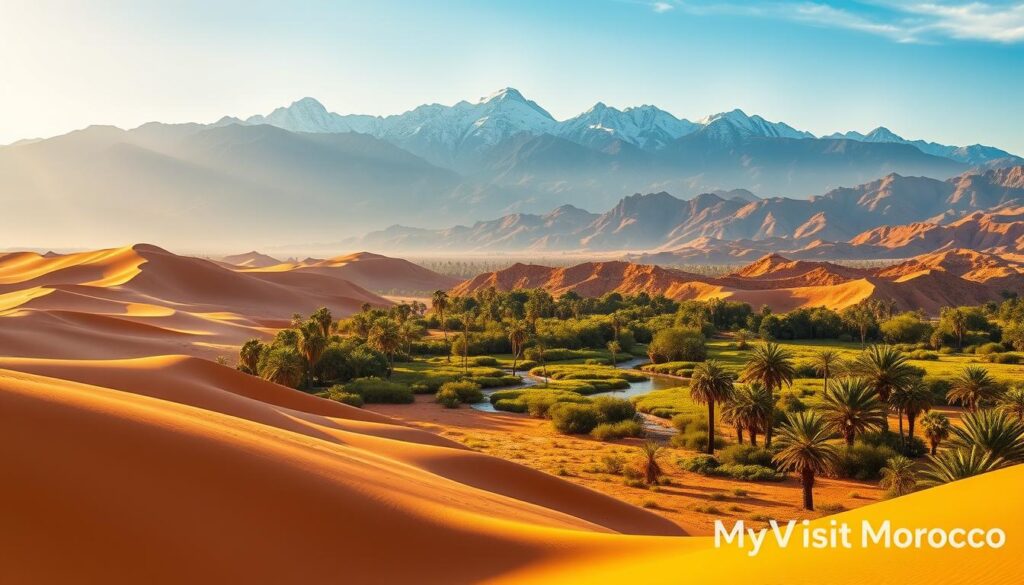
Morocco’s climate ranges from Mediterranean to desert. Coastal areas have mild winters and warm summers. The interior and desert are hot during the day and cold at night.
The Atlas Mountains have cold winters with snow. They’re perfect for winter sports.
Peak and Off-Peak Travel Periods
The best times to visit Morocco are spring (March to May) and autumn (September to November). The weather is nice in most places then. Summer is very hot, especially in the desert. Winters can be cool to cold, especially in the mountains.
Weather Considerations for Different Activities
Weather affects different activities. For desert trips, cooler months are better. Coastal visits are great in summer. Mountain trekking is best in spring and early autumn.
Desert Excursions
Desert trips are best from October to February. Avoid summer unless you’re ready for extreme heat.
Coastal Visits
Coastal spots like Casablanca and Essaouira are perfect for summer beach trips. The sea breeze keeps temperatures nice.
Mountain Trekking
Mountain trekking is best in spring and early autumn. The weather is mild, and trails are less crowded than in summer.
Knowing these seasonal changes and weather tips helps plan your Morocco trip. It ensures you enjoy your visit fully.
Safety Tips and Health Considerations
Before you head to Morocco, knowing the safety tips and health precautions is key. Morocco is safe for visitors, but knowing what to watch out for can make your trip better.
General Safety for Tourists
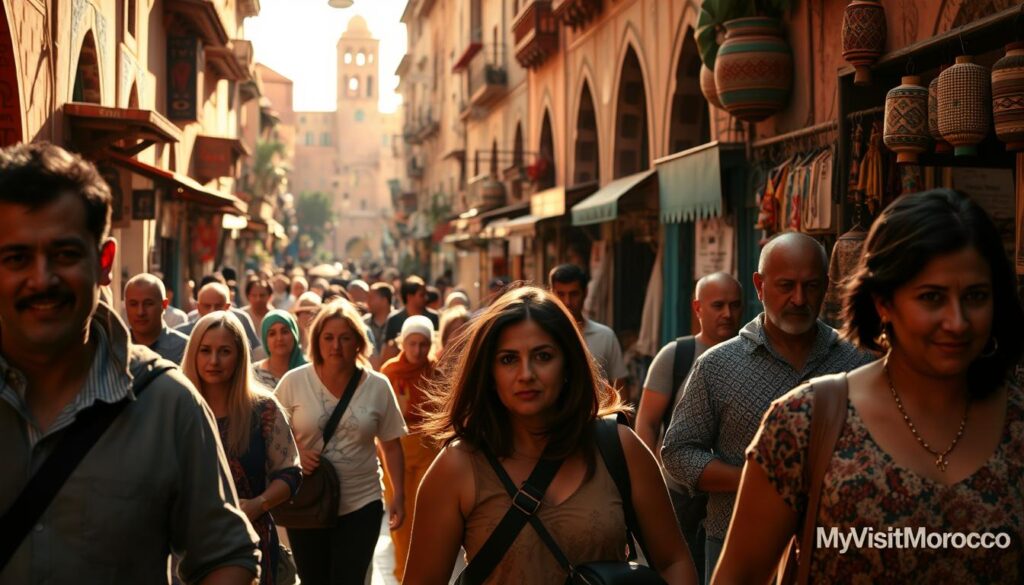
Morocco welcomes many tourists, and most places are safe. Still, keep an eye on your stuff, especially in busy spots like medinas and souks. Petty theft can happen, so keep valuables close and watch out for overly friendly people trying to steal your attention.
Women Travelers: Special Considerations
Women traveling alone might face catcalls or unwanted attention. Wearing modest clothes can help. It’s smart to avoid walking alone at night and stick to well-lit, busy areas. For more tips, check out travel health services.
Health Precautions and Medical Facilities
Make sure you’re current on all vaccinations before going to Morocco. You might need shots for hepatitis A and typhoid, depending on your plans. Morocco’s big cities have good hospitals, but rural areas might have limited care. Always have travel insurance that covers medical evacuations.
| Health Precaution | Description |
|---|---|
| Routine Vaccinations | Ensure all routine vaccinations are up-to-date before travel. |
| Hepatitis A and Typhoid Vaccinations | Consider these vaccinations based on your travel plans. |
| Travel Insurance | Have insurance that covers medical evacuations. |
Emergency Contacts and Services
In an emergency, knowing the right numbers is crucial. Morocco’s emergency number is 112 (or 19 for the police). Also, register with your country’s travel advisory to get safety updates.
By staying informed and taking precautions, you can have a safe and enjoyable trip to Morocco.
Language Guide: Arabic, Berber, French, and English
As you plan your trip to Morocco, learning the local languages can make your trip better. Morocco is known for its rich culture, shown through its languages. Arabic, Berber, French, and English are the main ones spoken.
Common Phrases to Know
Knowing basic phrases in Arabic and Berber can make talking to locals fun. Here are some key phrases to start with:
- Arabic: Hello – “Marhaba”, Thank you – “Shukraan”
- Berber: Hello – “Azul”, Thank you – “Tanmirt”
Communication Tips for Travelers
Many Moroccans speak French or English, especially in tourist spots. But, learning Arabic or Berber is still helpful. It shows respect for the culture and can lead to more real interactions.
Tip: A translation app can help, but internet might not always be available in rural areas.
Regional Language Variations
The language varies by region in Morocco. Berber languages are common in the Atlas Mountains and rural places. Arabic is spoken all over the country.
Language Apps and Resources
For learning languages, try apps like Google Translate or iTalki for Arabic and Berber. Also, having a phrasebook can be a good backup.
| Language | Common Phrase | Translation |
|---|---|---|
| Arabic | Marhaba | Hello |
| Berber | Azul | Hello |
| French | Bonjour | Good day |
| English | Hello | Hello |
Religion, Customs, and Etiquette
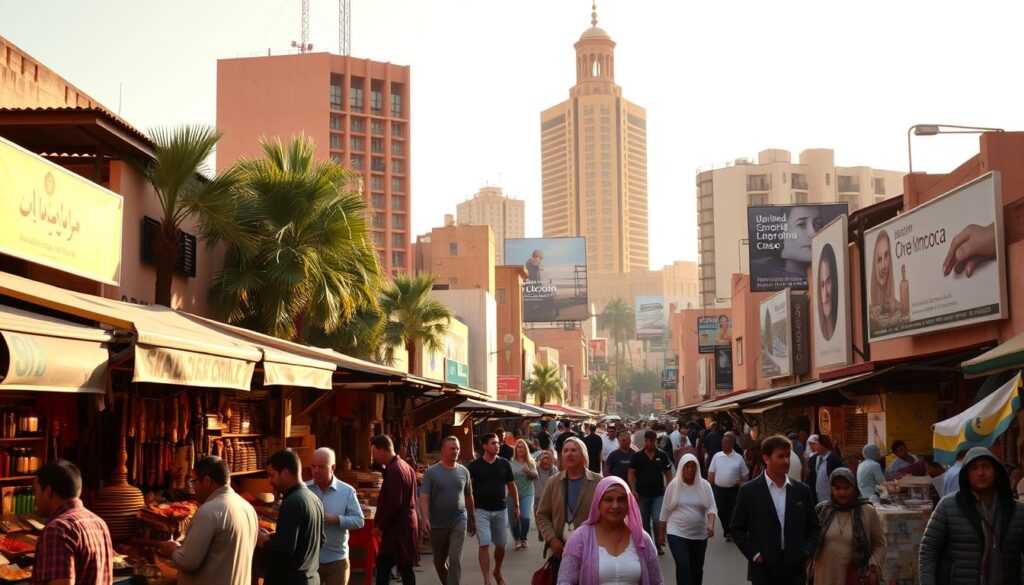
Before you head to Morocco, it’s important to know about the local customs and religious practices. Morocco is an Islamic country. It has a rich culture influenced by Arabs, Berbers, and Europeans.
Islamic Traditions and Practices
Morocco is mostly Muslim. Islamic practices are a big part of daily life. You’ll hear the call to prayer from minarets five times a day.
Some restaurants might close during prayer hours. It’s best to dress modestly, covering your shoulders and knees. This shows respect.
Visiting Morocco during Islamic events like Eid al-Fitr or Eid al-Adha is special. It lets you see local traditions and hospitality.
Ramadan: What Travelers Should Know
Ramadan is a holy month of fasting in Morocco. Many Muslims fast from dawn to sunset. As a traveler, be respectful of this.
Avoid eating, drinking, or smoking in public during the day. It’s considered impolite. Restaurants might be closed, but some offer private areas for non-Muslims.
Adjust your meal times to iftar (break-fast) and suhoor (pre-dawn meal). It’s a great way to enjoy local food and culture.
Dress Code and Behavior Guidelines
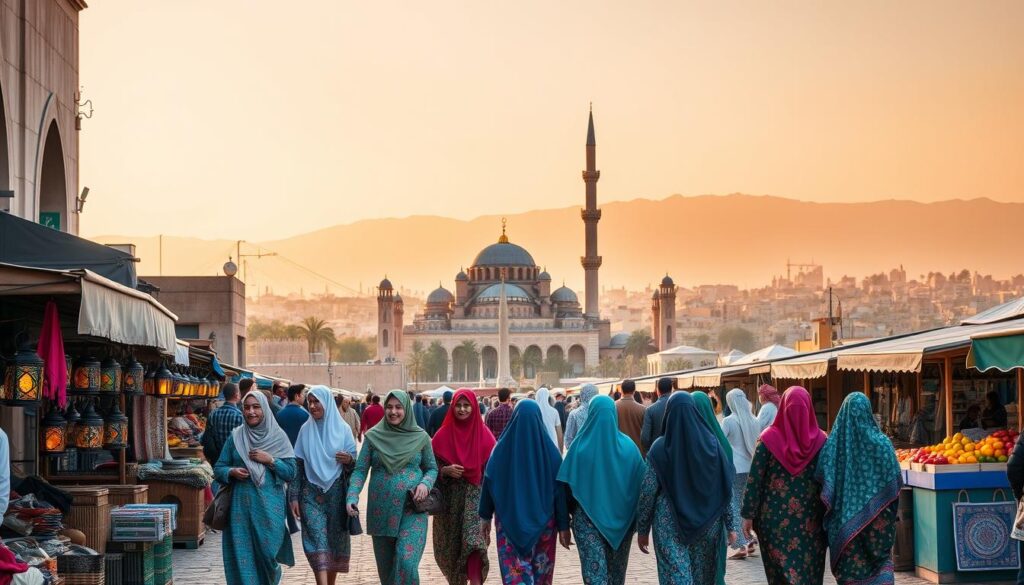
Morocco is conservative. Dress modestly, especially when visiting mosques or rural areas. Women should cover their shoulders and knees. Men should avoid shorts and sleeveless shirts.
Public displays of affection are not accepted. Avoid kissing or holding hands in public. Being aware of local norms makes your visit better.
Social Customs and Taboos
Knowing social customs is important for a respectful visit. Use your right hand when giving or receiving something. The left hand is considered unclean.
Remove your shoes before entering a mosque or a traditional home. It’s a sign of respect.
| Custom | Description |
|---|---|
| Greeting | Use a warm greeting like “As-salamu alaykum” (peace be upon you), and expect a similar response. |
| Dining Etiquette | Eat with your right hand, as using your left hand is considered impolite. |
| Respect for Elders | Show deference to older individuals, as age is highly respected in Moroccan culture. |
For more information on customs and etiquette in Morocco, visit My Visit Morocco. They offer valuable insights and tips for travelers.
Moroccan Cuisine: Flavors and Dining Etiquette
Moroccan cuisine is a mix of flavors from Africa, Europe, and the Arab world. It shows the country’s rich history and cultural mix. As you try Moroccan food, you’ll see how traditions blend together.
Signature Dishes and Ingredients
Moroccan food is known for its bold tastes and smells. It uses spices, herbs, and other ingredients. Tagines and couscous are two famous dishes.
Tagines and Couscous
Tagines are slow-cooked stews cooked in earthenware pots. They can have meat, poultry, or veggies, flavored with spices like cumin and cinnamon. Couscous is a staple made from semolina flour, often served with veggies and meat or sauce. Both are key to Moroccan cuisine and served on special days.
Mint Tea and Coffee Culture
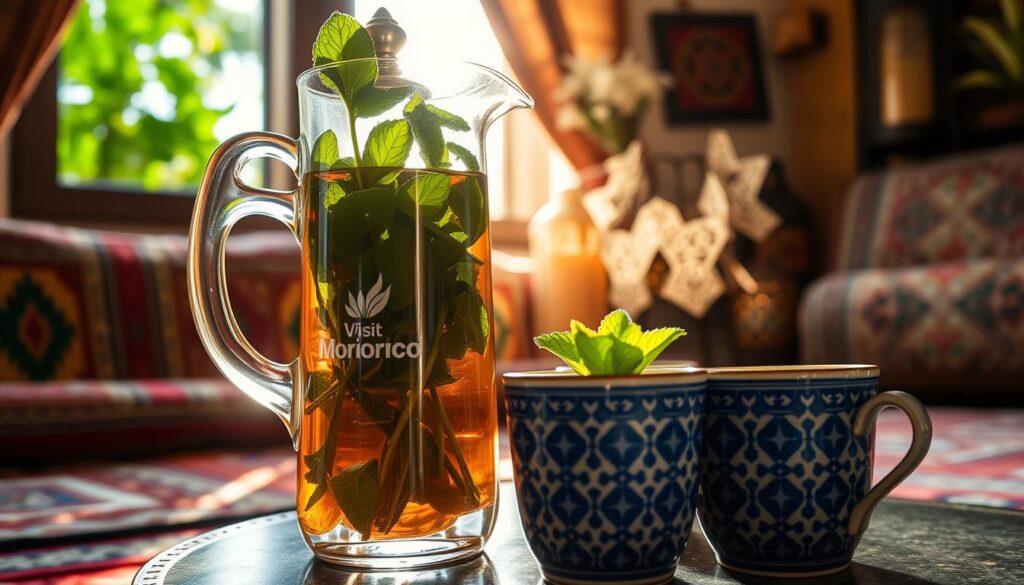
Mint tea and coffee are big in Morocco. Mint tea is a sign of welcome to guests. The way it’s made, pouring it from high to create a frothy top, is an art.
Street Food Safety
Street food is a big part of Moroccan cuisine, but safety matters. Choose vendors who are busy and have lots of customers. Make sure your food is cooked well and served hot.
Dining Customs and Restaurant Tips
When eating in Morocco, know some customs. Use your right hand to eat, as the left is seen as unclean. Wash your hands before and after eating. In restaurants, wait for the host to start eating before you do.
Dietary Restrictions and Vegetarian Options
While Moroccan food often has meat, there are many vegetarian options. Look for vegetable tagines and salads. If you have dietary needs, learning Arabic phrases helps. Many restaurants in tourist spots are welcoming to different diets.
Must-Visit Landmarks and Destinations
Morocco is full of exciting places to see, from lively cities to stunning natural spots. As you explore this beautiful country, you’ll find many landmarks and destinations. They show off Morocco’s rich history, diverse culture, and natural beauty.
Imperial Cities: Marrakech, Fes, Meknes, and Rabat
The imperial cities of Morocco are a must-see for travelers. Marrakech is famous for its colorful souks, beautiful buildings, and lively vibe. Fes is known for its ancient Fes el-Bali, a UNESCO World Heritage Site, and its medieval architecture.
Meknes and Rabat also offer a peek into Morocco’s history. They have impressive monuments and historic sites.
Coastal Gems: Casablanca, Essaouira, and Tangier
Morocco’s coastal towns are a highlight of any trip. Casablanca is a bustling city with a rich history and modern attractions. Essaouira is a charming town known for its beautiful beaches, arts scene, and seafood.
Tangier is a city that mixes Moroccan and international influences. It has a rich history and stunning coastal views.
Natural Wonders: Atlas Mountains and Sahara Desert
Nature lovers will love Morocco’s diverse landscapes. The Atlas Mountains offer stunning views, hiking, and traditional Berber villages. The Sahara Desert is a unique experience, with its vast sand dunes and starry skies.
UNESCO World Heritage Sites
Morocco has many UNESCO World Heritage Sites. These include the ancient city of Ait Benhaddou, the historic city of Essaouira, and the Medina of Fes. They show Morocco’s rich cultural heritage and architectural achievements.
Hidden Gems Off the Tourist Trail
For those who want to explore off the beaten path, Morocco has many hidden gems. Some include the Chefchaouen blue-painted town, the Ouzoud Falls, and the Tafraoute region. It’s known for its stunning rock formations and traditional villages.
| Destination | Description | Must-see Attractions |
|---|---|---|
| Marrakech | Vibrant city with rich history and culture | Jardin Majorelle, Bahia Palace, Djemaa el-Fna |
| Fes | Ancient city with well-preserved medieval architecture | Fes el-Bali, Al-Attarine Madrasa, Dar Batha Museum |
| Essaouira | Charming coastal town with beautiful beaches | Essaouira Medina, Skalla de la Ville, Taghazout Beach |
Transportation Options Within Morocco
Planning your trip to Morocco? Knowing the different ways to get around is key. Morocco has a wide range of transport options for every traveler.
Trains, Buses, and Grand Taxis
The ONCF train network is top-notch, linking cities like Marrakech, Fes, and Rabat. For shorter trips or rural areas, buses and grand taxis are your best bet. Check the ONCF website or local travel sites for more details.
| Mode | Operator | Route |
|---|---|---|
| Trains | ONCF | Major cities |
| Buses | Various | Urban and rural |
| Grand Taxis | Private operators | Short distances, rural |
Car Rental and Driving Tips
Car rental in Morocco lets you explore at your own speed. But, driving in cities can be tough. Get to know the local roads and rules.
Road Conditions and Rules
Moroccan roads range from smooth highways to bumpy rural paths. Always drive safely and follow local traffic laws.
Navigating Moroccan Cities
Cities like Marrakech and Fes have tight streets. Hiring a local driver or using GPS can help.
Internal Flights and Remote Transportation
For long trips or remote spots, internal flights are handy. Royal Air Maroc offers domestic flights. For the most remote places, local transport or guides are best.
“The best way to get to know Morocco is by exploring its diverse landscapes and experiencing its rich culture firsthand.”
Getting Around in Medinas
Medinas are tricky to navigate with their narrow streets. Walking with a local guide is often the best way. For tips on medinas and more, check My Visit Morocco.
Shopping, Bargaining, and Souvenirs
Shopping in Morocco is a journey through colors, scents, and textures. It’s a world that captures the senses. You’ll find a treasure trove of traditional crafts and unique souvenirs in the bustling souks.
Navigating the Souks
The souks in Morocco are like a maze. But with patience, they become a treasure trove of unique items. Start by getting familiar with the layout and don’t hesitate to ask for directions. Locals are friendly and happy to help.
The Art of Bargaining
Bargaining is key in Morocco. It’s not just about the price; it’s about respect and understanding the culture. Begin by offering half of what the vendor says, and be ready to negotiate. Showing interest and smiling can help a lot.
“The art of bargaining is a dance, a delicate balance between buyer and seller.”
Traditional Crafts and Souvenirs
Morocco is known for its traditional crafts. You’ll find carpets, pottery, ceramics, and leather goods. Each region has its own specialties, so explore different areas for unique souvenirs.
Carpets and Textiles
Moroccan carpets are famous for their patterns and colors. Look for authentic pieces that show local craftsmanship. Textiles like woven blankets and embroidered clothes are also great souvenirs.
Pottery and Ceramics
Moroccan pottery and ceramics are beautiful and functional. Find pieces that are handmade and unique. The colors and designs often tell the story of the region’s culture.
Leather Goods
Morocco is known for its leather goods, from handbags to belts. High-quality leather items showcase Moroccan craftsmanship. Make sure to check the quality and negotiate the price.
Shipping Items Home
After buying, think about how to get your items home. Many shops offer shipping, but agree on the details and costs first. Check with your airline for any shipping restrictions before you buy.
Accommodation Guide: From Riads to Desert Camps
Morocco has a wide range of places to stay, from lively medinas to peaceful deserts. You can find luxury, budget-friendly options, or something truly unique.
Traditional Riads and Their Unique Appeal
Riads are a key part of Moroccan architecture, offering a luxurious and authentic stay. These beautifully decorated homes have detailed tile work, calm gardens, and great service. Staying in a riad lets you dive into Moroccan culture.
Hotels and Resort Options
If you prefer modern comforts, Morocco’s hotels and resorts are perfect. You can choose from luxury five-star resorts in Marrakech to cozy hotels by the sea. Many places have amazing views, spas, and top-notch dining.
| Accommodation Type | Location | Features |
|---|---|---|
| Riads | Marrakech, Fes | Traditional architecture, personalized service |
| Hotels | Major cities, coastal towns | Modern amenities, spas, fine dining |
| Desert Camps | Sahara Desert | Unique desert experience, camel rides, stargazing |
Budget Accommodations and Hostels
For those watching their budget, Morocco has many affordable choices. You can find hostels in big cities or guesthouses in the countryside. These places are great for meeting new people and experiencing local hospitality.
Unique Stays: Desert Camps and Mountain Lodges
For a memorable stay, try a desert camp or mountain lodge. Desert camps offer glamping under the stars, camel rides, and desert adventures. Mountain lodges provide a cozy spot in beautiful nature.
Booking Tips and Considerations
When booking, think about location, amenities, and what others say. Booking early is smart, especially when it’s busy. Looking around and comparing can help you pick the best place for your trip.
Conclusion: Embracing the Magic of Morocco
Planning your trip to Morocco means starting an adventure filled with vibrant culture and stunning landscapes. You’ll experience the bustling souks of Marrakech and the peaceful Sahara Desert. Morocco promises to amaze your senses and create memories you’ll always treasure.
Morocco is a unique destination with a rich history and diverse geography. Exploring its cities, coastlines, and natural wonders will reveal the true essence of travel here. Whether you’re shopping in souks, trying local food, or enjoying the hospitality, every moment is special.
Before diving into Morocco, be open-minded, respectful, and prepared. With the right attitude and knowledge, you’ll fully enjoy the country’s beauty and magic. Morocco awaits you with open arms, ready to enchant you.



 Covers cities, coast, mountains, desert & food