
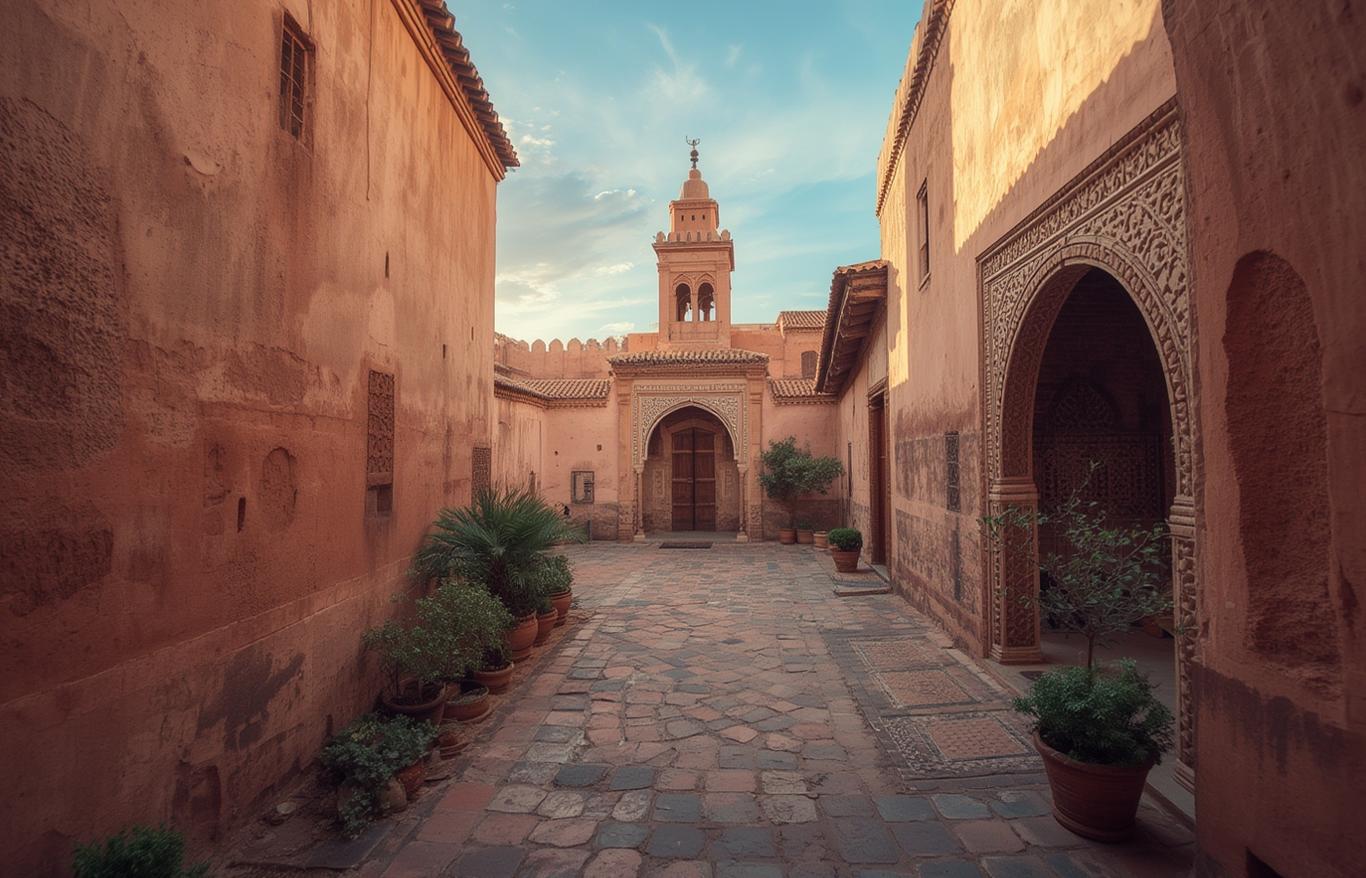
Walking into marrakech the city for the first time feels like stepping through a portal where centuries collide in the most enchanting way. The scent of spices drifts through narrow alleys while motorbikes zip past donkey carts, and beyond the ancient medina walls, sleek rooftop bars overlook the Atlas Mountains. This isn’t a city frozen in time or completely surrendered to modernity—it’s something far more compelling. Marrakech pulses with a rare energy that bridges medieval traditions and contemporary cosmopolitan life, creating an urban experience unlike anywhere else in Morocco.
The Living Heart of Marrakech: Jemaa el-Fnaa and Its Magnetic Pull
At the center of marrakech the city sits Jemaa el-Fnaa, a UNESCO-recognized square that transforms throughout the day like a living theater. Mornings bring fresh orange juice vendors setting up their carts in neat rows, their colorful displays catching the soft morning light. By afternoon, snake charmers unfurl their baskets while henna artists arrange their stools under sun umbrellas. When evening arrives, the square erupts into its most dramatic form—dozens of food stalls materialize in organized chaos, steam rising from tagines as storytellers gather crowds in Arabic, speaking in animated gestures that transcend language barriers.
This isn’t a tourist fabrication. Local families come here to eat, young Moroccans meet friends for tea, and the Marrakchis themselves navigate the square with the same fascination visitors feel. Standing in Jemaa el-Fnaa at sunset, with the call to prayer echoing from the Koutoubia Mosque and the food smoke creating a hazy glow, you understand why marrakech the city captivates so completely. The square serves as the city’s emotional anchor, the place where all neighborhoods eventually lead and where Marrakech’s essence condenses into one overwhelming sensory experience.
Navigating the Medina: Where Getting Lost Is Part of the Discovery
The medina sprawls around Jemaa el-Fnaa in a deliberately confusing maze of souks, residential derbs (narrow lanes), and hidden riads. Unlike the grid patterns of newer cities, marrakech the city designed its old quarters without straight lines or obvious logic. This labyrinth wasn’t accidental—the winding passages offered defensive advantages centuries ago and now create the medina’s distinctive character.
The Marrakech souks divide themselves by craft and trade. Souk Semmarine leads into the covered markets where leather babouches hang in rainbow towers, metalworkers hammer copper lanterns, and carpet sellers brew mint tea while unrolling Berber rugs. Each souk specializes: Souk Haddadine for blacksmiths, Souk Chouari for woodworkers, Souk Sebbaghine for dyers. Walking deeper, you’ll stumble upon fondouks—centuries-old merchant inns now converted into artisan workshops where craftsmen work using techniques unchanged for generations.
Navigation here requires surrendering control. Google Maps struggles with these tight passageways, and asking directions often leads to friendly locals walking you partway before pointing vaguely ahead. First-time visitors should embrace this disorientation. The medina reveals itself slowly—a carved wooden door here, a hidden fountain there, a rooftop terrace café appearing unexpectedly after climbing unmarked stairs. This discovery process defines the marrakech the city experience more authentically than any mapped route.

Beyond the Walls: Gueliz and the Contemporary Marrakech Identity
Cross through Bab Nkob or take Avenue Mohammed V westward, and marrakech the city transforms completely. Gueliz, the French-built new town, operates on a different rhythm. Wide boulevards replace narrow alleys, European-style cafés serve cappuccinos alongside Moroccan pastries, and boutiques sell contemporary Moroccan design rather than traditional crafts. This isn’t generic modernization—Gueliz represents how Marrakech evolved without abandoning its identity.
The neighborhood centers around Avenue Mohammed V, where locals do their everyday shopping at Carrefour, grab quick meals at sandwich shops, and meet friends at French-Moroccan bistros. Rue de la Liberté branches off with art galleries showcasing Moroccan contemporary artists, concept stores mixing traditional zellige tiles with modern furniture, and the occasional hammam offering spa treatments rather than the scrub-down experience of neighborhood bath houses.
This side of marrakech the city matters because it’s where you see how Marrakchis actually live beyond the tourism economy. University students gather at cafés with laptops, families stroll through Harti Garden on weekends, and the Cinema Colisée still shows films despite the rise of multiplexes. Gueliz doesn’t compete with the medina’s romance—it complements it, showing that Marrakech isn’t preserved in amber but continues growing and changing while respecting its foundations.
The Palaces, Gardens, and Monuments That Define Marrakech’s Grand Past
Marrakech the city accumulated architectural treasures across different dynasties, each leaving monuments that now define the skyline and visitor experience. The Koutoubia Mosque’s 77-meter minaret dominates views across the medina, its proportions so perfect that it inspired Seville’s Giralda and Rabat’s Hassan Tower. Non-Muslims can’t enter, but the surrounding gardens offer peaceful spots to appreciate the 12th-century craftsmanship.
The Bahia Palace captures the opulence of late 19th-century Morocco with its succession of courtyards, decorated chambers, and intricate zouak painted ceilings. Unlike European palaces with their linear grandeur, Bahia unfolds asymmetrically—rooms lead to gardens that open to more rooms, creating an intimate maze of luxury. The Saadian Tombs, sealed for centuries and rediscovered in 1917, house elaborate mausoleums where 16th-century royalty rest under stalactite plasterwork so detailed it seems impossible by hand.
For respite from urban intensity, Jardin Majorelle offers a completely different atmosphere. Yves Saint Laurent’s restoration transformed this botanical garden into an art deco oasis painted in striking cobalt blue. The bamboo groves, cactus gardens, and burbling fountains create a microclimate several degrees cooler than the surrounding streets—particularly welcome during summer. The attached Berber Museum and YSL Museum add cultural depth, showing how marrakech the city influenced global fashion and design.

The Flavor Map: How Marrakech Eats, From Street Carts to Riad Restaurants
Food in marrakech the city operates on multiple levels simultaneously. The bottom tier—and often the most delicious—exists at street level. Morning starts with bessara (fava bean soup) ladled from giant pots at medina corner stalls, eaten standing up with olive oil drizzled on top and bread for dipping. Lunch might be maakouda (potato fritters) sandwiched into fresh khobz, or a bowl of harira at a hole-in-the-wall that’s served the same recipe for forty years.
The Jemaa el-Fnaa food stalls offer their own experience. Stall 14 might be famous for sheep’s head, stall 32 for snail soup, stall 1 for mixed grills. Locals have favorites and will argue passionately about which makes the best mechoui or brochettes. Tourists often worry about safety, but these stalls feed Marrakchis nightly—just choose busy ones where locals eat and avoid anything that looks like it’s been sitting too long.
Mid-range restaurants cluster around Rue Riad Zitoun el-Jdid and scattered throughout Gueliz. Places like Café des Épices blend traditional Moroccan dishes with modern presentation, serving bastilla with less sugar or tagines with seasonal vegetables. The rooftop trend transformed eating in marrakech the city—terraces like Nomad or Café Arabe offer medina views alongside creative menus that respect tradition while experimenting with flavors.
At the luxury end, riads converted into restaurants create intimate dining experiences. Dar Yacout feels like eating in a private palace, while Le Jardin combines garden ambiance with refined Moroccan cuisine. These aren’t tourist traps—wealthy Moroccans celebrate special occasions here, and the cooking often represents the height of regional culinary achievement.
Practical Rhythms: Getting Around and Timing Your Marrakech Experience
Marrakech the city doesn’t require complex transport planning. The medina itself is pedestrian-only, meaning walking dominates. Comfortable shoes matter more than any other preparation—you’ll cover miles on uneven cobblestones. When your feet need relief, petit taxis (small beige cabs) operate throughout the city. They’re metered, though drivers sometimes “forget” to turn meters on for tourists. Insist on the meter or agree on a price before departing. Expect 20-30 dirhams for cross-town trips.
Between the medina and Gueliz, walking takes about 25 minutes or a 15-dirham taxi ride. Some visitors rent bicycles, though traffic and medina crowds make this more challenging than it sounds. Calèches (horse-drawn carriages) circle Jemaa el-Fnaa offering rides, popular for evening tours around the walls or to Majorelle Gardens, though animal welfare concerns lead some visitors to avoid them.
Timing shapes the marrakech the city experience significantly. Summer (June-August) brings intense heat—40°C days are common—making midday exploration exhausting. Most visitors come during spring (March-May) or fall (September-November) when temperatures hover pleasantly in the 20s. Winter (December-February) sees cool evenings requiring layers, but daytime remains comfortable. Ramadan adds another dimension—many restaurants close during daylight, the atmosphere becomes more subdued, then erupts into celebration after sunset.
The daily rhythm follows Islamic prayer times. Shops open late (10am or later), close for long lunch breaks, reopen around 3pm, then stay open until 8pm or later. Restaurants serve dinner late by Western standards—many Moroccans don’t eat until 9pm or 10pm. Jemaa el-Fnaa reaches peak energy around 8pm when the food stalls hit full operation and the evening crowds arrive.
Staying in Marrakech: The Riad Experience and Accommodation Choices
Where you sleep in marrakech the city profoundly affects your experience. Riads—traditional houses built around interior courtyards—now dominate medina accommodation. These converted homes offer intimate atmospheres, often just five to ten rooms, with rooftop terraces for breakfast and evening relaxation. Staying in a riad means living inside the medina’s fabric, hearing the morning call to prayer, falling asleep to distant Jemaa el-Fnaa sounds, and navigating the souks to reach your front door.
The riad choice matters. Some occupy quiet residential derbs where only the occasional donkey cart passes, offering peaceful retreats. Others sit closer to Jemaa el-Fnaa, trading some tranquility for convenience. Riads range from budget options (simple rooms, shared terraces) to luxury properties (private plunge pools, spa services, personal staff). The best ones feel like staying in a Moroccan home, with owners or managers who know the medina intimately and guide guests beyond tourist circuits.
Outside the medina, Gueliz and Hivernage offer conventional hotels from international chains to Moroccan boutique properties. These provide modern amenities—reliable air conditioning, gyms, pools—but sacrifice the atmospheric immersion of medina living. For longer stays or those who find the medina overwhelming, these neighborhoods offer easier parking, predictable layouts, and nearby supermarkets.
Palmerie, north of the city center, hosts resort properties set among palm groves. These work better for travelers wanting a Marrakech base while spending days on golf courses, by pools, or on day trips rather than exploring marrakech the city itself intensively.

Conclusion
Marrakech the city succeeds where many destinations fail—it hasn’t sacrificed authenticity for tourism or rejected modernity to preserve tradition. Instead, it exists as both simultaneously. The medina operates much as it did centuries ago while adapting to contemporary needs. Gueliz demonstrates how Morocco progresses without becoming generic. The souks sell to tourists and locals alike, craftsmen work alongside commerce, and daily life continues around visitor flows rather than being displaced by them.
This dual nature means Marrakech rewards different traveler styles. Those seeking exotic immersion find endless labyrinthine exploration, traditional hammams, and mint tea sipped on carpet shop cushions. Visitors wanting contemporary comfort discover stylish riads, modern restaurants, and cultural institutions. The city doesn’t force a choice—it offers layers, letting each person find their own Marrakech within the larger whole. Whether you’re drawn by the marrakech the city romance of ancient souks or the energy of a modern Moroccan metropolis, both versions exist authentically, often separated by a single doorway or a short walk between neighborhoods. That rare combination explains why Marrakech captivates first-time visitors and keeps drawing people back, always revealing something previously hidden in its beautiful complexity.
FAQs
How many days should I spend in Marrakech to experience the city properly?
Three to four full days allow enough time to explore the medina thoroughly, visit major monuments like Bahia Palace and Saadian Tombs, experience the souks and Jemaa el-Fnaa at different times of day, and venture into neighborhoods like Gueliz. Two days feels rushed, while five to seven days lets you settle into Marrakech’s rhythm, take a day trip to the Atlas Mountains or Essaouira, and discover quieter corners beyond main attractions. The city rewards slower exploration—rushing between sites misses the atmosphere that makes Marrakech special.
Is it safe to walk around Marrakech at night?
The medina and main tourist areas remain generally safe after dark, with significant foot traffic continuing late into evening, especially around Jemaa el-Fnaa which becomes more lively at night. However, poorly lit residential derbs can feel disorienting, and it’s wise to use major thoroughfares or taxis when returning to your accommodation late. Petty theft occurs more commonly than violent crime, so remain aware of belongings in crowded areas. Women may receive more attention in the evening, though staying in busier areas and projecting confidence helps. Gueliz functions like any modern city center with normal urban precautions.
What should I know about bargaining in the Marrakech souks?
Bargaining is expected and considered part of the shopping interaction, not an insult to sellers. Initial asking prices often start at two to three times the seller’s actual target, sometimes more for obviously foreign buyers. Start by offering 40-50% of the asking price and negotiate from there. The process should feel friendly—aggressive or hostile bargaining indicates you’re probably too far apart on price. Walking away often brings sellers down significantly; if they let you leave, your offer was likely too low. Don’t bargain unless genuinely interested in buying, and remember that craftsmen deserve fair payment for skilled work.
Can I visit Marrakech during Ramadan or should I avoid this period?
Visiting during Ramadan offers unique cultural insights as the city takes on different rhythms—quieter, more contemplative days followed by celebratory evenings after iftar (fast-breaking). Many restaurants close during daylight hours, though tourist-oriented places often stay open discreetly. After sunset, special Ramadan foods appear, families gather in festive moods, and the atmosphere becomes particularly warm. Travelers should eat and drink discretely during fasting hours out of respect. Services continue normally, monuments remain open, and hotels serve breakfast to guests. If you’re curious about Islamic traditions and don’t mind adjusted restaurant hours, Ramadan can enhance rather than hinder your Marrakech experience.



 Covers cities, coast, mountains, desert & food