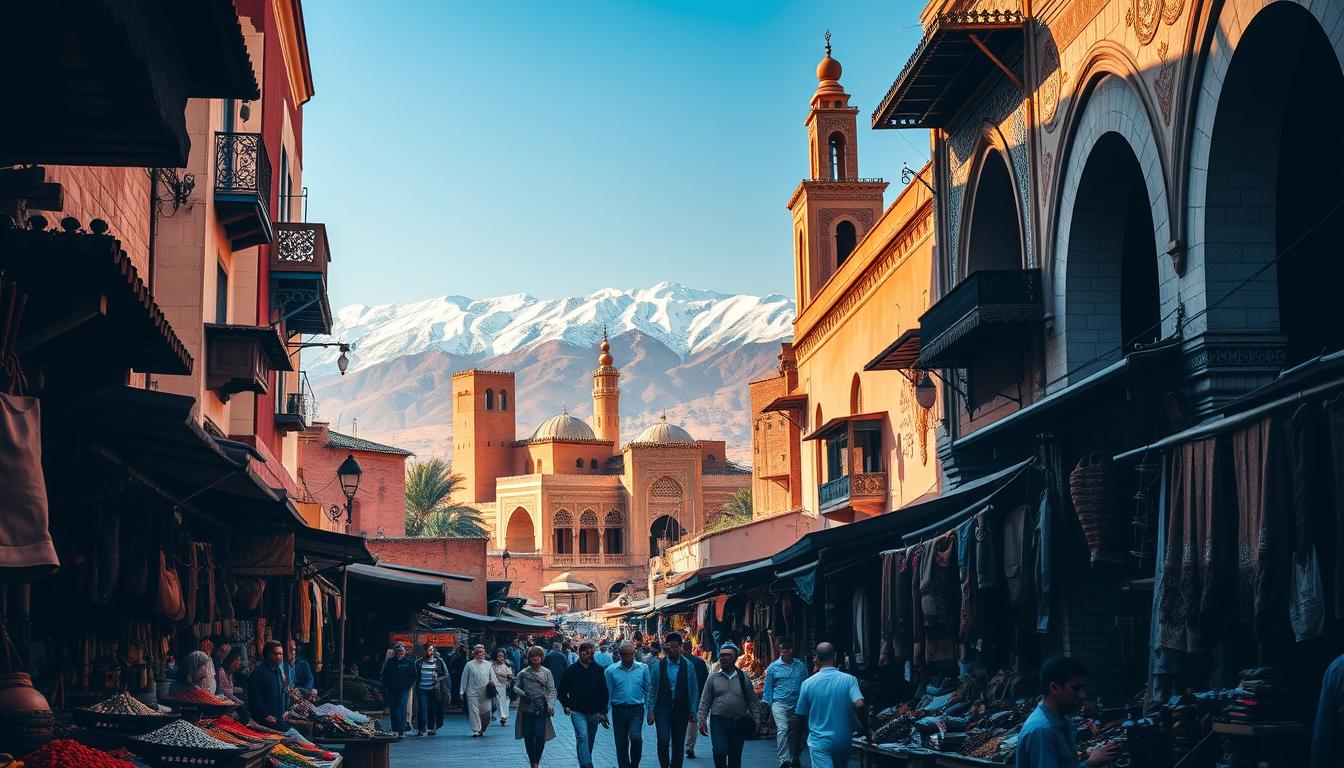
Exploring Morocco reveals a world of colorful cities. Each city has its own story and beauty. From old medinas to new cities, Moroccan cities are full of places to see.
For example, Marrakech is famous for its lively souks and the Jardin Majorelle. Fes is known for its maze-like medina and old madrasas. Each city offers a special experience, showing Morocco’s rich culture.
Key Takeaways
- Discover the vibrant souks and historical landmarks of Marrakech.
- Explore the ancient medina and madrasas of Fes.
- Visit the Hassan II Mosque in Casablanca, one of the few mosques open to non-Muslim visitors.
- Experience the relaxed atmosphere and blue-painted buildings of Chefchaouen.
- Enjoy the coastal views and historic Kasbah of Tangier.
The Cultural Tapestry of Morocco’s Ancient Kingdoms
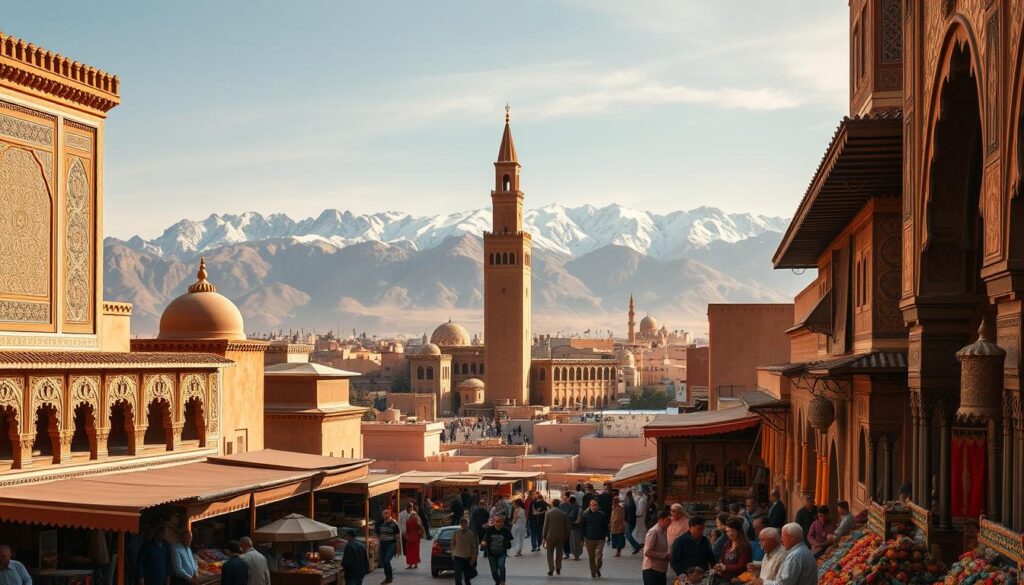
Exploring Morocco reveals a complex mix of cultures. This mix comes from centuries of history. Morocco sits at the crossroads of Africa, Europe, and the Arab world, making it a unique blend of influences.
The Berber, Arab, and European Heritage
Morocco’s culture is a rich mix of Berber, Arab, and European influences. The Berber culture, native to the region, has been shaped by Arab and European elements. This mix is seen in the language, cuisine, and architecture of Morocco.
You can see this diversity in the vibrant cities and historical sites across Morocco.
Four Imperial Cities and Their Historical Significance
Morocco has four imperial cities: Marrakech, Fez, Meknes, and Rabat. Each city has its own unique character and history. Marrakech is famous for its souks and rich culture. Fez is known for its medieval architecture.
Meknes has impressive historical monuments. Rabat is known for its elegant capital city charm. Visiting these cities gives a glimpse into Morocco’s past and its lasting cultural legacy.
Marrakech: The Vibrant Red City
As you enter Marrakech, you feel the city’s lively energy. It’s a place full of culture, history, and amazing buildings. You’ll be amazed and want to see more.
Jemaa el-Fnaa: The Heart of Moroccan Culture
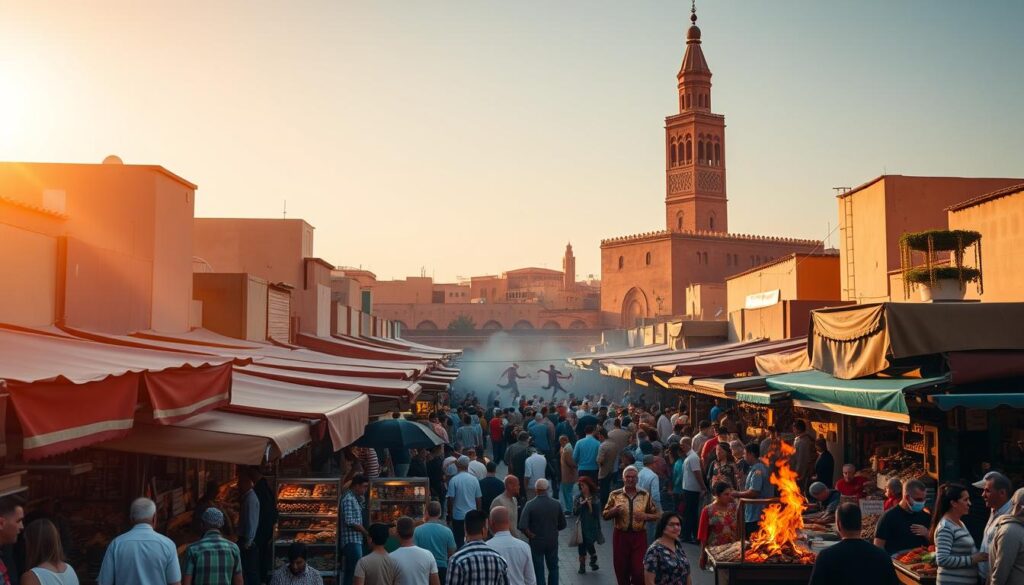
Jemaa el-Fnaa is Marrakech’s lively center. It’s a square filled with street performers, food, and vendors. At night, it turns into a place of music, dance, and fun. You can wander the alleys, try local food, and enjoy the atmosphere.
Palaces and Gardens: Bahia Palace and Majorelle Garden
Marrakech has beautiful palaces and gardens. The Bahia Palace is a work of art with stunning tile work and wood. The Majorelle Garden is a peaceful place with exotic plants and blue buildings. Seeing these places is a must in top cities to visit in Morocco.
| Attraction | Description |
|---|---|
| Bahia Palace | 19th-century palace showcasing Islamic craftsmanship |
| Majorelle Garden | Tranquil garden featuring exotic plants and blue architecture |
The Medina’s Labyrinthine Souks and Hidden Riads
The Medina of Marrakech is a maze of alleys and markets. You can find traditional crafts and souvenirs here. You’ll also find hidden riads that show the city’s architectural beauty. Exploring the Medina is an adventure you won’t forget, making Marrakech a popular city in Morocco.
Marrakech has something for everyone. It’s full of culture, history, and natural beauty. Whether you love history, architecture, or just the vibe, Marrakech will inspire you.
Fez: The Medieval Intellectual Capital
Fez is a city that shows off Morocco’s rich culture. Its ancient medina and landmarks are a treasure trove of history and culture.
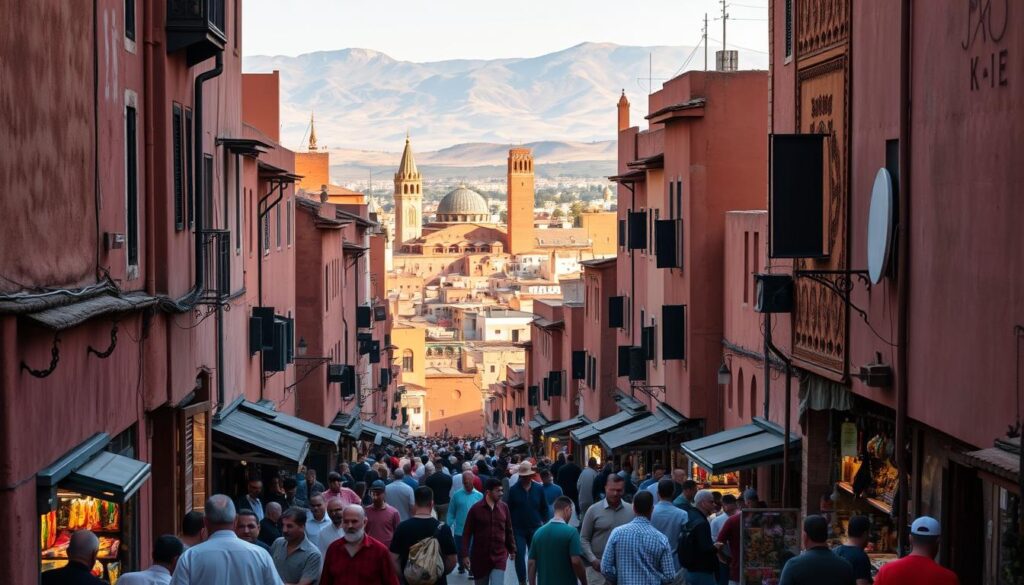
Fez el-Bali: The World’s Largest Car-Free Urban Area
Fez el-Bali is the old medina of Fez. It’s a car-free area, a maze of streets and alleys. Here, you’ll find souks, monuments, and crafts.
Walking through Fez el-Bali feels like stepping back in time. You get to see the city’s medieval charm up close.
Al-Qarawiyyin: The Oldest University in the World
At the heart of Fez is Al-Qarawiyyin, the oldest university in the world. Founded in 859 AD, it’s a hub of learning. Scholars from all over the Islamic world have studied here.
Today, Al-Qarawiyyin is a key cultural and historical site. It shows Fez’s importance as a medieval intellectual center.
The Famous Tanneries and Traditional Crafts
Fez is famous for its tanneries, where leather is made the old way. You can see workers preparing hides using ancient techniques. This gives a glimpse into a centuries-old craft.
Fez is also known for its traditional crafts. You can find woodworking, pottery, and weaving here. These crafts add to the city’s rich cultural heritage.
Casablanca: Where Tradition Meets Modernity
Casablanca is Morocco’s economic heart, blending history with modern style. Exploring this city, you’ll see a mix of old traditions and new trends.
Hassan II Mosque: Architectural Masterpiece by the Sea
The Hassan II Mosque is a top spot in Casablanca and Morocco. It’s not just a mosque but a symbol of Morocco’s culture. Its detailed stone work, mosaics, and tall minaret make it a wonder to see.
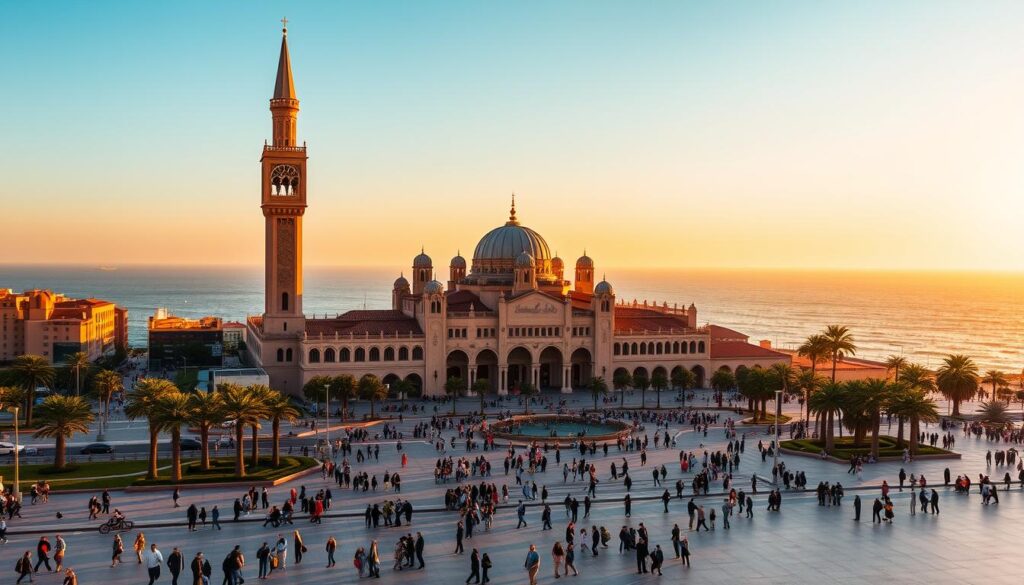
Mohammed V Square and Art Deco Buildings
Mohammed V Square is Casablanca’s historic heart. It’s surrounded by Art Deco buildings, showing the city’s architectural past. The square buzzes with life, offering cafes, shops, and street shows. It’s where old meets new.
The Old Medina and Contemporary Moroccan Life
Though smaller than other medinas, Casablanca’s old medina is rich in history and culture. It has traditional souks, landmarks, and artisans. Exploring here, you’ll understand modern Moroccan life and its roots.
| Landmark | Description | Significance |
|---|---|---|
| Hassan II Mosque | Architectural masterpiece with intricate stone carvings and mosaics | Iconic landmark and place of worship |
| Mohammed V Square | Historic center with Art Deco buildings and vibrant atmosphere | Hub of local activity and cultural significance |
| Old Medina | Traditional souks and historic landmarks | Glimpse into Morocco’s rich history and cultural heritage |
Rabat: The Elegant Capital City of Morocco
When you arrive in Rabat, you’re greeted by its elegant charm and rich history. This city is filled with historical sites, cultural experiences, and stunning architecture. It’s a top spot to visit in Morocco.
Kasbah of the Udayas: Fortress with Ocean Views
The Kasbah of the Udayas is a historic fortress with amazing views of the Atlantic Ocean. Its layout, streets, and gardens are all beautiful. You can visit museums, see local crafts, or enjoy the views.
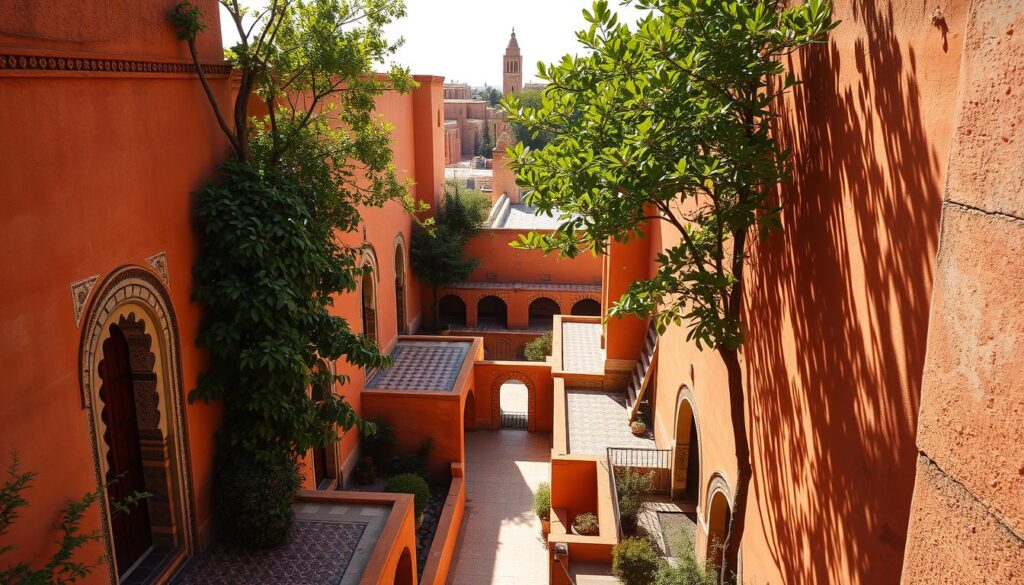
Hassan Tower and Mausoleum of Mohammed V
Rabat is home to the famous Hassan Tower, a minaret from the 12th century. Next to it is the Mausoleum of Mohammed V, a modern marvel. For more info on visiting, check The Times’ guide to Rabat.
Chellah: Roman Ruins and Islamic Necropolis
Chellah is a site that shows Rabat’s history, with Roman ruins and an Islamic necropolis. Exploring it, you’ll see how the city has changed over time. It’s a peaceful and historic place to visit.
| Attraction | Description | Must-see Features |
|---|---|---|
| Kasbah of the Udayas | Historic fortress with ocean views | Panoramic views, charming streets, local handicrafts |
| Hassan Tower | 12th-century minaret | Historical significance, architectural beauty |
| Chellah | Roman ruins and Islamic necropolis | Historical layers, serene atmosphere |
Chefchaouen: The Mesmerizing Blue City
Chefchaouen’s blue architecture is a sight to behold. It shows the city’s rich culture. Walking its blue streets, you’ll learn about the local culture and history.
The Mystery Behind the Blue-Washed Streets
The blue color came from Jewish refugees in the 1930s. They painted their homes blue to symbolize heaven. Now, the whole city wears this blue, creating a unique and peaceful look.
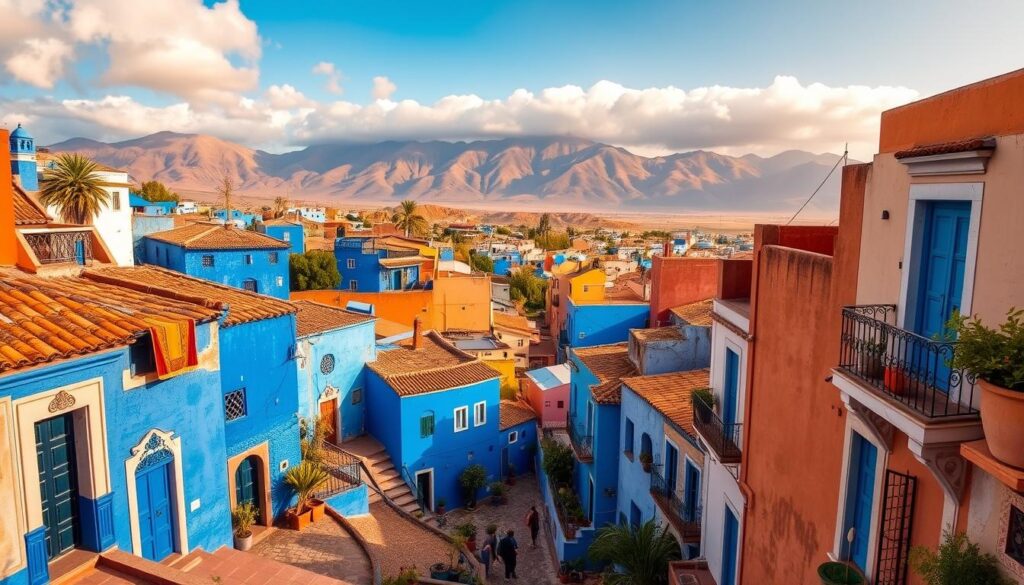
Plaza Uta el-Hammam and the Kasbah Museum
Plaza Uta el-Hammam is the city’s heart. It’s filled with cafes, shops, and historic buildings. The Kasbah Museum nearby shows the city’s history through crafts, weapons, and artifacts.
Artisanal Crafts and Mountain Excursions
Chefchaouen is famous for its crafts like weaving, pottery, and woodwork. You can find these in local workshops and markets. The city is also a great place for mountain trips, offering stunning views.
| Activity | Description | Location |
|---|---|---|
| Explore Blue Streets | Wander through Chefchaouen’s blue-washed streets | Chefchaouen City |
| Visit Kasbah Museum | Discover historical artifacts and traditional crafts | Plaza Uta el-Hammam |
| Mountain Excursions | Enjoy hiking and breathtaking views | Rif Mountains |
For more information on exploring Chefchaouen and its surroundings, visit Trip.com to plan your trip and discover the best experiences the city has to offer.
Tangier: The International City at Africa’s Edge
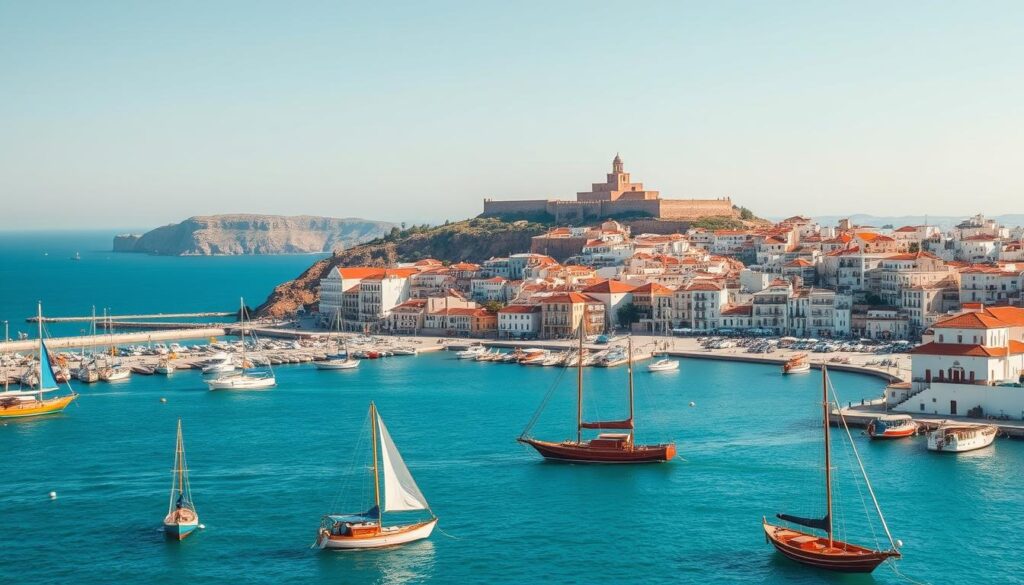
When you arrive in Tangier, you’re greeted by a mix of cultures and a stunning coastline. This Moroccan city at the northern tip is full of history, culture, and natural beauty.
The Legendary Café Culture and Literary History
Tangier’s café culture is famous, with places like Café de Paris and Café Central attracting intellectuals and artists. It’s a city that inspired many writers, including Paul Bowles and William S. Burroughs. You can visit the Hotel El Minzah, where famous authors stayed.
Walking through Tangier, you feel the city’s literary past. You’ll see landmarks that inspired some of the 20th century’s greatest works.
The Kasbah and American Legation Museum
The Kasbah, or old fortress, offers stunning views of the city and sea. Inside, the Dar el-Makhzen palace now serves as a museum, showing Tangier’s history and culture.
The American Legation Museum is also key, being the first U.S. public building outside America. It celebrates the U.S.-Morocco diplomatic ties.
Where the Mediterranean Meets the Atlantic
Tangier’s unique spot where the Mediterranean and Atlantic meet is breathtaking. Its beaches, like Achakkar and Sidi Kacem, offer peace and adventure.
- Explore the caves and beaches of the Mediterranean coast
- Visit the Hercules Caves, a natural wonder with a rich mythological history
- Enjoy water sports and activities along the Atlantic coast
Tangier mixes its rich history with modern sights, making it a must-visit city in Morocco. Whether you’re checking out historic sites, enjoying the culture, or taking in the views, Tangier will impress you.
Meknes: The Underrated Imperial City
Meknes is a city that mixes ancient history with a lively culture. It’s one of Morocco’s four imperial cities. Here, you can see stunning architecture, historical sites, and cultural traditions.
Bab Mansour: Morocco’s Most Impressive Gateway
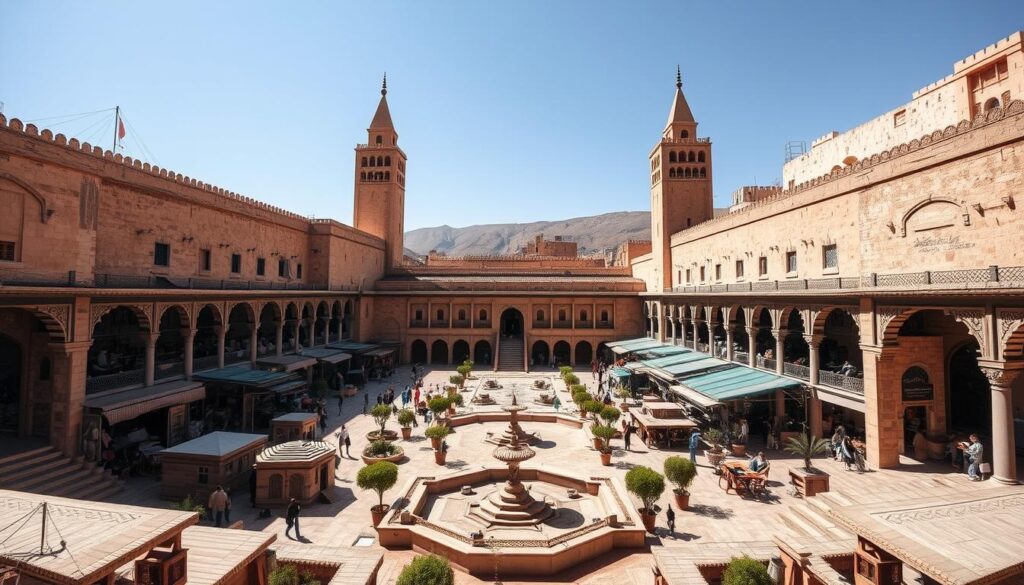
Bab Mansour is a famous gate in Meknes. It shows off Moroccan architecture from the early 18th century. Its detailed tile work and inscriptions are amazing.
When you see the gate, you feel its grandeur and history. It’s a must-see for anyone visiting Meknes.
Heri es-Souani: The Massive Royal Granaries
Heri es-Souani is a key historical site in Meknes. It was built during Sultan Moulay Ismail’s time. These huge granaries show the city’s importance in agriculture and economy.
Their size and history make them worth visiting. They give you a glimpse into Meknes’ past.
The Legacy of Sultan Moulay Ismail
Sultan Moulay Ismail ruled Morocco in the late 17th and early 18th centuries. He built many buildings in Meknes. Visiting Meknes lets you see his impact on the city.
For more on Meknes and other imperial cities, check out imperial cities tours. They can make your trip even better.
Meknes is a city that mixes old and new. It has impressive gates and huge granaries. There’s a lot to see and learn in this hidden gem.
The Historic Cities of Morocco: From Coast to Desert
Morocco’s cities are filled with history and culture, from the coast to the desert. As you travel, you’ll see many cities, each with its own charm.

Coastal Gems: Essaouira and Asilah
Essaouira is famous for its Portuguese architecture and arts scene. Asilah is known for its mural art and cultural festivals. Both cities show Morocco’s rich coastal heritage.
Mountain Retreats: Tetouan and Ifrane
Tetouan is in the Rif Mountains and has an Andalusian influence. Its medina is a UNESCO World Heritage Site. Ifrane, called “Little Switzerland,” has a cool climate and beautiful landscapes.
Desert Gateways: Ouarzazate and Zagora
Ouarzazate is a gateway to the Sahara Desert, famous for its film studios and ancient kasbahs. Zagora is on the desert’s edge, known for its Berber culture and the phrase “Tazigzaouine,” or “the valley of the gazelles.”
| City | Region | Main Attractions |
|---|---|---|
| Essaouira | Coastal | Portuguese ramparts, vibrant arts scene |
| Tetouan | Mountain | Andalusian architecture, UNESCO medina |
| Ouarzazate | Desert | Film studios, ancient kasbahs |
Morocco’s historic cities offer a rich experience, from coast to desert. They are perfect for history buffs, culture lovers, or anyone looking to explore new places.
Essaouira: The Windy City with Portuguese Heritage
Essaouira is a standout among Morocco’s top cities to visit. It’s on the Atlantic coast, famous for its windy weather, beautiful beaches, and rich culture.
The UNESCO-Listed Medina and Skala Fortress
The medina in Essaouira is a UNESCO World Heritage Site. It’s a maze of narrow streets and alleys with lively markets and historic sites. The Skala Fortress has amazing views of the Atlantic and the city.
Exploring the medina, you’ll learn about the city’s history. You’ll see its Portuguese roots and its role in 18th-century trade.
Gnaoua Music and Cultural Festivals
Essaouira is famous for its Gnaoua music and festivals. The Gnaoua World Music Festival, held every year, celebrates the city’s music. It mixes traditional Gnaoua with modern and international sounds.
As “Essaouira is a city that breathes music”, Gnaoua’s rhythms fill the air. You’ll feel the music everywhere you go.
“The Gnaoua World Music Festival is a testament to Essaouira’s vibrant cultural scene, bringing together artists and audiences in a celebration of music and heritage.”
Fishing Port and Atlantic Beaches
The fishing port is always busy. Fishermen sell their catch to local vendors. The Atlantic beaches are perfect for surfers and windsurfers.
Essaouira’s coastline is stunning. It’s a top spot in Morocco for culture, history, and outdoor fun.
Essaouira’s mix of history, culture, and nature makes it a must-see in Morocco.
Ait Ben Haddou and Ouarzazate: Morocco’s Cinema Legacy
Ait Ben Haddou and Ouarzazate are perfect for film lovers and travelers. They offer stunning views and ancient buildings. You’ll learn about their rich history and culture, loved by filmmakers.
Exploring the Ancient Ksar of Ait Ben Haddou
The Ksar of Ait Ben Haddou is a UNESCO World Heritage Site. It’s famous for its well-kept earthen buildings. Walking through its alleys feels like being in a movie.
Many films, like Gladiator and Game of Thrones, were shot here. Its architecture and nature make it a memorable spot.
Atlas Film Studios: Hollywood in the Desert
In Ouarzazate, the Atlas Film Studios is huge. It’s where many famous movies and TV shows were filmed, like Lawrence of Arabia and Gladiator. On a tour, you’ll see how these movies were made and the sets used.
Doorway to the Sahara and Draa Valley
Ouarzazate is called the “Gateway to the Sahara” because it’s near the desert. You can go on exciting desert trips or see the beautiful Draa Valley. It’s a great place to see Morocco’s true beauty and culture.
Seasonal Guide to Visiting Morocco’s Cities
Planning a trip to Morocco? Knowing the best times to visit can make your trip better. Morocco is great all year, with each season showing off its culture and landscapes in a unique way.
Spring and Fall: The Perfect Cultural Tour
Spring (March to May) and fall (September to November) are the best for cultural tours. The weather is just right for walking in Marrakech, exploring Fez‘s old medinas, and seeing Rabat‘s historic sites. For tips on planning, check out the Morocco Travel Guide.
Summer: Coastal Escapes and Mountain Retreats
Summer (June to August) is great for Morocco’s coast, like Essaouira and Casablanca. You can relax on the beach and try water sports. For a cool break, visit mountain towns like Chefchaouen. Learn more about summer fun in Morocco FAQs.
Winter: Southern Cities and Desert Adventures
Winter (December to February) is perfect for Morocco’s south, like Ouarzazate and Zagora. It’s a great time for desert adventures and seeing the Sahara. Enjoy camel rides, desert camping, and exploring the Draa Valley.
| Season | Best Cities to Visit | Activities |
|---|---|---|
| Spring/Fall | Marrakech, Fez, Rabat | Cultural tours, historical site visits |
| Summer | Essaouira, Casablanca, Chefchaouen | Beach relaxation, water sports, mountain retreats |
| Winter | Ouarzazate, Zagora | Desert adventures, camel rides, desert camping |
Practical Tips for Exploring Morocco’s Cultural Treasures
To enjoy Morocco fully, prepare with info on transport, places to stay, and cultural rules. Morocco’s cities are rich in culture. With some tips, you’ll find it easy to explore.
Transportation Between Cities and Local Navigation
Morocco has a good transport system. You can use trains, buses, taxis, or rent a car. The train network links big cities like Marrakech, Fez, and Rabat well. For shorter trips, grands taxis are handy, and petits taxis are best for local rides.
Accommodation: From Traditional Riads to Modern Hotels
Morocco has many places to stay, from riads to hotels. Traditional riads offer a unique stay with their gardens. Modern hotels have comforts like pools and spas. Think about the location and your travel plans when choosing.
Cultural Etiquette and Responsible Tourism
Be respectful of local customs and traditions in Morocco. Dress modestly, especially in mosques or rural spots. Showing respect for the culture and environment is crucial for responsible tourism. Interact with locals, try their food, and support local artists to make your trip better and help the economy.
Conclusion: The Enduring Magic of Moroccan Cities
As you finish your trip through Morocco’s famous cities, you’ll remember the country’s deep culture, beautiful buildings, and lively vibe. Places like Marrakech, Fez, and Essaouira mix old traditions with new experiences. You can wander through the medinas, see historic sites, and taste the local food.
From the top cities in Morocco like Casablanca and Rabat to must-sees like Chefchaouen and Tangier, each spot has its own appeal. Morocco’s cities offer history, culture, or fun. You can see ancient kasbahs, visit the Atlas Film Studios, or enjoy the Atlantic coast.
When planning your Morocco trip, make sure to visit the most famous cities. Morocco’s rich history and friendly people will amaze you. Explore Moroccan cities and find their lasting magic.




 Covers cities, coast, mountains, desert & food