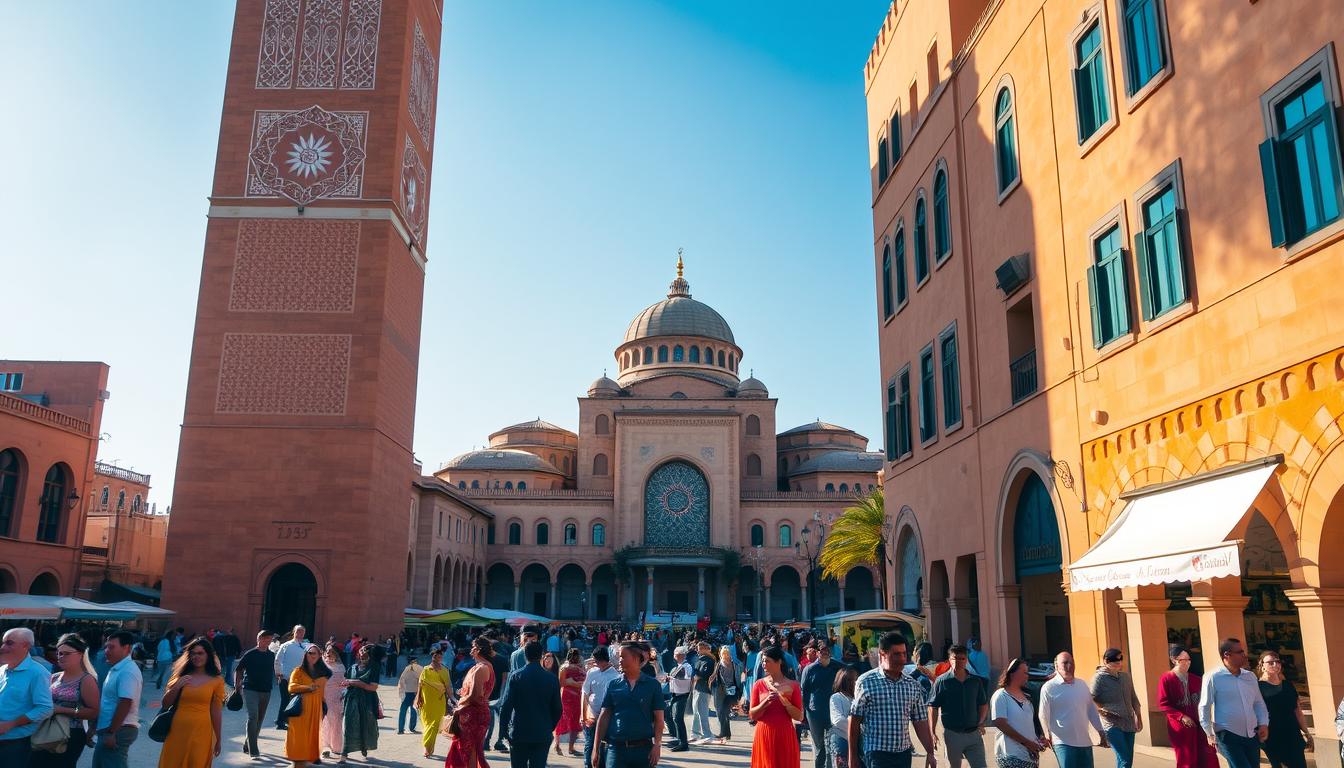
Are you curious about the cultural and historical significance of Rabat, Morocco’s capital city? Located on the Atlantic coast, Rabat is not only the capital of Morocco Africa. It’s also one of the most modern and developed cities in the country.
Rabat boasts a rich history, with landmarks like the Kasbah of the Oudayas and the Hassan Tower. These landmarks show off its architectural heritage. As you explore Rabat, you’ll find it’s very walkable. It also has a fully developed tram network, making it fun to explore on foot.
Key Takeaways
- Rabat is the capital city of Morocco, known for its historical significance.
- The city features several UNESCO World Heritage sites.
- Rabat is a modern and developed city with a relaxed atmosphere.
- It is located on the Atlantic coast, offering a unique blend of cultures.
- The city is well-connected by land and air, making it accessible for travelers.
The Capital of Morocco Africa: An Overview
Exploring Rabat, Morocco’s capital, reveals its charm. This city mixes old traditions with new modern touches. It’s a place full of interest.
Geographical Location and Significance
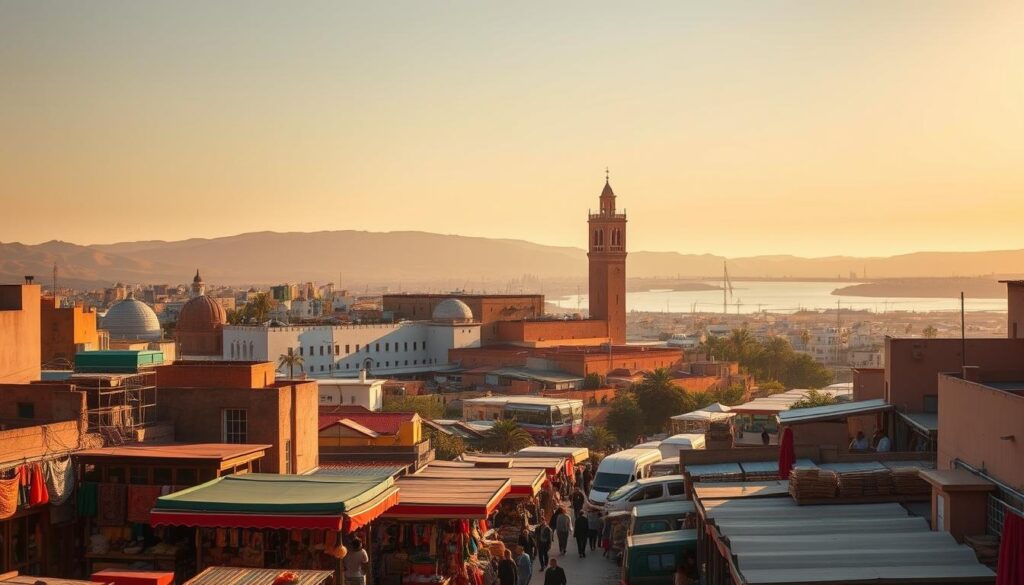
Rabat sits on Morocco’s Atlantic coast. It’s a key spot for culture and economy. Its location by the ocean helped it grow through trade and cultural sharing.
Being the moroccan capital, Rabat houses many government offices and embassies. This makes it even more important.
| Location | Significance |
|---|---|
| Atlantic Coast | Facilitates trade and cultural exchange |
| Capital City | Home to government institutions and diplomatic missions |
Rabat’s Position in North African Politics
Rabat is big in North African politics. Morocco, with Rabat at its heart, influences the region. The city’s diplomatic ties and international relations are key to its role.
As the seat of the morocco government, Rabat leads in making decisions for North Africa. It shapes the region’s future.
In summary, Rabat is more than Morocco’s capital. It’s a major player in North African politics. Its mix of old and new, along with its strategic spot, makes it a captivating city to visit.
Historical Evolution of Rabat as Morocco’s Capital
Rabat’s history is a captivating story of growth and change. It started with ancient civilizations and evolved into the modern capital it is today. Exploring its past reveals a rich tapestry of cultures and events.
Ancient Origins and Roman Influence
The Phoenicians first settled in Rabat, and later, the Romans made their mark. The ancient city of Sala Colonia was a key Roman site. Today, you can see its remnants and the mix of Roman and Islamic cultures at the Chellah Necropolis.
Islamic Period and Almohad Dynasty
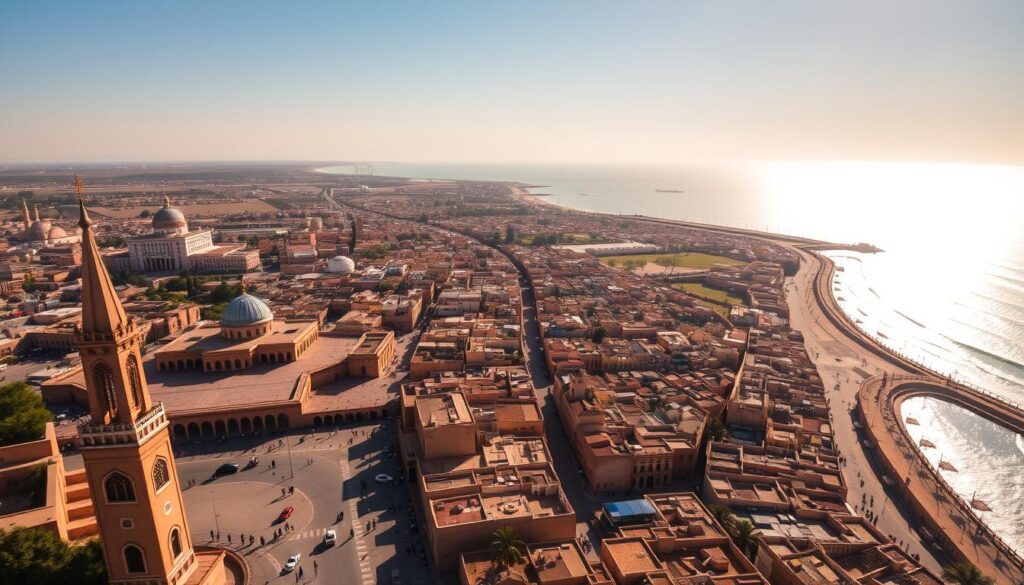
Islam brought Rabat to prominence. The Almohad dynasty significantly shaped the city’s architecture and culture. The Kasbah of the Udayas, a historic fort, showcases this era’s influence with its beautiful views.
French Protectorate to Independence
The French protectorate brought modern changes to Rabat. After gaining independence, the city continued to grow. Today, Rabat is a vibrant mix of old and new, showing its ability to adapt and thrive.
| Period | Significant Events | Cultural Impact |
|---|---|---|
| Ancient & Roman | Phoenician settlement, Roman occupation | Architectural remains, cultural blend |
| Islamic & Almohad | Islamic conquest, Almohad dynasty | Islamic architecture, cultural identity |
| French Protectorate | Modern infrastructure, architectural styles | Blend of traditional and modern elements |
Understanding Morocco’s Political Landscape
Morocco’s politics mix old monarchy with new governance. The capital, Rabat, is key to this mix. It has important government buildings and plays a big role in the country’s management.
The Moroccan Monarchy and Government Structure
The Moroccan monarchy is a special kind of monarchy. The King has a lot of power, but a government led by a prime minister runs the country. The King is the head of state, showing national unity and stability.
The government has a two-chamber parliament. This includes the House of Representatives and the House of Councillors. They handle laws.
Important parts of Morocco’s government are:
- Constitutional reforms to make democracy better
- A system with many parties for different views
- An independent court system for fair laws
Rabat’s Role as an Administrative Center
Rabat, the Moroccan capital, is the country’s main administrative center. It has government ministries, embassies, and important institutions. The city’s setup helps the government work well, with many buildings for administration.
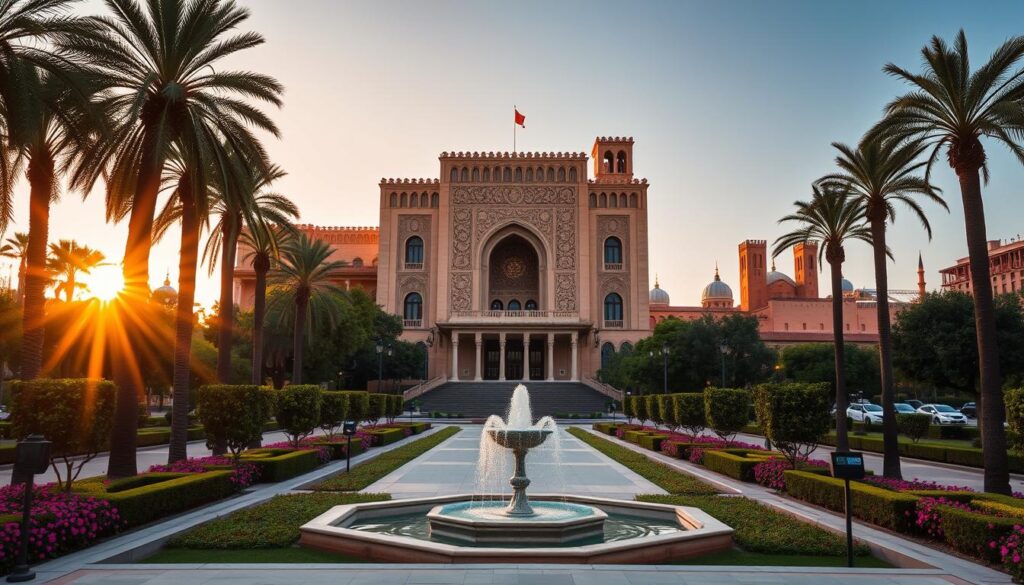
Rabat is also important for big national events and policy-making. This makes it key to understanding Morocco’s politics and government.
Architectural Treasures of Morocco’s Capital City
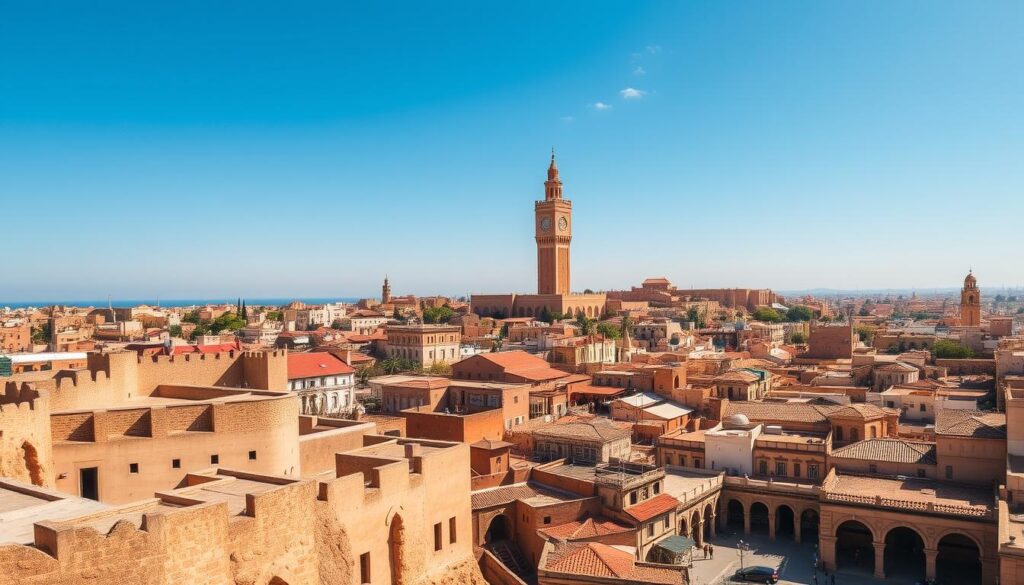
Exploring Rabat, Morocco’s capital, reveals a wealth of architectural wonders. These treasures show the city’s rich history and cultural heritage. You’ll see everything from ancient ruins to grand monuments, highlighting Rabat’s role as a cultural and political center.
The Iconic Hassan Tower
The Hassan Tower is a stunning minaret in Rabat. It was built in the 12th century by Almohad Caliph Yaqub al-Mansur. The tower was meant to be the world’s largest minaret but was never finished. Still, it stands as a symbol of Rabat’s history.
Kasbah of the Udayas
The Kasbah of the Udayas is a historic area with amazing views of the Atlantic Ocean. This 17th-century citadel has narrow streets, white houses, and colorful gardens. Walking through, you’ll feel the charm of Moroccan architecture.
Chellah Necropolis
The Chellah Necropolis is an ancient Roman site turned Islamic sacred place. It features detailed stone carvings, mosques, and gardens. Exploring here, you’ll discover Rabat’s layered history.
Royal Palace and Government Buildings
The Royal Palace, or Dar al-Makhzen, is the King of Morocco’s home. Though it’s not open to visitors, its impressive facade and gates are worth seeing. The nearby government buildings, mixing modern and traditional styles, enhance the city’s elegance.
UNESCO World Heritage Sites in Rabat
Rabat, Morocco’s capital, is a city where old meets new. It’s listed as a UNESCO World Heritage Site. This honor comes from its mix of cultural and architectural history over centuries.
Rabat’s Modern Capital and Historic City Designation
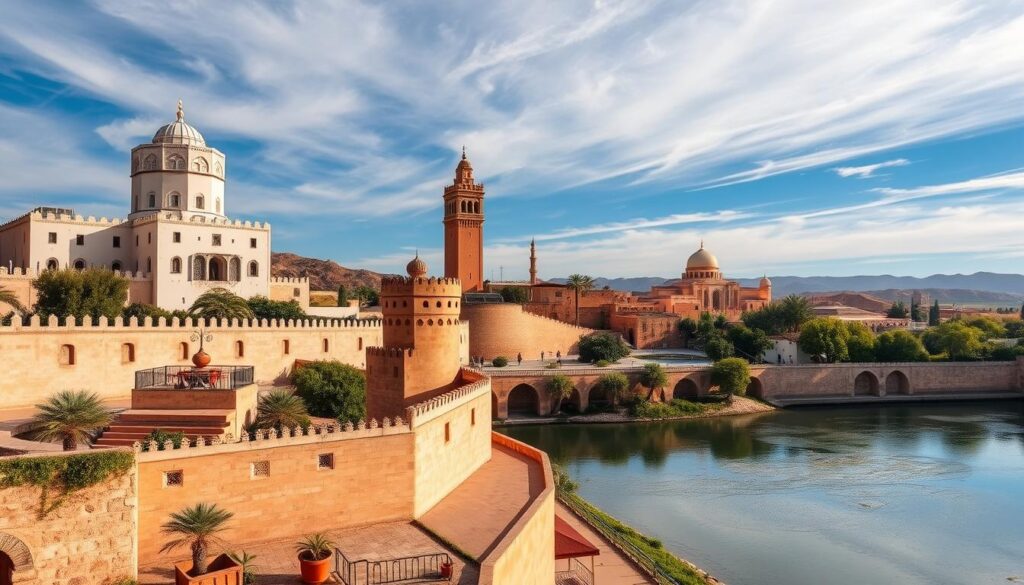
Rabat’s historic city has ancient walls and monuments. It sits next to its modern side, showing off different architectural styles. Landmarks like the Kasbah of the Udayas and Hassan Tower show its rich history.
The modern side of Rabat is seen in its well-designed buildings and new architecture. These modern touches live alongside the old, making Rabat a UNESCO World Heritage Site.
Conservation Efforts and Cultural Significance
Keeping Rabat’s history alive is key. The Moroccan government and international groups work hard to protect its sites.
Rabat’s UNESCO status is important for many reasons. It shows the city’s historical value and encourages cultural sharing. Below is a table that shows some of Rabat’s cultural treasures and how they’re kept safe.
| Cultural Aspect | Conservation Effort | Significance |
|---|---|---|
| Historic Monuments | Restoration and Maintenance | Preserves Historical Integrity |
| Traditional Architecture | Protection from Modernization | Maintains Cultural Identity |
| Cultural Events | Promotion and Support | Enhances Cultural Exchange |
Visitors can learn a lot about Rabat by exploring its cultural heritage. It helps us understand the city’s role as Morocco’s capital.
Cultural Diversity in the Moroccan Capital
Exploring Rabat reveals a rich mix of cultures. The Moroccan capital is a vibrant place where cultures blend. This blend has shaped the city into what it is today.
Berber, Arab, and European Influences
Rabat’s culture is a mix of Berber, Arab, and European. The Berber culture adds to the city’s traditions. Arab influences have shaped the language, architecture, and food.
European touches, especially from France and Spain, are seen in modern buildings and cultural practices.
Religious Harmony in Rabat
Rabat is known for its peaceful coexistence of Muslims, Christians, and Jews. The city’s mosques, churches, and synagogues show its tolerant spirit.
Languages and Communication
Arabic is the official language, but French is common in government and schools. Berber languages are also recognized, showing the country’s linguistic diversity. English is growing in popularity, especially among the young and in tourism.
| Cultural Influence | Manifestation |
|---|---|
| Berber | Traditional clothing, cuisine, and festivals |
| Arab | Language, architecture, and culinary practices |
| European | Modern architecture, cultural events, and educational systems |
Exploring Rabat’s Medina and Souks
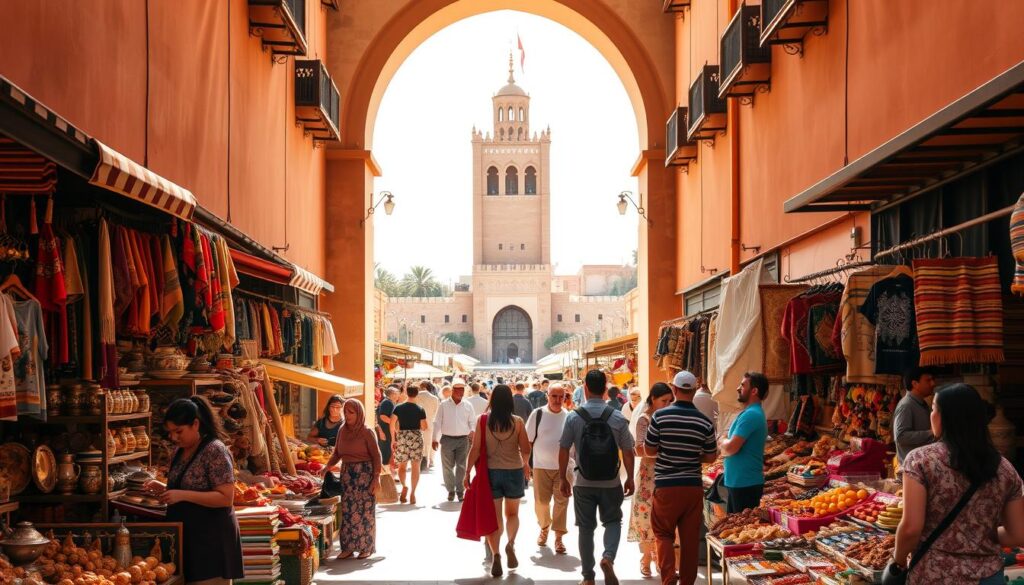
As you explore Rabat, Morocco, you’ll find its medina and souks enchanting. The medina, or old town, is a maze of narrow alleys and lively markets. It offers a peek into traditional Moroccan life. Here, you can dive into local culture, find unique souvenirs, and learn about the city’s rich history.
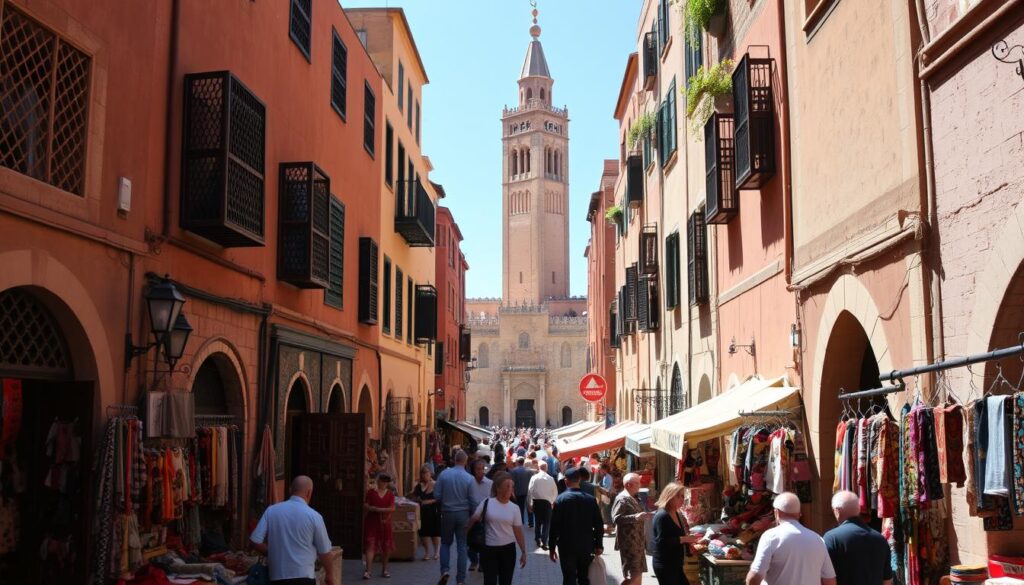
Navigating the Old Town Markets
Exploring Rabat’s medina is an adventure. The souks are full of goods like spices, textiles, jewelry, and handicrafts. To fully enjoy your visit, consider a local guide. They can help you through the narrow streets and alleys. You can also check the Rabat city guide for more details.
Authentic Moroccan Crafts and Souvenirs
Rabat’s medina is famous for its authentic Moroccan crafts and souvenirs. You can find unique items like handmade pottery, intricate tiles, and traditional clothing. When shopping, look for local artisans and their handmade products. This way, you’ll get authentic Moroccan crafts.
| Craft | Description | Price Range |
|---|---|---|
| Handmade Pottery | Unique, handcrafted pottery pieces | $20-$50 |
| Intricately Designed Tiles | Colorful, handmade tiles for decoration | $10-$30 |
| Traditional Clothing | Authentic Moroccan clothing and accessories | $30-$100 |
Bargaining Tips for Visitors
Bargaining is a big part of shopping in Rabat’s medina. To get good deals, be ready to negotiate. Start with a lower price than you want to pay, and be open to compromise. Always stay respectful and friendly, as bargaining is a big part of Moroccan culture.
By following these tips, you can have a great time exploring Rabat’s medina and souks. You’ll find unique souvenirs and dive into the local culture.
Rabat’s Coastal Charm: Beaches and Waterfronts
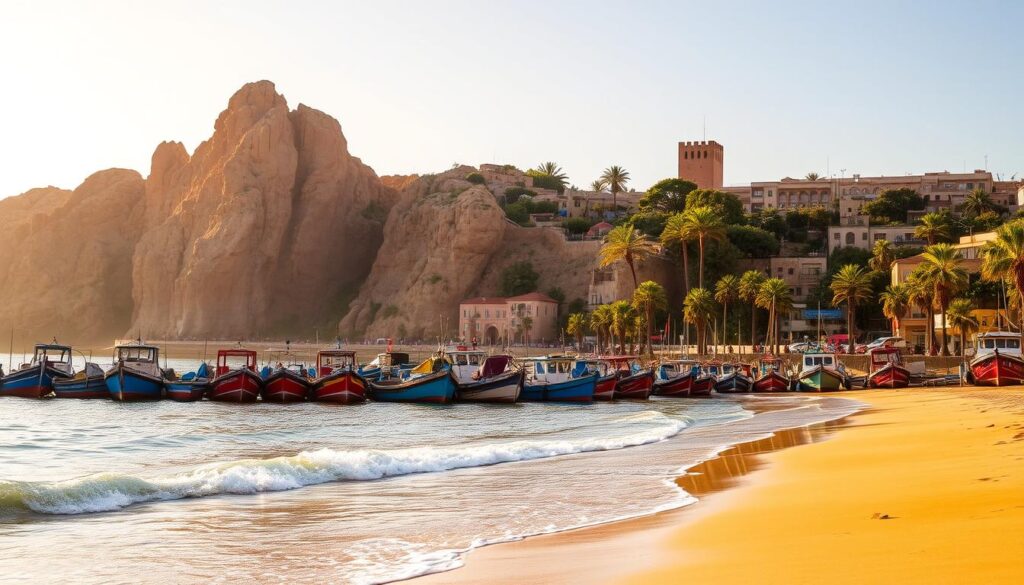
Rabat’s coastline is a treasure trove of natural beauty, rich history, and modern attractions. As Morocco’s capital, Rabat offers a unique mix of relaxation and adventure. Its beaches and waterfronts are picturesque and lively.
Popular Beach Destinations
Rabat has several popular beaches that draw both locals and tourists. Some top spots include:
- Skhirat Beach: Known for its long stretches of sand and crystal-clear waters, Skhirat Beach is perfect for swimming, sunbathing, and water sports.
- Temara Beach: A favorite among surfers, Temara Beach offers consistent waves and a lively atmosphere.
- Chellah Beach: Located near the historic Chellah Necropolis, this beach provides a serene escape with its calm waters and scenic views.
Waterfront Activities and Restaurants
The waterfront areas in Rabat are more than just beaches. They offer a range of activities and dining experiences. You can enjoy:
| Activity | Description | Location |
|---|---|---|
| Water Sports | Surfing, paddleboarding, and kayaking are popular activities along Rabat’s coastline. | Temara Beach, Skhirat Beach |
| Dining | Enjoy fresh seafood at one of the many waterfront restaurants, offering a range of Moroccan and international cuisine. | Rabat Waterfront, Kasbah of the Udayas |
| Sunset Views | Take a leisurely stroll along the waterfront and enjoy the stunning sunset views over the Atlantic Ocean. | Rabat Corniche |
As a travel enthusiast once said,
“Rabat’s coastal charm is a perfect blend of natural beauty and cultural richness, making it a must-visit destination in Morocco.”
Culinary Experiences in Rabat Morocco
Exploring Rabat, Morocco’s vibrant capital, reveals a culinary scene that’s both traditional and modern. The city’s food reflects its rich history and cultural diversity.
Traditional Moroccan Cuisine
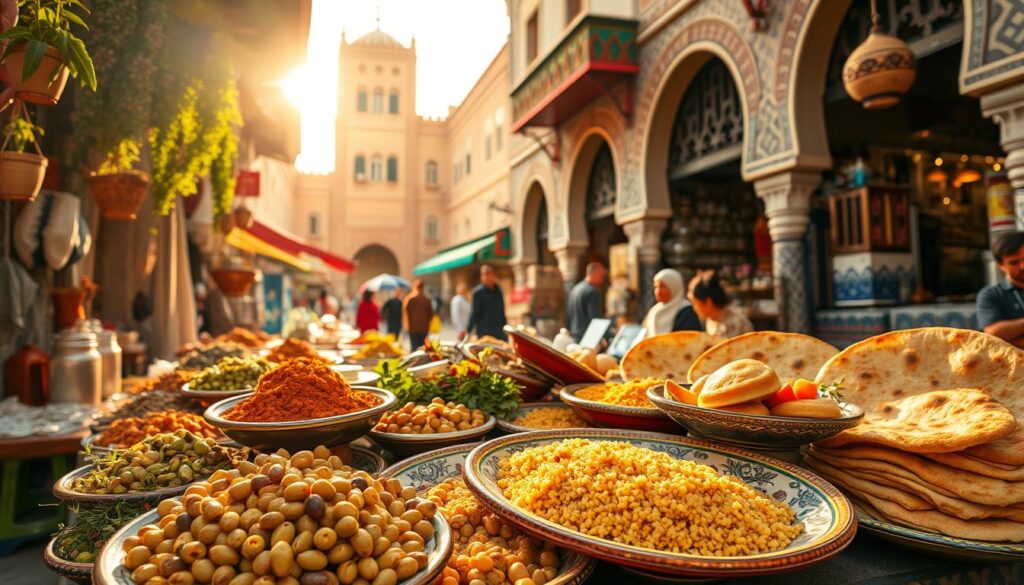
Traditional Moroccan cuisine is famous for its bold flavors and aromas. It often mixes sweet and savory tastes. Try dishes like tagine, a slow-cooked stew cooked in a clay pot.
Must-Try Local Specialties
When you visit Rabat, Morocco, don’t miss out on local specialties. Try couscous, a North African staple made from semolina flour. Also, pastilla, a savory pie filled with meat, onions, and spices, is a must-try. For an authentic experience, visit a local restaurant or food stall.
| Dish | Description | Main Ingredients |
|---|---|---|
| Tagine | Slow-cooked stew | Meat, dried fruits, spices |
| Couscous | North African staple | Semolina flour, vegetables, meat |
| Pastilla | Savory pie | Meat, onions, spices, filo dough |
Modern Dining and International Options
Rabat also offers modern dining and international options. You can find everything from contemporary Moroccan cuisine to French and Italian flavors. For more on food experiences in Morocco, visit this link.
Rabat vs. Casablanca: Understanding Morocco Country Capital
When planning a trip to Morocco, you’ll need to decide between Rabat and Casablanca. Both cities offer unique experiences. They serve different purposes and cater to different interests.
Economic and Cultural Differences
Rabat, the capital of Morocco, is rich in history and politics. It has many historical sites like the Kasbah of the Udayas and the Hassan Tower. These landmarks show its deep cultural heritage.
Casablanca, on the other hand, is Morocco’s economic center. It has a modern vibe with a mix of old and new buildings. The city’s economic strength makes it a key place for business.
Tourism Infrastructure Comparison
Casablanca has better tourism facilities, with more places to stay and eat. It’s also a big transport center, with the busiest port and airport. Rabat, however, offers a true Moroccan feel with its historic sites and traditional markets.
Visitors in Rabat can enjoy a calm pace. They can explore the medina and the waterfront.
Which City to Visit? A Traveler’s Guide
Choosing between Rabat and Casablanca depends on what you like. Rabat is great for history, culture, and a relaxed vibe. Casablanca is better for a lively, modern experience with modern comforts.
Visiting both cities gives you a full view of Morocco’s variety. You’ll see different landscapes and cultures.
Modern Life and Development in Rabat
Exploring Rabat, Morocco’s capital, reveals a mix of modern and traditional. The city beautifully combines old landmarks with new infrastructure.
Urban Planning and Infrastructure
Rabat’s urban planning aims for sustainability and efficiency. It includes:
- Modern transportation systems, including an efficient bus network
- Well-maintained roads and highways
- Green spaces and parks, such as the Rabat Botanical Gardens
Technology and Innovation Hubs
Rabat is becoming a key tech and innovation center in Morocco. It hosts:
- Tech startups, using Morocco’s location between Europe and Africa
- Innovation centers, like the Rabat Technopolis
- Research institutions, pushing boundaries in various fields
This environment supports growth and offers chances for entrepreneurs and businesses.
Arts and Entertainment in the Capital of Morocco Africa
Rabat, the capital of Morocco Africa, is a mix of old culture and new arts. As you wander through this lively city, you’ll see many artistic forms. These show its deep history and modern spirit.
Museums and Galleries
Rabat has many museums and galleries that share its cultural wealth. They give you a peek into the city’s past, art, and culture.
Mohammed VI Museum of Modern Art
The Mohammed VI Museum of Modern Art is a key spot in Rabat. It has a wide range of modern Moroccan art. You’ll see works by both local and international artists, giving you a fresh view of modern art.
Archaeological Museum
The Archaeological Museum in Rabat is a major cultural site. It has a huge collection of items that tell Morocco’s ancient stories. You’ll see Roman mosaics and Islamic artifacts, giving you a deep look into the region’s history.
Music and Theater Venues
Rabat’s music and theater scene is booming. Many venues host shows by both local and international artists. You can enjoy Moroccan music, modern concerts, and plays that show the city’s diverse culture.
Annual Festivals and Cultural Events
Throughout the year, Rabat celebrates with many festivals and events. These include music festivals and cultural shows, for every taste. By going to one of these, you can feel the city’s lively vibe. You’ll see local artists, musicians, and performers.
Day Trips from Rabat: Exploring Surrounding Areas
Rabat, Morocco’s capital, is surrounded by many exciting day trips. You can visit historic sites or beautiful coastal towns. There’s something for everyone.
Salé: Rabat’s Twin City
Salé is Rabat’s twin city, just across the Bou Regreg River. It’s a charming town with a rich history. You can see narrow streets, historic monuments, and vibrant markets.
Don’t miss the Grand Mosque and the Madinah. And be sure to try the local cuisine.
Coastal Excursions to Temara and Skhirat
For a beach day, visit Temara or Skhirat. These coastal towns have beautiful beaches and scenic views. They offer a relaxing atmosphere.
You can enjoy water sports, take a walk along the shore, or just relax in the sun.
Historical Sites Within Driving Distance
Rabat is near several historical sites. You can see the ancient city of Chellah. Or visit the Roman Ruins of Sala Colonia.
Don’t miss the historic town of Mohammedia. These sites show Morocco’s rich history and culture.
Some top day trip spots from Rabat are:
- Salé: Explore the historic town, visit the Grand Mosque, and enjoy local cuisine.
- Temara and Skhirat: Relax on the beach, enjoy water sports, or take a leisurely walk.
- Chellah and Roman Ruins: Discover ancient history and cultural heritage.
With so many great options nearby, you’re sure to find the perfect day trip from Rabat.
Practical Travel Tips for Visiting North Africa Capital
Planning a trip to Rabat, Morocco’s capital, is exciting. The city is full of history and modern sights. It’s the heart of Morocco’s government.
Best Time to Visit Morocco’s Capital
The best times to visit Rabat are spring (March to May) and autumn (September to November). The weather is nice and not too hot or cold. It’s perfect for seeing the city’s sights.
Transportation Options Within the City
Rabat is easy to get around. You can take petit taxis for short trips. They are cheap and handy. For longer rides, grands taxis are available. The city also has buses and a tram system.
Accommodation Recommendations
Rabat has many places to stay, from luxury to budget. For a fancy stay, choose hotels in the city center or by the beach. Budget travelers can find affordable riads and guesthouses. Book early, especially when it’s busy.
Safety and Cultural Etiquette
Stay safe and respect local customs in Rabat. It’s a safe city, but watch out for small thefts. Dress modestly, especially at religious sites. Knowing some Arabic can make your trip better.
Rabat’s Future: Development and Sustainability
The future of Rabat, Morocco’s capital, is bright. It’s thanks to new urban planning and a focus on being green. As you walk around, you’ll see old charm mixed with new developments.
Urban Planning Projects
Rabat is getting a makeover. It’s all about better infrastructure and a better life for locals. They’re working on new transport and fixing up old areas.
The aim is to make Rabat a great place to live. It should be modern but still keep its history.
Environmental Initiatives
Rabat is going green to cut down on pollution. They’re adding more parks, improving waste handling, and encouraging eco-friendly habits. These steps are key to keeping Rabat beautiful for the future.
Tourism Development Plans
Rabat wants to attract more visitors. They’re building new attractions and improving services. The goal is to make Rabat a top spot for those who love history and culture.
Conclusion: Embracing the Charm of Morocco’s Capital
Rabat, the capital of Morocco Africa, is a city that mixes old history with new style. You’ve seen how Rabat’s charm shines through its buildings, diverse culture, and lively art. From the famous Hassan Tower to the Kasbah of the Udayas, there’s much to see and do here.
Rabat’s weather is mild all year, making it a great place to visit. The city’s festivals, food, and restaurants offer a taste of Morocco. Whether you love history, culture, or just exploring, Rabat has it all. Check out Moroccan Vacations to start planning your trip and see Rabat’s charm for yourself.



 Covers cities, coast, mountains, desert & food