
Planning a trip to Morocco in August? It’s key to know the weather conditions you’ll encounter.
Morocco’s climate changes a lot depending on where you are. August is especially hot. You’ll see high temperatures everywhere, but the desert regions will be the hottest.
Getting to know the August Morocco weather will help you get ready for your trip. It will also help you enjoy your time in this stunning country.
Key Takeaways
- Morocco’s climate varies across regions in August.
- August is one of the hottest months in Morocco.
- Desert regions are particularly hot during this time.
- Understanding the weather helps in planning your trip.
- High temperatures are expected throughout the country.
What to Expect from Morocco’s Climate in August
The heat in August in Morocco can be tough, but knowing what to expect helps. As you plan your trip, learning about the climate and past weather is key. This knowledge will guide your travel plans.
General Climate Patterns
Morocco’s weather changes a lot from one place to another. In August, the heat is at its highest, especially in the desert and inland. Expect very hot days and warm nights, with temperatures varying by area.
For more details on Morocco’s weather, check out our Morocco weather page.
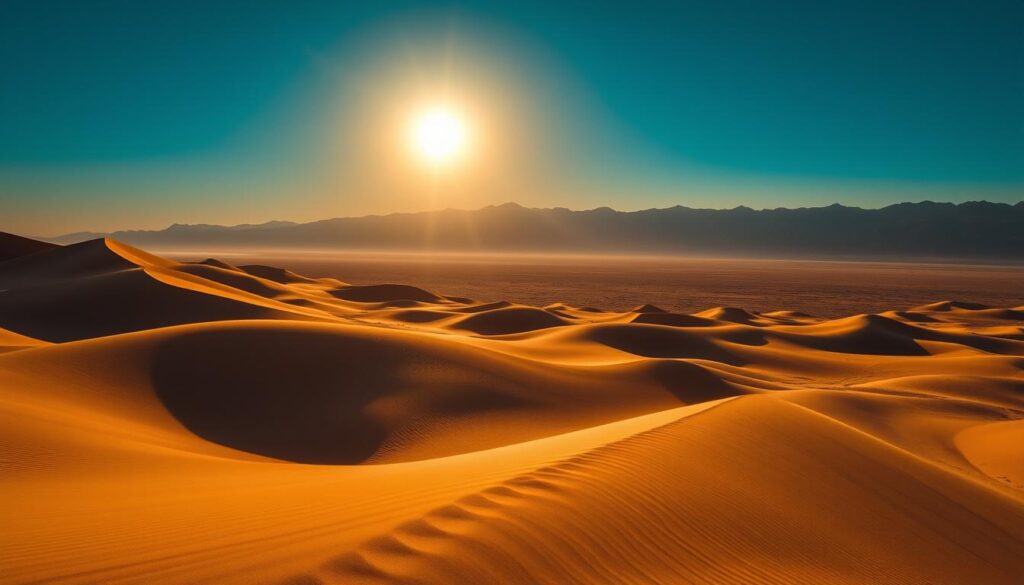
The coast is cooler because of the Atlantic Ocean. But the desert is extremely hot. Knowing this helps you pack right and plan your activities.
Historical Weather Data for August
August is very hot in Morocco, with highs often over 38°C (100°F) in the desert. Marrakech usually hits 38°C, and Merzouga can get even hotter. “The August heat is very high, so staying hydrated and sun-protected is crucial,” say travelers.
Nights can be cooler, especially in the desert. But in cities, nights can still be quite warm. Knowing these trends helps you prepare for your trip and enjoy Morocco’s varied landscapes.
August Morocco Weather: Regional Breakdown
Morocco’s weather in August changes a lot from one place to another. You’ll see cooler coastal areas and very hot deserts as you travel. This is because of the country’s varied geography.
Coastal Regions (Casablanca, Essaouira, Tangier)
The coastal areas of Morocco are cooler in August. Places like Casablanca, Essaouira, and Tangier stay cooler thanks to the ocean. Here, the average high is between 77°F and 82°F (25°C to 28°C).
“The ocean breeze offers a nice break from the heat,” making these places great for those who want milder weather.
Interior Cities (Marrakech, Fez, Meknes)
On the other hand, cities like Marrakech, Fez, and Meknes get much hotter in August. These cities are in the desert, so it gets very hot. The average high is often over 100°F (38°C).
It’s common for the temperature to go over 104°F (40°C) during the day. So, it’s important to drink lots of water and stay in the shade when exploring these cities.
Desert Areas (Merzouga, Zagora)
The desert areas, such as Merzouga and Zagora, are the hottest in Morocco in August. The heat can be extreme, with highs sometimes reaching 115°F (46°C) or more. If you’re going to the Sahara Desert, be ready for the heat and protect yourself from the sun and dehydration.
Knowing about these weather differences will help you plan your trip to Morocco in August. It ensures you have a better time exploring the country.
Temperature Ranges Across Different Regions
August in Morocco sees temperatures vary greatly. From very hot to cooler, knowing these changes is crucial for a great trip.
Daytime Highs by Region
In Morocco’s deserts, like Merzouga and Zagora, it gets over 40°C (104°F). This makes it vital to drink lots of water and stay in the shade. Coastal spots, such as Casablanca and Essaouira, are a bit cooler, with highs from 28°C to 32°C (82°F to 90°F). Cities like Marrakech and Fez get very hot, often reaching 38°C to 40°C (100°F to 104°F).
Nighttime Lows and Temperature Fluctuations
Nights can be cooler, especially in the desert. Temperatures there might drop to 20°C to 25°C (68°F to 77°F). Coastal areas stay milder, with lows from 20°C to 24°C (68°F to 75°F). Inland cities see a bigger drop, with lows around 25°C to 28°C (77°F to 82°F). Knowing these changes helps plan your day and where to stay.
Humidity Levels and Heat Index
Morocco’s August weather isn’t just about the temperature. Humidity and heat index also matter a lot. Knowing these can help you enjoy your trip more.
Coastal Humidity vs. Inland Dry Heat
The coastal areas like Casablanca, Essaouira, and Tangier are more humid. This is because they are close to the ocean. The humidity makes the heat feel more oppressive, as sweating is harder.
On the other hand, cities like Marrakech, Fez, and Meknes have dry heat. This heat is very hot but feels less suffocating than the coastal humidity. Knowing this helps you pack better and stay hydrated.
When Humidity Makes Heat Feel Worse
The heat index shows how hot it really feels. In August, coastal areas with high temperature and humidity make it feel very uncomfortable. For example, 30°C (86°F) with high humidity can feel like 40°C (104°F).
Knowing this helps you plan your day. Stay indoors when it’s hottest and drink lots of water. Following august morocco travel tips can also help you manage the heat better.
Rainfall and Precipitation in August
August in Morocco is usually dry, but summer storms can pop up. Knowing when it might rain and being ready can keep your trip on track.
Likelihood of Rain by Region
The shape of Morocco affects where it rains more. The coastal regions get more humid, leading to rain sometimes. Places like Tangier and Casablanca might see more clouds than inland cities.
In contrast, the desert areas are very dry, with almost no rain. Tan-Tan Airport, in southern Morocco, gets very little rain in August, as shown by WeatherSpark.
| Region | Average Rainfall in August | Likelihood of Rain |
|---|---|---|
| Coastal Regions | Minimal | Low |
| Inland Cities | Very Low | Very Low |
| Desert Areas | Extremely Low | Extremely Low |
Preparing for Occasional Summer Storms
Summer storms are rare but can happen in August. It’s smart to pack right for your trip. A light rain jacket or poncho is handy, especially near the coast.
Be ready for flash flooding in some spots. Keeping up with local weather forecasts helps you stay prepared. This way, your trip will be fun and worry-free.
Sun Intensity and UV Index
Traveling to Morocco in August means you need to know about the strong sun and high UV levels. This knowledge helps make your trip safe and fun. The sun is very intense in Morocco’s desert and inland cities during August.
Peak Sun Hours
In Morocco, the sun is strongest from 10 AM to 4 PM in August. This is when the risk of sunburn and heat exhaustion is highest. Travel experts say it’s vital to protect yourself from the sun to avoid serious health problems.
UV Protection Strategies
To fight the high UV index, use sunscreen with a high SPF and wear protective clothes. Don’t forget a hat and sunglasses. Stay in the shade, especially during the hottest hours. Reapply sunscreen every two hours or after swimming or sweating.
Avoiding Peak Heat Hours
Plan your activities to avoid the hottest hours. Do indoor or shaded activities during the day’s peak. Explore outdoor spots in the early morning or late evening when it’s cooler.
What to Pack for Morocco in August
Traveling to Morocco in August means packing for the heat. The desert climate makes days very hot. It’s important to bring the right clothes and accessories to stay cool.
Essential Clothing Items
Choosing the right clothes is key for a comfortable trip. Include lightweight, breathable items that let air flow. Remember, Morocco is conservative, so dress accordingly.
Fabrics That Work Best
Choose clothes made from cotton and linen. These keep you cool. Stay away from synthetic fabrics that can make you hotter.
Cultural Considerations for Clothing
Morocco values modesty, so dress conservatively. Women should cover shoulders and knees. Men should avoid shorts and sleeveless shirts. For more tips, check our blog on what to wear in Morocco.
Heat Protection Accessories
Protecting yourself from the sun is essential. Bring a wide-brimmed hat, sunglasses, and sunscreen with high SPF. A scarf can also protect your neck.
Electronics and Heat-Sensitive Items
August is hot and the sun’s rays are strong. Be careful with heat-sensitive items like your camera and batteries. Use a protective case for your electronics. For more tips, visit the Morocco travel FAQs.
Staying Healthy and Hydrated
To enjoy your August trip to Morocco, focus on staying healthy and drinking plenty of water. The heat can be tough, but with the right steps, you can have a great time.
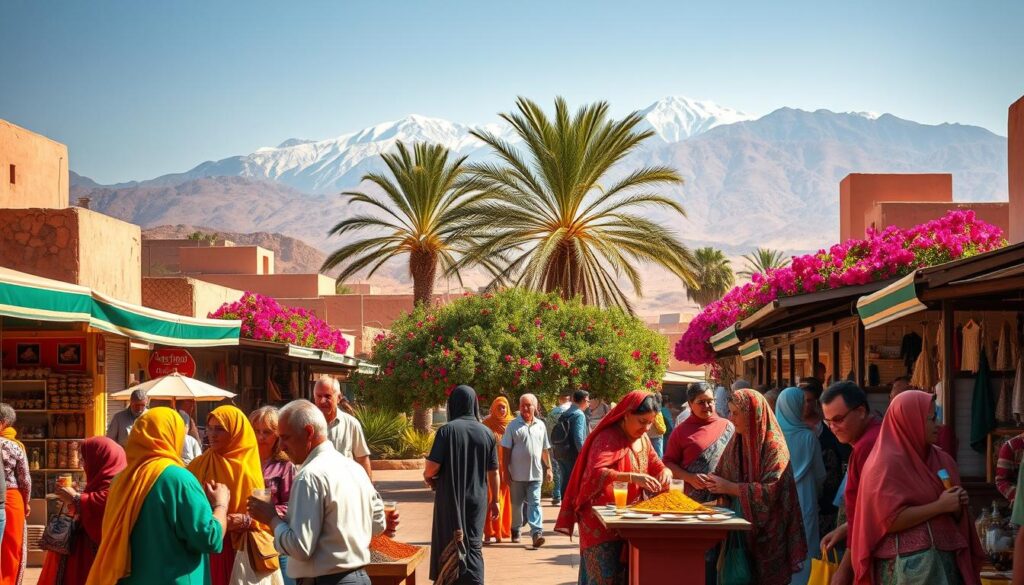
Water Safety and Consumption Tips
Drinking enough water is key in Morocco’s hot August. Aim to drink 2-3 liters of water per day. Choose bottled or filtered water to stay safe from illnesses. Also, watch out for ice in drinks and avoid unpeeled fruits or veggies washed in tap water.
Signs of Heat Exhaustion and Heatstroke
Knowing the signs of heat exhaustion and heatstroke is very important. Look out for dizziness, nausea, headaches, and a fast heartbeat. If you see these signs, find shade, drink water, and rest. Heatstroke is serious, with a body temperature over 103°F (39.4°C), and needs quick medical help.
Medical Preparations for Hot Weather Travel
Before you go, talk to your doctor about heat sickness meds. Pack a travel kit with oral rehydration salts, sunscreen, and a first-aid kit. Knowing where to find local health services in Morocco is also smart.
By following these tips, you can stay safe and have a wonderful trip in Morocco’s August heat.
Best Coastal Destinations for August
Morocco’s coastline is cooler in August, a nice break from the hot inland. If you’re heading to Morocco in August, check out its lovely coastal towns.
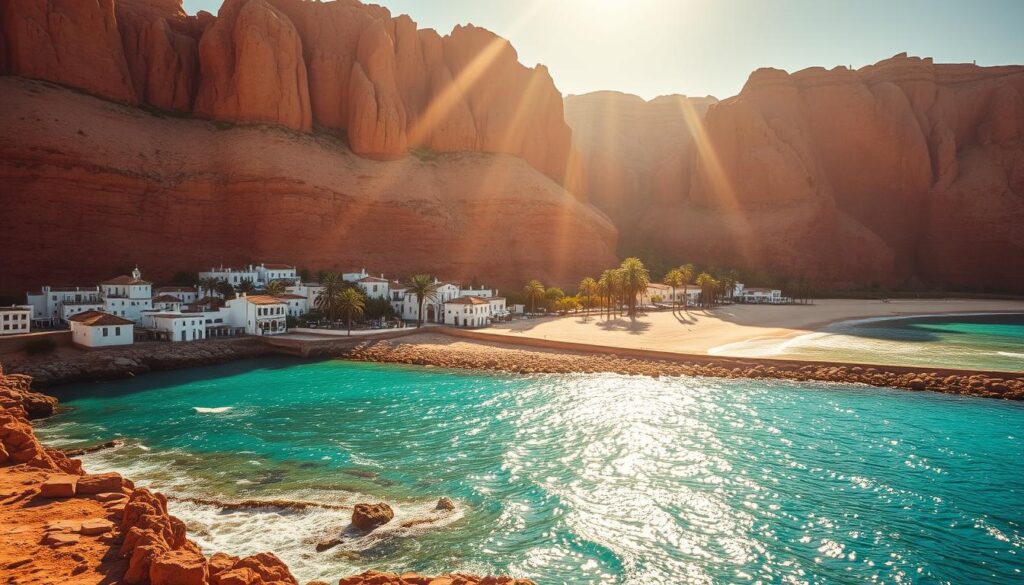
Essaouira: The Windy City Escape
Essaouira is a treasure on Morocco’s Atlantic coast, famous for its windy weather. It’s a great summer spot with a relaxed vibe, stunning beaches, and a lively arts scene. It’s perfect for unwinding and feeling the sea breeze.
Things to do in Essaouira:
- Explore the historic medina
- Enjoy water sports like kitesurfing and windsurfing
- Relax on the beautiful beaches
Tangier and the Mediterranean Coast
Tangier sits on the Mediterranean coast, blending cultures and history. In August, it’s warm but not too hot, with highs around 28°C (82°F). It’s great for exploring.
Tangier’s highlights include:
- The Kasbah and its historic significance
- The vibrant markets and souks
- The beautiful coastal views
Agadir and the Atlantic Beaches
Agadir is perfect for sun, sand, and sea lovers. Its wide beaches and modern facilities are great for families and beach enthusiasts.
Agadir’s attractions:
- Beautiful beaches with calm waters
- Water sports and activities
- Golf courses and other leisure activities
When planning your August trip to Morocco, think about these coastal spots. They offer a comfortable and fun experience. With their unique charm and attractions, your trip will surely be memorable.
Mountain Retreats to Beat the Heat
Morocco’s mountains are a cool escape from the summer heat. The cities and deserts get hot, but the mountains stay cooler and calmer. Here, you can enjoy nature, learn about local culture, and find peace.
The mountains of Morocco are more than a cool place to hide. They open up the country’s varied landscapes and cultures. From the Rif Mountains to the High Atlas, there’s a lot to see and do.
Chefchaouen in the Rif Mountains
Chefchaouen is a beautiful town in the Rif Mountains. It’s famous for its blue buildings and offers a laid-back vibe. You can go hiking, check out the markets, or just breathe in the mountain air.
High Atlas Mountain Villages
The High Atlas has many villages where you can dive into Berber culture. You can hike, see old kasbahs, and try local food. It’s perfect for escaping the summer heat.
Ifrane: Morocco’s “Little Switzerland”
Ifrane is a quaint town in the Middle Atlas. It has a cool climate and European-style buildings. It’s great for hiking and skiing, and the forests around it are peaceful.
| Mountain Retreat | Average High Temperature in August | Main Attractions |
|---|---|---|
| Chefchaouen | 28°C (82°F) | Hiking, local markets, blue-painted buildings |
| High Atlas Villages | 25°C (77°F) | Traditional Berber culture, hiking, ancient kasbahs |
| Ifrane | 26°C (79°F) | Outdoor activities, European-style architecture, forests |
These mountain retreats offer a cooler climate and a chance to see Morocco’s beauty and culture. Whether you want adventure or just to relax, the mountains are perfect in August.
Cities to Approach with Caution in August
Morocco’s cities can be very hot in August. But, with the right tips, you can still have a great time. Cities like Marrakech and Fez are must-sees, but they can be tough because of the heat.
Marrakech Heat Management Strategies
Marrakech is famous for its lively souks and old sites. But, it can be too hot in August. To beat the heat, visit early in the morning or late at night when it’s cooler.
Drinking lots of water is key. Also, take breaks in cool spots like riads or cafes. For a good plan, check out a Morocco 10-day itinerary.
Fez and Other Inland Cities
Fez and other cities like Meknes get very hot in August. To enjoy them, take it slow and stay out of the sun between 11 am and 3 pm. Wear light, airy clothes and a hat to keep cool.
Visiting places like the Jnan Sbil Gardens in Fez can be a nice break from the heat. With some planning, you can still see the amazing culture and history of these cities in August.
Desert Experiences in August: What to Know
Visiting the Sahara in August needs careful planning because of the intense heat. The desert is fascinating, but the extreme temperatures are a big challenge. Knowing if a Sahara trip is possible and exploring other desert options will help plan your adventure.
Is a Sahara Trip Feasible in August?
Going to the Sahara Desert in August is very hard because of the high temperatures. They can go over 120°F (49°C) during the day. But, with the right planning and precautions, you can still have a great time. Here are some tips for a Sahara trip in August:
- Travel early in the morning or late in the evening to avoid the hottest part of the day.
- Drink lots of water to stay hydrated.
- Wear clothes that protect you, like a hat and sunglasses.
- Choose places to stay that have good cooling.
As one travel expert says, “The key to surviving the Sahara in August is preparation and flexibility.”
“The desert is a vast and beautiful place, but it demands respect. Be prepared for the heat, and you’ll be rewarded with unforgettable experiences.”
Alternative Desert Experiences
If the Sahara’s heat in August worries you, think about other desert experiences in Morocco. The Agafay Desert, near Marrakech, has milder temperatures because it’s higher up. You can enjoy camel rides, desert camps, and stargazing without the Sahara’s extreme heat.
| Desert Location | August Temperatures | Activities |
|---|---|---|
| Sahara Desert | Up to 120°F (49°C) | Camel rides, desert camps, sandboarding |
| Agafay Desert | Up to 100°F (38°C) | Camel rides, desert camps, stargazing |
By looking at these alternatives and being ready, you can still have a desert adventure in Morocco in August. For more tips on traveling in Morocco during summer, see our articles on august morocco travel tips and what to pack for morocco in august.
Ideal Daily Itinerary Planning for Hot Weather
To beat the August heat in Morocco, plan your activities for the cooler parts of the day. This way, you can enjoy your trip more and avoid the hottest times.
Morning Activities Before the Heat
Begin your day with a big breakfast, then explore Morocco’s lively cities or peaceful landscapes. Visit places like the ancient medinas in Marrakech or Fez in the morning when it’s cooler. You can also wander through the busy souks or visit beautiful gardens.
Midday Rest and Indoor Options
When it gets really hot, take a break in a cool spot or an air-conditioned place. Many riads and hotels have comfy lounges for relaxing. You can also check out museums or indoor markets to cool off. For more Morocco travel tips, look into local resources.
Evening and Night Explorations
The evening is perfect for enjoying Morocco’s food and culture. Have a slow dinner at a rooftop restaurant, watch a Gnawa music show, or take a walk in the bright streets. The night air is cooler, making it great for exploring Moroccan cities.
Accommodation Choices for Heat Management
Traveling to Morocco in August means picking the right place to stay is key. The right spot can make a big difference in how comfortable you feel.
Traditional Riads and Natural Cooling
Traditional riads are special because of their design. They face inward, which helps keep them cool. These old houses have thick walls and high ceilings.
They also have central courtyards that help cool the inside. Some riads even use wind towers or shaded areas to keep it cooler. For instance, a riad in Marrakech might stay cooler inside than outside.
Modern Hotels with Climate Control
If you like modern comforts, hotels with climate control are great. These hotels have air conditioning to cool your room. They also have pools and shaded spots to help you stay cool.
When you book, look for hotels that say they have air conditioning. This ensures you’ll have a comfortable stay.
| Accommodation Type | Cooling Features | Best For |
|---|---|---|
| Traditional Riads | Thick walls, high ceilings, central courtyards | Cultural experience, natural cooling |
| Modern Hotels | Air conditioning, pools, shaded areas | Comfort, modern amenities |
For tips on staying cool while traveling, check out climate reports. They offer advice on managing temperature and cooling strategies.
Transportation in the August Heat
Traveling in Morocco in August can be tough due to the heat. The high temperatures make getting around a big challenge.
Air-Conditioned Travel Options
Using air-conditioned transport is a good idea. Taxis and private cars with AC are great for city trips. Luxury buses and trains also have AC, making long trips more comfortable.
| Transportation Mode | Air Conditioning | Comfort Level |
|---|---|---|
| Taxis | Yes | High |
| Luxury Buses | Yes | High |
| Trains | Yes | High |
Tips for Comfortable Road Trips
Plan your road trip to avoid the hottest times, 11 am to 3 pm. Use sunshades and bring lots of water and snacks. Renting a car with AC will make long drives more comfortable.
By using these tips and choosing air-conditioned transport, your trip in Morocco will be more comfortable and fun.
Conclusion: Embracing Morocco’s Summer Experience
When planning your trip to Morocco in August, knowing the august morocco weather and morocco climate in august is key. Morocco’s hot weather and lively culture make summer special.
Understanding the temperatures, humidity, and sun can help you prepare. Morocco’s coastal, city, and desert areas are all great in August.
Some might find the heat hard, but others love the warmth and culture. Wondering if August is the best time to visit morocco in august? It depends on what you want to do.
With good planning, like choosing the right places to stay and travel, your trip can be fun and memorable in August.



 Covers cities, coast, mountains, desert & food