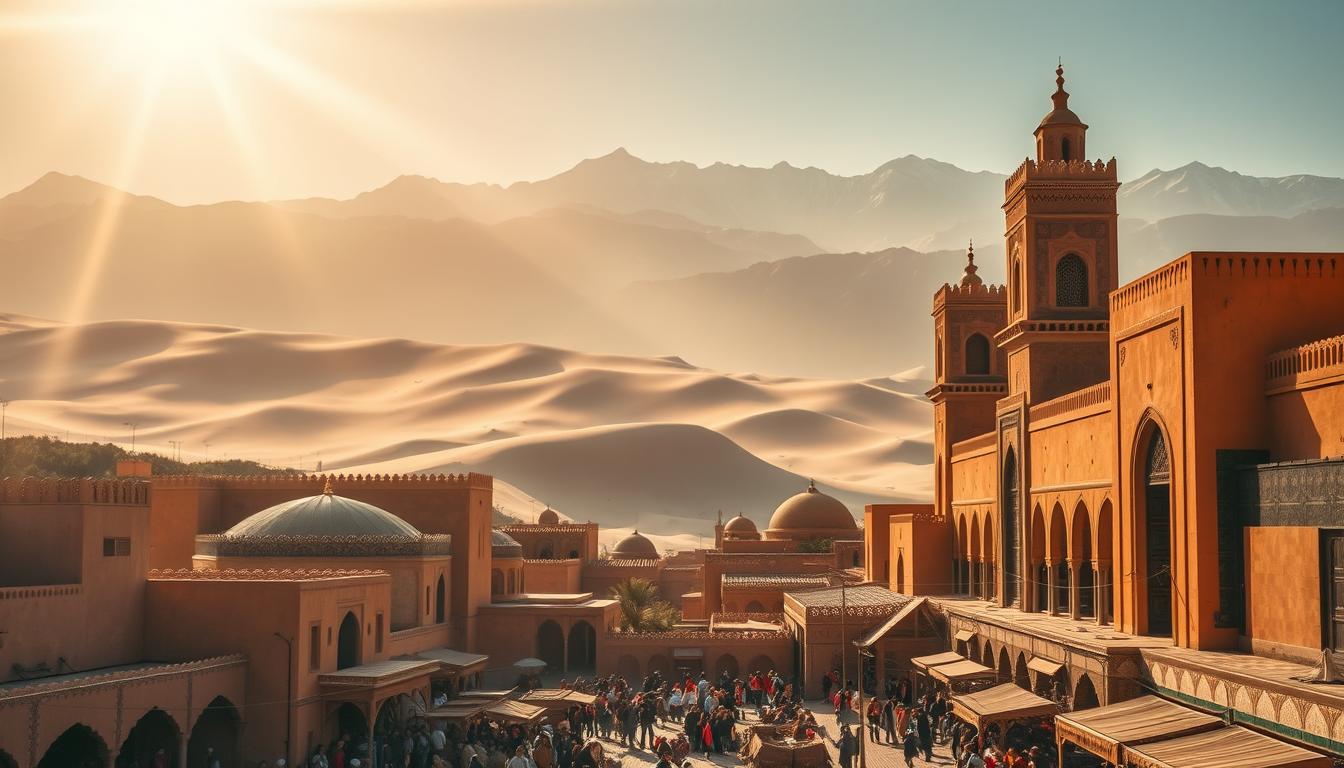
Have you ever thought about Morocco, a country in northwest Africa? Its official name, Al Mamlakah Al Maghribiyah, is full of cultural and historical value. Knowing the meaning of Morocco’s official name gives us a peek into its rich heritage.
The name Al Mamlakah Al Maghribiyah means “The Kingdom of Morocco” in English. It shows the country’s status as a sovereign kingdom with a long history and a strong monarchy. As you delve into Morocco’s culture, you’ll see its official name is more than a title. It’s a symbol of the nation’s identity.
Key Takeaways
- Al Mamlakah Al Maghribiyah is Morocco’s official name.
- The name signifies Morocco’s status as a kingdom.
- Understanding the official name provides insight into Moroccan culture.
- The name reflects Morocco’s rich history and heritage.
- Morocco is known for its strong monarchical tradition.
The Official Name of Morocco: Al Mamlakah Al Maghribiyah Explained
Have you ever wondered about Morocco’s official name, Al Mamlakah Al Maghribiyah? It’s more than just a title. It shows the country’s rich history, culture, and where it’s located.
Translation and Literal Meaning
Al Mamlakah Al Maghribiyah means “The Kingdom of Morocco” in English. “Al Mamlakah” means “kingdom,” showing Morocco’s royal government. “Al Maghribiyah” means Morocco, with “Al Maghrib” meaning “the west” in Arabic.
This name shows Morocco’s special place. It’s a bridge between Africa, Europe, and the Arab world. It celebrates the country’s culture and location.
- Key components:
- Al Mamlakah – Kingdom
- Al Maghribiyah – Morocco or “the west”
Pronunciation Guide for English Speakers
It can be hard for non-Arabic speakers to say “Al Mamlakah Al Maghribiyah.” A simple guide is “Al Mam-lah-kah Al Magh-ree-bee-yah.”
Break it down: “Al Mamlakah” is “Al Mam-lah-kah.” “Al Maghribiyah” is “Al Magh-ree-bee-yah.” Practice it a bit to get it right.
Historical Origins of Morocco’s Arabic Name
To understand Morocco’s Arabic name, we must look at its history. “Al Mamlakah Al Maghribiyah” is more than a name. It holds history, culture, and geography. As we explore, you’ll see how the name has changed over time.
Etymology of “Al Maghrib”
“Al Maghrib” means “the west” in Arabic. This refers to Morocco’s location as the Arab world’s westernmost country. The term originally covered Morocco, Algeria, Tunisia, and parts of Libya. It started with the Islamic conquest of North Africa in the 7th century.
Morocco became a key cultural and political center. The name “Al Maghrib” became linked with the country.
“Al Maghrib” shows Morocco’s importance in the region. It marks Morocco as a western gateway to the Arab world.
Evolution of the Name Through Centuries
Over time, “Al Maghrib” has changed due to history and cultural exchanges. At first, it covered the entire Maghreb region. But as borders solidified, “Al Mamlakah Al Maghribiyah” became Morocco’s official name.
The name’s evolution ties to Morocco’s political history. It reflects the country’s monarchical system and its western Arab world position.
| Period | Name/Term Used | Significance |
|---|---|---|
| 7th Century | Al Maghrib | Refers to the western region of North Africa |
| Modern Era | Al Mamlakah Al Maghribiyah | Official name of Morocco, signifying its monarchical system and western position |
“The name ‘Al Mamlakah Al Maghribiyah’ encapsulates the rich history and cultural heritage of Morocco, reflecting its unique position in the Arab world.”
The Geographic Significance of “Al Maghribiyah”
To understand “Al Maghribiyah,” we must look at Morocco’s location in North Africa. The name shows the country’s spot and its culture and history.
Morocco’s Strategic Position in North Africa
Morocco, or “Al Mamlakah Al Maghribiyah,” is in Africa’s northwest. It borders the Atlantic Ocean and the Mediterranean Sea. This spot makes it key for trade and cultural sharing between Europe, Africa, and the Arab world.
The country’s varied landscapes, from mountains to deserts, add to its unique identity.
Some key features of Morocco’s location are:
- The Atlas Mountains, which act as a natural barrier and have shaped the country’s culture and economy.
- The Sahara Desert, which covers a big part of Morocco and links it to the Saharan region.
- The coastal areas along the Atlantic Ocean and Mediterranean Sea, making trade and cultural exchange easy.
The Concept of “The West” in Arabic Geography
“Al Maghrib” means “the west” in Arabic, marking Morocco as the westernmost Islamic country. Historically, it includes modern-day Morocco, Algeria, Tunisia, and parts of Libya. In Arabic geography, “Al Maghrib” is more than a direction; it’s a cultural and religious identity shaped by Islam and Western interactions.
Key points of “The West” in Arabic geography are:
- The cultural exchange between the Islamic world and Europe.
- The region’s historical role as a bridge between Africa and Europe.
- The impact of Islamic traditions on the region’s culture.
Morocco vs. Al Mamlakah Al Maghribiyah: Understanding the Difference
Exploring Morocco’s official name, Al Mamlakah Al Maghribiyah, uncovers a deep history and culture. It sets it apart from its more familiar name, Morocco. This is not just Morocco’s case; many countries have different names in various languages.
Origin of the Name “Morocco” in English
The English name “Morocco” comes from Marrakech, a key cultural and historical spot. Europeans named the country after this important city. For more on this, check out the CIA World Factbook.
Why Different Names Exist Across Languages
Different names for countries come from history and language. “Al Mamlakah Al Maghribiyah” is Morocco’s official Arabic name, meaning “The Kingdom of Morocco.” It shows the country’s monarchy and its location in the Maghreb. The use of different names across languages shows Morocco’s complex cultural identity, blending Arab, Berber, and European influences.
| Name | Language/Culture | Meaning |
|---|---|---|
| Morocco | English | Derived from Marrakech |
| Al Mamlakah Al Maghribiyah | Arabic | The Kingdom of Morocco |
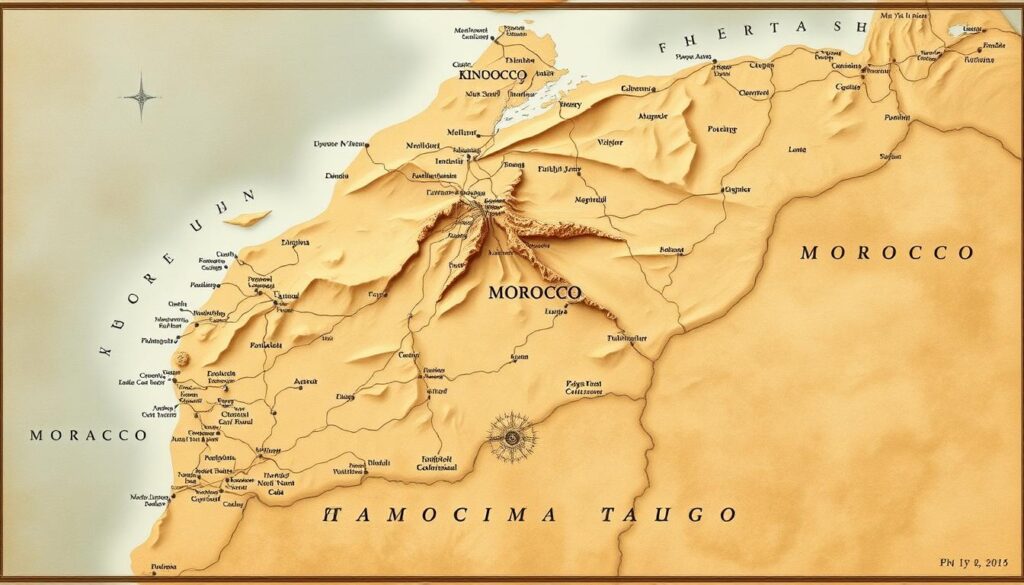
Al Mamlakah Al Maghribiyah: The Kingdom Component and Morocco’s Monarchy
Exploring Al Mamlakah Al Maghribiyah reveals the monarchy’s key role in Moroccan society. The term “kingdom” is more than a title. It’s a symbol of a long history that has shaped the country’s culture and identity.
The Historical Significance of Morocco’s Royal Institution
Morocco’s monarchy started with the Idrisid dynasty in the 8th century. The Alaouite dynasty has ruled since the 17th century. This long rule has made Morocco stable and strong.
The monarch has always been crucial in keeping the nation united. They settle disputes and represent the nation’s spirit.
The royal family has evolved with time. They’ve kept their traditional role while adopting modern governance. This mix of old and new is what makes Morocco’s politics unique.
King Mohammed VI and the Current Moroccan Royal Family
Under King Mohammed VI, Morocco has moved forward with reforms. Since 1999, he has focused on economic growth, social fairness, and human rights. The royal family is still at the heart of Moroccan life, symbolizing unity and stability.
The royal family balances tradition with modern issues. They work to keep Morocco’s rich culture alive while facing today’s challenges. This strategy keeps the monarchy relevant in the 21st century.
Cultural Identity Reflected in the Name Al Mamlakah Al Maghribiyah
Al Mamlakah Al Maghribiyah, Morocco’s official name, shows the country’s unique culture and history. It’s more than just a name; it’s the heart of Morocco’s heritage and values. It reflects the country’s geography and what Moroccans cherish most.
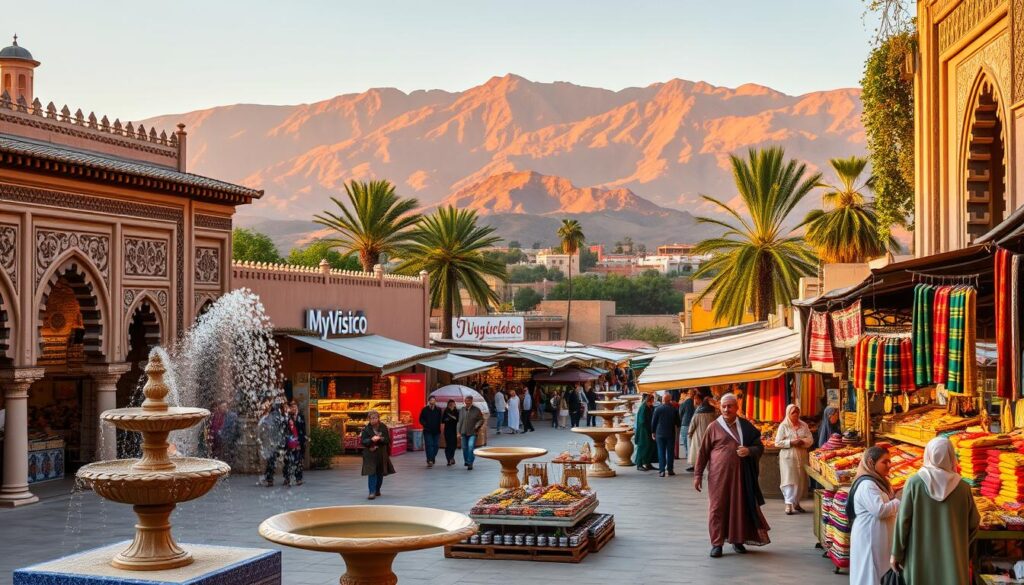
National Pride and the Official Name
The name Al Mamlakah Al Maghribiyah fills Moroccans with national pride. It highlights Morocco’s rich past, its key role in the Maghreb, and its unique culture. For Moroccans, it’s a symbol of their identity and a link to their ancestors and the land.
How Moroccans Refer to Their Country in Daily Life
In everyday talk, Moroccans call their country “Al Maghrib”. This shows the name’s deep cultural meaning. While “Al Mamlakah Al Maghribiyah” is for formal talks, “Al Maghrib” is a warm term used at home.
Using Al Mamlakah Al Maghribiyah in official talks and Al Maghrib in casual chats shows Morocco’s diverse identity. It shows the country’s blend of tradition and modernity, and its rich culture with its future dreams.
The Maghreb Region: Morocco’s Place in a Broader Context
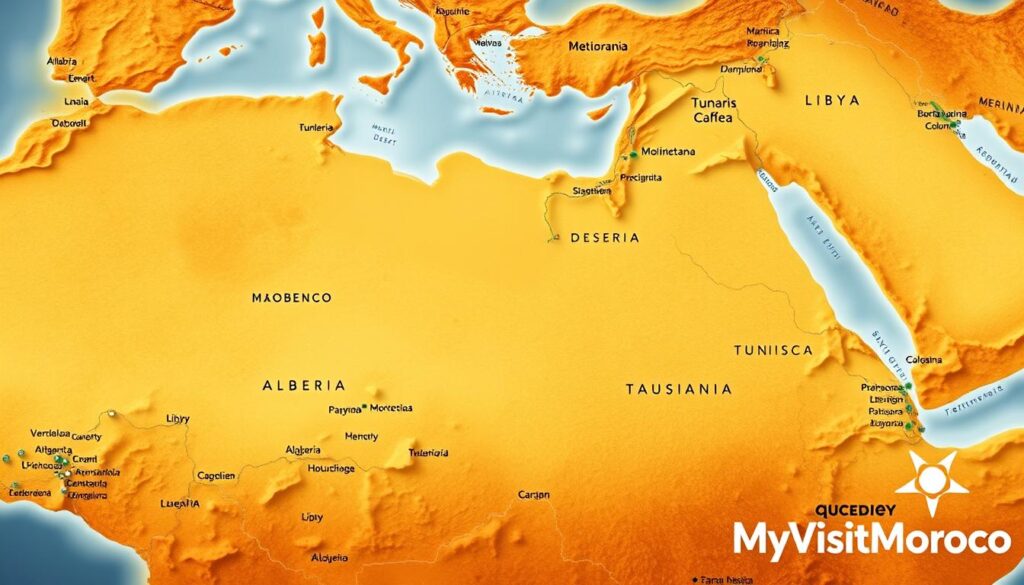
Understanding the Maghreb region is key to knowing Morocco’s culture, history, and politics. The Maghreb, meaning “the west” in Arabic, covers the western Arab world. It includes several North African countries.
Morocco is a major player in the Maghreb. It shares history, culture, and language with its neighbors. The region’s landscapes range from the Mediterranean to the Sahara Desert. Its culture is a mix of Arab, Berber, and Mediterranean influences.
Countries of the Maghreb Region
The Maghreb includes Morocco, Algeria, Tunisia, Libya, and Mauritania. These countries have a common history, language, and culture. Arabic is their official language, and Islam is important in their societies.
| Country | Capital | Official Language |
|---|---|---|
| Morocco | Rabat | Arabic, Amazigh |
| Algeria | Algiers | Arabic, Berber |
| Tunisia | Tunis | Arabic |
| Libya | Tripoli | Arabic |
| Mauritania | Nouakchott | Arabic |
Cultural and Historical Connections Among Maghreb Nations
The Maghreb countries have deep cultural and historical ties. These ties come from shared experiences like the Arab conquest and fighting for independence. For example, the Kingdom of Morocco has historical ties with other Maghreb nations through trade and cultural exchange.
These connections show in similar architectural styles, culinary traditions, and cultural festivals. The Maghreb is also known for its lively music and dance. Examples include Gnawa music in Morocco and Raï music in Algeria.
Language Politics in Al Mamlakah Al Maghribiyah
The language scene in Al Mamlakah Al Maghribiyah is complex. It’s made up of Arabic, Amazigh, and the influence of colonial times. This mix shapes the country’s identity and cultural heritage.
Language is key to Al Mamlakah Al Maghribiyah’s identity. The country officially speaks Arabic and Amazigh. Each language holds a special place in Moroccan society.
Arabic and Amazigh as Official Languages
Arabic is the main official language. It’s used in government, schools, and formal settings. It ties Morocco to the Arab world and Islamic traditions.
Amazigh, the other official language, shows Morocco’s respect for its Berber culture. This recognition is a recent step towards cultural diversity and inclusion.
Impact of French and Spanish Colonial History on Language
Morocco’s past as a colony has shaped its language scene. French, brought in during colonial times, is still important in education, government, and business. Many Moroccans speak French, which helps in international dealings.
The influence of Spanish colonialism is seen in the north, where Spanish is still spoken.
This mix of languages shows the rich history and cultural identity of Al Mamlakah Al Maghribiyah.
| Language | Role in Moroccan Society | Historical Significance |
|---|---|---|
| Arabic | Official language, used in government and education | Connection to the Arab world and Islamic heritage |
| Amazigh | Official language, symbol of indigenous Berber culture | Recognition of Morocco’s diverse cultural heritage |
| French | Used in commerce, education, and government | Legacy of French colonialism |
| Spanish | Spoken in northern regions | Legacy of Spanish colonialism |
Al Mamlakah Al Maghribiyah in International Relations
Al Mamlakah Al Maghribiyah, known as Morocco, has a strong global presence. Its location in North Africa makes it key in both regional and international affairs.
Diplomatic Recognition and International Organizations
Al Mamlakah Al Maghribiyah is part of important groups like the United Nations, the Arab League, and the African Union. Being in these groups shows its dedication to working together globally.
The country has formal ties with over 150 nations. This wide network helps Morocco act as a mediator in conflicts and support international peace efforts.
Morocco’s Position in Global Politics
In global politics, Morocco takes a balanced view. It often acts as a link between different cultures and politics. The government tackles big issues like climate change, terrorism, and migration.
| International Organization | Morocco’s Role |
|---|---|
| United Nations | Active participation in peacekeeping and development initiatives |
| Arab League | Promoting Arab unity and cooperation |
| African Union | Contributing to African development and stability |
By being active in global politics, Al Mamlakah Al Maghribiyah shows it’s a major and responsible player worldwide.
Symbolism in Morocco’s National Identity
Exploring Morocco’s identity reveals the importance of national symbols. These symbols represent the country’s values and history. They are deeply rooted in Moroccan culture, showing its rich heritage and diversity.
The Moroccan Flag and Its Meaning
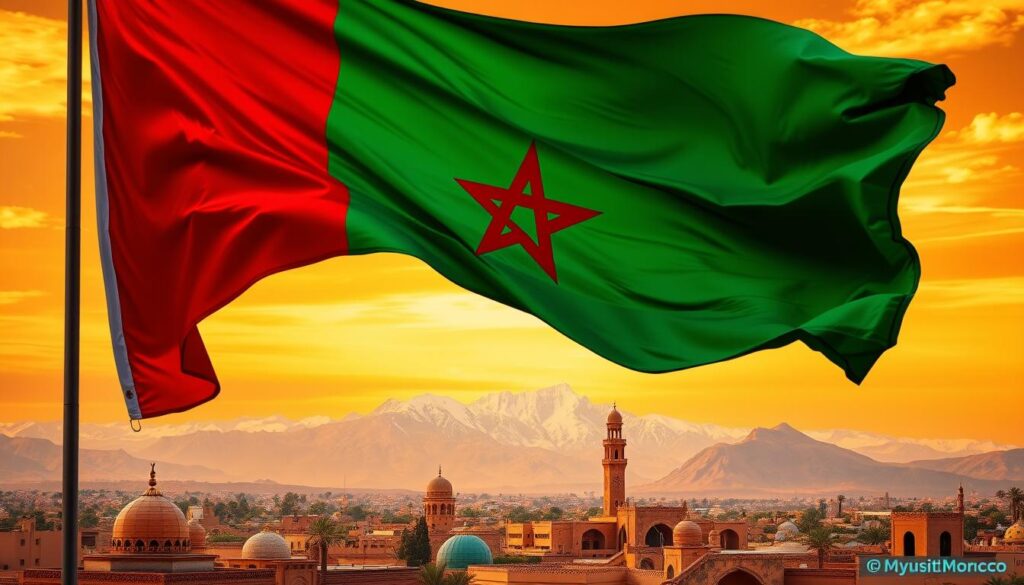
The Moroccan flag is a key symbol of the nation. Its red background and green pentagram hold deep meaning. The red color honors the royal heritage and the blood of martyrs. The green pentagram stands for the five pillars of Islam.
This flag is a symbol of national pride. It shows the unity and strength of the Moroccan people.
National Motto and Anthem of Al Mamlakah Al Maghribiyah
Morocco’s national motto, “Allahu, al-Watan, al-Malik” (“God, Country, King”), highlights the nation’s core values. It emphasizes faith, patriotism, and loyalty to the monarchy. The national anthem, “al-Nashid al-Sharif,” is a symbol of national unity and pride.
These symbols are key to understanding Morocco. They reflect the country’s values, history, and cultural identity. They help unite and inspire Moroccans.
Major Cities of Al Mamlakah Al Maghribiyah
Casablanca’s busy streets meet Fez’s ancient medinas in Morocco. These cities are full of life and history. They show Morocco’s mix of old traditions and new life.
Rabat: The Administrative Capital
Rabat is Morocco’s capital, known for its history and culture. It’s home to government offices and embassies. Don’t miss the Royal Palace and the Kasbah of the Udayas.
Casablanca: The Economic Powerhouse
Casablanca is Morocco’s business center, with modern buildings and a lively market scene. See the huge Hassan II Mosque and explore the Old Medina. It’s a city that feels like the world.
Marrakech, Fez, and Other Historic Centers
Marrakech and Fez are Morocco’s oldest cities, each with its own charm. Marrakech has colorful souks and the Bahia Palace. Fez is a UNESCO site, rich in Islamic culture. Other cities like Tangier offer different experiences. Learn more at My Visit Morocco.
| City | Significance | Main Attractions |
|---|---|---|
| Rabat | Administrative Capital | Royal Palace, Kasbah of the Udayas |
| Casablanca | Economic Hub | Hassan II Mosque, Old Medina |
| Marrakech | Cultural and Tourist Center | Bahia Palace, Jemaa el-Fnaa |
| Fez | Historic and Cultural Heritage | Ancient Medina, Al-Attarine Madrasa |
These cities make up Morocco’s vibrant urban scene. They offer a wide range of experiences. You’ll see Morocco’s history, culture, and modern life.
Morocco’s Diverse Landscapes and Geographic Regions
Morocco is a traveler’s dream with its varied landscapes. You’ll see everything from rugged mountains to calm coastlines. Each region has its own special charm and things to see.
From the Atlas Mountains to the Sahara Desert
The Atlas Mountains in Morocco are breathtaking. They’re home to the Berber people, who live traditionally. On the other hand, the Sahara Desert is vast and sandy, yet beautiful.
Traveling from mountains to desert is amazing. You’ll see a huge change in landscapes. It’s a great adventure for anyone.
Coastal Areas and Mediterranean Influences
Morocco’s coast by the Atlantic and Mediterranean is stunning. Its beaches and cities like Casablanca are key to the country’s culture and economy. They mix African and Mediterranean vibes.
In the north, you can taste the Mediterranean’s influence. The food and weather show a mix of Moroccan and Mediterranean styles. Morocco’s location between Africa and Europe makes it special.
| Region | Main Features | Attractions |
|---|---|---|
| Atlas Mountains | Mountain ranges, Berber villages | Hiking, traditional Berber culture |
| Sahara Desert | Sand dunes, oases | Desert safaris, camel rides |
| Coastal Areas | Beaches, ports, Mediterranean influence | Beach resorts, cultural experiences |
Cultural Treasures of Al Mamlakah Al Maghribiyah
Exploring Al Mamlakah Al Maghribiyah reveals a wealth of cultural treasures. These treasures show the country’s varied history and heritage. Morocco is full of cultural experiences just waiting to be discovered.
UNESCO World Heritage Sites
Al Mamlakah Al Maghribiyah boasts many UNESCO World Heritage Sites. Each site gives a unique look into Morocco’s rich culture and history. Some top sites include:
- The Medina of Marrakech, known for its vibrant souks and historic landmarks.
- The ancient city of Essaouira, with its well-preserved 18th-century architecture.
- The historic city of Meknes, featuring Roman ruins and Islamic monuments.
These sites draw tourists and highlight Morocco’s lasting cultural heritage.
Traditional Arts, Crafts, and Cuisine
Morocco’s culture shines through in its traditional arts, crafts, and food. The country is famous for:
| Traditional Craft | Description |
|---|---|
| Zellij Tilework | Intricately designed tiles used in architecture and decorative arts. |
| Handicraft Carpets | Vibrant, handwoven carpets that reflect Berber and Arabic designs. |
| Cuisine | A blend of Arabic, Mediterranean, and Berber flavors, featuring dishes like tagine and couscous. |
These traditional arts and crafts are not just beautiful. They also deeply influence Moroccan daily life and culture.
In conclusion, Al Mamlakah Al Maghribiyah’s cultural treasures showcase the country’s rich history and creativity. Whether you’re visiting ancient sites or experiencing traditional arts, Morocco offers a unique cultural journey.
Traveling to Al Mamlakah Al Maghribiyah: Visitor’s Guide
Planning your trip to Al Mamlakah Al Maghribiyah? Morocco is a must-see with its rich history and vibrant culture. It draws travelers from all over the world.
Entry Requirements and Practical Information
First, check the entry requirements for Al Mamlakah Al Maghribiyah. You might need a visa, depending on your nationality. For the latest info, visit the official government website or contact the Moroccan embassy or consulate in your country. The Morocco Handbook by the U.S. government is also a good resource.
Travel Documents: Make sure your passport is valid for at least six months after your planned departure. Some countries need a visa; check your specific requirements.
Vaccinations: Talk to your doctor about needed vaccinations. Morocco doesn’t require specific shots for entry, but keep your routine vaccinations up to date.
Cultural Etiquette and Customs for Visitors
Respecting local customs is key in Al Mamlakah Al Maghribiyah. Morocco is an Islamic country with conservative values. Dress modestly, especially in mosques or rural areas. Avoid public displays of affection.
Greetings: Moroccans love greetings. Shake hands or kiss cheeks (depending on how well you know them). Learn basic Arabic greetings like “As-salamu alaykum” (peace be upon you).
By following these cultural tips, you’ll have a better and more respectful visit to Al Mamlakah Al Maghribiyah.
Modern Morocco: Development and Challenges
Morocco is changing fast, thanks to new development plans. You can see big improvements in many areas. These changes help the country grow and connect with the world.
Economic Growth and Development Initiatives
Morocco is working hard to make its economy stronger. It’s focusing on clean energy, tourism, and building better infrastructure. The goal is to lead in solar and wind energy.
For more details on Morocco’s economic plans, check out the CIA World Factbook page on Morocco. It offers deep insights into the country’s economic scene.
- Investment in renewable energy
- Tourism development
- Infrastructure projects
Contemporary Social and Political Landscape
Morocco is also tackling its social and political issues. The country is pushing for reforms to bring people together and ensure stability. It’s working on better education, healthcare, and human rights to make society more welcoming.
Key areas of focus include fighting for gender equality and supporting young people. Morocco is trying to keep its traditions while moving forward.
Conclusion: The Enduring Significance of Al Mamlakah Al Maghribiyah
You now know the rich history and cultural importance of Morocco’s official name, Al Mamlakah Al Maghribiyah. This name is more than a title. It shows the country’s mix of Arabic, Amazigh, and Islamic cultures. Exploring Al Mamlakah Al Maghribiyah has deepened your understanding of Moroccan identity.
The lasting importance of Al Mamlakah Al Maghribiyah is its power to unite Moroccans. It stands for the country’s strategic spot in North Africa, its rich culture, and its strength through tough times. Understanding Morocco’s official name and its cultural background is key to seeing the country’s growth.
By looking into Al Mamlakah Al Maghribiyah, you’ve seen a nation that values tradition but also welcomes change. Morocco’s official name opens a door to its history, culture, and geography. It offers a peek into a complex and intriguing world.



 Covers cities, coast, mountains, desert & food