Have you ever thought about Morocco, a country in North Africa’s Maghreb region? To figure out if it’s rich, we must look at its economy and where it stands globally.
Morocco‘s economy is growing, thanks to sectors like agriculture, tourism, and manufacturing. By checking economic indicators and rankings, you’ll see how well the country is doing financially and its place in the world economy.
Key Takeaways
- Morocco’s economic growth rate and its contributing sectors.
- The country’s global ranking in terms of GDP and other economic indicators.
- Factors influencing Morocco’s economy, such as trade and investment.
- The impact of economic policies on the country’s financial status.
- Morocco’s position in regional and global economic contexts.
Morocco’s Economic Profile at a Glance
To understand Morocco’s economy, we need to look at its key indicators. The country’s economy is diverse. It gets a lot of money from agriculture, tourism, and industry.
Key Economic Indicators
GDP and Growth Rate
Morocco’s GDP has been growing steadily. The latest numbers show Moroccan GDP is about $120 billion. The growth rate is around 3.5%.
This growth comes from different sectors. Agriculture and tourism are big contributors.
Inflation and Employment Figures
Inflation in Morocco is stable, around 1.5%. The country has a diverse workforce, with many in agriculture. The unemployment rate is about 10%.
Morocco’s Position in North Africa
Regional Economic Comparisons
Morocco is a leading economy in North Africa. It has a more diversified economy than its neighbors. Here’s a comparison of Morocco’s economic indicators with other North African countries.
| Country | GDP (Billions) | Growth Rate (%) | Inflation Rate (%) |
|---|---|---|---|
| Morocco | 120 | 3.5 | 1.5 |
| Egypt | 250 | 4.0 | 2.0 |
| Algeria | 180 | 2.5 | 1.0 |
The table shows Morocco’s economy is strong in the region. It has a stable growth rate and controlled inflation.
“Morocco’s economic strategy focuses on diversifying its economy, improving infrastructure, and enhancing its business environment.”
Is Morocco a Rich Country? Analyzing the Evidence
To figure out if Morocco is rich, we need to know what makes a country wealthy. Wealth is measured by economic indicators, quality of life, and how the world sees it.
Defining National Wealth in Global Context
National wealth is complex and can be seen in many ways. We can look at a country’s income or its quality of life to understand its wealth.
Income-Based Classifications
Income-based classifications group countries by their GNI per capita. The World Bank uses this to sort countries into different income levels. Morocco’s GNI per capita is key to knowing its wealth.
Quality of Life Indicators
Quality of life indicators look at life expectancy, education, and healthcare. These give a fuller picture of a country’s well-being, not just its money.
Morocco’s Wealth Status by International Standards
To really understand Morocco’s wealth, we must look at how the world sees it.
World Bank Classification
The World Bank says Morocco is a lower-middle-income economy. This is based on its GNI per capita and shows its economic level.
Human Development Index Ranking
Morocco’s HDI ranking is also important for its wealth status. The HDI looks at life expectancy, education, and income for a complete view of development.
Morocco’s economy is diverse and growing. It’s in North Africa and has sectors like agriculture, tourism, and manufacturing. These areas help drive the economy forward.
- Economic Indicators: Morocco’s economy has both growth and challenges.
- Quality of Life: Better education and healthcare have improved life quality.
Looking at these points helps us understand Morocco’s wealth and its place in the world.
Morocco’s GDP: Growth Trends and Analysis
Morocco’s GDP is key to understanding its economic status. Economists closely watch it to see how the country is doing. The growth is shaped by many things, like past trends and what sectors contribute most.
Current GDP Figures and Historical Growth
Morocco’s GDP has grown steadily, with some ups and downs. This is because of changes in the world economy. The country is working hard to grow its economy in different ways. For more details, check out reports from places like the Policy Center for the New South.
Sector Contribution to GDP
The Moroccan economy relies on agriculture, tourism, and manufacturing. These sectors add up differently to the GDP. Agriculture is big because it employs many people and exports a lot. Tourism also brings in a lot of money for the country.
GDP Per Capita Compared to Global Standards
Looking at Morocco’s GDP per capita shows how it stacks up worldwide. Morocco’s is lower than many other countries. This shows it’s still a developing economy.
Purchasing Power Parity Considerations
Purchasing Power Parity (PPP) helps us see Morocco’s economy better. It adjusts the GDP per capita to reflect the cost of living. This makes Morocco’s economic situation clearer compared to other countries.
In summary, Morocco’s GDP trends show a complex economy. Knowing these details helps us understand its place in the world.
Historical Evolution of Morocco’s Economy
To understand Morocco’s economy, we must look at its history. The country’s economy has changed a lot over time. This change came from inside and outside factors.
From Traditional Economy to Modernization
Morocco’s economy used to focus on farming and trade. Its location made it a key spot for trade between Europe, Africa, and the Arab world.
Colonial Influence and Independence
The colonial era greatly affected Morocco’s economy. The French and Spanish brought in new systems but also took a lot from the country. When Morocco became independent in 1956, it had to grow its economy while keeping its freedom.
Economic Reforms and Their Impact
In the late 20th century, Morocco started making big changes to its economy. These changes included making the economy more open and private. The goal was to attract more foreign money and grow the economy.
Liberalization and Privatization Efforts
Morocco’s economy became more open to the world through new policies. By selling off state companies, the country aimed to work better and compete more.
Results of Recent Economic Policies
For more info on Morocco’s economy, check out the Wikipedia page on the Economy of Morocco. New policies have helped Morocco grow in areas like tourism, making things, and green energy.
These changes have made Morocco important in the world economy. As it keeps growing, it will face new challenges and chances that will shape its future.
Key Sectors Driving Morocco’s Economy
Morocco’s economy is shaped by several key industries. These include agriculture, tourism, and manufacturing. These sectors are vital for the country’s GDP and job creation.
Agriculture and Food Production
Agriculture is crucial in Morocco, employing many people. The country grows a variety of crops, like phosphates, citrus fruits, and olives.
Agricultural Exports and Challenges
Morocco exports a lot of agricultural products, mainly to European markets. But, the sector faces issues like drought and water scarcity. This can affect production. According to the Britannica, Morocco’s economy heavily relies on agriculture, making it sensitive to weather.
Tourism and Hospitality
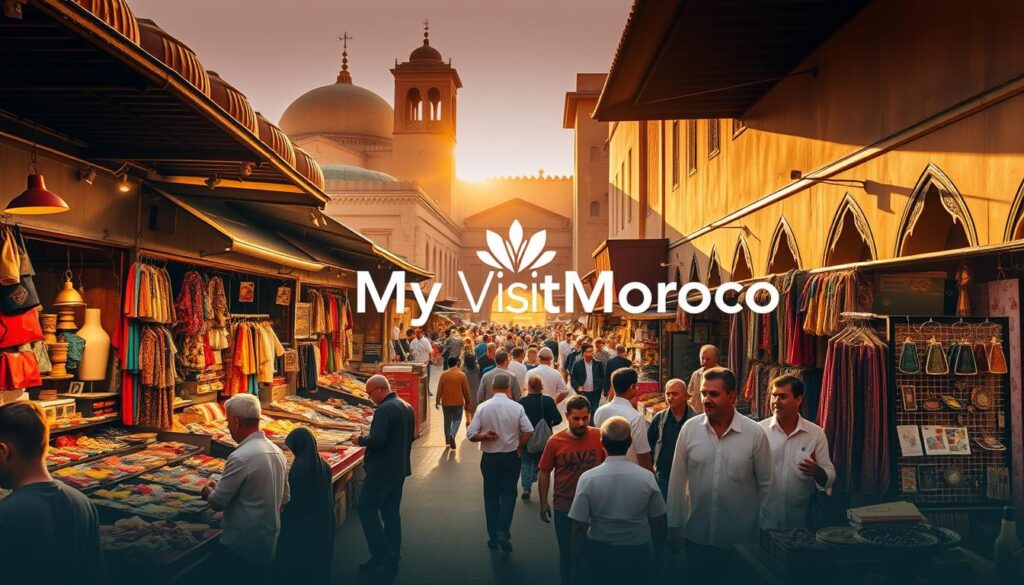
Tourism is a major driver of Morocco’s economy. It attracts visitors worldwide with its culture and natural beauty. The industry boosts the country’s GDP and creates jobs for many Moroccans.
Tourism’s Contribution to Employment
The tourism sector is a big employer in Morocco. Many work in hotels, restaurants, and tour operations. This helps lower unemployment rates and improves the economy.
Manufacturing and Exports
Manufacturing is growing in Morocco, focusing on automotive and aerospace. The country attracts foreign investors with low labor costs and a strategic location.
Automotive and Aerospace Industries
Morocco has seen a lot of investment in its automotive sector. Major manufacturers have set up facilities there. The aerospace industry is also expanding, making Morocco a key player in the region.
Emerging Industries
Morocco is also investing in new sectors like renewable energy. The country has great potential for solar and wind energy. These investments are driving economic growth.
Renewable Energy Investments
Morocco is committed to renewable energy, aiming to use more of it for electricity. This move reduces fossil fuel use and boosts the economy.
In conclusion, Morocco’s economy is diverse, with each sector playing a key role. By investing in new areas and growing existing ones, Morocco is set for future growth.
Foreign Investment and International Trade
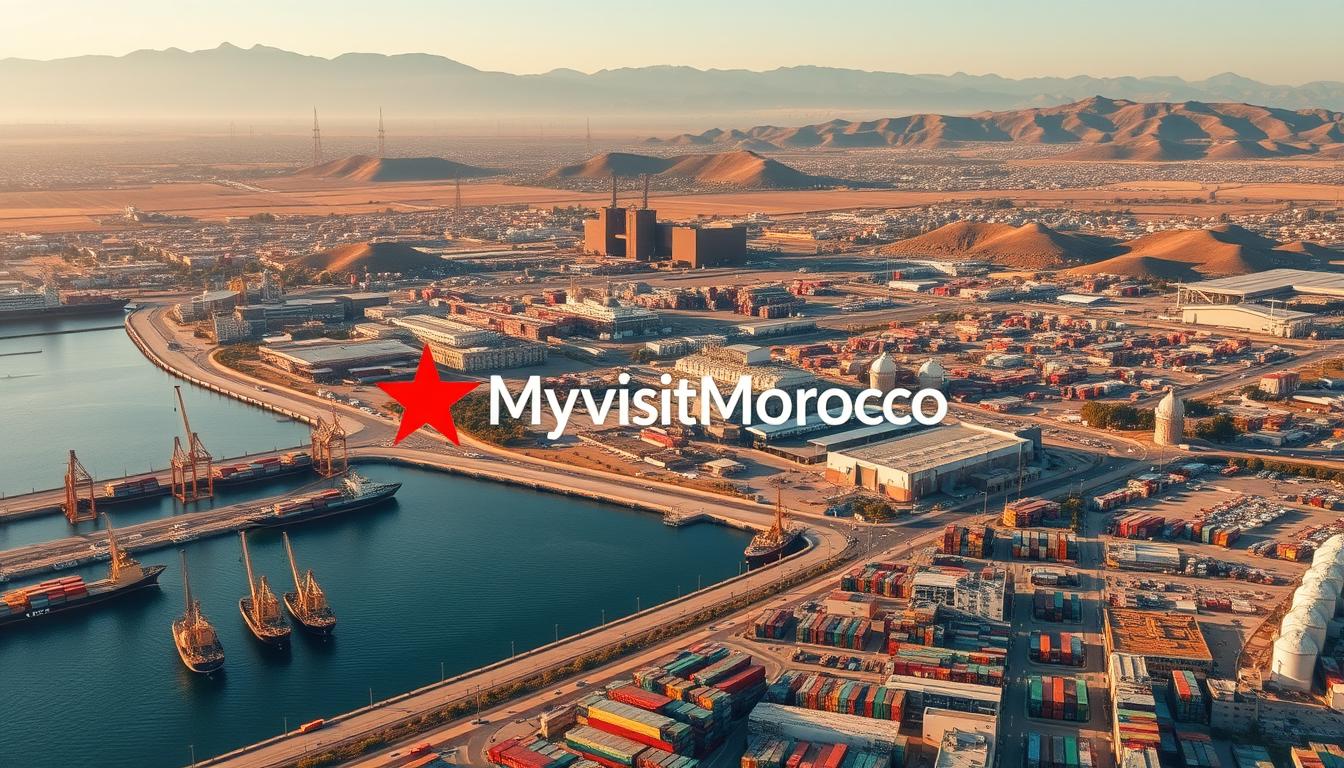
Morocco is a key player in international trade, sitting between Europe, Africa, and the Americas. Its location and business-friendly environment attract foreign investors.
Major Foreign Investors in Morocco
Many countries, especially those in Europe, have invested in Morocco. The European Union leads, with France and Spain at the forefront. They focus on automotive, aerospace, and renewable energy sectors.
Investment Trends and Hotspots
There’s a growing interest in Morocco’s offshore wind energy sector. The country also attracts investment in industrial zones in Tangier and Casablanca. A report shows that foreign direct investment has boosted Morocco’s economy.
Trade Agreements and Partnerships
Morocco has made several trade agreements to improve its global trade. It has a Deep and Comprehensive Free Trade Agreement (DCFTA) with the European Union, making trade easier between them.
EU and US Trade Relations
Morocco’s trade with the EU is strong, with the EU being its biggest trading partner. The country also has a trade agreement with the United States, boosting trade between them.
Morocco’s Export Economy
Morocco’s export economy is varied, with main sectors being agriculture, automotive, and textiles. Its location helps in exporting goods efficiently to Europe, Africa, and more.
Key Export Products and Markets
Morocco exports phosphates, automotive components, and agricultural produce. The European Union is its biggest market, followed by other African countries.
Poverty and Income Inequality in Morocco
To understand poverty and income inequality in Morocco, we need to look closely at its economy. It’s clear that tackling these issues is key for lasting growth.
Current Poverty Rates and Trends
Morocco has made big strides in cutting poverty over the years. The poverty rate has gone down, showing the country’s efforts to better people’s lives. But, how we measure poverty can lead to different views of the data.
Absolute vs. Relative Poverty Measures
Absolute poverty means not having basic needs like food, clothes, and a home. Relative poverty compares to the overall standard of living. In Morocco, both are used to grasp poverty’s extent. For example, a Policy Center report sheds light on the differences in measuring poverty and its impact on policy.
Urban vs. Rural Economic Disparities
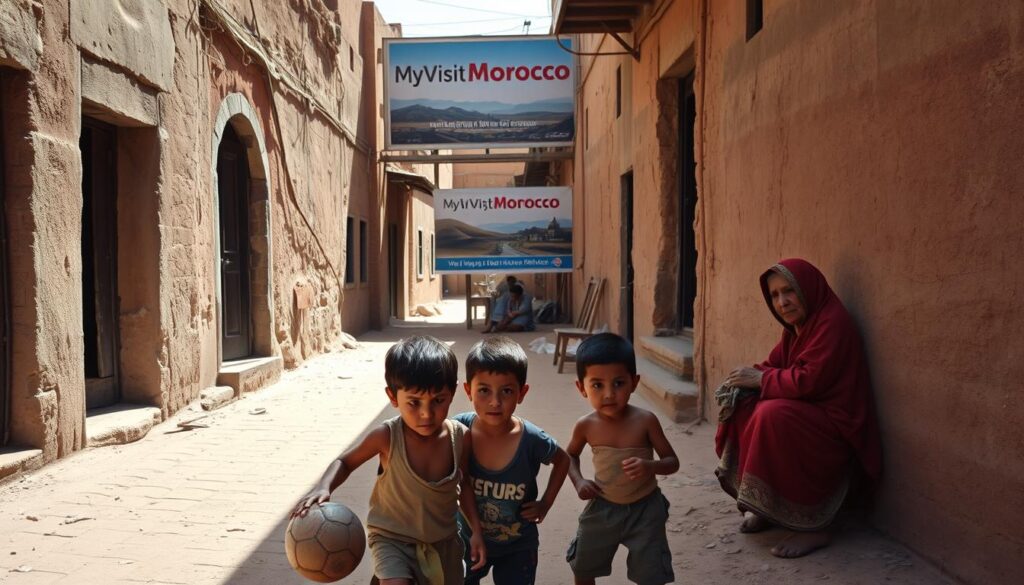
There’s a big gap in the economy between cities and rural areas in Morocco. Rural areas face higher poverty due to less access to education, healthcare, and jobs. This gap is a big challenge for those trying to lower poverty.
Geographic Distribution of Wealth
Wealth in Morocco is not spread evenly. Cities like Casablanca and Rabat are wealthier than rural areas. This uneven wealth leads to income inequality, as most opportunities and resources are in cities.
Government Initiatives to Address Poverty
The Moroccan government has started several efforts to fight poverty and income inequality. These include social safety nets for the poor and programs to boost economic chances.
Social Safety Net Programs
Social safety nets give financial help, healthcare, and education support to the poor. These programs are vital in helping families meet their basic needs and improve their economic status.
Effectiveness of Anti-Poverty Measures
How well anti-poverty measures work in Morocco is still being studied. Some programs have shown good results, but others need tweaks to tackle poverty and inequality’s root causes.
As Morocco grows, fighting poverty and income inequality will stay a top priority. By understanding these complex issues and finding effective solutions, the country can aim for a fairer economy.
Morocco’s Financial Landscape
Morocco has made big steps in its financial scene, including better banking and stable currency. Knowing about its financial sector is key when looking at its economy.
Banking Sector Development
The banking sector in Morocco has grown a lot. Big banks are at the heart of this growth. Some major banks include:
- Attijariwafa Bank
- BMCE Bank
- Crédit Agricole du Maroc
Major Financial Institutions
These banks have grown their services and helped the economy grow. For example, Attijariwafa Bank is huge in Morocco and Africa. It offers many financial services.
Currency Stability and Inflation
The Moroccan Dirham (MAD) has stayed stable, thanks to the central bank, Bank Al-Maghrib. The inflation rate has been low, keeping the economy stable.
Moroccan Dirham Performance
The central bank watches the Dirham closely to keep it stable. This stability helps attract foreign investors.
Access to Financial Services
Improving financial inclusion is a big goal. There are efforts to make financial services available to more people.
Financial Inclusion Initiatives
Mobile banking and microfinance are key in reaching more people. For instance, mobile banking has helped a lot in rural areas.
| Indicator | 2018 | 2019 | 2020 |
|---|---|---|---|
| Banking Penetration (%) | 60 | 62 | 65 |
| Mobile Banking Users (millions) | 2.5 | 3.2 | 4.0 |
| Inflation Rate (%) | 1.9 | 0.4 | 0.7 |
Morocco’s financial scene is changing for the better. There’s growth in banking, currency stability, and more people have access to financial services. 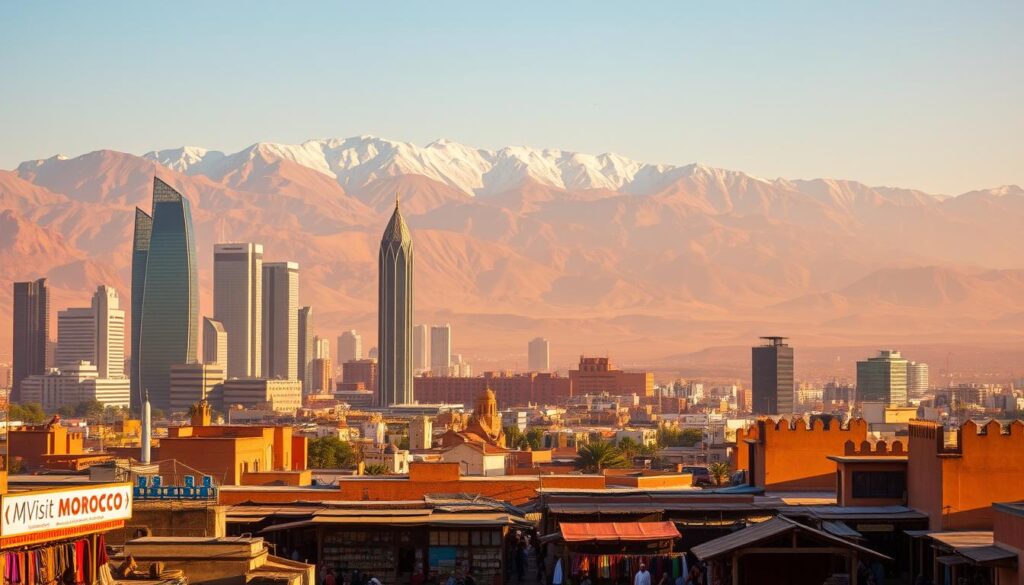
Morocco’s Global Economic Ranking
Morocco is a big player in North Africa’s economy. Its global economic standing is shaped by its GDP, trade deals, and investment climate.
International Economic Classifications
Morocco’s income status affects its global ranking. The World Bank uses Gross National Income (GNI) per capita to classify countries.
Lower Middle-Income vs. Upper Middle-Income Status
Morocco is seen as a lower middle-income country. This status impacts its access to international funds and its appeal to foreign investors. It’s working to become an upper middle-income country by diversifying its economy and boosting industrial output.
Comparison with Similar Economies
Morocco’s economy is compared to others in the MENA region and emerging markets. These comparisons help understand its performance and areas for growth.
MENA Region Economic Rankings
In the MENA region, Morocco is among the top economies. It competes with Tunisia and Egypt. This competition pushes for economic reforms and investment in key sectors.
Comparison with Other Emerging Markets
Morocco’s economy is resilient, with growth from tourism, agriculture, and manufacturing. Improving infrastructure and the business environment are key focuses.
Morocco’s global economic ranking shows its economic policies, investment climate, and sectoral performance. As it evolves, its global position will change, influenced by domestic reforms and international trends.
- Morocco is a lower middle-income country with growth potential.
- Its economic ranking in the MENA region is competitive.
- Emerging sectors and investment opportunities are key drivers of Morocco’s economic future.
Economic Development Challenges in Morocco
Despite progress, Morocco faces big challenges like high unemployment and infrastructure gaps. The country aims to boost its economic status. It must tackle these issues to succeed.
Unemployment and Labor Market Issues
Unemployment is a big problem in Morocco, hitting some groups harder than others.
Youth Unemployment Crisis
The youth unemployment rate in Morocco is very high, with nearly 40% of young people jobless. This hurts their financial stability and the country’s growth.
Gender Disparities in Employment
Women face higher unemployment rates than men, showing a gender gap in jobs. It’s key to work on gender equality in the workplace for a balanced economy.
Infrastructure Needs
Morocco’s infrastructure needs a lot of investment to meet its economic goals.
Transportation and Logistics Gaps
The transportation and logistics sectors need improvement to boost trade and commerce. Investing in modernizing these sectors will attract more foreign investors.
Education and Skill Development
Education and skill development are crucial for Morocco’s economic future.
Education-Employment Mismatch
The education system doesn’t always match the labor market’s needs. Aligning educational programs with industry requirements is key to lower unemployment and increase productivity.
To beat these challenges, Morocco must create detailed plans. These plans should tackle unemployment, improve infrastructure, and reform education to meet economic needs.
- Enhancing vocational training programs
- Promoting entrepreneurship and innovation
- Improving infrastructure to support business growth
By addressing these challenges, Morocco can ensure sustainable growth and better living standards for its people.
Morocco’s Economic Future: Projections and Opportunities
Morocco’s economy is set to grow, thanks to smart plans. The country is focusing on different areas to boost growth. These sectors are key to its success.
Growth Forecasts and Development Plans
Morocco has big goals for its economy by 2030. The Vision 2030 plan aims for sustainable growth and better living standards. It also wants Morocco to be more competitive globally.
Vision 2030 Economic Goals
The Vision 2030 plan has several main goals:
- Enhancing economic competitiveness
- Promoting sustainable development
- Fostering innovation and entrepreneurship
- Improving infrastructure and transportation networks
Emerging Sectors and Opportunities
New sectors are emerging in Morocco, promising growth. The digital economy is one of the most exciting areas. It’s seeing more tech startups.
Digital Economy and Tech Startups
The government is supporting the digital economy. It has programs for startups and is building tech hubs. This has brought in investment and talent, making Morocco a digital innovation hub.
Potential Risks and Challenges
Despite the positive outlook, Morocco faces challenges. Climate change and regional stability are major concerns.
Climate Change Impact on Economy
Climate change is a big threat to Morocco’s economy, especially in agriculture. Rising temperatures and changing weather could harm crops and water resources.
Regional Stability Factors
Regional stability is crucial for Morocco’s economy. Political changes in neighboring countries can affect investor confidence and trade.
| Economic Indicator | Current Status | Projected Growth |
|---|---|---|
| GDP Growth Rate | 4% | 5% |
| Unemployment Rate | 10% | 8% |
| Foreign Investment | $2 billion | $3 billion |
Morocco’s future looks bright, thanks to its plans and new sectors. It’s ready to face the global economy’s challenges.
How Morocco’s Economy Affects You as a Visitor or Investor
Thinking about visiting or investing in Morocco? It’s key to know about its economy. Morocco’s economy is varied, with many sectors helping it grow.
Cost of Living for Expatriates and Tourists
Morocco’s cost of living is lower than in many places. This makes it appealing for expats and tourists. But, prices differ based on where you are and how you live.
Purchasing Power Comparisons
Your money stretches further in Morocco than in the U.S. or Europe. Eating out and staying in hotels are cheaper here.
Investment Opportunities in Key Sectors
Morocco has many investment chances, especially in tourism, real estate, and manufacturing. The government is working hard to draw in foreign investors.
Real Estate and Tourism Investment
The real estate market in Morocco is booming. There are chances in homes and business spaces. Tourism is also a big investment area, with a focus on cultural sites and new buildings.
Business Climate and Regulations
Morocco has made its business environment better to attract investors. It’s now easier to start and run a business here.
Ease of Doing Business Indicators
Reports show Morocco has made starting a business faster and cheaper. This has helped its ranking in global business ease lists.
Conclusion: Understanding Morocco’s Economic Position
Morocco’s economy is complex, with many factors at play. Its growing GDP, tourism, and agriculture are key. Also, infrastructure projects and economic reforms are important.
The country’s economy has both old and new sectors. There’s a big difference in wealth between cities and rural areas. Despite challenges, Morocco is becoming more attractive to investors and tourists.
To learn more about Morocco’s economy, check out this platform. It offers detailed insights into Morocco’s economic status and ranking globally.
In summary, Morocco’s wealth status is complex. It shows both the country’s successes and its challenges. As Morocco grows, its economy will likely change based on how it tackles these issues and new opportunities.




 Covers cities, coast, mountains, desert & food